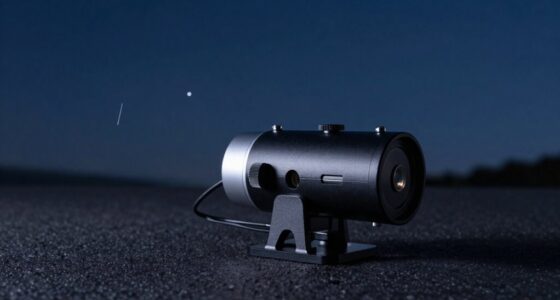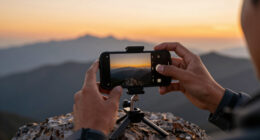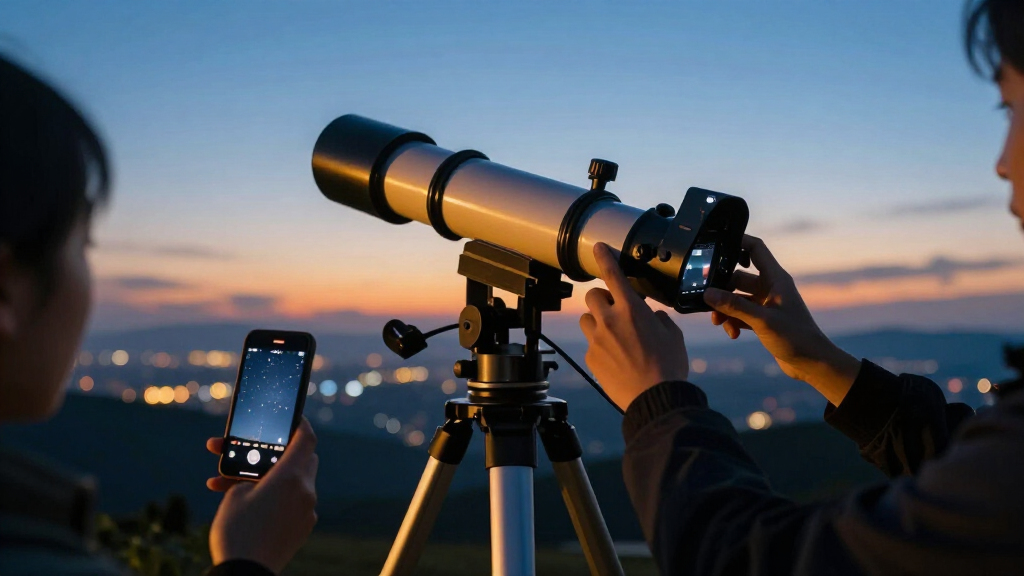

Smart telescope cameras combine a telescope, sensor, mount, and guiding electronics into one app-controlled unit, so you can capture planets, nebulae, and galaxies without a separate rig or years of astrophotography experience. The ZWO Seestar S30 Pro earns my best overall pick for pairing a proven optical design with live stacking and reliable GoTo tracking at a mid-tier price. If you want deeper-sky performance, the Unistellar Odyssey with its 85mm aperture and Enhanced Vision processing pulls in fainter targets faster, while the DWARFLAB Dwarf 3 is the standout for travelers who refuse to haul a full-size scope. The main tradeoffs in this category come down to aperture versus portability, image quality versus price, and dedicated astronomy optics versus budget multi-purpose digital telescopes. Read on for the full breakdown of all ten models.

Prime made for students and young adults
- Fast, free delivery for dorm and study essentials
- Prime Video and Amazon Music included
- Member-only deals
Key Takeaways
- Aperture was the single biggest differentiator: the 85mm Unistellar Odyssey and ZWO Seestar S30 Pro resolved faint deep-sky targets that smaller 30–50mm budget models simply could not collect light for, regardless of their 4K marketing claims.
- Several generic ‘4K astrophotography camera’ telescopes under different brand names (items 2, 5, 6, and 7) shared nearly identical hardware, differing mainly in bundled accessories like SD cards, carry bags, and dual screens — buyers should compare bundles rather than assume they are distinct products.
- App ecosystem quality mattered as much as hardware: ZWO and Unistellar offer mature apps with plate solving, live stacking, and target databases, while budget models rely on basic Wi-Fi apps with limited object catalogs and weaker update support.
- The DWARFLAB Dwarf Mini and Dwarf 3 filled a genuine gap for grab-and-go use, but their smaller sensors mean planetary and lunar imaging is their strength, not galaxies and nebulae.
- Fixed eyepiece-style digital telescopes with built-in screens (like the FASHIONARI 720X and the dual-screen refractors) are best treated as beginner learning tools — they cannot match the tracking precision or long-exposure capability of true smart telescopes.

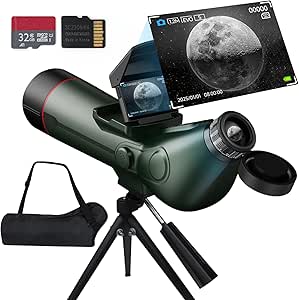


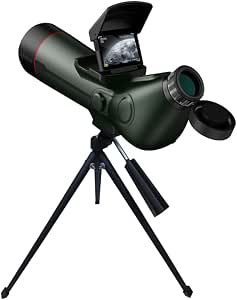
| smart telescope camera | Focal Length | Aperture |
|---|---|---|
| ZWO Seestar S30 Pro Smart Tele | 160 mm | — |
| Smart Refractor Telescope with | 300mm (f/8.89) | 80mm |
| Smart Portable Digital Electro | — | — |
| Unistellar Odyssey Smart Teles | 320 mm (f/3.9) | 85 mm |
| Smart Digital Telescope with 4 | 300 mm (f/8.89) | 78 mm |
| Smart Refractor Telescope with | 300mm (f/8.89) | 80mm |
| Smart Digital Refractor Telesc | 300mm (f/8.89) | 78mm |
| DWARFLAB Dwarf Mini Smart Tele | 150mm | — |
| DWARFLAB Dwarf 3 Smart Telesco | — | — |
| FASHIONARI Digital 720X Smart | 300mm (f/8.89) | 80mm |
More Details on Our Top Picks
ZWO Seestar S30 Pro Smart Telescope
The S30 Pro stands out as the only option in this lineup with genuine deep-sky astrophotography credentials: light-pollution filtering, AI image stacking, an equatorial mode, and a dedicated one-tap Milky Way routine. Compared with the Unistellar Odyssey, the 30mm aperture gathers far less light, but ZWO’s software does more with less, and the whole package weighs just 3.6 lb — light enough for a hike to dark skies. Compared with the dual-screen smart refractors, it trades direct eyepiece-style viewing for far better automated tracking. The tradeoff is patience: deep-sky sessions require the scope to stay completely stationary, and unlocking the deeper settings means working through the manual rather than relying purely on the app’s defaults.
Pros:- Automatic targeting and tracking that genuinely simplify first-time observing
- Light-pollution filter and AI enhancement make urban imaging practical
- Equatorial mode improves deep-sky results beyond typical entry-level smart scopes
- Extremely portable at 3.6 lb with anti-dew protection for long sessions
Cons:- 30mm aperture limits detail on faint deep-sky targets
- Deep-sky imaging requires the unit to remain stationary for long exposures
- Advanced software settings require consulting the manual
Best for: Budget-minded beginners and city dwellers who want real deep-sky images without a traditional rig
Not ideal for: Buyers who want to look through an eyepiece or share live views on a built-in screen — everything routes through a phone or tablet
- Objective Lens Diameter:30 mm
- Focal Length:160 mm
- Field of View:4.6 degrees
- Mount:Alt-azimuth; supports equatorial mode
- Focus:Autofocus and manual focus
- Weight:3.6 lb
- Imaging:Dual-camera 4K with AI enhancement
Our verdict“The most capable deep-sky starter package here for the money, as long as you accept phone-only viewing and a small aperture.”
Smart Refractor Telescope with Auto-Focus, 4K Astrophotography Camera, and Dual Screens
This model earns its spot with a dual-screen setup that solves a real problem: one person can observe through the diopter-adjustable eyepiece while others watch the foldable external display at the same time. That makes it a better fit for families and small groups than the ZWO Seestar S30 Pro, which funnels everything through a single phone. The 80mm aperture is the largest in this batch, and the 6-hour battery comfortably outlasts the Odyssey’s 5-hour runtime. The compromises are real, though: focusing is auto-only with no manual override, so if the system hunts or misses, you have no way to correct it — a frustration the S30 Pro avoids with its manual focus option.
Pros:- Dual screens let multiple people view simultaneously
- Largest aperture in this lineup at 80mm for brighter images
- Up to 6 hours of battery life with programmable auto shut-off
- Versatile enough for birdwatching, target spotting, and lunar work
Cons:- No manual focus — total reliance on autofocus
- Nonstandard battery type complicates replacement and travel charging
- No motorized tracking for deep-sky imaging sessions
Best for: Families and group observers who want to share live views on a screen and capture 4K footage without extra gear
Not ideal for: Precision-minded astrophotographers who want manual focus control and tracking for long exposures
- Aperture:80mm
- Focal Length:300mm (f/8.89)
- Max Magnification:350X
- Image Resolution:4K
- Battery:4500mAh built-in
- Battery Life:Up to 6 hours
- External Storage:Up to 512GB
- Diopter Adjustment:+/-4
Our verdict“The best pick here for shared, casual viewing sessions where a big screen and long battery matter more than fine optical control.”
Smart Portable Digital Electronic Telescope with Desktop Tripod
At 2.1 pounds with a bundled carrying case and rotating desktop tripod, this is the grab-and-go option of the group — closer in spirit to a spotting scope with smart features than a dedicated astro rig. Unlike the Smart Refractor with Dual Screens, it skips the display entirely and leans on dedicated moon and universe viewing modes, adjustable IR levels, and an adaptive night mode that help it move smoothly from daylight birdwatching to after-dark sky viewing. The catch is the 42mm objective, which is nearly half the light-gathering of the 78–80mm models here, so faint targets will stay faint. Manual focus also demands a patient hand, and the touch controls falter with wet fingers — worth knowing if your plans involve riversides or damp campsites.
Pros:- Genuinely portable at 2.1 lb with case and desktop tripod included
- Dedicated moon and universe modes simplify target-specific viewing
- Seven IR levels plus adaptive night mode handle varied lighting
- Rubber sheath and retractable sun hood add real field durability
Cons:- 42mm objective gathers far less light than larger models in this lineup
- Manual focus requires careful adjustment for sharp results
- Touch controls are unreliable with wet hands
Best for: Hikers, campers, and travelers who want one light device for both wildlife and casual moon viewing
Not ideal for: Anyone prioritizing deep-sky astrophotography — the small aperture and manual focus limit serious results
- Objective Lens Diameter:42 mm
- Mount Type:Altazimuth
- Focus Type:Manual focus
- Weight:2.1 pounds
- Eyepiece Angle:45 degrees
- IR Levels:7
- Included Accessories:360° rotating desktop tripod, carrying case
Our verdict“A lightweight day-to-night hybrid for outdoor trips, not a serious astrophotography tool.”
Unistellar Odyssey Smart Telescope (85mm f/3.9, Digital, App-Controlled)
The Odyssey is the most complete smart-telescope package in this roundup: one-click GoTo alignment, autofocus, a 5,000-object catalog backed by a 37-million-star database, and — uniquely here — RAW/FITS export for serious post-processing. Where the ZWO Seestar S30 Pro targets entry-level imagers, the Odyssey aims at buyers who may eventually want publication-grade results, and its citizen-science campaigns with NASA and SETI give it a dimension no other model here offers. The fast f/3.9 optics and 17.2 limiting magnitude mean it resolves targets the smaller dual-screen refractors simply cannot. But it demands full commitment to digital observing: no eyepiece exists, the 5-hour battery caps marathon sessions, and operating it without a phone or tablet is impossible.
Pros:- Ready to observe in under 2 minutes with automatic alignment and autofocus
- RAW/FITS export enables professional-grade image processing
- 5,000+ object catalog with a 37-million-star database
- NASA and SETI citizen-science participation adds genuine scientific value
Cons:- No eyepiece — traditional visual observing is impossible
- Requires a smartphone or tablet for every session
- 5-hour battery life limits all-night imaging runs
Best for: Enthusiasts and aspiring citizen scientists who want the most capable, app-driven observing and imaging experience in this lineup
Not ideal for: Traditionalists who want to look through an eyepiece, or anyone who might observe without a charged smartphone
- Aperture:85 mm
- Focal Length:320 mm (f/3.9)
- Mount:Motorized Alt-Az with one-click GoTo
- Limiting Magnitude:17.2
- Storage:64 GB onboard
- Battery Life:Up to 5 hours
- Weight (telescope):4 kg
- Connectivity:Wi-Fi; iOS & Android
Our verdict“The most capable and future-proof choice here for buyers willing to go fully digital and pay for premium optics.”
Smart Digital Telescope with 4K Astrophotography Camera and 64GB Card
This model’s appeal is out-of-the-box readiness: a 78mm aperture, a foldable 3-inch screen, one-touch 4K capture, and a 64GB card already included, so you can start shooting the same night it arrives. Compared with the Smart Refractor with Dual Screens, it gives up the eyepiece-style second display and an hour of battery headroom but keeps the core viewing-plus-capture experience with nearly identical optics. Its generous ±6 diopter adjustment also beats the dual-screen model’s ±4 range for eyeglass wearers. The honest caveat is the 350× magnification claim, which ships without supporting performance details — realistic expectations should center on lunar and planetary viewing, where the 300mm focal length and screen-based capture genuinely perform.
Pros:- Arrives ready to use with an included 64GB memory card
- Foldable 3-inch screen enables real-time shared viewing
- Wide ±6 diopter adjustment suits eyeglass wearers well
- 512GB external storage ceiling leaves room to grow
Cons:- 350× magnification claim lacks supporting performance details
- No motorized tracking for long-exposure astrophotography
- Smaller screen than the dual-screen alternatives in this roundup
Best for: First-time buyers who want everything included day one and mainly plan lunar, planetary, and daytime viewing
Not ideal for: Spec-driven shoppers who need verified performance figures before trusting high-magnification claims
- Aperture:78 mm
- Focal Length:300 mm (f/8.89)
- Magnification:Up to 350×
- External Display:3-inch foldable screen
- Image Resolution:4K
- Included Storage:64GB memory card
- Maximum External Storage:512GB
- Diopter Adjustment:±6
Our verdict“A sensible plug-and-play starter scope for casual lunar and daytime use, provided you take its magnification claims with a grain of salt.”
Smart Refractor Telescope with Auto-Focus, Dual Screens, and 4K Imaging
Where most smart telescopes in this roundup push you toward a phone screen, this model keeps direct viewing at the center with its dual-screen design — an adjustable eyepiece for the traditionalist and a foldable external display for sharing the view with a group. The 80mm aperture gathers noticeably more light than the DWARFLAB Dwarf Mini’s 30mm objective, which translates to brighter lunar detail and steadier planetary views. I’d point buyers here over the FASHIONARI 720X because this unit’s spec sheet is consistent: the 350X magnification claim matches the optical reality. The tradeoff is smarts — no app connectivity or GOTO tracking, so you’re finding targets manually while the Dwarf Mini slews to them automatically. For visual observers who dabble in imaging rather than deep-sky astrophotographers, that trade feels reasonable.
Pros:- 80mm aperture with up to 350X magnification for bright, detailed views
- Dual screens let one person use the eyepiece while others watch the foldable display
- One-touch 4K photo and video capture with support for up to 512GB of storage
- 6-hour battery life with programmable auto power-off to save charge
Cons:- No smartphone app connectivity or automated GOTO tracking
- Foldable screen and electronics add bulk compared to simpler refractors
Best for: Families and visual observers who want to share live views on a screen without fumbling with phones
Not ideal for: Deep-sky astrophotographers — without tracking or app control it can’t compete with the Dwarf Mini or Dwarf 3 for long exposures
- Aperture:80mm
- Focal Length:300mm (f/8.89)
- Max Magnification:350X
- Image Resolution:4K
- Battery:4500mAh, up to 6 hours
- Diopter Adjustment:+/-4
- External Storage:Up to 512GB
- Includes Tripod:Yes
Our verdict“This pick makes the most sense for buyers who prioritize shared, screen-based visual astronomy over automated deep-sky imaging.”
Smart Digital Refractor Telescope with 4K Camera, Dual Screens, Carry Bag, and 32GB Card
Compared with the B0H32ZKDQV model above, this telescope trades a few millimeters of aperture — 78mm instead of 80mm — for a genuinely turnkey package: tripod, carry bag, and a pre-installed 32GB memory card mean you’re observing the same night it arrives. That out-of-the-box readiness is what earns it a spot for newcomers; nothing else in this batch arrives as ready to use. The foldable 3-inch screen mirrors the dual-display approach of the FASHIONARI unit but with a spec sheet I find more honest. The honest weaknesses: 350X magnification is optimistic on any 300mm focal length and will be shaky without steady support, and the 4K capture claim is vague about whether it applies to photos, video, or both. Buyers wanting genuine deep-sky reach should step up to the DWARFLAB Dwarf 3 instead.
Pros:- Complete kit includes tripod, carry bag, and 32GB memory card
- Foldable 3-inch screen supports real-time shared viewing
- 6-hour battery life matches larger competitors
- Versatile enough for stargazing, birdwatching, and landscapes
Cons:- Advertised 350X magnification is difficult to use steadily in practice
- 4K capture claim doesn’t clarify whether it covers video, photos, or both
Best for: First-time telescope buyers who want every accessory included and zero extra purchases
Not ideal for: Detail-obsessed spec shoppers — the ambiguous 4K claim and inflated magnification rating will nag at them
- Aperture:78mm
- Focal Length:300mm (f/8.89)
- Magnification:Up to 350x
- Sensor:5MP CMOS
- Display:Foldable 3-inch external screen
- Battery:4500mAh, up to 6 hours
- Included Storage:32GB memory card
- Included Accessories:Tripod, carry bag
Our verdict“A sensible choice for beginners who value a complete, ready-to-run bundle over cutting-edge imaging specs.”
DWARFLAB Dwarf Mini Smart Telescope – Portable Astronomy Telescope
At 1.85 pounds, the Dwarf Mini is in a different category from every other telescope here — it fits in a backpack side pocket while the dual-screen refractors demand a dedicated bag. What surprises me is how much genuine astrophotography intelligence is packed in: automated GOTO tracking, an interactive sky atlas, 90-second EQ-mode exposures, and a Sony IMX662 sensor whose 2.9μm pixels deliver low-noise results the 5MP CMOS in the B0GTYB7TP6 kit can’t match. Light pollution filtering and cloud processing push its output further. The compromise is physics: a 30mm objective gathers a fraction of the light an 80mm scope collects, so faint deep-sky targets stay out of reach, and smartphone-dependent control with hybrid manual-and-auto focus won’t suit anyone wanting a fully automatic experience — the Dwarf 3 handles that better.
Pros:- Ultra-portable 1.85 lb body fits in a backpack or large pocket
- App control with built-in sky atlas gets you imaging in about 3 minutes
- Auto GOTO tracking with 360° rotation and EQ mode for long exposures
- Built-in light pollution filter and cloud processing enhance final images
Cons:- 30mm objective lens limits light-gathering versus larger telescopes
- Requires a smartphone for all control
- Hybrid manual-and-auto focus can frustrate users wanting full automation
Best for: Travelers, hikers, and city dwellers who want real tracking and imaging in a pocketable package
Not ideal for: Buyers chasing faint galaxies and nebulae — the 30mm aperture simply can’t gather enough light
- Weight:1.85 lbs (840g)
- Objective Lens Diameter:30mm
- Focal Length:150mm
- Field of View:2.45 degrees
- Sensor:Sony IMX662 (1/2.8-inch, 2.9μm pixels)
- Max Exposure:90 seconds
- Mount Modes:Altazimuth and Equatorial
- Power Source:Battery powered
Our verdict“The clear choice when portability matters more than aperture, as long as your targets are bright and your phone is charged.”
DWARFLAB Dwarf 3 Smart Telescope with App-Controlled Astrophotography Camera
Think of the Dwarf 3 as the Dwarf Mini’s bigger sibling: at 3 pounds it’s heavier, but its dual telephoto and wide-angle lenses make it the most versatile imager in this batch, covering deep-sky targets, wildlife, and landscapes without changing hardware. Compared with the FASHIONARI or the dual-screen refractors, its advantage is automatic tracking paired with cloud-powered processing — the scope stacks and refines images in software, which is how you get publishable nebula shots from a portable device. The included accessory bundle (carrying bag, magnetic filters, filter pouch, USB-C cable) is more thoughtful than the B0GTYB7TP6 kit because the filters actually expand what you can shoot. The honest tradeoffs: cloud dependence means no processing without connectivity, and the published specs are thin on lens details, leaving serious buyers guessing about exact optical performance before purchase.
Pros:- Dual telephoto and wide-angle lenses cover astronomy, wildlife, and landscapes
- Automatic tracking handles long-exposure capture without manual adjustment
- Cloud-powered processing in the DWARFLAB app stacks images for polished results
- Thoughtful accessory bundle includes magnetic filters and carrying bag
Cons:- Image processing depends entirely on cloud computing and connectivity
- Sparse technical detail about the lenses makes comparison shopping difficult
Best for: Astrophotography enthusiasts who want automated tracking and software-stacked images without a full telescope rig
Not ideal for: Off-grid observers — if you’re imaging from remote dark-sky sites without signal, the cloud processing pipeline becomes a bottleneck
- Weight:3 lb (1.35 kg)
- Imaging:Dual telephoto and wide-angle lenses
- Video Resolution:4K
- Tracking:Automatic tracking
- Image Processing:Cloud-powered via DWARFLAB app
- Included Accessories:Carrying bag, magnetic filters, filter pouch, wipe cloth, USB-C cable
Our verdict“The strongest imaging platform in this lineup for buyers who accept a cloud-connected workflow in exchange for dramatically better processed results.”
FASHIONARI Digital 720X Smart Telescope with 4K Astrophotography Camera
This FASHIONARI model leans hard into beginner comfort: auto focus, dual screens, and a starlight-grade sensor tuned for low-light lunar work make it about as friction-free as pointing a camera at the sky. The 80mm aperture matches the B0H32ZKDQV telescope optically, and the 4K low-light capture genuinely helps moon photography where cheaper sensors produce noise. My hesitation sits with the marketing math — the headline 720X magnification contradicts the stated 350X maximum, and I treat anything past 150X on a 300mm focal length as decorative. Compared with the B0GTYB7TP6 starter kit, you get a slightly stronger sensor and autofocus but no bundled memory card or carry bag. If automated simplicity for casual moon and planet viewing is the goal, it delivers; if you want honest deep-sky capability, the DWARFLAB Dwarf 3 is the better spend.
Pros:- 80mm aperture delivers bright, clear lunar and planetary views
- Starlight-grade sensor performs well in low-light moon photography
- Auto focus and dual screens remove the learning curve for new users
- 4K image capture for shareable astrophotos straight from the scope
Cons:- Advertised 720X magnification exceeds the stated 350X maximum, which reads as misleading
- No bundled storage or carrying accessories unlike rival starter kits
Best for: Casual beginners who want autofocus and dual screens for low-effort moon and planet viewing
Not ideal for: Spec-conscious buyers — the mismatched magnification claims and unverified brand track record make it a gamble for serious use
- Brand:FASHIONARI
- Aperture:80mm
- Focal Length:300mm (f/8.89)
- Max Magnification:350X
- Resolution:4K
- Focus Type:Auto focus
- Screens:Dual screens
- Return Policy:30-day voluntary return guarantee
Our verdict“A reasonable pick for set-it-and-forget-it lunar viewing, provided you ignore the inflated magnification claims.”
How We Picked
I ranked these smart telescope cameras on four factors that actually determine whether you get usable astro images. First, optical aperture and sensor quality: a smart telescope lives or dies by how much light it gathers, so genuine optics from ZWO, Unistellar, and DWARFLAB scored higher than interchangeable budget bodies with inflated zoom claims. Second, software and tracking: GoTo accuracy, plate solving, live stacking, and app stability separate models that produce clean long exposures from those that produce smeared frames. Third, usability out of the box — setup time, tripod quality, battery life, and how forgiving each system is for a first-time user. Fourth, value and bundle honesty: I penalized models where marketing (like “720X” magnification or generic “4K” labels) overstated real capability, and rewarded bundles that included genuinely useful extras.
The ranking logic follows a simple ladder: established smart telescopes with proven ecosystems sit at the top, versatile mid-tier digital telescopes fill the middle, and near-identical budget clones are ranked against each other by bundle and screen features so you know which one to actually buy if you’re spending at that level.
Factors to Consider When Choosing Smart Telescope Cameras
Before you pick a specific model, it helps to understand what actually separates a satisfying smart telescope from an expensive paperweight. These are the factors I weighed most heavily, plus the mistakes I see buyers make most often.Aperture Matters More Than Megapixels
The most common trap in this category is chasing resolution numbers while ignoring aperture. A 4K sensor behind a 30mm objective lens produces a sharp image of almost nothing when pointed at a galaxy, because the telescope simply isn’t collecting enough photons for the sensor to work with. Aperture determines how faint an object you can detect and how much detail you can resolve on planets and the moon. Marketing terms like “720X magnification” are largely meaningless — useful magnification is capped by aperture, and most smart telescope imaging doesn’t use eyepiece magnification at all. If deep-sky targets like nebulae and galaxies are your goal, prioritize 50mm of aperture or more. If you mainly want lunar and planetary views with some daytime birding mixed in, a smaller digital telescope is a reasonable choice.
Software Ecosystem and App Support
A smart telescope is really a software product with optics attached. Live stacking, plate solving, and GoTo databases are what let a beginner point at the Ring Nebula and get a visible image in sixty seconds, and the quality of these systems varies enormously. Established brands like ZWO, Unistellar, and DWARFLAB ship apps with regular updates, community-shared target lists, and features like mosaic imaging and dark-frame calibration. Generic digital telescopes often ship with a bare-bones app that receives few if any updates, which means bugs you find in month one may never get fixed. Before buying any model, check the app store listings — the last update date and the review content there tell you more about long-term ownership than the product page does.
Tracking and Mount Quality
Long-exposure astrophotography only works if the telescope tracks the sky precisely, and this is where cheap smart telescopes fail quietly. Alt-azimuth mounts with field rotation, backlash in the motors, or wobbly tripods all cap your maximum usable exposure time, which directly limits how faint your images can go. Look for built-in equatorial-style tracking or proven alt-az stacking algorithms — ZWO and Unistellar both handle this well, compensating for field rotation in software. Also check the tripod: several budget models include a lightweight desktop tripod that’s fine for tabletop planets but shakes badly in wind. A mediocre optical tube on a solid tracking system will outperform excellent optics on a shaky mount every single night.
Portability Versus Capability
Think honestly about where you’ll actually use the telescope. If you live under light-polluted skies and need to travel to darker locations, a model like the DWARFLAB Dwarf Mini that fits in a backpack beats a larger scope that stays home in a closet. Larger smart telescopes with 80mm+ apertures deliver dramatically better deep-sky results but often need a car, a power source, and ten minutes of setup. Battery life matters here too — most smart telescopes run 4–10 hours, and cold nights can cut that substantially. Also consider weight in the context of your tripod and surface: a heavy OTA on a light tripod is worse than a lighter complete package. The best telescope is the one you’ll carry outside in February.
Screens, Sensors, and Output Formats
Built-in screens on digital telescopes are convenient for sharing views with kids or groups, but they add cost, weight, and battery drain without improving image quality. For serious imaging, what matters is sensor size, RAW output support, and exposure control. A model that saves FITS or RAW files lets you stack images in dedicated software later, while JPEG-only output locks you into whatever the onboard processing decides. Similarly, manual control over gain, exposure length, and filters separates hobbyist tools from toys. If a model’s product listing doesn’t mention exposure control or file formats, assume it offers neither. Dual screens and bundled SD cards are nice conveniences, but they’re the last things you should pay extra for.
Total Cost of Ownership
The sticker price is rarely the full cost. Budget for a sturdier tripod if your model ships with a basic one, a dew heater or heater strip if you image in humid climates, a power bank for extended sessions, and possibly a light-pollution filter if you’re in a city. Some ecosystems also push paid features or cloud services — check whether the object database and advanced imaging modes are included or subscription-gated. On the used market, established brands hold value and have active resale communities, which matters if you want to upgrade later; generic models are nearly impossible to resell at meaningful value. Spending a little more upfront on a recognized ecosystem usually costs less over two years than replacing a disappointing budget unit.
Frequently Asked Questions
Can a smart telescope camera really replace a traditional telescope and DSLR rig?
For deep-sky imaging of bright to medium targets — the Orion Nebula, galaxies like M81, globular clusters — the answer is increasingly yes. Smart telescopes like the ZWO Seestar S30 Pro and Unistellar Odyssey automate alignment, tracking, and stacking, which traditionally took beginners months to learn. Where they fall short is flexibility: you’re locked into one focal length, one sensor, and the manufacturer’s processing pipeline, so you can’t swap in a different camera, add a proper guiding setup, or chase very small targets like planetary nebulae at high framing. A traditional rig also gives you full control over calibration frames and post-processing. If your goal is shareable images with minimal effort, a smart telescope wins; if you want to grow into a serious astrophotographer with upgrade paths, a conventional setup still makes sense.
Why do several of these budget telescopes look identical with different brand names?
Because they almost certainly are the same hardware. A large share of inexpensive digital telescopes are rebranded units from a handful of OEM factories, so the models with 4K cameras and dual screens in this roundup differ mainly in accessories, packaging, and seller support rather than optics or sensors. When comparing them, focus on what actually varies: included storage capacity, tripod quality, screen size, and whether the seller provides responsive warranty service. Reading the app listing is the fastest way to confirm — identical apps with different logos indicate identical hardware. This also means you shouldn’t pay a premium for one clone over another unless the bundle genuinely adds something you’d otherwise buy separately.
How much do light-polluted city skies limit a smart telescope?
Light pollution costs you faint targets, but smart telescopes handle it far better than visual observing because they stack many short exposures and filter out sky glow in software. From a bright suburb, expect great results on the moon, planets, brighter nebulae like Orion, and star clusters, while faint galaxies will remain disappointing. A dual-band light-pollution filter, available as an accessory for models like the ZWO Seestar line, can dramatically improve nebula imaging from urban locations. Battery-powered operation also means you can drive 20–30 minutes to darker skies without any setup penalty, which is exactly what portable models like the Dwarf 3 are designed for. If you can only image from a city balcony, prioritize a model with good filter support over raw aperture.
Is a built-in screen worth paying extra for?
It depends on who’s using the telescope. A built-in or dual screen is genuinely valuable for families and group viewing, since everyone can see the live-stacked image without pairing phones, and it removes the friction of app setup entirely. For solo imaging, the screen mostly duplicates what the app already shows, while adding weight, cost, and battery consumption that could otherwise go toward a larger sensor or better optics. Screen-equipped budget models also tend to lock you into fixed onboard processing, with limited ability to export RAW data for proper post-processing. My guidance: choose a screen model if ease of sharing is the priority, and choose a phone-controlled smart telescope if image quality and file control are.
What can I realistically expect to image as a complete beginner?
With a capable smart telescope, your first night can produce satisfying images of the moon, Jupiter’s cloud bands, Saturn’s rings, the Orion Nebula, and the brightest star clusters — objects that would take weeks of learning with traditional gear. Within a few sessions, most users are capturing galaxies like M81 and M82 and fainter nebulae, limited mainly by their model’s aperture and local sky conditions. Manage expectations on planets: they appear small, and smart telescopes are designed around wide-field deep-sky work rather than high-magnification planetary detail. The realistic learning curve is mostly about framing targets and letting live stacking run longer, not technical camera skills. That accessibility is the entire reason this product category exists.
Conclusion
The right pick depends on what kind of observer you are, and the gaps between these models are wide enough that a wrong choice means real disappointment. For best overall, the ZWO Seestar S30 Pro delivers the best balance of capable optics, mature software, and reliable tracking — it’s the model I’d point most buyers toward. For best premium, the Unistellar Odyssey justifies its higher cost with a larger 85mm aperture and an imaging pipeline that reaches noticeably fainter deep-sky objects. For best value, the DWARFLAB Dwarf 3 offers genuine smart-telescope functionality in a travel-friendly package that undercuts the big names. For best for beginners and families, a dual-screen digital telescope like the Smart Refractor with Auto-Focus and Dual Screens removes every technical barrier, though you should expect it as a stepping stone rather than a lifelong tool. If your priority is portability above all, the DWARFLAB Dwarf Mini fits in a daypack and still delivers real results. Whatever you choose, buy into an ecosystem with ongoing software support — in this category, the app matters as much as the glass.
Fall Picks
fall essentials
As an affiliate, we earn on qualifying purchases.