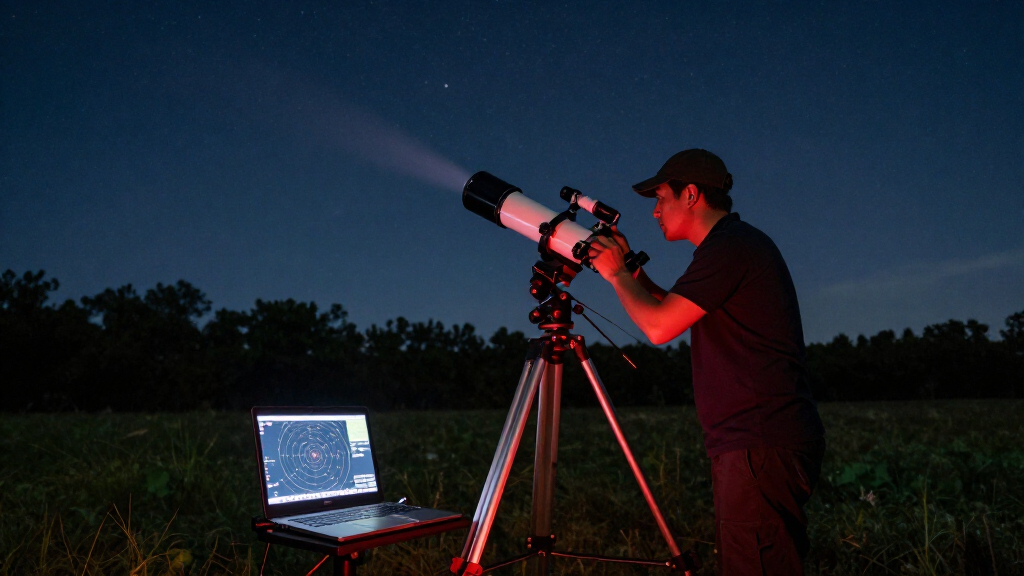
Choosing among today’s astrophotography guide cameras comes down to one core tradeoff: sensor sensitivity versus price, because a guide camera’s only job is to consistently see faint stars so your mount can correct drift. The SVBONY SV305C Pro with its IMX662 sensor stands out as my top overall pick thanks to its class-leading low-light sensitivity and USB 3.0 bandwidth, while the SVBONY SV305C delivers a similar guiding experience for less money. At the entry end, the SV105 and SV905C keep costs down but force you to accept dimmer guide stars and slower frame rates. This roundup breaks down where each model wins, where it falls short, and which one matches your mount, telescope, and budget — read on for the full comparison.

Prime made for students and young adults
- Fast, free delivery for dorm and study essentials
- Prime Video and Amazon Music included
- Member-only deals
Key Takeaways
- The IMX662 sensor in the SV305C Pro separates it from every other camera here, capturing fainter guide stars at shorter exposures — the single biggest performance differentiator in this lineup.
- Three of the seven cameras are SVBONY models, and their quality scales predictably with price: the SV905C suits occasional guiders, the SV305C is the sweet spot, and the SV305C Pro is the enthusiast choice.
- Higher megapixels (like the 7MP SV205 and 8MP 4K model) matter for planetary imaging and EAA, but they’re largely wasted on guiding — a mistake buyers frequently make in this category.
- USB 3.0 support, found only on the SV305C Pro, means faster frame rates and smoother guiding corrections; USB 2.0 models cap out quickly when exposures get short.
- The FIBONAX Nova200’s removable UV/IR cut filter is unique here, giving it a flexibility advantage for solar and planetary work that none of the pure guide cameras offer.
| FIBONAX Nova200 1080p USB Telescope Camera with Removable UV/IR Cut Filter |  | Best for Filter Flexibility | Sensor: 2MP CMOS | Video Resolution: 1920 × 1080 | Maximum Frame Rate: 30fps | VIEW LATEST PRICE | See Our Full Breakdown |
| SVBONY SV205 7.05MP Telescope Camera |  | Best Value Resolution | Sensor: 7.05MP IMX415, 1/2.8-inch CMOS color | Pixel Size: 1.45 × 1.45 µm | Interface: 1.25-inch | VIEW LATEST PRICE | See Our Full Breakdown |
| SVBONY SV105 Telescope Camera with IMX307 CMOS Sensor |  | Best Budget Starter Pick | Sensor: 1/2.8-inch IMX307 CMOS | Resolution: 1920 × 1080 | Frame Rate: Up to 30 fps | VIEW LATEST PRICE | See Our Full Breakdown |
| SVBONY SV305C 2.1MP Color Astrophotography Camera |  | Best for Serious Planetary and EAA Work | Sensor: IMX662 back-illuminated CMOS | Resolution: 2.1 MP | Pixel Size: 2.9 µm | VIEW LATEST PRICE | See Our Full Breakdown |
| 8MP 4K USB Astronomy Telescope Camera, 1.25-Inch |  | Best Resolution Pick | Sensor: 8MP | Video: Up to 4K; 1080p high-frame-rate | Connection: USB UVC | VIEW LATEST PRICE | See Our Full Breakdown |
| SVBONY SV305C Pro Telescope Camera, 2MP IMX662 Sensor, USB 3.0 |  | Best Planetary Performer | Sensor: IMX662 CMOS | Resolution: 2 MP; 1920 × 1080 video | Maximum frame rate: 107 fps | VIEW LATEST PRICE | See Our Full Breakdown |
| SVBONY SV905C 1.23MP Telescope Guide Camera |  | Best Budget Guider | Sensor: 1/3-inch CMOS color sensor | Resolution: 1.23 MP (1280 × 960) | Pixel size: 3.75 microns | VIEW LATEST PRICE | See Our Full Breakdown |
| astrophotography guide camera | Sensor | Connection | Resolution |
|---|---|---|---|
| FIBONAX Nova200 1080p USB Tele | 2MP CMOS | USB | — |
| SVBONY SV205 7.05MP Telescope | 7.05MP IMX415, 1/2.8-inch CMOS color | USB 3.0 | — |
| SVBONY SV105 Telescope Camera | 1/2.8-inch IMX307 CMOS | USB | 1920 × 1080 |
| SVBONY SV305C 2.1MP Color Astr | IMX662 back-illuminated CMOS | — | 2.1 MP |
| 8MP 4K USB Astronomy Telescope | 8MP | USB UVC | — |
| SVBONY SV305C Pro Telescope Ca | IMX662 CMOS | USB 3.0, 5Gbps | 2 MP; 1920 × 1080 video |
| SVBONY SV905C 1.23MP Telescope | 1/3-inch CMOS color sensor | — | 1.23 MP (1280 × 960) |
More Details on Our Top Picks
FIBONAX Nova200 1080p USB Telescope Camera with Removable UV/IR Cut Filter
The Nova200 stands out for one feature most entry-level cameras in this lineup don’t offer: a removable UV/IR cut filter. That matters if you ever want to experiment with infrared planetary imaging or use narrowband-adjacent techniques — the SVBONY SV305C locks its filter in place, so this FIBONAX pick gives you an escape hatch the SVBONY doesn’t. The CNC aluminum body and 110 g weight keep it comfortable in a standard 1.25-inch focuser, and UVC plug-and-play means it shows up as a webcam on nearly any laptop. The tradeoff is resolution: at 2MP and 1080p/30fps, it captures far less detail than the 8MP 4K camera later in this roundup, and the ASCOM driver only works on Windows, which limits scripted capture setups.
Pros:- Removable UV/IR cut filter opens up infrared imaging options
- UVC plug-and-play works across Windows, macOS, and Linux
- Lightweight CNC aluminum body fits standard 1.25-inch focusers
- Optional ASCOM driver supports more advanced Windows capture workflows
Cons:- ASCOM driver support is limited to Windows only
- 2MP sensor and 1080p ceiling restrict detail on small planetary targets
Best for: Beginners who want a cheap lunar and planetary camera with the option to remove the UV/IR filter for IR imaging experiments
Not ideal for: Anyone hoping to pull fine planetary detail — 2MP resolution trails the SV205 and 8MP options considerably
- Sensor:2MP CMOS
- Video Resolution:1920 × 1080
- Maximum Frame Rate:30fps
- Connection:USB
- Focuser Size:1.25 inches
- Filter:Removable UV/IR cut filter
- Body Material:CNC aluminum
- Weight:110 g
Our verdict“A sensible starter camera for lunar and planetary work whose removable filter gives it flexibility the locked-down SV305C can’t match.”
SVBONY SV205 7.05MP Telescope Camera
If pixel count per dollar drives your decision, the SV205 is the strongest argument in this batch. Its 7.05MP IMX415 sensor with 1.45 µm pixels delivers genuine high-resolution capture — 3264×2160 in uncompressed YUV — which the Nova200 and SV105 simply can’t touch at 1080p. That extra resolution translates directly into tighter lunar mosaics and more crop room on planets. Compared with the 8MP 4K camera, the SV205 counters with the SVBONY software ecosystem and a machined aluminum barrel that mounts securely in a 1.25-inch focuser. The catch: those tiny pixels gather less light per pixel, so dim targets suffer, and macOS users need third-party Astroamx Capture software rather than native support. It also can’t drive Apple phones or tablets at all.
Pros:- 7.05MP IMX415 sensor captures detailed uncompressed 3264×2160 video
- True plug-and-play operation with no driver installation
- USB 3.0 connection handles high-resolution streams without bottlenecking
- Machined aluminum 1.25-inch barrel mounts solidly in standard focusers
Cons:- No compatibility with Apple phones or tablets
- 1.45 µm pixels limit performance on dim or small targets
- Telescope interface may require an adapter on some setups
Best for: Budget-conscious lunar and planetary imagers who want high-resolution capture without paying premium-camera prices
Not ideal for: iPhone or iPad users, and anyone targeting faint deep-sky objects — small pixels and no long-exposure tooling make it the wrong tool
- Sensor:7.05MP IMX415, 1/2.8-inch CMOS color
- Pixel Size:1.45 × 1.45 µm
- Interface:1.25-inch
- MJPG Video:Up to 30 FPS at 1920 × 1080
- YUV Video:15 FPS at 3264 × 2160
- Connection:USB 3.0
- Compatibility:Laptop or PC; macOS requires Astroamx Capture
Our verdict“The resolution-per-dollar leader here, best for imagers who prioritize lunar and planetary detail over deep-sky ambitions.”
SVBONY SV105 Telescope Camera with IMX307 CMOS Sensor
The SV105 is the low-commitment entry point of this roundup — the camera you buy to find out whether electronic viewing is for you before spending real money. Its real strength is broad platform support: Windows, Linux, macOS, and even Android with compatible capture software, which the SV205 can’t manage without extra software and the 8MP 4K camera won’t do on mobile at all. Dark-light compensation helps somewhat on dimmer scenes. Be realistic about the ceiling, though: the IMX307 tops out at 1080p/30fps, so both the SV205 and the 8MP option leave it far behind on resolution, and you’ll need to supply your own capture software — there’s no polished all-in-one package. Pair it with an existing telescope and it’s an easy first step.
Pros:- Works across Windows, Linux, macOS, and Android platforms
- Plug-and-play operation with no driver required
- Standard 1.25-inch fitting and M28.5 filter thread match common accessories
- Dark-light compensation improves low-light clarity slightly
Cons:- Requires separately installed capture software on every platform
- 1080p maximum resolution trails the SV205 and 8MP options badly
- Not compatible with iPhones or iPads
Best for: First-time astrophotographers and Android users who want the cheapest way to view and record the Moon and planets on a laptop or phone
Not ideal for: Imagers who have already outgrown beginner gear — the resolution and sensor ceiling will frustrate anyone chasing detail
- Sensor:1/2.8-inch IMX307 CMOS
- Resolution:1920 × 1080
- Frame Rate:Up to 30 fps
- Connection:USB
- Eyepiece Size:1.25 inches
- Filter Thread:M28.5 × 0.6
- Compatibility:Windows, Linux, macOS, Android with capture software
Our verdict“The cheapest credible way into electronic astronomy viewing, ideal for testing the hobby — just don’t expect it to grow with you.”
SVBONY SV305C 2.1MP Color Astrophotography Camera
The SV305C is the most technically serious camera in this batch, and it earns that distinction through sensor quality rather than megapixels. The back-illuminated IMX662 with 2.9 µm pixels and 38 ke- full well delivers lower readout noise and better red-band sensitivity than the IMX307 in the SV105 — which means cleaner stacks and more natural color on Mars and Jupiter. A 128MB image buffer prevents dropped frames during capture, a genuine advantage over the buffer-free Nova200 and SV205 when recording long AVIs for stacking. ROI and 2×2 binning add capture flexibility, and the CS/C-mount option opens up lens-based wide-field shooting. The tradeoff: resolution is modest at 2.1MP, and the built-in UV/IR cut filter can’t be removed, unlike the removable filters on the FIBONAX and 8MP cameras.
Pros:- Back-illuminated IMX662 sensor with low readout noise and strong red sensitivity
- 128MB image buffer prevents dropped or corrupted frames during long captures
- ROI and 2×2 binning give flexible capture strategies for different targets
- Dual mounting: 1.25-inch telescope interface plus CS/C-mount for camera lenses
Cons:- Built-in UV/IR cut filter cannot be removed for IR work
- 2.1MP resolution limits detail compared with the SV205 and 8MP alternatives
- Manual focus only
Best for: Intermediate imagers focused on planetary stacking and electron-assisted astronomy who value sensor quality over raw resolution
Not ideal for: Filter experimenters and IR imagers — the built-in UV/IR cut filter is permanently fixed, unlike the removable units on cheaper models here
- Sensor:IMX662 back-illuminated CMOS
- Resolution:2.1 MP
- Pixel Size:2.9 µm
- Full Well Capacity:38 ke-
- Image Buffer:128MB DDRIII
- Interface:1.25-inch astronomical; CS mount with adapter
- Filter:Built-in UV/IR cut
- Functions:ROI, 2×2 binning, high-speed planetary and long-exposure modes
Our verdict“The pick for imagers who stack frames seriously — its sensor and buffer outclass everything else here even though its megapixel count doesn’t.”
8MP 4K USB Astronomy Telescope Camera, 1.25-Inch
When maximum detail is the goal, this 8MP 4K camera leads the roundup outright. It records up to 4K video plus 1080p high-frame-rate capture, and that combination matters: high frame rates beat atmospheric seeing for planets, while 4K preserves fine lunar detail that the Nova200 and SV105 lose entirely. Against the SV205, it adds genuine 4K, cross-platform support without extra software, and a removable IR-cut filter for infrared experiments — something only the FIBONAX matches here. The 110 g CNC aluminum housing sits securely in a 1.25-inch focuser without stressing it. Tradeoffs are familiar for this class: focusing is purely manual through the telescope, which takes patience at high resolution, and the sensor is tuned for bright targets — the Moon, planets, and the like — not faint deep-sky work.
Pros:- Highest resolution in this roundup at 8MP with 4K video support
- 1080p high-frame-rate mode helps freeze atmospheric seeing on planets
- Removable IR-cut filter enables infrared imaging experiments
- Native Windows, macOS, and Linux support with UVC plug-and-play
Cons:- Manual focusing only, which is tedious at 4K magnifications
- Best suited to bright objects; faint deep-sky targets are out of reach
Best for: Lunar and planetary imagers who want the highest resolution and frame-rate flexibility available in this lineup
Not ideal for: Deep-sky hunters and anyone who wants autofocus or automated focusing — dim targets and manual focus make it a poor fit
- Sensor:8MP
- Video:Up to 4K; 1080p high-frame-rate
- Connection:USB UVC
- Telescope Fit:1.25-inch barrel
- Filter Thread:M28.5 × 0.6
- Filter:Removable IR-cut
- Housing:CNC-machined aluminum
- Weight:110 g
- Compatibility:Windows, macOS, Linux
Our verdict“The resolution champion of this batch — buy it if lunar and planetary detail is your priority, skip it if faint targets or autofocus matter.”
SVBONY SV305C Pro Telescope Camera, 2MP IMX662 Sensor, USB 3.0
While most cameras in this roundup are built primarily around guiding, this option leans hard into planetary imaging, and that changes the calculus for what it can do. The 107 fps frame rate is the standout: for Jupiter or Saturn, capturing thousands of fast frames before the atmosphere smears your image is the whole game, and this delivers that capability at a resolution the SV105 and the 8MP 4K budget camera simply can’t match in sustained throughput. The 128MB DDR buffer means frames don’t drop mid-run over USB 3.0, which matters more than it sounds when stacking software depends on a complete sequence. Low 0.7e- readout noise also helps pull faint moons and banding detail out of dim captures. The tradeoff is that guiding takes a backseat — the ST4 port exists and works with PHD2 and ASCOM, but a 2MP IMX662 sensor is more camera than a guide scope strictly needs, and the iPad is unsupported, so mobile-only imagers are out of luck.
Pros:- 107 fps at 1080p is ideal for freezing atmospheric turbulence during planetary captures
- 128MB DDR buffer prevents dropped frames during long continuous runs
- Very low 0.7e- readout noise pulls out faint lunar and planetary detail
- ST4 port integrates with PHD2 and ASCOM if you want to double it as a guider
Cons:- No iPad support, so it is strictly tethered to a computer
- Oversized and overfeatured if all you need is a dedicated autoguider
Best for: Planetary imagers who want high frame rates and a large buffer for stacking thousands of frames, with autoguiding as a secondary duty
Not ideal for: Imagers running an iPad-only or mobile workflow, since the camera requires a connected computer and explicitly excludes iPad support
- Sensor:IMX662 CMOS
- Resolution:2 MP; 1920 × 1080 video
- Maximum frame rate:107 fps
- Readout noise:0.7e-
- Connection:USB 3.0, 5Gbps
- Guiding interface:ST4
- Buffer:128MB DDR
Our verdict“This pick makes the most sense for planetary-focused imagers who also want guiding capability in one gray box, not for mobile or guide-only setups.”
SVBONY SV905C 1.23MP Telescope Guide Camera
Sometimes you just need a camera that finds a star and holds it, and that is exactly the job this model is shaped for. Compared with the SV305C Pro, which is a planetary imager that happens to guide, this is the reverse: a dedicated autoguider that can dabble in lunar and planetary work. The 80% peak quantum efficiency is genuinely impressive at this tier, meaning it locks onto guide stars that budget sensors like the one in the SV105 would struggle to see, giving you more guide star choices in sparse fields. The 3.75-micron pixels pair well with typical short guide scopes, and the CS adapter plus snap ring with scale marks makes focusing and rotation repeatable between sessions. The compromises are real, though: USB 2.0 limits planetary frame rates, and the lack of ASI AIR compatibility rules it out for anyone building around ZWO’s popular control ecosystem — NINA, PHD2, and SKYX users are fine.
Pros:- 80% peak quantum efficiency locks onto faint guide stars reliably
- Snap ring and scale mark make focus and rotation positions repeatable
- Works with PHD2, NINA, MDL, and SKYX out of the box
- Compact 1.25-inch barrel with CS adapter fits most guide scopes
Cons:- Not compatible with ASI AIR, which excludes a large slice of the imaging community
- USB 2.0 caps throughput, making it weak for serious planetary imaging
- Requires manually downloading current drivers before first use
Best for: Budget-conscious deep-sky imagers who need a reliable dedicated autoguider for PHD2 or NINA setups and don’t use ASI AIR
Not ideal for: Imagers running ZWO’s ASI AIR platform, since the camera is incompatible with it and would force a software change
- Sensor:1/3-inch CMOS color sensor
- Resolution:1.23 MP (1280 × 960)
- Pixel size:3.75 microns
- Peak quantum efficiency:80%
- Interface:USB 2.0
- Guide port:ST4
- Lens interface:CS interface with CS-C adapter ring
- Software compatibility:PHD2, MDL, NINA, SKY-X; not compatible with ASI AIR
Our verdict“Buy this if you want an affordable, star-hungry dedicated guider for a PHD2 or NINA rig; skip it if your workflow is built on ASI AIR or planetary capture.”

How We Picked
I evaluated these seven cameras through the lens of what a guide camera actually has to do: lock onto a star, hold it steadily, and feed accurate corrections to your mount. That means I weighted sensor sensitivity and quantum efficiency above raw resolution — a 1MP sensor that sees faint stars beats an 8MP sensor that can’t. I also compared USB bandwidth, since USB 2.0 limits frame rate on short guide exposures, and driver and software compatibility, because a guide camera that fights PHD2 or ASCOM is worthless no matter how good its hardware is.
Ranking then came down to role fit and value. The SV305C Pro earned best overall for combining the most sensitive sensor with modern connectivity. The SV305C claimed the value slot by delivering most of that experience at a lower tier, while the SV105 and SV905C were ranked for beginners on affordability, with honest caveats about their limits. The higher-resolution models — the SV205, the 8MP 4K camera, and the FIBONAX Nova200 — were slotted as dual-purpose picks, since guiding alone doesn’t justify their extra pixels.
| astrophotography guide camera | Connection |
|---|---|
| FIBONAX Nova200 1080p USB Tele | USB |
| SVBONY SV205 7.05MP Telescope | USB 3.0 |
| SVBONY SV105 Telescope Camera | USB |
| SVBONY SV305C 2.1MP Color Astr | — |
| 8MP 4K USB Astronomy Telescope | USB UVC |
| SVBONY SV305C Pro Telescope Ca | USB 3.0, 5Gbps |
| SVBONY SV905C 1.23MP Telescope | — |
Factors to Consider When Choosing Astrophotography Guide Cameras
Before settling on a specific model, it helps to understand what actually moves the needle in guide camera performance — and where buyers commonly overspend or underbuy. These six factors shaped how I ranked the cameras above.Sensor Sensitivity Beats Resolution
The most common mistake in this category is chasing megapixels. A guide camera only needs enough pixels to see one star clearly; a 1.2MP to 2MP sensor is plenty for guiding, and every extra megapixel just slows down frame download without improving guiding accuracy. What matters is the sensor’s sensitivity — how faint a star it can detect in a one-to-two-second exposure. Modern sensors like the IMX662 and IMX307 pull in far more light than older chips, which means more guide stars to choose from and better performance through small guide scopes. If you guide with a 30–50mm guide scope rather than a larger off-axis rig, sensitivity should be your first filter, not resolution.
USB 2.0 Versus USB 3.0 Bandwidth
Connection speed is an invisible spec until you try to run two-second guide exposures and watch frames drop. USB 2.0 cameras are fine for longer exposures and planetary work, but they choke when you want high frame rates for precise, fast corrections or when you later repurpose the camera for lunar imaging. USB 3.0, found on the SV305C Pro in this lineup, keeps the full sensor readout flowing smoothly and reduces the lag between what your mount is doing and what your guiding software sees. If you plan to grow into a heavier imaging setup, paying once for USB 3.0 saves you from replacing the camera later. Budget buyers on USB 2.0 should simply be aware they’re accepting a ceiling on guide exposure speed.
Color Versus Mono Sensors for Guiding
Nearly every camera here is a color sensor, and that’s fine — but it’s worth knowing why monochrome cameras traditionally dominate serious guiding. Mono sensors don’t waste pixels on a Bayer matrix, so they deliver roughly all of their light to star detection rather than a fraction of it. In practice, a good modern color sensor like the IMX662 closes most of that gap, which is why color guide cameras are now perfectly viable for most mounts. Color also gives you the option to use the camera for casual planetary and lunar imaging on the side. Choose mono only if you’re chasing sub-arcsecond precision with long focal lengths; for typical 400–800mm imaging rigs, color is the more versatile buy.
Guide Scope Pairing and Pixel Scale
A guide camera never works alone — its performance depends on the focal length of the guide scope it’s attached to. Divide the camera’s pixel size by the guide scope focal length and you get your guiding resolution in arcseconds per pixel, and you generally want that number between 1 and 3 for responsive corrections. Pairing a small-pixel camera with a short 120mm guide scope can make corrections too coarse to matter, while a long 250mm guide scope with big pixels can make guiding twitchy and overcorrected. Before buying, check the pixel size in the spec sheet and match it to your guide scope. This is also why a modest 1–2MP camera often guides better than a high-resolution one paired with the same optics.
Software Ecosystem and Driver Support
Hardware means nothing if the camera doesn’t play well with PHD2, ASCOM, SharpCap, or N.I.N.A. — the software backbone of most astrophotography setups. SVBONY’s cameras have mature drivers and broad community support, which is a real advantage when you’re troubleshooting at midnight and need a forum answer fast. Off-brand cameras, including some generic 4K USB models, can have patchy drivers that work in one application but not another, or that break after a Windows update. Before purchasing any camera not covered here, search for its name alongside PHD2 and see what actual users report. An afternoon of compatibility research prevents months of frustration.
When to Pay More — and When Not To
The honest answer is that most beginners don’t need the premium option. If you’re guiding a short refractor at 400mm with a 50mm guide scope, a budget camera like the SV105 or SV905C will keep your stars round — the expensive sensor’s faint-star capability is wasted on bright, easy targets. Paying more makes sense when you guide at long focal lengths above 1000mm, use an off-axis guider with a narrow field of view where finding any guide star is hard, or want a camera that can double for planetary imaging with acceptable quality. The other reason to pay up is longevity: a USB 3.0, high-sensitivity camera survives multiple telescope upgrades. Buy for the rig you’ll have in two years, not just the one in your driveway today.
Frequently Asked Questions
Can I use a guide camera for planetary or lunar imaging too?
Yes, and many buyers do exactly that to justify the purchase, but the fit depends on the sensor. The SV205’s 7MP sensor and the 8MP 4K camera are genuinely usable for lunar and bright planetary targets, where high resolution pays off and long exposures aren’t needed. The 1–2MP guide-focused cameras can capture the Moon and Jupiter, but the small sensor makes framing planets tedious and limits the detail you can resolve. If dual-purpose use is a priority, lean toward the higher-resolution models in this lineup and accept their higher download times. If guiding is your only goal, that resolution is money spent on nothing.
Is the IMX662 sensor in the SV305C Pro worth the upgrade over the regular SV305C?
It depends entirely on how hard your guide stars are to find. The IMX662 is a newer back-illuminated sensor with substantially better sensitivity than the chip in the standard SV305C, which means it locks onto fainter stars with shorter exposures — valuable if you guide through an off-axis guider on a long focal length scope or image under light-polluted skies. If you use a wide-field guide scope under reasonably dark skies, the standard SV305C will find plenty of stars and the upgrade buys you little. The USB 3.0 connection on the Pro is the second real benefit, especially if you plan to repurpose the camera for lunar captures. For most beginners, the standard model is the smarter spend.
What’s the minimum frame rate I need for effective guiding?
For typical deep-sky guiding, you’ll run exposures between one and three seconds, which means even a modest 15–30 frames per second is more than sufficient — the mount can’t mechanically respond faster than that anyway. Frame rate becomes the limiting factor when you try sub-second guiding to catch fast periodic error, typically on long focal length rigs where corrections need to happen quickly. That’s where USB 2.0 cameras hit their ceiling and the SV305C Pro’s bandwidth advantage shows up. A useful rule: if your guide exposures are always above one second, don’t pay for speed you won’t use. If you’re pushing a big SCT at 2000mm, invest in the faster connection.
Why does the FIBONAX Nova200 have a removable UV/IR cut filter, and does it matter?
The removable filter is about flexibility rather than guiding performance. A UV/IR cut filter blocks infrared and ultraviolet light so colors render accurately in normal imaging, but removing it lets infrared light through — useful for solar imaging with proper filters or certain planetary applications where IR cuts through atmospheric turbulence better than visible light. For pure guiding, the filter state barely matters since guiding software only cares about star centroids, not color accuracy. This makes the Nova200 a sensible pick if you want one camera that straddles guiding and specialized planetary work. Dedicated guiders like the SV305C Pro don’t offer this, and for most users it’s a nice-to-have rather than a deciding feature.
Do I even need a guide camera, or can I image without one?
If your exposures stay under about 30 seconds on a short lens or small refractor, you can absolutely skip guiding — untracked or simply tracked imaging covers wide-field work well. Guiding becomes necessary when you want longer exposures at longer focal lengths, where even small tracking errors smear stars into trails after a minute or two. A guide camera plus a basic guide scope is the cheapest path into that world, and entry-level options like the SV105 make the experiment inexpensive. The honest caveat is that guiding adds setup time, extra cables, and a learning curve in PHD2 before it pays off. Start unguided, and add a guide camera when star trailing — not aperture — becomes what limits your images.
Conclusion
After comparing all seven cameras, the right choice maps cleanly to the kind of astrophotographer you are. For best overall, the SVBONY SV305C Pro earns it with the most sensitive sensor here, USB 3.0 speed, and headroom to grow into more demanding rigs — it’s the one camera in this lineup I’d call future-proof. The SVBONY SV305C takes best value, delivering the large majority of the Pro’s guiding performance at a friendlier price point, and it’s the pick I’d recommend to most imagers setting up their first guided rig.
Beginners should look at the SV105 or SV905C — both make guiding affordable while you learn PHD2, with the honest tradeoff of dimmer guide-star reach on challenging targets. For specific needs, the SV205’s 7MP sensor and the 8MP 4K camera suit anyone who wants one device for both guiding and lunar/planetary imaging, while the FIBONAX Nova200 stands alone with its removable UV/IR cut filter for infrared and solar work. Match the camera to your mount’s demands and your guide scope’s focal length, and any of these will keep your stars round — the differences are in how much fainter a star each can find, and how long it’ll stay useful as your kit evolves.
Fall Picks
fall essentials
As an affiliate, we earn on qualifying purchases.