TL;DR

Prime made for students and young adults
- Fast, free delivery for dorm and study essentials
- Prime Video and Amazon Music included
- Member-only deals
NASA removed SR-71A Tail No. 844 from its display pole at Armstrong Flight Research Center before April and placed it in the former Space Shuttle hangar, where crews began work. The agency offered jobs to former SR-71 test engineers, including Mike Relja and Tim Conners, for a return-to-flight effort, though NASA has not confirmed the project exists.
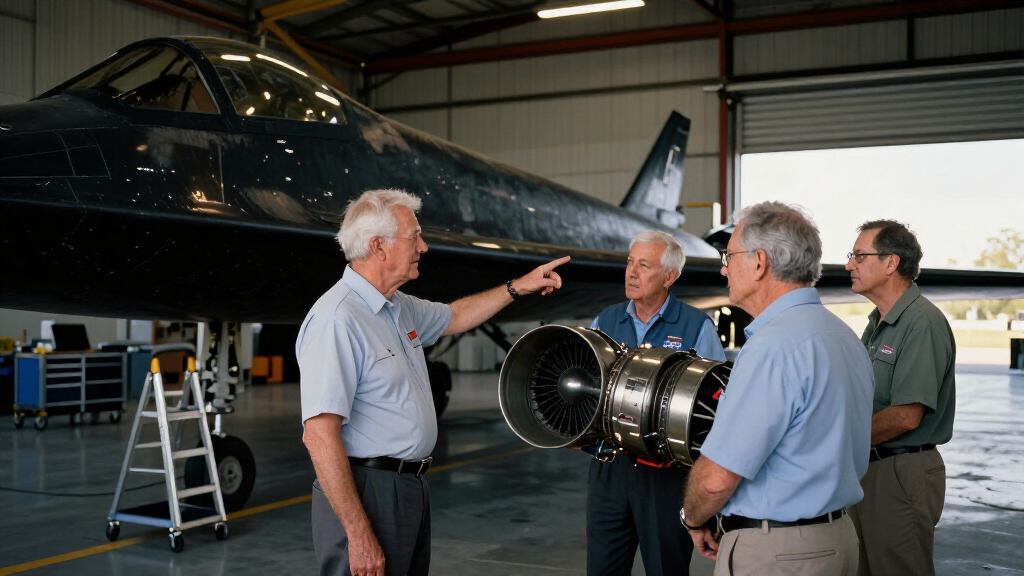
NASA has been quietly working to return a retired Lockheed SR-71A Blackbird to flight after nearly 27 years, according to an Aviation Week report, with the agency removing Tail No. 844 from its display pole at Armstrong Flight Research Center in California and offering jobs to former Blackbird test engineers to support the classified-seeming effort. The aircraft, which made the final flight of any Blackbird on Oct. 9, 1999, was moved into the former Space Shuttle hangar at Edwards Air Force Base sometime before April, based on commercial satellite imagery reviewed by Aviation Week.
The project came to light through Mike Relja, a retired U.S. Air Force and NASA test engineer for the SR-71A now in his late 70s, who received an unexpected job offer from NASA roughly a month before the report. David Ash, a former U.S. Navy and Joby test pilot hired in June as a special projects director for NASA, asked Relja to lend his expertise to the effort to return the long-retired aircraft to the air. Aviation Week confirmed that the agency also approached Tim Conners, another former NASA SR-71A test engineer, and others over the summer with offers to join the return-to-flight project for Tail No. 844.
Relja declined the offer, telling Ash he believed the obstacles were too great. “I do know they’ve got people working on it,” Relja told Aviation Week. “But again, without equipment, it’s beyond me what they’re doing.” In meetings with prospective rehires, Ash brushed aside questions about why NASA wanted to bear the effort and expense of restoring the Mach 3-capable aircraft, and reportedly assured Relja the challenges would not be a problem, without offering details.
A NASA spokesperson declined to elaborate on the aircraft’s removal or the reason behind it. “We recognize the interest in the SR-71 and its remarkable history at NASA but have no additional information to share regarding the aircraft at this time,” the spokesperson told Aviation Week. The agency has not confirmed that a return-to-flight project exists.
Why Reviving a 59-Year-Old Blackbird Matters
The effort, if genuine, would mark the first flight of any SR-71 since 1999 and would require restoring a 59-year-old airframe that has stood outdoors on a pole for nearly three decades. The project also aligns with a broader campaign by NASA Administrator Jared Isaacman to rebuild the agency’s X-plane fleet, pursuing aeronautic breakthroughs rather than incremental improvements.
The obstacles are substantial. Relja said the cavities inside Tail No. 844 are likely full of water and sand from its years on display, and the engines have not been lubricated or rotated since the final flight. “When we were operational, if we had a spare engine, every 90 days we had to rotate the engine,” Relja said. “Every 180 days, we had to run it to keep it as a ready spare. Now you’re talking about engines that have been sitting for 30-plus years.”
The supply chain problem may be the hardest to solve. The Air Force and NASA destroyed a $600 million supply of spare parts for the Blackbird fleet in 2007, after a return to operational service seemed unlikely. NASA would also need to restore access to the Blackbird’s unique JP-7 fuel blend, triethylborane ignition chemical, engine oil and hydraulic fluids, and rebuild bespoke ground equipment that no longer exists.
From All-In Summit Tease to Missing Blackbird
The first public hint of the effort came at the All-In Summit in Los Angeles on Sept. 12-14, where Isaacman, appearing as a panelist, teased an image of a new X-plane bearing the SR-71A’s distinctive outline — inward-canted vertical tails, bulbous midwing engine nacelles and a flush, blended cockpit. The image prompted speculation that NASA plans a modern X-plane based loosely on the Blackbird’s profile.
“In the service of the first ‘A’ in NASA, we are rebuilding our X-plane fleet,” Isaacman said at the summit. “It will not be long before NASA is once again flying as high and as fast from decades past — and then even more.” Retired NASA employees, however, describe a more concrete effort: physically restoring an actual Blackbird to airworthiness.
Tail No. 844 was a NASA-operated aircraft that had stood on the display pole near Lilly and Walker Avenues at Armstrong since its final flight in October 1999. NASA employees rolled it into the hangar that once housed the Space Shuttle at Edwards, Relja said, and an inspection followed before crews began active work on the airframe.
“I do know they’ve got people working on it. But again, without equipment, it’s beyond me what they’re doing.”
— Mike Relja
What NASA Has Not Confirmed
NASA has not confirmed the project exists. The agency declined to explain why Tail No. 844 was removed from display or to elaborate on Isaacman’s summit remarks. It is not yet clear whether the goal is to restore the aircraft to sustained flight operations or to support a broader X-plane program, or whether the Blackbird outline Isaacman displayed depicts a new-design aircraft rather than the vintage airframe itself.
Other unknowns include the project’s budget, its timeline, how many former SR-71 staffers accepted job offers, and how NASA intends to solve the parts, fuel and ground-equipment shortages Relja described. Ash reportedly assured Relja these issues “would not be a problem” but provided no details. Whether the airframe’s structural condition — after roughly 27 years outdoors — permits restoration also remains unknown.
Watch for the Blackbird’s Next Move
The most concrete signals to watch are further movements of Tail No. 844, engine activity at Armstrong, and any formal NASA announcement of new X-plane programs. Isaacman’s statement that NASA will soon fly “as high and as fast” as in past decades suggests additional aircraft announcements may come in the months ahead. Continued satellite imagery of the former Space Shuttle hangar, and any decisions by other former Blackbird engineers to join the effort, may offer the clearest evidence of whether the restart is progressing toward an actual first flight.
Key Questions
Which SR-71 is NASA reportedly restoring?
Tail No. 844, a NASA-operated SR-71A that made the final flight of any Blackbird on Oct. 9, 1999, and had stood on a display pole at Armstrong Flight Research Center ever since. It was moved into the former Space Shuttle hangar at Edwards AFB before April, per satellite imagery reviewed by Aviation Week.
Has NASA officially confirmed the return-to-flight project?
No. A NASA spokesperson said the agency has “no additional information to share regarding the aircraft at this time.” The project’s existence is reported by Aviation Week, based on job offers to former SR-71 engineers and the aircraft’s removal from display.
Why is restoring an SR-71 so difficult?
The airframe is 59 years old and has not flown in nearly 27 years. The Air Force and NASA destroyed a $600 million spare parts inventory in 2007, and the aircraft requires specialized supplies — JP-7 fuel, triethylborane ignition chemical, and bespoke ground equipment — that no longer exist in usable form, according to former test engineer Mike Relja.
How does this relate to NASA’s X-plane plans?
Administrator Jared Isaacman said NASA is “rebuilding our X-plane fleet” and teased an image of a new aircraft resembling the SR-71’s profile at the All-In Summit in September. It remains unclear whether the No. 844 restoration supports that program directly or is a separate effort.
Who is leading the effort at NASA?
David Ash, a former U.S. Navy and Joby test pilot hired in June 2025 as a NASA special projects director, extended the job offers to former SR-71 engineers, according to Aviation Week. He has declined to explain the project’s purpose or how its challenges will be solved.
Source: hn
Evergreen bestsellers Picks
bestsellers
As an affiliate, we earn on qualifying purchases.