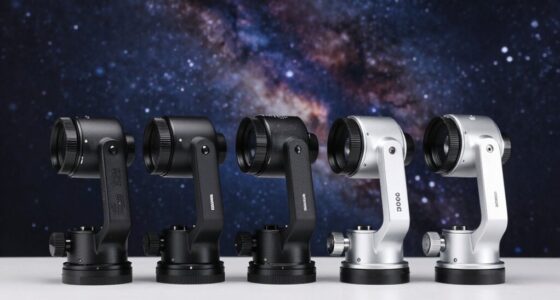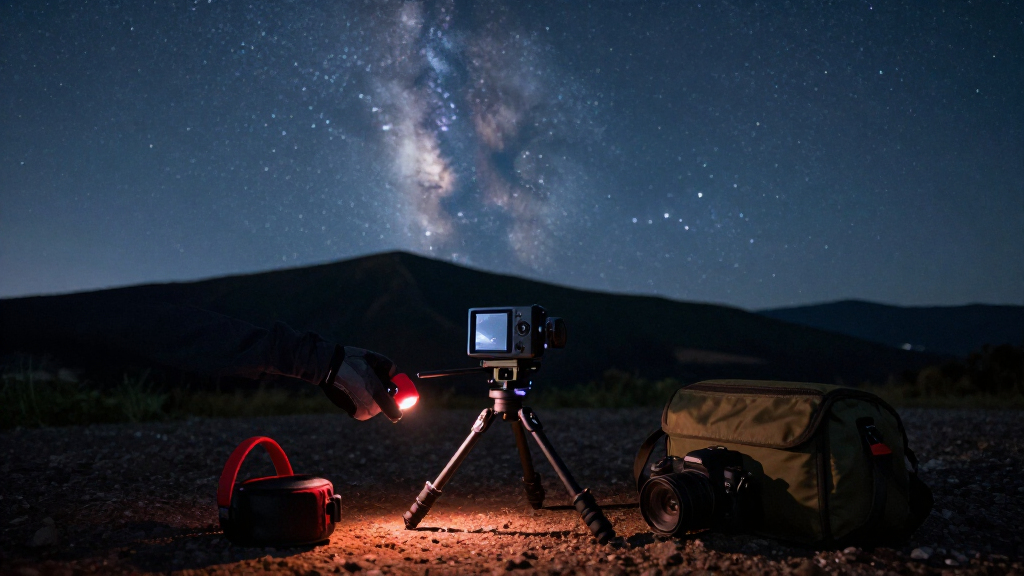
The right portable star tracker for astrophotography is what separates crisp two-minute Milky Way exposures from smeared star trails, and the biggest tradeoff in this category is between simplicity, payload capacity, and price. The Sky-Watcher Star Adventurer 2i Pro Pack earns my best overall pick for its balance of tracking accuracy, generous accessory bundle, and a payload that handles a telephoto lens or small telescope without strain. Budget-minded shooters should look at the OGST Single-Axis Automatic Tracking Mount, while imagers ready for computerized pointing will want the Star Adventurer GTi GoTo Kit. Cheaper trackers cut corners on polar alignment tools and build stiffness, while premium GoTo systems add weight and a steeper learning curve. Keep reading for the full breakdown of all thirteen options.

Prime made for students and young adults
- Fast, free delivery for dorm and study essentials
- Prime Video and Amazon Music included
- Member-only deals
Key Takeaways
- Pack composition mattered as much as the tracker itself: the Star Adventurer 2i Pro Pack and iOptron SkyGuider Pro Full Package included polar scopes, declination brackets, and counterweights, while budget listings like the base OGST and Xiaoxin mounts required separately purchased accessories before the first shoot.
- Single-axis budget trackers under $150 tracked acceptably for wide-field camera-lens work but lacked the rigidity and polar alignment aids needed for focal lengths beyond about 200mm.
- The GTi GoTo systems were the only picks that could locate and center targets automatically — a genuine advantage for deep-sky imaging, but overkill and heavier than needed for Milky Way landscapes.
- Duplicate listings appeared under different bundle names (Star Adventurer 2i Photo Kit, Astro Pack, and Pro Pack; two OGST models), and the differences came down entirely to included accessories rather than the tracker head itself.
- Payload capacity was the clearest dividing line: camera-plus-lens setups stayed comfortable on every tracker, but anything approaching a small refractor telescope pushed buyers toward the SkyGuider Pro, iEXOS-100-2, or GTi.
- Bundled tripods on the iEXOS-100-2 and GTi kit were serviceable but barely adequate — most serious shooters will upgrade the tripod before upgrading the tracker.
| Equatorial Mount Star Tracker with Latitude Adjustment Base |  | Best Heavy-Duty Budget Pick | Shell material: PETG and carbon fiber | Payload capacity: 15 kg | Tracking speeds: Sidereal, lunar, and custom | VIEW LATEST PRICE | See Our Full Breakdown |
| Sky-Watcher Star Adventurer 2i Photo Kit (S20520) |  | Best Overall | Model: S20520 | Mount weight: 2.4 lbs | Payload capacity: 11 lbs | VIEW LATEST PRICE | See Our Full Breakdown |
| OGST Single-Axis Automatic Tracking Equatorial Mount |  | Best for Weight-Conscious Travel | Tracking: Single-axis automatic | Periodic error: ±10 arcseconds over 10 minutes | Weight: 1.4 kg | VIEW LATEST PRICE | See Our Full Breakdown |
| Sky-Watcher Star Adventurer 2i Astro Pack Night Sky Tracker |  | Best Value Starter Package | Model: S20510 | Mount weight: 2.4 pounds | Payload capacity: 11 pounds | VIEW LATEST PRICE | See Our Full Breakdown |
| Sky-Watcher Star Adventurer 2i Pro Pack (S20512) |  | Best Premium for Growing Skills | Model: S20512 | Mount weight: 2.4 lbs | Payload capacity: 11 lbs | VIEW LATEST PRICE | See Our Full Breakdown |
| iEXOS-100-2 PMC-Eight Equatorial Tracker System with Tripod and Mount |  | Best Tech-Forward Pick | Mount Type: Equatorial mount | Control System: PMC-Eight with eight independent CPUs | Drive: Dual-axis worm gears with belt-driven stepper motors | VIEW LATEST PRICE | See Our Full Breakdown |
| iOptron SkyGuider Pro Camera Mount with Accessories |  | Best Guiding-Ready Camera Tracker | Tracking Rates: 1x sidereal, 1/2x, solar, lunar | Slew Speed: Up to 144x sidereal | Compatible Devices: Cameras | VIEW LATEST PRICE | See Our Full Breakdown |
| OGST Single-Axis Automatic Tracking Equatorial Mount |  | Best Ultralight Travel Pick | Tracking: Single-axis | Periodic Error: ±10 arcseconds | Gear Ratio: 1:101.25 | VIEW LATEST PRICE | See Our Full Breakdown |
| Sky-Watcher Star Adventurer GTi GoTo Equatorial Mount Head Kit |  | Best GoTo Capability | Mount Type: GoTo equatorial tracking mount | Connectivity: Built-in Wi-Fi | Polar Scope: Built-in with illuminator | VIEW LATEST PRICE | See Our Full Breakdown |
| iOptron SkyGuider Pro Camera Mount Full Package |  | Best Complete Starter System | Weight: 2.2 lbs (1.00 kg) | Maximum Payload: 11 lbs (4.99 kg) when balanced | Latitude Adjustment: -30° to 65° | VIEW LATEST PRICE | See Our Full Breakdown |
| Equatorial Mount Star Tracker with Ball Head for Astrophotography |  | Best for Tinkerers and Open-Source Builders | Shell material: PETG and carbon fiber (CF) | Controller: EESP32S dual-core main control chip | Tracking speeds: Stellar, lunar, custom rotation | VIEW LATEST PRICE | See Our Full Breakdown |
| Xiaoxin Portable Equatorial Star Tracker Mount for DSLR and Mirrorless Cameras |  | Best Ultralight Travel Pick | Material: Stainless steel, aluminum housing, electronic components | Dimensions: 5 × 5 × 10 cm | Weight: 200 g (package 300 g) | VIEW LATEST PRICE | See Our Full Breakdown |
| Sky-Watcher Star Adventurer GTi GoTo Mount Kit with Tripod and Accessories |  | Best Premium Complete Kit | Mount type: GoTo equatorial tracking mount | Included components: Mount head, tripod with pier extension, counterweight bar | Polar scope: Built-in with illuminator | VIEW LATEST PRICE | See Our Full Breakdown |
| portable star trackers for astrophotography | Connectivity |
|---|---|
| Equatorial Mount Star Tracker | — |
| Sky-Watcher Star Adventurer 2i | Wi-Fi smartphone control |
| OGST Single-Axis Automatic Tra | Wi-Fi with browser and app control |
| Sky-Watcher Star Adventurer 2i | — |
| Sky-Watcher Star Adventurer 2i | Wi-Fi |
| iEXOS-100-2 PMC-Eight Equatori | Wi-Fi and Bluetooth |
| iOptron SkyGuider Pro Camera M | — |
| OGST Single-Axis Automatic Tra | — |
| Sky-Watcher Star Adventurer GT | Built-in Wi-Fi |
| iOptron SkyGuider Pro Camera M | — |
| Equatorial Mount Star Tracker | — |
| Xiaoxin Portable Equatorial St | Bluetooth; infrared remote for iOS speed adjustment |
| Sky-Watcher Star Adventurer GT | Built-in Wi-Fi |
More Details on Our Top Picks
Equatorial Mount Star Tracker with Latitude Adjustment Base
Most trackers in this roundup stop at around 11 pounds of payload, but this model’s 15 kg load capacity sets it apart for photographers running heavy telephoto lenses or dual-camera rigs. The CNC-machined latitude base is a genuine step up from the molded plastic wedges found on entry-level options like the Xiaoxin tracker, and it makes polar alignment far more repeatable night after night. I’d call the no-app design a feature rather than a limitation — sidereal, lunar, and custom speeds are selectable directly, so there’s nothing to pair or update in the field.
The tradeoff is power: unlike the Sky-Watcher Star Adventurer 2i with its internal AA battery option, this mount needs an external USB-C source, so plan for a power bank on every outing. A ball head is also required, which adds cost and weight.
Pros:- 15 kg payload handles heavy lenses and dual-camera rigs
- Machined metal latitude base gives precise, repeatable polar alignment
- Works in both hemispheres with no app or account required
- Doubles as a time-lapse motion controller
Cons:- No built-in battery; entirely dependent on external USB-C power
- Ball head not included, adding cost before first use
- Tracking accuracy depends heavily on user polar alignment skill
Best for: Astrophotographers with heavy telephoto or dual-camera setups who want maximum payload without buying a full goto mount
Not ideal for: Travel-minimalists and anyone who forgets spare batteries — the lack of internal power means a dead power bank ends the night
- Shell material:PETG and carbon fiber
- Payload capacity:15 kg
- Tracking speeds:Sidereal, lunar, and custom
- Hemisphere support:Northern and southern
- Latitude base:CNC-machined metal, anodized finish
- Power:USB-C; external source required
- Max suggested exposure:5 min at 24mm; 30 sec at 450mm
Our verdict“A strong choice for gear-heavy shooters who need payload headroom and don’t mind carrying their own power.”
Sky-Watcher Star Adventurer 2i Photo Kit (S20520)
The Star Adventurer 2i Photo Kit earns the top spot because it gets the fundamentals right for the widest range of photographers. The built-in polar finder removes the biggest barrier for newcomers — no guessing at Polaris — and the brass-and-aluminum gear train delivers tracking smooth enough for multi-minute wide-field exposures. Compared with the OGST single-axis mount, the 2i’s Wi-Fi control via the SAM Console app is more polished, and its 72-hour battery life on AAs means a weekend of shooting without recharging anything.
It’s not flawless. The 11-pound payload is adequate for a DSLR and a 300mm lens but tight for big telephoto primes, where the 15 kg equatorial tracker above is the smarter pick. And the Photo Kit configuration means you’re paying for accessories you may already own, like a ball head.
Pros:- Built-in illuminated polar finder simplifies alignment for beginners
- Wi-Fi smartphone control through the SAM Console app
- Up to 72 hours of runtime on AA batteries
- Versatile enough for time-lapse, panoramas, and eclipse photography
Cons:- 11-pound payload limits heavier telephoto setups
- Kit includes accessories some photographers already own, inflating the buy-in
Best for: Serious hobbyists shooting Milky Way landscapes with a DSLR or mirrorless and lenses up to roughly 300mm
Not ideal for: Photographers with heavy 500mm-plus telephotos — the 11-pound payload will strain this platform
- Model:S20520
- Mount weight:2.4 lbs
- Payload capacity:11 lbs
- Battery life:Up to 72 hours on AA batteries
- Connectivity:Wi-Fi smartphone control
- Gears:Brass and aluminum
- Power input:AA batteries or 5V mini-USB
Our verdict“The most balanced tracker here — buy it if you want proven performance and a gentle learning curve in one box.”
OGST Single-Axis Automatic Tracking Equatorial Mount
At 1.4 kg all-in, this OGST mount undercuts even the 2.4-pound Star Adventurer 2i Astro Pack, and its stated ±10 arcsecond periodic error over 10 minutes is an impressive figure at this weight class. For backpackers and airline-bound astrophotographers, that combination matters more than raw features. I also like the flexibility in polar alignment: an optical polar scope, smartphone assist, or a simple star pointer all work, so you can scale your kit to the trip.
Where it falls behind the Sky-Watcher 2i Pro Pack is capability ceiling — it’s single-axis only, and the 120-second exposure limit at 300mm means deep-sky shooters with long glass will hit trailed stars sooner. The 4 kg payload is fine for a mirrorless body and a mid-range lens, but not for a full pro rig.
Pros:- Very light 1.4 kg carbon-composite body for travel
- ±10 arcsecond periodic error over 10 minutes for clean long exposures
- Three polar alignment methods to match skill and gear
- Wi-Fi browser and app control without a dedicated handset
Cons:- Single-axis tracking limits guiding upgrades later
- Exposure guidance caps at 120 seconds with a 300mm lens
- 4 kg payload rules out heavier camera-and-lens combinations
Best for: Travel and backpacking photographers who prioritize low weight and packability over maximum exposure length
Not ideal for: Deep-sky shooters using long telephotos who need exposures beyond two minutes at 300mm
- Tracking:Single-axis automatic
- Periodic error:±10 arcseconds over 10 minutes
- Weight:1.4 kg
- Payload capacity:4 kg
- Body material:ABS and carbon composite
- Connectivity:Wi-Fi with browser and app control
- Max stated exposure:120 seconds at 300mm
Our verdict“Buy this if ounces matter more than exposure length; skip it if your telephoto ambitions exceed 300mm.”
Sky-Watcher Star Adventurer 2i Astro Pack Night Sky Tracker
The Astro Pack is the most sensible entry point in the Star Adventurer line for one reason: it includes the illuminated polar finderscope, which is the single accessory that determines whether a beginner actually succeeds on their first night. Compared with the Pro Pack (S20512), you give up the equatorial base and declination bracket — but those matter far less for wide-field Milky Way work, which is exactly what most newcomers shoot first. Runtime is identical: up to 72 hours on AA batteries, the same endurance as the Photo Kit.
The honest limitation is shared across the whole 2i family: the 11-pound payload and single-camera design. Once you want to mount a small telescope with a counterweight, or chase galaxies at 400mm+, you’ll want the GTi GoTo mount instead.
Pros:- Illuminated polar finderscope included for easier first-night alignment
- 72-hour battery life on inexpensive AA cells
- Handles both cameras and small telescopes
- Lightweight 2.4-pound mount travels easily
Cons:- Requires clear alignment on Polaris, which is harder in light-polluted southern skies
- 11-pound payload limits heavier equipment
- Lacks the equatorial base and counterweight kit of higher trims
Best for: First-time astrophotographers who want a complete, ready-to-shoot wide-field kit without overbuying
Not ideal for: Users planning to grow into telescopes or heavy lenses — the payload and accessory path will bottleneck quickly
- Model:S20510
- Mount weight:2.4 pounds
- Payload capacity:11 pounds
- Battery life:Up to 72 hours
- Power options:AA batteries or 5V mini-USB input
- Gears:Brass and aluminum
- Included:Illuminated polar finderscope
Our verdict“The smartest money for a first tracker — everything you need for Milky Way shots, nothing you don’t.”
Sky-Watcher Star Adventurer 2i Pro Pack (S20512)
The Pro Pack is the version of the Star Adventurer for photographers who already know they’ll go beyond wide-field. The core tracking performance matches the Astro Pack and Photo Kit — same 2.4-pound mount, same 11-pound payload — but the bundled accessories position you to add a small telescope with counterweights later without rebuying the platform. Wi-Fi control through the SAM Console app rounds out a package that behaves like a miniature equatorial system rather than a simple camera tracker.
Be aware of the trim differences: compared with the Photo Kit, you’re paying more for mount-oriented accessories and getting less of the photographic ones, so confirm what’s actually in the box before assuming a ball head is included. And the same 11-pound ceiling applies — the GTi GoTo is the real answer if your telescope ambitions grow further.
Pros:- Accessory set supports future small-telescope use with counterweights
- All-metal gear construction for consistent tracking
- Wi-Fi smartphone control with the SAM Console app
- Works on standard photographic tripods
Cons:- Some equatorial accessories described as optional, so verify bundle contents
- Confusing listed weights (2.4 lbs mount vs. 7 lbs package) make trip planning harder
- Premium price over the Astro Pack buys capability many beginners won’t use yet
Best for: Intermediate astrophotographers planning to progress from camera lenses to a small telescope on one platform
Not ideal for: Casual wide-field shooters — the extra accessories add cost and weight with no benefit for Milky Way landscapes
- Model:S20512
- Mount weight:2.4 lbs
- Payload capacity:11 lbs
- Connectivity:Wi-Fi
- Gears:All-metal
- Dimensions:13.9 x 9.6 x 6.3 inches
- Telescope support:Optional accessories required
Our verdict“The right buy if you see a small telescope in your future and want one platform to grow into.”
iEXOS-100-2 PMC-Eight Equatorial Tracker System with Tripod and Mount
This option stands out for buyers who want genuine computerized GoTo control at a tracker-friendly size, rather than the purely manual experience of the Sky-Watcher Star Adventurer 2i family. The PMC-Eight system spreads processing across eight independent CPUs, and the quiet belt-driven steppers with clutched worm gears translate into smoother tracking and easier rebalancing mid-session. Compared with the iOptron SkyGuider Pro, it offers a real path into guided imaging and small-telescope work instead of camera-only wide field. The tradeoff is complexity: polar alignment runs through a basic sight hole rather than an illuminated reticle, and the whole system assumes you bring a tablet and are comfortable with app-based operation. The bundled tripod adds value, but this is a steeper learning curve than a turnkey tracker.
Pros:- PMC-Eight control with eight independent CPUs enables GoTo navigation
- Quiet belt-driven steppers and clutched dual-axis worm gears allow precise balancing and smooth repositioning
- ExploreStars app works across Apple, Android, and Windows tablets
- Included tripod and mount make it a complete starter system
Cons:- Polar alignment relies on a basic sight hole instead of an illuminated polar scope
- No focuser included, limiting small-telescope use out of the box
- Requires a tablet and app fluency, adding setup friction compared to simple trackers
Best for: Tech-comfortable imagers who want GoTo pointing and dual-axis control now, with room to grow into small telescopes and guided setups
Not ideal for: Buyers who want a grab-and-go camera tracker for lens-only Milky Way shots — the tablet-dependent workflow is overkill for that job
- Mount Type:Equatorial mount
- Control System:PMC-Eight with eight independent CPUs
- Drive:Dual-axis worm gears with belt-driven stepper motors
- App:ExploreStars
- Connectivity:Wi-Fi and Bluetooth
- Compatible Devices:Tablets (Apple, Android, Windows)
- Polar Alignment:Sight hole through RA axis with altitude control
Our verdict“This is the pick for imagers who want computerized control and growth potential in a portable package, provided they accept a steeper learning curve.”
iOptron SkyGuider Pro Camera Mount with Accessories
What separates this package from the Sky-Watcher Star Adventurer 2i Pro Pack is its ST-4 autoguiding and camera trigger ports, which open the door to longer guided exposures most camera trackers simply can’t manage. The included DEC mounting kit and counterweight let you balance heavier lens setups properly, which directly reduces strain on the drive and improves star shapes at longer focal lengths. Compared with the OGST Single-Axis mount, the SkyGuider Pro’s four tracking rates across both hemispheres and fast 144x slewing make framing and re-targeting far quicker. The built-in rechargeable battery means one less cable dangling in the dark. The main gap is that the optional hand controller is not included, so adjustments mid-shoot rely on the small onboard interface unless you add it.
Pros:- ST-4 guiding and camera trigger ports support longer exposures
- Four tracking rates in both hemispheres plus fast 144x slewing
- Built-in rechargeable power eliminates external battery clutter
- Full accessory loadout includes DEC kit, counterweight, dovetail saddle, and padded bag
Cons:- Optional hand controller is not included
- No GoTo capability, so all targeting is manual
Best for: Intermediate astrophotographers ready to try autoguiding with a camera and lens rig, who want a complete balanced setup in one box
Not ideal for: Buyers who want push-button GoTo pointing — this tracker has no computerized object location, unlike the Sky-Watcher Star Adventurer GTi
- Tracking Rates:1x sidereal, 1/2x, solar, lunar
- Slew Speed:Up to 144x sidereal
- Compatible Devices:Cameras
- Ports:ST-4 autoguiding and camera trigger
- Power:Built-in rechargeable battery
- Included Accessories:Padded bag, DEC mounting bracket, counterweight shaft, counterweight, Vixen-type dovetail saddle, USB cable
- Dimensions:3.74 x 4.53 x 5.24 in (D x W x H)
- Warranty:One year manufacturer warranty
Our verdict“This makes the most sense for lens-based imagers who want to step into autoguiding without abandoning portability.”
OGST Single-Axis Automatic Tracking Equatorial Mount
At 1.4 kg, this is the tracker you actually pack, where the iOptron SkyGuider Pro Full Package starts to feel like checked luggage. Its Wi-Fi browser control is a clever touch — no app download required, just connect and shoot — and the choice of polar scope, smartphone, or pointer alignment gives beginners multiple ways to get pointed at the pole. The 4 kg load capacity is respectable for a mount this light, handling a DSLR with a moderate telephoto. The tradeoff is fundamental: single-axis tracking only, so there’s no DEC correction and long-exposure drift will eventually show at longer focal lengths. Compared with the dual-axis iEXOS-100-2, it trades precision for portability. The mixed material listings in the product description (PETG, ABS, carbon composite) also leave build-quality questions the big brands don’t have.
Pros:- Featherweight 1.4 kg body with small packed footprint for travel
- Browser-based Wi-Fi control works without a dedicated app
- Three polar alignment methods including smartphone-assisted
- 4 kg load capacity accommodates DSLR and mirrorless rigs
Cons:- Single-axis tracking limits long-exposure accuracy at longer focal lengths
- Inconsistent material descriptions in product listings raise build-quality uncertainty
Best for: Travel photographers and airline-bound astrophotographers who prioritize weight above all and shoot wide fields at moderate exposures
Not ideal for: Imagers chasing tight stars with long telephoto lenses — single-axis tracking and a modest ±10″ periodic error will limit exposure length
- Tracking:Single-axis
- Periodic Error:±10 arcseconds
- Gear Ratio:1:101.25
- Load Capacity:4 kg
- Product Weight:1.4 kg
- Control:Wi-Fi-enabled browser control
- Polar Alignment Options:Polar scope, smartphone, or pointer
- Compatible Devices:Camcorders, DSLR and mirrorless cameras, small telescopes
Our verdict“Worth it for shooters who count grams and keep focal lengths short; skip it if you demand dual-axis precision.”
Sky-Watcher Star Adventurer GTi GoTo Equatorial Mount Head Kit
This is the model for anyone tired of star-hopping: the GoTo system finds and tracks targets automatically once aligned, something neither the Star Adventurer 2i standard trackers nor the iOptron SkyGuider Pro can do. Built-in Wi-Fi control from a phone replaces a bulky hand controller, and the illuminated polar scope makes the alignment step noticeably less painful than the sight-hole approach on the iEXOS-100-2. Because it’s a mount head only, buyers need their own tripod, ball head, and counterweight strategy — a real cost and planning consideration the full GTi kit with tripod addresses. The counterweight bar is included, which helps with balancing heavier camera and small-refractor rigs. It’s best understood as the brain of a custom imaging kit rather than a complete out-of-box solution.
Pros:- GoTo pointing finds and tracks celestial targets automatically
- Built-in Wi-Fi enables smartphone control without a hand controller
- Illuminated polar scope simplifies alignment in the dark
- Dovetail mounting and included counterweight bar support balanced refractor or camera rigs
Cons:- Mount head only — tripod, ball head, and camera are not included
- GoTo alignment workflow is more involved than a simple tracker’s
Best for: Astrophotographers building a custom rig who want GoTo pointing and app control and already own a sturdy tripod and accessories
Not ideal for: First-time buyers expecting everything in the box — no tripod, no camera, and no ball head means a parts list to assemble before first light
- Mount Type:GoTo equatorial tracking mount
- Connectivity:Built-in Wi-Fi
- Polar Scope:Built-in with illuminator
- Camera Mounting:Dovetail
- Included Accessories:Counterweight bar
- Camera Included:No
Our verdict“The smart choice for system builders who want GoTo in a portable head and already have the supporting hardware.”
iOptron SkyGuider Pro Camera Mount Full Package
This is the package I’d point a newcomer toward, because everything needed to image on night one is in the box: DEC bracket, counterweight and shaft, Vixen dovetail saddle, and a padded bag to carry it all. The all-metal build and 11 lb balanced payload give it more headroom than the lighter OGST single-axis mount, comfortably handling a DSLR with a telephoto lens. The illuminated polar scope with fine latitude and azimuth adjustment makes polar alignment the least painful part of setup, a clear advantage over trackers that expect you to eyeball it. Battery life up to 20 hours outlasts a full night’s session. Compared with the Sky-Watcher Star Adventurer GTi, you give up GoTo pointing — but you gain simplicity. Expect a learning curve on balancing, and note that 20-hour runtime is quoted at a mild 20°C.
Pros:- Complete accessory package covers balancing, mounting, and transport out of the box
- All-metal construction with 11 lb balanced payload capacity
- Illuminated polar scope with fine latitude and azimuth controls simplifies alignment
- Up to 20 hours of battery life plus four tracking speeds and 144x slew
Cons:- Polar alignment and counterweight balancing take practice before it becomes routine
- Battery runtime is specified at 20°C and drops in cold conditions
- No GoTo or object database
Best for: Beginners who want a complete, high-quality wide-field imaging kit in a single purchase and don’t need computerized pointing
Not ideal for: Imagers who want the mount to find targets for them — without GoTo, every object requires manual framing
- Weight:2.2 lbs (1.00 kg)
- Maximum Payload:11 lbs (4.99 kg) when balanced
- Latitude Adjustment:-30° to 65°
- Azimuth Adjustment:±5°
- Battery Life:Up to 20 hours at 20°C
- Tracking Speeds:1X, 1/2X, solar, lunar
- Quick Slew:144X
- Ports:ST-4 autoguiding, HBX hand controller, micro USB
- Included Accessories:DEC mounting bracket, counterweight and shaft, Vixen dovetail saddle, padded carry bag
Our verdict“If you want to start shooting tracked wide-field images with one purchase and minimal frustration, this full package is the strongest starting point.”
Equatorial Mount Star Tracker with Ball Head for Astrophotography
This tracker stands out for a reason none of the mainstream picks can claim: it’s open-source, which means the firmware, tracking rates, and behavior can be modified by anyone willing to get under the hood. That makes it a very different proposition than something like the Sky-Watcher Star Adventurer 2i, which trades flexibility for polish and turnkey reliability. The dual-core controller supports stellar, lunar, and custom rotation speeds across both hemispheres, and doubling as a time-lapse gimbal adds a second life beyond night photography. The tradeoffs are real, though. There’s no built-in battery, so a power bank and a USB-A to USB-C cable are mandatory kit, and the ball head isn’t optional — plus a 1/4-to-3/8 sleeve may be needed to mate with your tripod plate.
Pros:- Open-source firmware allows custom tracking rates and user modification
- Stellar, lunar, and custom speeds with northern and southern hemisphere support
- Doubles as a gimbal head for time-lapse work
- Runs from any USB power bank with no app or account required
Cons:- No built-in battery — a power bank and USB-A to USB-C cable are required
- Ball head sold separately, and a 1/4-to-3/8-inch sleeve may need to be purchased too
Best for: DIY-minded astrophotographers who want to tweak tracking rates, flash custom firmware, and already own gimbals and power banks
Not ideal for: Beginners who want a ready-to-shoot kit out of the box — this requires sourcing accessories and comfort with hobbyist-grade gear
- Shell material:PETG and carbon fiber (CF)
- Controller:EESP32S dual-core main control chip
- Tracking speeds:Stellar, lunar, custom rotation
- Hemisphere support:Northern and southern
- Power:USB Type-C; power bank compatible, no built-in battery
- Quick-release baseplate:38 mm
- Output shaft:1/4-inch screw (ball head required)
Our verdict“A modular, hackable tracker for builders who value customization over convenience.”
Xiaoxin Portable Equatorial Star Tracker Mount for DSLR and Mirrorless Cameras
At roughly 200 grams, this is the tracker you actually pack. Compared with the iOptron SkyGuider Pro, which is a far heavier system once you add its saddle and accessories, the Xiaoxin disappears into a camera bag and still handles up to 5 kg of camera and lens — enough for a DSLR with a moderate telephoto. The accessory bundle is generous for the class: a mini ball head, conversion screw, wrenches, and a storage bag come in the box. Bluetooth control with preset stellar, solar, and lunar rates keeps operation simple, though iPhone users should know speed adjustments rely on an infrared remote rather than the app Android shooters get. And loads beyond the 5 kg ceiling demand a balance wheel and counterweight, at which point the portability argument weakens.
Pros:- Featherweight 200 g metal body that fits in a jacket pocket
- 5 kg maximum payload covers most mirrorless and DSLR plus lens combos
- Bluetooth control with preset stellar, solar, and lunar tracking rates
- Includes mini ball head, conversion screw, wrenches, and storage bag
Cons:- Loads over 5 kg require the balance wheel and counterweight
- iOS users must adjust speeds via infrared remote instead of the app
Best for: Traveling photographers and hikers who want guided long exposures with a mirrorless camera and lightweight lenses
Not ideal for: Anyone running heavy telephoto or small-refractor setups — payloads above 5 kg need counterweights that erode the size advantage
- Material:Stainless steel, aluminum housing, electronic components
- Dimensions:5 × 5 × 10 cm
- Weight:200 g (package 300 g)
- Maximum load:5 kg
- Mounting threads:1/4-inch main shaft, M5 secondary thread
- Connectivity:Bluetooth; infrared remote for iOS speed adjustment
- Included accessories:Type-C power cord, two wrenches, 1/4-to-3/8 screw, storage bag, mini ball head
Our verdict“The most packable option here for guided wide-field shooting with light gear.”
Sky-Watcher Star Adventurer GTi GoTo Mount Kit with Tripod and Accessories
This is the ceiling of the roundup — and the priciest way in. Unlike the Star Adventurer 2i Photo Kit, which only tracks along the polar axis, the GTi adds GoTo slewing, so it can find and center targets automatically once paired over Wi-Fi. That transforms the shooting experience: instead of star-hopping with a wide lens, you can frame specific nebulae and clusters with longer focal lengths. The kit is genuinely complete too — tripod with pier extension, counterweight bar, and a built-in illuminated polar scope — where rivals like the 2i Astro Pack still leave you assembling a support system from separate purchases. The tradeoff is weight and complexity. This is a small equatorial mount, not a pocket tracker, and the GoTo workflow involves a steeper learning curve than the one-button simplicity of the Xiaoxin or OGST single-axis mounts.
Pros:- Full GoTo slewing finds and tracks specific celestial targets automatically
- Complete kit includes tripod, pier extension, and counterweight bar
- Built-in illuminated polar scope simplifies accurate polar alignment
- Built-in Wi-Fi enables control from a phone or tablet
Cons:- Heavier and bulkier than single-axis trackers, with more setup steps per session
- GoTo operation involves a steeper learning curve for newcomers
Best for: Astrophotographers ready to graduate from wide-field tracking to targeted GoTo imaging with a complete support system included
Not ideal for: Casual shooters who just want guided Milky Way shots — the extra capability adds weight, cost, and setup time they won’t use
- Mount type:GoTo equatorial tracking mount
- Included components:Mount head, tripod with pier extension, counterweight bar
- Polar scope:Built-in with illuminator
- Connectivity:Built-in Wi-Fi
- Tracking modes:GoTo sidereal tracking with automated slewing
- Control:Smartphone or tablet via Wi-Fi
Our verdict“The most capable and complete package here — worth it only if GoTo targeting is a feature you’ll actually use.”

How We Picked
I ranked these portable star trackers on five buyer-relevant criteria: tracking accuracy at realistic exposure lengths, payload capacity, ease of polar alignment, kit completeness, and total value including hidden costs like missing ball heads or counterweights. Because this roundup targets portability, I also weighed packed weight and whether the tracker could realistically travel in a camera backpack rather than a dedicated gear case. A tracker that drifts after sixty seconds or wobbles under a 400mm lens fails the core purpose, no matter the price.
The ranking logic follows use case more than price. Full-featured bundles like the Star Adventurer 2i Pro Pack and SkyGuider Pro Full Package ranked highest because they work out of the box with the fewest add-on purchases. GoTo mounts ranked as premium picks for deep-sky imagers, while single-axis budget models filled the value tier with clear caveats about focal length limits and accessory gaps.
| portable star trackers for astrophotography | Connectivity |
|---|---|
| Equatorial Mount Star Tracker | — |
| Sky-Watcher Star Adventurer 2i | Wi-Fi smartphone control |
| OGST Single-Axis Automatic Tra | Wi-Fi with browser and app control |
| Sky-Watcher Star Adventurer 2i | — |
| Sky-Watcher Star Adventurer 2i | Wi-Fi |
| iEXOS-100-2 PMC-Eight Equatori | Wi-Fi and Bluetooth |
| iOptron SkyGuider Pro Camera M | — |
| OGST Single-Axis Automatic Tra | — |
| Sky-Watcher Star Adventurer GT | Built-in Wi-Fi |
| iOptron SkyGuider Pro Camera M | — |
| Equatorial Mount Star Tracker | — |
| Xiaoxin Portable Equatorial St | Bluetooth; infrared remote for iOS speed adjustment |
| Sky-Watcher Star Adventurer GT | Built-in Wi-Fi |
Factors to Consider When Choosing Portable Star Trackers For Astrophotography
Before choosing a star tracker, it helps to understand what actually drives performance and where buyers commonly overspend or under-prepare. These six factors shaped how I ranked the thirteen models above.Payload Capacity and Focal Length
The most common mistake I see is buying a tracker rated for 11 pounds and assuming that means 11 pounds of usable capacity. Manufacturer payload ratings assume perfect balance and a rigid tripod, and real-world performance degrades well before the limit. Pair a full-frame DSLR with a 70-200mm lens and you are already near the comfort zone of basic trackers; add a small refractor telescope and you need the SkyGuider Pro, iEXOS-100-2, or GTi class of mount. Focal length compounds the problem: at 24mm you can tolerate several arc-seconds of tracking error, but at 300mm even minor periodic error smears stars within a minute. Match the tracker to the longest lens or heaviest telescope you realistically plan to use, not the gear you own today.
Polar Alignment Tools and Why They Make or Break Results
A tracker that is polar aligned poorly will trail stars no matter how accurate its internal motor is, and this is where budget listings quietly cost buyers their first several nights out. A built-in illuminated polar scope is the single most valuable accessory in this category, yet several of the cheaper options here ship without one or sell it separately. Smartphone apps like PS Align Pro help, but peering through a polar scope in the dark remains the fastest reliable method in the field. If you live at a southern latitude or shoot from odd angles, check that the latitude adjustment base covers your location — the adjustable wedge on the Star Adventurer and SkyGuider systems handles a far wider range than fixed-base budget mounts. Factor the roughly extra cost of a polar scope into any tracker that omits one before comparing prices.
Bundle Contents and the Hidden Cost of Missing Accessories
Identical tracker heads appear across this list at very different effective prices because of what is and is not in the box. A bare tracker head is nearly useless without a ball head to attach the camera, a dovetail plate, and ideally a counterweight kit for balanced loads. That is why the Star Adventurer 2i appears in Photo Pack, Astro Pack, and Pro Pack configurations — the head is the same, but only the Pro Pack includes the polar scope, declination bracket, and counterweights most shooters eventually buy anyway. When comparing a cheap tracker against a mid-tier bundle, price out the missing pieces honestly. The true cost of ownership, not the sticker price, is what should drive the decision, and bundled accessories usually cost less than piecemeal purchases.
Single-Axis Tracking versus GoTo Mounts
Single-axis trackers like the OGST, Xiaoxin, and standard Star Adventurer configurations rotate at sidereal rate and nothing more — you point at your target manually and the mount holds it. That is entirely sufficient for Milky Way panoramas, constellation fields, and broad nebula regions like the North America Nebula, and it keeps weight and complexity low. GoTo mounts like the Star Adventurer GTi and iEXOS-100-2 add motors on both axes plus computerized pointing, letting you find faint targets invisible in a camera viewfinder. The tradeoffs are real: GoTo systems need power management, app or hand-controller setup, and alignment procedures that add fifteen minutes to your session. Choose GoTo only if faint deep-sky targets are the goal; otherwise you are paying for capability you will not use.
Tripod Rigidity: The Underrated Bottleneck
Every tracker in this roundup is only as steady as the tripod under it, and this is where bundled kits quietly disappoint. The tripods included with the iEXOS-100-2 and the GTi kit are adequate for visual framing but flex noticeably under wind or when a heavy lens is cantilevered off the side — which produces exactly the trailed stars you bought the tracker to avoid. A solid aluminum or carbon fiber tripod rated for well above your total load is one of the highest-return upgrades in all of astrophotography. Look for legs that lock without creep and a head free of wobble when you tap the camera. If your budget forces a choice between a better tracker and a better tripod, the tripod is usually the smarter spend.
Portability and Power in the Field
Since portability is the point of this category, weigh packed size and power needs honestly before buying. Trackers running on AA batteries, like the SkyGuider Pro, can be replenished at any gas station, while USB-powered models tie you to a power bank you must remember to charge and protect from cold — lithium packs lose capacity fast on freezing nights. The GTi and iEXOS-100-2 draw more current when slewing, so a small 12V battery pack becomes a practical necessity for long sessions. Also check whether the tracker accepts a standard 1/4-20 or Vixen-style dovetail, because proprietary mounting plates limit which ball heads and telescopes you can attach later. Small compatibility details determine how flexible your kit remains as your interests evolve.
Frequently Asked Questions
Do I need a GoTo tracker, or is a basic single-axis tracker enough for astrophotography?
For most people starting with a camera and lens, a single-axis tracker like the Star Adventurer 2i or SkyGuider Pro is genuinely enough, and it is simpler to set up in the dark. These mounts handle wide-field Milky Way work, constellations, and bright nebula regions at focal lengths up to roughly 200-300mm very well. A GoTo mount such as the Star Adventurer GTi or iEXOS-100-2 becomes worthwhile when you want to photograph faint, small targets that are hard to frame manually — think small galaxies or planetary nebulae — or when you want to automate multi-hour shooting sessions. GoTo adds weight, power demands, and alignment procedures, so choose it for capability needs rather than convenience. If you cannot yet name three targets you want that require GoTo, you probably do not need it yet.
What is the difference between the Star Adventurer 2i Photo Kit, Astro Pack, and Pro Pack?
The tracker head itself is identical across all three — same motor, same payload, same tracking accuracy — so the difference comes down entirely to included accessories. The Photo Kit is aimed at landscape shooters and includes basics like a ball head but skips the polar scope, making it best for casual wide-field work. The Astro Pack adds astronomy-oriented accessories but still leaves gaps for serious long-lens work. The Pro Pack is the complete package with illuminated polar scope, equatorial wedge, counterweight bar, and declination bracket, which is why it ranked as my best overall pick — buying those pieces separately costs more than the bundle difference. Choose the Pro Pack unless you already own a polar scope and counterweights from a previous setup.
Can a budget star tracker under $150 actually produce good astrophotography results?
Yes, within clear limits, and the OGST and Xiaoxin models in this roundup prove it. A budget single-axis tracker can deliver clean two to three minute exposures at 14-50mm and respectable results up to about 135mm if it is carefully polar aligned and mounted on a stable tripod. Where these trackers fall short is mechanical rigidity under load and the absence of alignment aids — a polar scope is usually missing, and the mounts flex noticeably with heavier telephoto lenses. The value equation works if you accept that you are buying a wide-field tool, not a telescope platform. Budget another amount for a decent ball head and an alignment app or polar scope, and the total still undercuts mid-tier bundles while teaching you the fundamentals.
How much payload do I really need in a portable star tracker?
Add up your heaviest camera body, your longest intended lens, plus the ball head and any dovetail plate, then compare that total to the tracker’s rating — and ideally stay under about seventy percent of the rated maximum for reliable tracking. A mirrorless camera with a 24mm lens might total four pounds and work on anything; a full-frame DSLR with a 100-400mm zoom can approach nine pounds and pushes basic trackers to their practical limit. Remember that cantilevered loads stress a mount more than centered ones, so long telephoto lenses benefit from counterweight systems like those bundled with the SkyGuider Pro and Star Adventurer Pro Pack. If a small refractor telescope is in your future, skip straight to the iEXOS-100-2 or GTi class. Buying payload headroom now is cheaper than replacing a tracker in eighteen months.
Is the iOptron SkyGuider Pro or the Sky-Watcher Star Adventurer 2i the better choice?
Both are excellent and the gap between them is smaller than forum debates suggest, but they suit slightly different shooters. The SkyGuider Pro has a slightly higher practical payload, runs on AA batteries that are easy to replace anywhere, and its full package includes nearly everything needed from day one — advantages for travelers and heavier lens setups. The Star Adventurer 2i offers more configuration flexibility through its pack options, a built-in snap port for camera control, and a broader third-party accessory ecosystem, which appeals to shooters who want to grow their kit gradually. If you shoot remote locations with heavy glass, the SkyGuider Pro edges ahead; if you want maximum accessory choice and planned upgrading, the 2i Pro Pack is the stronger long-term platform. You will not go wrong with either, and both outclass every budget option here.
Conclusion
Matching the right tracker to your shooting style matters more than spending the most money. For the best overall balance of capability, included accessories, and price, the Sky-Watcher Star Adventurer 2i Pro Pack is the clear choice — it is the tracker most shooters will never outgrow. The OGST Single-Axis tracker and Xiaoxin mount take the value slot for wide-field Milky Way shooters on tight budgets who accept focal-length limits. At the premium end, the Star Adventurer GTi with tripod and the iEXOS-100-2 deliver GoTo pointing and telescope-class payload for serious deep-sky work. Beginners get the smoothest entry through the Star Adventurer 2i Astro Pack or the SkyGuider Pro Full Package, both of which include the alignment tools that make first nights successful. Travel-focused imagers carrying minimal gear should favor the lightweight SkyGuider Pro base package, while anyone planning to attach a small telescope eventually should skip the camera-tracker tier entirely and start with the GTi or iEXOS-100-2. Whatever you choose, invest in a solid tripod and learn polar alignment patiently — those two habits improve your images more than any tracker upgrade.