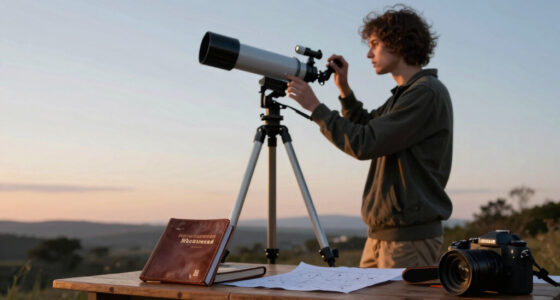
Equatorial telescope mounts are the foundation of any serious astrophotography or deep-sky observing setup, and choosing the wrong one is the fastest way to waste money on good optics. After comparing the leading options for 2026, the Sky-Watcher EQ6-R GoTo stands out as the best overall pick for its balance of payload capacity, tracking reliability, and long-term upgrade headroom. If budget matters, the Celestron Advanced VX is the smarter mid-range choice, while lightweight shooters should look at the Sky-Watcher Star Adventurer GTi for camera-lens work. The main tradeoffs you will face are payload versus portability, GoTo convenience versus manual simplicity, and paying more now for a mount that grows with your telescope collection. Keep reading for the full breakdown of all 11 mounts.

Prime made for students and young adults
- Fast, free delivery for dorm and study essentials
- Prime Video and Amazon Music included
- Member-only deals
Key Takeaways
- Payload capacity is the single biggest differentiator: the Celestron CGX-L and Sky-Watcher EQ6-R handle 50+ lb rigs for deep-sky astrophotography, while the iEXOS-100-2 and Star Adventurer GTi are limited to camera lenses and small refractors.
- The Star Adventurer GTi is the only lightweight tracker in this lineup with full GoTo, which separates it from the generic star trackers that only track without slewing.
- Manual mounts like the Celestron CG-4 force you to learn the night sky and polar alignment by hand, a tradeoff that makes them cheaper but slower for astrophotography.
- The Sky-Watcher AZ-EQ6 is the most versatile mount here because it converts between alt-azimuth and equatorial modes, but that flexibility adds cost and weight over the dedicated EQ6-R.
- Two items in this list (the carbon fiber tripod and the latitude-base star tracker) are accessories rather than complete mounts, worth buying only if you already own a compatible head.
| Celestron CGX-L Heavy-Duty German Equatorial Mount |  | Best for Heavy Imaging Setups | Mount type: Computerized German equatorial | Payload capacity: 75 lbs | Tripod leg diameter: 2.75 in | VIEW LATEST PRICE | See Our Full Breakdown |
| Celestron Advanced VX Computerized German Equatorial Mount, 30 lb Payload |  | Best Value Computerized EQ Mount | Mount type: Computerized German equatorial | Payload capacity: 30 lbs | Tripod legs: 2-inch stainless steel | VIEW LATEST PRICE | See Our Full Breakdown |
| Explore Scientific iEXOS-100-2 PMC-Eight Equatorial Tracker System with Tripod |  | Best for App-Controlled Portability | Mount type: Equatorial tracker with tripod | Control system: PMC-Eight with eight independent CPUs | Motor drive: Clutched dual-axis worm gears, belt-driven steppers | VIEW LATEST PRICE | See Our Full Breakdown |
| Sky-Watcher EQ6-R GoTo German Equatorial Telescope Mount |  | Best Overall | Mount type: GoTo German equatorial | Payload capacity: 44 lbs | Motor type: Belt-driven stepper motors | VIEW LATEST PRICE | See Our Full Breakdown |
| Sky-Watcher AZ-EQ6 GoTo Mount with SynScan |  | Best Premium Multi-Mode Mount | Mount modes: German equatorial, Alt-Az, dual OTA | Payload capacity: 44 lbs | Drive: Belt drive | VIEW LATEST PRICE | See Our Full Breakdown |
| Equatorial Mount Star Tracker with Latitude Adjustment Base |  | Best Star Tracker for Camera Lenses | Shell material: PETG and carbon fiber (CF) | Tracking speeds: Stellar, lunar, and custom | Hemisphere support: Northern and southern | VIEW LATEST PRICE | See Our Full Breakdown |
| Carbon Fiber Equatorial Mount Tripod, 50 kg Load Capacity |  | Best Tripod for Heavy Astrophotography Rigs | Maximum load: 50 kg / 110 lb | Weight: 1.9 kg / 4.19 lb | Material: 10-layer diamond-pattern carbon fiber | VIEW LATEST PRICE | See Our Full Breakdown |
| Equatorial Mount Star Tracker with Ball-Head Gimbal for Astrophotography |  | Best Value Star Tracker | Shell material: PETG and carbon fiber (CF) | Controller: ESP32-S dual-core | Tracking speeds: Stellar, lunar, and custom | VIEW LATEST PRICE | See Our Full Breakdown |
| Celestron CG-4 Manual German Equatorial Mount with Steel Tripod |  | Best Manual Mount for Learning the Sky | Mount type: Manual German equatorial | Maximum payload: 20 lbs (9.07 kg) | Tripod leg diameter: 1.75 inches | VIEW LATEST PRICE | See Our Full Breakdown |
| Celestron CGEM II Computerized Equatorial Mount and Tripod |  | Best Computerized Workhorse | Mount type: Computerized equatorial | Payload capacity: 40 lbs | Controller: NexStar+ hand controller | VIEW LATEST PRICE | See Our Full Breakdown |
| Sky-Watcher Star Adventurer GTi GoTo EQ Mount Kit with Tripod and Pier Extension |  | Best Portable GoTo Kit | Mount type: GoTo equatorial tracking mount | Included components: Mount head, tripod, pier extension, counterweight bar | Polar scope: Built-in with illuminator | VIEW LATEST PRICE | See Our Full Breakdown |
| equatorial telescope mount | Mount type |
|---|---|
| Celestron CGX-L Heavy-Duty Ger | Computerized German equatorial |
| Celestron Advanced VX Computer | Computerized German equatorial |
| Explore Scientific iEXOS-100-2 | Equatorial tracker with tripod |
| Sky-Watcher EQ6-R GoTo German | GoTo German equatorial |
| Sky-Watcher AZ-EQ6 GoTo Mount | — |
| Equatorial Mount Star Tracker | — |
| Carbon Fiber Equatorial Mount | — |
| Equatorial Mount Star Tracker | — |
| Celestron CG-4 Manual German E | Manual German equatorial |
| Celestron CGEM II Computerized | Computerized equatorial |
| Sky-Watcher Star Adventurer GT | GoTo equatorial tracking mount |
More Details on Our Top Picks
Celestron CGX-L Heavy-Duty German Equatorial Mount
If your telescope kit has outgrown mid-range mounts, the CGX-L’s 75-pound payload capacity is the reason it sits at the top of this list for serious imagers. Compared with the Sky-Watcher EQ6-R, which tops out at 44 pounds, the CGX-L handles large refractors, guide scopes, filter wheels, and cameras without straining the drive system — and running a mount well below its rated capacity is what produces those clean, round stars. The 144 mm worm wheel and 270 mm dovetail saddle translate into stable tracking and room for long rail setups. The tradeoff is honest: with a tripod alone weighing over 46 pounds, this is a mount you set up in a permanent spot or roll out on a wheeled pier, not something you toss in a hatchback for a dark-sky weekend. Alignment and setup also demand patience before tracking accuracy arrives.
Pros:- 75-pound payload capacity leaves huge headroom for imaging rigs
- Sidereal, solar, and lunar tracking rates cover every observing scenario
- Four auxiliary ports plus autoguide and USB connectivity support full remote operation
- Adjustable tripod height and 3°–65° latitude range suit most observing sites
Cons:- Tripod alone weighs over 46 pounds, making transport a real chore
- Accurate tracking requires careful alignment and setup each session
Best for: Serious astrophotographers running heavy imaging rigs who need maximum payload headroom and can leave the mount set up
Not ideal for: Portable or travel observers — the combined weight makes impromptu dark-sky trips impractical
- Mount type:Computerized German equatorial
- Payload capacity:75 lbs
- Tripod leg diameter:2.75 in
- Tripod height adjustment:35.75–52.75 in
- Latitude adjustment range:3°–65°
- Worm wheel diameter:144 mm
- Tracking rates:Sidereal, solar, lunar
Our verdict“Buy this if you need serious payload capacity for a permanent imaging setup; skip it if portability matters at all.”
Celestron Advanced VX Computerized German Equatorial Mount, 30 lb Payload
The Advanced VX earns its value slot by bundling pro-level tracking features into an entry-level price class. Unlike the Explore Scientific iEXOS-100-2, which leans on a tablet app and a modest payload, the VX gives you the NexStar+ hand control with a 40,000-object database, multiple alignment procedures, and permanently programmable periodic error correction — the feature that lets you smooth out tracking errors once and reuse the correction for long-exposure astrophotography. The 30-pound capacity comfortably carries an 8-inch SCT for visual work or a modest imaging rig. Compared with the CGX-L, you give up nearly half the payload, but most beginners and intermediate hobbyists will never need it. The stainless steel tripod keeps things steady, though the 47-pound total kit weight means this isn’t a grab-and-go option either.
Pros:- Permanently programmable periodic error correction supports long-exposure imaging
- NexStar+ database of over 40,000 objects with multiple alignment methods
- EQ North and EQ South tracking modes work in both hemispheres
- 2-inch stainless steel tripod legs provide a stable platform
Cons:- 47-pound total kit weight makes transport and storage cumbersome
- 30-pound payload limits room for growth into heavier imaging rigs
Best for: Intermediate hobbyists wanting a first computerized GoTo mount with real astrophotography capability
Not ideal for: Observers with large telescopes or heavy dual-instrument setups — the 30-pound ceiling fills up quickly
- Mount type:Computerized German equatorial
- Payload capacity:30 lbs
- Tripod legs:2-inch stainless steel
- Latitude adjustment range:7–77°
- Object database:Over 40,000 objects
- Tracking rates:Sidereal, solar, and lunar
- Periodic error correction:Permanently programmable
Our verdict“The smartest entry point for computerized equatorial tracking without paying for capacity you won’t use yet.”
Explore Scientific iEXOS-100-2 PMC-Eight Equatorial Tracker System with Tripod
This option stands out for a different philosophy: instead of a proprietary hand controller like the Celestron Advanced VX, the iEXOS-100-2 puts alignment and GoTo navigation entirely in the ExploreStars app on your own tablet — Apple, Android, or Windows. The open PMC-Eight architecture with eight independent CPUs appeals to tinkerers who want software flexibility, and the quiet, belt-driven steppers keep slewing discreet at public star parties. The clutched axes are a genuinely useful touch, letting you reposition and balance by hand without fighting the motors. Two compromises define who should skip it: payload is modest compared with the Sky-Watcher EQ6-R, so this suits small refractors and camera lenses rather than big OTAs, and polar alignment happens through a sight hole rather than an illuminated polar scope — fine for wide-field work, frustrating for precise long-exposure imaging.
Pros:- PMC-Eight system with eight independent CPUs offers an open, software-flexible platform
- Quiet belt-driven stepper motors keep operation discreet
- Works with Apple, Android, and Windows tablets instead of a dedicated handset
- Clutched axes allow smooth manual repositioning and precise balancing
Cons:- Polar alignment relies on a sight hole rather than a dedicated polar scope
- Requires a separate tablet to unlock full GoTo functionality
Best for: Tech-comfortable beginners and wide-field imagers who prefer controlling their mount from a tablet
Not ideal for: Long-exposure deep-sky imagers — the sight-hole polar alignment and light payload limit precision work
- Mount type:Equatorial tracker with tripod
- Control system:PMC-Eight with eight independent CPUs
- Motor drive:Clutched dual-axis worm gears, belt-driven steppers
- App compatibility:Apple, Android, and Windows tablets
- Polar alignment:Sight hole through RA axis with altitude control
- Focuser:Not included
Our verdict“A compact, app-driven tracker best suited to lightweight refractors and casual GoTo exploring rather than demanding imaging work.”
Sky-Watcher EQ6-R GoTo German Equatorial Telescope Mount
This model makes the most sense for the largest group of buyers because it hits the sweet spot the others miss. With a 44-pound payload capacity, it carries far more than the Celestron Advanced VX for imaging growth, yet it costs and weighs far less than the CGX-L‘s overkill 75-pound platform. The belt-driven steppers deliver quiet, low-backlash tracking that holds up under long exposures, and the illuminated polar finderscope — something the iEXOS-100-2 lacks entirely — makes achieving accurate polar alignment straightforward in the field. Dual D- and V-style saddles plus two included 11-pound counterweights mean it works with most telescopes out of the box. Be aware of the power demands: it needs a 12V supply delivering at least 4A, and you’ll have to supply your own USB-B cable for computer control, which computerized imagers will want for sequencing software.
Pros:- 44-pound payload balances capacity with manageable weight for serious imaging
- Belt-driven stepper motors deliver quiet, precise tracking with low backlash
- Illuminated polar finderscope simplifies accurate polar alignment
- Includes two 11-pound counterweights and dual D/V-style saddles
Cons:- Requires a 12V power source delivering at least 4A — battery planning is mandatory
- USB-B cable for computer connection is not included
Best for: Ambitious hobbyists who want one mount that handles both visual observing and serious astrophotography for years
Not ideal for: Casual grab-and-go observers — the mount, tripod, and counterweights add up to a heavyweight setup
- Mount type:GoTo German equatorial
- Payload capacity:44 lbs
- Motor type:Belt-driven stepper motors
- Object database:42,000 objects (SynScan)
- Latitude range:5–65 degrees
- Maximum slewing speed:3.4°/sec (800X)
- Counterweights:Two 11-pound weights
- Connectivity:ST-4 autoguider port and USB-B port
Our verdict“The most balanced choice on this list: enough payload for real astrophotography without the bulk or cost of a heavy-duty observatory mount.”
Sky-Watcher AZ-EQ6 GoTo Mount with SynScan
Where the Sky-Watcher EQ6-R is a dedicated equatorial workhorse, the AZ-EQ6 argues that versatility is worth paying more for. Its three operating modes — German equatorial, Alt-Az, and dual-telescope — mean one mount can track for astrophotography tonight, run simple alt-az visual sessions with the family tomorrow, and carry two scopes side by side for public events. The dual encoders with Freedom Find are the standout feature: you can push the mount by hand to any target and the GoTo system still knows where it’s pointing, which the Advanced VX simply cannot do. Permanent periodic error correction comes pre-programmed for smoother tracking out of the box. The catches: dual-OTA mode requires an extra mounting saddle beyond what a single-scope buyer needs, and like the EQ6-R, the total package with tripod and counterweights demands real muscle and a solid 12V power plan.
Pros:- Three mount modes: German equatorial, Alt-Az, and dual-telescope operation
- Dual encoders allow manual repositioning without losing GoTo alignment
- Belt drive with permanent periodic error correction supports smooth tracking
- Complete package includes tripod, two counterweights, two saddles, and SynScan handset
Cons:- Dual-telescope use requires a secondary mounting saddle
- Heavy full setup with counterweights demands permanent or semi-permanent placement
Best for: All-around observers and astro-event hosts who want equatorial imaging, alt-az visual use, and dual-scope capability from one mount
Not ideal for: Buyers who only ever image with one telescope — the multi-mode flexibility adds cost and complexity you won’t use
- Mount modes:German equatorial, Alt-Az, dual OTA
- Payload capacity:44 lbs
- Drive:Belt drive
- Tracking feature:Permanent periodic error correction (PPEC)
- Encoder technology:Dual encoders with Freedom Find
- Hand controller:SynScan
- Counterweights:Two 11-pound weights
- Warranty:Two-year limited
Our verdict“The pick for hobbyists whose observing style spans imaging, casual visual sessions, and running two scopes at once — if you’ll actually use the flexibility.”
Equatorial Mount Star Tracker with Latitude Adjustment Base
This pick stands out as the most camera-first option in the lineup. Unlike the Celestron CG-4, which is built around telescope tubes, this tracker is designed for wide-field astrophotography with DSLR or mirrorless cameras and camera lenses — the listed tracking times (5 minutes at 24 mm, down to 30 seconds at 450 mm) read like a working photographer’s guide, not marketing copy. The CNC-machined metal latitude base is the differentiator against product B0GK7DJN8W, which ships without one; precise latitude adjustment is what makes repeatable polar alignment possible. The 15 kg rating is generous for lenses, though real-world performance still depends on alignment quality and tripod stability. Tradeoffs are real: no built-in battery means carrying a power bank, and a ball head is mandatory to attach any camera.
Pros:- Stellar, lunar, and custom tracking speeds plus both-hemisphere support for travel flexibility
- CNC-machined metal latitude adjustment base for repeatable polar alignment
- Doubles as a gimbal head for time-lapse photography
- 15 kg load capacity leaves generous headroom for camera-plus-lens setups
Cons:- No built-in battery — a USB-C power bank is required for every session
- A ball head (and possibly a 1/4-to-3/8 adapter) is needed before a camera can mount
Best for: Landscape and nightscape photographers who shoot star fields with camera lenses and want long unguided exposures without a full telescope mount
Not ideal for: Visual astronomers — there is no dovetail or eyepiece-centric design here, and anyone wanting a self-powered grab-and-go tracker will need to supply a power bank
- Shell material:PETG and carbon fiber (CF)
- Tracking speeds:Stellar, lunar, and custom
- Hemisphere support:Northern and southern
- Load capacity:15 kg
- Power:USB-C external source; no built-in battery
- Latitude base:CNC-machined metal, anodized finish
- Mounting:3/8-inch bottom thread; 38 mm quick-release baseplate
Our verdict“A lens-based astrophotography tracker that earns its place through the metal latitude base and flexible tracking speeds, as long as you accept external power and BYO ball head.”
Carbon Fiber Equatorial Mount Tripod, 50 kg Load Capacity
Every equatorial mount is only as steady as what sits underneath it, and this carbon fiber tripod takes that argument further than anything else here. The 50 kg load rating means it can carry a Celestron CGEM II plus a heavy OTA without the flexure that undermines long exposures, yet it weighs just 1.9 kg — a fraction of the CGEM II’s 20 lb steel tripod. Compared with the stainless steel legs on the CG-4, the 4 cm carbon tubes and bundled ground stakes, hooks, and sandbags are aimed at wind-exposed dark-sky sites rather than backyard convenience. The compromise is height: a 77 cm working height is deliberately low, trading viewing comfort for vibration resistance. That low stance also means refractor users may need a pier extension or careful seating for eyepiece access.
Pros:- 50 kg load capacity comfortably supports heavy equatorial mounts and telescopes
- Carbon fiber construction keeps weight at 1.9 kg for travel to dark-sky locations
- Folds to 51.5 cm for compact transport
- Ground stakes, hooks, and sandbags add stability in wind
Cons:- 77 cm working height forces a low, seated-style setup
- Specialized for equatorial mounts rather than general tripod use
Best for: Astrophotographers hauling heavy GoTo mounts and large OTAs to remote sites who prioritize vibration damping over standing-height ergonomics
Not ideal for: Visual observers who want eye-level viewing without stooping — the low working height and mount-specific design make it a poor general-purpose tripod
- Maximum load:50 kg / 110 lb
- Weight:1.9 kg / 4.19 lb
- Material:10-layer diamond-pattern carbon fiber
- Working height:77 cm / 30.32 in
- Folded length:51.5 cm / 20.28 in
- Leg tube diameter:4.0 cm / 1.57 in
- Center axis:Reversible, extendable 3/8-inch screw
Our verdict“The stability foundation for serious imaging rigs, provided you accept that rock-solid means sitting low to the ground.”
Equatorial Mount Star Tracker with Ball-Head Gimbal for Astrophotography
This tracker shares the same ESP32-S dual-core electronics, tracking modes, and PETG/carbon fiber shell as product B0GK7Q8GMV, so what you are really choosing between is price versus the metal latitude base. Buyers comfortable doing polar alignment by eye, or who already own a latitude wedge, can save money here without losing the core function: stellar, lunar, and custom speeds, both-hemisphere operation, and time-lapse gimbal use with no app required. The connectivity quirk matters more than it sounds — USB-C-to-USB-C cables will not work, so an older USB-A-to-C cable and compatible power bank are part of the kit whether the listing says so or not. And like its sibling, it ships without a battery or ball head, so first-time buyers should budget for both.
Pros:- Same tracking modes and both-hemisphere support as higher-priced siblings
- No app or account needed — operation stays fully manual
- Doubles as a time-lapse gimbal head
- Lightweight PETG and carbon fiber shell for travel
Cons:- No built-in battery; requires an external USB power source
- Only accepts USB-A-to-C cables, not USB-C-to-USB-C
- Ball head and possibly a 1/4-to-3/8 screw sleeve sold separately
Best for: Budget-conscious nightscape photographers who already own a ball head and tripod and want entry into tracked long exposures
Not ideal for: Buyers wanting a complete out-of-the-box kit — the missing battery, ball head, possible screw sleeve, and picky cable requirement add hidden cost and frustration
- Shell material:PETG and carbon fiber (CF)
- Controller:ESP32-S dual-core
- Tracking speeds:Stellar, lunar, and custom
- Hemisphere support:Northern and southern
- Power:USB Type-C via USB-A-to-C cable; no battery
- Camera connection:1/4-inch screw; ball head required
- Baseplate:38 mm quick-release
Our verdict“The lower-cost route into lens-based tracking, best for photographers who already own the supporting accessories it assumes.”
Celestron CG-4 Manual German Equatorial Mount with Steel Tripod
In a roundup full of GoTo electronics, the CG-4 makes the case for doing things by hand — and that is exactly its value. Learning to star-hop and polar align on a manual German equatorial teaches skills that transfer to every mount you will ever own, and the slow-motion controls on both axes make tracking a planet by hand genuinely satisfying rather than a chore. Compared with the computerized Celestron CGEM II, there is no database, no motors, and no auto-alignment — but also no hand controller to learn, no batteries to charge, and far less to go wrong in the field. The 20 lb payload handles a respectable refractor or small reflector, and at 12.5 lbs total it is far easier to carry than the CGEM II’s 60 lb combined system. The tradeoff is stamina: long observing sessions mean constant manual corrections.
Pros:- Slow-motion controls on both axes allow precise manual tracking
- 20 lb payload suits mid-size refractors and small reflectors
- No electronics or power required — nothing to fail or recharge
- Adjustable stainless steel tripod dampens vibration and adapts to terrain
Cons:- Manual tracking demands constant hands-on adjustment throughout a session
- No computerized object location or auto-tracking for imaging
Best for: Beginning-to-intermediate visual astronomers who want to learn the sky actively rather than rely on GoTo, with a moderate 20 lb telescope
Not ideal for: Astrophotographers and lazy-session observers — manual tracking cannot hold the long, hands-off exposures a driven mount like the CGEM II delivers
- Mount type:Manual German equatorial
- Maximum payload:20 lbs (9.07 kg)
- Tripod leg diameter:1.75 inches
- Tripod height range:33–47 inches (83.8–119.3 cm)
- Weight:12.5 lbs (5.66 kg)
- Tripod material:Stainless steel
Our verdict“The classic learning mount — ideal if you want sky knowledge rather than a motorized tour guide, but the wrong tool for imaging.”
Celestron CGEM II Computerized Equatorial Mount and Tripod
The CGEM II occupies the sweet spot between the lighter Celestron Advanced VX and the heavier CGX-L: a 40 lb payload that supports serious imaging tubes while staying below the bulk of a true observatory-class mount. The NexStar+ hand controller with 40,000+ objects and multiple alignment routines makes finding targets fast, and sidereal, solar, and lunar rates cover both imaging and daytime outreach. Compared with the manual CG-4, the difference is night and day for astrophotography — guided, hands-off tracking is simply not possible by hand. The honest tradeoff is transport: the mount alone weighs 40 lbs, with another 20 lbs of tripod, and while it breaks into components, each piece is a two-handed carry. Compared with a tracker like B0GK7Q8GMV, this is a fundamentally different commitment in money, weight, and learning curve.
Pros:- 40 lb payload supports a wide range of tubes, guidescopes, and cameras
- 40,000-object database with multiple alignment options gets beginners productive quickly
- Sidereal, solar, and lunar tracking rates cover imaging and outreach use
- 2-inch steel tripod provides a stable, vibration-resistant platform
Cons:- 40 lb mount plus 20 lb tripod makes transport and setup a two-person-feel job
- Higher price and complexity than manual or tracker alternatives
Best for: Serious visual observers and budding imagers who need 40 lb of payload capacity and GoTo convenience at a permanent or semi-permanent site
Not ideal for: Grab-and-go observers and anyone with limited storage or physical lifting constraints — a 60 lb combined system is a commitment every session
- Mount type:Computerized equatorial
- Payload capacity:40 lbs
- Controller:NexStar+ hand controller
- Object database:Over 40,000 objects
- Tracking rates:Sidereal, solar, lunar
- Tripod:2-inch steel; 20 lbs
- Mount weight:40 lbs
- Connectivity:USB port
Our verdict“The capable computerized middleweight for imagers who have outgrown small mounts and can handle the weight that capacity demands.”
Sky-Watcher Star Adventurer GTi GoTo EQ Mount Kit with Tripod and Pier Extension
Not every equatorial buyer needs a payload monster, and this kit is proof. The Star Adventurer GTi packs genuine GoTo pointing and tracking into a package you can carry to a dark-sky site without a second thought — something the Celestron CGX-L or Sky-Watcher EQ6-R simply cannot match, since both demand a permanent or semi-permanent setup. Compared with the Explore Scientific iEXOS-100-2, its closest portable rival, the GTi pulls ahead with a built-in illuminated polar scope, which makes accurate polar alignment far less painful in the field, and its GoTo slewing via the SynScan app over Wi-Fi means no hand-controller juggling in the dark. The bundled pier extension is a thoughtful touch, getting the mount head high enough that a long refractor or camera rig doesn’t collide with the tripod legs. The tradeoff is payload: this is a camera-and-small-scope mount, full stop. Anyone hoping to hang a large OTA on it will be disappointed, and the lightweight tripod that makes it portable is more susceptible to wind shake than the steel legs Celestron ships with the CG-4.
Pros:- Genuinely portable GoTo equatorial tracking for field astrophotography
- Complete kit includes tripod, pier extension, and counterweight bar
- Built-in illuminated polar scope simplifies accurate alignment at night
- Wi-Fi control via smartphone app eliminates the need for a separate hand controller
Cons:- Low payload capacity compared with mid-size mounts like the Advanced VX — suitable only for camera lenses and small telescopes
- Lightweight tripod trades stability for portability and can wobble in wind or under long imaging exposures
Best for: Travel-minded astrophotographers and wide-field imagers who want GoTo tracking in a backpack-friendly kit for dark-sky trips
Not ideal for: Visual observers or imagers with heavy OTAs — the payload ceiling rules out medium and large telescopes that mounts like the CGEM II handle easily
- Mount type:GoTo equatorial tracking mount
- Included components:Mount head, tripod, pier extension, counterweight bar
- Polar scope:Built-in with illuminator
- Connectivity:Built-in Wi-Fi for app-based control
- Primary use:Portable astrophotography and tracking
- Control method:Smartphone or tablet via Wi-Fi (SynScan app)
- Form factor:Compact travel-ready kit
Our verdict“If your imaging kit fits in a camera bag and your observing happens away from home, this is the most capable portable GoTo equatorial setup in the lineup — just don’t ask it to carry a big telescope.”

How We Picked
My ranking logic starts with payload-to-weight ratio, because a mount that maxes out with your telescope, guide scope, and camera attached will ruin long exposures no matter how good its motors are. I then weighed tracking and GoTo performance: computerized mounts with accurate periodic error correction earn higher placement for astrophotography, while manual mounts are judged on smoothness and ease of polar alignment instead. Third, I evaluated ease of use for the intended buyer — a beginner-friendly mount with a forgiving setup ranks above a heavier, more capable mount that overwhelms a first-time user.
Finally, I factored in build quality, tripod stability, and upgrade headroom. Mounts that accept larger telescopes later justify a higher position even at a higher entry cost, because replacing an undersized mount is the most common money-wasting mistake in this hobby. Complete kits with a sturdy tripod ranked above bare heads, and pure accessories were placed only where they fill a genuine gap.
| equatorial telescope mount | Mount type |
|---|---|
| Celestron CGX-L Heavy-Duty Ger | Computerized German equatorial |
| Celestron Advanced VX Computer | Computerized German equatorial |
| Explore Scientific iEXOS-100-2 | Equatorial tracker with tripod |
| Sky-Watcher EQ6-R GoTo German | GoTo German equatorial |
| Sky-Watcher AZ-EQ6 GoTo Mount | — |
| Equatorial Mount Star Tracker | — |
| Carbon Fiber Equatorial Mount | — |
| Equatorial Mount Star Tracker | — |
| Celestron CG-4 Manual German E | Manual German equatorial |
| Celestron CGEM II Computerized | Computerized equatorial |
| Sky-Watcher Star Adventurer GT | GoTo equatorial tracking mount |
Factors to Consider When Choosing Equatorial Telescope Mounts
Before choosing from the 11 mounts above, it helps to understand the broader patterns that separate a satisfying purchase from an expensive regret. These are the factors that shaped my ranking, explained in more depth.Payload Capacity and the Real Limit
Manufacturers quote a maximum payload, but the practical rule for astrophotography is to stay at roughly half the rated capacity for sharp long exposures. A mount rated for 30 lb will carry a 30 lb telescope for visual observing, but imaging at that limit invites trailed stars and dropped guiding corrections. This is why the CGX-L and EQ6-R sit at the top of this roundup: their generous headroom means a typical imaging rig of an 80mm refractor, guide scope, and camera runs at a fraction of their limit. Beginners routinely underestimate total weight by forgetting counterweights, dovetail plates, dew heaters, and filter wheels. Add up everything you might attach within two years, then buy capacity above that number.
GoTo Versus Manual Operation
A GoTo system finds and tracks objects automatically, which transforms the hobby for anyone imaging faint targets or sharing views with family. The tradeoff is cost, battery dependence, and a steeper initial learning curve — you still need to star-align and polar-align the mount before the computer can help. Manual mounts like the CG-4 cost less and never run out of power, and many observers argue that finding objects by star-hopping builds skills GoTo users skip. My placement logic favors GoTo for astrophotography, where tracking precision matters more than anything, but keeps manual mounts ranked for visual observers on a budget. Choose based on how you actually plan to spend nights under the sky, not on how the feature list reads.
Portability and Setup Weight
The best-performing mount is worthless if it stays in the garage because it is too heavy to load at midnight. German equatorial mounts in the EQ6-R and AZ-EQ6 class weigh 40 lb or more before counterweights, which is manageable from a driveway but punishing for dark-sky trips. Lightweight trackers like the Star Adventurer GTi and iEXOS-100-2 trade payload for grab-and-go convenience, and many imagers own both a heavy mount and a small tracker for exactly this reason. Be honest about whether you observe at home or travel, because this single question eliminates half the options on the list. Tripod quality also compounds the problem: a flimsy tripod under a heavy head wastes the mount’s precision.
Tracking Accuracy for Astrophotography
For imaging, the mount matters more than the telescope. Two specs dominate: periodic error (the small wobble caused by imperfections in the worm gear) and slewing and guiding response. A mount with low periodic error can shoot several-minute subs unguided; a mount with high error needs an autoguider just to survive 60 seconds. Belt-driven and machined-worm designs explain why the EQ6-R outperforms cheaper mounts of similar rated capacity. If you plan to autoguide, confirm the mount accepts ST-4 or EQMOD connections before buying. Visual observers can safely ignore this section entirely, which is one reason manual mounts still earn their place.
Complete System Versus Accessory
Several items in this category ship without tripods, and two entries here — the carbon fiber tripod and the latitude-base tracker — are components rather than complete mounts. Buying piecemeal lets you upgrade selectively, but mismatches between head and tripod are a common and expensive mistake: a lightweight tripod under a capable head produces vibration that no amount of tuning fixes. Check the load rating of any tripod against the mount head plus full payload plus counterweights, with margin to spare. Carbon fiber damps vibration faster than steel at lower weight, which is why it commands a premium for travel setups. If you are starting from zero, complete kits almost always win on value.
Hybrid and Convertible Designs
Some buyers want one mount that does planetary visual work, deep-sky imaging, and casual daytime observing, which is where convertible designs earn their premium. The AZ-EQ6’s dual-mode architecture lets it run in alt-azimuth for quick visual sessions with two telescopes mounted, then convert to equatorial for imaging — a genuine advantage if your interests span both. The cost is extra weight, complexity, and a higher price than the dedicated equivalent. Before paying for versatility, audit how you actually observe; most imagers end up in equatorial mode permanently and would be better served by the simpler EQ6-R. Versatility is only a value when you use it.
Frequently Asked Questions
Is a German equatorial mount necessary, or can I use an alt-azimuth mount for astrophotography?
For long-exposure deep-sky imaging, an equatorial mount is effectively required because it rotates on a single axis aligned with Earth’s rotation, eliminating field rotation that blurs alt-azimuth images after 30–60 seconds. Alt-azimuth mounts work fine for visual observing, planetary imaging with short exposures, and even deep-sky work if paired with a field rotator, but that adds cost and complexity. If your interests are mostly visual with occasional imaging, a convertible mount like the AZ-EQ6 covers both without compromise. If astrophotography is your primary goal, a dedicated equatorial mount like the EQ6-R or CGX-L is the cleaner path. Deciding this before buying saves you from replacing the mount within a year.
How much payload capacity do I actually need?
Add up the weight of your telescope, camera, guide scope, guide camera, dovetail plate, and any accessories like a dew heater or electronic focuser — then add 30–50% headroom for future upgrades. For astrophotography, plan to run the rig at no more than about half the mount’s rated payload, because tracking precision degrades as you approach the limit. A typical beginner imaging rig with an 80mm refractor lands around 15 lb all-in, which the Advanced VX handles comfortably but which pushes smaller trackers to their ceiling. Visual-only observers can run closer to the rated maximum since brief vibration matters less than sustained tracking error. Buying capacity you will grow into is cheaper than buying twice.
Are the lightweight star trackers good enough for real astrophotography?
Trackers like the Star Adventurer GTi and iEXOS-100-2 produce genuinely publishable images with camera lenses and small refractors, and the GTi’s GoTo capability closes most of the gap with full-size mounts for wide-field work. Their limits appear with focal lengths beyond roughly 300mm, where small gear errors magnify into trailed stars, and with heavy telephoto lenses that strain the payload. They excel as second mounts for travel and as first mounts for learning polar alignment and framing without a big investment. If you already know you want to image galaxies and nebulae at long focal lengths, skip the tracker class and go straight to a mid-size German equatorial. Many imagers keep a tracker forever as a grab-and-go option even after upgrading.
Should I buy a GoTo mount or learn on a manual equatorial first?
GoTo mounts do not eliminate the learning curve — you still need to level, polar-align, and star-align before the computer can slew accurately — so the idea that manual mounts are only for learning is outdated. That said, a manual mount like the CG-4 forces you to learn the constellations and star-hopping, which many observers find rewarding and which makes GoTo failures recoverable later. For astrophotography, GoTo with tracking is close to mandatory because framing faint targets manually is miserable. For pure visual observing on a budget, a manual mount puts more of your money into optics instead of motors. Choose based on whether finding objects or observing them is the part of the hobby you enjoy.
Is it worth paying for a heavy-duty mount now, or upgrading later?
Heavy-duty mounts like the CGX-L and EQ6-R hold their value well and rarely need replacing, because almost any telescope you buy later will fit under them — which is why undersized mounts are the most commonly resold items in this hobby. The catch is that a big mount you never take out is worse than a small one you use weekly, so portability has to factor in honestly. If you observe from home with a permanent or semi-permanent setup, buying big once is almost always the right call. If you travel to dark sites, a two-mount strategy (a heavy base plus a lightweight tracker) often beats one compromise purchase. Pay for capacity when your habits are settled, not before.
Conclusion
For most serious imagers, the Sky-Watcher EQ6-R is my best overall pick — it carries substantial payloads, tracks well enough for guided deep-sky work, and leaves headroom for telescope upgrades. The best premium option is the Celestron CGX-L, whose heavier build suits permanent observatories and large scopes, while the Celestron CGEM II splits the difference for imagers who want more capacity than the EQ6-R without the CGX-L’s weight. For best value, the Celestron Advanced VX handles a genuine imaging rig at a mid-range price and outclasses anything cheaper in this lineup. Beginners should choose based on their goal: the Star Adventurer GTi for camera-lens astrophotography and grab-and-go use, the iEXOS-100-2 for a first GoTo experience with a small refractor, or the manual CG-4 for visual observers who want to learn the sky on a budget. Specialty needs point to the AZ-EQ6 for dual-mode versatility and dual-scope visual setups, while the carbon fiber tripod and latitude-base tracker fill targeted roles as upgrades to an existing kit rather than starting points. Match the mount to your telescope plans and observing habits, and you will not be shopping again in two years.