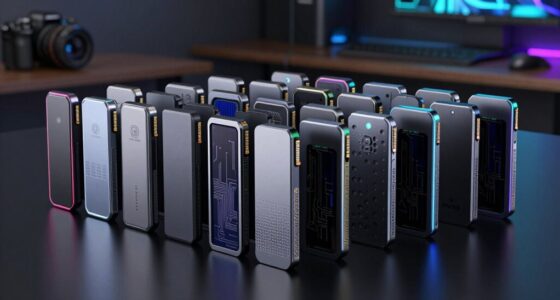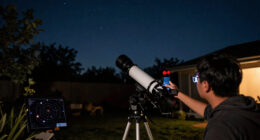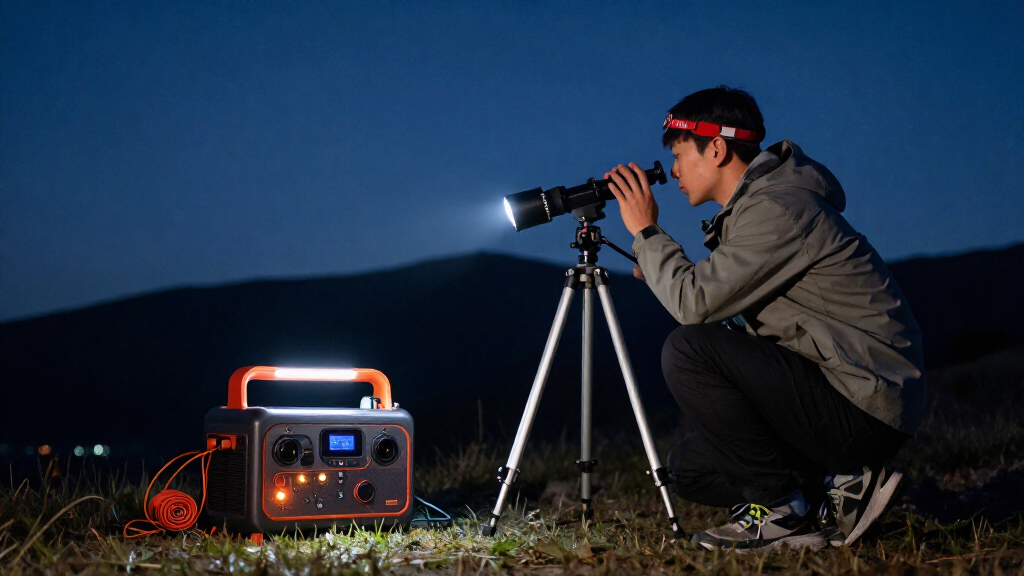

Portable astrophotography power stations need to run your mount, camera, and field accessories for a full session without adding more weight than your setup can handle. I rank the BLUETTI Elite 30 V2 as the best overall balance here, while the Jackery Explorer 300 stands out for a bundled solar panel and the Anker SOLIX C1000 for longer, higher-demand sessions. The main tradeoff is straightforward: compact units are easier to carry but offer less runtime, while larger batteries add capacity and bulk. Output limits, charging options, and battery chemistry also affect whether a station suits your gear. Read on for the full breakdown and help matching a pick to your imaging setup.

Prime made for students and young adults
- Fast, free delivery for dorm and study essentials
- Prime Video and Amazon Music included
- Member-only deals
Complete the kit


Key Takeaways
- The BLUETTI Elite 30 V2 is the strongest all-around fit among the compact-to-mid-size choices, pairing 288Wh capacity with 600W output for a useful balance of portability and headroom.
- The Jackery Explorer 300 is the clearest solar-ready starter bundle because it includes a 40W panel, though its 300Wh-class capacity still calls for careful runtime planning.
- Long sessions favor the larger battery options: the EBL Acc2400 has the largest listed capacity at 1843.2Wh, while the Anker SOLIX C1000 and DJI Power 1000 V2 offer roughly 1kWh class capacity.
- LiFePO4 models feature prominently at both ends of the range, from the 89.6Wh Daran to the 288Wh DARAN and 1843.2Wh EBL, letting buyers weigh battery chemistry alongside capacity.
- Capacity and output are different constraints: a station may hold enough energy for a session yet still lack the rated AC or surge output needed by a particular device, so check each load before choosing.


| portable astrophotography power station | Battery type | Weight | Capacity | Dimensions |
|---|---|---|---|---|
| BLUETTI Elite 30 V2 Portable P | LFP | 9.5 pounds | 288Wh | 9.8 × 7 × 6.6 inches |
| Portable Power Station 89.6Wh | — | 2.5 pounds | — | 6.5 × 3.3 × 4.0 inches |
| MARBERO M82 Portable Power Sta | — | 3.2 pounds | 88Wh | 6.5 × 4.6 × 3.1 inches |
| BLUETTI Elite 10 Mini Portable | LiFePO4 with BMS protection | 4 pounds | 128Wh | 7.8 × 5.7 × 4.3 inches |
| EBL Acc2400 Portable Power Sta | LiFePO4 | 54 pounds | — | 16.93 × 11.8 × 11.02 inches |
| DARAN Portable Power Station | LiFePO4 | 8.2 lb | — | — |
| Jackery Explorer 300 Portable | — | — | — | — |
| EnginStar Portable Power Stati | — | 6.5 lb in description; 3.6 kg in specifications | 296Wh | — |
| Portable Power Station | LiFePO4 | 8.8 lb | — | — |
| Dabbsson 600L Portable Power S | Semi-solid LiFePO4 | 17.6 lb | — | — |
| MARBERO M823 300W Portable Pow | Lithium-ion | 4.6 lbs | 237Wh | 8.15 × 5.83 × 3.90 inches |
| Anker SOLIX C1000 Portable Pow | LiFePO4 | — | 1,056Wh | — |
| LIBRIDS 640Wh Portable Power S | LiFePO₄ | — | 640Wh | 8.3 × 6.9 × 8.2 inches |
| Daran Portable Power Station | LiFePO4 | 2.54 pounds | 89.6Wh | — |
| DJI Power 1000 V2 Portable Pow | LFP | — | 1,024Wh | 17.64 × 8.85 × 9.05 inches |
More Details on Our Top Picks
BLUETTI Elite 30 V2 Portable Power Station, 288Wh, 600W
The BLUETTI Elite 30 V2 balances carry weight and usable output better than the tiny 88–89.6Wh units here. Its 288Wh capacity and 600W continuous output give a small astrophotography setup more headroom for a tracker, camera, and accessories, though actual runtime depends on their combined draw. At about 9.5 pounds, it is still manageable for a short walk from the car to a dark-sky site. AC, solar, and car charging offer practical ways to refill between sessions, and the 10 ms UPS can help protect connected gear during a brief interruption. The tradeoff is limited energy for long unattended sessions or power-hungry equipment; the 1500W Power Lifting mode is not continuous output. Compared with the much larger EBL Acc2400, this is easier to carry but stores far less energy.
Pros:- 600W continuous output supports more demanding gear than the sub-100Wh compact options.
- 288Wh capacity offers a useful middle ground between tiny travel units and heavy backup stations.
- AC, solar, and car charging suit both home preparation and field recharging.
- UPS transfer of 10 ms or less can help keep connected equipment powered through brief outages.
Cons:- At 9.5 pounds, it is heavier than the 2.5-pound R101 Lite and 4-pound BLUETTI Elite 10 Mini.
- 288Wh may not cover a long session with multiple continuously powered devices.
- The 1500W Power Lifting figure is a mode for compatible devices, not its 600W continuous rating.
Best for: Astrophotographers driving to a dark-sky site who need moderate output for a compact imaging rig and value manageable carry weight.
Not ideal for: Imagers running several high-draw devices through a long overnight session, since 288Wh may require recharging or load management.
- Capacity:288Wh
- Continuous output:600W
- Power Lifting output:1500W
- Battery type:LFP
- Weight:9.5 pounds
- Dimensions:9.8 × 7 × 6.6 inches
- Charging time:0–80% in 45 minutes; 0–100% in 70 minutes
- UPS transfer time:10 ms or less
Our verdict“Choose the Elite 30 V2 for a portable imaging setup that needs more output and capacity than a pocket unit can provide.”
Portable Power Station 89.6Wh Two-Way Fast Charging with AC 100W (200W Peak)
For a photographer whose setup is mostly camera batteries, a tracker, and small USB accessories, the R101 Lite keeps the carry burden low: it weighs 2.5 pounds and measures about the size of a large cup. Its 89.6Wh capacity is a clear step below the BLUETTI Elite 30 V2’s 288Wh, so this is better suited to topping up modest loads than powering a broad imaging rig all night. Two USB-C ports, including up to 100W output, make it especially convenient for compatible devices; the AC outlets are limited to 100W each, with 200W peak stated. Rapid AC recharging can help between outings, while solar panels are sold separately. The small battery and AC cutoff below 9% call for careful power budgeting.
Pros:- At 2.5 pounds, it is the lightest option among these five products.
- Two USB-C PD ports provide up to 100W output for compatible gear.
- The stated 1.3-hour full recharge supports quick turnarounds from AC or car power.
- LiFePO4 battery chemistry and a 12-layer battery management system are specified.
Cons:- 89.6Wh capacity is far below the BLUETTI Elite 30 V2 and restricts session runtime.
- Each AC outlet is rated for 100W, limiting which AC-powered devices it can run.
- Solar panels are not included, and AC output shuts off below 9% battery.
Best for: Traveling astrophotographers with a lightweight camera and tracker setup who prioritize a compact, easy-to-pack USB-C power source.
Not ideal for: Buyers powering multiple AC devices through a long session; its 89.6Wh capacity and 100W AC outlets set firm limits.
- Battery capacity:89.6Wh
- Battery cell type:LiFePO4
- Weight:2.5 pounds
- Dimensions:6.5 × 3.3 × 4.0 inches
- Number of ports:7
- AC output:100W; 200W peak
- USB-C output:Up to 100W PD
- Charge time to 100%:1.3 hours
Our verdict“Pick the R101 Lite when low carry weight and USB-C charging matter more than long runtime or higher AC output.”
MARBERO M82 Portable Power Station, 88Wh, 120W Surge
The MARBERO M82 is a compact choice for a modest imaging kit where the main goal is powering a tracker and keeping small devices topped up. Its eight output ports provide connection flexibility, but the listed 80W running wattage and 120W surge put it below the R101 Lite’s stated 100W AC output. That makes the M82 a better fit for low-draw equipment than for an AC-heavy setup. It weighs 3.2 pounds, a little more than the R101 Lite, and adds a useful LED light with SOS mode for handling gear at a dark site. AC and compatible solar charging provide options for replenishment, although the solar panel is not listed as included. The stated 230V AC output also deserves a compatibility check before connecting equipment.
Pros:- Eight ports allow several small devices to connect at once.
- The 80W running and 120W surge ratings suit appropriately low-draw equipment.
- Built-in LED lighting includes an SOS mode useful when setting up in the dark.
- Supports AC, battery, and compatible solar charging.
Cons:- Its 88Wh capacity and 80W running rating limit both runtime and device choice.
- At 3.2 pounds, it is heavier than the similarly sized R101 Lite.
- The listed 230V AC output may not match equipment intended for 120V.
Best for: Beginners using a low-draw star tracker, camera accessories, and USB devices who want multiple ports and a built-in light.
Not ideal for: Astrophotographers who need higher continuous AC output or whose gear is not compatible with the listed 230V output.
- Capacity:88Wh
- Running wattage:80W
- Surge wattage:120W
- Output ports:8
- Weight:3.2 pounds
- Dimensions:6.5 × 4.6 × 3.1 inches
- AC output voltage:230V
- Recharge time:0–80% in 2 hours with included adapter
Our verdict“Choose the M82 for a simple, low-draw tracker kit if its listed 230V AC output matches your equipment.”
BLUETTI Elite 10 Mini Portable Power Station, 128Wh 200W Solar Generator
The BLUETTI Elite 10 Mini adds a useful middle step between the 88–89.6Wh pocket stations and the larger Elite 30 V2. Its 128Wh capacity and 200W AC output give a compact rig more room than the R101 Lite, while the four-pound body remains easier to carry than the 9.5-pound Elite 30 V2. The built-in 10 ms UPS makes it a sensible option for gear that benefits from uninterrupted power, such as a small computer or router, though capacity still limits how long it can run. USB-C charging up to 100W, Bluetooth app control, and LED modes add convenience at camp. There is only one AC outlet, so running several AC-powered devices means using a suitable distribution setup and tracking the total load.
Pros:- 128Wh capacity exceeds the R101 Lite and MARBERO M82 while staying in a compact format.
- 200W AC output and 100W USB-C charging support a range of small devices.
- 10 ms UPS transfer can maintain power through brief interruptions.
- AC, solar, and car charging give several ways to recharge.
Cons:- The single AC outlet limits direct connection of multiple AC devices.
- Four pounds is heavier than the R101 Lite despite the still modest capacity.
- 128Wh may run out quickly with high-draw equipment.
Best for: Astrophotographers who want a compact, app-controlled station with UPS backup for a laptop, router, or similarly modest setup.
Not ideal for: Imagers needing several AC outlets or enough stored energy for a high-draw rig across a long night.
- Capacity:128Wh
- AC output power:200W
- USB-C fast charging:100W
- Battery type:LiFePO4 with BMS protection
- Weight:4 pounds
- Dimensions:7.8 × 5.7 × 4.3 inches
- UPS backup:10 ms
- Recharge options:150W AC, 100W solar, 100W car
Our verdict“Pick the Elite 10 Mini when UPS backup and a bit more capacity than a pocket station matter more than multiple AC outlets.”
EBL Acc2400 Portable Power Station, 1843.2Wh LiFePO4 Battery
When an imaging plan calls for several powered devices and a long session, the EBL Acc2400 offers a different scale of capacity from the compact stations here. Its 1843.2Wh battery and 2400W output provide far more power headroom than the BLUETTI Elite 30 V2, while four AC outlets and USB, DC, and car connections can accommodate a broader setup. The stated 54-pound weight changes the field logistics: it is best suited to a car-accessible site, not a long hike to a remote location. LiFePO4 cells are rated for over 3,500 charge cycles, and a 0.1-second backup mode adds household-style continuity. For a simple tracker-and-camera kit, this capacity and bulk may be excessive.
Pros:- 1843.2Wh capacity provides substantially more stored energy than the other four products.
- 2400W output and four AC ports support a larger, multi-device setup.
- LiFePO4 battery is rated for over 3,500 charge cycles.
- Multiple AC, USB, DC, car, and wireless charging connections offer broad device support.
Cons:- At 54 pounds, it is difficult to carry far from a vehicle.
- Its capacity and size may be unnecessary for a modest camera-and-tracker setup.
- The 0.1-second backup switching is slower than the 10 ms UPS figures listed for the BLUETTI models.
Best for: Astrophotographers working from a vehicle or fixed campsite who need to power several devices for extended sessions.
Not ideal for: Backpackers and remote-site hikers, or anyone running only a small tracker and camera kit.
- Battery capacity:1843.2Wh
- Battery type:LiFePO4
- Output wattage:2400W
- AC ports:4
- USB-C ports:2, up to 100W PD
- Battery cycle life:Over 3500 cycles
- Weight:54 pounds
- Dimensions:16.93 × 11.8 × 11.02 inches
Our verdict“Choose the Acc2400 for a car-accessible observing site and a power-hungry multi-device rig that justifies its 54-pound bulk.”
DARAN Portable Power Station, 288Wh LiFePO4 Battery, 350W (600W Surge), 2 AC Outlets, Solar Optional
For a portable imaging setup where every pound matters, I’d put the DARAN 288Wh ahead of the heavier Jackery Explorer 300: it weighs 8.2 lb and still offers two AC outlets plus USB-C and USB-A ports for a camera, tracker, and accessories. Its 60W USB-C PD output can handle compatible devices directly, while the LiFePO4 battery is a practical fit for repeated observing trips. The tradeoff is its 350W output ceiling, which rules out higher-draw gear, and solar charging requires separately sourced panels. At 288Wh, it suits shorter sessions better than the much larger Dabbsson 600L, which can keep more equipment running longer but weighs 17.6 lb. I’d choose DARAN when easy carrying matters more than long unattended runtimes.
Pros:- 8.2 lb weight makes it easier to carry than the Jackery Explorer 300
- 288Wh LiFePO4 battery suits repeated portable use
- AC, USB-C, USB-A, and DC outputs support a mix of imaging gear
- Wall, car, and optional solar charging give several ways to replenish it
Cons:- 350W rated output limits compatibility with higher-draw equipment
- Solar panels and car charging cables are sold separately
Best for: Astrophotographers carrying a compact tracker, camera, and small accessories to nearby dark-sky sites
Not ideal for: Observers powering several high-draw devices or seeking enough capacity for extended sessions without recharging
- Battery capacity:288Wh
- Battery type:LiFePO4
- Surge output:600W
- AC outlets:2
- USB-C output:60W PD
- Weight:8.2 lb
- Charging options:Wall outlet, 12V car port, optional solar
Our verdict“I’d choose this for a lightweight, short-session imaging kit that stays within its 350W output limit.”
Jackery Explorer 300 Portable Power Station with 40W Solar Panel
I’d favor the Jackery Explorer 300 bundle for newcomers who want a panel included and a ready starting point for field charging. Its 292Wh capacity is close to the DARAN 288Wh, but Jackery adds a 40W solar panel and a 100W USB-C PD port, which gives compatible laptops and other USB-C equipment more headroom than DARAN’s 60W port. The panel’s stated recharge pace is modest: reaching 80% takes about 7.5 hours, so it helps extend a session in good sun rather than quickly refilling the station. There’s also a weight discrepancy in the supplied listing, which gives 12.9 lb in the specs and 7.5 lb in the description; I’d confirm the actual carry weight before buying. Compared with the compact EnginStar, this is the more turnkey solar choice, but it is bulkier and still has limited capacity for long nights.
Pros:- 40W solar panel is included, unlike the panels for DARAN and EnginStar
- 100W USB-C PD port supports compatible higher-draw USB-C devices
- LiFePO4 battery is rated for over 4,000 cycles to 70% capacity
- Two AC outlets and multiple USB ports allow several devices to connect
Cons:- Listed weight is inconsistent: 12.9 lb in specs versus 7.5 lb in the description
- Included 40W panel takes about 7.5 hours to reach 80% capacity
- 292Wh capacity is better suited to shorter outings than extended sessions
Best for: Beginners who want a power station and starter solar panel together for short imaging sessions at sites with daylight
Not ideal for: Buyers who prioritize verified low carry weight or need rapid solar replenishment and multi-night capacity
- Battery capacity:292Wh
- Battery chemistry:LiFePO4
- Peak output:600W
- Solar panel:40W included
- USB-C port:100W PD
- Charge cycles:Over 4,000 to 70% capacity
- Listed weight:12.9 lb in specs; description also states 7.5 lb
Our verdict“I’d choose this as a starter bundle when an included solar panel matters more than compact carry or fast recharging.”
EnginStar Portable Power Station, 300W, 296Wh
The EnginStar 296Wh pairs near-300Wh capacity with a small listed footprint, making it a useful option when I want more stored energy than a tiny emergency unit without moving up to the larger Dabbsson 600L. Its pure sine wave AC outlets are suited to compatible sensitive electronics, and regulated 12V/24V DC outputs can serve gear designed for those voltages. The listed 300W AC limit keeps this in the small-rig category; it won’t suit equipment above that draw. EnginStar also gives conflicting size and weight figures: the description says 6.5 lb and 9 × 5.5 × 7.5 inches, while specs say 3.6 kg and 9.1 × 5 × 7 inches. I’d verify those details before planning a tightly packed kit. Solar is supported but sold separately, unlike the Jackery bundle’s included panel.
Pros:- 296Wh capacity is comparable to Jackery’s 292Wh station
- Two pure sine wave AC outlets suit compatible sensitive electronics
- Wall, car, and compatible solar charging are supported
- Regulated 12V/24V DC outputs serve gear built for those voltages
Cons:- Solar panel is not included
- 300W AC output limits the equipment it can run
- Listed weight and dimensions conflict between the description and specifications
Best for: Astrophotographers with a small, low-draw rig who want roughly 296Wh in a compact stated footprint
Not ideal for: Buyers who need an included solar panel, dependable published carry dimensions, or more than 300W of AC output
- Capacity:296Wh
- AC output:300W
- AC outlets:2 pure sine wave, 110V
- USB-C output:18W
- DC outputs:2 regulated outputs, 12V/24V
- Charging methods:AC wall outlet, 12V car socket, compatible 12–25V solar panel
- Recharge time:80% in 2 hours at maximum 65W charging speed
- Weight:6.5 lb in description; 3.6 kg in specifications
Our verdict“I’d consider this for a compact, low-draw setup after confirming its carry specifications and accepting a separately sourced solar panel.”
Portable Power Station, 300W (600W Surge), 192Wh
For an imaging setup where a brief power interruption could disrupt a session, I’d look at this 192Wh station for its stated UPS switch time of 10ms or less. That feature gives it a distinct role next to the 288–296Wh DARAN and EnginStar: it trades stored energy for a backup function and a 65W USB-C PD port. Six total outlets help connect several small devices, but port count can’t make up for the lower battery capacity. Compared with the Dabbsson 600L, this unit is much lighter at 8.8 lb and easier to carry, while the Dabbsson offers four times the capacity and substantially more output. I’d reserve this for a small, low-draw rig or backup duty; its 300W rating excludes higher-draw equipment, and solar charging needs a separately sourced compatible panel.
Pros:- UPS function has a stated switch time of 10ms or less
- LiFePO4 battery is rated for over 4,000 charge cycles
- Six outlets include a 65W USB-C PD port
- 8.8 lb weight is far below the Dabbsson 600L’s 17.6 lb
Cons:- 192Wh capacity is lower than the DARAN, Jackery, and EnginStar options
- 300W output is unsuitable for equipment above that draw
- Compatible solar panel and car charger are not included
Best for: Portable-rig owners who need a light UPS-style backup for a router, tracker, or other compatible low-draw electronics
Not ideal for: Astrophotographers running long sessions, high-draw equipment, or multiple devices that need substantial stored energy
- Battery capacity:192Wh
- Battery type:LiFePO4
- Surge output:600W
- USB-C port:1 × 65W PD
- Total outlets:6
- UPS switch time:≤10ms
- Weight:8.8 lb
Our verdict“I’d pick this for portable UPS-style continuity and a few low-draw devices, but not for long imaging sessions.”
Dabbsson 600L Portable Power Station, 768Wh, 600W Output
Among these five, the Dabbsson 600L is the clearest pick when session length matters most: its 768Wh capacity is more than double the roughly 300Wh options and gives a multi-device rig a larger energy reserve. A 100W USB-C port, two AC outlets, and combined AC-plus-solar charging make it flexible for cameras, computing gear, and compatible accessories. The tradeoff is the 17.6 lb carry weight, which makes it less appealing for long hikes than the 8.2 lb DARAN. Its rated output is stated as 600W, while the description also cites 900W maximum and 1,200W surge, so I’d match equipment against the rated figure and check the product’s operating conditions before relying on higher output. Solar panels are not included. This suits car-accessible dark-sky sites better than minimalist, walk-in setups.
Pros:- 768Wh capacity provides substantially more stored energy than the other four picks
- 100W USB-C and multiple output types accommodate a varied rig
- AC, solar, car, and combined charging options offer flexible replenishment
- EPS switching is specified at under 15ms
Cons:- 17.6 lb weight is more burdensome to carry than the smaller stations
- Solar panel is not included
- Rated output is 600W; higher output depends on specific conditions
Best for: Astrophotographers driving to dark-sky sites who need longer runtimes for several compatible devices
Not ideal for: Walk-in observers who prioritize low carry weight or anyone whose equipment exceeds the stated 600W rated output
- Battery capacity:768Wh
- Battery type:Semi-solid LiFePO4
- Maximum output:900W
- Surge output:1,200W
- USB-C outputs:1 × 100W, 1 × 30W
- AC recharge time:1.6 hours claimed
- Weight:17.6 lb
Our verdict“I’d choose the Dabbsson for longer, car-accessible imaging sessions where extra capacity outweighs its heavier carry.”
MARBERO M823 300W Portable Power Station, 237Wh
For a short imaging session with a small star tracker, camera, and phone, the 4.6-pound M823 is easier to pack than the larger Anker SOLIX C1000. Its 237Wh capacity and 300W output suit modest loads, while the mix of AC, USB, USB-C, and DC outputs gives you options for different field gear. That flexibility comes with a clear limit: this is a compact session battery, not a way to run power-hungry equipment through a long night. The BLUETTI Elite 30 V2 offers 600W output in the comparison lineup, making it a better fit when your setup needs more headroom. The M823’s built-in lights are handy at camp, though solar charging requires a compatible panel that is sold separately.
Pros:- Weighs 4.6 pounds and has a compact footprint for transport to observing sites
- Provides AC, USB-A, USB-C, and DC outputs for a varied small imaging setup
- Can recharge from a wall outlet, car adapter, or compatible solar panel
- Includes two adjustable LED lights, one with SOS mode
Cons:- 237Wh capacity may run short during extended imaging sessions
- 300W output rules out higher-power equipment
- Compatible solar panel is not included
Best for: Astrophotographers packing a lightweight tracker-and-camera setup for short sessions who want several types of output in a small unit
Not ideal for: Imagers running several high-draw devices all night or needing more than 300W of continuous output
- Capacity:237Wh
- Output:300W running; 375W peak
- Battery type:Lithium-ion
- AC outlets:2
- Other ports:2 USB-A QC3.0, 2 USB-A, 1 USB-C, 1 DC output
- Recharge options:Wall outlet, 12V car adapter, compatible solar panel
- Weight:4.6 lbs
- Dimensions:8.15 × 5.83 × 3.90 inches
Our verdict“Choose the M823 for a portable, modest-load imaging kit; pick a higher-capacity model for longer sessions or power-hungry gear.”
Anker SOLIX C1000 Portable Power Station, 1,056Wh
When the priority is keeping a substantial imaging rig powered through a long session, the 1,056Wh LiFePO4 battery and 1,800W running output give the Anker SOLIX C1000 much more room than the MARBERO M823. Its 11 ports can serve several devices, while app controls and fast AC charging help when you need to replenish between outings. Solar input reaches up to 600W, giving remote users a meaningful recharging route with compatible equipment. That capacity and output make it less appealing for a minimalist kit: at this scale, it is a heavier, bulkier choice than compact stations such as the Daran 89.6Wh. The fastest AC recharge also depends on using the Anker app and a smartphone, and solar charging requires a compatible setup.
Pros:- 1,056Wh capacity supports longer sessions than compact stations such as the MARBERO M823
- 1,800W running output and 2,400W surge output provide substantial load headroom
- LiFePO4 battery is rated for 3,000 cycles
- Supports up to 600W solar input and rapid AC recharging
Cons:- Fastest AC charging requires the Anker app and a smartphone
- Solar charging needs a compatible input setup
- Larger capacity is more than a lightweight, low-draw kit may need
Best for: Astrophotographers running a mount, camera, computer, and accessories through extended sessions who can transport a larger station
Not ideal for: Travel-light observers with a small tracker-and-camera kit who do not need a kilowatt-hour of capacity or high output
- Capacity:1,056Wh
- Battery type:LiFePO4
- Running output:1,800W
- Surge output:2,400W
- Output ports:11
- Solar input:Up to 600W
- AC recharge:80% in 43 minutes; full charge in under an hour
Our verdict“Pick the C1000 when long runtimes and substantial power headroom matter more than carrying the smallest station.”
LIBRIDS 640Wh Portable Power Station with 600W Output
The LIBRIDS H1008 occupies a useful middle ground: its 640Wh LiFePO4 battery offers more session capacity than the MARBERO M823, while its 600W output stays below the Anker SOLIX C1000’s much larger power ceiling. For astrophotographers who value power continuity, the 10ms UPS switching and pure sine wave output are practical features for connected electronics. Four AC outlets also make it easier to plug in several pieces of a small rig. Its 1.5-hour AC charge time helps shorten turnarounds, but the 600W running limit still narrows equipment choices. The metal enclosure is intended for dry conditions, so it needs protection from dew, rain, and damp ground at observing sites.
Pros:- 640Wh capacity exceeds the MARBERO M823’s 237Wh for longer sessions
- 10ms UPS switching provides backup continuity for connected devices
- Pure sine wave output is suited to sensitive electronics
- AC charging takes 1.5 hours
Cons:- 600W running output limits which equipment combinations it can support
- Metal enclosure must be kept away from rain and moisture
Best for: Imagers who want midrange capacity, several AC connections, and UPS backup for sensitive electronics at a dry observing site
Not ideal for: Observers expecting to use the station in wet conditions or run equipment whose combined draw exceeds 600W
- Capacity:640Wh
- Battery type:LiFePO₄
- Running output:600W
- Surge output:1,200W
- Output ports:8 total, including 4 AC outlets
- UPS switching time:10ms
- AC charging time:1.5 hours
- Dimensions:8.3 × 6.9 × 8.2 inches
Our verdict“Choose the LIBRIDS for a mid-capacity setup that benefits from UPS backup, provided you can keep it dry and within its 600W limit.”
Daran Portable Power Station, 89.6Wh LiFePO4 Battery, 100W
The Daran is for the smallest power needs: at 2.54 pounds, it is easy to bring along as a backup for a phone, camera accessory, or other low-draw device. Its 89.6Wh battery and 100W maximum output put it well below the MARBERO M823 in capacity and power, so I would treat it as a supplement to a compact setup rather than the main supply for a full night’s imaging. The LiFePO4 battery, multiple charging methods, digital display, and SOS flashlight add practical utility for travel. Those features do not change its central tradeoff: the 100W ceiling excludes many larger loads, and the optional solar panel and cable are not included.
Pros:- Lightweight 2.54-pound design with a carrying handle
- LiFePO4 battery is rated for 3,500+ cycles
- Supports AC, USB-C PD, car, and solar charging
- Digital display and four-level flashlight include SOS mode
Cons:- 89.6Wh capacity is limited for extended imaging sessions
- Maximum output of 100W excludes higher-draw equipment
- Optional solar panel and cable are not included
Best for: Traveling astrophotographers who need a lightweight reserve for low-draw devices and value a built-in flashlight
Not ideal for: Anyone powering a mount, computer, or multi-device imaging rig that needs more than 100W or sustained overnight capacity
- Capacity:89.6Wh
- Battery type:LiFePO4
- Maximum output:100W
- Output ports:7
- USB-C output:45W and 15W
- Charging methods:AC, USB-C PD, car, solar
- Weight:2.54 pounds
Our verdict“Use the Daran as a light reserve for low-draw gear, not as the primary station for a full astrophotography rig.”
DJI Power 1000 V2 Portable Power Station, 1024Wh LFP Battery
For a demanding field setup, the DJI Power 1000 V2 pairs a 1,024Wh LFP battery with up to 2,600W output, giving it more output headroom than the Anker SOLIX C1000. That can matter when an imaging station draws power from several devices at once, while two 140W USB-C ports support high-wattage charging for compatible gear. Quiet operation as low as 26 dB is useful near a telescope, and its 10ms UPS switch time adds backup continuity. The tradeoff is a physically substantial unit that is less suited to carry-in sites than the MARBERO M823 or Daran. Solar and car charging also need a separate compatible adapter, adding gear to an otherwise capable field setup.
Pros:- 1,024Wh LFP battery and 2,600W output suit demanding setups
- Reaches 80% charge in 37 minutes
- Quiet operation is rated as low as 26 dB
- 10ms UPS switching and two 140W USB-C ports add useful field flexibility
Cons:- Solar and car charging require a separate compatible adapter
- Its dimensions make it less convenient than compact stations for carry-in observing sites
Best for: Astrophotographers with a high-draw multi-device rig who prioritize output headroom, quiet running, and fast recharging
Not ideal for: Observers who need a lightweight station for remote carry-in sites or want solar and car charging without buying a separate adapter
- Capacity:1,024Wh
- Battery type:LFP
- Output:Up to 2,600W
- USB-C ports:Two 140W ports; 280W total
- Recharge time:0–80% in 37 minutes
- Noise level:As low as 26 dB
- UPS switch time:10ms
- Dimensions:17.64 × 8.85 × 9.05 inches
Our verdict“Choose the DJI for a power-hungry setup near transport, and favor a lighter station when carrying distance matters.”
How We Picked
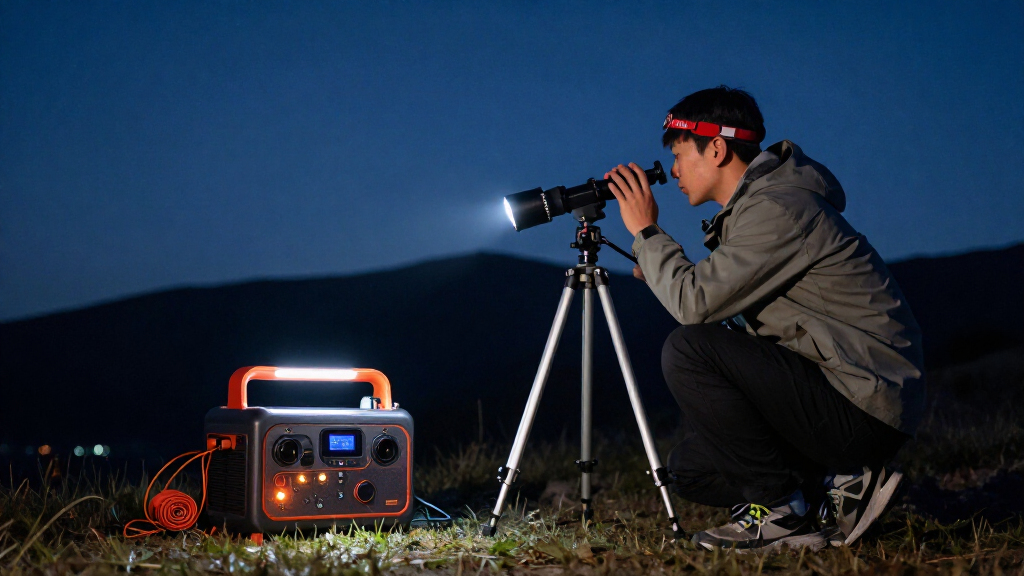
I compared these 15 stations through the needs of a portable astrophotography setup: usable energy for a night in the field, output suited to the connected equipment, recharge options, and the amount of capacity a buyer must carry. Capacity and output were treated separately because watt-hours affect runtime while watts set the load a station can support. I also considered listed battery chemistry, included solar equipment, portability clues, and how clearly the product information specifies its capabilities.
The order favors models with a practical balance for common imaging loads, then recognizes specialists for compact carry, beginner-friendly bundles, and extended sessions. Larger capacity alone did not earn a top position: a heavy station may be a poor match for a remote site or a small tracker. Listings with limited technical detail are harder to recommend for sensitive or demanding rigs, so I call out fit and tradeoffs rather than assuming unlisted features.
| portable astrophotography power station | Battery type |
|---|---|
| BLUETTI Elite 30 V2 Portable P | LFP |
| Portable Power Station 89.6Wh | — |
| MARBERO M82 Portable Power Sta | — |
| BLUETTI Elite 10 Mini Portable | LiFePO4 with BMS protection |
| EBL Acc2400 Portable Power Sta | LiFePO4 |
| DARAN Portable Power Station | LiFePO4 |
| Jackery Explorer 300 Portable | — |
| EnginStar Portable Power Stati | — |
| Portable Power Station | LiFePO4 |
| Dabbsson 600L Portable Power S | Semi-solid LiFePO4 |
| MARBERO M823 300W Portable Pow | Lithium-ion |
| Anker SOLIX C1000 Portable Pow | LiFePO4 |
| LIBRIDS 640Wh Portable Power S | LiFePO₄ |
| Daran Portable Power Station | LiFePO4 |
| DJI Power 1000 V2 Portable Pow | LFP |
Factors to Consider When Choosing Portable Astrophotography Power Stations
Choosing a station starts with the gear and the session, not the biggest capacity number on a product page. I would map the load, the hours away from an outlet, and the trip from the car to the observing spot before comparing models. These broader checks help avoid a station that is technically powerful but awkward or poorly matched in the field.
Estimate a Full Session’s Energy Use
List every device that will draw power, including the mount, camera, dew control, mini computer, and phone or tablet. Multiply each device’s watts by its expected operating hours to estimate watt-hours, then add a reserve for cold conditions and unexpected delays. For devices with changing draw, use a realistic average rather than the peak printed on the adapter. AC conversion can consume some stored energy, so a DC connection may stretch runtime when the equipment supports it. A common mistake is treating a battery’s advertised capacity as energy that all reaches the load. Leave margin instead of planning to finish a long session at the station’s limit.
Check Starting and Peak Loads
The station’s continuous output must cover the equipment that may run at the same time. Some devices draw a brief surge when they start, so compare their startup requirement with the station’s surge rating as well. A higher watt rating does not extend a session; it only describes how much load the unit can support. Conversely, a large battery can still be unsuitable if its output is below a device’s requirement. Check whether the relevant rating applies to AC, USB, or DC ports, since those outputs can differ. When the equipment documentation is unclear, contact its maker or measure the load before relying on a field setup.
Choose Connections That Match the Rig
Count the ports you need and identify the connector and voltage for each device before buying. A station with multiple outlets can simplify cable routing, but port count does not guarantee that each port can deliver the required power simultaneously. AC adapters add conversion losses and extra cables, while compatible DC outputs may be more efficient and easier to secure. Avoid loose adapter chains in a dark observing area, where an accidental tug can interrupt tracking or imaging. Keep sensitive equipment on stable, properly rated connections and use the cable lengths your setup needs. The cleanest setup is the one with fewer conversions and connections that match your equipment’s specifications.
Plan for Cold, Dew, and Long Nights
Low temperatures can reduce the energy a battery delivers, so a winter session may not match a capacity estimate made at room temperature. Keep the station within its stated operating range and shield it from moisture without blocking airflow. Dew heaters can draw power for many hours, making them a larger part of the energy budget than a short camera exposure suggests. If the forecast or session length is uncertain, a reserve battery or a planned recharge can matter more than a small increase in rated output. Check the manufacturer’s charging and storage guidance before taking a unit into cold conditions. Do not count on solar charging to recover a full night’s consumption unless panel output and daylight conditions support that plan.
Balance Capacity Against the Trip to the Site
A high-capacity station can keep more equipment running, but its mass and footprint affect whether it is practical at a remote observing location. Think through the entire route: stairs, uneven ground, a long walk, or limited vehicle space can change which capacity is useful. For a lightweight tracker and camera, a compact unit may keep the setup manageable; a larger telescope, computer, and heated accessories can justify carrying more energy. Solar panels add flexibility but also take time to deploy and depend on useful sunlight, which may be limited during a night-focused trip. Compare the actual station and panel kit weight, not only the battery capacity. Buy capacity for the load you expect to bring, with enough margin for the session.
Decide When Battery Chemistry and Recharge Speed Matter
Battery chemistry affects cycle life, weight, charging behavior, and operating guidance, so it belongs in a long-term ownership decision as well as a field-use decision. Several picks here list LiFePO4 or LFP cells, but a chemistry label alone does not tell you how a complete station performs. Compare the stated cycle information, charge limits, warranty, and temperature guidance where available. Faster recharge can help when you have a short turnaround between nights, while a solar input can be useful for multi-day trips with dependable daylight. Do not assume a compatible panel will charge at its full rated output in real conditions. Pay more for the characteristics you will use repeatedly, such as a longer run time or a charging route that fits your trips.
Frequently Asked Questions
How much capacity do I need for a full night of astrophotography?
There is no single capacity that fits every rig: a mount and camera draw much less than a setup that also runs a computer and dew heaters. Add the expected watt-hours for each device across the planned session, then leave room for cold weather, conversion losses, and a longer-than-planned night. Compare that estimate with the station’s stated capacity, recognizing that not all stored energy reaches connected equipment. The 88Wh to 128Wh options in this roundup suit a narrower, low-draw role than the roughly 1kWh and larger models. A measured load or reliable equipment specification gives a better estimate than guessing from device count.
Can a compact 100Wh-class station run a telescope mount and camera together?
It may, if both devices’ combined draw and connection requirements fit the station’s output and the session is short enough for its capacity. Check continuous output, any startup surge, and the limits for the exact ports you plan to use. Then estimate runtime from the devices’ average draw, with a reserve for accessories such as dew control. A compact unit is easier to carry, but the 89.6Wh models in this roundup leave less room for long sessions or added loads than the larger options. If you cannot verify the draw, a higher-capacity station offers more margin.
Is a solar panel useful when I am imaging at night?
Solar can replenish a station during daylight on a multi-day trip, but it does not solve the nighttime energy budget by itself. Panel output varies with sun angle, shade, weather, and charging limits, so a panel’s rated wattage is not a guarantee of the energy it will deliver. The Jackery Explorer 300 bundle includes a 40W panel, which makes it a convenient entry point for daytime top-ups. For a single overnight session, size the battery to the equipment first and treat solar as a recharge option. Check panel compatibility and charging input limits before assembling a separate kit.
Should I choose a LiFePO4 station for astrophotography?
LiFePO4 can be appealing if you expect frequent cycling and want to compare cycle life alongside capacity. This roundup includes LiFePO4 listings from compact Daran units to the much larger EBL Acc2400, showing that chemistry does not determine whether a station is portable for your trip. Review the maker’s cycle-life conditions, temperature limits, weight, and warranty rather than relying on the chemistry name alone. Cold-weather charging and operating guidance matter for outdoor astronomy. If a station will see only occasional use, port fit, runtime, and carry weight may matter more to your decision.
Is a 1kWh station worth carrying to a dark-sky site?
A station around 1kWh can make sense when your rig includes several continuous loads or you want capacity for more than one session. The Anker SOLIX C1000 and DJI Power 1000 V2 sit in that class, while the EBL Acc2400 goes substantially higher for buyers with heavier energy needs. The tradeoff is more equipment to transport, and the largest battery is not automatically the best choice for a remote location. Estimate your actual night’s consumption and consider the route from your vehicle to the observing spot. If your load is modest, a smaller unit may be easier to carry without sacrificing useful runtime.
Conclusion
I would start with the BLUETTI Elite 30 V2 as the best overall for buyers seeking a capable middle ground between carry size and output. For a best value in practical setup, the Jackery Explorer 300 is a straightforward beginner choice because the included panel gives it a ready-made recharge option; keep its capacity limits in mind. The best premium direction is the Anker SOLIX C1000 or DJI Power 1000 V2 for a longer session with more demanding gear, while the EBL Acc2400 fits buyers who prioritize the most listed capacity and accept the added bulk. For a compact tracker or camera rig, consider the smaller 89.6Wh to 128Wh models after checking runtime and port needs. Match the station to your measured load and travel constraints, and the right choice should become clear.