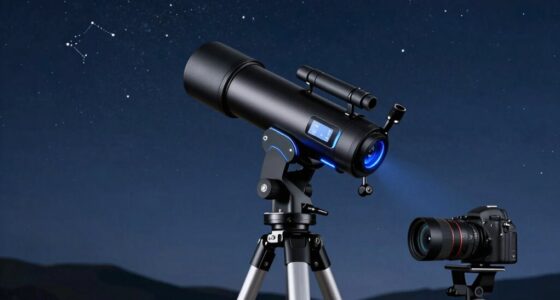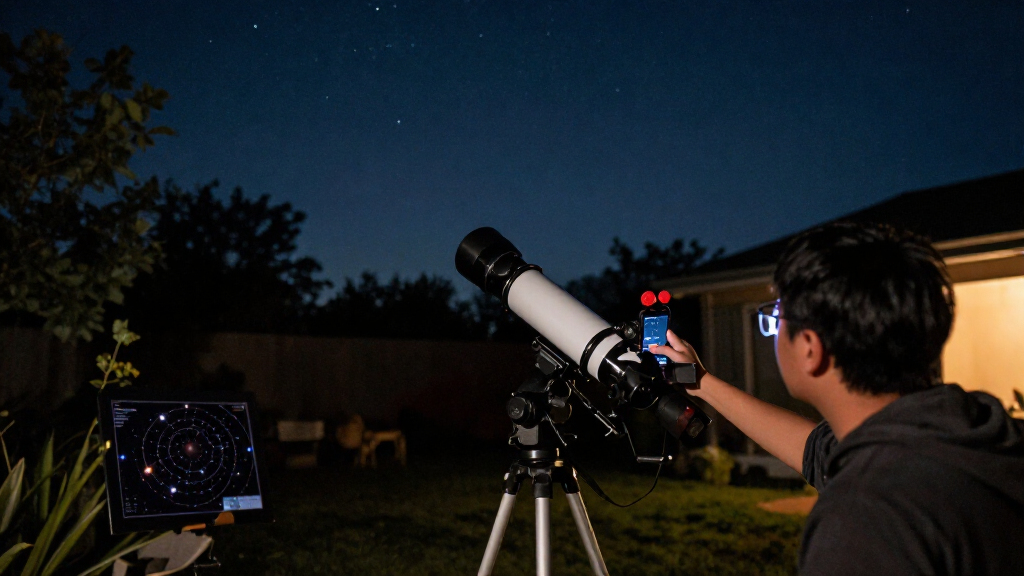
The best smart telescope camera overall is the ZWO Seestar S30 Pro for buyers seeking an integrated imaging system, while the DWARFLAB Dwarf 3 stands out as a portable all-in-one option and the SVBONY SV305C Pro suits astronomers who want a dedicated camera for an existing telescope. The main choice is between a telescope-camera system that handles much of the setup and a camera that relies on your own optical tube, mount, and software. Screen-equipped 4K models emphasize direct viewing and simple operation, while dedicated astronomy cameras prioritize sensor control and compatibility. Those differences affect portability, setup effort, and how much room you have to grow. Continue reading for the full breakdown of all 15 smart telescope cameras and how I would match them to different buyers.

Prime made for students and young adults
- Fast, free delivery for dorm and study essentials
- Prime Video and Amazon Music included
- Member-only deals
Key Takeaways
- The Seestar S30 Pro and Dwarf 3 represent the integrated-system route: they combine telescope and imaging features, reducing the need to assemble a separate camera-and-optics setup.
- Dedicated SVBONY cameras fill a different role: the SV305C Pro and SV305C are add-on imaging cameras, so their value depends on the telescope, mount, and software a buyer already owns.
- Sensor resolution alone does not settle the choice: the SV205’s 7.05MP figure does not make it an automatic upgrade over lower-resolution options; sensor behavior, compatibility, and intended targets matter too.
- Built-in screens and wireless features favor convenience, not necessarily astronomy flexibility: models from Telonixium, Yunir, FIBONAX, and others emphasize standalone viewing, while specialist cameras may offer a more expandable workflow.
- Product category labels can hide very different setups: a smart telescope, a telescope eyepiece camera, and a USB astronomy camera are not interchangeable, so buyers should confirm what optical and mounting equipment is included.
| DWARFLAB Dwarf Mini Smart Telescope |  | Best Compact Smart Telescope | Sensor: Sony IMX662, 1/2.8-inch, 2.9 μm pixels | Focal length: 150 mm | Objective lens diameter: 30 mm | VIEW LATEST PRICE | See Our Full Breakdown |
| SVBONY SV305C 2.1MP Color Astrophotography Camera |  | Best for Planetary and Lunar Capture | Sensor: Sony IMX662 back-illuminated CMOS | Resolution: 2.1 MP | Pixel size: 2.9 µm | VIEW LATEST PRICE | See Our Full Breakdown |
| DWARFLAB Dwarf 3 Smart Telescope |  | Best for Day-and-Night Versatility | Mount: Altazimuth | Focus: Autofocus | Objective lens diameter: 35 mm | VIEW LATEST PRICE | See Our Full Breakdown |
| SVBONY SV105 Telescope Camera, 1.25-inch IMX307 CMOS Color Eyepiece Camera |  | Best Beginner Plug-and-Play Camera | Sensor: 1/2.8-inch Sony IMX307 color CMOS | Video resolution: 1920 × 1080 | Maximum frame rate: 30 fps | VIEW LATEST PRICE | See Our Full Breakdown |
| FIBONAX Nova200 1080p USB Telescope Camera |  | Best for a Lightweight Filter-Ready Setup | Sensor: 2MP CMOS | Video resolution: 1920 × 1080 | Maximum frame rate: 30 fps | VIEW LATEST PRICE | See Our Full Breakdown |
| Digital Telescope, Professional Auto-Focus Digital Refractor Smart Telescope |  | Best for Autofocus Convenience | Objective aperture: 80 mm | Focal length: 300 mm | Advertised magnification: Up to 350× | VIEW LATEST PRICE | See Our Full Breakdown |
| Smart Telescope for Adults Kids Beginners, 4K Digital Electronic Astrophotography Telescope with 3-inch Flip Screen, App, Remote Control, 64G Card |  | Best for Family Sharing | Objective aperture: 78 mm | Focus type: Manual | Imaging: 4K video; up to 30 MP photos | VIEW LATEST PRICE | See Our Full Breakdown |
| Telonixium 4K Wireless Telescope Eyepiece Camera | 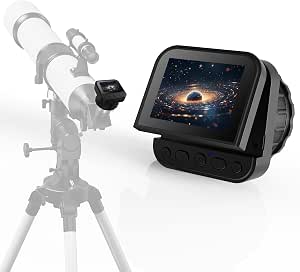 | Best Add-On Camera for Existing Telescopes | Sensor: 8 MP CMOS | Video resolution: 4K | Maximum image resolution: 64 MP | VIEW LATEST PRICE | See Our Full Breakdown |
| Yunir 4K Digital Telescope Eyepiece Camera with 3-Inch Display and Night Vision | 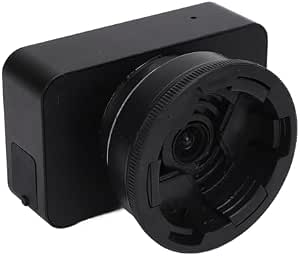 | Best for Low-Light Eyepiece Recording | Video resolution: 4K | Display: 3-inch color screen | Eyepiece compatibility: 22–46 mm | VIEW LATEST PRICE | See Our Full Breakdown |
| ZWO Seestar S30 Pro Smart Telescope |  | Best for Automated Deep-Sky Imaging | Mount: Alt-azimuth; supports equatorial mode | Focal length: 160 mm | Field of view: 4.6 degrees | VIEW LATEST PRICE | See Our Full Breakdown |
| Pegasus Astro SmartEye Telescope Eyepiece and Camera |  | Best for Simultaneous Viewing and Imaging | Sensor: Sony IMX533, 9 MP | Accessory fit: Standard 2-inch | Mount type: Altazimuth | VIEW LATEST PRICE | See Our Full Breakdown |
| FASHIONARI 80mm Refractor Smart Telescope with 4K Camera and Autofocus |  | Best for App-Controlled 4K Capture | Telescope type: Refractor | Objective aperture: 80 mm | Focal length: 300 mm | VIEW LATEST PRICE | See Our Full Breakdown |
| SVBONY SV305C Pro Telescope Camera with 2MP IMX662 Sensor |  | Best for High-Speed Planetary Video | Sensor: 2 MP IMX662 CMOS | Video resolution: 1920×1080 | Maximum frame rate: 107 fps | VIEW LATEST PRICE | See Our Full Breakdown |
| SVBONY SV205 7.05MP Telescope Camera |  | Best for Higher-Resolution Lunar Capture | Sensor: 7.05 MP IMX415 CMOS | Sensor size: 1/2.8 inch | Pixel size: 1.45 × 1.45 µm | VIEW LATEST PRICE | See Our Full Breakdown |
| YOTOMIGUO Smart Refractor Telescope with 4K Camera |  | Best for Families Who Want Direct Viewing | Telescope type: Refractor | Objective aperture: 80 mm | Focal length: 300 mm (f/8.89) | VIEW LATEST PRICE | See Our Full Breakdown |
| smart telescope camera | Sensor |
|---|---|
| DWARFLAB Dwarf Mini Smart Tele | Sony IMX662, 1/2.8-inch, 2.9 μm pixels |
| SVBONY SV305C 2.1MP Color Astr | Sony IMX662 back-illuminated CMOS |
| DWARFLAB Dwarf 3 Smart Telesco | — |
| SVBONY SV105 Telescope Camera | 1/2.8-inch Sony IMX307 color CMOS |
| FIBONAX Nova200 1080p USB Tele | 2MP CMOS |
| Digital Telescope | — |
| Smart Telescope for Adults Kid | — |
| Telonixium 4K Wireless Telesco | 8 MP CMOS |
| Yunir 4K Digital Telescope Eye | — |
| ZWO Seestar S30 Pro Smart Tele | — |
| Pegasus Astro SmartEye Telesco | Sony IMX533, 9 MP |
| FASHIONARI 80mm Refractor Smar | — |
| SVBONY SV305C Pro Telescope Ca | 2 MP IMX662 CMOS |
| SVBONY SV205 7.05MP Telescope | 7.05 MP IMX415 CMOS |
| YOTOMIGUO Smart Refractor Tele | — |
More Details on Our Top Picks
DWARFLAB Dwarf Mini Smart Telescope
The Dwarf Mini is the most camera-like all-in-one option here for someone who wants automated observing without assembling a separate camera and telescope. At 1.85 lb, it is easier to pack than the Dwarf 3, while its app handles target selection and tracking. Equatorial mode and exposures up to 90 seconds give it more room for astrophotography than the basic USB eyepiece cameras, including the SVBONY SV105. Its light-pollution filters and cloud image processing also support a guided, phone-based workflow rather than a hands-on capture setup. The tradeoff is a small 30 mm objective, which limits light gathering, and operation depends on a smartphone. Buyers who want to choose their own telescope optics or work directly with computer imaging software will have more flexibility with a dedicated camera such as the SVBONY SV305C.
Pros:- Lightweight 1.85 lb design is easy to carry to observing sites.
- App-based target selection and automated tracking reduce manual setup.
- Equatorial mode and exposures up to 90 seconds support longer astrophotography captures.
- Includes light-pollution filters and cloud image processing.
Cons:- The 30 mm objective gathers less light than larger telescope systems.
- Smartphone app control is required for operation.
- The listed battery type is nonstandard, which may complicate replacements.
Best for: Travelers and newer astrophotographers who want a lightweight, app-guided telescope with automated tracking and built-in imaging tools.
Not ideal for: Buyers who want a larger light-gathering aperture, computer-first camera control, or a system that works without a smartphone.
- Sensor:Sony IMX662, 1/2.8-inch, 2.9 μm pixels
- Focal length:150 mm
- Objective lens diameter:30 mm
- Field of view:2.45 degrees
- Mount:Altazimuth and equatorial
- Maximum single-frame exposure:90 seconds
- Weight:1.85 lb (840 g)
- Dimensions:2.39 × 3.95 × 7.23 in
Our verdict“Choose the Dwarf Mini if portability and automated, phone-guided imaging matter more than aperture or hands-on camera flexibility.”
SVBONY SV305C 2.1MP Color Astrophotography Camera
The SVBONY SV305C is a dedicated camera for telescope owners who want to record the Moon and planets, not a self-contained smart telescope. Its IMX662 back-illuminated sensor, low readout noise, and red-light sensitivity are suited to detailed planetary capture, while the 128 MB buffer helps keep frame transfers steadier during high-speed recording. Region-of-interest capture lets you crop around a target, and 2×2 binning offers another way to tune sensitivity. Compared with the SVBONY SV105, the SV305C adds these capture controls and a larger buffer; unlike the DWARFLAB Dwarf Mini, it does not provide its own optics, tracking, or guided target selection. It is a better fit for an engaged observer building a telescope-based imaging setup. The USB 2.0 connection and planetary focus are limiting factors for buyers seeking a simple all-in-one or broad deep-sky system.
Pros:- IMX662 back-illuminated sensor offers low readout noise and improved red-light sensitivity.
- 128 MB image buffer helps reduce dropped or damaged frames during transfer.
- ROI and 2×2 binning allow capture settings to be adapted to the target.
- 1.25-inch connection and included CS-C adapter ring support different optical setups.
Cons:- Designed mainly for planetary, lunar, and EAA use rather than general-purpose imaging.
- USB 2.0 is less suited to fast data transfer than newer interfaces.
- The built-in UV/IR cut filter is not removable.
Best for: Telescope owners focused on lunar, planetary, or electronic-assisted observing who want ROI, binning, and steadier frame transfer.
Not ideal for: Beginners looking for an all-in-one smart telescope, or deep-sky imagers who need a broad-field automated tracking system.
- Sensor:Sony IMX662 back-illuminated CMOS
- Resolution:2.1 MP
- Pixel size:2.9 µm
- Full well capacity:38 ke⁻
- Image buffer:128 MB DDRIII
- Interface:USB 2.0
- Mount interface:1.25-inch, with CS interface and CS-C adapter ring
- Capture modes:Planetary high-speed and long-exposure
Our verdict“Pick the SV305C if you already have a telescope and want more capture control for planets and the Moon than the simpler SV105 offers.”
DWARFLAB Dwarf 3 Smart Telescope
The DWARFLAB Dwarf 3 earns its place by doing more than celestial imaging: its dual imaging lenses and tracking features are intended for wildlife and landscape subjects as well as the night sky. That gives it a broader role than the Dwarf Mini, whose listed setup is more focused on compact astronomy and longer single-frame exposures. The Dwarf 3 offers autofocus, Auto GOTO, and 4K tracking, with app-based processing to simplify capture. Its ability to pair with a smartphone, laptop, or computer gives buyers more device options than products that list smartphone compatibility alone, though it remains an app-controlled system rather than a bare camera for a telescope you already own. At 2.28 kg, it is notably heavier than the Dwarf Mini. Buyers should also treat the 4K tracking claim as a feature description, not a guarantee of image quality.
Pros:- Dual imaging system is intended for daytime and nighttime subjects.
- Auto GOTO and autofocus reduce manual target and focus adjustments.
- 4K tracking supports recording moving subjects as well as celestial targets.
- Includes a carrying bag and accessories, with a listed two-year warranty.
Cons:- At 2.28 kg, it is heavier than the Dwarf Mini for travel.
- Compatible use still depends on a smartphone, laptop, or computer.
- Promotional image-quality and ease-of-use claims are not independently substantiated in the supplied product information.
Best for: Travel and outdoor imaging enthusiasts who want one app-controlled system for astronomy, wildlife, and landscape subjects.
Not ideal for: Astronomers prioritizing the lightest travel kit, or experienced imagers who want a standalone camera to pair with their own telescope.
- Mount:Altazimuth
- Focus:Autofocus
- Objective lens diameter:35 mm
- Weight:2.28 kg
- Dimensions:2.56 × 8.74 × 5.59 in (D × W × H)
- Tracking and pointing:4K tracking, Auto GOTO, EQ mode
- Battery:1 lithium-ion battery included
- Compatible devices:Smartphone, laptop, personal computer
Our verdict“Choose the Dwarf 3 if daytime tracking and broader subject coverage justify carrying more weight than the compact Dwarf Mini.”
SVBONY SV105 Telescope Camera, 1.25-inch IMX307 CMOS Color Eyepiece Camera
The SVBONY SV105 is a straightforward entry into telescope-camera imaging: it replaces an eyepiece with a USB camera that sends a live view to a computer. Its 1.25-inch barrel fits many telescope focusers, and the IMX307 sensor records lunar and planetary video at up to 30 fps in Full HD. That makes it a more hands-on and lower-complexity starting point than the app-driven DWARFLAB Dwarf Mini, but it does not supply the Mini’s automated tracking, target selection, or integrated optics. The SV105 also lists support for Windows, Linux, and Apple laptops, with capture software needed for use; Apple phones and tablets are not compatible. Its low-light compensation may help the live image, but the product data does not make it a substitute for a larger-aperture setup or a dedicated deep-sky camera.
Pros:- Standard 1.25-inch barrel connects directly to many telescope focusers.
- Captures 1920 × 1080 video at up to 30 fps.
- USB connection and listed plug-and-play operation offer a simple computer-based start.
- M28.5×0.6 threading supports compatible telescope filters.
Cons:- Primarily suited to the Moon, planets, and terrestrial targets rather than deep-sky imaging.
- Requires a computer and compatible capture software; Apple phones and tablets are unsupported.
- Manual focus and a fixed mount provide less automation than the Dwarf Mini.
Best for: First-time telescope imagers who own a compatible telescope and want to capture Moon or planet video on a laptop or computer.
Not ideal for: Buyers seeking a self-contained smart telescope, mobile-phone capture, or a camera geared toward deep-sky imaging.
- Sensor:1/2.8-inch Sony IMX307 color CMOS
- Video resolution:1920 × 1080
- Maximum frame rate:30 fps
- Mount:1.25-inch, M28.5×0.6 thread
- Field of view:1.5 degrees
- Focus:Manual
- Connectivity:USB 2.0
- Weight:0.29 kg
Our verdict“Choose the SV105 if you already own a telescope and want a basic computer-connected camera for lunar and planetary video.”
FIBONAX Nova200 1080p USB Telescope Camera
The FIBONAX Nova200 is a compact USB eyepiece camera for people who want a simple way to record the Moon and planets through a telescope. It captures 1080p video at up to 30 fps, much like the SVBONY SV105, but its removable UV/IR cut filter gives the owner more freedom to change the optical path when a different filter setup is needed. The CNC aluminum body weighs 110 g, making it an easy addition to a portable telescope kit. UVC support is intended to simplify connection across Windows, macOS, and Linux, while the optional ASCOM driver is limited to Windows. Unlike the DWARFLAB Dwarf Mini, the Nova200 has no built-in optics, tracking, or target automation; it depends on a separate telescope and computer. Its planetary focus also makes it a narrow choice for buyers hoping to image a wide range of deep-sky objects.
Pros:- Records 1920 × 1080 video at up to 30 fps.
- Removable UV/IR cut filter allows more control over the imaging setup.
- UVC plug-and-play support is listed for Windows, macOS, and Linux.
- 110 g CNC aluminum body is compact for travel.
Cons:- Designed mainly for lunar and planetary imaging.
- Optional ASCOM driver is available only for Windows.
- Requires a separate telescope and USB host, unlike the self-contained Dwarf Mini.
Best for: Telescope owners who want a light, USB-connected camera for lunar or planetary video and may want to remove the UV/IR filter.
Not ideal for: Buyers who want an all-in-one smart telescope, automated tracking, or a camera designed primarily for deep-sky imaging.
- Sensor:2MP CMOS
- Video resolution:1920 × 1080
- Maximum frame rate:30 fps
- Mount:1.25-inch telescope eyepiece holder
- Filter:Removable UV/IR cut filter
- Connectivity:USB, UVC
- Weight:110 g
- Compatible systems:Windows, macOS, Linux
Our verdict“Pick the Nova200 if you need a lightweight, filter-flexible USB camera for planetary work and already have a telescope.”
Digital Telescope, Professional Auto-Focus Digital Refractor Smart Telescope
Autofocus and dual displays make this refractor a straightforward choice for buyers who want to frame and record without attaching a phone. Its 80 mm aperture and 300 mm focal length are specified, but the advertised 350× magnification does not by itself indicate how much fine detail the optics can resolve. Compared with the manual-focus 78 mm model in this roundup, this one trades tactile focusing for less hands-on adjustment; the other model includes app control and a remote, which this listing does not specify.
The fold-out screen and eyepiece screen offer more than one way to view a target, while the 4,500 mAh battery is rated for up to six hours. I would shortlist it for casual Moon viewing and daytime spotting, not buyers seeking proven deep-sky tracking or detailed planetary imaging. The listing gives few specifics about tracking and does not clarify how the high magnification is achieved.
Pros:- Autofocus reduces the need for repeated manual focus adjustments.
- Dual viewing screens provide framing options without relying on a smartphone.
- Up to six hours of stated runtime from a 4,500 mAh rechargeable battery.
- Supports TF card storage up to 512 GB.
Cons:- The listing does not provide sensor resolution or detailed imaging specifications.
- No app control, remote shutter, or automatic tracking is specified.
- The claimed 350× magnification lacks enough detail to judge practical image quality.
Best for: Beginners who want a self-contained scope with autofocus, onboard recording, and both an eyepiece and external screen for casual astronomy and daytime viewing.
Not ideal for: Astrophotographers who need documented tracking, sensor specifications, or a clear optical explanation of the advertised magnification.
- Objective aperture:80 mm
- Focal length:300 mm
- Advertised magnification:Up to 350×
- Focus type:Autofocus
- Imaging:4K photos and video
- Displays:Eyepiece screen and foldable external display
- Battery:4,500 mAh; up to 6 hours stated runtime
- Storage support:TF card up to 512 GB
Our verdict“Choose this model for autofocus and self-contained viewing, but look elsewhere if app-based control or verified tracking matters more.”
Smart Telescope for Adults Kids Beginners, 4K Digital Electronic Astrophotography Telescope with 3-inch Flip Screen, App, Remote Control, 64G Card
This model makes shared viewing its clearest advantage: a 3-inch flip screen, smartphone app, and wireless remote let a group follow the image without crowding around an eyepiece. The included 64 GB card also means buyers can start saving footage without arranging separate storage first. Compared with the autofocus refractor in this roundup, it gives up hands-free focusing in favor of a manual focus ring and adds app and remote control—useful if you want to frame from a distance or share files to a phone.
The 78 mm aperture and adjustable eyepiece provide a familiar way to refine the view, but manual focusing takes practice, especially for younger users. Its 4K and 30 MP claims describe output formats, not a guarantee of fine astronomical detail. I would treat it as an accessible recording scope for the Moon and casual observing rather than a substitute for a tracked deep-sky system such as the Seestar S30 Pro.
Pros:- Flip-out screen makes live viewing easier to share with a group.
- App and wireless remote support phone viewing and hands-off capture.
- Manual focus ring gives the observer direct control over sharpness.
- Includes a 64 GB card and supports cards up to 512 GB.
Cons:- Manual focus requires adjustment and can be less convenient for beginners than autofocus.
- The listing does not specify automatic GoTo targeting or tracking.
- Advertised 4K video and 30 MP photos do not establish actual astronomical detail.
Best for: Families and first-time observers who want a shared screen, phone transfers, remote capture, and included storage for casual sessions.
Not ideal for: Buyers who prioritize automatic focusing, tracked deep-sky imaging, or minimal setup and adjustment for children observing alone.
- Objective aperture:78 mm
- Focus type:Manual
- Imaging:4K video; up to 30 MP photos
- Display:3-inch flip-out external screen and electronic eyepiece
- App control:Supported
- Wireless remote range:Up to 85 ft
- Included storage:64 GB card
- Maximum supported storage:512 GB
Our verdict“Pick this for family-friendly screen sharing and remote capture, rather than for automatic tracking or effortless focusing.”
Telonixium 4K Wireless Telescope Eyepiece Camera
Unlike the complete refractor scopes elsewhere in this roundup, the Telonixium is an eyepiece camera: it attaches to compatible equipment rather than providing a telescope of its own. Its mounting groove covers eyepieces from 23 to 60 mm, making it the most flexible fit option among these standalone camera add-ons. The rotatable 2.8-inch screen supports local framing, while Wi-Fi and an app add remote viewing and time-lapse features.
The 8 MP CMOS sensor records 4K video, and the listed 64 MP maximum image resolution should not be read as equivalent to native sensor detail. Compared with the Yunir camera, Telonixium offers a wider stated eyepiece compatibility range and Wi-Fi features, while Yunir has a larger 3-inch display and mentions night vision. The 32-foot Wi-Fi range is modest, and buyers need to provide a microSD card. This makes the most sense for telescope owners who want a compact recording add-on, not someone shopping for a ready-to-use smart telescope.
Pros:- Broad stated compatibility with eyepieces from 23 to 60 mm.
- Rotatable IPS screen allows on-device framing.
- Wi-Fi app supports remote viewing and time-lapse.
- Supports microSD cards up to 512 GB.
Cons:- The 32-foot Wi-Fi range limits remote positioning.
- A microSD card is required and is not specified as included.
- It is an accessory camera, not a telescope or tracking mount.
Best for: Telescope owners whose eyepieces measure 23–60 mm and who want a screen-equipped camera with app access and time-lapse recording.
Not ideal for: Buyers who need a complete telescope, a long-range wireless connection, or storage included in the box.
- Sensor:8 MP CMOS
- Video resolution:4K
- Maximum image resolution:64 MP
- Display:2.8-inch rotatable IPS
- Eyepiece compatibility:23–60 mm
- Wi-Fi range:32 ft
- Storage support:microSD up to 512 GB
- Battery:2,000 mAh rechargeable lithium polymer
- Focus type:Manual
Our verdict“Choose the Telonixium to add recording and app viewing to a compatible telescope, not as a standalone smart telescope.”
Yunir 4K Digital Telescope Eyepiece Camera with 3-Inch Display and Night Vision
The Yunir is a camera attachment for an existing telescope or microscope, not a complete smart telescope, and its standout feature is stated night-vision support for low-light viewing. A built-in 3-inch color screen also gives it a larger onboard viewing area than the Telonixium’s 2.8-inch display. Its 22–46 mm fit range is narrower than Telonixium’s 23–60 mm range, so checking eyepiece diameter before buying is especially important.
It records 4K video and supports cards up to 128 GB, but the card is not included. Manual focus means the user must handle sharpness rather than letting the camera do it, and the listing provides no sensor resolution or Wi-Fi control details. Compared with the Seestar S30 Pro, the Yunir does not offer a self-contained telescope, GoTo targeting, or tracking; its appeal is simpler and more specific: add a screen and recording to compatible optical gear.
Pros:- Night-vision support is specified for low-light viewing.
- Built-in 3-inch screen enables live viewing without a phone.
- Records 4K video through compatible telescope or microscope eyepieces.
- Supports memory cards up to 128 GB.
Cons:- A memory card is not included.
- Manual focus requires user adjustment.
- The 22–46 mm compatibility range is narrower than the Telonixium’s stated range.
Best for: Owners of compatible telescopes or microscopes who want an onboard display and low-light recording without replacing their existing optics.
Not ideal for: First-time buyers seeking a complete telescope, automatic tracking, phone-app control, or storage included with the camera.
- Video resolution:4K
- Display:3-inch color screen
- Eyepiece compatibility:22–46 mm
- Focus type:Manual
- Low-light feature:Night vision
- Maximum supported storage:128 GB memory card
- Objective lens diameter:46 mm
- Field of view:400 meters
- Dimensions:5.11 × 3.14 × 2.36 in
Our verdict“Pick the Yunir if low-light viewing and a larger built-in screen matter more than broad eyepiece fit or app control.”
ZWO Seestar S30 Pro Smart Telescope
The Seestar S30 Pro stands apart from the eyepiece cameras here because it is a complete app-controlled telescope with GoTo targeting and automatic tracking. Those features take much of the locating work out of imaging: the scope can aim at a selected target and follow it during a session. Its dual-camera system, one-tap imaging, and AI-assisted noise reduction are aimed at producing shareable results with less manual image handling. Compared with the screen-equipped refractors in this roundup, it relies on a phone or tablet rather than a built-in display.
At 3.64 lb, it is portable, and built-in light-pollution filters suit observers who cannot always travel to dark skies. Its stated 160 mm focal length and 4.6-degree field of view describe a wide-field instrument, while the listing explicitly says it is not intended for planetary observation. Imaging also requires a stable, stationary setup. I would choose it for automated deep-sky sessions, not close-up planetary work or handheld viewing.
Pros:- GoTo targeting and automatic tracking simplify finding and following targets.
- One-tap imaging and AI-assisted noise reduction reduce manual workflow.
- Built-in light-pollution filters support observing from urban locations.
- Portable design weighs 3.64 lb and supports equatorial mode.
Cons:- The listing says it is not intended for planetary observation.
- Deep-sky imaging requires a stationary setup for stable tracking.
- Viewing and control depend on a compatible smartphone or tablet rather than an onboard display.
Best for: Beginners and mobile astrophotographers who want app-based target selection, automated tracking, and one-tap deep-sky imaging in a portable system.
Not ideal for: Observers focused on detailed planetary viewing, buyers who want an onboard screen, or anyone who needs to image while moving the telescope.
- Mount:Alt-azimuth; supports equatorial mode
- Focal length:160 mm
- Field of view:4.6 degrees
- Focus:Autofocus and manual focus
- Imaging:Dual-camera system; 4K-quality images
- Control:App control, GoTo targeting, and automatic tracking
- Additional imaging features:One-tap imaging, mosaic stitching, AI-assisted noise reduction
- Weight:3.64 lb
- Power:Battery powered
Our verdict“Choose the Seestar S30 Pro for guided, automated deep-sky imaging; skip it if planetary close-ups are your main goal.”
Pegasus Astro SmartEye Telescope Eyepiece and Camera
The SmartEye’s defining advantage is that it combines an eyepiece and a Sony IMX533 9 MP camera, letting an observer view and capture at the same time rather than choosing between looking through the telescope and operating a separate camera. Its standard 2-inch fit also makes it a more natural match for telescope owners who already use that accessory size. Compared with the SVBONY SV305C Pro, this is the more viewing-oriented option; the SV305C Pro instead prioritizes high-frame-rate planetary capture and computer-based controls. The SmartEye can connect to laptops, phones, and tablets, but it is not a self-contained smart telescope, and its battery requirement adds another item to manage. The listed 1× zoom and 1-inch field of view also suggest less flexibility for framing than a dedicated imaging setup.
Pros:- Combines direct eyepiece viewing with imaging
- Sony IMX533 sensor is specified at 9 MP
- Fits standard 2-inch telescope accessories
- Works with laptops, smartphones, and tablets
Cons:- Requires a lithium-ion battery, adding a separate power need
- Listed 1× zoom and 1-inch field of view offer limited framing flexibility
- At 12 lb, the stated weight is substantial for an eyepiece camera
Best for: Telescope owners with a 2-inch focuser who want to observe and record through one eyepiece-camera unit using a phone, tablet, or laptop.
Not ideal for: Buyers seeking a complete standalone smart telescope, broad framing options, or a camera optimized for high-speed planetary video.
- Sensor:Sony IMX533, 9 MP
- Accessory fit:Standard 2-inch
- Mount type:Altazimuth
- Focus:Auto focus
- Power:Lithium-ion battery required
- Compatible devices:Laptop, smartphone, tablet
- Field of view:1 inch (listed)
- Weight:12 lb
- Warranty:1 year
Our verdict“Choose the SmartEye if simultaneous visual observing and capture matter more than a compact, high-speed imaging-only camera.”
FASHIONARI 80mm Refractor Smart Telescope with 4K Camera and Autofocus
The FASHIONARI packages an 80 mm refractor, 300 mm focal length, autofocus, and a 4K camera as a single system, so it suits beginners who want imaging controls rather than a bare camera that must be paired with a telescope. App and remote operation, plus photo and video modes, give it a more approachable setup than the computer-dependent SVBONY SV305C Pro. The tradeoff is that the SV305C Pro supplies clearer capture details, including its 107 fps rate and USB 3.0 interface, while the FASHIONARI description does not specify comparable video performance or sensor information. Its stated magnification reaches 350×, but the supplied data do not explain how useful that figure is for actual viewing. I would also treat the listed measurement data cautiously: the description gives an 80 mm aperture, while another measurement is reported as 1 mm.
Pros:- 80 mm aperture and 300 mm focal length are specified
- Autofocus reduces manual focusing work
- Includes a 4K astrophotography camera
- App and remote controls support photo and video capture
Cons:- Sensor model and video frame rates are not specified
- The listed 1 mm objective measurement conflicts with the stated 80 mm aperture
- The stated 350× magnification is not accompanied by performance details
Best for: Beginners who want a complete refractor with autofocus, app or remote controls, and 4K capture without building a camera-and-telescope setup.
Not ideal for: Imagers who need documented sensor, frame-rate, or connection details, or buyers who prefer specifications that are internally consistent.
- Telescope type:Refractor
- Objective aperture:80 mm
- Focal length:300 mm
- Camera:4K astrophotography camera
- Focus:Autofocus
- Maximum magnification:Up to 350× (listed)
- Controls:App and remote control
- Compatible devices:Computer, tablet, smartphone
- Warranty:1 year
Our verdict“Pick the FASHIONARI for an all-in-one, app-controlled 4K telescope, but skip it if you need well-documented imaging specifications.”
SVBONY SV305C Pro Telescope Camera with 2MP IMX662 Sensor
For planetary imaging, the SV305C Pro makes a clearer case than general-purpose smart telescope cameras: its 1920×1080 capture reaches 107 fps, and the IMX662 sensor, low stated readout noise, and HDR are aimed at recording fine detail in challenging light. USB 3.0, a 128 MB buffer, and an ST4 guiding port make it a more technical, computer-centered tool than the Pegasus Astro SmartEye, which adds direct eyepiece viewing and broader mobile-device compatibility. That focus also narrows its appeal. The SV305C Pro requires a computer to operate and does not support iPad, so it is not the convenient screen-free or tablet-first choice. Its manual focus and 1.25-inch format mean buyers must also match it to a compatible telescope and handle focusing themselves.
Pros:- Captures 1920×1080 video at up to 107 fps
- IMX662 sensor is specified with 0.7 e− readout noise and HDR support
- USB 3.0 and a 128 MB DDR buffer support continuous capture
- ST4 guiding interface supports compatible astronomy setups
Cons:- Requires a computer and does not support iPad
- Manual focus requires user adjustment
- Needs a compatible 1.25-inch telescope connection
Best for: Planetary imagers who use a computer and want fast 1080p capture, low-noise performance, and an ST4 guiding connection.
Not ideal for: Beginners seeking a self-contained telescope camera, iPad users, or observers who want autofocus and direct eyepiece viewing.
- Sensor:2 MP IMX662 CMOS
- Video resolution:1920×1080
- Maximum frame rate:107 fps
- Readout noise:0.7 e−
- Connection:USB 3.0, 5 Gbps
- Guiding interface:ST4
- Buffer:128 MB DDR
- Eyepiece size:1.25 inches
- Focus:Manual
Our verdict“Choose the SV305C Pro for computer-based, high-frame-rate planetary capture, not for simple mobile or standalone observing.”
SVBONY SV205 7.05MP Telescope Camera
The SV205 is the higher-resolution, more flexible video choice for buyers who want to record the Moon, planets, or terrestrial scenes through an existing telescope. Its 7.05 MP IMX415 sensor supports 2K MJPG video at up to 30 fps and a larger 3264×2160 YUV mode, though that mode drops to 15 fps. Compared with the SVBONY SV305C Pro, the SV205 trades the Pro’s much faster 107 fps 1080p capture and ST4 guiding port for more recorded pixels. That makes the Pro a stronger fit for high-speed planetary work, while the SV205 suits detail-focused capture where frame rate is less pressing. The 1.25-inch barrel and USB 3.0 connection keep setup straightforward for compatible telescopes, but this is still a computer-connected camera—not a phone or tablet telescope.
Pros:- 7.05 MP IMX415 sensor supports detailed imaging
- Offers 2K video at up to 30 fps and 3264×2160 YUV capture
- USB 3.0 connection and 1.25-inch barrel suit compatible telescopes
- Includes a USB cable, dust cover, cleaning cloth, and manual
Cons:- 3264×2160 YUV video is limited to 15 fps
- Requires a compatible 1.25-inch telescope connection
- Not compatible with Apple phones or tablets; macOS requires Astroamx Capture
Best for: Telescope owners who want a compact USB camera for higher-resolution lunar, planetary, or terrestrial video on Windows or Linux.
Not ideal for: Apple phone or tablet users, and planetary imagers who prioritize high frame rates over resolution.
- Sensor:7.05 MP IMX415 CMOS
- Sensor size:1/2.8 inch
- Pixel size:1.45 × 1.45 µm
- Connection:USB 3.0
- Barrel interface:1.25-inch
- Video modes:1920×1080 at up to 30 fps (MJPG); 3264×2160 at 15 fps (YUV)
- Compatible operating systems:Windows, Linux; macOS with Astroamx Capture
- Weight:9.6 oz
Our verdict“Choose the SV205 for higher-resolution capture through a compatible telescope, but choose the SV305C Pro when fast planetary video matters more.”
YOTOMIGUO Smart Refractor Telescope with 4K Camera
The YOTOMIGUO pairs an 80 mm refractor and autofocus with a foldable 3-inch screen, so families can view the camera feed without bringing a phone or laptop to the telescope. Its 4K photo and video modes, one-touch switching, and included 64 GB card make it more immediately usable as a family imaging setup than the SVBONY SV205, which needs a compatible telescope and computer. The tradeoff is less transparency about imaging performance: the YOTOMIGUO listing gives no sensor model or video frame rate, while the SV205 specifies its sensor and capture modes. The stated 350× maximum magnification also comes without practical performance guidance, so I would not use that number alone to judge what it can show. Its built-in screen favors simple local viewing over a modular camera setup.
Pros:- Foldable 3-inch screen allows direct viewing without an external device
- Captures 4K photos and videos with one-touch mode switching
- Includes a 64 GB memory card and supports storage up to 512 GB
- 80 mm aperture and autofocus suit an integrated beginner setup
Cons:- Sensor model and video frame rates are not specified
- The stated 350× maximum magnification has no supporting practical performance detail
- Built-in display and integrated design offer less flexibility than a separate telescope camera
Best for: Families and first-time observers who want a self-contained refractor with a built-in display, autofocus, and included storage.
Not ideal for: Experienced astrophotographers who need detailed sensor and frame-rate specifications, or buyers who want a modular camera for an existing telescope.
- Telescope type:Refractor
- Objective aperture:80 mm
- Focal length:300 mm (f/8.89)
- Display:Foldable 3-inch screen
- Camera:4K photo and video
- Focus:Autofocus
- Included storage:64 GB memory card
- Maximum supported storage:512 GB
- Maximum magnification:350× (listed)
Our verdict“Choose the YOTOMIGUO for family-friendly, screen-based observing and simple 4K recording, not for specification-led astrophotography.”
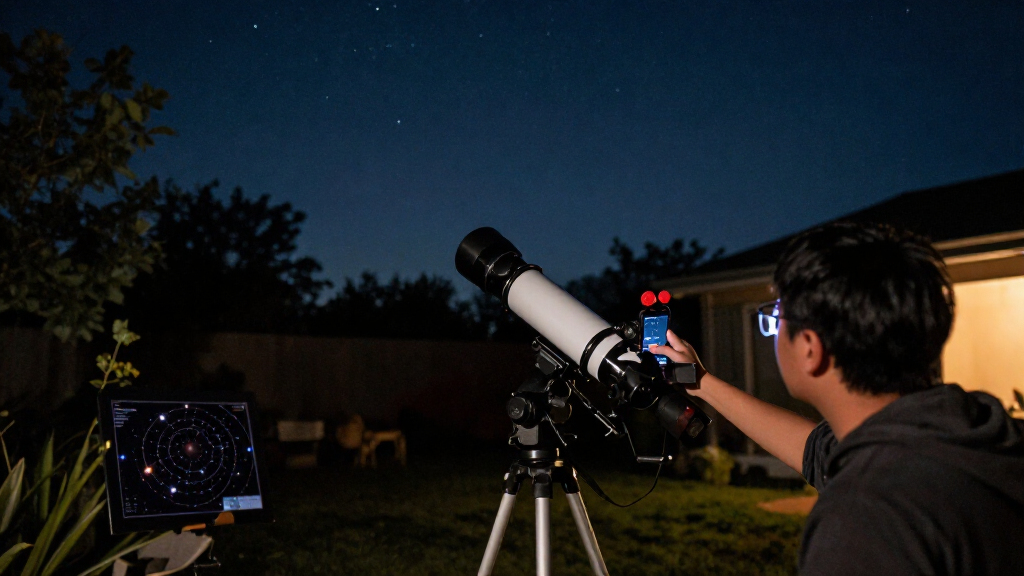
How We Picked
I compared these 15 products by the job they ask the buyer to do. The leading criteria were whether each option is a complete telescope-camera system or an add-on camera, how straightforward its stated controls and viewing workflow appear, what its sensor and imaging format suggest for its intended use, and how clearly it can fit into a broader astronomy setup. I also weighed portability, included viewing or storage features, and the potential need for extra optics, mounts, adapters, or software.
The ranking favors products with a clear and usable role in smart astronomy, rather than treating megapixels or a 4K label as a guarantee of better astronomical images. Integrated systems rank well for reducing setup friction; dedicated cameras earn their place when they offer a more specialized path for existing equipment. Less-established or sparsely specified models rank lower because buyers have less information for judging compatibility and workflow. I treat each product according to its stated category and avoid assuming that similarly named features produce equivalent results.
Factors to Consider When Choosing Smart Telescope Cameras
Before choosing among smart telescope cameras, I would settle the system question first: do you want a telescope that already includes imaging, or a camera to connect to equipment you own? The details that matter next are compatibility, control method, intended targets, and what the product description actually includes.
Decide Whether You Need a Complete Telescope or a Camera Add-On
A smart telescope typically combines optics, a camera, and some form of guided control, while an astronomy camera usually depends on a separate telescope and often a mount. That distinction changes the real setup: an add-on camera may be a compact purchase but still require adapters, cables, a computer, or compatible capture software. A complete system can cut down on assembly, though it may offer fewer ways to replace or upgrade individual parts. Before ordering, check whether the listing includes the optical tube and mount or only the camera body. Buyers with a functioning telescope should map its focuser and mount connections before choosing an add-on. The common mistake is comparing every product by its camera resolution while ignoring the equipment needed to make it work.
Match the Sensor and Imaging Workflow to Your Targets
A sensor’s megapixel count is only one part of how a camera frames the sky and records detail. Sensor size, pixel characteristics, exposure controls, and the telescope’s focal length all shape the result, so a higher resolution number does not promise a better view of faint objects. Buyers interested in the Moon or planets may prioritize a different capture approach from those seeking wide-field nebula images. Check whether the product supports the exposure and file controls your intended targets call for, rather than relying on labels such as 4K or astrophotography. An all-in-one product may simplify capture but limit manual adjustments compared with a dedicated camera. If the manufacturer does not clearly explain image controls or sensor details, treat that uncertainty as part of the decision.
Check Compatibility Before You Buy an Eyepiece or USB Camera
Eyepiece cameras and USB cameras can look like simple add-ons, but physical and software fit determine whether they are useful with your telescope. Confirm the barrel size, focuser arrangement, required adapters, operating-system support, and whether capture needs a separate computer or mobile device. A product described as a telescope camera may not include a telescope, mount, or viewing screen. Wireless operation can reduce cable clutter, but it does not automatically mean the device can control every telescope or app. I would also look for clear instructions on connection and supported formats before committing. Buyers who skip this check risk ending up with a camera that cannot attach to their optics or communicate with their preferred device.
Choose Convenience Features for the Way You Observe
Built-in displays, autofocus claims, remote controls, onboard storage, and phone apps can make casual observing more approachable, especially when several people share a telescope. Each added convenience changes the workflow, but it may not replace the flexibility of a dedicated astronomy camera connected to a computer. A screen is useful for direct viewing; it is less of a priority if images will be captured and processed on another device. Autofocus can reduce manual setup, but buyers should check what it focuses on and whether manual control remains available. Storage capacity matters when the product saves images locally, while app compatibility matters when the phone is the main control surface. Choose the features that remove a real obstacle for you, not a long list that sounds advanced.
Treat Portability, Power, and Setup as One Tradeoff
A compact, self-contained telescope may be easier to carry and set up, yet its size can limit the optics and controls available compared with a larger modular rig. A separate camera adds less bulk by itself, but the complete setup can become heavier once the telescope, mount, computer, and cables are included. For travel or quick sessions, ask how the full system is powered and whether it needs a phone, tablet, or laptop nearby. For home use, a more involved setup may be acceptable if it gives you room to change cameras or accessories. Check the listed operating requirements rather than assuming that wireless means cable-free or that a portable product runs without external power. Thinking about the whole observing kit avoids choosing a camera that is convenient in isolation but awkward in use.
Pay More for Control or Simplicity Only When It Solves Your Problem
A higher-spec or more specialized camera makes sense when it supports a defined goal, such as using existing telescope equipment or controlling image capture more directly. A beginner may get more practical value from an integrated system with a clear setup path than from a camera whose capabilities depend on separate software and accessories. On the other hand, an experienced observer with compatible optics may prefer the flexibility of a dedicated sensor over an all-in-one unit. Before paying for a feature, identify what it replaces: extra hardware, setup time, a separate display, or post-capture work. Be cautious when product descriptions emphasize resolution without explaining compatibility or capture controls. The right spend is the one that fits your observing habits, not the one attached to the longest specification list.
Frequently Asked Questions
Should I buy an all-in-one smart telescope or a camera for the telescope I already own?
I would choose an all-in-one system if reducing setup and coordinating the optics, camera, and controls matters most. A dedicated camera is a stronger fit when you already own a compatible telescope and want to add imaging without replacing the whole setup. Check the camera’s connection, required software, and any computer or mount needs before comparing features. Also confirm what comes in the box; a camera listing may not include telescope optics. If your current equipment is older or has an unusual focuser, verify fit before choosing the add-on route.
Does a 4K label or a higher megapixel count mean a telescope camera will show more sky detail?
Not by itself. Resolution describes the number of image pixels, but the telescope’s optics, sensor characteristics, framing, exposure controls, and observing conditions also affect the recorded result. A high-resolution camera paired with unsuitable optics or limited controls may not outperform a lower-resolution option used in a better-matched system. For astronomy, check the sensor details and supported capture settings, not only the headline number. I would match those details to your intended targets before treating 4K or megapixels as a deciding factor.
Can I use a telescope eyepiece camera without a laptop or phone?
That depends on the specific camera and the way it handles viewing and capture. Some products include a screen or describe wireless controls, while many dedicated cameras rely on a connected computer or mobile device for setup and image display. Read the product details for the required app, operating system, cables, and storage method. Do not assume that an eyepiece-shaped camera works as a standalone display just because it fits where an eyepiece would go. If screen-free operation matters, confirm that the device can capture and show images on its own.
What should I check before attaching a smart telescope camera to my existing telescope?
Start with the physical interface: barrel diameter, focuser type, back focus requirements, and any adapter needed to mount the camera. Then check whether the camera supports your computer or phone and whether its capture software is compatible with your operating system. Look for documentation on power, cables, image formats, and exposure control. Confirm whether the camera needs a tracking mount for the targets you plan to image. These checks can reveal extra equipment or setup steps that a camera-only product description may not make obvious.
Is an integrated smart telescope a sensible choice for a beginner who wants to learn astrophotography?
It can be a sensible starting point if you value a guided, self-contained workflow and want fewer separate components to connect. That convenience may leave less room to swap optics or camera parts than a modular telescope-and-camera setup. A beginner should still check how the system handles focusing, target selection, image saving, and control from a phone or screen. If learning manual capture and building a customized rig are the main goals, a dedicated camera may provide a different path, provided you are ready for the added setup. The best fit depends on whether you want to learn by operating a complete system or assembling and controlling the pieces yourself.
Conclusion
For buyers who want one coherent imaging setup, I recommend the ZWO Seestar S30 Pro as the best overall, with the DWARFLAB Dwarf 3 a strong alternative for a portable all-in-one approach. My best value direction is the SVBONY SV305C or SV305C Pro for someone who already owns compatible telescope equipment; neither is a value choice if you still need to buy the rest of the rig. For a premium, specialist route, the Pegasus Astro SmartEye is the pick to investigate when an eyepiece-style camera fits your observing setup. Beginners who want direct controls and a screen can compare the FIBONAX, Yunir, and other screen-equipped models, while buyers with an existing telescope should focus on the SVBONY camera options and confirm compatibility first. The right smart telescope camera is the one that matches your complete observing setup—not just the resolution printed on its listing.
Halloween Picks

8.5 Foot Halloween Inflatable Haunted House Castle with Skeleton, Ghost & Skulls

Haunted Hill Farm 2-Ft. Zombie Raccoon Halloween Animatronic

JOYIN 5-Foot Halloween Animatronic Drinking Skeleton
As an affiliate, we earn on qualifying purchases.