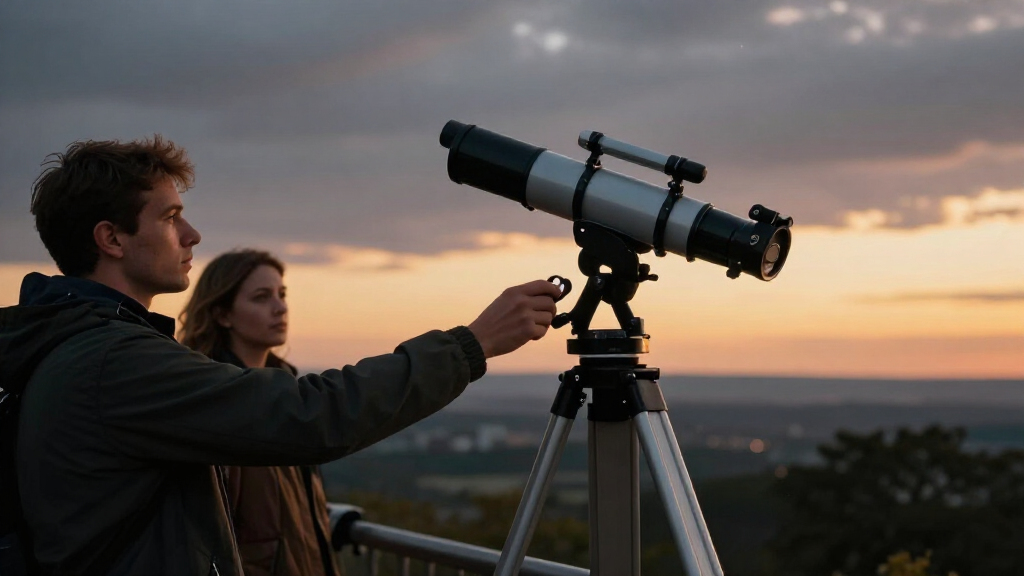

Choosing among portable computerized telescope mounts means balancing what you want to carry against what you want the mount to do. My strongest all-around pick is the Sky-Watcher AZ-GTi, since its 8.6-pound design includes a tripod and offers app control for both telescopes and DSLR cameras. For a more imaging-focused equatorial setup, the Star Adventurer GTi brings GoTo operation, an illuminated polar scope, and an 11-pound capacity, though you must supply a tripod. The Explore Scientific iEXOS-100-2 is a compelling alternative for tablet-led equatorial observing, with belt-driven motors and thoughtful polar-alignment features.

Prime made for students and young adults
- Fast, free delivery for dorm and study essentials
- Prime Video and Amazon Music included
- Member-only deals
The main tradeoff is not simply portability versus capacity. Alt-az mounts such as the AZ-GTi are generally easier to carry and use for visual observing, while equatorial mounts are better suited to tracking the sky’s apparent rotation for imaging. A more capable mount can also mean more equipment to pack, more setup steps, or dependence on a particular controller or power source. I rank these five by how well their portability, control system, supplied equipment, and intended use fit together—not by payload alone.
Key Takeaways
- The Sky-Watcher AZ-GTi is the easiest complete portable setup in this group: it weighs 8.6 pounds and includes an adjustable tripod, but its alt-az design is not the group’s strongest choice for long-exposure deep-sky imaging.
- The Star Adventurer GTi is a more purpose-built portable imaging mount, with equatorial tracking, Wi-Fi, an illuminated polar scope, and an 11-pound capacity; you need to provide a tripod.
- The Explore Scientific iEXOS-100-2 offers a distinct tablet-controlled equatorial experience with belt-driven motors and balancing clutches, but the supplied compatibility information specifies tablets.
- The iOptron Astroboy is the simplest ready-to-carry telescope package for mixed land and sky viewing, though its 60mm aperture and tabletop base make it a different proposition from a mount for larger optical tubes.
- The Celestron Advanced VX offers the highest stated capacity and a full-size tripod, but its 47-pound kit is the least convincing fit if frequent carrying is the priority.
| Sky-Watcher AZ-GTi Portable Computerized GoTo Alt-Az Mount |  | Best Overall for Portable, App-Controlled Observing | Mount type: Computerized GoTo alt-az | Weight: 8.6 lb | Payload capacity: 11 lb | VIEW LATEST PRICE | See Our Full Breakdown |
| Sky-Watcher Star Adventurer GTi GoTo Equatorial Tracking Mount Head Kit |  | Best Portable Equatorial Mount for Imaging | Mount type: Equatorial | Payload capacity: 11 lb | Included counterweight: 5 lb with counterweight bar | VIEW LATEST PRICE | See Our Full Breakdown |
| Explore Scientific iEXOS-100-2 PMC-Eight GoTo Equatorial Mount and Tripod |  | Best Tablet-Controlled Equatorial Mount | Mount type: Equatorial | Control system: Explore Scientific PMC-Eight with eight independent CPUs | Drive: Dual-axis worm gears with belt-driven stepper motors | VIEW LATEST PRICE | See Our Full Breakdown |
| iOptron Astroboy 60mm Portable Computerized GoTo Telescope |  | Best Complete Package for Beginners and Mixed Viewing | Optical design: 60mm achromatic refractor | Mount type: Computerized alt-azimuth | Control: GOTONOVA computerized GoTo | VIEW LATEST PRICE | See Our Full Breakdown |
| Celestron Advanced VX Computerized German Equatorial Mount, 30 lb Payload |  | Best for Higher Capacity When Portability Is Secondary | Mount type: German equatorial | Payload capacity: 30 lb | Kit weight: 47 lb | VIEW LATEST PRICE | See Our Full Breakdown |
| portable computerized telescope mount | Mount type | Power | Payload capacity | Connectivity |
|---|---|---|---|---|
| Sky-Watcher AZ-GTi Portable Co | Computerized GoTo alt-az | AA batteries or 12V input | 11 lb | Built-in Wi-Fi |
| Sky-Watcher Star Adventurer GT | Equatorial | Battery or external power | 11 lb | Built-in Wi-Fi |
| Explore Scientific iEXOS-100-2 | Equatorial | — | — | Wi-Fi and Bluetooth |
| iOptron Astroboy 60mm Portable | Computerized alt-azimuth | Battery or 9–14V DC | — | — |
| Celestron Advanced VX Computer | German equatorial | DC power supply; one CR2032 battery | 30 lb | — |
More Details on Our Top Picks
Sky-Watcher AZ-GTi Portable Computerized GoTo Alt-Az Mount
The Sky-Watcher AZ-GTi earns my top spot because its portability is practical, not just a claim about the mount head. It weighs 8.6 pounds and comes with an adjustable aluminum tripod and pier extension, so a buyer does not have to source that major piece separately. Built-in Wi-Fi and the SynScan Pro app add computerized pointing without relying on a dedicated hand controller. For a portable observer who wants to travel with a small telescope or DSLR, this is the most balanced package here.
Its 11-pound payload capacity is shared with the Star Adventurer GTi, but the two mounts serve different priorities. The AZ-GTi uses an alt-az arrangement and includes a tripod; the Star Adventurer is an equatorial kit aimed more directly at imaging, but its tripod is not included. The AZ-GTi’s dual encoders are especially useful for relaxed visual sessions: they let the user slew manually without losing alignment. That flexibility makes it less fussy to operate than a setup that depends on staying within a strict computerized workflow.
The mount also offers panorama and time-lapse functions, with automated camera exposures supported when an optional shutter-release cable is added. These features broaden its use beyond telescope pointing, though I would not mistake them for a substitute for a dedicated equatorial imaging setup. The supplied tripod’s 53-inch maximum height can also limit how comfortably some observers look through a telescope, depending on the tube and target position. And while the kit is portable, its usefulness still depends on carrying a compatible power source: it can use AA batteries or 12V input.
Compared with the heavier Advanced VX, the AZ-GTi is far easier to take on a trip, but it cannot carry the same stated load. Compared with the Astroboy, it is a mount for a buyer who wants to bring their own optical tube or camera rather than a bundled 60mm telescope. I would choose it for portable visual astronomy and casual camera work, not for a large scope or a buyer whose main aim is extended deep-sky exposures.
Pros:- Light 8.6-pound design with an adjustable tripod and pier extension included.
- Built-in Wi-Fi enables SynScan Pro app control on iOS and Android.
- Dual encoders allow manual slewing without losing alignment.
- Supports telescope and DSLR payloads up to 11 pounds, plus panorama and time-lapse functions.
Cons:- Alt-az tracking is less suited than equatorial tracking to long-exposure deep-sky imaging.
- Automated DSLR shutter operation requires an optional release cable.
- The tripod’s 53-inch maximum height may not suit every observing position.
Best for: Traveling visual observers and DSLR users who want a light alt-az mount with an included tripod, app control, and manual-slew flexibility.
Not ideal for: Buyers planning to carry a large telescope or prioritizing long-exposure deep-sky imaging over easy visual setup.
- Mount type:Computerized GoTo alt-az
- Weight:8.6 lb
- Payload capacity:11 lb
- Control:SynScan Pro app for iOS and Android
- Connectivity:Built-in Wi-Fi
- Tripod:Adjustable aluminum tripod with pier extension
- Power:AA batteries or 12V input
- Photography functions:Panorama, time-lapse, and automated 60-second exposures with optional shutter cable
Our verdict“For a portable observer who wants the least complicated complete mount-and-tripod package in this group, I would start with the AZ-GTi.”
Sky-Watcher Star Adventurer GTi GoTo Equatorial Tracking Mount Head Kit
The Star Adventurer GTi is my pick for buyers who put equatorial tracking ahead of a complete, ready-to-carry kit. Its built-in Wi-Fi and GoTo capability put computerized object locating in a compact equatorial package, while the illuminated polar scope helps with the alignment step that distinguishes this design from the AZ-GTi. It supports lunar, solar, and sidereal tracking rates, giving it a wider tracking toolkit than a simple camera tracker.
The stated 11-pound capacity makes room for a camera setup or a small telescope, and the kit includes a 5-pound counterweight and counterweight bar. That package is useful, but it is not a full mount-and-tripod solution: the tripod and pier extension are not included. A camera and optional SynScan hand controller are also absent. This is the central tradeoff against the AZ-GTi, which arrives with a tripod and is lighter by the listed weight; the Star Adventurer asks the buyer to complete more of the system in exchange for equatorial operation and a clearer imaging orientation.
For a portable setup, the 6.9-kilogram listed weight deserves attention. It is not as light as the AZ-GTi’s stated 8.6 pounds, and the mount head is only one part of what must be transported once tripod and imaging equipment are added. Its battery or external-power options provide flexibility, but the buyer should plan the power arrangement along with the rest of the kit. Compared with the Explore Scientific iEXOS-100-2, the Star Adventurer’s built-in Wi-Fi and illuminated polar scope make its imaging case easy to understand; the Explore Scientific instead stands out for tablet-based ExploreStars control, belt-driven motors, and clutched axes.
I would select this mount for someone who understands the extra alignment and packing demands of an equatorial system and wants portable GoTo tracking for camera or small-telescope imaging. A visual observer looking for the simplest complete kit should choose the AZ-GTi, while a buyer who needs a tripod in the box should look elsewhere or budget space and setup time for a separate one.
Pros:- Equatorial GoTo design with built-in Wi-Fi.
- Illuminated polar scope supports polar-alignment work.
- 11-pound capacity for cameras or small telescopes.
- Includes a counterweight and supports lunar, solar, and sidereal tracking rates.
Cons:- Tripod and pier extension are not included.
- Camera and optional SynScan hand controller must be supplied separately.
- The stated 6.9-kilogram weight makes it less compact than the AZ-GTi by listed weight.
Best for: Astrophotographers who want a portable equatorial GoTo mount for a camera or small telescope and already have, or plan to choose, a suitable tripod.
Not ideal for: Buyers who need an all-in-one mount-and-tripod package, want the lightest listed setup, or prefer not to polar-align an equatorial mount.
- Mount type:Equatorial
- Payload capacity:11 lb
- Included counterweight:5 lb with counterweight bar
- Item weight:6.9 kg
- Connectivity:Built-in Wi-Fi
- Polar scope:Built-in and illuminated
- Power:Battery or external power
- Warranty:Two-year limited warranty
Our verdict“I recommend the Star Adventurer GTi to imaging-minded buyers willing to provide a tripod in return for a compact equatorial GoTo platform.”
Explore Scientific iEXOS-100-2 PMC-Eight GoTo Equatorial Mount and Tripod
The Explore Scientific iEXOS-100-2 stands apart through its PMC-Eight control system: eight independent CPUs work with quiet, belt-driven stepper motors, and ExploreStars supplies app-based alignment and GoTo control. For a portable equatorial mount, that combination will appeal to buyers who want computerized operation without making a hand controller the center of the experience. The kit also includes a tripod, giving it an out-of-box advantage over the Star Adventurer GTi, whose tripod must be sourced separately.
Alignment and balancing are more than spec-sheet details on an equatorial mount. The clutched axes support smooth repositioning and precise balancing, while the RA-axis sight hole and altitude controls provide tools for polar alignment. Compared with the AZ-GTi, this is a more involved arrangement but a better match for observers who specifically want equatorial tracking. The AZ-GTi is the more straightforward travel recommendation because it is lighter by the listed figures and includes a tripod; the iEXOS-100-2 makes more sense when equatorial operation and tablet control are the deciding factors.
The important limitation is the documented tablet compatibility. ExploreStars is described for Apple, Android, or Windows tablets, and the compatible-device information specifies a tablet. I would not assume that a phone can fill the same role without checking compatibility. This requirement can affect packing: a buyer who does not already bring a suitable tablet must add one to the observing kit. The supplied specifications also give no payload capacity, so I would verify that the intended telescope and accessories fall within the manufacturer’s supported load before buying; I would not compare it directly with the stated 11-pound limits on the AZ-GTi or Star Adventurer based on these details alone.
This mount is best for a buyer who values tablet-led equatorial control, quiet belt-driven motors, and included tripod convenience more than minimal setup weight or phone-based operation. Compared with the Celestron Advanced VX, it reads as the more portable direction, but the Advanced VX publishes a much higher capacity and a large hand-controller object database. I would skip the iEXOS-100-2 if device flexibility and a clearly stated payload limit are central requirements.
Pros:- PMC-Eight control system uses eight independent CPUs.
- Quiet, belt-driven stepper motors support computerized movement.
- Clutched axes help with balancing and repositioning.
- Includes a tripod and provides an RA sight hole and altitude controls for polar alignment.
Cons:- Compatible-device information specifies tablets, which may add a device to the travel kit.
- The provided specifications do not state a payload capacity.
- Equatorial setup involves more alignment work than the AZ-GTi’s alt-az arrangement.
Best for: Equatorial observers who already use a compatible tablet and want app-based GoTo control, balancing clutches, and an included tripod.
Not ideal for: Buyers who require phone control, need a published payload figure for matching a heavy telescope, or want the lightest setup in the group.
- Mount type:Equatorial
- Control system:Explore Scientific PMC-Eight with eight independent CPUs
- Drive:Dual-axis worm gears with belt-driven stepper motors
- App:ExploreStars
- Compatible devices:Tablet
- Connectivity:Wi-Fi and Bluetooth
- Polar-alignment aids:RA-axis sight hole and altitude controls
- Focus type:No focuser
Our verdict“The iEXOS-100-2 is my tablet-first equatorial choice, provided its device requirement and telescope compatibility fit the buyer’s setup.”
iOptron Astroboy 60mm Portable Computerized GoTo Telescope
The iOptron Astroboy differs from the other picks because it is a portable computerized telescope package, not simply a mount for an optical tube the buyer already owns. Its 60mm achromatic refractor sits on an alt-az GoTo mount with a database of more than 4,000 objects, and the system can also be used for land viewing. For a beginner who wants one compact package for looking at the sky and nearby terrestrial subjects, this is a clearer starting point than buying a separate mount and matching telescope.
The hard carrying case and tabletop base support a packable format, and the mount can fit camera tripods with a 1/4-inch screw. That compatibility offers a way to raise the viewing position, but the tripod is sold separately. In contrast, the AZ-GTi includes an adjustable tripod and supports a buyer-supplied telescope or DSLR. The Astroboy has a different advantage: the 60mm refractor is included, so it reduces the matching decisions a beginner must make. Its 24-pound listed weight, however, means the complete package is not the lightest choice in this roundup despite its portable design.
Computerized locating and tracking can make it easier to find targets than relying on manual star-hopping, especially for someone new to astronomy. The manual focus keeps the optical operation simple, and a reflex finderscope provides another way to aim. Its stated 150-degree field of view should be read in the context of the supplied product specification; I would check the full optical documentation before treating that figure as a particular eyepiece view. The included 60mm aperture is also a meaningful boundary: this is a small refractor for accessible observing, not a substitute for a larger telescope on a higher-capacity mount such as the Advanced VX.
Power is another practical tradeoff. The Astroboy accepts batteries or 9–14V DC power, but the power adapter is not included. A tabletop base makes sense for a compact session, while the optional tripod adds both expense in equipment and another item to carry. I would choose it for a new observer who values a bundled scope, computerized object finding, and land-and-sky flexibility. Buyers who already own a telescope, want a mount with a published camera payload, or prioritize equatorial imaging should choose the AZ-GTi, Star Adventurer GTi, or iEXOS-100-2 instead.
Pros:- Includes a 60mm refractor, computerized alt-az mount, tabletop base, and hard case.
- GoTo system locates and tracks targets from a database of more than 4,000 objects.
- Supports both celestial and land viewing.
- Can fit camera tripods with a 1/4-inch screw.
Cons:- Optional tripod is sold separately.
- Power adapter is not included.
- The listed 24-pound weight is substantial beside the AZ-GTi’s stated 8.6 pounds.
Best for: Beginners who want a bundled small refractor and computerized mount for casual celestial and terrestrial viewing.
Not ideal for: Experienced observers seeking a mount head for an existing telescope, astrophotographers needing equatorial tracking, or buyers focused on minimum carried weight.
- Optical design:60mm achromatic refractor
- Mount type:Computerized alt-azimuth
- Control:GOTONOVA computerized GoTo
- Object database:More than 4,000 objects; 256 user-definable objects
- Focus:Manual
- Power:Battery or 9–14V DC
- Tripod compatibility:Camera tripods with 1/4-inch screw
- Included accessories:Tabletop base and hard carrying case
Our verdict“I would choose the Astroboy as a portable starter telescope package, not as the most flexible mount for upgrading an existing telescope.”
Celestron Advanced VX Computerized German Equatorial Mount, 30 lb Payload
The Celestron Advanced VX sits last in this portable-focused ranking for a straightforward reason: its capability is substantial, but its 47-pound kit is difficult to describe as convenient for frequent transport. If portability means taking a mount to a nearby observing field or moving a full setup between sites, the included 2-inch stainless steel tripod and 30-pound payload capacity are strong assets. If portability means packing light for travel, the AZ-GTi and the smaller equatorial options are more persuasive fits.
For a buyer who needs to carry a larger telescope and accessories, the capacity difference matters. The AZ-GTi and Star Adventurer GTi are each listed for 11 pounds, while the Advanced VX supports up to 30 pounds. Its NexStar+ hand control contains a database of more than 40,000 objects, and multiple alignment procedures, All-Star Polar Alignment, and sidereal, solar, and lunar tracking options support a feature-rich observing setup. The iEXOS-100-2 offers a different form of portability with tablet app control, but the supplied details do not state its payload; the Advanced VX is the clearer choice for a buyer who needs a published higher capacity.
The German equatorial design is aimed at tracking the sky as it appears to rotate, which can suit visual observing and imaging better than an alt-az arrangement when the load is larger. The broad latitude adjustment range and dual saddle plate add flexibility for setup and telescope compatibility. On the other hand, this mount requires a DC power supply, and its kit weight makes both transport and storage more demanding. A robust tripod can be valuable for a heavier telescope, but buyers should not confuse a supplied tripod with a lightweight travel solution.
I would put the Advanced VX ahead of the smaller mounts only when the telescope’s load and stability needs justify the extra bulk. Compared with the Star Adventurer GTi, it offers much more stated capacity and includes a substantial tripod, but it is not the mount I would pack for a minimalist imaging trip. Compared with the Astroboy, it is not a telescope-in-a-case package; it is a larger mount platform for a separate telescope. This is my pick for capacity and full-featured equatorial control, not for effortless portability.
Pros:- 30-pound payload capacity supports substantially heavier equipment than the 11-pound AZ-GTi and Star Adventurer GTi.
- Includes a 2-inch stainless steel tripod.
- NexStar+ control provides access to a database of more than 40,000 objects.
- Offers multiple alignment procedures and sidereal, solar, and lunar tracking.
Cons:- The 47-pound kit is cumbersome for frequent transport.
- Requires a DC power supply.
- A larger setup takes more space and effort than the AZ-GTi or the compact telescope package.
Best for: Observers with a heavier telescope and accessories who need a higher stated payload, a full-size tripod, and an extensive hand-controller database.
Not ideal for: Travelers who prioritize low carried weight, quick packing, or battery-powered operation without a separate DC supply.
- Mount type:German equatorial
- Payload capacity:30 lb
- Kit weight:47 lb
- Tripod:2-inch stainless steel legs
- Hand control:NexStar+
- Object database:More than 40,000 objects
- Tracking rates:Sidereal, solar, and lunar
- Power:DC power supply; one CR2032 battery
Our verdict“The Advanced VX is the right choice when a heavier telescope needs capacity and stability, but I would not choose it for lightweight travel.”
How We Picked
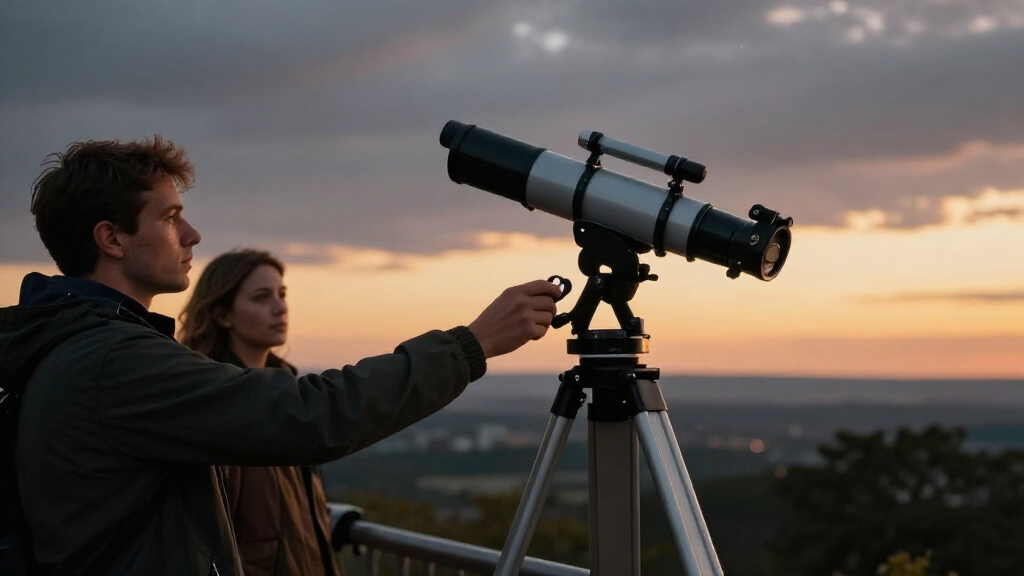
I ranked these products around the promise of portable computerized telescope mounts, rather than treating every GoTo system as interchangeable. Portability depends on the whole kit: a light mount head may still require a separate tripod, counterweight, power supply, or controller. I gave credit to products that include the parts needed to get started and called out omissions that affect packing and setup.
I also separated alt-azimuth convenience from equatorial tracking. An alt-az mount moves across the sky in familiar up-down and left-right directions, which can make visual observing and terrestrial viewing straightforward. An equatorial mount is aligned with Earth’s axis and can follow the sky’s apparent rotation, a practical advantage for astrophotography. That does not make one category universally better: the right choice depends on the telescope, the observing plan, and the buyer’s tolerance for alignment work.
Control and setup were another part of the ranking. I compared app-based control, hand-controller availability, alignment aids, object databases, and power options. Those details shape whether a mount is convenient at a dark site or only appealing on paper. Payload figures matter, but a mount’s stated capacity does not by itself describe how confidently it will carry a particular telescope and camera combination. I treated the listed limits as a starting point and considered what else each kit includes.
Finally, I used the supplied specifications to identify meaningful drawbacks, not to assume performance claims that were not provided. The AZ-GTi rises to the top because it combines low listed weight, a tripod, app control, and useful camera functions. The Star Adventurer GTi ranks higher for imaging intent but loses some out-of-box convenience because it lacks a tripod. The iEXOS-100-2 follows as a distinctive tablet-controlled equatorial option. The Astroboy is a compact complete telescope package rather than a general mount head, while the much heavier Advanced VX is the best capacity choice but the weakest match for frequent transport.
| portable computerized telescope mount | Mount type | Connectivity | Power |
|---|---|---|---|
| Sky-Watcher AZ-GTi Portable Co | Computerized GoTo alt-az | Built-in Wi-Fi | AA batteries or 12V input |
| Sky-Watcher Star Adventurer GT | Equatorial | Built-in Wi-Fi | Battery or external power |
| Explore Scientific iEXOS-100-2 | Equatorial | Wi-Fi and Bluetooth | — |
| iOptron Astroboy 60mm Portable | Computerized alt-azimuth | — | Battery or 9–14V DC |
| Celestron Advanced VX Computer | German equatorial | — | DC power supply; one CR2032 battery |
Factors to Consider When Choosing Portable Computerized Telescope Mounts
Before choosing a computerized mount, I would decide what “portable” means for the way it will actually be used. A mount carried from a car to a nearby field can be heavier than a kit packed for a flight or a long hike. The five models here cover very different interpretations of portability, from an 8.6-pound app-controlled alt-az mount to a 47-pound equatorial kit built for heavier equipment.
Choose the mount motion for the job
Alt-az mounts move vertically and horizontally, a familiar arrangement that suits visual observing and can simplify casual sessions. The AZ-GTi and Astroboy use this style. The AZ-GTi is the more flexible mount head for a buyer-supplied telescope or camera, while the Astroboy bundles a 60mm refractor for someone who wants a system rather than a component.
Equatorial mounts are aligned with Earth’s axis so the mount can track the sky’s apparent rotation. That makes them the stronger fit for many imaging plans, but polar alignment adds setup work. The Star Adventurer GTi and iEXOS-100-2 serve this category in more portable packages; the Advanced VX extends it to heavier equipment at the cost of considerable weight.
Match payload to the whole observing rig
Use the listed capacity as a screening figure, not as an invitation to load a mount to its limit without checking compatibility. Add the telescope, camera, adapters, finder, and other accessories together before comparing systems. The AZ-GTi and Star Adventurer GTi each list an 11-pound capacity; the Advanced VX lists 30 pounds. The supplied iEXOS-100-2 details do not state a payload, so I would confirm that number with the manufacturer before pairing it with a particular telescope.
The Astroboy does not occupy the same comparison as a bare mount head: its optical tube is part of the package. If a buyer already owns a telescope, a mount with an appropriate documented capacity is usually a more direct match than buying a bundled starter scope.
Count every piece of equipment you have to carry
A mount head’s weight does not describe the full travel setup. Check whether a tripod, pier extension, counterweight, and controller are included. The AZ-GTi includes an adjustable tripod and pier extension, while the Star Adventurer GTi includes a counterweight and bar but not a tripod or pier extension. The iEXOS-100-2 includes a tripod, and the Advanced VX includes a substantial stainless steel tripod but weighs 47 pounds as a kit.
The Astroboy includes a tabletop base and hard case, but its optional tripod is separate. That arrangement can be useful for compact use on a stable surface; it is less convenient if a standing-height tripod is part of the plan.
Check app, tablet, and controller requirements
Computerized pointing is only convenient when the control method suits the devices a buyer carries. The AZ-GTi uses the SynScan Pro app on iOS and Android. The iEXOS-100-2 uses ExploreStars, with the listed compatible-device information specifying a tablet. The Star Adventurer GTi has built-in Wi-Fi, while its optional SynScan hand controller is not included. The Advanced VX takes a different route with a supplied NexStar+ hand control.
For a buyer who would rather avoid depending on a phone or tablet, the Celestron controller has a clear advantage. For someone who already uses a tablet at the telescope, ExploreStars may feel like a natural fit. I would confirm app and device requirements before purchasing, especially for the iEXOS-100-2.
Plan power and alignment before leaving home
Power arrangements can determine whether a portable setup is genuinely self-contained. The AZ-GTi accepts AA batteries or 12V input, and the Star Adventurer GTi can use batteries or external power. The Astroboy accepts batteries or 9–14V DC, but its power adapter is not included. The Advanced VX requires a DC power supply. Check what is supplied and what must be packed separately.
Alignment also varies with mount type. An equatorial model needs polar alignment; the iEXOS-100-2 provides an RA-axis sight hole and altitude controls, while the Star Adventurer GTi has an illuminated polar scope. Alt-az systems avoid that particular alignment step, which helps explain the AZ-GTi’s appeal for quick visual sessions. Faster setup may matter more to one buyer than an imaging-oriented tracking arrangement.
Keep imaging expectations realistic
GoTo pointing and tracking features do not make every mount equally suited to every photograph. The Star Adventurer GTi’s equatorial arrangement and tracking rates make its imaging role the clearest of the lightweight mount options. The iEXOS-100-2 is also an equatorial choice, with app-based control and alignment aids. The AZ-GTi adds panorama, time-lapse, and camera functions, but its alt-az tracking is not the same proposition as a dedicated equatorial system for long exposures.
Also account for accessories: the AZ-GTi needs an optional shutter-release cable for automated DSLR operation, and the Star Adventurer GTi does not include a camera or tripod. For a more demanding telescope-and-camera load, the Advanced VX provides greater stated capacity, but that capability comes in a much heavier package.
Frequently Asked Questions
Which mount is easiest to pack for portable visual astronomy?
I would begin with the Sky-Watcher AZ-GTi for a portable visual setup because it has a listed weight of 8.6 pounds and includes an adjustable tripod and pier extension. Its alt-az design is straightforward for casual observing, and dual encoders allow manual slewing without losing alignment. The Astroboy is another option if a bundled 60mm telescope is more useful than a mount for an existing optical tube, though its listed weight is 24 pounds.
Which option is the best fit for portable astrophotography?
The Star Adventurer GTi is the clearest imaging-focused portable choice in this lineup because it combines equatorial tracking, GoTo operation, built-in Wi-Fi, and an illuminated polar scope. It supports up to 11 pounds and includes a counterweight, but not a tripod or pier extension. The iEXOS-100-2 is another equatorial option with app control and alignment aids; I would verify its payload suitability with the manufacturer because no capacity is provided in the supplied specifications.
Do I need an equatorial mount for visual observing?
No. An alt-az mount can be a practical choice for visual astronomy, and it avoids the polar-alignment step required by an equatorial system. The AZ-GTi is the more flexible alt-az mount for a buyer-supplied telescope, while the Astroboy combines a small refractor and computerized mount. An equatorial mount makes more sense when the buyer values its tracking approach, particularly for imaging, and is willing to handle its alignment procedure.
Which mount supports the heaviest telescope setup?
The Celestron Advanced VX has the highest stated payload in this group at 30 pounds, compared with the 11-pound limits listed for the AZ-GTi and Star Adventurer GTi. That capacity comes with a 47-pound kit and a 2-inch stainless steel tripod, so it is a poor match for buyers who prioritize light travel. I would still check the telescope, accessories, and manufacturer guidance as a complete system rather than selecting a mount by capacity alone.
What should I check before buying an app-controlled mount?
Confirm that the app runs on a device you already own and that the device is supported by the mount’s listed compatibility. The AZ-GTi uses SynScan Pro on iOS and Android, while the iEXOS-100-2’s compatibility information specifies a tablet for ExploreStars. Also check whether a hand controller is included, whether Wi-Fi or Bluetooth is required, and whether your observing location has a workable power plan. These details can add weight and setup steps to an otherwise compact kit.
Conclusion
My overall recommendation is the Sky-Watcher AZ-GTi for buyers who want a lightweight, app-controlled mount with a tripod included and enough flexibility for visual observing or casual camera work. If astrophotography with an equatorial system is the priority, I would choose the Star Adventurer GTi, provided a separate tripod fits the plan. Tablet users who specifically want equatorial control and included tripod convenience should compare the Explore Scientific iEXOS-100-2, checking device support and telescope capacity before committing.
For a beginner who wants a bundled telescope and land-viewing flexibility, the iOptron Astroboy is the more direct package, though its tripod and power adapter are separate. For a heavier telescope, the Celestron Advanced VX offers the highest stated payload and a supplied full-size tripod, but I would choose it only when that capacity outweighs the burden of carrying a 47-pound kit. The right pick follows from the equipment you already own, the kind of tracking you need, and how much gear you are willing to transport.