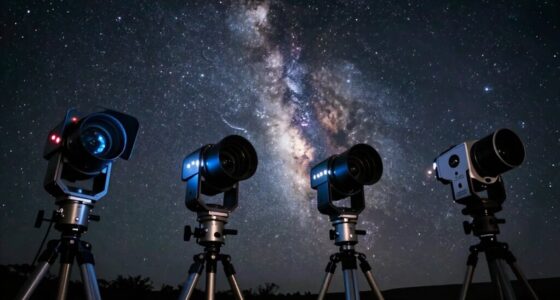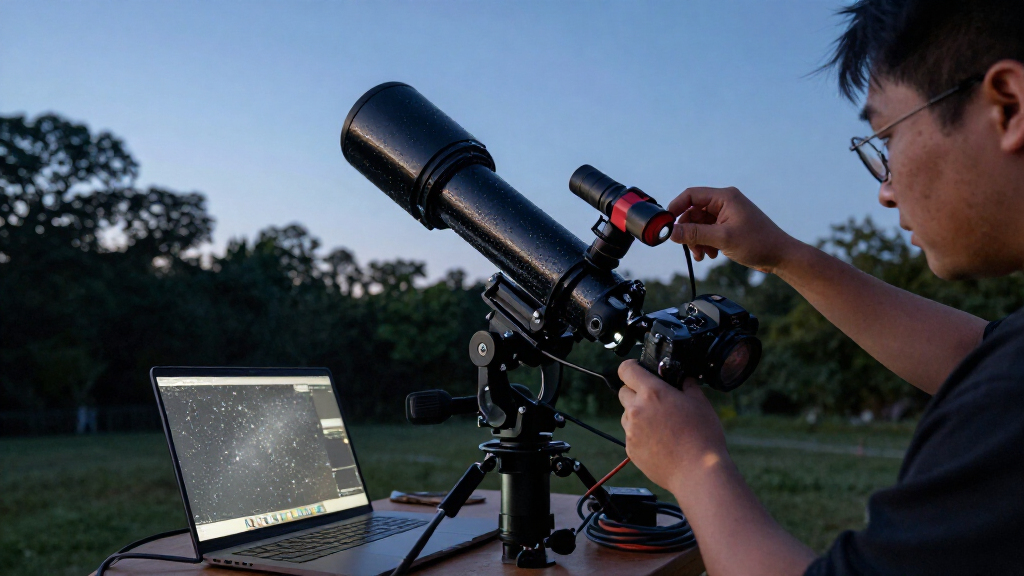

Dedicated astrophotography cameras range from simple planetary imagers to cooled deep-sky cameras and self-contained smart telescopes, so the right pick depends on what you want to photograph. I’d put the SVBONY SC571CC first for its APS-C sensor and cooled-camera approach, while the SVBONY SV405CC is a strong alternative for buyers who want cooling without moving to the same sensor class. Beginners who prefer an integrated setup may find the ZWO Seestar S30 Pro easier to start with than a camera that needs a telescope, mount, computer, and imaging workflow. The main tradeoffs are sensor size, cooling, setup complexity, and whether you want planetary, deep-sky, or automated imaging. Read on for how all 10 options differ and which one fits your observing goals.

Prime made for students and young adults
- Fast, free delivery for dorm and study essentials
- Prime Video and Amazon Music included
- Member-only deals
Key Takeaways
- The SC571CC leads for flexible deep-sky imaging in this group because its cooled APS-C sensor gives advanced imagers a larger capture area than the compact planetary and guide cameras.
- Cooling separates dedicated deep-sky cameras from basic imagers. The SV405CC, SC571CC, and SV605CC are the more relevant options for managing sensor heat during longer exposures.
- Planetary cameras solve a different problem from deep-sky cameras. The Celestron NexImage 20 and ZWO ASI662MC favor fast video capture of the Moon and planets rather than long-exposure, wide-field imaging.
- Smart telescopes trade component choice for convenience. The Seestar S30 Pro and DWARFLAB Dwarf 3 integrate imaging and telescope functions, which suits guided, accessible sessions but offers less of a modular camera-and-telescope setup.
- Low-cost utility cameras have narrower roles. The SV105 and SV905C can suit basic capture or guiding tasks, but their purpose and capabilities differ from cooled imaging cameras built for deep-sky work.
| Celestron NexImage 20 Solar System Imager, Color Lunar and Planetary Camera |  | Best for High-Resolution Solar System Imaging | Sensor: 20 MP AR2020 back-illuminated CMOS | Resolution: 5240 × 3840 | Pixel size: 1.4 microns | VIEW LATEST PRICE | See Our Full Breakdown |
| OM SYSTEM OM-3 Astro Mirrorless Camera, Silver |  | Best for Astrophotography with Everyday Camera Flexibility | Sensor: 20.4 MP Four Thirds stacked BSI Live MOS CMOS | Sensor size: 17.4 × 13 mm | Lens mount: Micro Four Thirds | VIEW LATEST PRICE | See Our Full Breakdown |
| SVBONY SV105 1.25-Inch IMX307 CMOS Telescope Camera |  | Best Entry-Level Telescope Camera | Sensor: 1/2.8-inch IMX307 color CMOS | Maximum resolution: 1920 × 1080 | Maximum frame rate: 30 fps | VIEW LATEST PRICE | See Our Full Breakdown |
| ZWO Seestar S30 Pro Smart Telescope |  | Best All-in-One Smart Astrophotography System | Mount: Alt-azimuth; supports equatorial mode | Focal length: 160 mm | Field of view: 4.6 degrees | VIEW LATEST PRICE | See Our Full Breakdown |
| SVBONY SV405CC Cooled Astrophotography Camera with IMX294 Sensor |  | Best for Cooled Deep-Sky Imaging | Sensor: 4/3-inch back-illuminated IMX294 color CMOS | Resolution: 4144 × 2822 pixels (11.7 MP) | Pixel size: 4.63 μm | VIEW LATEST PRICE | See Our Full Breakdown |
| ZWO ASI662MC 2.1 MP USB 3.0 Color Astronomy Camera |  | Best for Fast Planetary Video | Sensor: Sony IMX662 CMOS | Resolution: 1920 × 1080 (2.1 MP) | Pixel size: 2.9 μm | VIEW LATEST PRICE | See Our Full Breakdown |
| SVBONY SC571CC Cooled Color Astronomy Camera with IMX571 APS-C Sensor |  | Best for Large-Sensor Deep-Sky Imaging | Sensor: IMX571 APS-C BSI CMOS | Resolution: 26 MP | Sensor area: 23.4 × 15.7 mm | VIEW LATEST PRICE | See Our Full Breakdown |
| SVBONY SV905C Guide Camera Telescope Eyepiece |  | Best for Autoguiding | Sensor: 1/3-inch CMOS | Resolution: 1.23 MP (1280 × 960) | Pixel size: 3.75 microns | VIEW LATEST PRICE | See Our Full Breakdown |
| DWARFLAB Dwarf 3 Smart Telescope |  | Best Portable App-Controlled System | Mount: Altazimuth | Objective lens diameter: 35 mm | Focus type: Auto focus | VIEW LATEST PRICE | See Our Full Breakdown |
| SVBONY SV605CC Cooled Color Astrophotography Camera |  | Best for Versatile Square-Frame Imaging | Sensor: IMX533 color, 1-inch | Resolution: 9 MP (3008 × 3008) | Pixel size: 3.76 μm | VIEW LATEST PRICE | See Our Full Breakdown |
| dedicated astrophotography camera | Sensor | Resolution | Pixel size |
|---|---|---|---|
| Celestron NexImage 20 Solar Sy | 20 MP AR2020 back-illuminated CMOS | 5240 × 3840 | 1.4 microns |
| OM SYSTEM OM-3 Astro Mirrorles | 20.4 MP Four Thirds stacked BSI Live MOS CMOS | — | — |
| SVBONY SV105 1.25-Inch IMX307 | 1/2.8-inch IMX307 color CMOS | — | — |
| ZWO Seestar S30 Pro Smart Tele | — | — | — |
| SVBONY SV405CC Cooled Astropho | 4/3-inch back-illuminated IMX294 color CMOS | 4144 × 2822 pixels (11.7 MP) | 4.63 μm |
| ZWO ASI662MC 2.1 MP USB 3.0 Co | Sony IMX662 CMOS | 1920 × 1080 (2.1 MP) | 2.9 μm |
| SVBONY SC571CC Cooled Color As | IMX571 APS-C BSI CMOS | 26 MP | 3.76 µm |
| SVBONY SV905C Guide Camera Tel | 1/3-inch CMOS | 1.23 MP (1280 × 960) | 3.75 microns |
| DWARFLAB Dwarf 3 Smart Telesco | — | — | — |
| SVBONY SV605CC Cooled Color As | IMX533 color, 1-inch | 9 MP (3008 × 3008) | 3.76 μm |
More Details on Our Top Picks
Celestron NexImage 20 Solar System Imager, Color Lunar and Planetary Camera
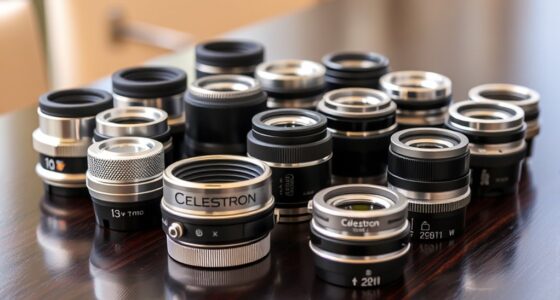
The NexImage 20 is the most resolution-focused planetary camera in this group: its 20 MP sensor records much finer image detail than the SVBONY SV105, which tops out at 1920 × 1080. Its small 1.4-micron pixels and region-of-interest capture are suited to recording short, high-frame-rate sequences of the Moon and planets, where selecting the sharpest frames can matter more than long-exposure sensitivity. The camera also supports autoguiding, giving it a secondary role in a deep-sky setup. That does not make it a cooled deep-sky camera like the SVBONY SV405CC; it lacks TEC cooling and is better treated as a planetary imager. Buyers also need a Windows PC for the listed iCap software, and solar imaging requires a suitable filter. I’d choose it for detailed Solar System capture, not as a one-camera solution for every target.
Pros:- 20 MP sensor records substantially more image detail than the SVBONY SV105’s 1080p sensor.
- Region-of-interest capture can raise frame rates while limiting file sizes.
- Autoguiding support adds a practical secondary function for compatible deep-sky rigs.
- USB-C connection and included iCap software provide capture controls.
Cons:- The listed iCap software is for Windows PCs, limiting the straightforward software choice for other systems.
- Solar imaging requires a compatible solar filter, which is not listed as included.
- No sensor cooling is specified, so it is less suited than the SVBONY SV405CC to long-exposure deep-sky imaging.
Best for: Telescope owners with a Windows PC who want high-resolution lunar and planetary videos, plus occasional autoguiding.
Not ideal for: Deep-sky imagers prioritizing cooled long exposures, or buyers who need Mac or mobile capture software.
- Sensor:20 MP AR2020 back-illuminated CMOS
- Resolution:5240 × 3840
- Pixel size:1.4 microns
- Sensor size:7.3 × 5.4 mm
- Maximum frame rate:Up to 90 fps
- Maximum shutter speed:30 seconds
- Connection:USB-C; USB-A to USB-C cable included
- Telescope connection:1.25-inch eyepiece holder or C-thread adapter
Our verdict“Choose the NexImage 20 for high-detail Moon and planet capture, but pick the cooled SVBONY SV405CC for deep-sky long exposures.”
OM SYSTEM OM-3 Astro Mirrorless Camera, Silver
The OM SYSTEM OM-3 Astro is the outlier here: it is an interchangeable-lens mirrorless camera, not a telescope-only astronomy camera. Its enhanced H-alpha sensitivity gives it a specific astrophotography advantage for recording nebula color, while the Micro Four Thirds mount lets buyers use a broader lens-based setup than the telescope-mounted Celestron NexImage 20. That versatility also means it is less specialized: it does not list the dedicated cooling of the SVBONY SV405CC, which is designed for long deep-sky exposures. The 20.4 MP sensor, stabilization, and weather-sealed metal body make the OM-3 more adaptable for night landscapes and general photography, too. Its small sensor format and need for a battery-powered camera body may not suit buyers building a computer-controlled telescope rig. I’d pick it when one camera needs to cover astro and daytime work.
Pros:- Enhanced H-alpha sensitivity is aimed at capturing nebula color.
- Micro Four Thirds mount supports interchangeable lenses and lens-based night-sky setups.
- IP53 weather sealing and a metal body suit outdoor use better than the non-water-resistant NexImage 20.
- 7.5-stop image stabilization supports steadier handheld photography.
Cons:- No dedicated sensor cooling is specified, unlike the SVBONY SV405CC.
- A battery is required, adding a power-management concern for extended sessions.
- Its mirrorless design and lens ecosystem may be unnecessary for buyers seeking a telescope-mounted specialist camera.
Best for: Photographers who want an astro-oriented mirrorless body for nebula and night-sky images alongside everyday lens-based photography.
Not ideal for: Dedicated deep-sky imagers who prioritize cooled sensors, telescope-camera software workflows, or long-exposure noise control.
- Sensor:20.4 MP Four Thirds stacked BSI Live MOS CMOS
- Sensor size:17.4 × 13 mm
- Lens mount:Micro Four Thirds
- Image stabilization:Optical, up to 7.5 stops
- ISO range:200–25,600
- Video:4K up to 60 fps; H.265 10-bit
- Weather sealing:IP53
- Weight:413 g (14.56 oz)
Our verdict“Choose the OM-3 Astro if you want H-alpha-aware astrophotography in a versatile mirrorless camera, not a cooled deep-sky imaging rig.”
SVBONY SV105 1.25-Inch IMX307 CMOS Telescope Camera
The SVBONY SV105 keeps the telescope-camera setup straightforward: its 1.25-inch barrel fits common telescope holders, and its 1080p, 30 fps output suits basic lunar, planetary, and terrestrial capture. It offers a more accessible starting point than the higher-resolution Celestron NexImage 20, though the difference is clear if fine planetary detail is the priority. Unlike the app-driven ZWO Seestar S30 Pro, the SV105 depends on a separate computer or compatible device and capture software; it does not automate targeting or processing. Its broad listed operating-system support, including Windows, Linux, Android, and macOS, gives it more flexibility than the NexImage’s Windows-oriented software. The tradeoff is modest resolution and USB 2.0 transfer, which limit headroom for demanding capture workflows. I’d choose it as a simple first telescope camera, not for advanced imaging ambitions.
Pros:- 1.25-inch barrel fits common telescope holders and supports a direct telescope-camera setup.
- 1080p capture at up to 30 fps suits introductory lunar and planetary imaging.
- Listed compatibility includes Windows, Linux, Android, and macOS.
- M28.5 × 0.6 thread supports compatible filters and accessories.
Cons:- 1920 × 1080 resolution offers less detail than the Celestron NexImage 20.
- USB 2.0 is a more limited data connection than the USB 3.0 interface on the SVBONY SV405CC.
- Requires compatible capture software and does not provide the Seestar S30 Pro’s automated targeting workflow.
Best for: New telescope owners who want an uncomplicated camera for lunar, planetary, or terrestrial video and already have a compatible capture device.
Not ideal for: Imagers seeking high-resolution planetary detail, automated telescope operation, or a cooled camera for long deep-sky exposures.
- Sensor:1/2.8-inch IMX307 color CMOS
- Maximum resolution:1920 × 1080
- Maximum frame rate:30 fps
- Connection:USB 2.0
- Barrel size:1.25 inches (31.75 mm)
- Thread:M28.5 × 0.6
- Field of view:1.5 degrees
- Operating system compatibility:Windows, Linux, Android, and macOS; not compatible with iOS devices
Our verdict“Pick the SV105 for a basic, broadly compatible telescope-camera start; move to the NexImage 20 when planetary detail becomes the priority.”
ZWO Seestar S30 Pro Smart Telescope
The Seestar S30 Pro takes a different route from the other picks: it combines optics, camera, tracking, and app control rather than asking buyers to pair a camera with a separate telescope. Automatic GoTo targeting and tracking, plus AI noise reduction and mosaic stitching, make it easier to collect finished deep-sky and wide-field images than with a manual camera setup such as the SVBONY SV405CC. Its portability and built-in filters also favor quick sessions and travel. That convenience comes with less component-level flexibility: buyers cannot treat it like a standalone camera body, and it is not intended for planetary observation. Deep-sky imaging also calls for a stationary setup, so portability does not mean shooting while moving. Compared with the lens-based OM SYSTEM OM-3 Astro, this is the more automated telescope package, but the OM-3 is more adaptable beyond astronomy.
Pros:- Automatic GoTo targeting and tracking reduce the work of finding and following objects.
- Apochromatic optics and built-in light pollution filters support its deep-sky imaging focus.
- AI noise reduction and automatic mosaic stitching simplify image processing.
- Portable 3.64 lb body and anti-dew protection suit travel and extended sessions.
Cons:- Not intended for planetary observation, unlike the Celestron NexImage 20 and SVBONY SV105.
- Deep-sky imaging requires the telescope to remain stationary for stable tracking.
- Integrated design offers less component flexibility than a separate camera such as the SVBONY SV405CC.
Best for: Beginners and travel-focused observers who want app-guided deep-sky and wide-field imaging without assembling a separate telescope-camera rig.
Not ideal for: Planetary imagers, buyers who want to choose separate camera and telescope components, or anyone needing a camera body for general photography.
- Mount:Alt-azimuth; supports equatorial mode
- Focal length:160 mm
- Field of view:4.6 degrees
- Imaging:Dual-camera 4K
- Focus:Autofocus and manual focus
- Weight:3.64 lb
- Power:Battery powered; one nonstandard battery included
- Control and tracking:App control, GoTo targeting, auto tracking, EQ mode, and plan mode
Our verdict“Choose the Seestar S30 Pro for a portable, automated deep-sky system, but skip it if planetary imaging or modular gear is your goal.”
SVBONY SV405CC Cooled Astrophotography Camera with IMX294 Sensor
The SVBONY SV405CC is the most purpose-built deep-sky camera in this batch. Its two-stage TEC cooling can lower sensor temperature by up to 30°C below ambient, helping control sensor heat during long exposures in a way the NexImage 20 and SV105 do not. The 4/3-inch, 11.7 MP sensor, HCG mode, and 14-bit output support a workflow aimed at collecting faint deep-sky detail rather than high-frame-rate planetary video. USB 3.0 and a 256 MB buffer help move image data, while broad operating-system support gives it more setup options than the Windows-oriented NexImage. This is not a self-contained camera: it needs compatible capture software and a computer or Raspberry Pi, and its 3.08-pound body adds load to the telescope. Compared with the integrated Seestar S30 Pro, it gives the buyer more control but demands more setup.
Pros:- Two-stage TEC cooling lowers sensor temperature by up to 30°C below ambient for long-exposure work.
- HCG mode helps reduce read noise while preserving dynamic range.
- USB 3.0 and a 256 MB buffer support fast data transfer.
- Listed compatibility spans Windows, Linux, macOS, Chrome OS, and Raspberry Pi with AstroDMx Capture.
Cons:- Requires compatible capture software and a computer or Raspberry Pi rather than operating as a self-contained system.
- At 3.08 pounds, it adds meaningful weight to a telescope setup.
- Its 11.7 MP sensor and full-resolution frame rates are less suited to high-speed planetary capture than dedicated planetary cameras.
Best for: Deep-sky imagers with a telescope, computer or Raspberry Pi, and capture software who want active sensor cooling for long exposures.
Not ideal for: Beginners seeking one-tap imaging, lightweight planetary video gear, or a camera that works without a separate computer-based capture setup.
- Sensor:4/3-inch back-illuminated IMX294 color CMOS
- Resolution:4144 × 2822 pixels (11.7 MP)
- Pixel size:4.63 μm
- Full well capacity:63 ke−
- ADC output:14-bit
- Cooling:Two-stage TEC, up to 30°C below ambient
- Interface and buffer:USB 3.0, 5 Gbps; 256 MB DDRIII
- Full-resolution frame rates:19 fps RAW8 or 16 fps RAW16
Our verdict“Choose the SV405CC for computer-controlled, cooled deep-sky imaging; choose the Seestar S30 Pro for a more automated setup with less component-level control.”
ZWO ASI662MC 2.1 MP USB 3.0 Color Astronomy Camera
I’d choose the ZWO ASI662MC for planetary imaging, where recording many frames quickly matters more than a large sensor. Its 102.6 fps at full 1080p resolution gives imagers plenty of frames to select and stack, while the infrared sensitivity can reveal detail beyond visible-light color capture. Low read noise and zero amp glow also support cleaner results. This is a different tool from the SVBONY SV605CC, whose cooled, square sensor better suits longer deep-sky exposures and a broader range of targets. The ASI662MC’s 1/2.8-inch sensor limits the capture area, and it needs a USB-connected computer or other compatible device to operate. I’d skip it if wide-field deep-sky framing is the priority.
Pros:- Captures full-resolution 1080p video at up to 102.6 fps for planetary frame stacking.
- Infrared sensitivity can help record additional planetary detail.
- Low read noise and zero amp glow support cleaner captures.
- Compact form factor with USB 3.0 connectivity.
Cons:- The 1/2.8-inch sensor provides a relatively small imaging area.
- Requires a USB-connected computer or compatible device rather than operating independently.
Best for: Planetary imagers who want a compact color camera for high-frame-rate 1080p capture and infrared-sensitive detail.
Not ideal for: Deep-sky photographers seeking a larger sensor for wide framing or a cooled camera for long exposures.
- Sensor:Sony IMX662 CMOS
- Resolution:1920 × 1080 (2.1 MP)
- Pixel size:2.9 μm
- Sensor size:1/2.8 inch
- Maximum frame rate:102.6 fps at full resolution
- Connectivity:USB 3.0
- Primary use:Color planetary astrophotography
Our verdict“Choose the ASI662MC for fast planetary video, but pick the SV605CC or another cooled camera for deep-sky work.”
SVBONY SC571CC Cooled Color Astronomy Camera with IMX571 APS-C Sensor
The SVBONY SC571CC is the strongest fit here for deep-sky imagers who want a large color sensor and active cooling in a dedicated camera. Its 26 MP APS-C IMX571 captures a much wider area than the 1-inch sensor in the SVBONY SV605CC, making it easier to frame extended targets without immediately reaching for a mosaic. Dual-stage TEC cooling, zero amp glow, and a 512 MB buffer are aimed at longer imaging sessions, while the software-controlled heater helps manage dew on the front window. The tradeoff is a heavier, more involved telescope setup: this is not a general-purpose camera, and cooling is specified as up to 35°C below ambient rather than a fixed operating temperature. I’d choose the SV605CC for a smaller sensor and simpler framing needs.
Pros:- 26 MP APS-C back-illuminated sensor offers broad framing for deep-sky targets.
- Dual-stage TEC cooling lowers sensor temperature by up to 35°C below ambient.
- Zero amp-glow circuitry and 512 MB DDR3 buffer support long capture sessions.
- Software-controlled front-window heater helps prevent dew.
Cons:- Cooling performance is specified as up to 35°C below ambient, so actual temperature depends on conditions.
- Designed for telescope astrophotography rather than general-purpose photography.
- At 1.31 pounds, it adds meaningful weight to a camera and telescope setup.
Best for: Deep-sky telescope imagers who want APS-C framing, active cooling, and a buffer for sustained data transfer.
Not ideal for: Beginners seeking an all-in-one portable system, or planetary imagers who prioritize high-frame-rate capture over sensor area.
- Sensor:IMX571 APS-C BSI CMOS
- Resolution:26 MP
- Sensor area:23.4 × 15.7 mm
- Pixel size:3.76 µm
- Cooling:Dual-stage TEC, up to 35°C below ambient
- ADC:16-bit
- Buffer memory:512 MB DDR3
- Data interface:USB 3.0 Type-C
Our verdict“Pick the SC571CC if APS-C deep-sky framing and active cooling matter more than a lighter, smaller-sensor setup.”
SVBONY SV905C Guide Camera Telescope Eyepiece
I’d treat the SVBONY SV905C primarily as a guide camera, not as a main imaging camera. Its 80% peak quantum efficiency, low read noise, and ST4 port are useful for detecting guide stars and sending tracking corrections, while the 1.25-inch barrel fits many guide scopes and off-axis guider setups. Compared with the ZWO ASI662MC, it has far lower resolution and a slower USB 2.0 interface, so it is a less natural choice for detailed planetary video. Its 1.23 MP color sensor can still support basic planetary imaging, but that is secondary to its guiding role. Software support includes PHD2 and NINA; however, it is not compatible with ASI AIR systems. Buyers should check their control setup before choosing it.
Pros:- 80% peak QE and low read noise help detect faint guide stars.
- ST4 guide port supports direct guiding connections.
- Compact 1.25-inch barrel fits many guide scopes and off-axis guiders.
- Compatible with software including PHD2, NINA, MDL, and SKY-X.
Cons:- Not compatible with ASI AIR systems.
- USB 2.0 is slower than the USB 3.0 interfaces on the ASI662MC and SV605CC.
- Its 1.23 MP resolution is limited for detailed primary imaging.
Best for: Telescope owners who need an affordable, compact guide camera for PHD2, NINA, or another listed compatible program.
Not ideal for: Imagers who rely on ASI AIR, need a high-resolution planetary camera, or want a faster interface for large capture streams.
- Sensor:1/3-inch CMOS
- Resolution:1.23 MP (1280 × 960)
- Pixel size:3.75 microns
- Peak QE:80%
- Interface:USB 2.0, ST4 guide port
- Barrel size:1.25 inch
- Compatible software:PHD2, MDL, NINA, SKY-X
Our verdict“Choose the SV905C as a dedicated guide camera if your software supports it, not as a substitute for a higher-resolution imaging camera.”
DWARFLAB Dwarf 3 Smart Telescope
The DWARFLAB Dwarf 3 takes a different path from the dedicated astronomy cameras in this lineup: it combines optics, mount, tracking, and app-based processing in one portable system. Its dual imaging setup offers both telephoto and wide-angle capture, while Auto GOTO and tracking reduce the need to assemble and coordinate a separate telescope, mount, and camera. That makes it more approachable for casual night-sky imaging than the SVBONY SC571CC, which is a cooled camera intended to attach to a telescope. The tradeoff is less control over a conventional dedicated-camera workflow. Image processing depends on the DWARFLAB app and cloud computing, and the system needs its included lithium-ion battery. I’d pick it for portability and varied subjects, not for buyers building a modular deep-sky rig.
Pros:- Dual imaging system supports telephoto and wide-angle photography.
- Auto GOTO and tracking simplify target finding and capture.
- Portable system supports smartphone, laptop, and personal computer connections.
- Includes a carrying bag, magnetic filters, and USB-C cable.
Cons:- Image processing depends on the DWARFLAB app and cloud computing.
- Requires its lithium-ion battery for operation.
- Its integrated design offers a different, less modular workflow than telescope-mounted cameras such as the SVBONY SC571CC.
Best for: Travelers and casual astrophotographers who want an app-controlled telescope for night-sky, wildlife, and landscape imaging.
Not ideal for: Telescope users seeking a modular dedicated-camera setup, or imagers who prefer processing that does not rely on a specific app and cloud services.
- Mount:Altazimuth
- Objective lens diameter:35 mm
- Focus type:Auto focus
- Features:4K tracking, Auto GOTO, EQ mode
- Compatible devices:Smartphone, laptop, personal computer
- Dimensions:2.56 × 8.74 × 5.59 inches
- Weight:2.28 kg
- Included items:Carrying bag, magnetic filters, filter pouch, wipe cloth, USB-C cable
Our verdict“Choose the Dwarf 3 if portability and app-led convenience matter more than building a traditional dedicated-camera telescope setup.”
SVBONY SV605CC Cooled Color Astrophotography Camera
The SVBONY SV605CC is a cooled color camera for buyers who want one sensor to handle deep-sky exposures as well as panoramic, meteor, or lucky imaging. Its 9 MP square IMX533 sensor gives more flexibility when cropping or framing targets than the 2.1 MP ASI662MC, while USB 3.0 supports a faster capture connection. Double-layer semiconductor cooling can lower sensor temperature by up to 30°C below ambient, helping control sensor heat during longer sessions. It does not match the APS-C area or 26 MP resolution of the SVBONY SC571CC, so expansive targets may require a narrower composition or a mosaic. The cooling figure is also an upper specification, not a fixed temperature. I’d choose this model for a cooled, square-format middle ground rather than maximum sensor coverage.
Pros:- Square 3008 × 3008 sensor offers flexible framing and cropping.
- Cooling can lower sensor temperature by up to 30°C below ambient.
- USB 3.0 supports a faster connection for capture.
- Specified for deep-sky, panoramic, meteor, and lucky imaging.
Cons:- The 1-inch sensor covers less area than the APS-C sensor in the SVBONY SC571CC.
- Cooling is specified as up to 30°C below ambient, so performance varies with conditions.
- At 1.6 kg, it is heavier than compact planetary and guide cameras.
Best for: Astrophotographers who want a cooled color camera for deep-sky, panoramic, meteor, and lucky imaging in a square format.
Not ideal for: Buyers who need APS-C framing, the highest resolution in this group, or an ultralight camera for a portable setup.
- Sensor:IMX533 color, 1-inch
- Resolution:9 MP (3008 × 3008)
- Pixel size:3.76 μm
- Quantum efficiency:Up to 80%
- Cooling:Double-layer semiconductor, up to 30°C below ambient
- Connectivity:USB 3.0
- Dimensions:6.5 × 6.3 × 8.46 inches
- Weight:1.6 kg
Our verdict“Choose the SV605CC for cooled, square-format versatility; step up to the SC571CC if broader APS-C framing is your priority.”
How We Picked
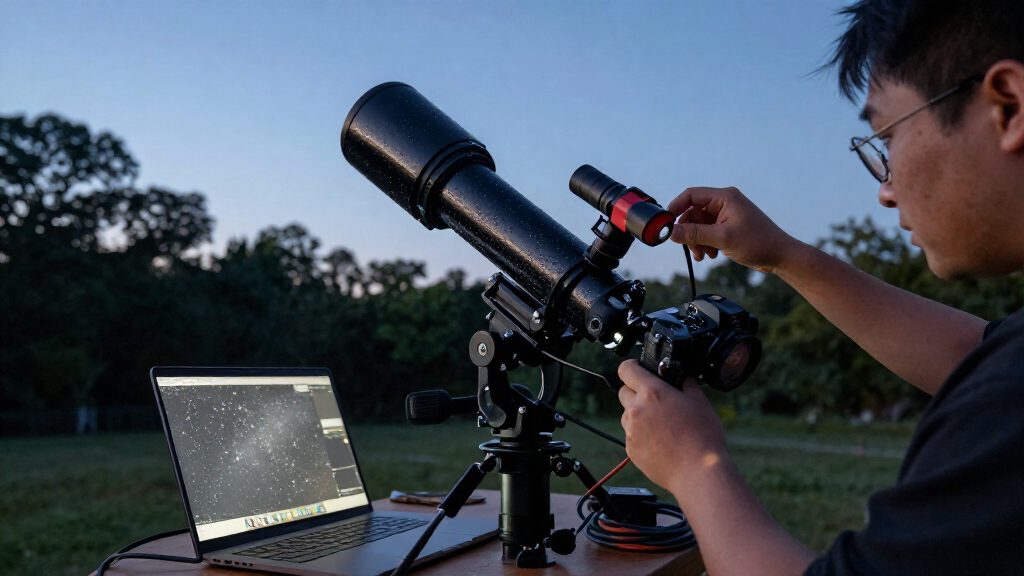
I ranked these options by how well each serves a clearly defined astrophotography use: deep-sky imaging, lunar and planetary capture, guiding, or beginner-friendly automated observing. For dedicated cameras, I weighed sensor format and type, cooling where specified, connection and workflow demands, and how much of a complete imaging setup a buyer still needs to supply. A larger sensor or cooling can make a camera more capable for long sessions, but it also raises demands on the telescope, mount, power, and processing workflow.
The ranking favors gear with a strong fit for its stated role and useful room to grow, while separating cameras from smart telescopes rather than treating them as interchangeable. The cooled APS-C SC571CC ranks highest for broad deep-sky potential; the SV405CC follows as a more approachable cooled alternative. Planetary and guiding models rank lower for general-purpose use, not because those tasks matter less, but because their narrower capture roles do not replace a cooled deep-sky camera. Smart telescopes earn their place through integration and accessibility, with reduced modularity as the tradeoff.
Factors to Consider When Choosing Dedicated Astrophotography Cameras
Before choosing a camera, decide what the complete imaging system needs to do. A camera that suits lunar video can be a poor match for faint nebulae, while a cooled deep-sky model may add complexity you do not need. These broader checks help prevent buying a capable sensor that your telescope, mount, or workflow cannot use well.
Match the Camera to Your Target
Planetary imaging and deep-sky imaging put different demands on a camera. The Moon and planets are bright and benefit from recording many short frames, while faint galaxies and nebulae usually call for longer exposures and careful management of sensor noise. A camera marketed for telescope use is not automatically suited to every target. Before choosing, name the objects you expect to photograph most often and check whether the camera’s sensor and capture style fit them. Buyers who want both disciplines may need separate cameras or a setup that accepts a compromise in field of view and workflow.
Choose Sensor Size Around Your Telescope
Sensor size affects how much sky appears in each frame, but a larger sensor is not always an upgrade. Your telescope’s focal length and image circle determine whether the sensor frames a useful field without severe vignetting or edge distortion. A broad APS-C sensor can capture more of a large target, yet it may expose optical limitations that a smaller sensor hides. Use a field-of-view calculator with your telescope and intended targets before buying. That step can prevent paying for sensor area your optics cannot illuminate cleanly.
Decide Whether Cooling Is Worth the Added Setup
Active cooling can reduce heat-related sensor noise during longer deep-sky exposures, especially across repeated imaging sessions. It does not remove the need for calibration frames, careful exposure choices, or a stable mount. Cooled cameras also bring practical requirements such as power, cable management, and managing condensation risk in changing conditions. For quick lunar sessions or casual experimentation, a simpler uncooled camera may be easier to handle. Pay for cooling when your targets and exposure plans make the added control useful, not just because it appears on a specification sheet.
Budget for the Entire Imaging Chain
A dedicated camera is only one part of a working rig. Deep-sky imaging can also call for a tracking mount, telescope with suitable focus travel, power supply, computer, adapters, and processing software. Small compatibility details—thread type, back focus, USB connection, and driver support—can add friction or extra purchases. Smart telescopes reduce the number of separate components, but they also limit how much you can swap or upgrade. Compare the cost and effort of the full system rather than judging the camera by itself.
Be Realistic About Setup and Learning Time
Manual camera systems offer more control, but the buyer must learn focus, tracking, exposure planning, calibration, and image processing. An integrated smart telescope can shorten the path to a first result by handling much of the capture process, though it provides less flexibility than a conventional telescope-and-camera rig. A guide camera adds another task: it helps correct tracking errors but does not replace the main imaging camera. Consider how much time you want to spend configuring and refining a setup. The most capable option on paper may be the wrong purchase if its workflow keeps you from imaging.
Check the Mount and Computer Before Upgrading
More sensor area and longer exposures can reveal weaknesses elsewhere in the system. A mount that tracks well enough for visual observing may still produce elongated stars, and a heavier camera or accessory train can affect balance. Large image files also require storage and a computer that can handle capture and processing without constant bottlenecks. Check payload capacity, tracking performance, cable reach, and software compatibility before choosing an advanced camera. Upgrading the mount or simplifying the imaging train can produce a better result than buying a higher-spec sensor first.
Frequently Asked Questions
Can one dedicated astrophotography camera handle both planets and deep-sky objects?
Some cameras can be used across both, but the best fit depends on your targets and telescope. Planetary work favors fast capture of many short frames, while deep-sky imaging favors stable long exposures and often benefits from cooling. A small planetary camera can make a useful Moon or planet tool but may be limiting for wide deep-sky compositions. A cooled deep-sky camera can capture faint objects, though its field of view and workflow may not suit every planetary setup. If both are equally important, compare the camera’s readout and sensor format alongside your telescope rather than relying on a broad “astronomy camera” label.
Do I need a cooled camera if I am new to astrophotography?
No: cooling is most useful when you plan longer deep-sky sessions and want more control over sensor temperature and noise. A beginner focused on the Moon, planets, or short guided sessions may gain more from a simple workflow than from added cooling hardware. Cooling also brings power and setup needs, so it can make a first rig more involved. If you already own a tracking mount and expect to image faint targets regularly, a cooled model may be a sensible step. Otherwise, start by learning focus, framing, and capture before adding that complexity.
Should I buy a smart telescope or a separate camera and telescope?
A smart telescope is a good fit if you want an integrated system with fewer separate components to select and connect. It can reduce setup friction, but its built-in optics and imaging design give you less freedom to change the camera or telescope later. A separate camera-and-telescope rig offers more choices in sensor, focal length, and upgrades, at the cost of more compatibility checks and hands-on setup. Think about whether your priority is getting started quickly or building a modular system over time. The Seestar and Dwarf models in this roundup suit the former approach; the dedicated cooled cameras suit buyers assembling the latter.
What should I check before pairing a camera with my existing telescope?
Check the telescope’s usable image circle, focuser travel, back-focus requirements, and the camera’s mounting threads or adapters. Sensor size matters because a large sensor may reveal vignetting or soft edges that are less visible with a smaller one. Confirm that your mount can track the intended exposure length and carry the camera plus any filter wheel or adapter train. Also check computer, cable, and driver compatibility before ordering. These checks can matter more to successful imaging than a small difference in camera specifications.
Is a guide camera a substitute for the main imaging camera?
No. A guide camera monitors a guide star and sends corrections to the mount to improve tracking; the main imaging camera records the target. Guide cameras are designed around that supporting role, so they are not a direct replacement for a cooled deep-sky imager or a planetary camera. Some can also be used for basic capture experiments, but that does not make them equivalent to a purpose-built primary camera. If you are assembling a deep-sky rig, choose the main camera first and add guiding when mount performance or exposure length calls for it.
Conclusion
For a flexible deep-sky setup, I’d choose the SVBONY SC571CC as best overall, while buyers seeking a cooled alternative with a different sensor class should look at the SVBONY SV405CC as the value-minded choice in this lineup. The SVBONY SV605CC is the best premium direction for shoppers prioritizing a dedicated cooled imaging camera, though they should confirm its sensor and system fit before committing. For beginners who want an integrated route, the ZWO Seestar S30 Pro is the easiest recommendation; the DWARFLAB Dwarf 3 is another smart-scope path for buyers who prefer that all-in-one format. For lunar and planetary capture, compare the Celestron NexImage 20 with the ZWO ASI662MC; for guiding or basic utility, look to the SVBONY SV905C or SV105. Choose by target and workflow first: the best camera is the one your telescope, mount, and available setup time can support.