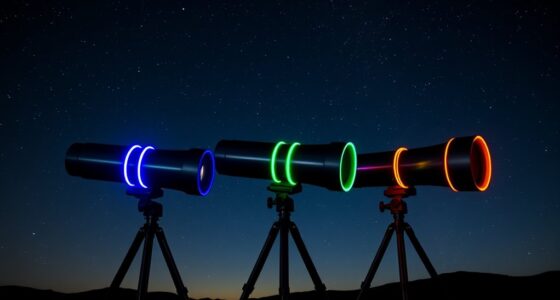
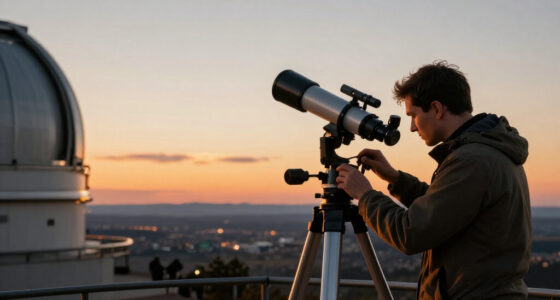
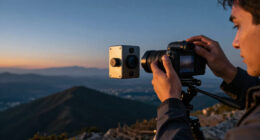
Among these telescope astrophotography cameras, I name the SVBONY SC571CC best overall for its cooled APS-C sensor and deep-sky potential, while the SVBONY SV705C is a more approachable choice for a modern planetary and general-purpose sensor. For a simpler, self-contained setup, the Seestar S50 Pro stands out as a smart telescope rather than a camera for an existing telescope. The main tradeoffs are sensor size and cooling versus cost and setup complexity, with smart telescopes trading flexibility for convenience. Match the camera to your targets, telescope, and computer or phone workflow before choosing. Continue reading for the full comparison and buying advice.

Prime made for students and young adults
- Fast, free delivery for dorm and study essentials
- Prime Video and Amazon Music included
- Member-only deals
Key Takeaways
- The SC571CC leads for deep-sky flexibility: its cooled APS-C sensor puts it ahead of smaller, uncooled camera options for buyers building a dedicated imaging rig.
- The SV705C offers a different balance: its IMX585 sensor makes it a strong fit for buyers who want a modern, versatile astronomy camera without stepping up to the SC571CC’s larger sensor class.
- Smart telescopes solve a different problem: the Seestar S50 Pro, Seestar S30 Pro, Dwarf 3, and Dwarf Mini bundle optics and imaging workflow, so they suit convenience-focused buyers more than owners seeking a camera upgrade for an existing telescope.
- Planetary and guiding cameras should not be judged by megapixels alone: the SC715C and SV905C serve specialized jobs, while matching sensor behavior and software to the task matters more than headline resolution.
- Basic USB eyepiece cameras prioritize access over imaging flexibility: the 4K 8MP, SV205, and wireless eyepiece options can appeal to casual or screen-based viewing, but they are not direct substitutes for dedicated cooled deep-sky cameras.
| 4K 8MP Telescope Camera, 1.25 Inch USB Electronic Eyepiece |  | Best for Simple Lunar and Planetary Capture | Sensor resolution: 8 MP | Video: Up to 4K; high-frame-rate 1080P capture | Telescope connection: Standard 1.25-inch barrel | VIEW LATEST PRICE | See Our Full Breakdown |
| SVBONY SC571CC Cooled Color Astronomy Camera with IMX571 APS-C Sensor |  | Best for Dedicated Deep-Sky Imaging | Sensor: Sony IMX571 APS-C BSI CMOS | Resolution: 26 MP | Sensor area: 23.4 × 15.7 mm | VIEW LATEST PRICE | See Our Full Breakdown |
| SVBONY SV705C USB 3.0 Astronomy Camera with IMX585 Sensor |  | Best Versatile Camera for Planetary and EAA | Sensor: Sony IMX585 | Sensor format: 1/1.2 inch | Maximum resolution: 3856 × 2180 | VIEW LATEST PRICE | See Our Full Breakdown |
| Seestar S50 Pro Smart Telescope with 50mm Aperture |  | Best All-in-One Smart Telescope for Astrophotography | Objective aperture: 50 mm | Focal length: 260 mm | Mount: Alt-azimuth; supports equatorial mode | VIEW LATEST PRICE | See Our Full Breakdown |
| DWARFLAB Dwarf Mini Smart Telescope |  | Best Compact Smart Telescope | Objective aperture: 30 mm | Focal length: 150 mm | Sensor: Sony IMX662, 1/2.8 inch | VIEW LATEST PRICE | See Our Full Breakdown |
| ZWO ASI662MC 2.1 MP USB 3.0 Color Astronomy Camera |  | Best for High-Speed Planetary Capture | Sensor: Sony IMX662 CMOS | Resolution: 1920 × 1080 (2.1 MP) | Pixel size: 2.9 µm | VIEW LATEST PRICE | See Our Full Breakdown |
| FASHIONARI 350X Auto-Focus Digital Refractor Telescope |  | Best for Screen-Based Casual Observing | Telescope type: Digital refractor | Objective lens diameter: 80 mm | Focal length: 300 mm | VIEW LATEST PRICE | See Our Full Breakdown |
| SVBONY SV905C 1.23MP Telescope Guide Camera |  | Best for Autoguiding on a Budget | Sensor: 1/3-inch CMOS | Resolution: 1280 × 960 (1.23 MP) | Pixel size: 3.75 microns | VIEW LATEST PRICE | See Our Full Breakdown |
| DWARFLAB Dwarf 3 Smart Telescope |  | Best for Portable App-Controlled Sky Imaging | Objective lens diameter: 35 mm | Mount: Altazimuth | Focus: Autofocus | VIEW LATEST PRICE | See Our Full Breakdown |
| SVBONY SC311 WiFi Telescope Camera with IMX662 Sensor |  | Best for Wireless All-Purpose Telescope Imaging | Sensor: IMX662 | Resolution: 2.1 MP | Interface: 1.25 inch | VIEW LATEST PRICE | See Our Full Breakdown |
| Telonixium 4K Wireless Telescope Eyepiece Camera | 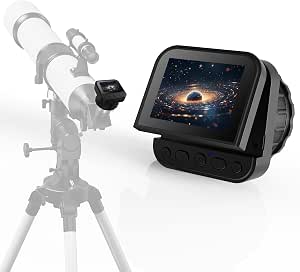 | Best for Shared Viewing and Simple Recording | Sensor: 8MP CMOS | Video resolution: 4K | Maximum image resolution: 64MP | VIEW LATEST PRICE | See Our Full Breakdown |
| SVBONY SV305C 2.1MP Color Astrophotography Camera |  | Best for Low-Noise Lunar and Planetary Capture | Sensor: IMX662 back-illuminated CMOS, 1/2.8-inch | Resolution: 2.1MP | Pixel size: 2.9 μm | VIEW LATEST PRICE | See Our Full Breakdown |
| SVBONY SV205 7.05MP Telescope Camera with IMX415 Sensor |  | Best for Higher-Resolution Computer Capture | Sensor: 7.05MP IMX415 CMOS color, 1/2.8-inch | Pixel size: 1.45 × 1.45 µm | Connection: USB 3.0 | VIEW LATEST PRICE | See Our Full Breakdown |
| ZWO Seestar S30 Pro Smart Telescope |  | Best All-in-One Deep-Sky Imaging System | Mount: Alt-azimuth; supports equatorial mode | Imaging: Dual-camera 4K | Focal length: 160 mm | VIEW LATEST PRICE | See Our Full Breakdown |
| SVBONY SC715C IMX715 Color Planetary Telescope Camera | 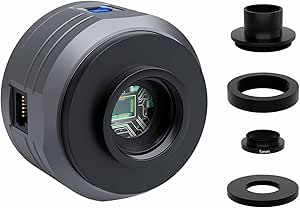 | Best for High-Speed 4K Planetary Video | Sensor: IMX715 color | Pixel size: 1.45 μm | Resolution: 4K | VIEW LATEST PRICE | See Our Full Breakdown |
| telescope astrophotography camera | Sensor |
|---|---|
| 4K 8MP Telescope Camera | — |
| SVBONY SC571CC Cooled Color As | Sony IMX571 APS-C BSI CMOS |
| SVBONY SV705C USB 3.0 Astronom | Sony IMX585 |
| Seestar S50 Pro Smart Telescop | — |
| DWARFLAB Dwarf Mini Smart Tele | Sony IMX662, 1/2.8 inch |
| ZWO ASI662MC 2.1 MP USB 3.0 Co | Sony IMX662 CMOS |
| FASHIONARI 350X Auto-Focus Dig | — |
| SVBONY SV905C 1.23MP Telescope | 1/3-inch CMOS |
| DWARFLAB Dwarf 3 Smart Telesco | — |
| SVBONY SC311 WiFi Telescope Ca | IMX662 |
| Telonixium 4K Wireless Telesco | 8MP CMOS |
| SVBONY SV305C 2.1MP Color Astr | IMX662 back-illuminated CMOS, 1/2.8-inch |
| SVBONY SV205 7.05MP Telescope | 7.05MP IMX415 CMOS color, 1/2.8-inch |
| ZWO Seestar S30 Pro Smart Tele | — |
| SVBONY SC715C IMX715 Color Pla | IMX715 color |
More Details on Our Top Picks
4K 8MP Telescope Camera, 1.25 Inch USB Electronic Eyepiece
This 1.25-inch USB camera makes the most sense for newcomers who want to record the Moon or bright planets using a telescope they already own. Its UVC viewing support works with compatible computer capture software, while optional ASCOM support adds a route into supported Windows astronomy programs. The removable IR-cut filter can help keep color closer to natural, and the lightweight metal body is easy to manage in a standard eyepiece holder.
Compared with the SVBONY SV705C, this model is more explicitly aimed at basic lunar and planetary use, while the SV705C offers a broader set of imaging applications and a specified IMX585 sensor. The tradeoff is that this camera is not presented as a deep-sky tool, has no autofocus, and requires enough focuser travel to reach focus. I would skip it if long exposures or advanced sensor specifications are central to your setup.
Pros:- Supports up to 4K video and high-frame-rate 1080P capture for bright lunar and planetary targets.
- UVC viewing works with compatible Windows, macOS, and Linux capture software.
- Removable IR-cut filter and M28.5×0.6 thread allow compatible filter use.
- Lightweight CNC aluminum housing weighs approximately 110 g.
Cons:- Designed primarily for lunar and planetary imaging, not long-exposure deep-sky photography.
- Manual telescope focusing is required, and fitting the focuser does not guarantee focus.
- ASCOM support requires an optional driver and is limited to supported Windows applications.
Best for: Telescope owners who want a straightforward computer-connected camera for lunar and bright-planet recording, without starting with a dedicated deep-sky setup.
Not ideal for: Deep-sky imagers seeking long-exposure capability, or buyers whose telescope focuser cannot bring a 1.25-inch camera into focus.
- Sensor resolution:8 MP
- Video:Up to 4K; high-frame-rate 1080P capture
- Telescope connection:Standard 1.25-inch barrel
- Filter thread:M28.5×0.6
- Software connection:UVC USB viewing; optional ASCOM support for Windows
- Focus:Manual, using the telescope focuser
- Filter:Removable IR-cut filter
- Weight:Approximately 110 g
Our verdict“Choose this camera for accessible Moon and bright-planet capture with a computer, but pick the SVBONY SV705C for a more broadly specified imaging sensor.”
SVBONY SC571CC Cooled Color Astronomy Camera with IMX571 APS-C Sensor
The SC571CC is the deep-sky specialist in this group: its 26 MP APS-C back-illuminated sensor gives a substantially larger image area than the SVBONY SV705C, which suits wide targets and detailed captures when paired with compatible optics. Dual-stage TEC cooling, with a stated reduction of up to 35°C below ambient, helps manage sensor heat during extended imaging sessions. Its 16-bit conversion and zero amp glow also target cleaner, more flexible image data than a basic planetary camera.
A front-window heater addresses dew risk, and the 512 MB buffer with USB 3.0 supports data transfer during capture. Those features come with a more demanding setup: this is a dedicated astronomy camera, not an all-in-one observing device like the Seestar S50 Pro. The product information also does not specify software compatibility, so I would verify that before buying. Its larger sensor and cooling are wasted on casual lunar snapshots.
Pros:- 26 MP APS-C back-illuminated sensor provides a large image area for deep-sky framing.
- Dual-stage TEC cooling lowers sensor temperature by up to 35°C below ambient.
- 16-bit conversion and zero amp glow are suited to capturing and processing faint targets.
- Front-window heater, USB 3.0, and 512 MB buffer support longer imaging sessions.
Cons:- Requires a compatible telescope and a more involved computer-based imaging setup.
- Software compatibility is not specified in the product information.
- Cooling and APS-C coverage are excessive for buyers focused on simple planetary videos.
Best for: Experienced deep-sky imagers with a compatible telescope, computer workflow, and mount who want a cooled APS-C color sensor for extended sessions.
Not ideal for: Casual observers seeking an integrated, app-guided telescope or buyers who need clearly documented software compatibility before choosing a camera.
- Sensor:Sony IMX571 APS-C BSI CMOS
- Resolution:26 MP
- Sensor area:23.4 × 15.7 mm
- Pixel size:3.76 µm
- Cooling:Dual-stage TEC, up to 35°C below ambient
- ADC and dynamic range:16-bit; up to 14 stops
- Amp glow:Zero amp glow
- Connection and buffer:USB 3.0 Type-C; 512 MB DDR3
- Weight:1.31 lb
Our verdict“Pick the SC571CC for a cooled, large-format deep-sky camera, provided your software and telescope setup are compatible.”
SVBONY SV705C USB 3.0 Astronomy Camera with IMX585 Sensor
The SV705C bridges planetary capture and entry-level deep-sky work better than the FIBONAX 4K 8MP camera, whose stated purpose is narrower. Its back-illuminated IMX585 sensor records at 3856 × 2180, while dual-gain operation is intended to reduce read noise at higher gain without giving up all dynamic range. That makes this a flexible choice for planetary imaging, lucky imaging, and electronically assisted observing rather than a camera tied to just one target type.
The 1/1.2-inch format is much smaller than the APS-C sensor in the SVBONY SC571CC, so it offers less framing area for wide deep-sky scenes and lacks that model’s TEC cooling. In return, the SV705C is a less specialized option, with USB 3.0 and an included C-CS adapter for compatible lenses. Its useful flexibility still depends on having suitable telescope or lens optics; it is not a standalone smart telescope.
Pros:- IMX585 back-illuminated sensor records up to 3856 × 2180.
- Supports planetary imaging, EAA, lucky imaging, and entry-level deep-sky photography.
- Dual-gain operation is designed to reduce read noise at higher gain while retaining dynamic range.
- CS port and included C-CS adapter support compatible C-mount and CS-mount lenses.
Cons:- Its 1/1.2-inch sensor has less image area than the APS-C SVBONY SC571CC.
- Not specified as a cooled camera for dedicated long-exposure deep-sky sessions.
- Requires compatible telescope or C-mount/CS-mount optics.
Best for: Observers who want one computer-connected camera for planetary videos, lucky imaging, EAA, and modest entry-level deep-sky experimentation.
Not ideal for: Deep-sky imagers who need a cooled large-format sensor, or beginners expecting an app-controlled telescope that finds and tracks targets by itself.
- Sensor:Sony IMX585
- Sensor format:1/1.2 inch
- Maximum resolution:3856 × 2180
- Image area:11.2 × 6.3 mm
- Peak quantum efficiency:About 90%
- Full well capacity:38 ke-
- Interface:USB 3.0
- Mount:CS port; C-CS adapter included
Our verdict“Choose the SV705C if you want a versatile sensor camera for planetary work and EAA, rather than the larger cooled format of the SC571CC.”
Seestar S50 Pro Smart Telescope with 50mm Aperture
The Seestar S50 Pro is a complete imaging system, not a camera to add to an existing telescope. App control handles target finding and tracking, while built-in stacking, mosaic mode, time lapse, and AI noise reduction reduce the amount of manual capture work. Its 50 mm aperture and 260 mm focal length suit automated deep-sky imaging and lunar sessions, and the included storage and battery make it more self-contained than the SVBONY SV705C, which needs a separate telescope and computer workflow.
That convenience limits flexibility: eyepieces are not compatible, a smartphone or tablet is required, and the product is explicitly not suitable for viewing planets. Compared with the smaller DWARFLAB Dwarf Mini, the S50 Pro has a larger stated aperture and longer focal length, but is also heavier at 2.8 kg. Choose it for guided imaging, not for a conventional telescope experience or a standalone planetary camera.
Pros:- Automatically locates and tracks celestial targets through app control.
- Built-in stacking, time lapse, AI noise reduction, and mosaic mode simplify imaging.
- 128 GB storage and up to 9 hours of battery life support portable sessions.
- Includes a tripod, carry case, and sun filter, and supports daytime telephoto use.
Cons:- Not suitable for viewing planets, according to the product information.
- Requires a smartphone or tablet and does not accept eyepieces.
- At 2.8 kg, it is heavier than the 1.85 lb DWARFLAB Dwarf Mini.
Best for: Beginners and casual astrophotographers who want an app-guided, self-contained setup for automated deep-sky imaging and occasional Moon capture.
Not ideal for: Planetary observers, traditional visual telescope users, or anyone unwilling to rely on a smartphone or tablet for operation.
- Objective aperture:50 mm
- Focal length:260 mm
- Mount:Alt-azimuth; supports equatorial mode
- Camera system:Dual camera
- Storage:128 GB
- Battery life:Up to 9 hours
- Focus:Autofocus and manual focus
- Weight:2.8 kg (6.2 lb)
- App devices:Android and iPhone smartphones; tablets
Our verdict“Choose the S50 Pro if you want automated, app-led deep-sky imaging in one package and do not need planetary viewing or interchangeable eyepieces.”
DWARFLAB Dwarf Mini Smart Telescope
Portability is the Dwarf Mini’s defining advantage: at 1.85 lb, it is easier to pack and carry than the 2.8 kg Seestar S50 Pro. The app provides an interactive sky map and automated target finding, while altazimuth and equatorial modes plus exposures up to 90 seconds give it more imaging flexibility than a simple electronic eyepiece such as the FIBONAX 4K 8MP. Its built-in light-pollution filters and cloud processing also keep more of the workflow inside the device and app.
The compact format comes with a 30 mm objective and 150 mm focal length, so it is a small smart imaging platform rather than a substitute for a larger telescope or a dedicated cooled camera like the SC571CC. A smartphone is needed for app control, and the battery is nonstandard. I would choose it for travel and approachable automated imaging, but not for buyers prioritizing larger optics or a conventional camera-and-telescope setup.
Pros:- Compact 1.85 lb body is more portable than the Seestar S50 Pro.
- App includes an interactive sky map and automated target finding.
- Supports altazimuth and equatorial modes, with exposures up to 90 seconds.
- Built-in light-pollution filters and cloud processing support an integrated workflow.
Cons:- 30 mm aperture and 150 mm focal length limit it relative to larger telescope systems.
- Smartphone app control is required.
- Uses a nonstandard battery.
Best for: Travel-minded beginners who want an especially light, app-controlled smart telescope for automated celestial imaging and can operate it with a smartphone.
Not ideal for: Imagers who need a larger aperture, a dedicated cooled sensor, or a setup that works without a smartphone and nonstandard battery.
- Objective aperture:30 mm
- Focal length:150 mm
- Sensor:Sony IMX662, 1/2.8 inch
- Pixel size:2.9 μm
- Maximum single-frame exposure:90 seconds
- Mount modes:Altazimuth and equatorial
- Field of view:2.45°
- Weight:1.85 lb (840 g)
- Dimensions:2.39 × 3.95 × 7.23 in
Our verdict“Pick the Dwarf Mini for a lightweight, automated travel setup, but choose the Seestar S50 Pro if you prefer its larger stated aperture and longer focal length.”
ZWO ASI662MC 2.1 MP USB 3.0 Color Astronomy Camera
The ZWO ASI662MC is the focused choice here for recording fast-moving planetary detail. Its 102.6 fps full-resolution rate lets you capture many frames in short bursts, giving you more material to select and stack. The IMX662’s low read noise, zero amp glow, and high infrared sensitivity suit planetary work where clean, detailed video matters. Compared with the SVBONY SC311, this camera prioritizes USB-connected high-speed capture over built-in WiFi and standalone operation; the SC311 instead offers exposures up to 30 seconds for broader observing and imaging uses. The ASI662MC’s tradeoff is its narrow role: its 2.1 MP sensor and planetary emphasis make it less suited to wide-field deep-sky imaging, and it needs a USB connection to operate.
Pros:- Captures up to 102.6 frames per second at full resolution for short planetary imaging bursts.
- Low read noise and zero amp glow support cleaner captures.
- High infrared sensitivity can help record planetary detail.
- Compact camera body is easy to fit into a telescope imaging setup.
Cons:- Primarily designed for planetary imaging rather than broad deep-sky use.
- Requires a USB connection rather than offering built-in wireless operation.
Best for: Planetary imagers who already use a telescope and computer and want high-frame-rate color video for lunar or planetary stacking.
Not ideal for: Beginners seeking a self-contained wireless camera or deep-sky imagers who need a larger sensor and longer exposures.
- Sensor:Sony IMX662 CMOS
- Resolution:1920 × 1080 (2.1 MP)
- Pixel size:2.9 µm
- Sensor size:1/2.8 in
- Maximum frame rate:102.6 fps at full resolution
- Connectivity:USB 3.0
- Primary use:Color planetary astrophotography
Our verdict“Choose the ASI662MC for fast, computer-connected planetary capture; pick the SVBONY SC311 instead if wireless operation and longer exposures matter more.”
FASHIONARI 350X Auto-Focus Digital Refractor Telescope
The FASHIONARI 350X is the outlier in this group: it is a complete digital refractor, not a camera intended to attach to an existing telescope. Its 80 mm aperture, autofocus, fold-out screen, and wireless controls make it appealing to casual observers who want to view and record without building a computer-based imaging rig. It claims 30 MP stills and 4K video, plus up to six hours of battery operation. That convenience contrasts with the ZWO ASI662MC, which offers much faster planetary frame capture but depends on a separate telescope and USB-connected setup. For astrophotography buyers, the tradeoff is limited optical detail: the listed 300 mm focal length and 80 mm aperture make it a less specialized planetary or deep-sky tool than dedicated astronomy cameras, and the unusually small listed dimensions warrant caution.
Pros:- Autofocus and app or remote control support hands-free operation.
- Fold-out screen and digital eyepiece provide direct viewing and sharing.
- Records claimed 30 MP stills and 4K video.
- Rechargeable battery is listed for up to six hours of operation.
Cons:- A complete digital telescope rather than an adaptable camera for an existing telescope.
- The 300 mm focal length and 80 mm aperture limit its appeal for specialized astrophotography.
- Listed dimensions are unusually small for a telescope and may be inaccurate.
Best for: Casual observers who want an all-in-one screen-based telescope for basic sky viewing, wildlife, and occasional recording without a separate camera rig.
Not ideal for: Dedicated planetary or deep-sky imagers who need a specialized sensor, established telescope compatibility, or high-speed capture controls.
- Telescope type:Digital refractor
- Objective lens diameter:80 mm
- Focal length:300 mm
- Maximum magnification:350×
- Image capture:30 MP stills; 4K video
- Control:Wireless app and remote
- Battery:4500 mAh rechargeable; up to 6 hours
- External storage support:Up to 512 GB
Our verdict“Pick the FASHIONARI for convenient, screen-based general observing, not for the dedicated planetary performance of the ZWO ASI662MC.”
SVBONY SV905C 1.23MP Telescope Guide Camera
The SVBONY SV905C earns its place as a practical guiding camera that can also handle basic planetary imaging. Its ST4 guide port and 1.25-inch barrel make it straightforward to pair with a guide scope or off-axis guider, while compatibility with software such as PHD2 and NINA gives it a clear role in a computer-controlled setup. The stated 80% peak quantum efficiency can help it register guide stars, though actual results depend on the rest of the rig and conditions. Compared with the ZWO ASI662MC, the SV905C has lower resolution and USB 2.0, so it is less suited to high-frame-rate planetary capture. Its strength is flexibility as a guider; its limits include a modest 1.23 MP sensor, required driver installation, and no ASI AIR compatibility.
Pros:- ST4 port supports direct connection to compatible mounts for autoguiding.
- 1.25-inch barrel and CS interface suit guide scopes and off-axis guider setups.
- Listed 80% peak quantum efficiency supports guide-star detection.
- Compatible with guiding software including PHD2, MDL, NINA, and SKY-X.
Cons:- 1.23 MP resolution and USB 2.0 are less suited to high-speed planetary capture than the ZWO ASI662MC.
- Not compatible with ASI AIR.
- Requires downloading the latest driver software.
Best for: Telescope owners assembling a PC-based guiding setup who want a compact camera with an ST4 port and the option of occasional planetary imaging.
Not ideal for: ASI AIR users or planetary imagers who prioritize high resolution and fast USB 3.0 capture.
- Sensor:1/3-inch CMOS
- Resolution:1280 × 960 (1.23 MP)
- Pixel size:3.75 microns
- Peak quantum efficiency:80%
- Interfaces:USB 2.0, ST4
- Mount:1.25-inch barrel
- Lens interface:CS interface with CS-C adapter ring
- Dimensions:1.42 × 1.42 × 2.56 inches
Our verdict“Choose the SV905C for PC-based guiding with occasional planetary use, but select the ASI662MC for dedicated high-speed planetary imaging.”
DWARFLAB Dwarf 3 Smart Telescope
The DWARFLAB Dwarf 3 suits buyers who would rather carry one integrated device than assemble a telescope, camera, and computer. Its dual-lens design spans daytime wildlife and landscape viewing as well as night-sky targets, while app-based processing and 4K tracking with Auto GOTO simplify capture for newcomers. That makes it a different kind of astrophotography choice from the SVBONY SC311, which is a camera intended to fit a separate telescope and supports RAW/FITS capture. The Dwarf 3’s convenience comes with less control over the imaging chain: processing depends on its dedicated app and cloud computing, and the altazimuth mount is not the same as a dedicated equatorial imaging setup. At 2.28 kg, it is portable, but not as light as its compact dimensions might suggest.
Pros:- Dual lenses support daytime viewing as well as night-sky imaging.
- 4K tracking and Auto GOTO simplify following and locating targets.
- App-based image processing avoids the need for a separate computer.
- Includes a carrying bag and magnetic filters.
Cons:- Image processing depends on the dedicated app and cloud computing.
- Integrated design offers less camera and telescope flexibility than the SVBONY SC311.
- The 2.28 kg listed weight is substantial for a compact travel device.
Best for: Travelers and first-time sky imagers who want app-guided, all-in-one imaging with the option to photograph daytime subjects.
Not ideal for: Experienced imagers who want to use their own telescope, control the camera directly, or avoid app- and cloud-dependent processing.
- Objective lens diameter:35 mm
- Mount:Altazimuth
- Focus:Autofocus
- Tracking:4K tracking
- Additional modes:Auto GOTO, EQ mode
- Dimensions:2.56 × 8.74 × 5.59 in
- Weight:2.28 kg
- Warranty:2 years
Our verdict“Choose the Dwarf 3 for portable, app-led imaging across day and night; choose the SC311 if you want a camera for an existing telescope and RAW/FITS capture.”
SVBONY SC311 WiFi Telescope Camera with IMX662 Sensor
The SVBONY SC311 is the most self-contained camera option in this group for owners who want to use an existing telescope without a permanent computer connection. Its 2.4 GHz WiFi links to a phone or tablet, while the IMX662 sensor, RAW/FITS saving, and exposures up to 30 seconds give it more range than a planetary-only camera. Compared with the ZWO ASI662MC, it trades USB 3.0 high-frame-rate capture for wireless operation and longer exposures; the ZWO is the stronger fit for fast planetary video. The SC311 also supports scheduled shooting and includes a 32 GB card, expandable to 256 GB. Its fixed focus and lack of photo preview make the shooting process less immediate, and buyers should note that this version uses a different app from the older SC311.
Pros:- WiFi supports direct connection to a phone or tablet.
- IMX662 sensor is specified with low noise, zero amp glow, and enhanced red/NIR sensitivity.
- Supports exposures up to 30 seconds and RAW/FITS capture.
- Includes a 32 GB TF card with expansion support up to 256 GB.
Cons:- Photo mode has no image preview, so captures must be viewed after triggering an exposure.
- Fixed focus offers less focusing flexibility than a camera setup with adjustable focus.
- This version requires a different app from the older SC311.
Best for: Telescope owners who want phone-controlled lunar, planetary, or basic deep-sky capture with onboard storage and no continuous USB connection.
Not ideal for: Planetary imagers who need very high frame rates, or buyers who want to preview each still image before taking another exposure.
- Sensor:IMX662
- Resolution:2.1 MP
- Interface:1.25 inch
- Maximum exposure:30 seconds
- Connectivity:2.4 GHz WiFi
- Battery:2500 mAh; about 4 hours
- Included storage:32 GB TF card
- Maximum expandable storage:256 GB
Our verdict“Choose the SC311 for wireless, stored-to-card telescope imaging and longer exposures; pick the ZWO ASI662MC for faster planetary video capture.”
Telonixium 4K Wireless Telescope Eyepiece Camera
The Telonixium takes a different approach from the SVBONY SV305C: rather than being a computer-connected astronomy camera, it combines an eyepiece-mounted camera, built-in screen, and wireless app viewing. That makes it appealing for observers who want to share lunar or planetary views without routing a live feed through a laptop. Its 2.8-inch IPS display, app-based time-lapse, and support for eyepieces from 23 to 60 mm also let it move between telescopes and other optical devices. The headline 4K video and 64MP image claims may sound more capable than the 8MP sensor alone suggests, so I would treat them as output options rather than a guarantee of fine astrophotographic detail. The tradeoffs are manual focus, a separate microSD card, and Wi-Fi limited to 32 feet; dedicated planetary cameras offer more capture control.
Pros:- Built-in 2.8-inch display supports viewing without a separate computer
- Wi-Fi app supports remote viewing, timed shooting, and time-lapse
- 23–60 mm mounting range suits a variety of eyepieces and optical devices
- Rechargeable battery supports portable sessions
Cons:- A microSD card must be supplied separately for recording
- Wireless viewing range is limited to 32 feet
- Manual focus and eyepiece-mounted operation offer less control than dedicated planetary cameras
Best for: Casual observers who want to record and share Moon or planet views directly from a compatible eyepiece, without setting up a computer.
Not ideal for: Planetary imagers seeking detailed, high-speed frame capture or advanced computer workflows; its manual focus and eyepiece-camera design are less specialized than the SVBONY SC715C.
- Sensor:8MP CMOS
- Video resolution:4K
- Maximum image resolution:64MP
- Display:2.8-inch IPS
- Eyepiece compatibility:23–60 mm
- Storage support:microSD up to 512GB
- Wireless range:32 ft
- Battery:2000mAh lithium polymer
Our verdict“Choose the Telonixium for convenient screen-based sharing and casual recording, not for precision planetary capture.”
SVBONY SV305C 2.1MP Color Astrophotography Camera
The SV305C is a focused choice for lunar, planetary, and electronically assisted viewing rather than an all-purpose deep-sky camera. Its back-illuminated IMX662 sensor is designed for low readout noise and stronger red and near-infrared response, while the 128MB buffer helps retain frames when USB transfer falters. ROI and 2×2 binning give users ways to adjust capture area and sensitivity for different targets. Compared with the SVBONY SV205, this camera has a lower stated resolution but puts more emphasis on sensor behavior and capture flexibility than on pixel count. That makes it the more targeted pick for planetary work, though its USB 2.0 connection is less modern than the SV205’s USB 3.0. The built-in UV/IR cut filter also cannot be removed, limiting flexibility for infrared experiments.
Pros:- Back-illuminated IMX662 sensor is designed for low readout noise
- 128MB buffer helps protect frame capture during USB interruptions
- ROI and 2×2 binning provide capture flexibility
- Includes 1.25-inch telescope interface and CS mount with adapter ring
Cons:- USB 2.0 is slower than the USB 3.0 connection on the SVBONY SV205
- Built-in UV/IR cut filter is not removable
- Designed primarily for lunar, planetary, and EAA imaging rather than broad deep-sky use
Best for: Planetary, lunar, and EAA observers who want a low-read-noise color sensor with ROI controls and a useful frame buffer.
Not ideal for: Deep-sky imagers or users who want to remove the UV/IR filter for infrared capture; its fixed filter and planetary-focused design limit those uses.
- Sensor:IMX662 back-illuminated CMOS, 1/2.8-inch
- Resolution:2.1MP
- Pixel size:2.9 μm
- Full well capacity:38 ke⁻
- Image buffer:128MB DDRIII
- Interface:USB 2.0
- Mounts:1.25-inch astronomical interface; CS mount with included CS-C adapter ring
- Filter:Built-in UV/IR cut filter; protective glass is removable
Our verdict“Pick the SV305C for sensor-focused lunar and planetary capture, provided its fixed filter and USB 2.0 connection fit your workflow.”
SVBONY SV205 7.05MP Telescope Camera with IMX415 Sensor
The SV205 makes sense for buyers who want a straightforward computer-connected camera with more stated resolution than the SV305C. Its 7.05MP IMX415 color sensor supports uncompressed YUV video up to 3264 × 2160 at 15 FPS, while MJPG reaches 30 FPS at 1080p. That gives users a choice between higher-resolution, slower capture and smoother full-HD video. The SV305C is better tailored to planetary capture with its low-read-noise sensor emphasis, buffer, and ROI tools; the SV205 instead leans on USB 3.0 and flexible video formats. It suits lunar, planetary, and terrestrial imaging, but does not include a built-in screen or wireless viewing. You will also need a compatible 1.25-inch telescope interface, and Mac users must install Astroamx Capture.
Pros:- 7.05MP color sensor offers higher stated resolution than the SV305C
- USB 3.0 connection supports live viewing and recording through a computer
- Offers both MJPG and uncompressed YUV video formats
- Machined aluminum 1.25-inch barrel provides a direct telescope connection
Cons:- Requires a compatible 1.25-inch telescope interface or suitable adapter
- Not compatible with Apple phones or tablets
- Mac use requires Astroamx Capture
Best for: Computer-based observers who want a higher-resolution color camera for lunar, planetary, or terrestrial video and can work within its software requirements.
Not ideal for: Phone-first observers, users without a compatible 1.25-inch connection, or planetary imagers who prioritize low read noise and specialized capture tools over resolution.
- Sensor:7.05MP IMX415 CMOS color, 1/2.8-inch
- Pixel size:1.45 × 1.45 µm
- Connection:USB 3.0
- Maximum video resolution:3264 × 2160 at 15 FPS, uncompressed YUV
- MJPG video:1920 × 1080 at up to 30 FPS
- Adapter interface:1.25 inch
- Compatibility:Windows, Linux, and macOS with Astroamx Capture
- Weight:9.6 ounces
Our verdict“Choose the SV205 if computer-based, higher-resolution lunar and planetary video matters more than wireless convenience or the SV305C’s specialized capture features.”
ZWO Seestar S30 Pro Smart Telescope
The Seestar S30 Pro is the most self-contained option here: unlike the SVBONY SC715C, it is a complete smart telescope rather than a camera that needs a separate telescope and focuser. App control, automatic GoTo targeting, tracking, and one-tap imaging reduce the hands-on setup involved in finding and recording deep-sky objects. Its dual-camera 4K imaging, light-pollution filters, AI noise reduction, and automatic mosaic stitching are aimed at producing accessible wide-field results, while equatorial mode supports longer imaging workflows. The compact 3.64 lb body is easier to take outside than a camera-and-mount assembly. The compromise is less control over individual imaging components, and its 160 mm focal length and 4.6-degree field suit wide views rather than close planetary work. It is explicitly not intended for planetary observation and must remain stationary for stable tracking.
Pros:- Automatic GoTo targeting and tracking simplify finding and following objects
- Built-in light-pollution filters and AI noise reduction support deep-sky imaging
- Automatic mosaic stitching helps create wider-field compositions
- Compact 3.64 lb design and anti-dew protection suit outdoor sessions
Cons:- Not intended for planetary observation
- Requires a stationary setup for stable tracking
- Integrated design offers less flexibility to swap or upgrade individual imaging components
Best for: Beginners and mobile observers who want app-guided deep-sky imaging in one portable instrument, with automated targeting and processing.
Not ideal for: Planetary imagers or experienced users seeking a modular camera, telescope, and mount setup with broad component-level control.
- Mount:Alt-azimuth; supports equatorial mode
- Imaging:Dual-camera 4K
- Focal length:160 mm
- Field of view:4.6 degrees
- Focus:Autofocus and manual focus
- Weight:3.64 lb
- Control:Smartphone and tablet app
- Imaging features:Automatic tracking, GoTo targeting, mosaic stitching, AI noise reduction, and anti-dew protection
Our verdict“Choose the Seestar S30 Pro for automated, portable deep-sky imaging, but skip it if close-up planetary capture or a modular rig is your goal.”
SVBONY SC715C IMX715 Color Planetary Telescope Camera
The SC715C is the specialist choice in this group for capturing fast-moving lunar and planetary detail. Its IMX715 color sensor and 1.45 μm pixels pair with USB 3.0 to record 4K at up to 45.5 FPS, giving it a stronger high-speed video case than the SVBONY SV205, which reaches 15 FPS at its maximum listed resolution. A 512MB DDR3 cache adds room to manage frame data, and the ST4 port can connect to compatible mount-guiding equipment. Unlike the Seestar S30 Pro, this is not a complete telescope: you supply the optics, mount, computer, and focusing control. The camera has no built-in focus adjustment, so the telescope’s focuser does that job. It also lacks smartphone compatibility, making it a better fit for dedicated computer-based capture than casual app viewing.
Pros:- Captures 4K at up to 45.5 FPS at full resolution
- 512MB DDR3 cache supports high-speed capture workflows
- ST4 autoguider interface adds a mount-guiding connection
- Lightweight aluminum-alloy body is compact and designed for heat dissipation
Cons:- No built-in focus adjustment; focusing depends on the telescope’s focuser
- Not compatible with smartphones
- Requires dedicated astronomy software and a separate telescope setup
Best for: Planetary imagers with a compatible telescope and computer who want high frame rates at 4K resolution, plus an ST4 guiding connection.
Not ideal for: Phone-based users, buyers seeking an all-in-one smart telescope, or anyone whose telescope lacks a suitable focuser and mount setup.
- Sensor:IMX715 color
- Pixel size:1.45 μm
- Resolution:4K
- Frame rate:Up to 45.5 FPS at full resolution
- Cache:512MB DDR3
- Interface:USB 3.0
- Autoguider interface:ST4
- Compatibility:Mac computers; SharpCap, AstroDMX Capture, and NINA
Our verdict“Pick the SC715C for high-speed 4K planetary capture with a computer-controlled telescope, not for a phone-led or all-in-one setup.”
How We Picked
I compared these 15 products by asking what kind of imaging job each one can realistically serve: deep-sky capture, planetary imaging, guiding, casual electronic viewing, or an all-in-one smart-telescope workflow. The ranking gives more weight to useful sensor characteristics, cooling where relevant, connection and control options, and fit with a conventional telescope than to resolution claims alone. I also considered how much additional equipment, software knowledge, and setup work a buyer may need.
The order reflects role and flexibility, not a claim that one design suits every astronomer. Dedicated cameras rank higher when they offer more control for serious imaging, while smart telescopes earn their place for buyers who value an integrated system. Specialized guide cameras and basic eyepiece devices rank lower for general astrophotography because their intended jobs or limited flexibility make them less suitable as one-camera solutions. I treat product names and stated specifications as starting points; buyers should confirm compatibility, sensor details, and included accessories before purchase.
Factors to Consider When Choosing Telescope Astrophotography Cameras
Choosing among these products starts with your imaging goal, not the largest resolution number. The factors below help separate a camera that fits an existing telescope from a self-contained smart telescope or a tool made for a narrower task.
Start With the Target: Planets or Deep Sky
Planetary imaging and deep-sky imaging place different demands on a camera, so a single spec rarely predicts success for both. Planets are small and bright; capture speed, suitable sensor behavior, and a telescope with enough focal length often matter more than a large sensor. Faint nebulae and galaxies call for long exposures, careful tracking, and often cooling to manage sensor heat during extended sessions. A common mistake is buying a high-megapixel camera for planets without checking frame rate or pairing it with suitable optics. Decide what you want to photograph most often, then treat broad versatility as a bonus rather than the main requirement.
Match Sensor Size to Your Telescope and Targets
A larger sensor records a wider field, but it also demands more from the telescope’s corrected image circle, focuser, and mount. Before choosing APS-C, check whether your optics can illuminate the sensor without heavy edge distortion or dark corners. Smaller sensors can frame planets tightly and may be easier to pair with compact telescopes, though they show less sky at once. Use a field-of-view calculator with your telescope’s focal length and the camera’s sensor dimensions instead of relying on sensor size as a quality ranking. That step can prevent buying a camera whose framing is poorly suited to your usual targets.
Decide Whether Cooling Is Worth the Added Rig
Cooling helps control sensor temperature during long exposures, which can make calibration and repeatable deep-sky sessions easier. It adds power needs, physical bulk, and setup considerations, so it is most useful when long-exposure imaging is a regular goal. For short planetary captures or casual electronic viewing, cooling may add little practical value. Buyers sometimes pay for cooling before addressing a more limiting part of the system, such as tracking, focus, or light pollution. Put the camera in the context of the whole imaging chain before deciding where to spend effort and budget.
Check Compatibility Before You Buy
A camera’s connector is only one part of compatibility. Confirm the nosepiece or adapter size, back focus needs, driver support, operating-system compatibility, and whether the intended capture software can control the device. A camera that fits a 1.25-inch focuser may still need an extension or spacer to reach focus, while wireless models may depend on a phone app and network conditions. Check what is included rather than assuming a power supply, cables, filters, or adapters come in the box. If you already own a telescope and computer, prioritize a camera that fits those tools instead of rebuilding your setup around a marketing label.
Choose Between a Camera and a Smart Telescope
A dedicated astronomy camera is an imaging component: you supply the telescope, mount, control device, and often the software workflow. A smart telescope combines optics, mount, camera, and app-led controls, reducing setup friction but limiting upgrades and the freedom to use your own telescope. This tradeoff is about control as much as convenience. If learning capture and processing is part of the goal, a dedicated camera gives you more room to shape the system. If you want a compact, integrated route to observing and imaging, a smart telescope may be a better match even if it cannot replace a larger custom rig.
Budget for the Whole Imaging System
The camera is only one part of a successful astrophotography setup, and the weakest supporting component can limit the result. Deep-sky work may call for a stable tracking mount, a suitable power source, filters, adapters, and image-processing software. Planetary imaging may benefit more from a compatible barlow, precise focusing, and reliable capture control. Beginners often underestimate cables, mounting hardware, and the time needed to learn calibration and processing. Compare the full system cost and complexity, not just the camera body, and keep some room for the accessories your chosen targets require.
Frequently Asked Questions
Can I use a telescope astrophotography camera with the telescope I already own?
Often, but physical fit and focus are not guaranteed by the camera’s product name. Check the focuser diameter, camera nosepiece or thread, back focus, and whether your telescope can reach focus with a sensor in place of an eyepiece. Also compare the camera’s field of view with your telescope’s focal length to see whether your intended targets will fit. Some setups need an adapter, spacer, or barlow. Confirm those details before buying, especially if the camera uses a less common connection.
Should I choose a cooled camera or a smart telescope for deep-sky photos?
Choose a cooled camera if you already have, or plan to build, a telescope-and-mount system and want more control over long-exposure imaging. Cooling can help with repeatable deep-sky capture, but it does not replace tracking, focusing, or processing skills. A smart telescope bundles the imaging system and usually reduces setup work, but offers less freedom to change optics and components. The Seestar and Dwarf models in this roundup are integrated instruments, not interchangeable camera upgrades for a separate telescope. Your existing gear and willingness to manage a multi-part rig should decide the direction.
Is a higher megapixel count always better for astrophotography?
No. Resolution alone does not tell you how well a camera suits a target or telescope. Pixel size, sensor area, capture speed, sensitivity, cooling, and the telescope’s focal length all affect the image you can record. A smaller sensor can frame a planet effectively, while a larger sensor can capture more of a broad nebula if the optics support it. Check the camera’s intended use and calculate the field of view rather than treating megapixels as a universal quality score.
Can a guide camera also take good photos of planets or deep-sky objects?
A guide camera is designed mainly to monitor a guide star and help correct mount tracking, so its specifications and controls may not suit general imaging. Some models can capture other subjects, but that does not make them equivalent to a dedicated planetary or deep-sky camera. For planets, look for a camera and capture workflow suited to high-speed recording; for deep sky, consider sensor characteristics and long-exposure support. The SV905C is listed as a guide camera, so buyers should treat guiding as its primary role. If you need one camera for several jobs, choose a model explicitly suited to those imaging tasks.
What should a beginner buy first: a camera or an all-in-one smart telescope?
If you want a contained setup with fewer separate components to match, an all-in-one smart telescope is the simpler starting point. It can reduce the burden of choosing a camera, telescope, mount, and control software separately, though it leaves less room for component upgrades. A dedicated camera makes more sense if you already own compatible optics and a tracking mount or want to learn a custom imaging workflow. The basic USB eyepiece cameras can support casual viewing, but they are not automatically the easiest path to polished long-exposure images. Choose based on whether you value a guided, integrated experience or flexibility to build over time.
Conclusion
For a dedicated rig, I recommend the SVBONY SC571CC as the best overall because its cooled APS-C format is the strongest fit here for buyers pursuing serious deep-sky imaging. The SVBONY SV705C is my value-oriented pick for shoppers who want a dedicated camera with a modern sensor and do not need the SC571CC’s larger, cooled setup. For a premium integrated route, choose the Seestar S50 Pro if convenience matters more than using your own telescope; the Seestar S30 Pro, Dwarf 3, and Dwarf Mini offer alternatives for buyers comparing compact smart-telescope systems. Beginners who want an all-in-one experience should start with a smart telescope, while beginners who already own compatible gear can look at the SV705C rather than a specialized guide camera. For planetary work, compare the SC715C and other dedicated camera options against your focal length and capture needs; for guiding, choose the SV905C for its stated role. The best choice is the one that fits your target, existing equipment, and appetite for setup—not simply the one with the biggest resolution claim.
Black Friday Picks

Vitamix Nano Personal Blender with SmoothiePilot, Black
As an affiliate, we earn on qualifying purchases.