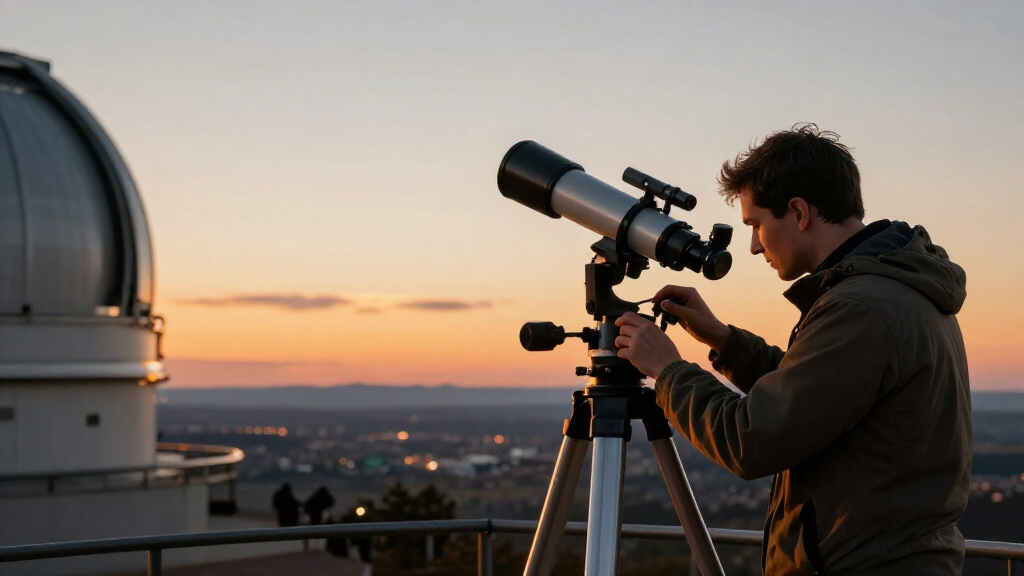
For most DSLR astrophotographers, the Celestron Universal 1.25-Inch T-Adapter is my best overall starting point because it offers a straightforward camera-to-telescope connection without adding a Barlow lens. The Celestron SCT T-Adapter is a better match for Schmidt-Cassegrain owners, while the Astromania 2-Inch T2 Adapter suits setups built around a wider focuser. The main tradeoffs are camera-mount compatibility, telescope connection size, and whether you need direct focus or extra extension and magnification. A mismatch in any of these can prevent focus or produce an awkward optical setup. Read on for my full breakdown of all 12 adapters and how to choose the right fit.

Prime made for students and young adults
- Fast, free delivery for dorm and study essentials
- Prime Video and Amazon Music included
- Member-only deals
Key Takeaways
- The telescope-side connection matters as much as the camera ring: the lineup includes 1.25-inch, 2-inch, and SCT-specific options, and they are not interchangeable without the right fittings.
- Direct T-adapters are the simplest route to prime-focus imaging: the Celestron Universal 1.25-Inch T-Adapter avoids the extra magnification of the separate 2X Barlow model.
- Extension flexibility is a specialist advantage, not a universal upgrade: Astromania‘s variable and extendable adapters can help with spacing, but added length may make an already marginal focusing setup harder to manage.
- Camera brand compatibility is a hard gate: Canon EOS and Nikon T-rings serve different camera mounts, so a ring that fits the telescope side can still be wrong for the camera.
- SCT owners have a more direct match in this roundup: the dedicated Celestron SCT T-Adapter is more relevant to that telescope design than a generic 1.25-inch nosepiece.
| Celestron T-Ring for Canon EOS EF-Mount Cameras |  | Best for Canon EF-Mount Owners | Brand: Celestron | Model: 93419 | Camera mount: Canon EOS EF mount | VIEW LATEST PRICE | See Our Full Breakdown |
| Astromania Telescope Camera Adapter and Tele-Extender |  | Best for Eyepiece Projection and High Magnification | Brand: Astromania | Eyepiece compatibility: 1.25-inch eyepieces under 45 mm in diameter | T-ring: Standard T-ring required; sold separately | VIEW LATEST PRICE | See Our Full Breakdown |
| Astromania T2 T-Ring and T-Adapter for Canon EOS SLR and DSLR Cameras |  | Best All-in-One 1.25-Inch Adapter for Canon | Brand: Astromania | Compatible cameras: Canon EOS and Rebel SLR/DSLR cameras with EF mount | T-thread: M42x0.75 | VIEW LATEST PRICE | See Our Full Breakdown |
| Celestron SCT T-Adapter for Schmidt-Cassegrain Telescopes |  | Best for Schmidt-Cassegrain Prime Focus | Brand: Celestron | Compatible telescopes: Schmidt-Cassegrain models 5, 6, 8, 9.25, 11, and 14 | Camera compatibility: SLR and DSLR cameras with a compatible T-ring | VIEW LATEST PRICE | See Our Full Breakdown |
| Astromania 1.25-Inch Extendable Telescope Camera Adapter with T2 Thread |  | Best for Adjustable Projection on 1.25-Inch Telescopes | Brand: Astromania | Compatible telescopes: Reflector and refractor telescopes with 1.25-inch eyepiece holders | Eyepiece compatibility: 1.25-inch eyepieces up to 38 mm outside diameter | VIEW LATEST PRICE | See Our Full Breakdown |
| Celticbird 1.25″ Telescope Camera T-Adapter for Canon EOS |  | Best for Canon Owners Seeking a Simple 1.25-Inch Connection | Brand: Celticbird | Mount type: T-Mount | Camera compatibility: Canon EOS SLR cameras, including 5D, 60D, and Rebel series | VIEW LATEST PRICE | See Our Full Breakdown |
| Astromania T2 T-Ring and 1.25-Inch T-Adapter for Nikon SLR/DSLR Cameras |  | Best Nikon Starter Set | Camera compatibility: Nikon F-bayonet SLR/DSLR cameras | Telescope mount: Standard 1.25 inches (31.75 mm) | Thread: M42 x 0.75 T/T2 | VIEW LATEST PRICE | See Our Full Breakdown |
| Astromania 2-Inch T2 Telescope Camera Adapter for SLR/DSLR Cameras |  | Best for 2-Inch Focuser Setups | Telescope compatibility: Standard 2-inch focusers | Telescope filter thread: M48x0.75 male | Camera adapter thread: M42 T2 external | VIEW LATEST PRICE | See Our Full Breakdown |
| Celestron Universal 1.25-Inch T-Adapter and 2X Barlow Lens |  | Best Multi-Use Imaging Accessory | Accessory type: 2X Barlow lens and T-adapter | Barlow magnification: 2X | Focuser size: 1.25 inches | VIEW LATEST PRICE | See Our Full Breakdown |
| Astromania 1.25-Inch Variable Extension Telescope Camera Adapter |  | Best for Adjustable Eyepiece Projection | Brand: Astromania | Compatible devices: D/SLR cameras | Telescope connection: 1.25-inch eyepiece | VIEW LATEST PRICE | See Our Full Breakdown |
| Celestron Universal 1.25-Inch T-Adapter for DSLR Astrophotography |  | Best for Prime-Focus DSLR Setups | Brand: Celestron | Focuser size: 1.25 inches | Camera compatibility: DSLR or SLR camera with compatible T-ring | VIEW LATEST PRICE | See Our Full Breakdown |
| Astromania T2 T-Ring Camera Adapter for Canon EOS DSLR/SLR |  | Best Canon-Specific T-Ring | Brand: Astromania | Compatible cameras: Canon EOS SLR/DSLR with EF mount | Telescope accessory thread: M42x0.75 male | VIEW LATEST PRICE | See Our Full Breakdown |
| telescope camera adapters for astrophotography | Brand | Material | Item weight | Focus type |
|---|---|---|---|---|
| Celestron T-Ring for Canon EOS | Celestron | — | — | — |
| Astromania Telescope Camera Ad | Astromania | Metal | 5.6 ounces | — |
| Astromania T2 T-Ring and T-Ada | Astromania | Aluminum | 1.76 ounces | Manual |
| Celestron SCT T-Adapter for Sc | Celestron | Metal | — | — |
| Astromania 1.25-Inch Extendabl | Astromania | Black anodized aluminum | 7.23 ounces | — |
| Celticbird 1.25" Telescope Cam | Celticbird | Anodized aluminum | 0.13 kg | Manual |
| Astromania T2 T-Ring and 1.25- | — | Aluminum | 1.76 ounces | Manual |
| Astromania 2-Inch T2 Telescope | — | Aluminum | — | — |
| Celestron Universal 1.25-Inch | — | — | — | Manual |
| Astromania 1.25-Inch Variable | Astromania | Anodized aluminum | — | Manual |
| Celestron Universal 1.25-Inch | Celestron | — | 9.07 g | — |
| Astromania T2 T-Ring Camera Ad | Astromania | Anodized aluminum | 1.76 ounces | Manual |
More Details on Our Top Picks
Celestron T-Ring for Canon EOS EF-Mount Cameras
For a Canon EOS body with an EF mount, this Celestron ring provides a direct camera-side connection to telescope adapters that use M42 T-threads. Its bayonet fitting locks onto the camera like a lens, while the threaded end lets you pair it with a separate telescope adapter. That focused role makes it less of a complete setup than the Astromania T2 T-Ring and T-Adapter for Canon EOS, which also provides a 1.25-inch telescope connection. The Celestron is the better fit if you already have a compatible T-thread adapter and want only the camera-specific ring. Its main limitation is mount compatibility: RF- and M-mount cameras need another adapter, adding a connection and potential fit concern. It supports terrestrial as well as celestial photography, but does not itself attach to a telescope.
Pros:- Bayonet fitting attaches to compatible Canon EOS EF-mount cameras
- M42 T-threads connect to compatible telescope adapters
- Can be used for terrestrial and celestial photography
- Includes a two-year warranty
Cons:- Fits EF-mount cameras only; RF and M mounts need an additional adapter
- Does not provide a telescope-side connection by itself
Best for: Canon EOS DSLR or SLR owners with EF mounts who already have a telescope adapter with M42 T-threads.
Not ideal for: Canon RF- or M-mount camera owners, or buyers seeking a complete camera-to-telescope adapter in one piece.
- Brand:Celestron
- Model:93419
- Camera mount:Canon EOS EF mount
- Telescope connection:M42 T-thread
- Warranty:2 years
- Unit count:1
- UPC:050234934190
Our verdict“Choose this ring if your Canon EOS camera has an EF mount and you already own a compatible M42-thread telescope adapter.”
Astromania Telescope Camera Adapter and Tele-Extender
This metal adapter is the flexible choice here for eyepiece-projection photography: it accepts compatible 1.25-inch eyepieces and can also be used for prime focus. Its stated reach beyond 10,000 mm effective focal length suits attempts at highly magnified subjects, where small details matter more than a wide field. That capability comes with a demanding setup: high magnification makes atmospheric seeing and telescope movement more visible, so it is less forgiving than the Celestron SCT T-Adapter for straightforward prime-focus work. You will also need to supply a standard T-ring, sold separately, to connect your camera. Manual focusing is part of the process. I’d pick this when experimenting with eyepiece projection is the goal, not when I want the simplest camera attachment or steady deep-sky exposures.
Pros:- Supports both prime-focus and eyepiece-projection photography
- Accepts compatible 1.25-inch eyepieces under 45 mm in diameter
- Can extend effective focal length beyond 10,000 mm
- Metal construction
Cons:- Requires a standard T-ring, which is sold separately
- High magnification makes atmospheric conditions and telescope movement more apparent
- Manual focusing can make precise setup slower
Best for: Astrophotographers with a compatible 1.25-inch eyepiece and camera who want to experiment with high-magnification lunar or planetary imaging.
Not ideal for: Beginners seeking a simple, ready-to-connect prime-focus setup, or anyone whose telescope mount and observing conditions make high magnification difficult to manage.
- Brand:Astromania
- Eyepiece compatibility:1.25-inch eyepieces under 45 mm in diameter
- T-ring:Standard T-ring required; sold separately
- Effective focal length:Over 10,000 mm
- Focusing:Manual
- Material:Metal
- Item weight:5.6 ounces
- Dimensions:5.18 × 2.37 × 2.37 inches
Our verdict“Pick this adapter for eyepiece-projection experiments and high magnification if you already have a T-ring and can manage a sensitive setup.”
Astromania T2 T-Ring and T-Adapter for Canon EOS SLR and DSLR Cameras
Unlike the Celestron T-Ring for Canon EOS EF-Mount Cameras, which needs a separate telescope adapter, this Astromania combines a Canon EF-mount T-ring with a 1.25-inch telescope connection. That makes it a practical match for Canon EOS and Rebel SLR or DSLR owners whose telescope has a standard 1.25-inch focuser. Its M42x0.75 thread is the common T-thread interface, and the aluminum body keeps the adapter light. The tradeoff is a fully manual camera connection: there are no electrical contacts, so you must set focus and aperture without electronic control through the adapter. It is also specific to Canon EF-mount bodies, unlike a camera-neutral projection adapter such as the Astromania Telescope Camera Adapter and Tele-Extender. The included hex wrench helps adjust camera angle, but won’t change those compatibility limits.
Pros:- Combines a Canon EF-mount T-ring with a 1.25-inch telescope connection
- M42x0.75 T-thread fits compatible equipment
- Lightweight aluminum construction
- Includes a hex wrench for camera angle adjustment
Cons:- No electrical contacts, so focusing and aperture adjustments are manual
- Limited to Canon EOS and Rebel cameras with EF mounts
Best for: Canon EOS or Rebel EF-mount camera owners who want a single adapter assembly for a telescope with a 1.25-inch focuser.
Not ideal for: Owners of non-Canon or RF- and M-mount cameras, and photographers who rely on electronic camera controls for focusing or aperture adjustment.
- Brand:Astromania
- Compatible cameras:Canon EOS and Rebel SLR/DSLR cameras with EF mount
- T-thread:M42x0.75
- Telescope connection:1.25-inch (31.75 mm)
- Material:Aluminum
- Focus type:Manual
- Zoom ratio:1:1
- Item weight:1.76 ounces
- Included accessories:Hex wrench
Our verdict“Choose this combined adapter if you have a Canon EF-mount camera and a 1.25-inch focuser, and are comfortable with manual camera adjustments.”
Celestron SCT T-Adapter for Schmidt-Cassegrain Telescopes
For a compatible Schmidt-Cassegrain telescope, this adapter connects directly to the rear cell and provides standard T-threads for a camera-specific T-ring. That direct fit makes it a more targeted prime-focus choice than the Astromania 1.25-Inch Extendable Telescope Camera Adapter, which is made for telescopes with 1.25-inch eyepiece holders and offers projection flexibility. Here, the appeal is a dedicated connection for listed SCT models rather than an extendable eyepiece assembly. The metal construction suits a camera attachment, but the adapter is only part of the system: the camera’s T-ring is sold separately. Prime focus also does not solve tracking needs; long deep-sky exposures may call for an equatorial mount and a guidescope or off-axis guider. I’d choose it for a compatible SCT and a direct imaging path, not as a general-purpose adapter for mixed telescope types.
Pros:- Attaches directly to the rear cell of compatible Schmidt-Cassegrain telescopes
- Provides standard T-threads for a compatible camera T-ring
- Supports prime-focus photography
- Metal construction
Cons:- Camera-specific T-ring is sold separately
- Long deep-sky exposures may require a guidescope or off-axis guider and an equatorial mount
Best for: Owners of a listed Schmidt-Cassegrain telescope who want to attach an SLR or DSLR for prime-focus astrophotography.
Not ideal for: Users of refractors, reflectors, or telescopes without compatible SCT rear-cell threads, and deep-sky imagers without suitable tracking equipment.
- Brand:Celestron
- Compatible telescopes:Schmidt-Cassegrain models 5, 6, 8, 9.25, 11, and 14
- Camera compatibility:SLR and DSLR cameras with a compatible T-ring
- Connection:Standard T-thread
- Use:Prime-focus photography
- Material:Metal
- Weight:0.08 kg
- Unit count:1
Our verdict“This is the direct prime-focus adapter to choose for a listed Schmidt-Cassegrain telescope, provided you have a separate camera T-ring and suitable tracking for long exposures.”
Astromania 1.25-Inch Extendable Telescope Camera Adapter with T2 Thread
This adapter is the more adaptable 1.25-inch option for photographers who want to switch between prime focus and eyepiece projection. Its extendable design allows slight magnification changes, while compatibility with eyepieces up to 38 mm in outside diameter gives it a different fit range from the Astromania Telescope Camera Adapter and Tele-Extender, which accepts eyepieces under 45 mm and is aimed at more extreme focal-length extension. This model instead specifies a 285 mm focal length and a 0.14-degree field of view, so it suits a narrower imaging setup rather than broad framing. You’ll need a T2 ring and a camera with a compatible bayonet connector, and the 1.25-inch holder requirement rules out larger focuser setups. I’d favor it for controlled projection adjustments, not for the widest compatibility or a camera-ready kit.
Pros:- Supports both eyepiece-projection and prime-focus photography
- Extendable design allows slight magnification adjustments
- Fits compatible reflector and refractor telescopes with 1.25-inch holders
- T2 thread is also threaded for standard 1.25-inch filters
Cons:- Requires a T2 ring and a camera with a compatible bayonet connector
- Limited to telescopes with 1.25-inch eyepiece holders
- Specified 0.14-degree field of view is narrow for broad sky framing
Best for: Astrophotographers using a reflector or refractor with a 1.25-inch holder who want to adjust eyepiece-projection magnification or try prime focus.
Not ideal for: Owners of telescopes with 2-inch-only focusers, photographers without a compatible T2 ring and camera bayonet, or those seeking a wide field of view.
- Brand:Astromania
- Compatible telescopes:Reflector and refractor telescopes with 1.25-inch eyepiece holders
- Eyepiece compatibility:1.25-inch eyepieces up to 38 mm outside diameter
- Thread:T2; threaded for standard 1.25-inch filters
- Material:Black anodized aluminum
- Focal length:285 mm
- Field of view:0.14 degrees
- Item weight:7.23 ounces
Our verdict“Choose this for adjustable projection with a 1.25-inch reflector or refractor when you already have the required T2 ring and camera connection.”
Celticbird 1.25″ Telescope Camera T-Adapter for Canon EOS
For a Canon EOS owner with a telescope that has a standard 1.25-inch eyepiece port, this adapter offers a direct, all-metal route to prime-focus imaging. Its broad stated compatibility, from Rebel bodies to models such as the 5D and 60D, makes it a straightforward alternative to buying a camera-specific T-ring and a separate telescope-side adapter. Compared with the Astromania 2-Inch T2 Telescope Camera Adapter, this Celticbird model connects through a narrower 1.25-inch port and is built specifically around Canon EOS cameras, rather than a 2-inch focuser and a separate T-ring. That simplicity is also its limit: it will not fit a 2-inch-only focuser, and manual focusing remains part of the setup. I’d choose it for a compatible Canon-and-telescope pairing, not for a flexible multi-camera system.
Pros:- Stated compatibility covers a wide range of Canon EOS SLR cameras.
- Anodized aluminum construction provides a metal-bodied connection.
- Attaches to standard 1.25-inch telescope eyepiece ports.
- Includes a lifetime warranty and 24/7 technical support, according to the product information.
Cons:- Limited to telescopes with a 1.25-inch eyepiece port.
- Manual focus is required.
- Its Canon-specific design is less suited to photographers switching between camera mounts.
Best for: Canon EOS SLR owners whose telescope has a standard 1.25-inch focuser and who want a dedicated, metal prime-focus adapter.
Not ideal for: Photographers using a telescope with only a 2-inch focuser, or anyone who wants electronic focus or aperture control through the adapter.
- Brand:Celticbird
- Mount type:T-Mount
- Camera compatibility:Canon EOS SLR cameras, including 5D, 60D, and Rebel series
- Telescope connection:1.25-inch eyepiece port
- Material:Anodized aluminum
- Focus type:Manual
- Item weight:0.13 kg
- Optical tube length:1.25 inches
Our verdict“Choose this if you use a Canon EOS camera and a 1.25-inch focuser; skip it if your telescope needs a 2-inch connection or you want more adaptable camera support.”
Astromania T2 T-Ring and 1.25-Inch T-Adapter for Nikon SLR/DSLR Cameras
This Astromania set is a practical pick for Nikon F-bayonet owners because it bundles the camera-side T-ring with a 1.25-inch telescope adapter. That two-piece approach is more camera-ready than the Astromania 2-Inch T2 Telescope Camera Adapter, which requires a separately purchased T-ring and a 2-inch focuser. A hex wrench for angle adjustment also gives you a way to set camera orientation, useful when composing a target or arranging the framing before a session. The tradeoff is the narrow telescope-side fit: it only suits a standard 1.25-inch focuser, while a 2-inch setup calls for a different adapter. There are no electrical contacts, so focusing and aperture adjustments remain manual. I’d favor it over a generic adapter when the camera is Nikon F-mount and the telescope connection already matches.
Pros:- Includes both a Nikon F-bayonet T-ring and a 1.25-inch telescope adapter.
- Fits standard 1.25-inch telescope focusers and accessories.
- Metal construction.
- Included hex wrench allows camera angle adjustment.
Cons:- Only fits telescopes with a compatible 1.25-inch focuser.
- Focusing and aperture adjustment must be done manually because there are no electrical contacts.
- The camera-side connection is specific to Nikon F-bayonet cameras.
Best for: Nikon F-bayonet SLR or DSLR owners who want the camera T-ring and a 1.25-inch telescope adapter in one set.
Not ideal for: Nikon shooters with a telescope that has only a 2-inch focuser, or users who expect electronic camera controls through the connection.
- Camera compatibility:Nikon F-bayonet SLR/DSLR cameras
- Telescope mount:Standard 1.25 inches (31.75 mm)
- Thread:M42 x 0.75 T/T2
- Material:Aluminum
- Focus type:Manual
- Item weight:1.76 ounces
- Dimensions:2.64 x 2.64 x 0.84 inches
- Items included:2
Our verdict“Pick this bundled set for a Nikon F-mount camera and 1.25-inch focuser, but choose a 2-inch adapter if your telescope has a wider focuser.”
Astromania 2-Inch T2 Telescope Camera Adapter for SLR/DSLR Cameras
When a telescope has a standard 2-inch focuser, this Astromania adapter avoids the narrower connection used by the Celticbird and Nikon Astromania 1.25-inch options. Its M42 T2 external thread connects to a compatible camera T-ring, while the M48x0.75 filter thread offers a filter-thread connection within the imaging setup. The short 3 mm optical extension is intended to preserve focus position, a useful detail when back focus is tight. An anodized metal body and internally threaded surfaces are also designed to keep the assembly sturdy and limit reflections. The main catch is that the T-ring is not included, so this is not a complete camera-to-telescope kit by itself. I’d choose it over a 1.25-inch adapter for a 2-inch focuser, but not if you need the ring bundled or only have a 1.25-inch telescope connection.
Pros:- Fits standard 2-inch focusers across refractor, reflector, and Schmidt-Cassegrain telescope types.
- M42 T2 external thread accepts a compatible camera T-ring.
- M48x0.75 male filter thread supports compatible filter connections.
- Short 3 mm extension and internally threaded, anodized aluminum construction.
Cons:- A compatible T-ring is required and is not included.
- Will not connect directly to a 1.25-inch-only focuser.
- Camera compatibility depends on matching the separate T-ring to the camera mount.
Best for: SLR/DSLR astrophotographers with a standard 2-inch focuser who already have, or plan to obtain, a compatible T-ring.
Not ideal for: Users with only a 1.25-inch focuser or buyers seeking a complete adapter-and-camera-T-ring package.
- Telescope compatibility:Standard 2-inch focusers
- Telescope filter thread:M48x0.75 male
- Camera adapter thread:M42 T2 external
- Optical extension:3 mm
- Material:Aluminum
- Dimensions:1.74 x 1.63 x 3.06 inches
- Weight:1.4 ounces
- T-ring:Required; not included
Our verdict“Choose this for a 2-inch telescope focuser and an existing compatible T-ring; otherwise, a bundled 1.25-inch set may be simpler.”
Celestron Universal 1.25-Inch T-Adapter and 2X Barlow Lens
Unlike the fixed-purpose Celticbird Canon adapter, this Celestron combines a 2X Barlow and T-adapter, with options for visual observing, prime-focus photography, and Barlowed photography. The Barlow mode doubles image scale and may provide extra inward focus travel, which can help on telescopes that struggle to reach focus with a camera attached. That versatility comes with a real imaging tradeoff: using the Barlow changes magnification, so it is not a neutral substitute for a plain adapter when framing wider targets. Prime-focus compatibility can also vary by telescope; the product information notes that some setups may need the Barlow attached to reach focus. A camera-specific T-ring is sold separately. I’d pick it over a single-purpose 1.25-inch adapter for someone who wants one accessory for observing and multiple imaging configurations, not for the simplest fixed-scale connection.
Pros:- Combines a 2X Barlow lens with T-adapter functionality.
- Offers visual observing, prime-focus photography, and Barlowed photography modes.
- Barlow mode may provide extra inward focus travel on some telescopes.
- Multi-coated optics and a stated two-year warranty.
Cons:- A camera-specific T-ring is sold separately.
- Some telescopes may not reach focus in prime-focus mode.
- The 2X Barlow changes image scale, limiting its suitability when an unamplified view is preferred.
Best for: 1.25-inch telescope owners who want one accessory for visual Barlow use and both prime-focus and Barlowed camera configurations.
Not ideal for: Astrophotographers who need a plain, fixed-scale camera connection or whose telescope cannot reach focus in prime-focus mode.
- Accessory type:2X Barlow lens and T-adapter
- Barlow magnification:2X
- Focuser size:1.25 inches
- Camera compatibility:DSLR or SLR with a compatible T-ring
- Coating:Multi-coated
- Focus type:Manual
- Warranty:2 years
Our verdict“Choose this if you want a Barlow and camera adapter in one 1.25-inch accessory, but opt for a plain adapter when unchanged image scale matters most.”
Astromania 1.25-Inch Variable Extension Telescope Camera Adapter
For lunar and planetary imaging, this Astromania model offers something the fixed-length Celticbird and Nikon adapters do not: an adjustable 34 mm extension intended for changing focal length in eyepiece-projection setups. It supports both prime-focus and eyepiece-projection photography, giving a DSLR user more room to tune image scale than a simple connection adapter. Its threaded interior is designed to reduce reflections, and the anodized aluminum body keeps the adapter metal-bodied. The added adjustability makes it a more specialized choice, though: it still requires a 1.25-inch telescope connection, and adjustments are manual. Compared with Celestron’s 1.25-inch Barlow adapter, this Astromania option provides extension adjustment rather than a stated fixed 2X Barlow. I’d choose it for experimenting with projection magnification, not for a minimal prime-focus setup.
Pros:- Supports prime-focus and eyepiece-projection photography.
- 34 mm extension scale allows adjustment for image-scale changes.
- Anodized aluminum body.
- Threaded interior is designed to reduce reflections.
Cons:- Requires a telescope with a 1.25-inch eyepiece connection.
- Extension and focus operation are manual.
- Its adjustable projection design adds complexity for users who only need a basic prime-focus adapter.
Best for: DSLR astrophotographers with a 1.25-inch telescope connection who want to adjust extension for lunar or planetary eyepiece-projection images.
Not ideal for: Owners of 2-inch-only telescopes, or photographers who want a simple fixed connection and do not need projection or extension adjustment.
- Brand:Astromania
- Compatible devices:D/SLR cameras
- Telescope connection:1.25-inch eyepiece
- Material:Anodized aluminum
- Focus type:Manual
- Extension scale:34 mm
- Dimensions:5.1 x 2.4 x 2.4 inches
- Warranty:2 years
Our verdict“Pick this for manual image-scale adjustment in 1.25-inch lunar or planetary setups, and skip it if a straightforward camera connection is all you need.”
Celestron Universal 1.25-Inch T-Adapter for DSLR Astrophotography
This adapter is the direct choice for attaching a DSLR or SLR to a telescope for prime-focus photography, provided the telescope can reach focus in that configuration. Its 1.25-inch barrel fits compatible focusers, while standard T-threads connect to a camera-specific T-ring. Unlike the Astromania T2 T-Ring Camera Adapter for Canon EOS DSLR/SLR, which handles the camera-side connection for Canon bodies, this Celestron model supplies the telescope-side barrel as well. That makes it a practical match for a compatible 1.25-inch focuser, but the separate T-ring adds another part to source. The main limitation is focus travel: some telescopes cannot bring a camera to focus in prime-focus mode. I’d choose it when that compatibility is confirmed, and skip it if the telescope’s focus position is uncertain.
Pros:- Supports prime-focus photography with compatible DSLR and SLR cameras.
- 1.25-inch barrel fits compatible telescope focusers or eyepiece adapters.
- Standard T-threads work with a camera-specific T-ring.
- Includes a 2-year US warranty and support.
Cons:- Camera-specific T-ring is sold separately.
- Some telescopes lack enough focus travel for prime-focus use.
- Limited to setups with a compatible 1.25-inch connection.
Best for: DSLR or SLR owners whose telescope has a 1.25-inch focuser and enough focus travel for prime-focus imaging.
Not ideal for: Astrophotographers using telescopes that cannot reach prime focus, or buyers who need a complete camera connection without purchasing a separate T-ring.
- Brand:Celestron
- Focuser size:1.25 inches
- Camera compatibility:DSLR or SLR camera with compatible T-ring
- Connection:Standard T-threads; camera-specific T-ring sold separately
- Optical tube length:3.8 inches
- Item weight:9.07 g
- Warranty:2 years
Our verdict“Choose this Celestron adapter for a confirmed 1.25-inch prime-focus setup, but check focus travel and source the matching T-ring first.”
Astromania T2 T-Ring Camera Adapter for Canon EOS DSLR/SLR
For Canon EOS users, this is a camera-side T-ring that connects an EF-mount DSLR or SLR to telescope accessories with an M42x0.75 male thread. Its role differs from the Celestron Universal 1.25-Inch T-Adapter: the Astromania ring mates the camera to a threaded telescope accessory, while the Celestron provides a 1.25-inch focuser barrel. The anodized aluminum body and knurled grip make handling straightforward, and the included hex wrench lets you adjust camera angle. It has no electrical contacts, so the camera cannot control focus or aperture through the adapter; those adjustments are manual. This is a focused option for Canon owners whose telescope-side adapter has the required thread, not a standalone route into a 1.25-inch focuser.
Pros:- Fits compatible Canon EOS cameras with EF mounts.
- M42x0.75 male thread connects to matching telescope accessories.
- Lightweight anodized aluminum construction with a knurled grip.
- Included hex wrench allows camera-angle adjustment.
Cons:- No electrical contacts, so focus and aperture adjustments are manual.
- Requires a telescope accessory with an M42x0.75 male thread.
- Does not provide the 1.25-inch focuser barrel included with the Celestron Universal 1.25-Inch T-Adapter.
Best for: Canon EOS DSLR or SLR owners who already have a telescope adapter with an M42x0.75 male thread and want a camera-specific T-ring.
Not ideal for: Users of non-Canon cameras, or anyone whose telescope connection is a 1.25-inch focuser without a compatible threaded adapter.
- Brand:Astromania
- Compatible cameras:Canon EOS SLR/DSLR with EF mount
- Telescope accessory thread:M42x0.75 male
- Material:Anodized aluminum
- Focus type:Manual
- Item weight:1.76 ounces
- Optical tube length:42 millimeters
- Included:Hex wrench
Our verdict“Pick this T-ring when you have a Canon EOS camera and a matching M42x0.75 telescope connection; choose a focuser adapter instead if you still need that link.”

How We Picked
I ranked these adapters by how directly they solve the connection problem for astrophotography: camera mount fit, telescope-side fit, and suitability for the intended imaging path. A correctly matched T-ring and adapter can make a dependable prime-focus connection; an adapter that does not match the camera mount or focuser cannot. I also weighed whether each design adds useful flexibility, such as variable extension or a Barlow, against the extra setup complexity it brings.
The order favors options with a clear use case and fewer avoidable dependencies, then places specialized or more setup-sensitive designs where they best serve particular rigs. The Celestron Universal 1.25-Inch T-Adapter leads as a broadly useful direct connection, while the SCT model ranks highly for its specific telescope fit. Brand-specific rings and extension-style adapters can be the better choice for the right camera or imaging train, but they are less universal. I did not treat similar-looking T-rings as interchangeable: buyers need to verify both camera mount and telescope connection before choosing.
| telescope camera adapters for astrophotography | Brand | Material |
|---|---|---|
| Celestron T-Ring for Canon EOS | Celestron | — |
| Astromania Telescope Camera Ad | Astromania | Metal |
| Astromania T2 T-Ring and T-Ada | Astromania | Aluminum |
| Celestron SCT T-Adapter for Sc | Celestron | Metal |
| Astromania 1.25-Inch Extendabl | Astromania | Black anodized aluminum |
| Celticbird 1.25" Telescope Cam | Celticbird | Anodized aluminum |
| Astromania T2 T-Ring and 1.25- | — | Aluminum |
| Astromania 2-Inch T2 Telescope | — | Aluminum |
| Celestron Universal 1.25-Inch | — | — |
| Astromania 1.25-Inch Variable | Astromania | Anodized aluminum |
| Celestron Universal 1.25-Inch | Celestron | — |
| Astromania T2 T-Ring Camera Ad | Astromania | Anodized aluminum |
Factors to Consider When Choosing Telescope Camera Adapters For Astrophotography
Before choosing from this list, map the whole connection from camera to telescope rather than shopping by the word “T-adapter” alone. A camera ring, telescope-side adapter, focuser, and any extension or Barlow all affect fit and focusing. These checks can prevent a purchase that physically connects but cannot reach focus or gives an unintended image scale.
Match the camera mount, not just the camera brand
Camera compatibility depends on the exact lens mount, not simply whether the body is Canon or Nikon. Check the camera model and mount generation, especially if you use a mirrorless body or an older camera system. A DSLR T-ring usually connects the camera body to a T2-threaded adapter, but the ring itself is specific to the camera mount. Do not assume a standard T2 thread makes the camera end universal. If you own more than one camera body, confirm that they share the same mount before planning to reuse one ring. A wrong ring can leave the telescope-side adapter perfectly compatible and the camera unusable with it.
Measure the telescope-side connection
Identify whether your telescope accepts a 1.25-inch nosepiece, a 2-inch nosepiece, or a telescope-specific threaded fitting such as an SCT connection. These are different mechanical interfaces, and a larger adapter does not automatically fit a smaller focuser. A 2-inch path can be useful when the telescope and imaging train support it, but it does not by itself guarantee a wider or better image. Check for restrictions elsewhere in the optical path, including the focuser and any accessories. For Schmidt-Cassegrain telescopes, a dedicated SCT adapter may attach more directly than a generic barrel-style option. Verify the telescope manual or focuser dimensions rather than relying on the product title alone.
Confirm the optical path can reach focus
Mechanical fit and optical focus are separate questions. Some telescopes need a particular back-focus distance, while others may not reach focus with a long stack of rings, extensions, or a Barlow. Before adding extension length, check the telescope’s focus range and the camera’s required spacing. Variable adapters can help when you need to adjust spacing, but they add length and another point that must stay aligned. If your camera will not focus with a simple connection, diagnose the telescope’s focus requirements before assuming a longer adapter will solve it. Trying the shortest compatible connection first is a useful way to isolate the problem.
Choose direct focus or added magnification deliberately
Prime-focus imaging uses the telescope as the camera lens and is often the simpler starting point for photographing broad celestial targets. A Barlow increases effective focal length and image scale, which can make the subject larger but also narrows the field of view and can make tracking errors more apparent. That tradeoff may suit lunar or planetary imaging better than wide-field targets. Added magnification also spreads the available light over a larger image, so exposure and focusing demands can rise. Pick a Barlow-equipped adapter only when that optical change matches your target and setup. Do not treat magnification as a general upgrade for every astrophotography session.
Decide whether extension flexibility is worth the extra setup
Fixed adapters keep the imaging train shorter and simpler, while adjustable or extendable designs give more control over spacing. That adjustment can be useful when a camera needs a specific position or when the optical setup has unusual clearance requirements. Each added section also increases the number of threaded or sliding connections that can loosen, tilt, or collect dust. A longer train can place more leverage on the focuser, especially with a heavier camera. For a straightforward DSLR-to-telescope connection, fewer pieces often mean easier alignment and less chance of sag. Pay for flexibility only when you have a defined spacing or clearance problem to solve.
Plan around the target and the full imaging train
The best adapter depends partly on what you intend to photograph and what other equipment sits between camera and telescope. A wide-field target, a small planetary target, and lunar detail do not call for the same focal length or accessory stack. A filter, reducer, off-axis guider, or Barlow can change spacing needs and may affect whether the camera reaches focus. Check the usable opening of every component, since a narrow connection can restrict the light path even when the camera sensor is large. Also account for camera weight and whether the focuser can support it without sag. Write down the connection sequence before buying so each interface and spacing requirement has a clear match.
Frequently Asked Questions
Can I use one T-adapter with both a Canon and a Nikon DSLR?
Usually, the telescope-side adapter may be reusable, but the camera-side T-ring must match each camera mount. A Canon EOS ring will not attach to a Nikon DSLR simply because both rings use a standard T2 thread on the telescope side. Check whether the product combines a T-ring and telescope adapter or sells them as separate parts. If you switch camera brands, plan on changing the camera-specific ring while keeping compatible T2 components. Also verify mount compatibility for newer mirrorless bodies, which may need a different ring or an additional mount adapter.
Will a 1.25-inch adapter work in a 2-inch focuser?
It can work if the focuser has a 1.25-inch reducer or adapter, but that adds another part to the imaging train. The connection may be secure, yet the narrower path can limit the usable field or introduce vignetting with some camera and telescope combinations. A 2-inch adapter is a more direct fit when the focuser and other components support that size. Do not choose based only on the focuser opening: inspect the full optical path for narrower sections. If you already own a 1.25-inch adapter, confirm that the focuser’s reducer holds it firmly and squarely.
Should I choose a Barlow adapter for astrophotography?
Choose one when you specifically want more image scale, often for the Moon or planets, and your mount and telescope can handle the longer effective focal length. A Barlow reduces the field of view and makes small tracking errors more visible, so it is less suited to many broad deep-sky targets. It can also make focusing and exposure more demanding. For a first DSLR connection or general-purpose imaging, a plain T-adapter is usually the more flexible starting point. Consider the target and tracking capability before adding magnification.
What should I do if the camera connects but will not reach focus?
First check whether the telescope requires more inward or outward focus travel and whether the adapter stack is too long or too short. Remove optional extensions, Barlows, and other accessories, then test the shortest compatible connection. If focus remains out of reach, consult the telescope documentation for back-focus requirements or recommended imaging configurations. A variable extension may help only when the issue is spacing in the direction it can correct; it cannot solve every focus-travel limitation. Avoid forcing the focuser or adding parts at random, since that can obscure the actual cause.
Do I need a dedicated SCT adapter for a Schmidt-Cassegrain telescope?
Not in every setup, but a dedicated SCT adapter can provide a more direct mechanical connection than a generic 1.25-inch nosepiece. Whether it is the right choice depends on the rear-cell thread, any visual back already installed, and the rest of the imaging train. Check the telescope model’s connection specifications before ordering, as SCT designs and accessory arrangements can vary. A generic adapter may still work through a compatible visual back, though it can add length or extra joints. Prefer the direct SCT option when its thread matches your telescope and the rest of your setup supports that connection.
Conclusion
My best overall pick is the Celestron Universal 1.25-Inch T-Adapter for DSLR Astrophotography for buyers seeking a straightforward direct connection. For best value, the Astromania T2 T-Ring and T-Adapter for Canon EOS SLR and DSLR Cameras is a practical combined option for compatible Canon users who want the camera ring and adapter together. The best premium-style choice for a specialized setup is the Celestron SCT T-Adapter when you own a matching Schmidt-Cassegrain telescope and want a dedicated connection. Beginners should start with the simplest adapter that matches both their camera and focuser, rather than adding a Barlow or extension before they know they need one. For a specific need, choose the Astromania 2-Inch T2 Adapter for a supported 2-inch imaging path, the Nikon T-ring set for a compatible Nikon body, or the Barlow model when extra magnification suits your target. The right pick is the one that matches your entire camera-to-telescope connection, not the one with the most adjustment pieces.
Halloween Picks
halloween
As an affiliate, we earn on qualifying purchases.