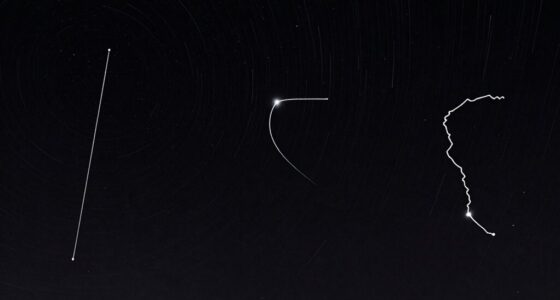

To keep your mount tracking at its best, understand that periodic error comes from gear imperfections causing star trails. Regularly calibrate PEC by ensuring proper polar alignment, using guiding software, and tightening gear backlash. Keep your setup stable, update PEC data regularly, and troubleshoot mechanical issues promptly. Fine-tuning and maintenance are ongoing, but mastering these basics will considerably improve your imaging success. Stick around to discover how expert techniques can help you maintain peak performance over time.
Key Takeaways
- Regularly calibrate PEC after equipment changes to maintain tracking accuracy and prevent error accumulation.
- Ensure precise polar alignment and mount stability for effective PEC performance.
- Use guiding software tools like PHD2 or PECPrep to analyze and correct periodic errors.
- Tighten gear backlash and inspect mount components to reduce mechanical sources of periodic error.
- Schedule routine recalibrations and maintenance to sustain long-term astrophotography precision.

Sky Watcher Sky-Watcher Star Adventurer GTI Mount Kit with Counterweight, CW bar, Tripod, and Pier Extension - Full GoTo EQ Tracking Mount for Portable and Lightweight Astrophotography
- Mount Head: Star Adventurer GTi full GoTo mount
- Tripod and Pier: Includes tripod with pier extension
- Polar Scope: Built-in polar scope with illuminator
As an affiliate, we earn on qualifying purchases.
Understanding Periodic Error and Its Impact on Imaging
Periodic error is a repeating misalignment in the tracking of your mount that can cause star trails and blurry images during long exposures. This error stems from slight imperfections in the gear train, which disrupt mount stability and lead to inconsistent tracking. When your mount isn’t properly aligned optically, these errors become more pronounced, affecting image quality. Accurate optical alignment guarantees your mount moves smoothly and consistently, reducing the effects of periodic error. Even small misalignments can amplify periodic error, making it harder to capture sharp, detailed images. Understanding how these tracking inaccuracies impact your imaging helps you appreciate the significance of maintaining mount stability and precise optical alignment. Mastering deep-sky imaging involves understanding and addressing these factors to achieve high-quality results. Addressing these issues is vital for achieving high-quality astrophotography results.

Sky Watcher Star Adventurer GTI Mount Head Kit with Counterweight and CW bar - Full GoTo EQ Tracking Mount for Portable and Lightweight Astrophotography
- Full GoTo Mount Head: Star Adventurer GTi with GoTo functionality
- Counterweight Bar: Includes counterweight bar for stability
- Built-in WiFi: Integrated WiFi for remote control
As an affiliate, we earn on qualifying purchases.
How to Detect and Measure Periodic Error in Your Mount
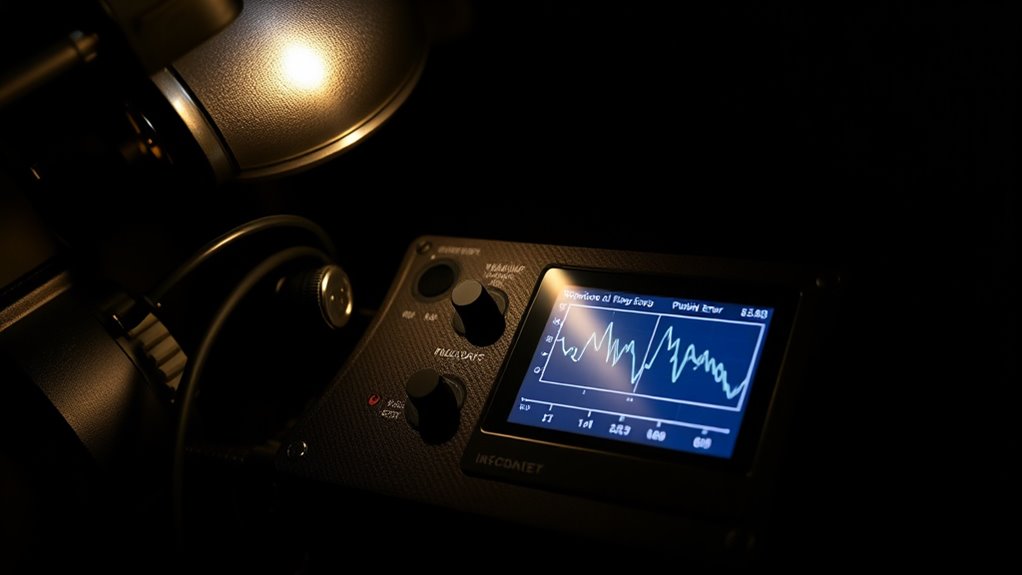
To detect periodic error, you need to observe the tracking error patterns over time. Using autoguide systems can help you identify consistent deviations that indicate periodic issues. Once you recognize these patterns, you can better measure and plan for correction strategies. Familiarity with the performance cookies used by your mount’s control software can also assist in analyzing operational data for anomalies.
Tracking Error Patterns
Have you ever wondered how to identify the telltale signs of tracking errors in your mount? Tracking error patterns often show up as periodic deviations in your star trails or faint, repetitive shifts in your images. To detect these, review your mounted star images and look for consistent, repeating errors that match the mount’s periodic error cycle. Proper polar alignment and mount calibration are essential for accurate measurement. Use the following table to visualize common error patterns:
| Error Pattern | Description | Visual Indicator |
|---|---|---|
| Backlash | Play in gears, causing lag | Slight jumps in star position |
| Periodic Error | Repeating deviations every cycle | Regular star elongation or shift |
| Flexure | Mechanical movement within mount | Slight drift during tracking |
| Misalignment | Incorrect polar alignment | Asymmetric star trails |
| Mount Calibration | Improper setup | Irregular, inconsistent errors |
Additionally, understanding how machine learning algorithms are utilized in advanced mount calibration can help improve tracking accuracy and error correction.
Using Autoguide Systems
Autoguide systems are vital tools for detecting and measuring periodic error in your mount. Proper polar alignment is essential, as it ensures accurate guiding and reduces systematic errors. When selecting a mount, consider models with built-in autoguiding compatibility and low inherent periodic error. Once set up, your autoguide camera tracks a guide star, allowing the software to detect deviations caused by periodic error. This data helps you quantify the error’s magnitude and pattern over time. By analyzing these measurements, you can determine whether your mount’s periodic error requires correction or if further alignment adjustments are needed. Regular autoguiding with precise polar alignment enhances measurement accuracy, making it easier to implement effective periodic error correction and achieve sharper astrophotographs. Additionally, understanding the latest advancements in AI can help you interpret guiding data more effectively and optimize your correction strategies.

iEXOS-100-2 PMC-Eight Equatorial Tracker System Tripod and Mount for Astrophotography with WiFi and Bluetooth Compatible
- Advanced Multi-CPU System: Eight independent CPUs for fast responsiveness
- Quiet Dual-Axis Gears: Clutched worm gears with precision stepper motors
- User-Friendly App: ExploreStars app for easy alignment and navigation
As an affiliate, we earn on qualifying purchases.
The Process of Calibrating PEC for Optimal Performance
To calibrate PEC effectively, you need accurate data collection to identify your mount’s error cycle precisely. Once you have reliable measurements, you can apply fine-tuning adjustment methods to improve tracking. This process guarantees your mount performs at its best during long exposures. Incorporating nutrient-rich ingredients into your calibration routine can further support optimal performance and overall system health.
Accurate Data Collection
Accurate data collection is essential for effectively calibrating periodic error correction (PEC) and ensuring your telescope’s tracking performance is maximized. To achieve this, you need a precise polar alignment, as even small misalignments can distort data. Make sure your mount is stable throughout the calibration process, minimizing vibrations and movements that could skew results. When collecting data, record multiple passes over the same star to identify consistent periodic errors. Use reliable software or guiding tools to analyze your recordings accurately. Consistent, high-quality data allows for precise PEC calibration, reducing periodic errors and improving tracking accuracy. Remember, the better your initial data, the easier it is to fine-tune your mount for optimal astronomical performance. Proper soil conditions can also influence the stability of your setup, especially if you are using an outdoor mount.
Fine-Tuning Adjustment Methods
Fine-tuning PEC involves carefully adjusting your mount’s calibration to minimize residual periodic errors and enhance tracking accuracy. First, verify your mount is properly aligned; precise mount alignment reduces initial errors and makes calibration more effective. Next, address gear backlash by tightening or adjusting gear meshes, which helps prevent gear slack from causing periodic deviations. When calibrating PEC, test your mount’s performance by guiding through a calibration run, then review the tracking data. If you notice persistent errors, refine your calibration by re-aligning the mount or adjusting gear backlash settings. This iterative process helps eliminate residual errors, resulting in smoother, more accurate tracking. Regular fine-tuning ensures your PEC system performs at its best, delivering consistent astrophotography results.
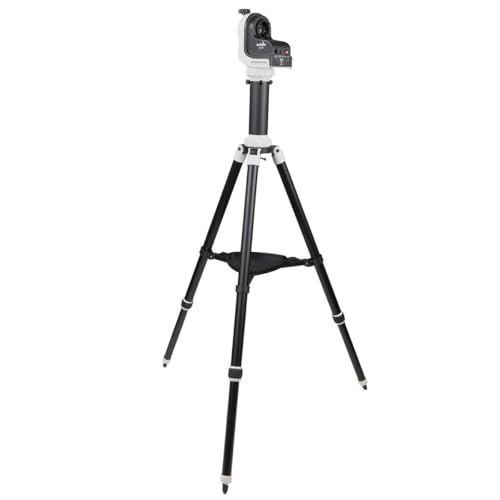
Sky-Watcher Sky-Watcher AZ-GTI – Portable Computerized GoTo Alt-Az Mount for On-The-Go Astronomy – WiFi Enabled App Controlled – Time-Lapse and Panorama Photography Capable (S21110)
- Lightweight Design: Weighs only 8.6 pounds for portability
- High Payload Capacity: Supports up to 11 pounds of equipment
- WiFi and App Control: Operable via smartphone or tablet
As an affiliate, we earn on qualifying purchases.
Common Mistakes in PEC Setup and How to Avoid Them
When setting up periodic error correction (PEC), it’s easy to make mistakes that undermine its effectiveness. One common error is neglecting proper mount alignment, which causes inaccurate PEC data. Verify your mount is precisely aligned before recording PEC corrections, or you’ll introduce errors instead of fixing them. Additionally, gear backlash can distort the PEC calibration process. If you don’t account for backlash, your corrections will be off, leading to star trailing or tracking issues. Always perform a thorough backlash calibration and keep the gears well-maintained. Rushing through setup or skipping these steps results in ineffective PEC. Take your time to properly align your mount and address gear backlash—these small details make a significant difference in achieving precise, reliable PEC corrections. Proper mount calibration ensures the corrections are based on accurate data, ultimately improving tracking performance.
Tools and Software to Assist With PEC Calibration

Using the right tools and software can substantially streamline the PEC calibration process. Automated mount alignment tools help guarantee your telescope is precisely aligned, reducing errors during calibration. Software like PHD2, PECTool, or PECPrep guides you through polar alignment, which is vital for accurate PEC. These programs analyze star movement, providing real-time feedback to fine-tune your mount’s positioning. Additionally, some software integrates with your mount’s control system, simplifying data collection and correction. Accurate polar alignment minimizes initial errors, making PEC calibration more effective. Proper butter-making techniques can also serve as a useful analogy for understanding precise calibration steps, emphasizing the importance of meticulous setup and adjustment. By leveraging these tools and software, you can save time, improve calibration accuracy, and achieve better tracking performance, ensuring your astrophotography or observation sessions are as successful as possible.
Maintaining and Updating PEC Data Over Time
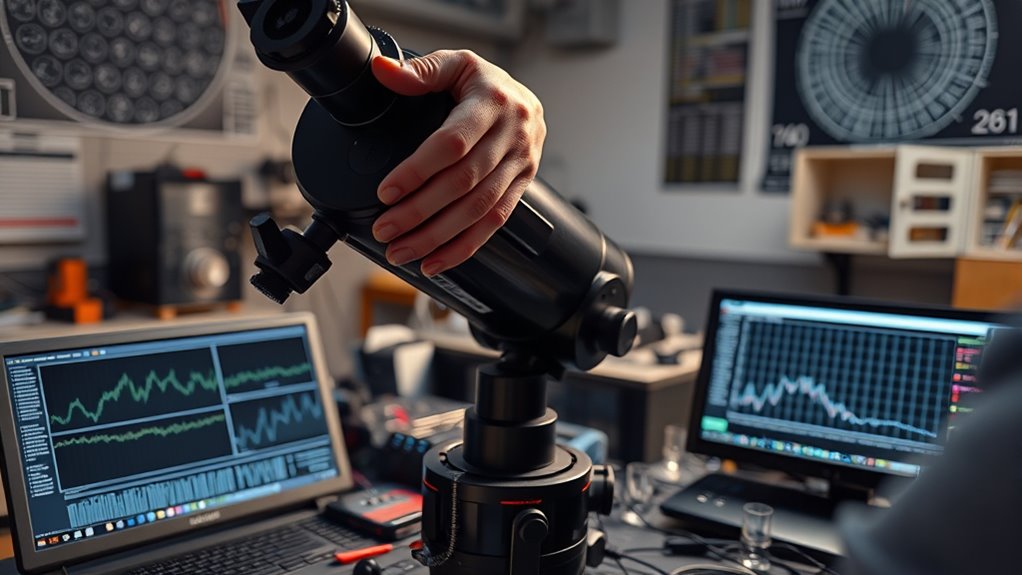
Regularly maintaining and updating your PEC data is essential to guarantee your telescope continues to track accurately over time. As your mount experiences shifts, you need to revisit mount alignment and polar scope calibration to ensure the PEC remains effective. Over time, small misalignments can accumulate, degrading tracking precision. To keep your PEC current:
- Regularly revisit mount alignment to correct any positional shifts
- Recalibrate the polar scope to ensure accurate polar alignment
- Update PEC data after major adjustments or equipment changes
- Be aware of support hours at your local resources to get assistance when needed
Staying proactive with these tasks helps prevent errors from compounding. Proper maintenance ensures your periodic error correction stays precise, reducing the need for extensive troubleshooting later. Consistent updates keep your telescope performing at its best, giving you clearer, more accurate astrophotography sessions.
Troubleshooting Persistent Errors and Improving Accuracy
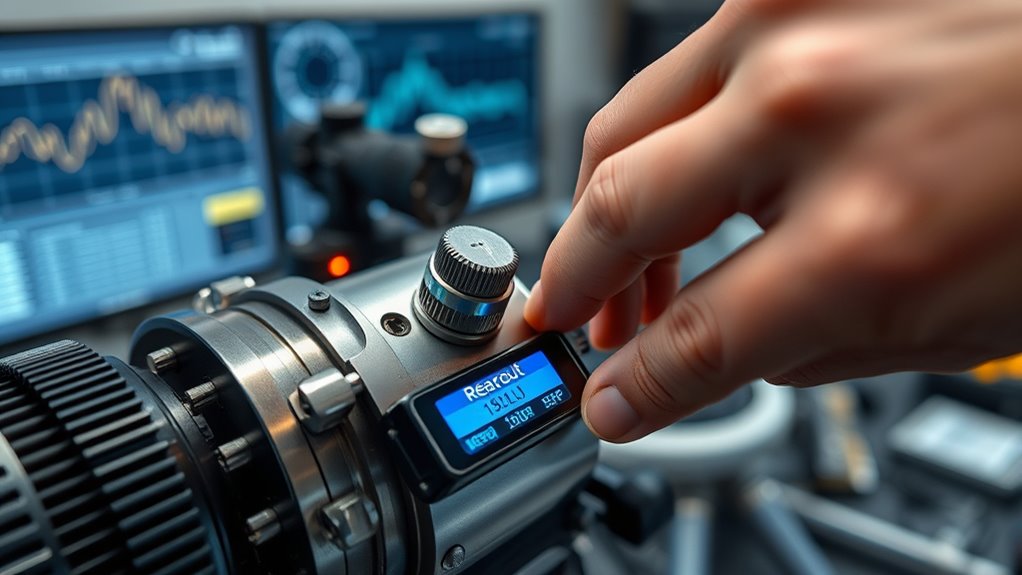
Persistent tracking errors can be frustrating, but identifying their root causes is essential for improving your telescope’s accuracy. Common issues include misaligned mounts or poor polar alignment. Start by double-checking your mount alignment; even slight misalignments can cause persistent errors. Confirm your polar alignment is precise, as small deviations substantially impact tracking. Use the table below to diagnose issues:
| Symptom | Possible Cause | Solution |
|---|---|---|
| Star drifting east/west | Mount misalignment | Re-align mount properly |
| Inconsistent tracking | Poor polar alignment | Recheck polar alignment |
| Error persists after setup | Mechanical looseness | Tighten all mount components |
| Erratic movement | Faulty gear or motor | Inspect and service mount |
| Error after PEC update | Data mismatch | Recalibrate PEC |
Address these areas systematically to troubleshoot errors and improve accuracy. Ensuring proper calibration can significantly reduce persistent errors and enhance your overall tracking performance.
Best Practices for Long-Term PEC Maintenance and Success

Maintaining PEC (Periodic Error Correction) over the long term requires consistent attention to detail and proactive practices. Regularly check your mount alignment to guarantee it remains precise, as even slight shifts can affect PEC accuracy. Keep your power supply stable; fluctuations can introduce errors that undermine your corrections. Schedule periodic recalibrations to catch drift early and maintain ideal performance. Additionally, verify cabling and connections to prevent signal disruptions that could compromise PEC results. Proper storage and handling of your equipment also extend its lifespan and reliability. Remember, a well-maintained setup minimizes errors and maximizes imaging quality.
Consistently check alignment, stabilize power, and handle equipment properly to ensure long-term PEC performance and optimal imaging results.
- Regularly verify mount alignment and recalibrate as needed
- Use a stable, quality power supply to prevent fluctuations
- Keep equipment clean, well-connected, and stored properly
Frequently Asked Questions
How Often Should I Recalibrate My PEC System for Best Results?
You should recalibrate your PEC system every 3 to 6 months for ideal results. Regular calibration frequency ensures your mount stays precise, especially after heavy use or significant changes. Keep up with mount maintenance by checking for mechanical issues and cleaning components before recalibrating. Consistent calibration helps maintain accurate tracking, so your astrophotography remains sharp. Don’t wait too long; routine calibration is key to achieving the best imaging results.
Can PEC Correction Be Performed on All Types of Mounts?
Yes, PEC correction can be performed on most mount types, but you need to check your mount’s compatibility with PEC software. Some mounts have built-in PEC capabilities, while others require external modules or firmware updates. Always verify your mount’s compatibility before attempting PEC correction. Using PEC software properly can markedly improve tracking accuracy, especially on mounts that support it, ensuring better astrophotography results.
What Are Signs That My PEC Data Needs Updating?
You’ll want to update your PEC data if you notice alignment issues during tracking or if your mount’s performance feels inconsistent. Firmware updates can also impact PEC accuracy, so keep your equipment’s firmware current. Regularly reviewing your PEC data and recalibrating when you see tracking problems or after firmware updates guarantees your mount stays precise. Staying proactive helps prevent long-term errors and keeps your astrophotography sharp.
Are There Specific Environmental Conditions That Affect PEC Accuracy?
Environmental conditions like temperature instability and poor humidity control can considerably impact PEC accuracy. When temperatures fluctuate, it causes the equipment to expand or contract, leading to errors. High humidity can also affect sensor performance. To maintain ideal PEC, keep your environment temperature-stable and humidity-controlled, ensuring consistent conditions. This minimizes drift and maintains calibration precision, helping your PEC data stay accurate and reliable over time.
How Do I Integrate PEC Calibration Into My Regular Imaging Workflow?
You should integrate PEC calibration into your imaging workflow by first setting up a reliable autoguide system. Use PEC software to record and analyze your mount’s periodic error. Afterward, apply the calibration data during each session to improve tracking accuracy. Make sure to perform regular recalibrations, especially after changes in your autoguide setup or environmental conditions, to maintain ideal PEC performance and image quality.
Conclusion
Think of PEC as the heartbeat of your mount, guiding your astrophotography journey. When you understand its rhythm, you can dance smoothly through the stars, avoiding missteps and blunders. Regular calibration keeps this dance in sync, turning errors into harmony. With patience and the right tools, you’ll master this celestial symphony, ensuring your imaging flows seamlessly — a steady beat that elevates your stargazing from good to extraordinary.