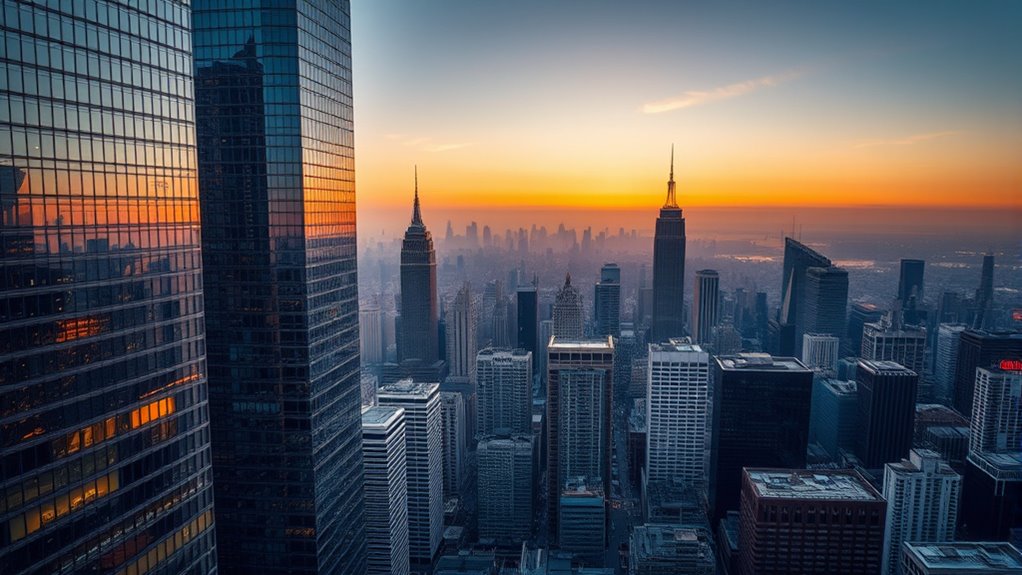

Focal length controls how much of a scene you see and how big subjects appear in your photos. A shorter focal length (like 24mm) gives a wider field of view, capturing more background, while a longer focal length (like 100mm) zooms in on details and compresses distance. Knowing how focal length affects perspective helps you choose the right lens for your desired composition. Keep exploring to discover how to optimize your shots for any scene.
Key Takeaways
- Focal length determines the camera’s field of view, affecting how much of the scene is visible.
- Longer focal lengths (telephoto) produce narrower views, magnifying subjects and compressing background and foreground.
- Shorter focal lengths (wide-angle) offer broader perspectives, capturing more of the scene with less magnification.
- Sensor size influences perceived field of view at the same focal length; larger sensors provide wider views.
- Adjusting focal length changes image scale and perspective, shaping how subjects and background relate visually.
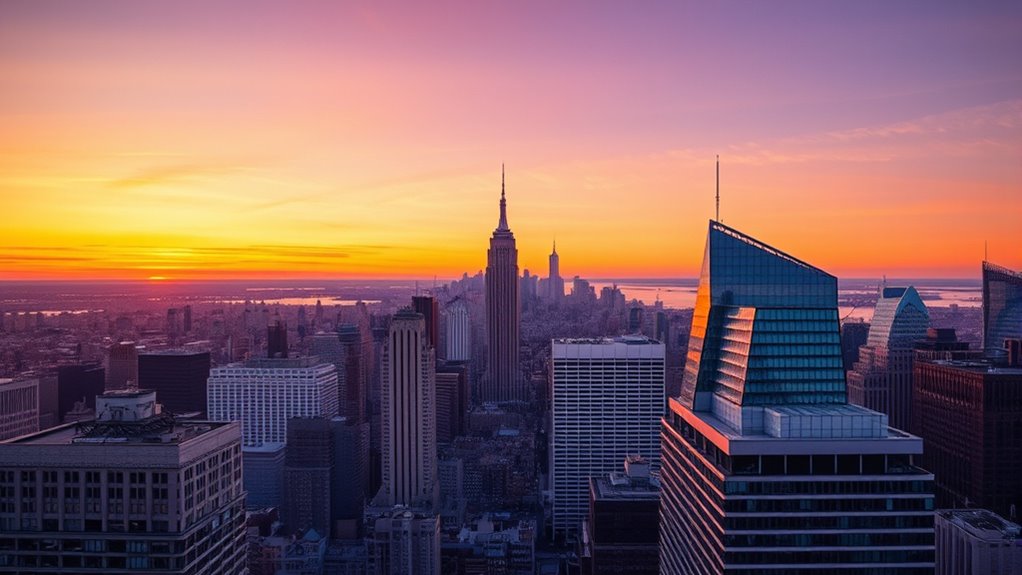
Have you ever wondered how photographers capture stunning images with different perspectives? One of the key factors that influence this is focal length, which determines how much of a scene you see and how large subjects appear in your photos. But to truly understand how focal length works, you need to think about the sensor size of your camera and the aperture effects that come into play. These elements shape the overall look and feel of your images, affecting both the field of view and image scale.
Sensor size is fundamental because it impacts how focal length translates into the perspective you see through your lens. A camera with a larger sensor, like a full-frame sensor, captures more light and provides a wider field of view at a given focal length compared to a smaller sensor, such as a crop sensor or Micro Four Thirds. For example, a 50mm lens on a full-frame camera offers a natural perspective similar to what the human eye perceives, but the same lens on a crop sensor camera will have a narrower field of view, making your subject appear more zoomed-in. This means that understanding your sensor size helps you anticipate how focal length affects your composition and perspective, allowing you to choose lenses that best suit your creative vision.
Larger sensors offer wider views at the same focal length, shaping your scene’s perspective and composition.
Aperture effects also play a significant role in shaping your images. The aperture controls how much light enters the lens, influencing depth of field and the amount of background blur. When you use a wide aperture, like f/1.4 or f/2.8, you can achieve a shallow depth of field, isolating your subject from the background and emphasizing scale and perspective. Conversely, smaller apertures, such as f/8 or f/11, increase depth of field, capturing more of the scene in sharp focus. These aperture effects interact with your focal length to alter the perceived size and distance of objects in your frame. For instance, a telephoto lens with a wide aperture can compress the background and foreground, making distant objects appear closer together and larger, which dramatically influences how your scene is perceived.
Additionally, understanding the relationship between sensor size and focal length can help you better predict how your camera will interpret scenes and improve your compositional decisions. In essence, understanding how sensor size and aperture effects influence your focal length choices empowers you to control your images’ composition and perspective. By selecting the right lens and aperture combination, you can manipulate the field of view, enhance or soften background details, and effectively communicate the story you want to tell. Whether you’re capturing sweeping landscapes or intimate portraits, grasping these concepts helps you create images with the desired scale, depth, and impact.

Canon EF-S 24MM 1.2.8 STM
- Lens Type: Wide-angle for Canon APS-C cameras
- Size and Weight: Slim and lightweight design
- Aperture: 7-blade circular aperture for soft backgrounds
As an affiliate, we earn on qualifying purchases.
As an affiliate, we earn on qualifying purchases.
Frequently Asked Questions
How Does Sensor Size Affect Focal Length Perception?
Sensor size substantially influences your perception of focal length because larger sensors provide less image magnification, offering a wider field of view. Conversely, smaller sensors increase image magnification, making subjects appear closer. This means that with a bigger sensor, your lens’s focal length feels more natural, while smaller sensors make you perceive the same focal length as more zoomed-in. So, sensor size directly affects how you perceive focal length and framing in your photos.
What Is the Impact of Focal Length on Depth of Field?
Focal length directly impacts your depth of field, with longer lenses creating a shallower focus area. This results in a more pronounced background blur and better bokeh quality, making your subject stand out. You’ll notice that as focal length increases, the background becomes softer and more aesthetically pleasing. So, if you want a dreamy, blurred background, choose a longer focal length to enhance your image’s depth and bokeh effect.
How Do Zoom Lenses Alter Field of View at a Fixed Focal Length?
Ever wonder how zoom lenses transform your shot? When you zoom, you change the zoom range, narrowing or widening your field of view without altering focal length settings. This lets you get closer or farther without moving the camera, but it requires compatible lenses. Your lens compatibility determines how smoothly you can adjust the zoom range, giving you versatile control over your framing while maintaining clarity and focus.
Can Focal Length Change During a Shot With Adjustable Lenses?
Yes, focal length can change during a shot with adjustable lenses if the lens isn’t properly calibrated. You need to verify lens calibration for focal length consistency; otherwise, focus and framing might shift unexpectedly. Modern zoom lenses allow you to smoothly alter focal length during filming, but maintaining calibration ensures your shot stays consistent. Always check calibration before critical shots to avoid unwanted changes in focal length mid-recording.
How Does Focal Length Influence Image Distortion?
Focal length dramatically influences how your image appears, often creating surprising effects. Longer focal lengths minimize perspective distortion, giving a compressed, flatter look that brings distant objects closer. Shorter focal lengths, however, exaggerate perspective distortion, stretching foreground elements and creating a sense of depth or chaos. This compression effect can dramatically alter your scene’s mood, making your choice of focal length a powerful tool to shape how viewers perceive your shot.

Canon RF100-400mm F5.6-8 is USM Telephoto Lens, Black, Compatible with EOS R Series Mirrorless Cameras
- Compact and Lightweight Design: High-image quality RF tele zoom lens
- Versatile Zoom Range: 100-400mm for various shooting needs
- Optical Image Stabilizer: Up to 5.5 stops of shake correction
As an affiliate, we earn on qualifying purchases.
As an affiliate, we earn on qualifying purchases.
Conclusion
Now that you understand focal length, you can wield your camera like a superhero with a superpower. Imagine zooming in so close that your subject jumps right out of the frame, or capturing a vast landscape that feels huge enough to step into. Focal length transforms your shots from tiny, distant specks to larger-than-life scenes. So, pick your lens wisely, and turn your photos into epic adventures that leap off the page and into your imagination!

Sony – FE 50mm F1.8 Standard Lens (SEL50F18F/2), Black
- Maximum Aperture: F1.8 for beautiful defocusing
- Bokeh Quality: 7-blade circular aperture
- Design: Compact and lightweight for portability
As an affiliate, we earn on qualifying purchases.
As an affiliate, we earn on qualifying purchases.

Sigma 16mm f/1.4 DC DN Contemporary Lens for Sony E (402965) Black
- Compatibility: Fits Sony E mount cameras
- Ideal Use: Great for nature and events
- Aperture: Large f/1.4 for low light
As an affiliate, we earn on qualifying purchases.
As an affiliate, we earn on qualifying purchases.