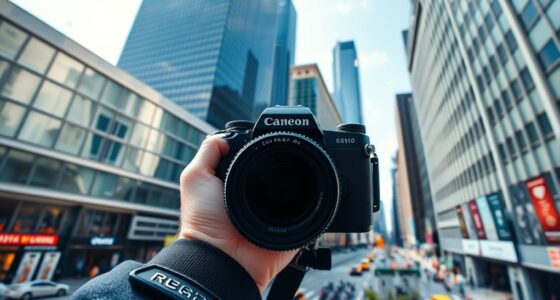
To make certain proper back focus spacing, you need to calibrate your camera so the focus point matches the actual subject distance. Use a high-contrast target placed at the distance you typically shoot. Adjust the autofocus system until sharpness aligns precisely with the target. Regularly check and recalibrate, especially after impacts or repairs. Getting this right will improve image clarity and help you capture sharper shots every time—if you want to learn more, keep exploring how to perfect this process.
Key Takeaways
- Proper spacing ensures the calibration target is at the same plane as the subject for accurate back focus adjustment.
- Maintain consistent distance between the camera and target during calibration to achieve reliable focus results.
- Use a fixed, well-lit, high-contrast target placed at the intended subject distance for precise calibration.
- Ensure the camera’s autofocus system is set to single-point mode to control focus on the specific target area.
- Avoid changing the distance or position during calibration to prevent inaccuracies caused by spacing variations.
Have you ever struggled with blurry photos despite focusing correctly? If so, you’re not alone. Back focus issues are a common problem that can ruin otherwise perfect shots. The key to fixing this often lies in understanding and adjusting your camera’s autofocus system, specifically through lens calibration and autofocus adjustment. When your camera isn’t properly calibrated, it might focus slightly in front of or behind your intended subject, leading to images that look sharp in some areas but blurry in others. This mismatch is what we call back focus, and correcting it requires a precise approach.
Back focus causes blurry images; calibration and autofocus adjustments can fix this for sharper, clearer shots.
First, you need to determine if your camera or lens needs calibration. Many modern cameras allow you to fine-tune autofocus settings to eliminate back focus problems. Lens calibration involves adjusting the autofocus motor or the lens’s focusing mechanism to ensure the camera focuses exactly where you want it to. This process can be done through the camera’s menu system or with specialized tools designed for calibration. When you perform autofocus adjustment, you’re essentially telling your camera how to interpret focus signals accurately, aligning its focus point with the actual sharpness of your subject. This is especially important if you notice consistently out-of-focus areas in your images, even when your focus point appears correct.
To begin, set your camera on a sturdy tripod and choose a high-contrast target at a fixed distance. Use a small aperture to increase depth of field, which helps in evaluating focus accuracy. Take test shots, then review them carefully at 100% zoom. If the focus is consistently in front of or behind your target, it’s time to make adjustments. Many cameras provide a calibration setting where you can input a positive or negative value to shift the autofocus slightly. Start with small adjustments and retake your test images until the focus aligns perfectly with your target. Remember, the goal is to achieve sharp focus exactly where you want it, not just close. Proper lens calibration can prevent recurring back focus issues and improve overall image quality.
Regularly calibrating your lens and adjusting autofocus ensures that your camera performs at its best, especially when working with fast-moving subjects or in situations demanding high precision. Proper lens calibration minimizes back focus issues, allowing your images to be crisp and clear. Keep in mind that some lenses and camera bodies may require periodic recalibration, especially after impacts or repairs. Investing time in these adjustments saves you from frustration and wasted shots, ensuring that your photos always meet your expectations. Ultimately, understanding and performing autofocus adjustment and lens calibration are essential steps toward mastering your camera’s focus system and consistently capturing sharp, professional-quality images.
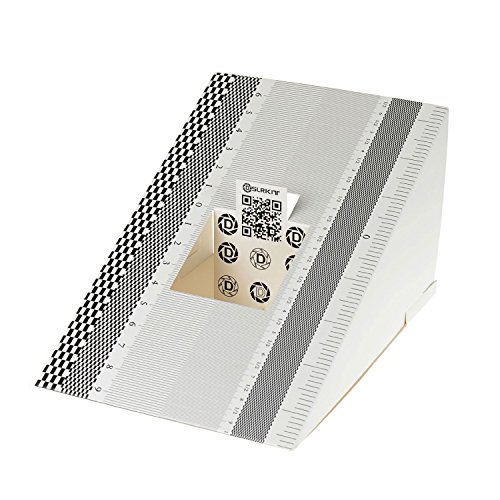
DSLRKIT Lens Focus Calibration Tool Alignment Ruler Folding Card,Pack of 2
- Lens Focus Calibration Tool: Compact and easy to use
- Detects Autofocus Accuracy: Ensures precise focusing for sharp images
- Adjusts Autofocus Settings: Helps fine-tune camera focus
As an affiliate, we earn on qualifying purchases.
As an affiliate, we earn on qualifying purchases.
Frequently Asked Questions
How Do Back Focus Requirements Vary Between Different Camera Models?
Your back focus requirements vary between camera models mainly due to differences in lens compatibility and autofocus modes. Some cameras need precise adjustments for specific lenses to achieve sharp focus, while others automatically fine-tune autofocus. Always check your camera’s compatibility with your lenses and understand its autofocus modes to guarantee accurate focus. Properly setting back focus ensures clearer images across different models, especially when switching lenses or shooting in challenging conditions.
Can Incorrect Back Focus Affect Image Sharpness?
Yes, incorrect back focus can substantially affect image sharpness. When the focus point is off, your subject may appear blurry, especially if you’re working with a shallow depth of field. It can also impact autofocus speed, causing delays in acquiring proper focus. Ensuring correct back focus helps maintain sharpness, keeps your subject crisp, and allows your camera to autofocus quickly and accurately, improving overall image quality.
Is There a Quick Way to Test Back Focus at Home?
Yes, you can do a quick lens calibration focusing test at home. Set up a ruler or a detailed focusing chart on a flat surface, about 10-20 feet away. Use your camera on a tripod and focus on a specific point. Check if the focus matches the marked point; if not, it indicates your back focus isn’t accurate. Adjust your lens calibration accordingly to guarantee sharp images.
How Often Should Back Focus Calibration Be Performed?
Think of your camera’s autofocus calibration as a routine health check for your lens. You should perform back focus calibration every 3-6 months, or whenever you notice out-of-focus images. Regular lens maintenance keeps your autofocus sharp and reliable. If you change lenses often or your camera experiences bumps, more frequent calibration can prevent blurry shots, keeping your images crisp and your gear performing at its best.
What Tools Are Recommended for Precise Back Focus Adjustment?
You should use focus charts and calibration tools for precise back focus adjustment. Focus charts help you visually verify focus accuracy, while calibration tools like a collimator or a dedicated back focus gauge provide precise measurement. By following manufacturer instructions and using these tools, you guarantee ideal focus alignment. Regular calibration with these tools guarantees sharp, clear images and maintains your equipment’s performance over time.
DSLRKIT Lens Focus Calibration Tool Alignment Ruler Folding Card,Pack of 2
- Lens Focus Calibration Tool: Compact and easy to use
- Detects Autofocus Accuracy: Ensures precise focusing for sharp images
- Adjusts Autofocus Settings: Helps fine-tune camera focus
As an affiliate, we earn on qualifying purchases.
As an affiliate, we earn on qualifying purchases.
Conclusion
By paying attention to back focus requirements, you guarantee your images are sharp and precise. Think of it as the difference between a blurry, unfocused shot and a crystal-clear masterpiece—like a lighthouse piercing through the fog. Proper spacing between your lens and subject acts as the guiding light, bringing clarity to your work. When you get this right, every shot becomes a vivid story, sharp and compelling, standing out against the hazy background of uncertainty.

SmallRig Wireless Follow Focus Kit (Lite) with Handwheel Controller & Receiver Motor, A/B Stops & 15mm Rod Clamp, Compact Design, Widely Compatible with Cinema and Zoom Lenses with High Damping – 4296
- Wide Lens Compatibility: Fits cinema and zoom lenses
- High Torque Motor: Provides 4.3 kgf.cm torque
- Long Battery Life: Up to 21 hours of use
As an affiliate, we earn on qualifying purchases.
As an affiliate, we earn on qualifying purchases.

ARTIBETTER Camera Focus Calibration Card Lens Test Chart Color Wheel Chart for CCTV Installation Alignment Indoor Outdoor Use 15.7 X 12.6 Inch
- Includes Calibration Tools: Focus test chart and adjustment card
- Durable Construction: Built for long-term use and repeated testing
- Versatile Use: Suitable for CCTV calibration and color testing
As an affiliate, we earn on qualifying purchases.
As an affiliate, we earn on qualifying purchases.