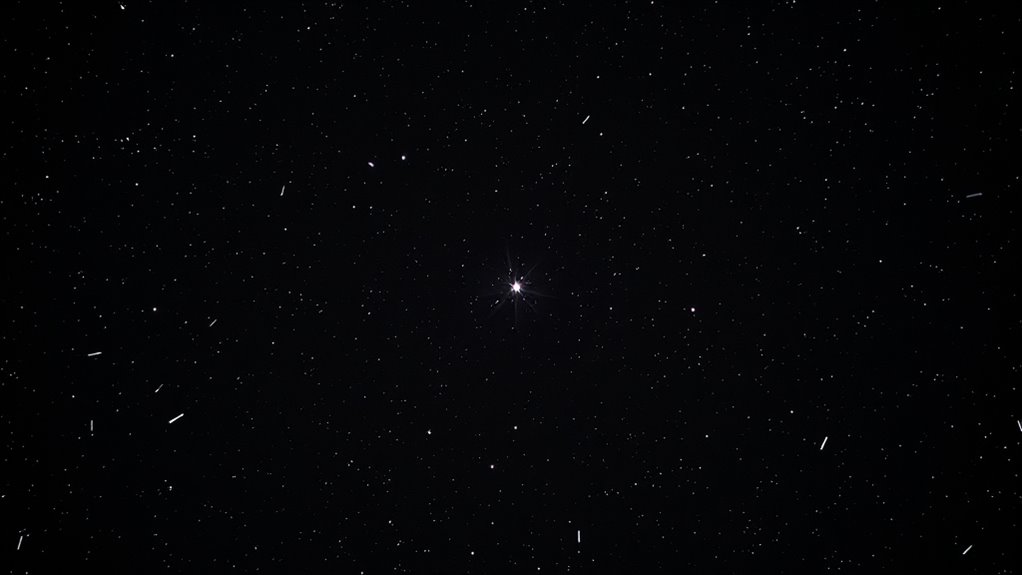

To diagnose off-axis star shapes caused by sensor tilt or collimation issues, start by capturing images of dense star fields or calibration targets. Look for star elongation or skewed shapes across the frame, especially near the edges. If stars appear elongated or asymmetric, your sensor might be tilted. Adjust the tilt screws gradually until star shapes are uniform and round throughout the frame. Continuing with these steps helps guarantee ideal focus and image quality.

Prime made for students and young adults
- Fast, free delivery for dorm and study essentials
- Prime Video and Amazon Music included
- Member-only deals
Key Takeaways
- Capture test images of dense star fields to observe star shape variations across the frame.
- Look for star elongation or skewness at the edges indicating off-axis aberrations.
- Analyze star shapes systematically to identify patterns consistent with sensor tilt or miscollimation.
- Use software tools or visual guides to compare star images from different regions of the frame.
- Confirm by making small adjustments to sensor tilt and checking for improved, uniform star shapes.
Have you ever noticed blurry or distorted images when using a sensor-based device? If so, it might be due to sensor tilt or misalignment. When your sensor isn’t perfectly aligned with the optical axis, you’ll often see signs like star elongation or off-axis distortions. These issues occur because the sensor isn’t perpendicular to the incoming light path, causing light from stars to hit different parts of the sensor at slightly different angles. Over time, even small deviations in sensor alignment can lead to noticeable image quality problems, especially toward the edges of your frame.
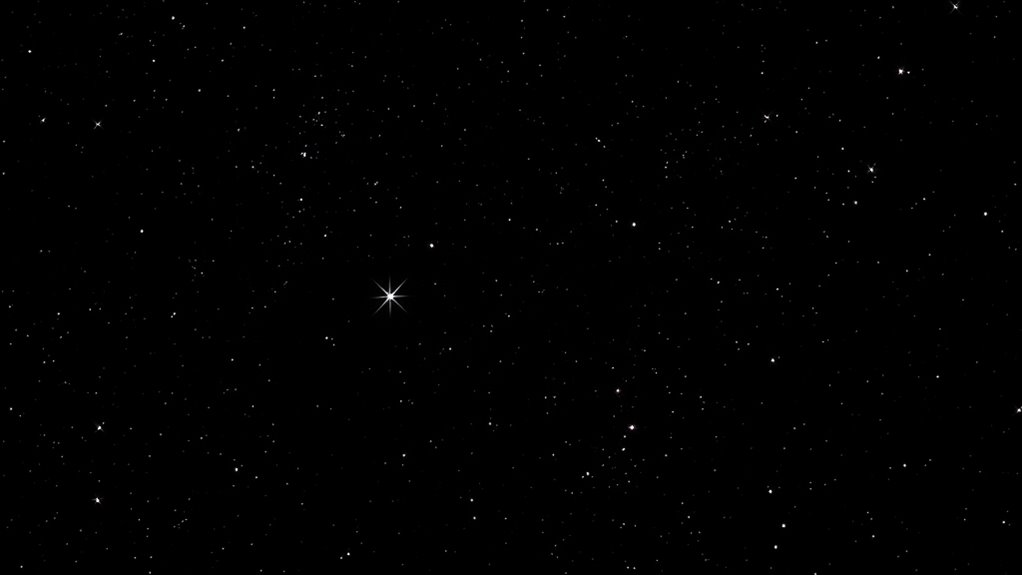
Sensor tilt can be subtle, but its effects are unmistakable once you know what to look for. You might observe that stars near the center of your images appear round and sharp, while those toward the edges turn into elongated streaks. This star elongation is a telltale sign of off-axis aberrations caused by the sensor not being properly collimated. When the sensor is tilted, the light rays from a point source don’t focus evenly across the entire sensor, resulting in these stretched or skewed star shapes. Recognizing this pattern is vital because it directly points to the need for collimation adjustments.
Diagnosing and fixing these issues involves carefully checking your sensor alignment. First, you should ensure that the sensor is seated correctly and that any mounting hardware is tight and even. Many devices have adjustable mounts or tilt screws that allow you to fine-tune the sensor’s position. When aligning the sensor, it’s helpful to take test images of a dense star field or a calibration target, then analyze the star shapes across the frame. If you notice consistent elongation toward the edges, adjusting the tilt screws slightly can help bring the sensor back into proper collimation.
It’s important to proceed gradually and with precision. Small adjustments can make a big difference, and overcorrecting might introduce new issues. Use software tools or visual guides to compare star shapes before and after each tweak. The goal is to achieve uniform, round star images across the entire frame. When you properly align the sensor and eliminate tilt, you’ll notice a marked improvement: stars will appear crisp from the center to the edges, and the star elongation will vanish. This not only enhances image quality but also guarantees your device performs at its best, especially for astrophotography or high-precision imaging. Ensuring your collimation is precise is essential for optimal image performance.
As an affiliate, we earn on qualifying purchases.
Frequently Asked Questions
Can Sensor Tilt Cause Star Shape Distortion in Astrophotography?
Yes, sensor tilt can cause star shape distortion in astrophotography. When the sensor isn’t properly aligned with the optical axis, it creates uneven focus across the image, resulting in elongated or distorted stars. Ensuring correct sensor alignment minimizes tilt, which helps maintain sharp, round stars. Regularly check and adjust your sensor to prevent off-axis issues that compromise your images’ quality and clarity.
How Does Collimation Impact Off-Axis Star Shapes?
Did you know that proper collimation can reduce off-axis star distortions by up to 50%? When you align your sensor correctly, it guarantees the optical axis stays centered, minimizing off-axis aberrations. Collimation impacts star shapes by maintaining the alignment between your optical elements, preventing asymmetrical distortions. By regularly checking your collimation, you keep your sensor alignment precise, resulting in sharper, more accurate star images across the entire field of view.
What Tools Are Best for Diagnosing Sensor Tilt?
You should use tools like a sensor tilt measurement device or a camera alignment kit to diagnose sensor tilt. These tools help you accurately assess sensor alignment and detect any tilt issues. By measuring sensor tilt precisely, you can make necessary adjustments to improve star shapes across your images. Regularly checking sensor alignment guarantees off-axis star shapes are minimized, resulting in sharper, more consistent astrophotography.
Does Temperature Affect Sensor Tilt and Collimation?
Think of your camera sensor like a boat on a lake—temperature changes can cause it to tilt slightly, affecting calibration. Yes, temperature impacts sensor tilt and collimation by causing slight shifts in sensor alignment, especially if your setup isn’t thermally stable. Sudden temperature drops or rises can lead to calibration errors, making thermal stability essential for consistent star shapes. Regularly check and adjust your sensor calibration to maintain ideal image quality.
Can Software Corrections Fix Off-Axis Star Distortions?
Yes, software corrections can fix off-axis star distortions, but they work best when you perform proper sensor calibration and optical alignment first. These adjustments help identify and compensate for misalignments, reducing star shape issues. While software can improve the results, ensuring your sensor is correctly calibrated and your optical setup is properly aligned is essential for minimizing off-axis distortions and achieving sharp, accurate star images.
collimation software for astrophotography
As an affiliate, we earn on qualifying purchases.
As an affiliate, we earn on qualifying purchases.
Conclusion
By understanding sensor tilt and collimation, you can fine-tune your setup like a skilled navigator steering through starry waters. Recognizing off-axis star shapes helps you diagnose and correct issues, ensuring your images are sharp and true to the sky. Think of collimation as the conductor of an orchestra—when everything’s aligned, your telescope performs in perfect harmony. Master these adjustments, and your astrophotography will shine brighter than ever, capturing the cosmos with clarity and precision.
As an affiliate, we earn on qualifying purchases.
As an affiliate, we earn on qualifying purchases.
Fall Picks
fall essentials
As an affiliate, we earn on qualifying purchases.