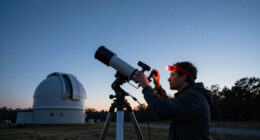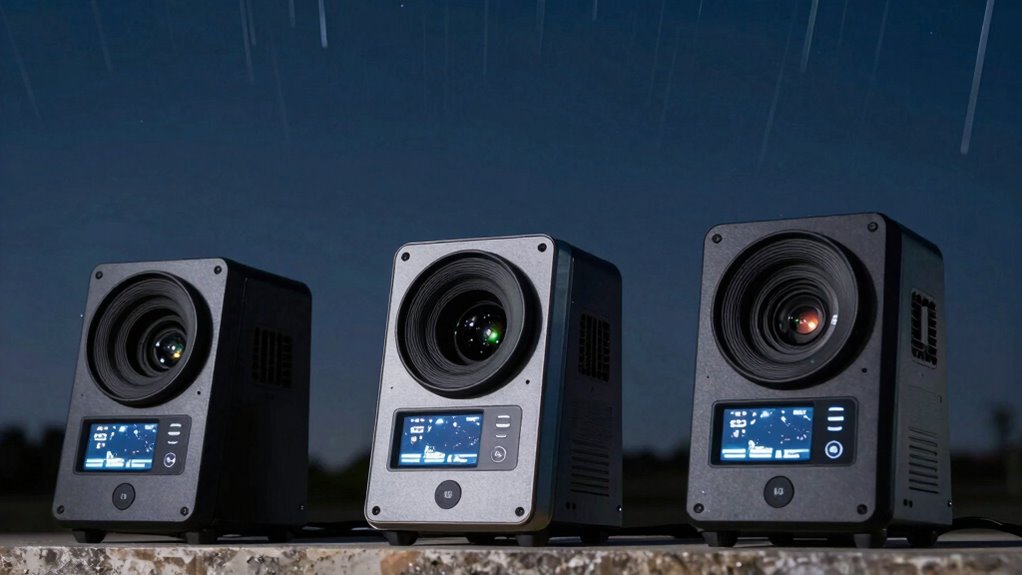

A star tracker with a built-in intervalometer can refer to a mount that triggers a camera, or to a tracker with app-controlled time-lapse features; those are not the same thing. Of these four options, the iOptron SkyGuider Pro is the clearest fit if a camera trigger port matters, while the Sky-Watcher Star Adventurer 2i Pro Pack has the broadest stated mix of tracking and time-lapse use with smartphone control. For a lighter travel kit, the Star Adventurer Mini Pro Pack is easier to carry, and the OGST offers several alignment methods in a compact package.

Prime made for students and young adults
- Fast, free delivery for dorm and study essentials
- Prime Video and Amazon Music included
- Member-only deals
The main tradeoff is between camera-trigger clarity, portability, payload, and control. Product details do not confirm that every model has a built-in intervalometer, so I distinguish a dedicated trigger port from app-based control rather than treating them as interchangeable. If your priority is timed exposures, check camera compatibility and control behavior before buying.
Key Takeaways
- The iOptron SkyGuider Pro is the only listed model whose specifications explicitly include a camera trigger port, making it the strongest match when a direct camera connection is central.
- The Star Adventurer 2i Pro Pack combines Wi-Fi app control with stated time-lapse use, but the provided details do not specify a dedicated intervalometer or camera-trigger port.
- The Star Adventurer Mini Pro Pack weighs 1.5 lb and supports up to 6.6 lb, a useful balance for travel kits that do not need to carry the heaviest camera rigs.
- The OGST lists a 4 kg payload and three polar-alignment methods, but its power requirements are not specified and tracking is single-axis.
- A tracker’s smartphone control, camera trigger connection, and camera intervalometer are distinct capabilities; confirm which one controls your exposure sequence before choosing.
| iOptron SkyGuider Pro Camera Mount with Accessories |  | Best Overall for a Direct Camera Trigger Connection | Tracking rates: 1× sidereal, 1/2×, solar, and lunar | Slew speed: Up to 144× sidereal | Power: Built-in rechargeable power source | VIEW ON AMAZON | See Our Full Breakdown |
| Sky-Watcher Star Adventurer 2i Pro Pack (S20512) |  | Best for App-Controlled Time-Lapse Versatility | Model: Star Adventurer 2i | Pack: Pro Pack | Control: Wi-Fi and SAM Console smartphone app | VIEW ON AMAZON | See Our Full Breakdown |
| Sky-Watcher Star Adventurer Mini Pro Pack (S20582) |  | Best Compact Travel Pick | Weight: 1.5 lb | Payload capacity: 6.6 lb | Power: AA batteries, up to 24 hours, or 5V mini USB | VIEW ON AMAZON | See Our Full Breakdown |
| OGST Single-Axis Automatic Tracking Equatorial Mount for Astrophotography |  | Best for Multiple Polar-Alignment Methods | Mount type: Equatorial mount | Tracking axes: Single-axis | Period error: ±10 arcseconds over 10 minutes, manufacturer-stated | VIEW ON AMAZON | See Our Full Breakdown |
| star tracker with built in intervalometer | Power | Included accessories | Dimensions | Control |
|---|---|---|---|---|
| iOptron SkyGuider Pro Camera M | Built-in rechargeable power source | Padded bag, DEC kit, counterweight, and USB cable | 3.74 × 4.53 × 5.24 in | — |
| Sky-Watcher Star Adventurer 2i | — | — | — | Wi-Fi and SAM Console smartphone app |
| Sky-Watcher Star Adventurer Mi | AA batteries, up to 24 hours, or 5V mini USB | Equatorial base, polar scope, and DEC bracket | — | — |
| OGST Single-Axis Automatic Tra | — | — | 15 × 12 × 18 cm | Wi-Fi, browser, and app |
More Details on Our Top Picks
iOptron SkyGuider Pro Camera Mount with Accessories
The SkyGuider Pro is my first pick for this roundup because its specification list includes a camera trigger port, the closest direct match here to a tracker-integrated intervalometer workflow. That still does not establish exactly which cameras or timed sequences it supports, so I would verify compatibility before relying on it as the sole exposure controller. Its built-in rechargeable power source, illuminated polar scope, and four tracking rates make it a capable compact imaging mount beyond that one connection.
Compared with the Star Adventurer 2i Pro Pack, which emphasizes Wi-Fi smartphone control and time-lapse use, the iOptron has a more explicit wired camera-trigger feature. The 2i may suit buyers who want phone-based operation, but the listed details do not identify a camera trigger port. The iOptron package also includes a DEC kit and counterweight, helpful when positioning a camera, though it remains a wide-field astrophotography mount rather than a general-purpose camera head.
Its four listed rates—sidereal, half-sidereal, solar, and lunar—give it more tracking choices than the supplied descriptions for the other models. The fast slew mode can make target positioning less laborious, and the rechargeable power source avoids depending on AA cells. The drawback is that the hand controller is optional; buyers should check what control method is included and whether it fits their setup. This is the most convincing choice for direct camera triggering, not a guaranteed all-in-one intervalometer solution.
Pros:- Explicit camera trigger port
- Built-in rechargeable power source
- Four tracking rates for different celestial targets
- DEC kit and counterweight included
Cons:- Hand controller is optional
- Designed for wide-field astrophotography rather than general-purpose mounting
- Camera-trigger compatibility and interval timing are not detailed
Best for: Astrophotographers who want a compact mount with an explicitly listed camera trigger port, included balancing accessories, and several tracking rates.
Not ideal for: Buyers seeking a general camera-mounting head, a confirmed camera-specific intervalometer, or a package that includes a hand controller without checking the listing.
- Tracking rates:1× sidereal, 1/2×, solar, and lunar
- Slew speed:Up to 144× sidereal
- Power:Built-in rechargeable power source
- Ports:ST-4 guiding port and camera trigger port
- Alignment:Illuminated polar scope
- Included accessories:Padded bag, DEC kit, counterweight, and USB cable
- Dimensions:3.74 × 4.53 × 5.24 in
- Warranty:One year
Our verdict“I rank the SkyGuider Pro first for its direct camera trigger port, while advising buyers to confirm that it supports their camera and interval needs.”
Sky-Watcher Star Adventurer 2i Pro Pack (S20512)
The Star Adventurer 2i Pro Pack is the strongest choice for someone who wants one tracker to serve wide-field astrophotography and time-lapse work. It supports Wi-Fi control through the SAM Console smartphone app, and its listed uses include time-lapse video as well as telescopic imaging. That makes it broader in stated use than the iOptron, whose most distinctive feature for this topic is its camera trigger port rather than a named time-lapse workflow.
There is an important distinction: Wi-Fi app control is not automatically a built-in camera intervalometer. The supplied specifications do not say that the SAM Console triggers a connected camera’s shutter, nor do they list a camera trigger port. I would select this model for app-controlled tracker operation and time-lapse capability only after checking how it handles the camera’s exposures. Buyers who need explicit camera triggering have clearer evidence with the SkyGuider Pro.
The modular design mounts to photographic tripods, and the deluxe equatorial base is intended to help with polar alignment. This is an appealing combination for photographers who want a portable platform with smartphone control rather than a mount centered on a wired trigger connection. But the provided listing does not state payload capacity, power requirements, or the detailed contents of the Pro Pack. Those omissions make it harder to compare load limits and field endurance against the Mini Pro Pack, which does list its weight, payload, and power options.
Pros:- Wi-Fi control through the SAM Console app
- Listed for astrophotography, time-lapse, and telescopic use
- Modular design attaches to photographic tripods
- Deluxe equatorial base supports polar positioning
Cons:- Dedicated camera intervalometer or trigger port is not specified
- Payload capacity is not provided in the supplied details
- Power requirements and detailed pack contents are not specified
Best for: Photographers who want smartphone control and a tracker described for both wide-field astrophotography and time-lapse use.
Not ideal for: Buyers who require a confirmed camera-shutter intervalometer, or who need clearly stated payload and power specifications before choosing.
- Model:Star Adventurer 2i
- Pack:Pro Pack
- Control:Wi-Fi and SAM Console smartphone app
- Listed uses:Wide-field astrophotography, time-lapse video, and telescopic use
- Mounting:Compatible with photographic tripods
- Base:Deluxe equatorial base
Our verdict“I recommend the 2i Pro Pack for app-controlled versatility, but not as a confirmed camera intervalometer until camera triggering is verified.”
Sky-Watcher Star Adventurer Mini Pro Pack (S20582)
The Star Adventurer Mini Pro Pack is the portability choice: at 1.5 lb, it is the lightest option here with a listed weight, and its 6.6 lb payload covers many camera setups described for DSLR and mirrorless use. Wi-Fi control through the SynScan app gives it a phone-based workflow, while its included equatorial base, polar scope, and DEC bracket make it a more complete alignment and positioning package than a bare tracker.
For intervalometer-focused buyers, though, the distinction is the same as with the 2i: smartphone control does not confirm camera shutter control. The product details list app connectivity and time-lapse use, but do not specify a dedicated camera trigger port. The iOptron remains the clearer pick for a direct camera connection. I would choose the Mini when low carry weight and flexible power matter more than explicit trigger documentation or a larger load margin.
Its power options are practical for travel: it can run on AA batteries or external 5V mini USB power, with up to 24 hours listed for AA operation. The 6.6 lb payload is a firm boundary for heavier lenses and accessories, and counterweights are not included. Compared with the OGST, the Mini gives more specific power information and a lower listed weight; compared with the iOptron, it is lighter but lacks the stated camera trigger port. That makes it a strong compact tracker, not the safest choice when direct interval control is the deciding feature.
Pros:- Lightweight 1.5 lb design
- 6.6 lb payload capacity for many camera setups
- AA battery or external USB power options
- Equatorial base, polar scope, and DEC bracket included
Cons:- Counterweights are not included
- Payload ceiling limits heavier camera and lens combinations
- Dedicated camera trigger or intervalometer support is not specified
Best for: Travel photographers with a modest DSLR or mirrorless setup who value low carry weight, app control, and more than one power option.
Not ideal for: Owners of heavier camera rigs, buyers who need included counterweights, or anyone who requires a confirmed built-in camera trigger.
- Weight:1.5 lb
- Payload capacity:6.6 lb
- Power:AA batteries, up to 24 hours, or 5V mini USB
- Connectivity:Wi-Fi smartphone control via SynScan app
- Included accessories:Equatorial base, polar scope, and DEC bracket
- Gear material:Brass and aluminum
Our verdict“I would choose the Mini Pro Pack for a light travel kit, while checking camera triggering separately if timed exposures are essential.”
OGST Single-Axis Automatic Tracking Equatorial Mount for Astrophotography
The OGST stands out for its combination of a 4 kg payload capacity and three listed polar-alignment methods: an optical polar scope, smartphone-based alignment, and star-pointer assistance. Its Wi-Fi, browser, and app control give buyers several ways to interact with the mount, and the listed travel and fixed operating modes suggest flexibility between portable and more settled setups. For buyers who find alignment options more pressing than a direct camera trigger, this is the most alignment-focused pick in the group.
Its core compromise is single-axis tracking. That may suit a compact astrophotography rig, but it is a more limited tracking arrangement than buyers might assume from a general equatorial-mount description. The manufacturer also states a period error of ±10 arcseconds over 10 minutes; that figure is useful context, but it does not settle real-world image results across different cameras, focal lengths, or setup conditions. By comparison, the iOptron lists four tracking rates and a camera trigger port, giving it a more explicit fit for this roundup’s intervalometer theme.
At 1.4 kg, the OGST is reasonably portable on paper and has a higher stated payload than the Mini’s 6.6 lb limit. But the description does not specify power requirements, an important gap for anyone planning long sessions away from an outlet. It also does not list a camera trigger port or a built-in intervalometer; Wi-Fi and browser control should not be treated as proof of shutter control. I see it as a mount for buyers drawn to alignment choice and stated load capacity, not the safest selection for exposure sequencing without further confirmation.
Pros:- Three listed polar-alignment options
- 4 kg payload capacity
- Wi-Fi, browser, and app control
- Travel and fixed operating modes
Cons:- Single-axis tracking
- Power requirements are not specified
- Camera triggering or intervalometer support is not specified
Best for: Astrophotographers who want several polar-alignment methods, a stated 4 kg payload, and browser or app-based mount control.
Not ideal for: Buyers who need a confirmed camera intervalometer, two-axis tracking, or clear power details for remote sessions.
- Mount type:Equatorial mount
- Tracking axes:Single-axis
- Period error:±10 arcseconds over 10 minutes, manufacturer-stated
- Payload capacity:4 kg
- Product weight:1.4 kg
- Control:Wi-Fi, browser, and app
- Polar alignment:Optical polar scope, smartphone-based, and star-pointer assisted
- Dimensions:15 × 12 × 18 cm
Our verdict“I would shortlist the OGST for alignment flexibility and stated payload, but verify power and camera-trigger functions before relying on it for timed imaging.”

How We Picked
I ranked these models around the promise in the search: a star tracker with built-in intervalometer capability. The supplied specifications do not verify a dedicated intervalometer in all four products. Rather than assume an app can trigger a camera, I gave the strongest fit to the iOptron because it explicitly lists a camera trigger port. I treated the Star Adventurer 2i’s time-lapse support and Wi-Fi app control as useful, but not proof of a camera intervalometer.
I also compared payload and portability, alignment aids, power information, and the flexibility each mount offers for imaging. The Star Adventurer Mini earns a distinct travel role through its low listed weight and flexible power options, while its payload ceiling and lack of included counterweights narrow its use. The OGST gains credit for its stated payload and multiple alignment approaches, but missing power details and single-axis tracking limit its recommendation.
These picks are not presented as hands-on test results. I use the listed product information to show what each model is suited to and where the available details leave questions. For a buyer whose essential feature is a true, built-in camera intervalometer, I recommend confirming camera triggering, supported exposure timing, and compatibility with the manufacturer before purchase.
| star tracker with built in intervalometer | Power | Included accessories | Control |
|---|---|---|---|
| iOptron SkyGuider Pro Camera M | Built-in rechargeable power source | Padded bag, DEC kit, counterweight, and USB cable | — |
| Sky-Watcher Star Adventurer 2i | — | — | Wi-Fi and SAM Console smartphone app |
| Sky-Watcher Star Adventurer Mi | AA batteries, up to 24 hours, or 5V mini USB | Equatorial base, polar scope, and DEC bracket | — |
| OGST Single-Axis Automatic Tra | — | — | Wi-Fi, browser, and app |
Factors to Consider When Choosing Star Tracker With Built In Intervalometer
I would choose a tracker by separating the mount’s tracking job from the camera’s exposure-control job. A feature list may mention Wi-Fi, app control, or time-lapse, but those terms do not by themselves confirm that the tracker can trigger a camera shutter.Check what “built-in intervalometer” means for your camera
Start by confirming whether the product offers a camera trigger connection, a built-in sequence timer, or only controls for the tracker itself. The SkyGuider Pro explicitly lists a camera trigger port, while the Star Adventurer 2i and Mini list Wi-Fi smartphone control. The OGST lists Wi-Fi, browser, and app control. Those are meaningful control features, but the supplied details do not establish that they trigger a camera’s exposures.
Check camera make and model compatibility, connector type, supported exposure duration, and whether the control can repeat exposures with the intervals you need. If a separate camera intervalometer will handle exposures, app control of the tracker may be enough. If you expect one device to manage both tracking and shutter timing, get clear confirmation before purchase.
Match payload to the complete imaging rig
Payload means the camera setup you intend to track, not just the camera body. Include the lens, mounting plate, brackets, and other accessories when checking your load. The Mini lists a 6.6 lb capacity; the OGST lists 4 kg. The SkyGuider Pro package includes a DEC kit and counterweight, but the supplied details do not state a payload limit. The 2i details also omit a load figure, so I would look up the manufacturer’s limit before mounting a heavier lens.
A mount near its practical limit can be harder to balance and position. For a lightweight mirrorless body and modest lens, the Mini’s travel-friendly format may be more relevant than extra capacity. With a heavier rig, give a clearly stated capacity and the right balancing accessories greater weight in your decision.
Compare alignment and tracking features with your shooting plan
Polar alignment affects how well a tracker is aimed at the celestial pole. The SkyGuider Pro lists an illuminated polar scope; the Mini includes a polar scope and equatorial base; the 2i includes a deluxe equatorial base; and the OGST offers three alignment approaches. Multiple methods can help suit different setups, but they do not remove the need to learn the alignment process.
Tracking features also differ. The SkyGuider Pro lists sidereal, half-sidereal, solar, and lunar rates. The OGST is explicitly single-axis, while the supplied 2i and Mini information focuses on use cases and controls rather than a full list of tracking rates. Choose based on what you plan to photograph and confirm any mode you need, especially for specialist targets or a longer lens.
Plan power and field operation
Power details can decide whether a tracker suits a night away from home. The SkyGuider Pro has a built-in rechargeable power source; the Mini runs on AA batteries or external 5V mini USB and lists up to 24 hours on AA batteries. The OGST’s power requirements are not provided, and the 2i’s supplied details do not state its power source. I would resolve those gaps before planning a long unattended session.
Also check what controls and accessories are in the box. The SkyGuider Pro’s hand controller is optional, while the Mini does not include counterweights. The 2i description does not enumerate its full pack contents. These details can affect setup and the need for additional gear, even when the tracker itself appears to match your camera system.
Decide whether app control or direct camera triggering matters more
If you mainly want to adjust or operate the tracker from a phone, the Star Adventurer models and OGST list wireless control options. If your priority is directly triggering the camera, the SkyGuider Pro has the clearest specification in this group. But a camera trigger port still needs camera compatibility confirmation; it should not be treated as universal intervalometer support.
My ranking reflects that difference: iOptron leads for the most explicit camera-trigger feature, the 2i follows for stated time-lapse use and smartphone control, the Mini is the compact travel pick, and the OGST suits buyers prioritizing alignment options and a stated load capacity. None should be purchased as a confirmed all-in-one intervalometer without checking the exact camera workflow.
Frequently Asked Questions
Which of these trackers explicitly lists a camera trigger port?
The iOptron SkyGuider Pro is the only model in this comparison whose supplied specifications explicitly list a camera trigger port. That makes it the clearest option for a direct connection, but the details do not identify compatible camera models or exposure-sequencing functions. Check those points before treating it as a complete intervalometer replacement.
Does Wi-Fi control mean a tracker has a built-in intervalometer?
No. Wi-Fi may let an app control the tracker without controlling the camera shutter. The Star Adventurer 2i, Mini, and OGST list wireless or app-based control, but the supplied descriptions do not confirm camera-trigger functionality. Check whether the app controls exposure timing, tracker movement, or both.
Which option makes the most sense for travel?
The Star Adventurer Mini Pro Pack is the most clearly travel-oriented choice in the listed specifications: it weighs 1.5 lb and can use AA batteries or external USB power. Its 6.6 lb payload limit and lack of included counterweights can be limiting with larger camera setups. The OGST also has a portable listed weight, but its power requirements are not specified.
Which model has the clearest stated payload capacity?
The OGST lists a 4 kg payload, while the Star Adventurer Mini lists 6.6 lb. Those figures can help compare them, but actual suitability still depends on the complete balanced setup. The supplied details for the iOptron and 2i do not state payload capacity, so buyers should confirm their limits before attaching a camera and lens.
Can I use one of these trackers for time-lapse without a separate intervalometer?
The Star Adventurer 2i is described for time-lapse video, but the provided information does not explain whether it triggers a camera or what exposure sequences it supports. The iOptron lists a camera trigger port, yet its compatible cameras and timing functions are not specified. I would confirm the full camera-control workflow or plan on using a separate intervalometer rather than assuming any of these models replaces one.
Conclusion
For a buyer who wants the clearest listed connection to a camera, I recommend the iOptron SkyGuider Pro, with camera compatibility confirmed before purchase. For someone who values smartphone control and stated time-lapse use, the Star Adventurer 2i Pro Pack is the better fit, though its details do not verify shutter triggering. Choose the Mini Pro Pack if low weight and flexible field power matter most and your rig fits its payload. The OGST suits buyers who prioritize alignment options and a stated 4 kg capacity, provided its single-axis tracking and unspecified power needs fit the plan. If a true built-in intervalometer is non-negotiable, I would verify camera-trigger behavior for the exact setup before choosing any of these four.
Halloween Picks
halloween
As an affiliate, we earn on qualifying purchases.