
TL;DR
Open a free Amazon Business account
Business pricing, bulk buying and tax-exempt orders.
As an affiliate, we earn on qualifying purchases.
This article explains how machine learning is used to improve protein molecules for drug development. It covers current techniques, key companies like Cradle, and why this progress matters. Uncertainties remain about the full capabilities and limitations of these systems.
Biotech company Cradle has demonstrated a successful application of machine learning to optimize protein molecules for drug development, marking a significant step forward in the field of protein design.
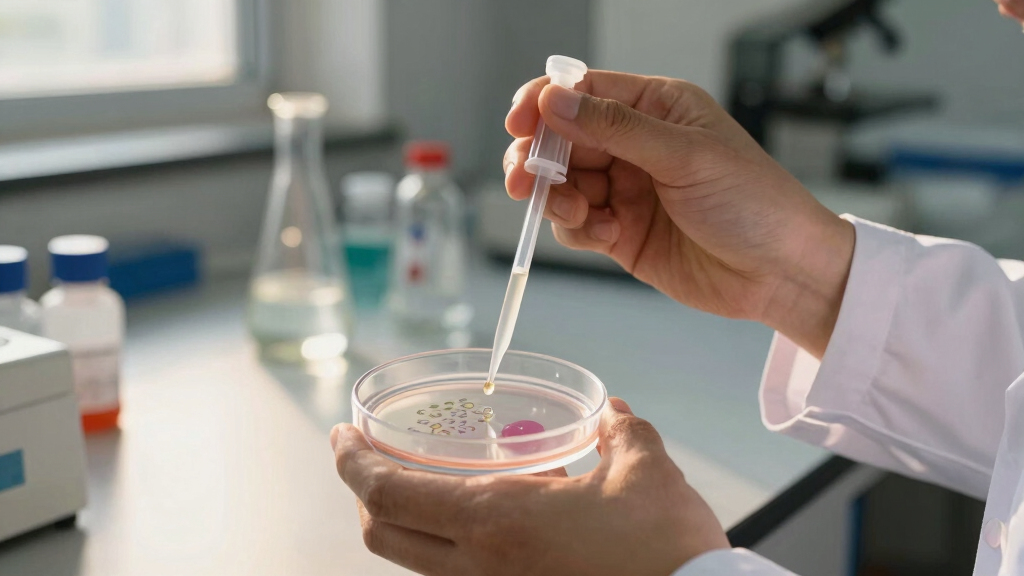
Cradle, a bio-tech startup, employs machine learning systems to refine existing protein molecules, aiming to improve their functions for pharmaceutical applications. Their approach integrates computational predictions with laboratory feedback, enabling faster and more targeted lead optimization compared to traditional methods like directed evolution. The company’s system is reportedly used in collaborations with major pharmaceutical firms such as Novo Nordisk, Bayer, and Johnson & Johnson, and has shown promising results across various protein targets. Their white paper outlines a process involving a base model, fine-tuning techniques, and property estimation methods to guide protein modifications. This approach leverages large protein databases and deep learning models to propose mutations likely to enhance specific properties, reducing the trial-and-error nature of earlier methods.
Why It Matters
This advancement matters because it accelerates the drug discovery pipeline, potentially reducing costs and increasing the success rate of developing new therapies. By automating and improving the precision of lead optimization, machine learning could transform how proteins are designed for medical purposes, leading to faster development of treatments for diseases.
As an affiliate, we earn on qualifying purchases.
Background
Protein design has traditionally relied on methods like directed evolution, which involve random mutations and lab testing. Recent progress in deep learning, exemplified by AlphaFold-2’s success in predicting protein structures, has opened new avenues for computational protein engineering. Cradle’s system represents a practical application of these advances, integrating machine learning with wet lab validation. The field is still evolving, with ongoing research into how best to model protein properties and optimize multiple objectives simultaneously.
“Our system combines machine learning predictions with experimental feedback to rapidly improve protein leads, significantly shortening development timelines.”
— Cradle spokesperson
“The use of AI in protein engineering could revolutionize drug development, but challenges remain in accurately predicting complex properties and multi-objective optimization.”
— Industry analyst
protein structure prediction tools
As an affiliate, we earn on qualifying purchases.
As an affiliate, we earn on qualifying purchases.
What Remains Unclear
It remains unclear how broadly applicable and reliable these machine learning systems are across diverse protein targets and functions. The long-term effectiveness and scalability of these approaches are still being tested, and it is not yet certain how they will perform in fully autonomous drug discovery pipelines.
laboratory protein analysis kits
As an affiliate, we earn on qualifying purchases.
As an affiliate, we earn on qualifying purchases.
What’s Next
Next steps include broader validation of these systems in different drug development contexts, further refinement of models to handle multi-objective optimization, and increased collaboration between biotech firms and pharmaceutical companies to scale these methods.
machine learning for drug discovery
As an affiliate, we earn on qualifying purchases.
As an affiliate, we earn on qualifying purchases.
Key Questions
How does machine learning improve protein lead optimization?
It predicts mutations that are likely to enhance desired properties, reducing trial-and-error and speeding up the design process.
What companies are leading in this field?
Cradle is a notable example, working with major pharma firms and demonstrating promising results in protein optimization.
What are the main challenges remaining?
Accurately modeling complex protein properties, handling multiple optimization goals simultaneously, and scaling these systems for widespread use are ongoing challenges.
Will AI replace traditional lab work?
AI is expected to augment, not replace, laboratory experiments, making the process more efficient and targeted.
NFL season / tailgating Picks
team gear
As an affiliate, we earn on qualifying purchases.