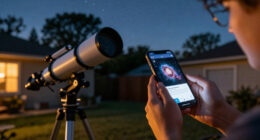
Portable star trackers for astrophotography let a camera follow the sky’s apparent motion, making longer exposures of stars and the Milky Way possible than a fixed tripod allows. My best overall pick is the iOptron SkyGuider Pro Camera Mount with iPolar, which pairs a camera-focused design with electronic polar alignment. The Sky-Watcher Star Adventurer GTi stands out for GoTo control, while the compact Star Adventurer Mini Pro Pack suits travelers who want a lighter, simpler setup. The main tradeoffs are portability versus payload and automation versus setup simplicity. Continue reading for the full breakdown of all 12 options and guidance on choosing for your camera, lens, and observing style.

Prime made for students and young adults
- Fast, free delivery for dorm and study essentials
- Prime Video and Amazon Music included
- Member-only deals
Key Takeaways
- Camera-first trackers and GoTo mounts serve different jobs: the SkyGuider Pro and SkyTracker Pro focus on portable camera tracking, while the Star Adventurer GTi and iEXOS-100-2 add computerized mount functions at the cost of extra setup and bulk.
- Polar alignment can matter more than extra automation: the SkyGuider Pro with iPolar is the standout when alignment assistance is a priority; a simpler tracker may still suit wide lenses and short sessions.
- The Star Adventurer Mini favors a light kit over headroom: it is the compact choice, while the larger SkyGuider Pro and Star Adventurer 2i are better candidates when the camera-and-lens combination needs more capacity.
- Two listings are duplicates rather than distinct designs: the iOptron SkyTracker Pro appears twice, once with a polar scope and once under the same product name, so buyers should verify package contents instead of treating them as separate tracker types.
- A complete kit can simplify the first outing but adds carried gear: the Star Adventurer GTi kit with tripod and pier extension and the iEXOS-100-2 package offer more bundled hardware than mount-head options.
| Sky-Watcher Star Adventurer Mini Pro Pack (S20582) |  | Best for Ultralight Camera Kits | Model: S20582 | Mount type: Equatorial | Weight: 1.5 lb | VIEW LATEST PRICE | See Our Full Breakdown |
| Sky-Watcher AZ-GTi Portable Computerized GoTo Alt-Az Mount |  | Best for GoTo and Time-Lapse Flexibility | Model: S21110 | Mount type: Alt-az GoTo | Weight: 8.6 lb | VIEW LATEST PRICE | See Our Full Breakdown |
| iOptron SkyGuider Pro Camera Mount with iPolar Electronic Polar Finder |  | Best for Electronic Polar Alignment | Mount type: Altazimuth | Maximum payload: 11 lb (5 kg), balanced with DEC mounting bracket; counterweight excluded | Polar finder: Integrated iPolar electronic polar scope | VIEW LATEST PRICE | See Our Full Breakdown |
| iOptron SkyTracker Pro Camera Mount with Polar Scope |  | Best Minimalist Polar-Scope Pick | Model: SkyTracker Pro | Included alignment aid: Polar scope | Package contents: Mount only | VIEW LATEST PRICE | See Our Full Breakdown |
| Sky-Watcher Star Adventurer GTi GoTo Equatorial Mount Head Kit |  | Best for Heavier GoTo Imaging Setups | Model: S20590 | Mount type: Equatorial GoTo | Payload capacity: 11 lb | VIEW LATEST PRICE | See Our Full Breakdown |
| Sky-Watcher Star Adventurer GTi GoTo Mount Kit with Tripod and Pier Extension |  | Best for GoTo Convenience | Payload capacity: 11 lb | Item weight: 26 lb | Connectivity: Built-in Wi-Fi | VIEW LATEST PRICE | See Our Full Breakdown |
| OrionU Star Tracking Equatorial Mount, Portable Single-Axis Star Tracker for DSLR & Mirrorless (Matte Black) |  | Best for Lightweight Camera Setups | Maximum load capacity: 4 kg | Product weight: 500 g | Body material: Carbon-reinforced PETG and steel | VIEW LATEST PRICE | See Our Full Breakdown |
| TeSeek Equatorial Mount Star Tracker with Ball-Head Gimbal |  | Best Compact Tracker for Flexible Tracking Modes | Net weight: 360 g | Maximum load capacity: 3 kg without counterweight | Tracking speeds: Stellar, lunar, and custom | VIEW LATEST PRICE | See Our Full Breakdown |
| iOptron SkyTracker Pro Camera Mount with Polar Scope | | Best for Self-Contained Wide-Field Sessions | Maximum payload: 6.6 lb (3 kg) | Tracking: Automatic right ascension | Tracking rates: 1X sidereal, 1/2X, solar, lunar | VIEW LATEST PRICE | See Our Full Breakdown |
| iOptron SkyGuider Pro Camera Mount Full Package |  | Best for Heavier Balanced Camera Rigs | Weight: 2.2 lb (1.00 kg) | Maximum payload: 11 lb (4.99 kg) when balanced | Latitude adjustment range: -30° to 65° | VIEW LATEST PRICE | See Our Full Breakdown |
| Sky-Watcher Star Adventurer 2i Pro Pack |  | Best for Flexible Wide-Field Imaging | Model: S20512 | Tracker weight: 2.4 lbs; product information also lists 7 lbs | Payload capacity: 11 lbs | VIEW LATEST PRICE | See Our Full Breakdown |
| Explore Scientific iEXOS-100-2 PMC-Eight GoTo Equatorial Mount and Tripod |  | Best for Tablet-Controlled GoTo Mounting | Mount type: Equatorial mount | Control: Wi-Fi and Bluetooth app control | Compatible device: Tablet | VIEW LATEST PRICE | See Our Full Breakdown |
More Details on Our Top Picks
Sky-Watcher Star Adventurer Mini Pro Pack (S20582)
At 1.5 lb, the Star Adventurer Mini Pro Pack is the easiest pick here to fit into a camera bag for wide-field nightscapes and travel. Its equatorial tracking is a better match for long-exposure star fields than the AZ-GTi’s alt-az design, while Wi-Fi control keeps basic operation on your phone. The included polar scope, equatorial base, and DEC bracket give you a useful starting setup, though you still need a tripod and may need to source a counterweight for heavier camera combinations. Its 6.6 lb payload limit also leaves less room than the SkyGuider Pro’s stated 11 lb balanced capacity. I’d choose this for a light DSLR or mirrorless kit, not a setup built around a heavy lens or small telescope.
Pros:- Very low 1.5 lb mount weight is easy to pack for remote shoots.
- Equatorial tracking suits wide-field long exposures better than the AZ-GTi’s alt-az layout.
- Includes an equatorial base, polar scope, and DEC bracket.
- Wi-Fi smartphone control and sidereal, solar, lunar, and custom tracking presets.
Cons:- The 6.6 lb payload capacity is lower than the SkyGuider Pro’s stated balanced capacity.
- Counterweights are not included, which can complicate balancing heavier setups.
- Requires separately supplied AA batteries or a suitable 5V mini-USB power source.
Best for: Travel photographers using a lightweight DSLR or mirrorless camera for wide-field nightscapes and long exposures.
Not ideal for: Astrophotographers with heavier camera-and-lens combinations who need more payload headroom or want counterweights included.
- Model:S20582
- Mount type:Equatorial
- Weight:1.5 lb
- Payload capacity:6.6 lb
- Power:2 AA batteries or 5V mini-USB
- Battery life:Up to 24 hours
- Control:Wi-Fi via SynScan app
- Tracking speeds:Sidereal, solar, lunar, and custom presets
- Included accessories:Equatorial base, polar scope, DEC bracket, and ball-head adapter
Our verdict“Choose the Star Adventurer Mini Pro Pack if low carry weight matters more than payload headroom.”
Sky-Watcher AZ-GTi Portable Computerized GoTo Alt-Az Mount
The AZ-GTi is the most flexible choice here for app-controlled pointing and general-purpose time-lapse or panorama work, but its alt-az design makes it a different tool from the equatorial Star Adventurer Mini and Star Adventurer GTi. That layout is convenient for locating targets and moving around the sky; for long deep-sky exposures, field rotation can make it less suitable than an equatorial tracker. Its 11 lb payload capacity gives it more listed headroom than the Mini, and the included adjustable tripod means fewer core pieces to source. Dual encoders also let you move the mount manually without losing alignment. I’d pick it for mixed observing and camera projects, but not as my first choice for long-exposure deep-sky imaging.
Pros:- Wi-Fi and the SynScan Pro app provide smartphone or tablet control.
- 11 lb payload capacity exceeds the Star Adventurer Mini’s stated capacity.
- Dual encoders allow manual slewing without losing alignment.
- Includes an adjustable tripod and accepts AA batteries or 12V external power.
Cons:- Alt-az tracking is less suited to long deep-sky exposures than equatorial mounts.
- Automated camera shutter release requires a separately sold cable.
- At 8.6 lb, it is heavier to carry than the 1.5 lb Star Adventurer Mini.
Best for: Traveling beginners who want smartphone-controlled GoTo pointing, visual astronomy, and time-lapse or panorama capability in one setup.
Not ideal for: Deep-sky photographers prioritizing long exposures, who are better served by an equatorial tracker such as the Star Adventurer GTi.
- Model:S21110
- Mount type:Alt-az GoTo
- Weight:8.6 lb
- Payload capacity:11 lb
- Connectivity:Wi-Fi
- Control:SynScan Pro smartphone or tablet app
- Tripod height:28 to 53 in
- Power options:AA batteries or 12V external input
Our verdict“Choose the AZ-GTi for portable GoTo and mixed-use flexibility, not for the longest deep-sky exposures.”
iOptron SkyGuider Pro Camera Mount with iPolar Electronic Polar Finder
The SkyGuider Pro’s standout is its integrated iPolar electronic finder, which can help when the pole star is obscured—a useful distinction from the optical polar scope on the Star Adventurer Mini and the illuminated scope on the Star Adventurer GTi. That alignment feature makes this a compelling camera tracker for wide-field work where visibility near the pole is imperfect. Its all-metal construction and quick-lock drive levers favor a more substantial mechanical setup than the Mini’s ultralight approach. The stated 11 lb capacity applies to a balanced configuration with the DEC bracket and excludes the counterweight, so it should not be read as a ready-to-use load figure. A tripod is also absent. I’d choose it for alignment flexibility, but the Mini is easier to pack and the GTi is a more complete mount-head package for heavier kits.
Pros:- Integrated iPolar electronic finder supports alignment when the pole star is obscured.
- All-metal mechanical structure.
- Quick-lock drive engagement levers simplify engaging the tracking mechanism.
- Stated 11 lb maximum payload with a balanced DEC-bracket setup.
Cons:- Tripod is not included, unlike the AZ-GTi package.
- The 11 lb payload excludes the counterweight and requires a balanced setup.
- Battery warranty is shorter than the mount warranty.
Best for: Wide-field astrophotographers who need electronic polar alignment when the pole star is blocked or hard to see.
Not ideal for: Buyers seeking a complete travel setup in one box, since a tripod is not included and the payload figure depends on balancing and a counterweight.
- Mount type:Altazimuth
- Maximum payload:11 lb (5 kg), balanced with DEC mounting bracket; counterweight excluded
- Polar finder:Integrated iPolar electronic polar scope
- Construction:All-metal mechanical structure
- Power:Rechargeable battery
- Tripod:Not included
- Included accessories:Accessories and padded carry bag
- Warranty:One year limited; 90 days on battery
Our verdict“Choose the SkyGuider Pro when electronic polar alignment matters more than an included tripod or the Mini’s lower carry weight.”
iOptron SkyTracker Pro Camera Mount with Polar Scope
The SkyTracker Pro is the most stripped-back option in this group: it focuses on camera tracking and polar alignment rather than app control or GoTo features. Its integrated polar scope gives it a clear astrophotography purpose, while the Star Adventurer Mini adds Wi-Fi control and includes a DEC bracket and ball-head adapter. The SkyTracker’s compact mount-only format may suit a photographer who already owns compatible support gear and wants to keep the kit simple. The tradeoff is that the supplied information does not state its payload capacity, and it recommends a separate balance-weight kit for loads over 3 lb. That makes it harder to plan around than the Mini or SkyGuider Pro, both of which publish payload figures. I’d consider it for a modest camera setup, but not when load requirements are uncertain.
Pros:- Integrated polar scope supports alignment for astrophotography.
- Compact mount design favors a lean camera-tracking kit.
- Focused camera-mount format avoids paying attention to GoTo features a user may not need.
Cons:- Package contains the mount only, so buyers must provide their own supporting equipment.
- Balance-weight kit is sold separately and suggested for payloads over 3 lb.
- No maximum payload capacity is stated in the supplied product data.
Best for: Photographers who already own a tripod and camera support hardware and want a compact tracker with a built-in polar scope.
Not ideal for: Buyers with heavier lenses or a need for clear payload guidance, since the supplied product data gives no maximum capacity and recommends added balance hardware above 3 lb.
- Model:SkyTracker Pro
- Included alignment aid:Polar scope
- Package contents:Mount only
- Balance-weight guidance:Balance weight kit suggested for payloads over 3 lb
- Primary use:Camera mount for astrophotography
- Portability:Compact mount design
Our verdict“Choose the SkyTracker Pro for a simple camera-tracking setup if you already have the supporting gear and your load is modest.”
Sky-Watcher Star Adventurer GTi GoTo Equatorial Mount Head Kit
The Star Adventurer GTi combines equatorial tracking, GoTo control, and an 11 lb payload rating, making it the more capable step up from the Mini for cameras, small astrographs, or small telescopes. Built-in Wi-Fi and an illuminated polar scope support app-guided use and alignment in dim conditions; unlike the AZ-GTi, its equatorial layout is better matched to long-exposure deep-sky imaging. The included counterweight bar and 5 lb counterweight also give it a more ready balancing package than the Mini, though the Mini remains much lighter to carry. This is the head kit, not a full field setup: the tripod and pier extension are not included, and the camera is separate. I’d favor it when payload and GoTo capability matter more than keeping the entire kit compact.
Pros:- Equatorial tracking is better suited to long-exposure deep-sky imaging than the AZ-GTi’s alt-az layout.
- 11 lb payload capacity supports cameras and small telescopes.
- Built-in Wi-Fi GoTo control and an illuminated polar scope aid field operation.
- Includes a counterweight bar and 5 lb counterweight.
Cons:- Tripod and pier extension are not included in this head-kit configuration.
- At 6.9 kg, it is substantially heavier than the 1.5 lb Star Adventurer Mini.
- Camera and optional SynScan hand controller are not included.
Best for: Astrophotographers moving beyond a lightweight camera tracker to an equatorial GoTo mount for a camera, small astrograph, or small telescope.
Not ideal for: Travelers who need the smallest possible kit or buyers expecting a complete mount-and-tripod package in this configuration.
- Model:S20590
- Mount type:Equatorial GoTo
- Payload capacity:11 lb
- Weight:6.9 kg
- Dimensions:12 x 7 x 16 in
- Power:Battery or external power
- Connectivity:Built-in Wi-Fi
- Alignment and tracking:Illuminated polar scope; lunar, solar, and sidereal rates
- Included items:Counterweight bar and 5 lb counterweight
Our verdict“Choose the Star Adventurer GTi head kit when you need equatorial GoTo and greater payload capacity, and already have a suitable tripod.”
Sky-Watcher Star Adventurer GTi GoTo Mount Kit with Tripod and Pier Extension
The Star Adventurer GTi kit is the most self-contained choice here for photographers who want computerized pointing as well as tracking. Its 11 lb capacity and included tripod, pier extension, counterweight bar, and counterweight make it more ready for a small telescope or heavier camera rig than the lighter camera trackers in this group. Built-in Wi-Fi and the SynScan Pro app provide smartphone control, while the illuminated polar scope helps with alignment in the field. Compared with the iOptron SkyGuider Pro Full Package, the GTi adds GoTo operation but weighs substantially more as a complete item at 26 lb. That weight is a real cost for travel, and the optional hand controller is not listed as included, so buyers should plan to use app control or source a controller separately.
Pros:- GoTo equatorial tracking with smartphone control through built-in Wi-Fi
- Illuminated polar scope aids alignment in low-light field conditions
- 11 lb payload capacity accommodates camera rigs and small telescopes
- Tripod, pier extension, counterweight bar, and 5 lb counterweight are included
Cons:- 26 lb item weight makes transport more demanding than the camera-focused trackers
- Optional SynScan hand controller is not listed among the included components
Best for: Astrophotographers who want app-controlled GoTo pointing, a supplied tripod and counterweight, and room to grow into a small telescope setup.
Not ideal for: Backpackers and air travelers prioritizing a very light kit; the 26 lb item weight is far less convenient than the 500 g OrionU or 360 g TeSeek tracker.
- Payload capacity:11 lb
- Item weight:26 lb
- Connectivity:Built-in Wi-Fi
- Tracking rates:Lunar, solar, and sidereal
- Maximum height:44.5 in
- Included components:Tripod, pier extension, counterweight bar, 5 lb counterweight
- Warranty:Two-year limited warranty
Our verdict“Choose the GTi if GoTo control and a supplied mount kit matter more than keeping your astrophotography loadout lightweight.”
OrionU Star Tracking Equatorial Mount, Portable Single-Axis Star Tracker for DSLR & Mirrorless (Matte Black)
For a traveler who wants to keep the tracker itself nearly weightless, the OrionU single-axis mount is the standout: its 500 g body is much easier to pack than the 26 lb Sky-Watcher GTi kit. The stated 4 kg load capacity gives DSLR and mirrorless users useful room for a camera and lens, while a steel-reinforced axis and alignment pointer address stability and polar setup without adding much bulk. It runs from a standard 5V power bank, which can simplify longer sessions if you already carry one. The tradeoff is its single-axis design; it is a simpler camera tracker than the dual-axis GoTo GTi and may not suit users seeking more advanced guiding or telescope-oriented tracking. It is also not water resistant, so damp conditions call for extra protection.
Pros:- 500 g product weight is well suited to compact travel kits
- Stated 4 kg maximum load supports many DSLR and mirrorless combinations
- High-brightness alignment pointer assists polar alignment
- Operates from standard 5V power banks
Cons:- Single-axis tracking offers fewer capabilities than the dual-axis Sky-Watcher GTi
- Not water resistant, limiting use in damp or rainy conditions
- Requires an external power bank rather than using a built-in battery
Best for: DSLR and mirrorless photographers who travel light, use a 5V power bank, and want a compact tracker for wide-field imaging or time-lapse work.
Not ideal for: Astrophotographers seeking dual-axis control, GoTo features, or a tracker they can use without weather protection in wet conditions.
- Maximum load capacity:4 kg
- Product weight:500 g
- Body material:Carbon-reinforced PETG and steel
- Power source:5V power bank
- Control system:ESP32 dual-core
- Compatible devices:DSLR and mirrorless cameras
- Water resistance:Not water resistant
Our verdict“Pick the OrionU for a minimal-weight camera kit, but choose a more capable mount if you need dual-axis operation or GoTo control.”
TeSeek Equatorial Mount Star Tracker with Ball-Head Gimbal
At 360 g, the TeSeek is the lightest option in this batch, and its stellar, lunar, and custom tracking speeds give it more mode flexibility than the OrionU’s single-axis camera-tracking setup. Support for both hemispheres also makes it a practical travel pick for photographers who shoot in different parts of the world. The mount can double as a time-lapse gimbal head, widening its use beyond night-sky tracking. Its 3 kg load limit is below the iOptron SkyGuider Pro’s 11 lb balanced capacity, though it is suitable for lighter camera combinations. Power and connection details need attention: there is no built-in battery, a USB-A-to-USB-C cable is required, and USB-C-to-USB-C cables are prohibited. A ball head is needed for camera attachment, so check the kit contents and your mounting hardware before heading out.
Pros:- 360 g net weight suits compact travel and backpacking kits
- Stellar, lunar, and custom tracking speeds offer varied use
- Supports both northern and southern hemispheres
- Can also serve as a gimbal head for time-lapse photography
Cons:- 3 kg maximum load is lower than the iOptron SkyGuider Pro’s 11 lb balanced capacity
- No built-in battery; requires external USB power
- Requires a USB-A-to-USB-C cable and camera-mounting hardware, with USB-C-to-USB-C cables prohibited
Best for: Travel photographers wanting a very light tracker with stellar, lunar, and custom rates for a modest camera-and-lens setup.
Not ideal for: Users with heavier rigs or those who want a self-powered, ready-to-mount camera tracker without sourcing the specified cable and connection hardware.
- Net weight:360 g
- Maximum load capacity:3 kg without counterweight
- Tracking speeds:Stellar, lunar, and custom
- Hemisphere support:Northern and southern
- Power input:USB-C, 5 V 500 mA; supports USB-PD 9 V for camera loads over 2 kg
- Output shaft:1/4-inch screw
- Product dimensions:83 × 72 × 82 mm
Our verdict“Choose the TeSeek for a featherweight, multi-mode travel tracker if your camera load stays within 3 kg and you can meet its cable and mounting requirements.”
iOptron SkyTracker Pro Camera Mount with Polar Scope
The SkyTracker Pro suits wide-field photographers who want a simple camera tracker with its own battery rather than a mount built around a telescope-style rig. Its rechargeable battery is rated for up to 24 hours, and the illuminated polar scope offers eight brightness levels to help tailor the view in dark conditions. Four tracking rates and support for both hemispheres provide useful flexibility for sky and time-lapse work. Compared with the TeSeek, it avoids dependence on an external USB power source during a session; compared with the SkyGuider Pro Full Package, it is limited to a 3 kg payload and is less suited to heavier balanced setups. Charging is slow, with about five hours needed to reach 80%, so topping it up between outings takes planning.
Pros:- Built-in rechargeable battery rated for up to 24 hours of operation
- Illuminated polar scope has eight brightness levels
- Four tracking rates support sidereal, solar, and lunar imaging needs
- Supports use in both hemispheres and includes a padded carry bag
Cons:- 3 kg maximum payload is well below the SkyGuider Pro Full Package’s 11 lb balanced capacity
- Battery takes about five hours to reach 80% charge
- Camera-focused capacity is less suitable for heavier telescope setups
Best for: Wide-field DSLR and mirrorless photographers who value built-in battery power, a compact camera mount, and straightforward polar-scope alignment.
Not ideal for: Photographers planning heavier rigs or expecting quick battery turnaround; its 3 kg payload limit and slow charging are less suited to those needs.
- Maximum payload:6.6 lb (3 kg)
- Tracking:Automatic right ascension
- Tracking rates:1X sidereal, 1/2X, solar, lunar
- Battery life:Up to 24 hours
- Polar scope illumination:8 brightness levels
- Mounting threads:1/4-inch and 3/8-inch
- Included accessories:Padded carry bag and 1/4-inch–3/8-inch thread converter
Our verdict“The SkyTracker Pro is a strong fit for wide-field shooters who want long battery operation in a compact mount, not a heavy-load platform.”
iOptron SkyGuider Pro Camera Mount Full Package
The SkyGuider Pro Full Package is the more capable camera-mount choice for photographers carrying a substantial lens or adding accessories: its 11 lb capacity when balanced exceeds the 3 kg limits of both the SkyTracker Pro and TeSeek. The package also includes a DEC mounting bracket, counterweight and shaft, and Vixen dovetail saddle, giving buyers the hardware needed to build a balanced setup rather than relying on a bare tracker. At 2.2 lb, the mount itself remains easy to transport, while its illuminated polar scope and fine latitude and azimuth adjustments support careful alignment. Compared with the Sky-Watcher GTi, it lacks listed GoTo control and a supplied tripod, but it is a lighter camera-mount option. Battery life is rated at up to 20 hours at 20°C, so colder-field performance may differ.
Pros:- Supports balanced payloads up to 11 lb
- Full package includes DEC bracket, counterweight and shaft, Vixen saddle, and padded carry bag
- Illuminated polar scope and adjustable latitude and azimuth support alignment
- 2.2 lb mount weight keeps the tracker itself portable
Cons:- The 11 lb maximum requires the equipment to be balanced
- Battery life rating of up to 20 hours is specified at 20°C
- Does not list GoTo control or a tripod, unlike the Sky-Watcher Star Adventurer GTi kit
Best for: Astrophotographers with heavier camera-and-lens combinations who want a portable mount, counterweight hardware, and an 11 lb balanced payload limit.
Not ideal for: Buyers who want computerized GoTo pointing or a complete tripod kit; the GTi includes GoTo features and a tripod, while this package does not list either.
- Weight:2.2 lb (1.00 kg)
- Maximum payload:11 lb (4.99 kg) when balanced
- Latitude adjustment range:-30° to 65°
- Azimuth adjustment:±5°
- Tracking speeds:1X, 1/2X, solar, lunar
- Battery life:Up to 20 hours at 20°C
- Ports:ST-4 auto guiding, HBX, micro USB
- Included accessories:DEC mounting bracket, counterweight and shaft, Vixen dovetail saddle, padded carry bag
Our verdict“Choose the SkyGuider Pro Full Package for a portable, heavier-load camera rig when you can balance the payload and do not need GoTo or a supplied tripod.”
Sky-Watcher Star Adventurer 2i Pro Pack
The Star Adventurer 2i Pro Pack suits photographers who want one portable tracker for wide-field nightscapes, time-lapses, and panoramas. Its 11-pound payload capacity and all-metal gears give it more room for camera setups than a lightweight travel-first option such as the Star Adventurer Mini Pro Pack. Wi-Fi control through the SAM Console app also lets you manage tracking from a phone, rather than relying only on direct controls.
The tradeoff is that the listed tracker weight varies between 2.4 and 7 pounds, so I would verify the packed configuration before planning a weight-sensitive trip. It mounts to a photographic tripod, but the equatorial base, declination bracket, and counterweight are optional if you want to build a small-telescope setup. That makes it more adaptable, though less ready-to-go for telescope use than a complete mount kit.
Pros:- Supports camera payloads up to 11 pounds, giving it room for more substantial wide-field setups.
- Wi-Fi control via the Sky-Watcher SAM Console smartphone app.
- All-metal gears support a durable tracking mechanism.
- Works for wide-field astrophotography, nightscapes, time-lapses, and panoramas.
Cons:- Equatorial base, declination bracket, and counterweight for telescope configurations are optional accessories.
- Product information lists two different weights, 2.4 pounds and 7 pounds, complicating packing decisions.
- The tracker requires a compatible photographic tripod, which is not specified as included.
Best for: Traveling DSLR or mirrorless photographers who want a portable tracker for wide-field exposures and time-lapse work, with the option to add telescope-support accessories later.
Not ideal for: Buyers seeking a complete small-telescope tracking setup in one purchase, or hikers who need a clearly specified packed weight and the lightest possible kit.
- Model:S20512
- Tracker weight:2.4 lbs; product information also lists 7 lbs
- Payload capacity:11 lbs
- Dimensions:13.9 x 9.6 x 6.3 inches
- Connectivity:Wi-Fi
- Control:Sky-Watcher SAM Console smartphone app
- Battery:Included lithium metal batteries
- Mounting:Compatible with photographic tripods
Our verdict“Choose the Star Adventurer 2i Pro Pack if you want a capable, configurable camera tracker and can account for its optional telescope accessories and unclear weight listing.”
Explore Scientific iEXOS-100-2 PMC-Eight GoTo Equatorial Mount and Tripod
Unlike camera-first trackers such as the Sky-Watcher Star Adventurer 2i Pro Pack, the Explore Scientific iEXOS-100-2 is an equatorial mount and tripod built around telescope alignment and GoTo navigation. Its PMC-Eight system uses eight independent CPUs, while quiet, belt-driven stepper motors move the dual-axis worm gears. For an astrophotographer who wants to locate celestial targets through an app and track with a telescope-based setup, that control approach is more fitting than a simpler camera tracker.
The mount’s clutched axes help with balancing and repositioning, and a polar alignment sight hole provides an alignment aid without a polar scope. The cost of this more mount-like workflow is dependence on a compatible tablet: ExploreStars supports Apple, Android, and Windows tablets, but not phone-only operation. It also has no focuser included, so buyers assembling a telescope rig need to source that separately.
Pros:- PMC-Eight control system uses eight independent CPUs.
- ExploreStars app supports Apple, Android, and Windows tablets.
- Quiet belt-driven stepper motors drive dual-axis worm gears.
- Clutched axes and a polar alignment sight hole support balancing and setup.
Cons:- App operation requires a compatible tablet.
- No focuser is included, so telescope users must provide one separately.
- Its mount-and-tripod format is less suited to minimalist camera-tracking travel than the Star Adventurer 2i.
Best for: Astrophotographers who already have a compatible tablet and want an equatorial mount with app-guided GoTo navigation for telescope-based imaging.
Not ideal for: Camera-only travelers seeking a compact, simple tracker or anyone who does not want to depend on a compatible tablet for app control.
- Mount type:Equatorial mount
- Control:Wi-Fi and Bluetooth app control
- Compatible device:Tablet
- App:ExploreStars for Apple, Android, and Windows tablets
- Drive:Dual-axis worm gears with belt-driven stepper motors
- Control system:Eight-CPU PMC-Eight system
- Polar alignment:Sight hole through the RA axis
- Focuser:Not included
- Model number:ES-iEXOS-100-02
Our verdict“Pick the iEXOS-100-2 if tablet-guided GoTo control and telescope-oriented equatorial mounting matter more than a compact camera-tracker setup.”
How We Picked
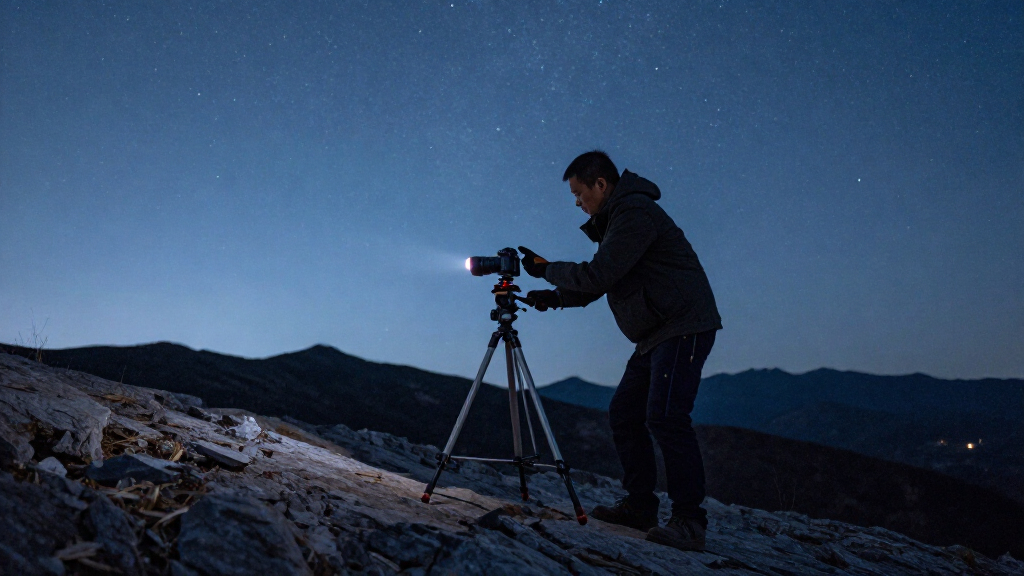
I ranked these options around the needs of portable astrophotography: tracking suitability for camera-based wide-field work, practical portability, alignment approach, control complexity, and how clearly the setup fits a beginner or an experienced imager. A tracker’s stated payload alone does not tell the whole story; camera weight, lens length, balance, tripod stability, and the difficulty of polar alignment all affect the experience. I also separated simple camera trackers from GoTo equatorial and alt-az mounts, since they solve different problems rather than competing on one feature list.
The order favors tools with a clear use case and a useful balance of tracking support, field setup, and flexibility. Camera-focused models rank ahead for travelers who want a compact imaging rig; GoTo systems rank higher for buyers who value automated pointing and broader observing use, but not by default, because they bring added setup demands. The repeated SkyTracker Pro listing is treated as one design with package verification flagged, rather than counted as a meaningful technical alternative. Product names and bundles do not substitute for confirmed compatibility, so buyers should check included hardware and their intended camera load before choosing.
Factors to Consider When Choosing Portable Star Trackers For Astrophotography
The right portable tracker depends less on a headline feature than on how you plan to shoot and carry your setup. These factors help prevent mismatches that can lead to short exposures, frustrating alignment, or gear that stays at home.
Match the Tracker to Your Camera and Lens
Start with the complete imaging load: camera body, lens, ball head, quick-release plate, and any counterweight hardware. A tracker’s payload rating is not a guarantee of sharp results, since a long or heavy lens can make balance and vibration more demanding than a small wide-angle setup. For Milky Way landscapes, a compact camera and short lens usually make portability and quick alignment more valuable than a large mount head. Longer focal lengths magnify tracking errors, so buyers planning telephoto work should favor a stable, well-supported equatorial setup and leave capacity in reserve. A common mistake is buying for the camera body alone, then adding a lens that makes the entire assembly harder to balance. Check the maker’s current payload guidance and the specific mounting hardware before ordering.
Choose an Alignment Method You Will Actually Use
Polar alignment is the step that points an equatorial tracker’s rotation axis toward the celestial pole, and its accuracy strongly affects usable exposure length. A polar scope provides a direct optical method, while electronic assistance such as iPolar can make the process easier to interpret when conditions and equipment permit. Neither removes the need for a stable tripod, careful leveling where required, and a clear view of the pole. Buyers shooting from a backyard with an unobstructed view may value alignment precision more than travelers working quickly between locations. Do not assume computerized GoTo control automatically means easy polar alignment; pointing and tracking alignment are related but separate tasks. Before choosing, check whether your typical site has the sky visibility and power access the alignment system expects.
Decide Whether GoTo Adds Enough to Carry
GoTo control can locate celestial targets and broaden a mount’s usefulness beyond following a camera’s framing, which appeals to users who also observe or image smaller objects. That capability brings more components, setup steps, power needs, and potential configuration work than a basic camera tracker. A simple single-axis tracker is often a better match for wide-field exposures when the target is easy to frame manually. GoTo is more compelling if you want automated target finding or expect to grow into a more involved imaging workflow. Do not pay in weight and complexity for features your usual subjects do not need. Compare the complete field setup, including tripod, counterweights, cables, and controller, rather than the mount head alone.
Plan for Tripod Stability and the Full Carry Kit
A portable tracker is only as steady as the surface and support beneath it. Lightweight travel tripods are convenient, but a tall center column or a loosely locked head can introduce movement that undermines tracking. Bundled tripod and pier-extension kits can reduce guesswork about fit, though they may be bulkier than assembling a compact system from separate parts. Check whether the package includes a tripod, wedge or alignment base, counterweight, ball head, and required cables; product names do not always make bundle contents obvious. For hiking, the weight of every accessory matters, not just the tracker. For car-based trips, a heavier but more stable kit may produce a smoother setup and fewer support compromises.
Set Realistic Expectations for Exposure Length
Tracking can reduce star trailing, but it does not remove every limit on exposure time. Alignment error, focal length, balance, wind, tripod movement, and the tracker’s mechanical behavior all shape the result. Wide lenses are more forgiving, while longer lenses reveal small errors quickly; this is why a setup that works for Milky Way scenes may not suit close views of nebulae. Plan to take test frames and adjust exposure rather than expecting one setting to work across lenses and locations. Stacking several shorter exposures can be a more reliable route than pushing a portable mount to its limits. Buyers should compare real-world workflow needs, not just a maximum tracking or payload claim.
Check Compatibility and Package Details Before Buying
Mounting standards, control methods, power connections, and included accessories can vary between a head-only option and a full kit. Confirm that your tripod has the needed thread and that the tracker can accept your preferred ball head or camera plate. For app or computer control, check operating-system support and whether the relevant controller or cable is included. Duplicate-looking listings deserve extra care: this roundup includes two entries for the iOptron SkyTracker Pro, so the meaningful distinction may be the listed polar-scope package rather than a different tracker. A quick inventory of what you already own can prevent buying redundant hardware or discovering a missing adapter at the observing site. When a bundle is unclear, verify its contents with the seller or manufacturer before placing an order.
Frequently Asked Questions
Is a GoTo mount a better choice than a simple camera tracker for wide-field astrophotography?
Not automatically. A simple camera tracker can be easier to carry and faster to set up when you mainly photograph the Milky Way or broad star fields. GoTo adds target-finding and wider observing utility, but also brings more setup, power, and configuration demands. If you rarely need automated pointing, the extra functions may not improve your images enough to justify the added kit. Choose GoTo when you expect to use its pointing features, not just because it sounds more advanced.
Can a compact tracker handle a mirrorless camera with a telephoto lens?
It depends on the combined weight, balance, lens length, and the tracker’s supported load, so a camera body rating alone is not enough. Telephoto lenses make tracking errors easier to see and can create more leverage on the mount than short wide-angle lenses. Check the manufacturer’s payload guidance and account for the ball head and all accessories. If you are near the tracker’s limit, a larger mount with a steadier tripod is usually a safer choice than relying on a compact unit to work at full capacity. For a first setup, a shorter lens gives you more room to learn alignment and balance.
Do I need electronic polar alignment, or is a polar scope enough?
Either approach can work; the better fit depends on how precise and convenient you need alignment to be. A polar scope gives a direct optical reference and can suit a straightforward field setup, while electronic assistance can make position finding easier for some users. Both still depend on a stable mount and a usable view of the celestial pole. If you mostly shoot wide fields with short lenses, you may not need the most elaborate alignment method. For longer focal lengths or repeated sessions where setup speed matters, alignment assistance can be a more meaningful upgrade.
Should I buy a tracker kit with a tripod or use a tripod I already own?
Use your existing tripod only if it is stable, has compatible mounting threads, and can support the tracker and camera without wobble. A bundled tripod can simplify compatibility and provide a matched starting point, but it may add weight or duplicate gear you already trust. Check whether the package includes other essentials such as a wedge, pier extension, counterweight, and camera head. A weak tripod can spoil the benefit of a capable tracker, especially in wind or with a long lens. Compare the complete setup you will carry, not just the price or contents of the mount box.
What should I do when two listings name the same tracker but show different packages?
Compare the exact model number and the included accessories rather than assuming the listings describe different tracking hardware. In this roundup, the iOptron SkyTracker Pro appears twice, with one entry explicitly naming a polar scope. Check whether the other listing includes that scope, a tripod, a wedge, a ball head, or power accessories. Package details can change the out-of-box setup even when the mount itself is the same. If the contents are unclear, confirm them with the seller or manufacturer before buying.
Conclusion
For most camera-focused astrophotographers, I would start with the iOptron SkyGuider Pro with iPolar as the best overall balance of a dedicated imaging role and alignment assistance. The Sky-Watcher Star Adventurer Mini Pro Pack is my best fit for beginners who value a compact, less involved setup, while the Sky-Watcher Star Adventurer 2i Pro Pack is the best value-style pick for buyers who want a camera tracker without stepping up to a full GoTo system. For a premium, more automated setup, look to the Star Adventurer GTi or Explore Scientific iEXOS-100-2, choosing between their kits based on support and control needs. If your priority is a camera tracker with a straightforward polar-scope package, compare the SkyTracker Pro listings and verify what is included; if you want GoTo control and broader use, consider the AZ-GTi. Match the load and field kit to your shooting style, and you will have a clearer reason to choose one mount over another.