
TL;DR
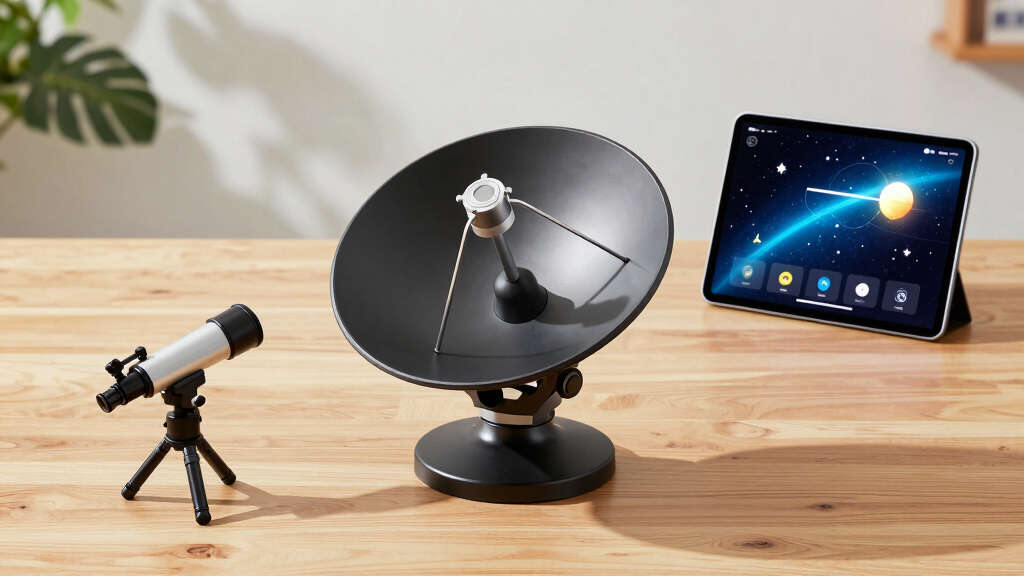
An Australian team of teenagers has developed an affordable radio telescope kit aimed at schools. This innovation seeks to democratize access to radio astronomy and inspire STEM learning among students.
An Australian team of teenagers has developed a low-cost radio telescope kit aimed at making radio astronomy accessible for schools, potentially transforming STEM education in rural and underserved areas.
The team, composed of high school students from various regions in Australia, created a portable, affordable radio telescope prototype that costs significantly less than commercial units. According to team leader Alex Johnson, the device can be assembled with readily available components and is designed for ease of use by students and teachers with limited technical backgrounds.
Initial testing has shown the kit can detect basic cosmic signals, such as solar activity and radio emissions from planets, providing a practical introduction to radio astronomy. The project received support from local educational authorities and STEM organizations, which aim to incorporate the kits into school curricula over the coming year.
Why It Matters
This development is significant because it addresses the high costs traditionally associated with radio astronomy equipment, which have limited access for many schools, especially in rural or low-income areas. By reducing costs and simplifying assembly, the project could broaden participation in STEM fields, fostering interest in space science and engineering among young students.
Experts note that early exposure to scientific instruments like radio telescopes can inspire future careers in science, technology, engineering, and mathematics, making this initiative a potentially impactful step toward educational equity and innovation.

Celestron FirstScope Accessory Kit for FirstScope Tabletop Telescopes
- Enhanced viewing experience: Includes Moon filter and two eyepieces
- Magnification options: 24X and 50X eyepieces
- Easy object locating: 5×24 finderscope
As an affiliate, we earn on qualifying purchases.
As an affiliate, we earn on qualifying purchases.
Background
Radio astronomy has historically been constrained by expensive, complex equipment, limiting its educational use outside well-funded institutions. Recent years have seen efforts to create low-cost alternatives, but few have achieved the balance of affordability and functionality demonstrated by this Australian team. The project builds on prior initiatives to democratize science tools, with the team’s prototype emerging from a nationwide STEM competition aimed at encouraging youth innovation.
“Our goal was to create a simple, affordable radio telescope that schools can easily build and use, opening up space science to more students.”
— Alex Johnson, team leader
“Providing students with hands-on experience with real scientific instruments can ignite their passion for science and inspire future careers.”
— Dr. Lisa Carter, STEM educator
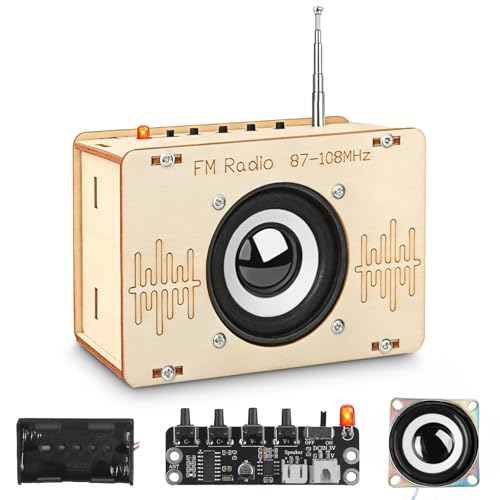
Poraxy Science Kits for Kids Age 8-12 12-14, STEM Kits 8-10, Build Your Own FM Radio Kit, Electronic DIY Experiment Engineering Building Project, Toys Gifts for Teen Boys Girls 9 11 13 15 16+
- Educational STEM Toy: Encourages scientific exploration and circuit learning
- Ideal Gift for Kids: Perfect for birthdays, Christmas, and special occasions
- FM Radio Functionality: Automatically searches 87-108 MHz stations with retractable antenna
As an affiliate, we earn on qualifying purchases.
As an affiliate, we earn on qualifying purchases.
What Remains Unclear
It is not yet clear how widely the kits will be adopted by schools or how they will perform in diverse educational environments. Further testing and scaling are still in progress, and long-term durability and curriculum integration remain to be evaluated.

Telescope for Kids 50mm 100x Magnification Beginner Telescopio with Tripod, 2 Eyepieces & Finder Scope, STEM Educational Gift for Boys & Girls Ages 6-12, Portable Kids Telescope for Astronomy
- Magnification Range: 20x to 100x zoom for detailed viewing
- Child-Friendly Design: Suitable for ages 6-12, easy to use
- Quick Setup: Includes tripod, finderscope, eyepieces, and Barlow lens
As an affiliate, we earn on qualifying purchases.
As an affiliate, we earn on qualifying purchases.
What’s Next
The team plans to expand testing to more schools across Australia, gather feedback, and refine the design. They aim to secure additional funding to mass-produce the kits and formalize partnerships with educational authorities for broader deployment.
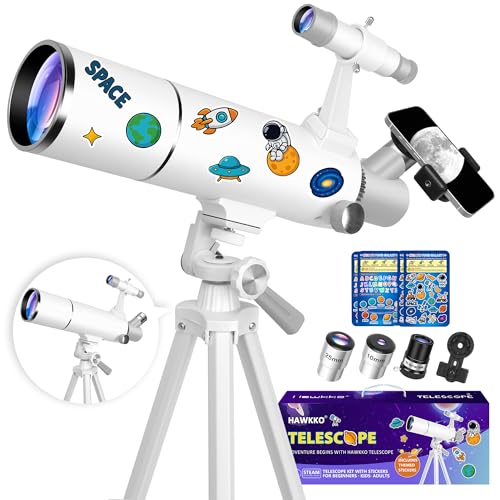
Hawkko 80mm Aperture 500mm Telescope for Kids 8-12 & Adults Beginners
- Family-Friendly Space Exploration: Ideal for kids and adults to explore space together
- Bright, Clear Images: 80mm fully multi-coated lens for vivid views
- Versatile Magnification: Adjust from 20X to 150X zoom
As an affiliate, we earn on qualifying purchases.
As an affiliate, we earn on qualifying purchases.
Key Questions
How much does the radio telescope kit cost?
The current prototype costs significantly less than commercial units, with estimates around a few hundred dollars, making it affordable for most schools.
Can the kit be assembled by students without technical backgrounds?
Yes, the design emphasizes simplicity and includes step-by-step instructions, allowing students and teachers with limited technical experience to build and operate it.
What kind of signals can the radio telescope detect?
The initial versions can detect solar activity, planetary radio emissions, and some cosmic background signals, providing a practical introduction to radio astronomy.
Will the project be available outside Australia?
While currently focused on Australian schools, the team hopes to expand internationally as they refine the design and secure funding for wider distribution.