During bright moon phases, you should choose narrowband filters like H-alpha or OIII because they target specific emission lines and markedly reduce moonlight scatter. Broad-spectrum or light pollution filters may not cut through the glare, resulting in washed-out images. By using the right filters and adjusting your exposure times, you can improve contrast and capture more detail despite the bright sky. Keep exploring to find out how to optimize your imaging under these challenging conditions.
Key Takeaways
- Bright moonlight increases sky brightness, reducing contrast and making faint objects harder to image.
- During full moon, standard light pollution filters are less effective; narrowband filters better suppress scattered light.
- Narrowband filters (H-alpha, OIII) are preferred during bright lunar phases for enhanced contrast and detail.
- Filter choice should be adjusted based on lunar phase; more restrictive filters are needed during full moon.
- Combining filters or adjusting exposure times helps mitigate moonlight effects and improve imaging quality.

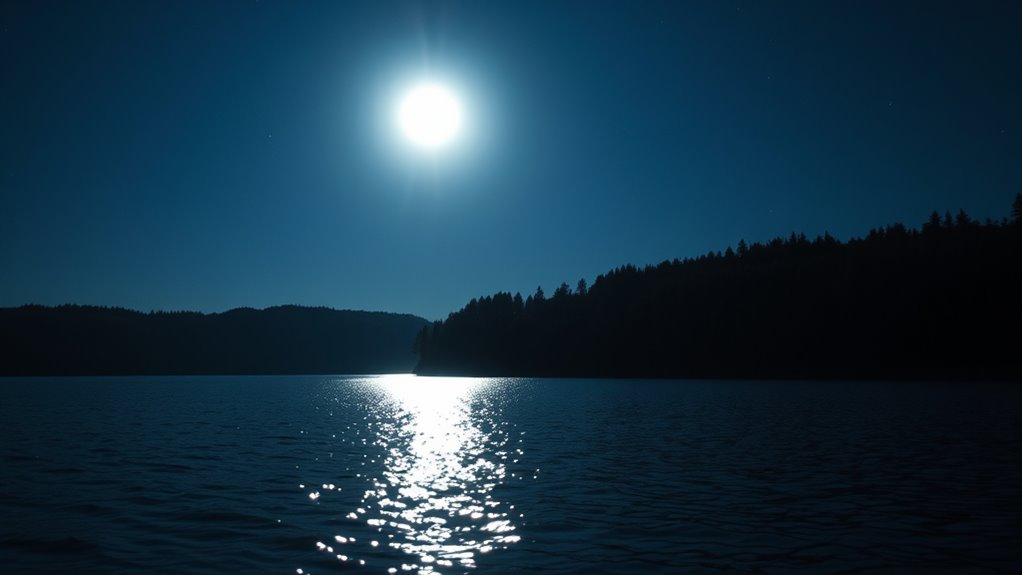
When the bright moon illuminates the night sky, it can make observing stars and celestial objects more challenging. The intense moonlight scatters through the atmosphere, creating a glow that can wash out faint objects and reduce contrast. This phenomenon, known as moonlight scatter, profoundly impacts your ability to capture clear, detailed images of the night sky. To combat this, your choice of filters becomes vital, especially during bright lunar phases. Selecting the right filter allows you to minimize the effects of moonlight scatter and enhance your imaging results.
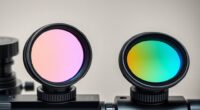
In bright moon conditions, broad-spectrum or light pollution filters often fall short because they allow too much of the moon’s scattered light to pass through. Instead, you need to opt for filters designed specifically to block out or reduce the wavelengths associated with moonlight. Narrowband filters, such as H-alpha or OIII filters, are excellent choices because they target specific emission lines from celestial objects, making them stand out against the bright sky. These filters cut through the moonlight scatter, offering higher contrast and sharper images of nebulae and other deep-sky objects. When selecting filters, pay attention to their bandwidth; narrower bandwidths provide better suppression of unwanted light but may require longer exposure times.
Your filter selection should also consider the phase of the moon. During a full moon, the sky’s brightness increases dramatically, meaning you’ll want filters that can handle high levels of scattered light. Conversely, during a crescent moon, you might get away with slightly less restrictive filters. Keep in mind that even with the best filter, imaging during a bright moon requires patience and adjustments to your exposure settings. Longer exposures can help gather enough light from your target object while minimizing the impact of moonlight scatter, but be cautious of overexposure, which can lead to washed-out images.
Additionally, using a combination of filters can be effective. For instance, stacking a narrowband filter with a light pollution filter can further suppress unwanted moonlight scatter, boosting the contrast of your target. Remember, the goal is to maximize the signal-to-noise ratio; reducing the background glow caused by moonlight enables your equipment to capture details that would otherwise be lost. Understanding the effects of moonlight scatter and choosing the appropriate filter is essential for successful astrophotography during bright lunar phases. It’s a strategic balance—filter selection, exposure adjustments, and patience—that ensures your images remain sharp, vibrant, and full of detail despite the challenges posed by a luminous moon.

SVBONY SV220 Telescope Filter, 7nm Dual-Band Nebula, H-Alpha and O-III Narrowband Filter for One-Shot Color Cameras, Reduce Light Pollution for Astrophotography (1.25 inches)
Reduce light pollution; SV220 telescope filter can greatly reduce the interference from natural light sources such as moonlight…
As an affiliate, we earn on qualifying purchases.
As an affiliate, we earn on qualifying purchases.
Frequently Asked Questions
Can Moonlight Impact Autofocus Performance During Imaging Sessions?
Yes, moonlight can impact autofocus accuracy during imaging sessions. The increased illumination from bright moons creates moonlight challenges, making it harder for your camera’s autofocus system to lock onto subjects precisely. You might notice slower focusing or even false focus points. To improve autofocus performance in such conditions, consider using manual focus or adjusting your camera’s AF settings to compensate for the extra moonlight.
Are Specific Filters Better for Capturing Deep-Sky Objects Under Bright Moonlight?
Think of capturing deep-sky objects under bright moonlight as trying to hear a whisper in a thunderstorm. Spectral filtering becomes your shield, allowing you to cut through the moon’s glare. You’ll want narrowband filters like OIII or H-alpha, which select specific wavelengths and block out unwanted light. Proper filter selection helps you reveal faint details hidden behind the moon’s luminous curtain, making your images clearer and more vibrant.
How Does Moon Phase Influence the Choice of Imaging Equipment Settings?
You should adjust your imaging parameters based on the moon phase. During a full moon, reduce exposure times, lower ISO, or increase light pollution filters to prevent overexposure. As the moon wanes, you can increase exposure and ISO to capture more detail. Keep an eye on the moon phase to optimize your equipment settings, ensuring clear images despite the changing brightness, and avoid overly bright or washed-out captures.
What Techniques Help Minimize Moonlight Interference in Astrophotography?
To minimize moonlight interference, you should use narrowband filters that cut through light pollution and reduce sky brightness. Additionally, plan your imaging sessions during new moon phases or when the moon is below the horizon to avoid excessive sky brightness. Use a fast focal ratio and increase exposure times to improve signal-to-noise ratio. Post-processing techniques like stacking images also help enhance faint objects while minimizing the impact of moonlight.
Does Moonlight Affect the Thermal Regulation of Imaging Sensors?
Moonlight may mildly influence your thermal sensor’s heat dissipation, but it doesn’t directly affect its thermal regulation. When moonlight strikes your equipment, it can cause slight warming, prompting your cooler to work harder. You stay steady by ensuring proper heat dissipation, keeping your thermal sensor cool and stable. Focus on effective cooling systems and shielding to prevent thermal fluctuations, so your imaging remains pristine despite the bright lunar luminescence.
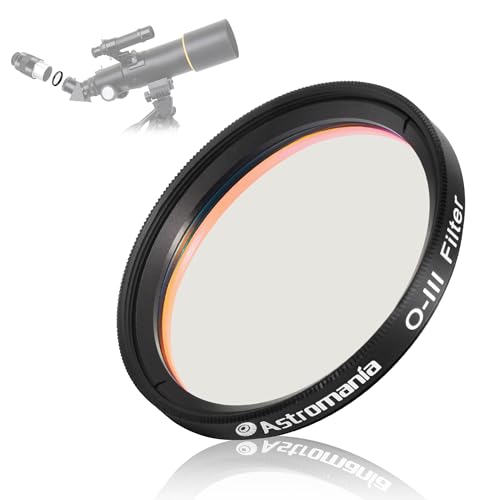
Astromania 2" O-III Filter – Enhances Contrast During Visual Observation of Gaseous and Planetary Nebulae in All Sky Conditions, The Veil, Ring, Dumbbell and Orion Nebula, Among Many Other Objects
2Inch O-III Filter greatly enhances contrast during visual observation of gaseous and planetary nebulae in all sky conditions;…
As an affiliate, we earn on qualifying purchases.
As an affiliate, we earn on qualifying purchases.
Conclusion
So, as you steer your session under shining moons, steer clear of cluttered, costly filters by choosing carefully crafted, contrast-enhancing filters. By balancing brightness and bandwidth, you’ll banish blinding backscatter and bring out breathtaking, balanced images. Remember, mastering Moonlight’s magic means making mindful filter choices, maximizing your moment’s magnificence. With wisdom and wit, you’ll wield the right filter, transforming twilight troubles into breathtaking brilliance, and ensuring your astrophotography remains precise, powerful, and perfectly poised for peak performance.
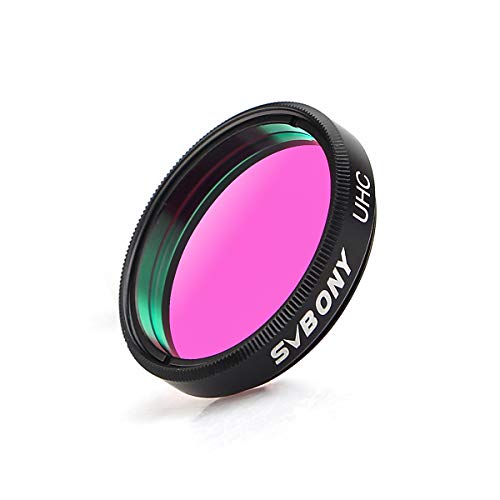
SVBONY Telescope Filter 1.25" UHC Filter Astrophotography to Improve The Image Contrast Reduces Light Pollution (1.25 inch)
UHC filters or light pollution reduction filters are designed to selectively reduce the transmission of certain wavelengths of…
As an affiliate, we earn on qualifying purchases.
As an affiliate, we earn on qualifying purchases.
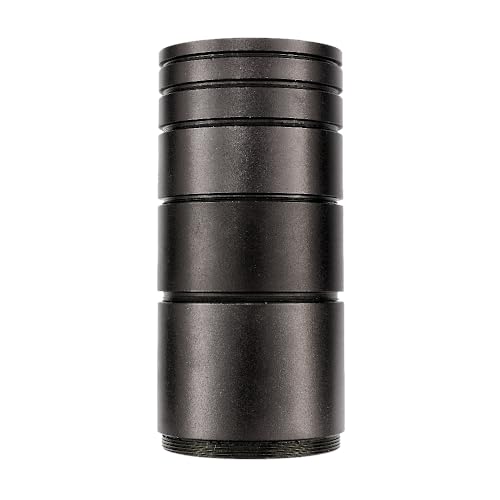
Starboosa M42 1.25" Spacer Ring Set — 3/5/7/15/20/30mm — M42x0.75 Threaded Extensions (Male/Female) — Fine-Tune T2 Backfocus for Astro Cameras, OAGs & Filter Trains — 6 Rings
**Flexible Spacing, One Kit:** Mix and match six rings (3/5/7/15/20/30 mm) to build the exact distance you need—adjust…
As an affiliate, we earn on qualifying purchases.
As an affiliate, we earn on qualifying purchases.