If you’re choosing filters for your color camera, single-band filters let you focus on specific wavelengths, giving you precise color and high contrast. Multi-band filters, on the other hand, capture multiple spectral bands simultaneously, offering broader coverage and more versatility. Single-band filters are simpler and cost-effective, while multi-band options are more complex and pricier. To find out which suits your needs best and how their differences affect image quality, keep exploring further.
Key Takeaways
- Single-band filters offer high spectral precision, ideal for accurate color reproduction and scientific applications.
- Multi-band filters enable simultaneous imaging of multiple spectral ranges, suitable for multispectral and environmental monitoring.
- Single-band filters are simpler, more cost-effective, and easier to manufacture with consistent quality.
- Multi-band filters involve complex fabrication, higher costs, and potentially less spectral accuracy.
- The choice depends on whether precise spectral separation or broader spectral coverage aligns with the camera’s application needs.
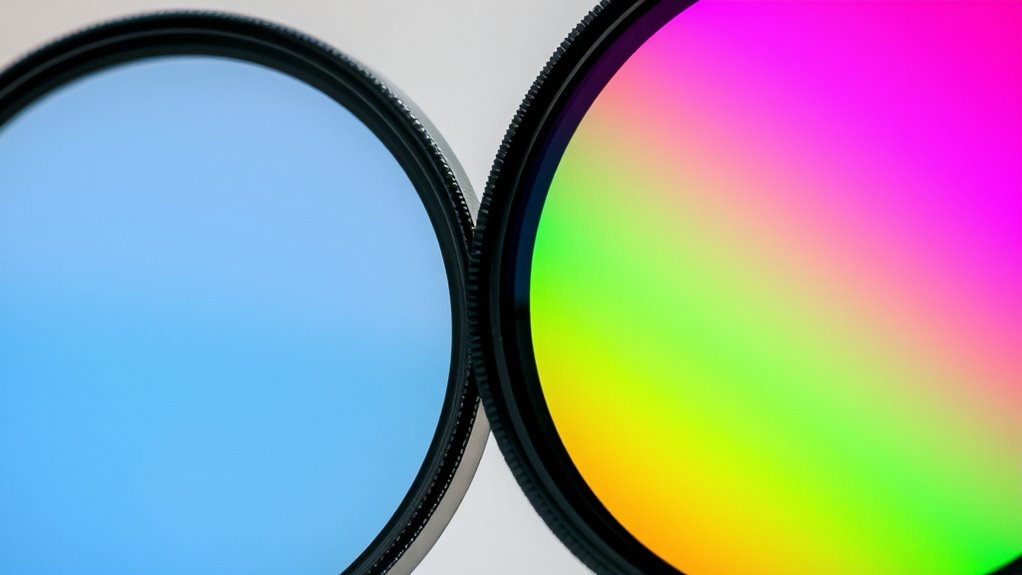
When choosing filters for color cameras, understanding the differences between single-band and multi-band filters is essential. These choices directly influence the camera’s spectral selectivity—the ability to isolate specific wavelengths of light—and affect manufacturing complexity. Single-band filters are designed to transmit a narrow range of wavelengths, typically centered on a specific color such as red, green, or blue. This narrow spectral window allows for precise control over the light entering the camera, enabling high color accuracy and contrast. Because of their simplicity, single-band filters are easier to manufacture with consistent quality, making them a reliable choice for applications where precise color separation is necessary.
In contrast, multi-band filters are engineered to transmit multiple spectral bands within a single filter. They can combine several narrow bands, covering a broader spectrum, or include wider passbands to capture more light. This design offers greater spectral flexibility, allowing you to capture multiple colors or spectral features simultaneously. However, this flexibility comes with increased manufacturing complexity. Creating multi-band filters requires sophisticated deposition and layering techniques to ensure each band maintains its spectral characteristics without overlapping or causing unwanted interference. The precise control needed during manufacturing makes multi-band filters more expensive and potentially less consistent compared to single-band options.
Your choice between the two depends on your specific needs. If you require high spectral selectivity for tasks like scientific imaging, remote sensing, or color calibration, single-band filters offer a straightforward, reliable solution. They excel in scenarios where you need to isolate a particular wavelength with minimal bleed from adjacent bands. On the other hand, if you’re working on applications that demand capturing multiple spectral features simultaneously—such as multispectral imaging, environmental monitoring, or complex color analysis—multi-band filters provide a versatile solution, despite their higher manufacturing complexity and cost.
Ultimately, understanding the spectral selectivity each filter type offers and the manufacturing intricacies involved helps you make an informed decision. Single-band filters are simpler, more cost-effective, and precise for narrow spectral applications. Multi-band filters, with their broader and more flexible spectral coverage, can be more complex to produce but open up possibilities for advanced imaging techniques. Your choice should align with your project’s specific spectral requirements, budget, and the level of detail you need to capture in your imaging endeavors.

Optical Lens Filter 650nm Narrow Band Single Board Computer Lens Filter (Bundle : Diameter 8)
Central wavelength: 650 + – 2 nm
As an affiliate, we earn on qualifying purchases.
As an affiliate, we earn on qualifying purchases.
Frequently Asked Questions
How Do Filters Impact Camera Image Processing Speed?
Filters can slow down image processing because filter application adds extra steps to the camera’s workflow. When you use multi-band filters, the camera must process multiple spectral channels, which takes more time. Single-band filters usually speed up processing since they focus on a narrow wavelength. Overall, the type of filter directly impacts image processing speed, with more complex filters requiring additional computational effort before your image is ready.
Are Multi-Band Filters More Durable Than Single-Band Filters?
Multi-band filters generally offer similar durability to single-band filters, but their environmental resilience can vary based on materials and construction quality. If you’re using your camera outdoors or in harsh conditions, check the durability comparison and verify the filter has robust coatings and sturdy mounting. High-quality multi-band filters can withstand environmental challenges just as well, but lower-grade options might be more prone to scratches or damage over time.
Can Filters Be Customized for Specific Color Wavelengths?
Yes, filters can be customized for specific color wavelengths. You’ll find a range of customization options that allow you to tailor filters to your precise wavelength specificity needs. Manufacturers can create filters with unique coatings or materials to target particular wavelengths, ensuring peak performance for your camera. This customization enhances color accuracy and sensitivity, giving you more control over your imaging system’s capabilities and helping you achieve the exact color capture you desire.
How Do Environmental Conditions Affect Filter Performance?
Environmental conditions can considerably impact your filter’s performance. You’ll want filters with high environmental durability to withstand dust, moisture, and UV exposure. Temperature fluctuations can affect their stability, causing shifts in filtering accuracy or potential damage. To maintain ideal performance, choose filters designed for temperature stability and rugged environments, ensuring they continue to deliver clear, accurate images regardless of outdoor or harsh conditions you encounter.
What Are the Cost Differences Between Single-Band and Multi-Band Filters?
You’ll find single-band filters tend to be cheaper due to simpler manufacturing expenses, making them a budget-friendly choice. Meanwhile, multi-band filters, with their complex design and precise layering, often come with a higher cost comparison. If you’re counting coins, single-band filters save you money, but for versatile and advanced imaging, investing in multi-band filters might be worth the extra expense.
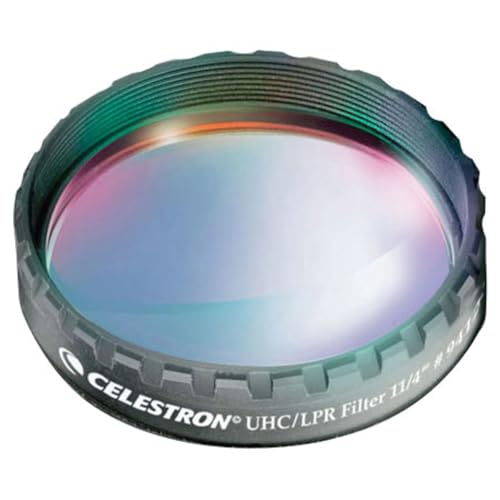
Celestron 94123 1.25-inch UHC/LPR Filter with Multi-Layer Dielectric Coatings – Optimises Spectral and Optical Characteristics for Improved Celestial Viewing, Black
Our 1-1/4" Light Pollution Reduction (LPR) Filters are designed to selectively reduce the transmission of certain wavelengths of…
As an affiliate, we earn on qualifying purchases.
As an affiliate, we earn on qualifying purchases.
Conclusion
Choosing between single-band and multi-band filters is like picking the right brush for your painting—each adds its own flavor to your image. Single-band filters give you sharp, focused strokes, while multi-band filters paint with broader, more vibrant strokes. Think of them as your camera’s palette—select wisely to bring your visual masterpiece to life. Ultimately, the best choice depends on your creative vision, turning every shot into a colorful adventure.

LingoFoto 6pcs Round Full Color Lens Filter Set Red Orange Yellow Green Blue Purple+ 6 Pockets Filter Pouch+3 Lens Cleaning Tool (52mm)
[FUNCTION]: Full color filters provide a complete color transition for a smooth blending effect. Give your landscape and…
As an affiliate, we earn on qualifying purchases.
As an affiliate, we earn on qualifying purchases.

UV/IR650nm Filter Square:6.0/10.0/14.0mm Lens Optical Filter IR Cut Color Imaging Color Correction Filter Infrared Cutoff Filter (Bundle : Square 14.0 mm)
Square: 6.0 / 10.0 / 14.0 mm (corresponding to package 1, 2, 3 respectively)
As an affiliate, we earn on qualifying purchases.
As an affiliate, we earn on qualifying purchases.