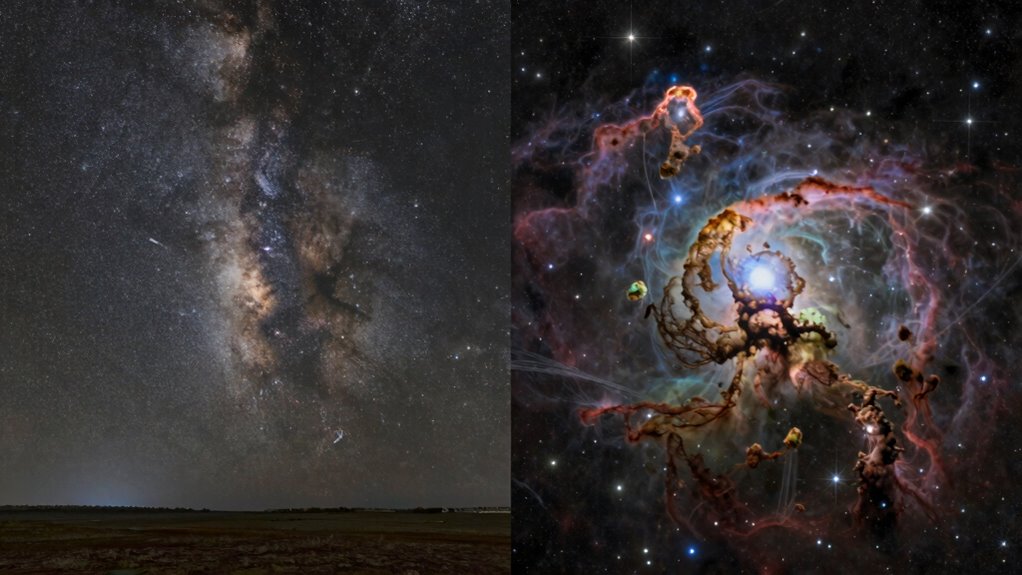
To choose between wide-field and deep-sky focal lengths, start by identifying your main goal—do you want to capture expansive Milky Way vistas or detailed deep-sky objects? For wide views, go shorter to cover more area, but watch for distortion. For detailed images, pick longer focal lengths for magnification. Consider your equipment and environment as well. If you stay tuned, you’ll discover how to optimize your setup for stunning astrophotography results.
Key Takeaways
- Determine your primary target: wide star fields and Milky Way or detailed deep-sky objects.
- Use shorter focal lengths (around 14-35mm) for expansive wide-field views.
- Opt longer focal lengths (over 100mm) for high-magnification deep-sky imaging.
- Balance focal length with aperture to reduce distortion and enhance sharpness.
- Consider seasonal visibility and subject size to select the most effective focal length.
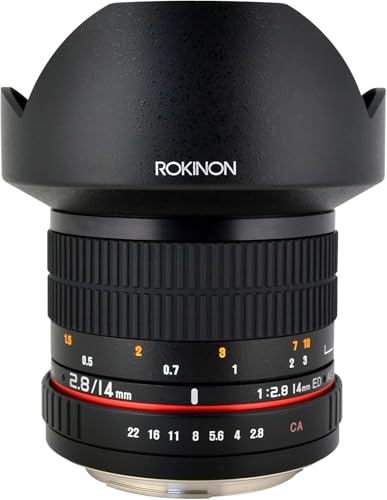
Rokinon FE14M-C 14mm F2.8 Ultra Wide Lens for Canon (Black)
Ultra wide-angle 14mm lens with an approximately 90° angle of view using an APS-C camera, for dramatic effects
As an affiliate, we earn on qualifying purchases.
As an affiliate, we earn on qualifying purchases.
How to Decide the Best Focal Length for Wide-Field Astrophotography
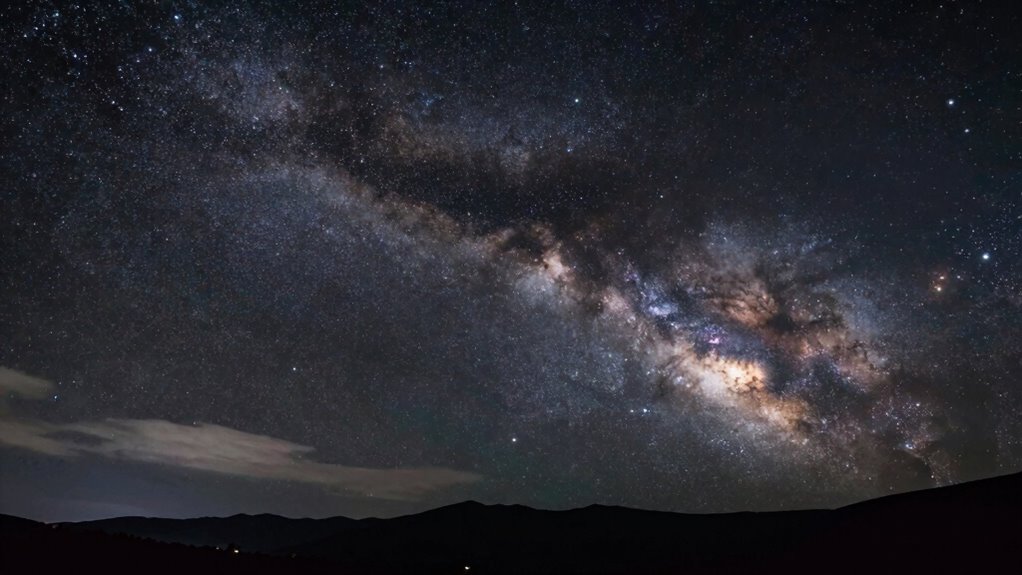
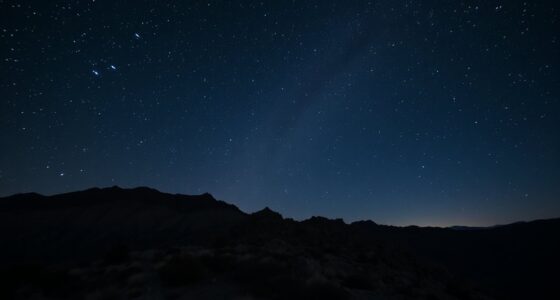
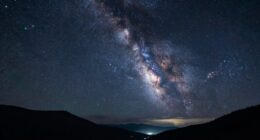
Choosing the right focal length is essential for successful wide-field astrophotography because it directly affects your field of view and the level of detail you can capture. A shorter focal length offers a wider view, ideal for capturing vast star fields or the Milky Way, but it may introduce lens distortion, which can distort star shapes and reduce image sharpness. Conversely, longer focal lengths improve image sharpness and detail but narrow your view, making it harder to capture large sections of the sky. To decide, consider your subject and how much of the sky you want to include. Balance your focal length to guarantee lens distortion while maintaining sufficient sharpness for crisp, clear images, especially when aiming for high contrast ratios that can enhance your visual results. This ensures you get the best results for your wide-field astrophotography sessions. Additionally, understanding seasonal Milky Way visibility can help you choose the most effective focal length for your shots. Exploring digital content formats can also enhance your understanding of how different focal lengths impact visual storytelling in astrophotography. Incorporating natural landscapes into your compositions can further enrich your images and provide context to the celestial elements you capture. Regularly checking your battery maintenance is crucial to ensure your equipment performs optimally during long astrophotography sessions.

SVBONY SV48P Telescope, 90mm Aperture F5.5 Refractor OTA for Adults Beginners, Telescope for Adults & Beginner Astronomers, Telescopes for Deep Sky Astrophotography and Visual Astronomy
90 mm aperture; 500mm focal length; compared with 70mm and 80mm; 90mm telescope has more light input and…
As an affiliate, we earn on qualifying purchases.
As an affiliate, we earn on qualifying purchases.
Choosing the Right Focal Length for Deep-Sky Imaging
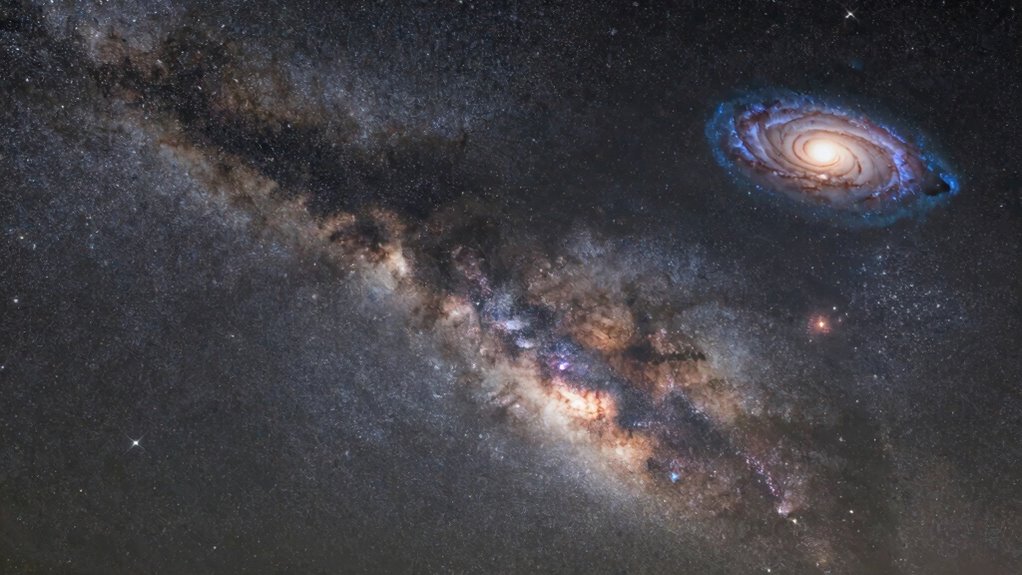
For deep-sky imaging, selecting the appropriate focal length is essential because it determines the level of detail and the size of the objects you capture. A longer focal length offers greater magnification, revealing intricate details of distant galaxies and nebulae, but it can also introduce lens distortion, affecting image accuracy. Conversely, a shorter focal length provides a wider field of view, making it easier to capture larger deep-sky objects and reduce distortion. The key is balancing these factors: choose a focal length that highlights details without compromising image quality. Keep in mind that lens distortion can distort star shapes and positions, so selecting optics with minimal distortion ensures cleaner, more precise images for your deep-sky projects.
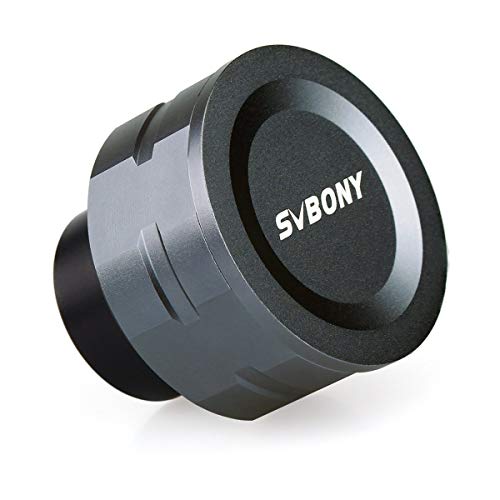
SVBONY SV105 Telescope Camera, 1.25" USB2.0 IMX307 CMOS Color Astrophotography Camera, Electronic Telescope Eyepiece for Telescope, Suitable for Astrophotography Beginners
SV105 telescope camera is the basic method for starting astronomical imaging; you can use the SV105 electronic telescope…
As an affiliate, we earn on qualifying purchases.
As an affiliate, we earn on qualifying purchases.
Which Focal Length Is Best for Your Stargazing Goals?
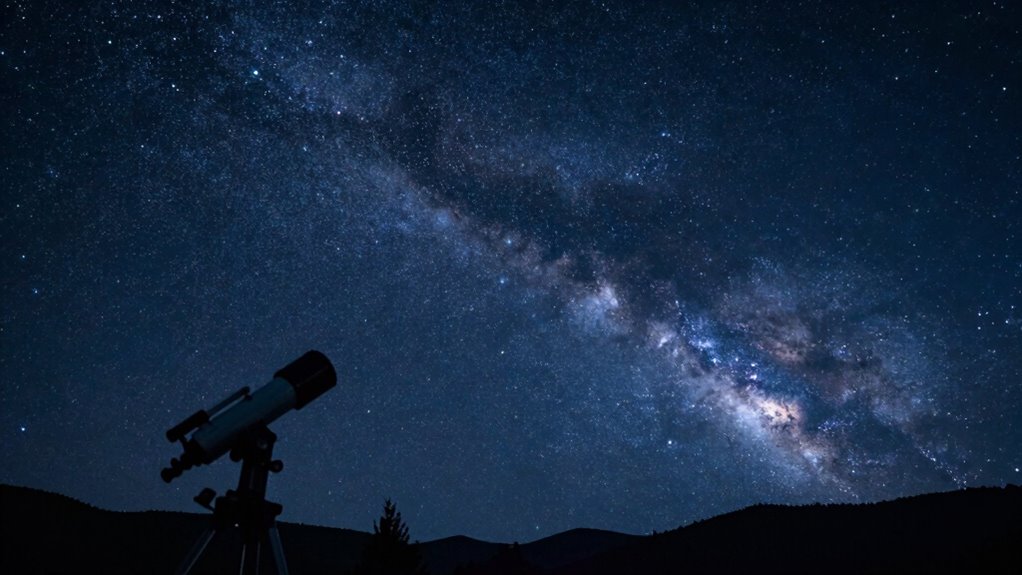
Your stargazing goals greatly influence the ideal focal length for your telescope. If you want wide-field views of the Milky Way or large nebulae, a shorter focal length offers lower magnification levels and a broader field of view, making it easier to scan the night sky. For detailed planetary or deep-sky observations, a longer focal length provides higher magnification, revealing fine details. Aperture considerations also matter—larger apertures gather more light, enhancing image clarity at higher magnifications. Determine what you hope to observe most often, then choose a focal length that balances your desired magnification levels with your telescope’s aperture to optimize your stargazing experience.

Celticbird Astronomical Telescope Accessory Kit – with 3pcs Plossl Eyepieces Set, 4pcs Filter Set, a 2X Barlow Lens
Useful 1.25-Inch telescope accessory kit to get the most out and enhances the performance of your telescope. Includes…
As an affiliate, we earn on qualifying purchases.
As an affiliate, we earn on qualifying purchases.
Frequently Asked Questions
How Does Focal Length Affect Image Distortion?
Focal length influences image distortion by affecting lens performance, especially in wide-angle lenses. Shorter focal lengths can cause more lens distortion and chromatic aberration, making stars appear stretched or blurry. Longer focal lengths reduce these issues, providing sharper images with less distortion. When choosing your lens, consider how focal length impacts these distortions to match your target, whether wide-field or deep-sky, ensuring clearer, more accurate images.
Can I Use the Same Lens for Both Wide-Field and Deep-Sky?
You can use the same lens for both wide-field and deep-sky photography, but its versatility depends on focal length adaptation. A lens with a versatile focal length allows you to capture wide vistas and detailed deep-sky images. However, for ideal results, consider switching lenses tailored to each type’s specific needs. While some lenses work well for both, investing in specialized lenses often yields better, clearer astrophotography.
What Are the Best Accessories for Different Focal Lengths?
Think of your camera setup as a versatile toolkit. For different focal lengths, you’ll want specific accessories—like sturdy camera mounts to keep your shots steady and light pollution filters to clear up hazy skies. For wide fields, use wider mounts and filters to brighten your view. For deep-sky, opt for more precise mounts and filters that enhance faint details, making your celestial images clearer and more detailed.
How Does Aperture Size Influence Focal Length Choices?
Aperture size considerably influences your focal length choices because larger apertures gather more light, ideal for deep-sky astrophotography. When selecting lenses, consider coatings that reduce glare and improve image clarity. For astrophotography tips, choose a telescope with a suitable aperture to match your focal length, ensuring sharp, detailed images. Smaller apertures are better for wide-field views, while larger ones excel in capturing faint deep-sky objects.
Is a Shorter Focal Length Better for Beginner Astrophotographers?
A shorter focal length is generally better for beginner astrophotographers because it offers greater focal length versatility and is more beginner friendly. These lenses allow you to capture wide fields of view, making it easier to locate and frame objects. Plus, they usually require less precise tracking and are more forgiving of beginner mistakes, helping you build confidence as you learn astrophotography techniques.
Conclusion
Whether you’re chasing sweeping star fields or capturing intricate nebulae, choosing the right focal length shapes your experience. Wide-field offers freedom and perspective, like standing beneath a vast night sky. Deep-sky reveals detail and depth, akin to peering into a cosmic tapestry. By matching your focal length to your stargazing goals, you craft a journey—one that’s as expansive as the universe itself or as detailed as its hidden wonders. Your perfect shot awaits.