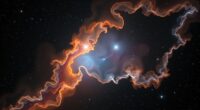
Wide-field images of the California Nebula (NGC 1499) show its expansive, glowing structure filled with intricate filaments, dark lanes, and bright emission regions. These images capture how stellar winds and radiation shape the nebula’s complex morphology, highlighting areas of active star formation and stellar feedback. The contrast between bright gas clouds and dark dust lanes reveals ongoing cosmic processes. Keep exploring to uncover more about this dynamic region’s fascinating features and evolution.
Key Takeaways
- Wide-field images showcase the California Nebula’s extensive structure, revealing intricate filaments, knots, and dark lanes.
- These images highlight the nebula’s complex morphology shaped by stellar winds, radiation, and gas dynamics.
- Wide-field views display both bright emission regions and surrounding dust lanes, illustrating ongoing star formation.
- Such images capture the nebula’s interaction with nearby hot stars, illustrating stellar feedback effects.
- They provide a comprehensive perspective on the nebula’s size, structure, and role in the stellar evolution cycle.
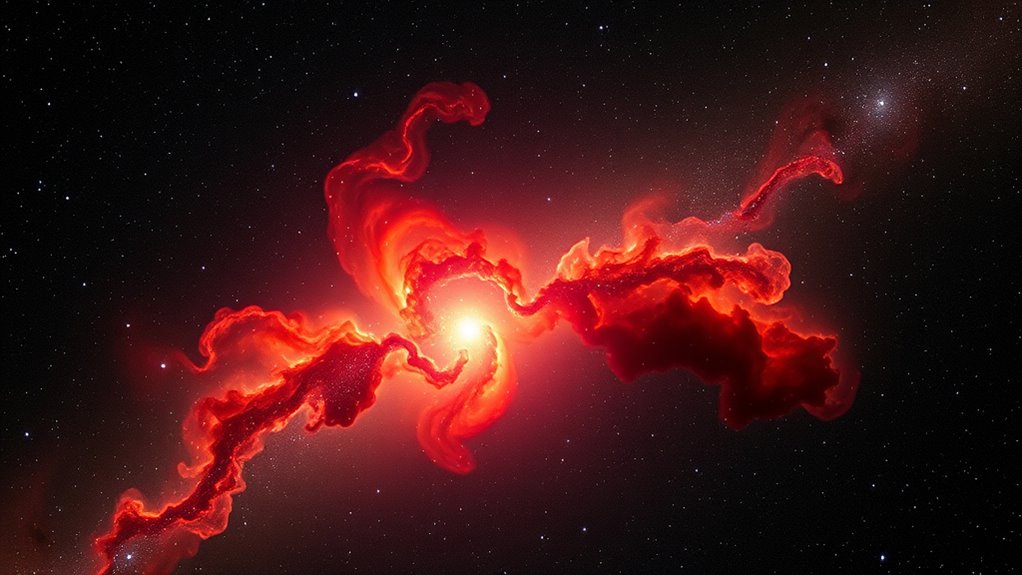
The California Nebula, also known as NGC 1499, is a stunning emission nebula located in the constellation Perseus. When you look at wide-field images of this celestial marvel, you’re witnessing a vast cloud of ionized gas illuminated by nearby hot stars. These images reveal the nebula’s intricate structure, which is shaped by the ongoing processes of stellar evolution. As massive stars form, live out their relatively short lifespans, and eventually die, they influence the surrounding gas, sculpting its nebula morphology. This dynamic interaction creates the spectacular filaments, knots, and dark lanes you see in wide-field photographs.
Understanding nebula morphology helps you appreciate the physical processes at play. The California Nebula’s shape isn’t random; it results from the distribution of gas and dust, as well as the energy input from nearby stars. The morphology showcases regions of high density where star formation might still be occurring, contrasted with more diffuse areas that have been cleared out by stellar winds and radiation. As stars evolve, they emit intense ultraviolet radiation and stellar winds, which carve out cavities and shape the nebula’s appearance. This ongoing stellar feedback keeps the nebula in a constant state of transformation, which is vividly captured in wide-field images.
When you examine these images, you also see the nebula’s relation to the broader cycle of stellar evolution. The gas and dust in NGC 1499 originate from previous generations of stars, enriched with heavier elements they’ve expelled. As new stars form within these dense regions, they eventually follow the same evolutionary path, illuminating the nebula and contributing to its changing morphology. The nebula acts as both a remnant of past stellar activity and a cradle for new stars, illustrating the cyclical nature of stellar evolution. Additionally, the complex interactions between radiation and matter can lead to the formation of new structures over time, demonstrating the ongoing process of stellar feedback.
The wide field of view allows you to appreciate the nebula’s size and complexity. You notice the interplay between bright emission regions and darker, dust-laden areas that obscure parts of the nebula. These contrasting features emphasize how nebula morphology results from a combination of stellar radiation, gas dynamics, and dust distribution. Observing NGC 1499 in this way helps you visualize the ongoing story of star birth and death, making the California Nebula a vivid example of the universe’s constant evolution. In essence, these wide-field images capture not just a beautiful object, but the processes that shape our galaxy’s life cycle.

Astromania Super Plossl Eyepiece 2 Inch, Telescope Eyepiece 56mm Fully Multi-Coated Optics, 52 Degree Wide Field 4-Element Design, High Eye Relief for Astronomy Telescope Included 2 Inch Filter Thread
Advanced Optical Accessories: The use of aluminum allows for a longer service life; it with less distortion in…
As an affiliate, we earn on qualifying purchases.
As an affiliate, we earn on qualifying purchases.
Frequently Asked Questions
What Equipment Is Best for Capturing Wide-Field Images of NGC 1499?
For capturing wide-field images of NGC 1499, you should choose a camera with a large sensor to maximize light collection and detail. Pair it with a fast, wide-angle lens, such as a 14mm or 24mm, to cover more of the nebula in a single shot. The combination of a high-quality sensor and appropriate lens selection allows you to capture stunning, detailed images of this beautiful celestial object.
How Long Should Exposure Times Be for Detailed Nebula Imaging?
Think of exposure duration as watering a plant—you need enough time to bring out its full beauty. For detailed nebula imaging, aim for exposure times between 10-30 minutes per shot, sometimes longer for faint details. This allows you to enhance detail and reduce noise, revealing intricate structures. Patience pays off, so stack multiple long exposures to create a stunning, detailed image of NGC 1499.
Can Amateur Astronomers Successfully Photograph the California Nebula?
Yes, you can successfully photograph the California Nebula with your amateur astrophotography skills. Focus on capturing long exposures and use proper image processing techniques to enhance details. Practice stacking multiple images to improve signal-to-noise ratio, and adjust your settings for ideal clarity. With patience and dedication, you’ll create stunning wide-field images that showcase the nebula’s intricate structure, even with modest equipment.
What Are Common Challenges When Photographing Large Nebulae Like NGC 1499?
Think of capturing the California Nebula as taming a wild ocean; challenges like atmospheric distortion can obscure your view, making stars appear shaky or streaked. You must also master camera calibration to guarantee your images are sharp and accurate. These obstacles test your patience, but with careful planning, proper equipment, and post-processing, you can transform chaos into breathtaking cosmic art.
How Does Light Pollution Affect Wide-Field Nebula Imaging?
Light pollution, especially from urban glow and increased sky brightness, drastically impacts your wide-field nebula imaging. It washes out faint details, reducing contrast and making it harder to capture the nebula’s true colors. To minimize this, shoot from darker locations, use light pollution filters, and plan your sessions during new moon phases. This way, you’ll get clearer, more detailed images of celestial objects like the California Nebula.

SVBONY SV605CC Cooled Astrophotography Camera, Double Layer Semiconductor Refrigeration, 9MP IMX533 USB3.0 CMOS Astronomy Camera with 2" 7nm Dual-Band Nebula Filter for Deep Sky Astrophotography
Born for Deep Sky Astrophotography: The combination of the telescope camera's high sensitivity and low noise with the…
As an affiliate, we earn on qualifying purchases.
As an affiliate, we earn on qualifying purchases.
Conclusion
As you gaze at these wide-field images of the California Nebula, you’re reminded how breathtaking the universe can be. With every glance, you feel like an intrepid explorer, discovering cosmic wonders from your backyard. Just like those early astronomers with their trusty telescopes, you get lost in the beauty of this celestial masterpiece—proof that even today, the universe still holds surprises, and perhaps, a little bit of magic.

Celestron – Cometron 7×50 Astronomy Binoculars – Entry-Level for Stargazing and Comet Watching – Large 50mm Objective Lenses – Wide 6.6° Field of View – Multi-Coated Optics
EASY-TO-USE ASTRONOMY BINOCULARS FOR BEGINNERS: Cometron 7×50 binoculars are an easy, affordable way to learn the night sky…
As an affiliate, we earn on qualifying purchases.
As an affiliate, we earn on qualifying purchases.

SVBONY SV555 Deep Sky Astrophotography Kit, Full Frame Compatibility, 54mm Petzval APO Telescope Includes EAF Mount Kit, with SV238 Off-Axis Guider, SV226P M42-M48 Filter Drawer
SVBONY SV555 Deep-sky Astrophotography Full-Frame Kit: SV555 APO refractor with upgraded focus; SV238 off-axis guider for error-free guiding;…
As an affiliate, we earn on qualifying purchases.
As an affiliate, we earn on qualifying purchases.