
To make the most of clear nights, choose targets that match your telescope’s focal length. Shorter focal lengths are great for wide-field views like star clusters and the Milky Way, while longer focal lengths suit detailed planetary or deep-sky objects. Knowing your FOV helps you select the right objects and avoid frustration. By aligning your targets with your gear, you’ll improve your imaging success. Keep exploring for more tips to optimize your night sky sessions.

Get school and study supplies delivered free — and shop member deals
- Fast, free delivery on millions of items
- Access to Prime Big Deal Days deals on October 6–7
- Prime Video, Amazon Music and more included
Key Takeaways
- Match your focal length to target size: wide FOV for large nebulae, narrow FOV for detailed planetary objects.
- Use FOV calculations to select targets that fit well within your equipment’s view.
- Adjust focal length with focal reducers or Barlow lenses to optimize target framing.
- Prioritize targets suited to your focal length to maximize image detail and minimize frustration.
- Plan sessions around moon phases and light pollution to ensure your chosen targets are visible and well-framed.
wide field of view telescope eyepiece
As an affiliate, we earn on qualifying purchases.
As an affiliate, we earn on qualifying purchases.
Why Your Telescope Isn’t Capturing the Night Sky as You Hope
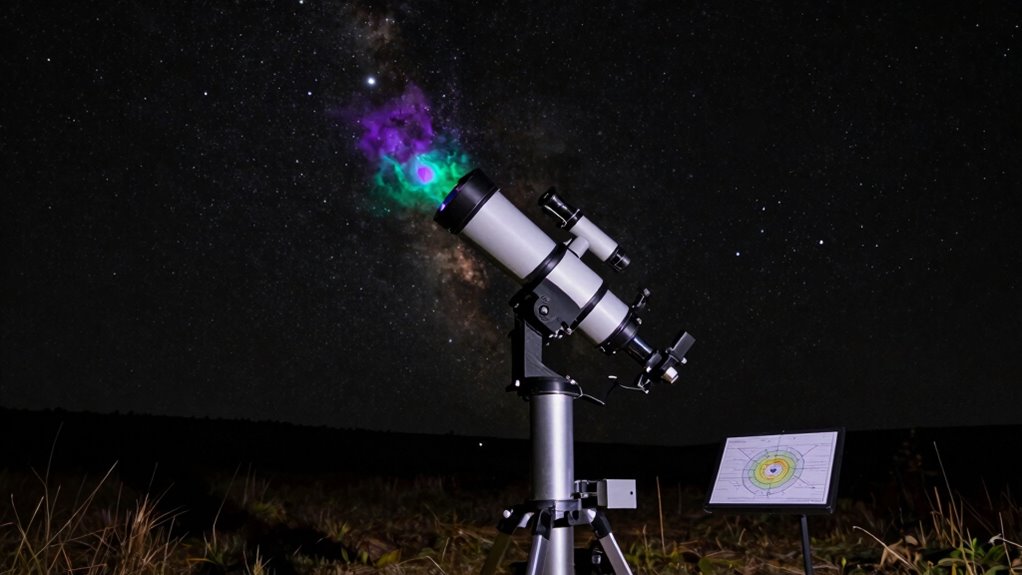
If your telescope isn’t showing the night sky as clearly as you’d like, the problem might not be the equipment itself but how you’re using it. First, make certain you’re consulting accurate star charts to identify your targets. These charts help you navigate the sky more effectively, guaranteeing you’re pointing your telescope at the right objects. Also, don’t forget equipment maintenance. Regularly clean your lenses and mirrors, check for loose parts, and ensure your mount is stable. Poor alignment or dirty optics can notably reduce image quality. Properly maintaining your gear keeps it functioning at its best and prevents frustrating observations. With clear star charts and diligent equipment upkeep, you’ll see more detail and enjoy your night sky much more. Additionally, exploring new frontiers in your observational techniques can significantly enhance your overall experience.
As an affiliate, we earn on qualifying purchases.
How to Calculate Your Telescope’s Field of View
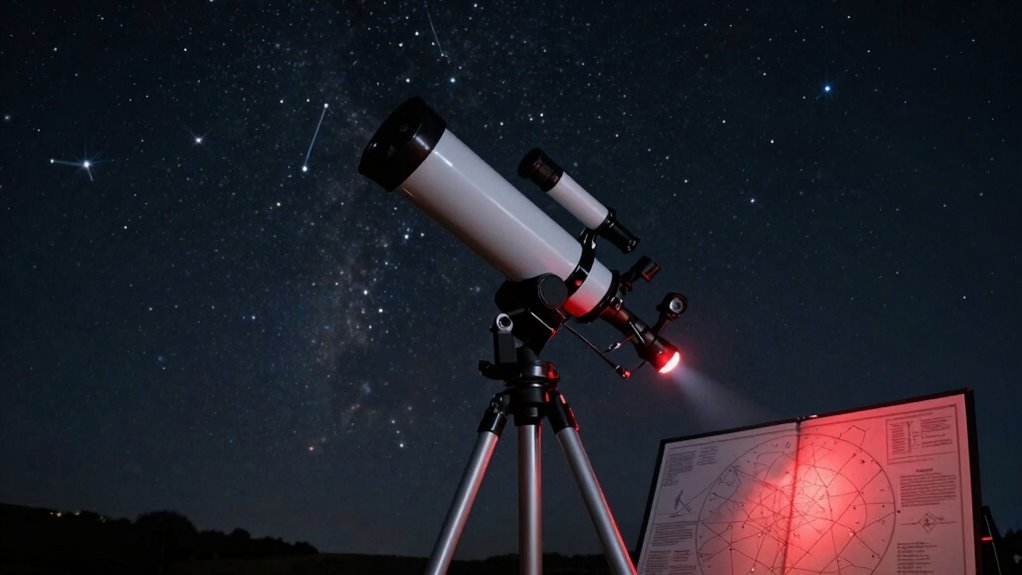
Understanding your telescope’s field of view helps you see more of the night sky at once. By knowing how to calculate it, you can choose the right eyepiece and plan your observations more effectively. Let’s explore how to determine your telescope’s FOV to make the most of clear nights.
Understanding Eyepiece Field of View
Knowing how to calculate your telescope’s field of view is essential for planning your night sky observations. The eyepiece’s field of view determines how much of the sky you see through your eyepiece at a given magnification. A wider apparent field of view offers a more immersive experience, while higher magnification narrows it. To understand this better, consider this table:
| Eyepiece Magnification | Apparent Field of View | True Field of View |
|---|---|---|
| 50x | 50° | 1.4° |
| 100x | 50° | 0.7° |
| 200x | 50° | 0.35° |
| 150x | 68° | 1.1° |
This helps you select the right eyepiece for your target and focal length.
Calculating Telescope FOV
Calculating your telescope’s field of view is a straightforward process that helps you plan observing sessions more effectively. To do this, consider these key steps:
- Measure your eyepiece’s apparent field of view during lens calibration.
- Note your telescope’s focal length, which determines how much of the sky you see.
- Use the formula: FOV = (apparent field of view / magnification).
- Adjust your star tracking settings to keep objects centered within this calculated FOV.
Barlow lens for planetary observation
As an affiliate, we earn on qualifying purchases.
As an affiliate, we earn on qualifying purchases.
How Focal Length Influences Your Astrophotography Targets
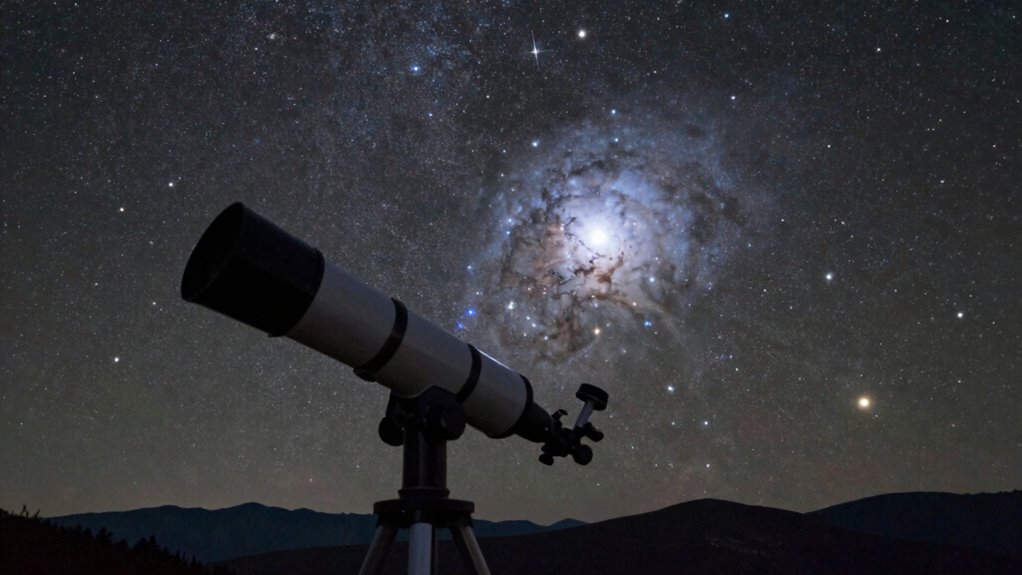
Focal length plays a crucial role in determining which astrophotography targets you can capture effectively. Longer focal lengths narrow your field of view, allowing you to focus on smaller, more detailed objects like planetary nebulae or distant galaxies. Shorter focal lengths, on the other hand, provide a wider field of view, ideal for capturing expansive star fields or the Milky Way. Your focal length influences your astrophotography composition, guiding how much of the sky you can include and how the target appears in your frame. By understanding this relationship, you can select targets that suit your equipment and maximize your clear nights. Choosing the right focal length helps you craft compelling images and avoid frustration from capturing unsuitable objects. Additionally, ensuring color accuracy in your images can significantly enhance the overall quality of your astrophotography.
star chart for amateur astronomers
As an affiliate, we earn on qualifying purchases.
As an affiliate, we earn on qualifying purchases.
What Celestial Objects Are Best for Your Focal Length Range
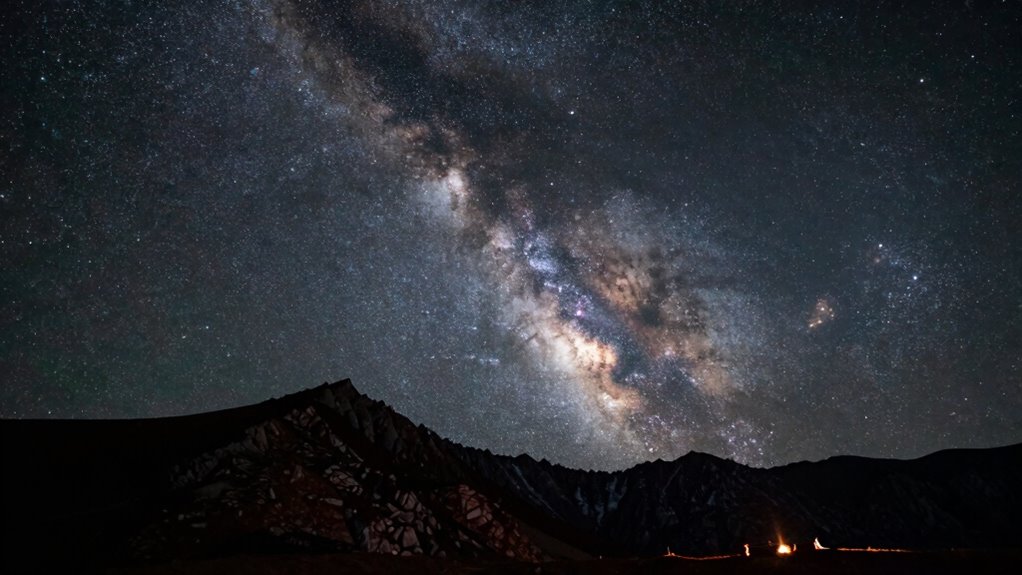
Your focal length determines which celestial objects you’ll capture best. With shorter focal lengths, you can enjoy wide fields and expansive star clouds, while mid-range focal lengths are perfect for detailed planetary views. For deep-sky targets, longer focal lengths help highlight individual nebulae and galaxies, making your night under the stars more rewarding.
Suitable Deep Sky Targets
When choosing deep sky targets, it’s essential to take into account your telescope’s focal length to guarantee the objects will fit well within your field of view and reveal enough detail. For shorter focal lengths, you’ll want wide, bright targets like:
- Galactic clusters — their dense star groups stand out clearly without needing excessive magnification.
- Bright nebulae — especially with nebula filters, revealing intricate structures.
- Large emission nebulae — their expansive shapes fill the view nicely.
- Supernova remnants — their diffuse glow benefits from wider fields for context.
As you get into longer focal lengths, more detailed, compact objects like planetary nebulae become prominent. Always match your target type to your focal length for best viewing.
Optimal Planetary Views
As you shift from wide targets to more detailed views, planetary objects become increasingly mesmerizing through your telescope. For your focal length range, focus on bright planetary nebulae like the Ring Nebula or the Dumbbell Nebula, which reveal intricate structures with moderate magnification. Star clusters, especially open clusters such as the Pleiades or the Beehive Cluster, also shine at these focal lengths, offering rich detail and vibrant colors. These objects often respond well to mid-range focal lengths, allowing you to see fine details without losing brightness. Avoid overly high magnifications that can obscure faint features, and instead, balance magnification to enhance contrast and detail. Additionally, incorporating simple foam rolling techniques can improve your recovery and performance, ensuring you’re ready for those nights under the stars. Understanding the Milky Way’s structure can also guide you in selecting optimal targets for your astrophotography sessions. This approach guarantees you make the most of clear nights, capturing stunning planetary views with clarity.
Best for Wide Fields
Looking for celestial objects that shine brightest through wide-field telescopic views? Wide-field setups excel at capturing large, luminous objects. To maximize your experience, consider these targets:
- The sprawling Orion Nebula, filling your view with vibrant colors and intricate details.
- The majestic Milky Way, stretching across the sky like a luminous river.
- The bright Pleiades Cluster, with its sparkling blue stars clustered closely together.
- The expansive Hercules Galaxy Cluster, showcasing numerous galaxies in a single sweep.
Good sky conditions are essential—clear, dark nights reveal the full splendor. Regular equipment maintenance guarantees your optics stay clean and aligned, preventing blurry images. These targets are perfect for your focal length, offering breathtaking wide-field views every time.
How to Match Your Telescope’s Focal Length to Suitable Targets
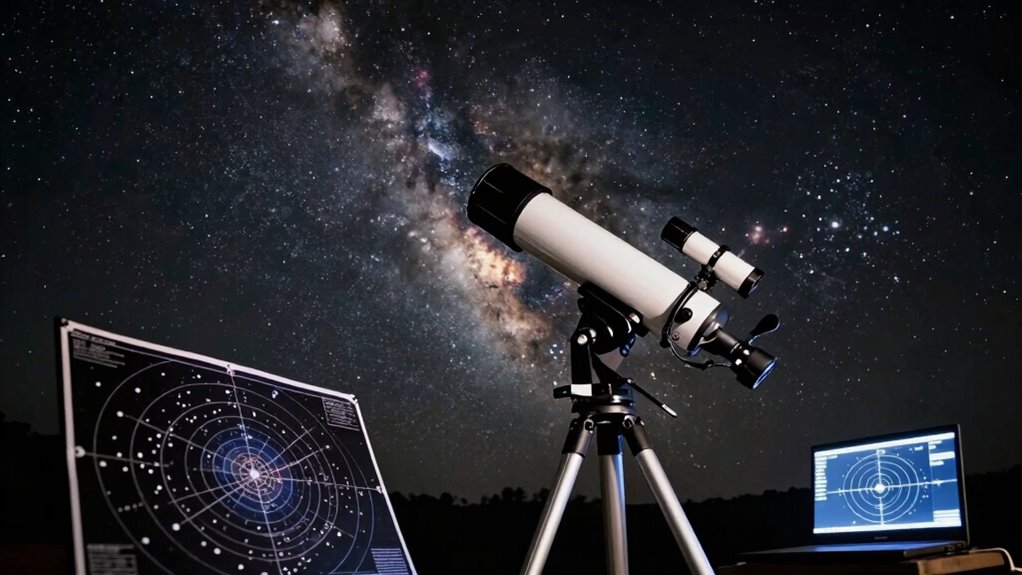
Choosing the right focal length for your telescope is essential for effectively observing different celestial targets. Shorter focal lengths are great for wide-field views of nebulae and star clusters, while longer focal lengths provide high magnification for planets and the Moon. To match your telescope’s focal length to your targets, consider equipment upgrades like focal reducers or Barlow lenses, which can adapt your setup for different objects. Additionally, good weather forecasting helps you plan sessions when skies are steady, maximizing your chances of clear, detailed views. Understanding brewing fundamentals can also enhance your patience and focus during long observing sessions. By understanding your telescope’s focal length and adjusting your gear accordingly, you’ll optimize your observing sessions and make the most of every clear night. Incorporating fire pits for warmth can create a cozy atmosphere for stargazing in your backyard.
Planning Your Night Sky Shots for Better Results
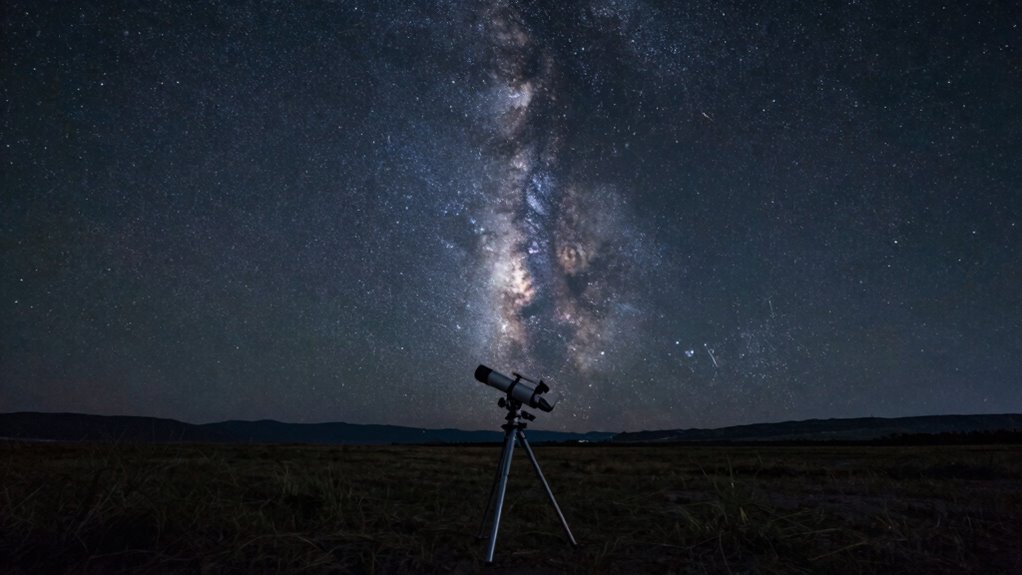
Effective night sky photography begins with careful planning. First, check the Moon phases—new moon nights offer the darkest skies, ideal for capturing faint stars and deep-sky objects. Next, study constellation patterns to identify interesting targets that suit your focal length, like Orion’s Belt or the Big Dipper. Third, consider your location’s light pollution; aim for spots with minimal artificial glow. finally, plan your shoot time based on the position of your target in the sky, ensuring it’s high enough to avoid atmospheric interference. By aligning your shooting schedule with moon phases and constellation positions, you maximize your chances of capturing stunning, clear images with better detail and less hassle. Planning ahead makes every clear night count.
Troubleshooting When Your Targets Don’t Fit Your Setup
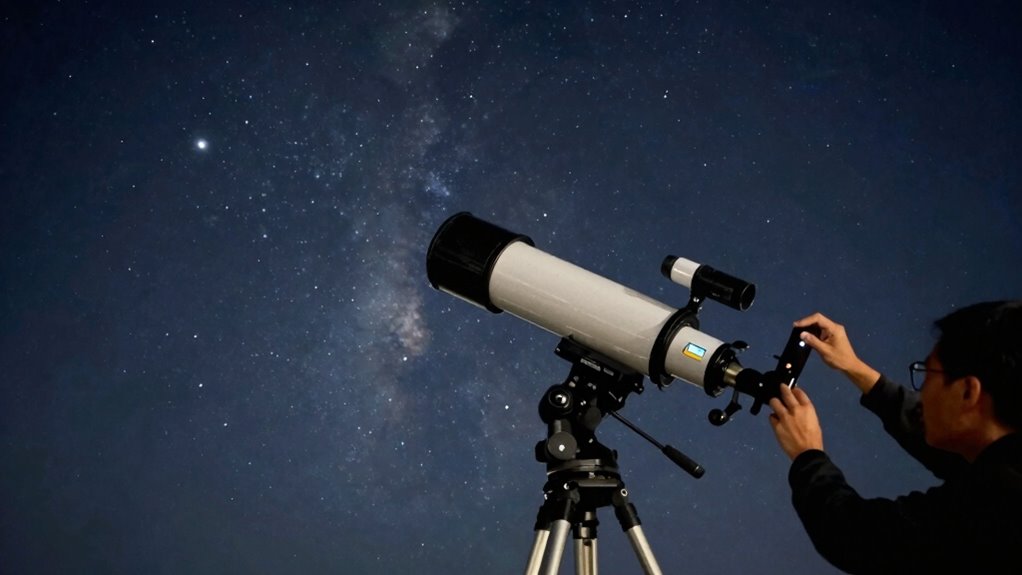
Sometimes, even with thorough planning, your camera setup may not align perfectly with your target. If you’re struggling to frame a celestial object, consider moon phases; a bright moon can wash out faint objects, making them hard to capture. Adjust your timing to shoot during a new moon or when the moon is below the horizon. Light pollution also plays a big role—if your target doesn’t fit your focal length, move to a darker site or use light pollution filters. Additionally, check your equipment’s field of view and adjust your focal length or use a wider lens if necessary. Sometimes, simply repositioning your camera or changing your target based on moon phases and light pollution conditions can make all the difference.
Tips to Maximize Your Clear Nights and Capture More
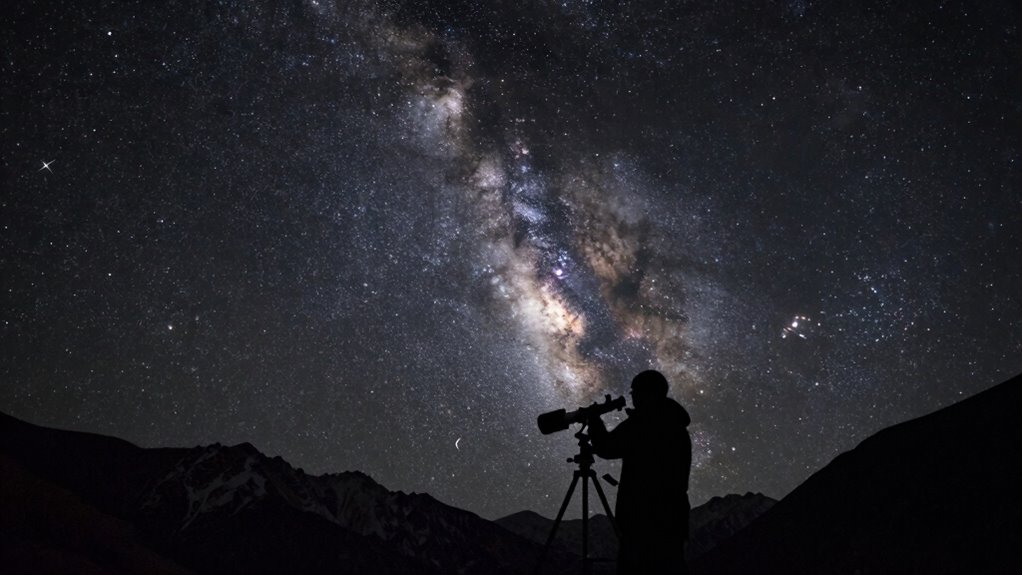
Maximizing your clear nights starts with careful planning and preparation. To capture more, focus on optimizing your gear and observing conditions. First, regularly perform equipment maintenance to prevent technical issues that waste valuable time. Second, prioritize targets with good color correction to ensure vibrant, accurate images. Third, plan your sessions around moon phases and weather forecasts to avoid interruptions. Fourth, keep detailed logs of your sessions to refine your setup and target choices. By maintaining your equipment and selecting targets suited for your focal length, you’ll reduce wasted nights and increase successful captures. Consistent preparation helps you make the most of clear skies and guarantees that every session yields quality results.
Frequently Asked Questions
How Does Focal Ratio Affect Astrophotography Target Selection?
Focal ratio differences directly influence your astrophotography target selection because they determine the exposure needed for ideal depth. A lower focal ratio (f/4) lets you capture more detail quickly, ideal for deep-sky objects, while higher ratios (f/10) require longer exposures but offer sharper images. By choosing targets that match your focal ratio, you maximize astrophotography depth and minimize wasted time during clear nights.
Can Changing Eyepieces Improve Your Telescope’s Field of View?
Yes, changing eyepieces can improve your telescope’s field of view. When you select compatible eyepieces, they often offer wider fields, allowing you to see more of the sky at once. Check eyepiece compatibility with your telescope to make sure they fit properly. By switching to a wider-field eyepiece, you’ll enjoy a broader view, making it easier to locate objects and enjoy immersive astrophotography sessions.
What’s the Best Way to Identify Objects for Your Focal Length?
To identify objects for your focal length, start by understanding your equipment compatibility, ensuring your telescope and accessories work well together. Use star charts or astronomy apps tailored to your focal length to find suitable targets that fit your field of view. Tracking accuracy is essential—use a stable mount and, if available, tracking systems to keep objects centered. This approach makes locating and observing objects more precise and enjoyable.
How Do Atmospheric Conditions Impact Target Choice During Clear Nights?
Think of atmospheric conditions like a glass of muddy water—light pollution and turbulence cloud your view. During clear nights, high light pollution dims faint objects, while atmospheric turbulence causes shimmering, blurring details. To optimize your stargazing, choose brighter targets when turbulence is strong and focus on objects less affected by light pollution. Monitoring weather and sky quality helps you adapt, ensuring you make the most of your celestial observations.
Are Certain Mounts Better Suited for Specific Focal Lengths?
Yes, certain mounts are better suited for specific focal lengths. You should consider mount compatibility to guarantee it can handle your telescope’s weight and focal length, especially for long exposures. Portability considerations also matter—lighter mounts are great for quick setups, while sturdier ones are better for precise, long-duration imaging. Matching your mount to your focal length enhances stability and tracking accuracy, optimizing your observing experience.
Conclusion
Remember, your telescope is a key that reveals the universe’s secrets. By choosing targets that align with your focal length, you’re not just capturing images—you’re weaving your own constellation of memories. Each clear night is a blank canvas, waiting for your vision to paint the stars. So, plan wisely, match your gear, and let the sky’s infinite stories guide your journey. Your patience and preparation will turn fleeting moments into timeless treasures.
Fall Picks
fall essentials
As an affiliate, we earn on qualifying purchases.