TL;DR

Get school and study supplies delivered free — and shop member deals
- Fast, free delivery on millions of items
- Access to Prime Big Deal Days deals on October 6–7
- Prime Video, Amazon Music and more included
Nebula Pa 30 is a nebula thought to be the remnant of a supernova recorded by astronomers in 1181, and NASA APOD’s October 7, 2026 image shows its striking radial filaments around a hot central star. Those structures make a compelling long exposure target, but their fine detail and faint light call for a long focal length telescope, steady tracking, and dark skies.
Some cosmic fireworks keep glowing long after the flash is gone. In NASA APOD’s October 7, 2026 image, Nebula Pa 30 sends fine spokes outward from a mysterious central star, like pale threads caught in a dark wind. The scene looks festive at first glance. Its history is stranger: astronomers connect the nebula to a bright “guest star” recorded in the year 1181.
This article unpacks what those glowing strands may tell you about an unusual supernova, why the nebula remains a puzzle, and what makes it such a challenging target for photography from Earth. You’ll also get a practical guide to choosing gear and planning a session, plus a clear distinction between what the image shows and what astronomers still don’t know.
The visual reference described here was observed with the Gemini North Telescope in Hawai‘i. That powerful observatory can reveal detail that ordinary backyard equipment cannot. Still, knowing what to look for can change how you read the image: those delicate lines aren’t decoration. They’re clues scattered across the aftermath of a stellar explosion.
Nebula Pa 30 is thought to be the remnant of an unusual supernova linked to a guest star recorded in 1181.
Historical records describe that guest star as visible for 185 days; the records come from Chinese, Japanese, and Arabic astronomers.
A very hot central star produces a strong wind that may help shape Pa 30’s radial filaments.
The pearl-like knots in those filaments are about 4 light-days across.
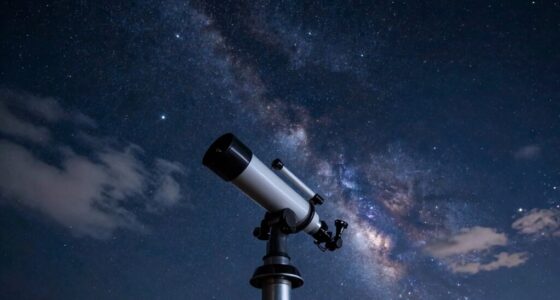
For close framing, choose a long focal length telescope and pay special attention to focus and tracking.

What Nebula Pa 30’s Firework-Like Filaments Reveal
Nebula Pa 30 is a glowing nebula thought to be the remnant of an unusual supernova, with a hot central star and radial filaments that look like fireworks suspended in space. In the NASA APOD image for October 7, 2026, the strands spread outward from the center, giving the object a spiky, almost hand-drawn appearance. Their orderly direction matters: the filaments preserve information about how material moved after the explosion, so the nebula is more than a beautiful shape. It is a record of an event unfolding over time.
The center is more than a bright point in a pretty picture. Its star produces a strong wind, and astronomers think that wind may help form the filaments. If the wind is shaping the ejecta, the strands could reveal how energy from the surviving central object interacts with material thrown out by the explosion. The explanation remains tentative: the precise event that made Pa 30 is not fully understood, so the image gives researchers a structure to investigate rather than a complete answer.
Look closely at the knots along the strands. The pearl-like clumps are described as about 4 light-days across. A light-day is the distance light travels in one day, so even one of these tiny-looking beads dwarfs anything you could build or photograph on Earth. Their scale makes the apparent delicacy striking: structures that look like thin threads in a telescope image are vast formations of gas and dust. The knots may also offer clues about where material gathered or resisted the central star’s wind, though their appearance alone cannot establish how they formed.
That mix of delicate shape and enormous size makes Pa 30 a rewarding image to study. The filaments draw your eye outward; the knots invite you to stop and inspect the details. In an observing log, you might sketch the center first, then mark each visible spoke. Even if your telescope cannot resolve individual knots, comparing your sketch with the Gemini North view helps you understand what long exposures and large observatories reveal—and how much information can be hidden in a faint, compact-looking object.
long focal length telescope for astrophotography
As an affiliate, we earn on qualifying purchases.
As an affiliate, we earn on qualifying purchases.
Why an 1181 Guest Star Still Matters to Astronomers
The historical link is what turns Nebula Pa 30 from a striking nebula into a time-spanning mystery: records from Chinese, Japanese, and Arabic astronomers describe a “guest star” seen for 185 days in 1181, and researchers believe that stellar flare-up may have created the nebula. The records place a temporary point of light in the sky nearly nine centuries before modern telescopes could inspect its remains.
That is a remarkable bridge between careful sky watching and modern astrophysics. A person in the year 1181 could note a new bright object; today, astronomers can examine a cloud of material and a star at its center. The old observations and the modern image answer different questions. The record tells us when the light appeared and how long it stayed visible; the nebula offers physical evidence of what may have remained. Linking them gives astronomers a rare way to check whether a proposed remnant fits an independently recorded event, rather than relying on the nebula’s appearance alone.
Pa 30 is associated with a rare class called a Type Iax supernova. Astronomers think this kind of explosion may arise when two white dwarfs merge, but the exact chain of events remains uncertain. A white dwarf is the compact remnant of a star, and two such objects meeting could produce an unusual blast. Pa 30 gives researchers a chance to compare a proposed explanation with a real nebula and its central star. That comparison matters because an explosion that leaves a surviving star would have different implications from one that destroys both stars completely.
Imagine matching a centuries-old note about a bright guest to a faint, spiky remnant in the same part of the sky. That match is powerful, but it does not settle every detail. The event’s date and duration are part of the historical record; the merger explanation remains a scientific interpretation. Keeping those categories separate lets you enjoy the detective story without mistaking a leading idea for a final verdict. It also shows why historical observations still matter: they can constrain the age and identity of a modern astronomical object even when they cannot explain its physics.
equatorial mount for astrophotography
As an affiliate, we earn on qualifying purchases.
As an affiliate, we earn on qualifying purchases.
What the Central Star and Wind Might Explain
The central star in Nebula Pa 30 is exceptionally hot, and it produces a strong wind that may shape the nebula’s radial filaments. This is the proposed link between a star you can spot near the center of the image and the spoke-like structure around it. If the wind helps organize the expelled material, the filaments could preserve a record of the forces acting after the explosion. The idea offers a way to connect the remnant’s present shape to its physical history, though astronomers have not established every step in the process.
Think of the filaments as threads caught in a gust, except the “gust” is material streaming from a stellar remnant. That image helps you picture why the strands seem to radiate outward. It is only an analogy, though: space is not air, and the structures form through physical processes very different from a flag flapping in the wind. The distinction matters because an analogy can make a pattern intuitive without explaining the forces or proving the proposed cause.
The knots add another layer. Their pearl-like look suggests a string of brighter clumps along the strands, each several light-days in size. Those clumps may help researchers test whether the outflow is uniform or whether material has collected unevenly along its path. For an astrophotographer, they are also a reminder that sharpening a picture is not the same as discovering detail. A clearer image can help you inspect a feature; it cannot by itself prove why that feature formed.
For instance, if you compare two images of Pa 30, one might show the central star sharply while another brings out the fainter outer filaments. That difference can come from exposure, telescope design, observing conditions, or image processing. These choices involve tradeoffs: emphasizing faint strands may reduce the prominence of the center, while a sharp central star does not guarantee that the dim outer structure is captured. The NASA APOD description identifies the observation with Gemini North, but the details provided here do not specify a wavelength or processing recipe. It is more accurate to admire the structure than to claim that every color or brightness maps directly to what a human eye would see.
high precision star tracking mount
As an affiliate, we earn on qualifying purchases.
As an affiliate, we earn on qualifying purchases.
Why Pa 30 Calls for Long Focal Length Photography
Nebula Pa 30 is a better fit for a long focal length telescope than a wide-field camera because its fine radial filaments and small knots reward close framing. A wide-field setup may gather the surrounding star field, but it will devote fewer pixels to the nebula itself. A long focal length view gives those narrow strands more room in the frame, making it easier to record their shape and compare features. The choice depends on the story you want the image to tell: the close view favors structure, while the wide view gives more context.
There’s a tradeoff: a tighter field of view makes tracking errors easier to see. If your mount drifts, a star that should look like a pin can stretch into a tiny dash, and delicate filaments may blur. Long exposures also gather more signal from faint details, but they require accurate focus, patient tracking, and a stable setup. Shorter exposures or a wider field are more forgiving, but may leave the smallest features unresolved. A wide-field lens is still useful if you want to show Pa 30 in its broader sky setting.
| Setup | What it does well | Tradeoff |
|---|---|---|
| Wide-field camera or short lens | Shows a broad star field and gives context | Fine strands occupy fewer pixels |
| Long focal length telescope | Frames the filaments and central region closely | Needs steadier tracking and careful focus |
For example, a photographer with a short lens might make a lovely field image but find that Pa 30 looks like a small smudge. A telescope aimed tightly at the nebula can give the structure more scale, yet a small shift from wind or a loose tripod can soften the result. Choose your gear around the detail you hope to show, then plan the session around the stability that gear demands. If your mount or conditions cannot support long exposures, a wider framing can produce a more useful image than a tightly cropped view whose fine detail has blurred.
As an affiliate, we earn on qualifying purchases.
How to Plan a Careful Pa 30 Imaging Session
To photograph a faint object such as Nebula Pa 30, prepare your framing, focus, and tracking before you collect a long series of exposures. The goal is a steady record of light, not a single heroic frame. A careful routine helps you spot problems early, when a quick adjustment can still save the session. Each check protects a different part of the image: framing keeps the target in view, focus preserves fine edges, and tracking prevents the light from smearing.
- Choose your framing. Use a long focal length telescope if you want the filaments to fill more of the frame; choose a shorter lens if you want more surrounding sky.
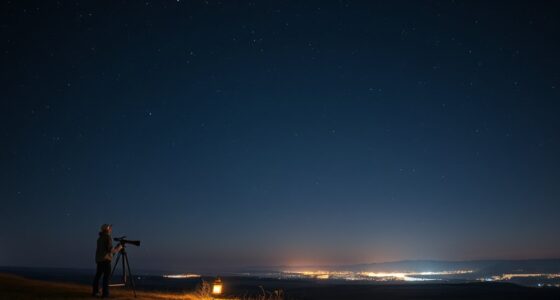
- Check conditions. Seek a dark location with a clear view of the target’s position, and avoid nights when haze or unstable air softens fine detail.
- Focus on a star. Make stars as small and crisp as you can before aiming at the faint nebula.
- Confirm tracking. Take a short test exposure and inspect the stars for streaks before starting a longer sequence.
- Review the result. Check whether the central region and faint strands appear, and adjust framing or exposure choices as your equipment allows.
For instance, you might discover after the first test that the stars look slightly oval. Fixing alignment then can improve every later frame. If you are using a wide-field camera, take time to center the object while leaving enough sky around it. If you have a telescope, use a test image to make sure the nebula has not drifted toward the edge of the frame. A short test is useful because it isolates basic setup problems before they are repeated across many exposures.
These steps do not promise that you will reproduce the Gemini North image. A professional observatory and backyard setup have very different light-gathering power and observing conditions. The practical win is a well-focused, carefully tracked image that records what your equipment can capture. Keep notes about exposure settings and sky conditions, too; those details help you understand why one night’s filaments appear clearer than another’s and make it easier to adjust one variable at a time.
What Backyard Observers Can Learn From the Image
NASA APOD’s Pa 30 image is best treated as a detailed view of a distant nebula, not a promise that the same fine structure will jump out through every backyard telescope. The Gemini North Telescope in Hawai‘i captured the observation described here, and its large collecting area can reveal faint features beyond the reach of modest gear. Your own view depends on your telescope, sky darkness, tracking, and the object’s position from where you observe. Those limits shape what you can learn: an image that shows a faint filament may still help you understand its orientation even if your own setup records only the central patch.
A useful first goal is recognition rather than perfect detail. You might be able to locate the relevant star field and record a faint patch, while the radial strands remain too subtle to see. That does not make the session a failure. Comparing what you can observe with the APOD view teaches you how aperture, exposure, and imaging methods change the amount of detail you can detect. It also helps separate a real observing limit from a setup problem such as poor focus or tracking.
Photography also depends on conditions that are easy to overlook indoors. Thin haze can wash out a faint target; a gust can shake a long telescope; poor focus can turn stars into soft discs. A simple practical tip is to take a short test image and enlarge it before committing to many exposures. If the stars are sharp and round, continue. If not, address focus or tracking first. This small pause can save time, although it does not overcome a bright sky or a night when the atmosphere itself blurs the view.
For anyone seeking the original image and credit, NASA APOD’s entry is the natural reference point; the supplied description credits NASA and identifies Gemini North as the observing telescope. An APOD page can provide the image and its explanation together, making it easier to trace what the picture shows. When sharing or studying it, keep the credit attached and describe the uncertain supernova origin as a belief supported by the evidence, not as an entirely settled account. Reading the caption alongside the image also helps distinguish the observed features from the interpretation researchers attach to them.
Frequently Asked Questions
What is Nebula Pa 30?
Nebula Pa 30 is a nebula thought to be the remnant of an unusual supernova. It has a mysterious central star and radial filaments, with pearl-like knots along the strands. Its possible connection to a guest star observed in 1181 makes it a scientific puzzle as well as a striking image.
How old is the supernova linked to Pa 30?
The proposed supernova is linked to historical reports of a guest star in the year 1181, nearly nine centuries ago. Astronomers believe that event created Pa 30, but the exact explosion scenario remains uncertain. The historical date and the modern interpretation are related pieces of evidence, not identical claims.
Can I see Nebula Pa 30 tonight?
The image description alone does not establish whether Pa 30 is visible from your location tonight or when it sits above your horizon. Visibility depends on your location, the date, sky conditions, and your equipment. Check a current sky chart or observing tool for local timing, then remember that faint nebular detail may require imaging gear and dark skies.
What makes Pa 30’s filaments look like fireworks?
The nebula’s strands radiate outward from a central star, creating a spoke-like pattern that resembles fireworks. The central star is extremely hot and produces a strong wind, which may help form those filaments. That explanation is still under investigation, so the image shows the pattern more clearly than it settles its cause.
What telescope and camera setup suits Pa 30?
A long focal length telescope is a good choice if you want to frame the fine filaments and central region closely. It also makes accurate tracking and focus more demanding. A wide-field camera can show more surrounding sky, but the nebula’s small details will occupy less of the image.
Are the image colors what my eyes would see?
The available description does not specify the wavelength or processing choices used for the image, so it cannot establish whether the colors represent ordinary visible light exactly as your eyes would see it. Astronomical images can use processing to reveal faint structure. Treat the visible colors as part of the published image unless its caption explains how they map to measured light.
Conclusion
Nebula Pa 30 brings together three things that make astronomy memorable: a dramatic image, a centuries-old sky record, and a modern mystery that still has open questions. Its filaments may trace a powerful stellar wind, while its connection to the guest star of 1181 points to an unusual supernova. The likely explanation is compelling; the details are still under study.
If you photograph it, start with a steady mount, sharp focus, and a test exposure before chasing fine detail. Then look again at those pale spokes: they are not just cosmic fireworks, but a message that has been traveling since long before anyone called it a nebula.
Halloween Picks
halloween
As an affiliate, we earn on qualifying purchases.