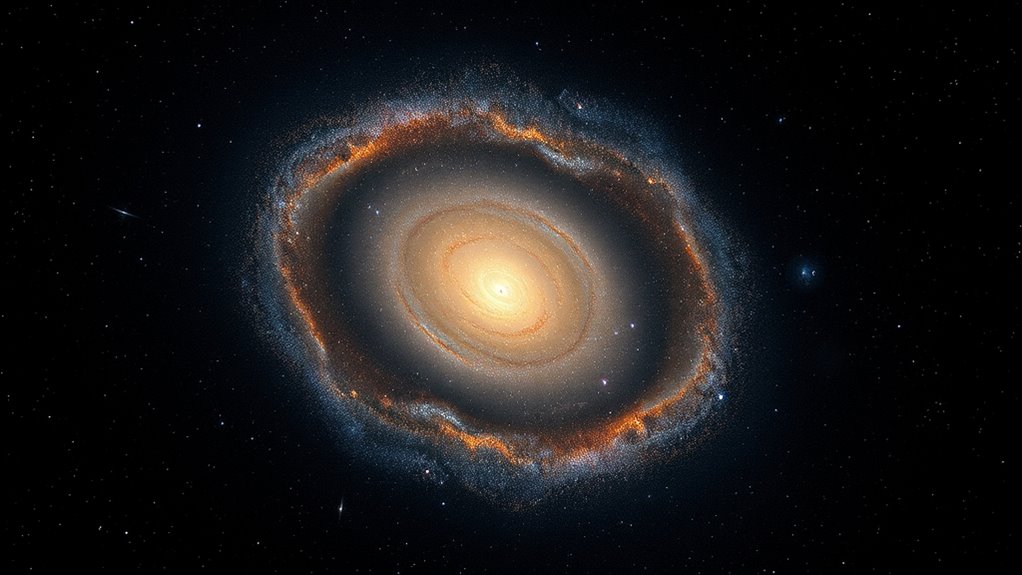

Autumn offers excellent conditions for imaging the Triangulum Galaxy (M33). Clear, crisp skies, cooler temperatures, and longer nights give you the perfect environment to capture more detailed and sharper images. Stable atmospheric conditions reduce turbulence, while lower humidity minimizes haze and boosts contrast. Long exposure times become more effective, letting you reveal faint nebulae and star clusters. To maximize your results, learn how these ideal conditions can help you achieve stunning astrophotos throughout the season.
Key Takeaways
- Clear, cool autumn nights reduce atmospheric turbulence, enhancing image sharpness and detail when photographing M33.
- Longer nights provide extended exposure opportunities to capture faint structures and star clusters in the galaxy.
- Lower humidity minimizes haze, increasing contrast and revealing intricate features of M33’s spiral arms and nebulae.
- Stable atmospheric conditions improve focus accuracy and image clarity during long astrophotography sessions.
- Cooler temperatures help prevent equipment overheating, ensuring consistent performance for detailed astrophotography of M33.
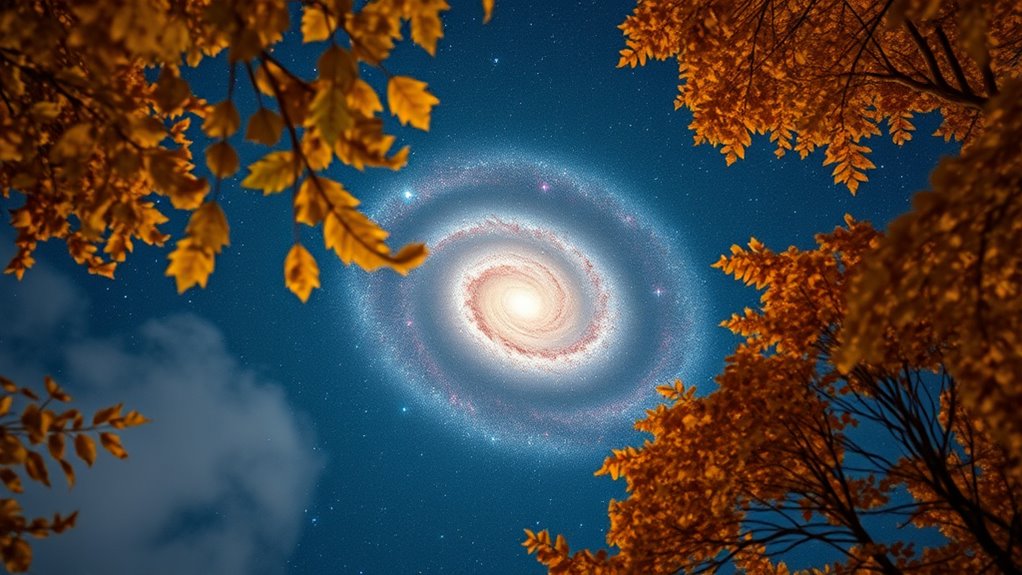
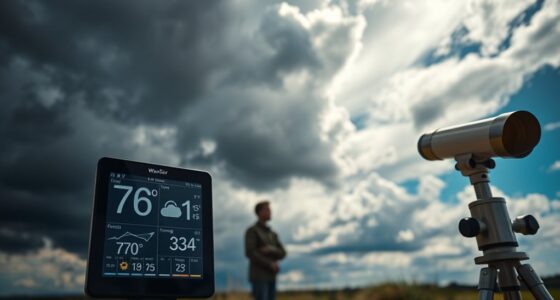
Have you ever wondered why autumn is the perfect time to capture stunning images of the Triangulum Galaxy? The answer lies in the combination of clear skies, cooler temperatures, and longer nights, which create ideal conditions for astrophotography. When you set out to photograph M33 during this season, you’ll notice that the reduced atmospheric turbulence and lower humidity improve your chances of capturing sharp, detailed images. Autumn’s crisp air minimizes the distortion caused by heat waves, allowing your telescope or camera to focus more precisely on distant celestial objects. Plus, the extended night hours give you more time to experiment with different exposure settings and compositions.
Autumn’s clear, cool nights enhance astrophotography of the Triangulum Galaxy with sharper, more detailed images.
As you point your telescope towards the Triangulum Galaxy, you’ll want to pay special attention to its vibrant star clusters and nebula regions. These features highlight the galaxy’s rich stellar composition and give your images a dynamic, textured appearance. Star clusters within M33 are especially prominent in autumn images because the cooler, darker skies make their individual stars stand out more clearly. These clusters often appear as bright, concentrated points of light scattered across the galaxy’s spiral arms, offering excellent subjects for detailed astrophotography. Capturing these star groups requires precise focus and longer exposures, which are easier to manage during the stable, clear nights typical of autumn.
Nebula regions in M33 add another layer of complexity and beauty to your images. While these nebulae are faint and require sensitive equipment, autumn conditions help improve their visibility. The reduced atmospheric interference means your camera can better detect the faint emissions from nebula regions, especially with narrowband filters that isolate specific wavelengths of light emitted by ionized gases. These nebulae often appear as subtle, wispy structures nestled within the galaxy’s spiral arms, contrasting beautifully against the backdrop of stars. When you carefully frame these regions, you’ll reveal intricate details that make your images compelling and unique.
Autumn nights also tend to be less humid, which means less moisture in the air to scatter light and create haze. This clarity enhances the contrast and sharpness of your astrophotos, making features like star clusters and nebula regions pop with more detail. Additionally, the cooler temperatures help prevent equipment from overheating during long exposures, ensuring your gear remains stable and your images remain crisp. With the right planning, patience, and equipment, autumn provides the perfect window to capture the Triangulum Galaxy’s stunning features, revealing the intricate interplay of stars, gas, and dust that make M33 such a mesmerizing target for astrophotographers.
Top picks for "imag triangulum galaxy"
Open Amazon search results for this keyword.
As an affiliate, we earn on qualifying purchases.
Frequently Asked Questions
What Is the Best Time of Night for Observing M33 in Autumn?
You should observe M33 in the late evening, around midnight, when the moon phase is new or crescent, minimizing its brightness. This timing reduces light pollution and enhances visibility. Avoid nights with a full moon, as its glow can wash out faint details of the galaxy. Clear, dark skies are essential, so check local light pollution levels and aim for a moonless night for the best view of M33.
Which Telescope Aperture Is Needed for Detailed Images of M33?
You’ll need a telescope with at least a 6-inch aperture to capture detailed images of M33. A larger aperture improves image resolution, revealing more structure and finer details within the galaxy. The increased light-gathering power helps you see features like spiral arms and star clusters clearly. For the best results, use a high-quality, well-collimated telescope and stable mount to maximize image resolution and enjoy stunning, detailed views of the Triangulum Galaxy.
Are There Specific Autumn Weather Conditions That Improve Viewing Quality?
Autumn’s clear skies act as a gentle canvas, revealing the universe’s secrets. During this season, atmospheric stability and crisp air enhance sky clarity, making your stargazing experience brighter and sharper. Calm, cool nights reduce turbulence, allowing light from M33 to reach your telescope with minimal distortion. So, if you want your images to shine, aim for nights when autumn’s atmospheric stability turns the sky into your celestial window.
Can Amateur Astronomers Capture Images of M33 Without Advanced Equipment?
You can definitely capture images of M33 without advanced equipment by using a smartphone or a basic camera attached to a telescope. While autonomous drones aren’t suitable for planetary imaging, they exemplify innovative tech you could explore for astrophotography. Focus on clear, dark skies, and use long exposure settings to improve your chances. Patience and steady hands will help you get better shots of this beautiful galaxy.
What Are the Common Challenges Faced When Imaging M33 During Autumn?
When imaging M33 in autumn, you face challenges like light pollution, which can wash out faint details, and atmospheric turbulence, causing image distortion. These issues make it harder to capture clear, sharp images. You can combat light pollution by choosing darker observing sites or using filters, and reduce turbulence effects by selecting nights with stable weather conditions. Patience and proper equipment can help you get better results despite these obstacles.
Conclusion
As you gaze upon M33 this autumn, imagine yourself as a cosmic gardener tending a delicate, glowing flower in the vast night. Each star is a petal, shimmering with the promise of new discoveries. Your telescope becomes a magical lens, revealing hidden wonders. Just like nurturing a rare bloom, your patience and curiosity will help you uncover the galaxy’s secrets, making this celestial garden an enchanting masterpiece you’ll cherish forever.