
TL;DR
Open a free Amazon Business account
Business pricing, bulk buying and tax-exempt orders.
Create a free accountAs an affiliate, we earn on qualifying purchases.
A spacecraft upper stage is scheduled to collide with the Moon on August 5, 2026. This event is confirmed by space agencies and raises concerns about space debris management and lunar environment safety.
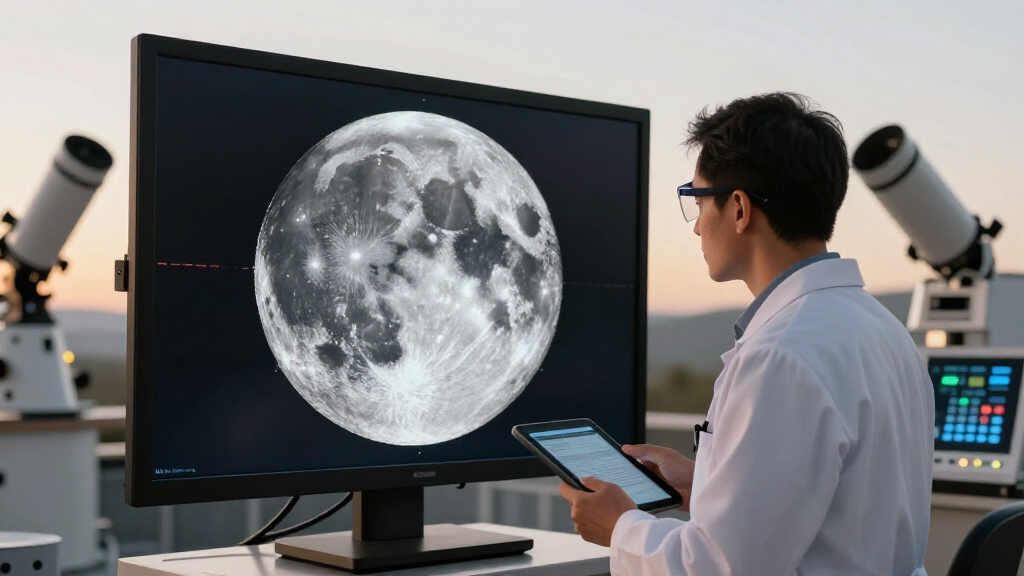
Space agencies have confirmed that an upper stage of a spacecraft will collide with the Moon on August 5, 2026. This planned impact involves a piece of space debris from a previous mission and is part of ongoing efforts to track and manage space objects. The event matters because it highlights issues related to space debris and lunar safety, especially as lunar exploration plans expand.
The upper stage, originating from a past lunar mission, is expected to impact the Moon at approximately 2:30 UTC on August 5, 2026. This information comes from tracking data provided by the European Space Agency (ESA) and NASA, which confirmed the object’s trajectory and predicted collision date. The debris is classified as space junk, and its impact is unlikely to cause significant damage but raises concerns about increasing lunar debris levels.
According to ESA officials, the object was identified during routine tracking of space debris and was determined to be an uncrewed upper stage from a 2014 lunar mission. The agency emphasized that the impact is expected to be a small-scale collision, with no risk to current lunar missions or future crewed activities. However, experts warn that as space activity around the Moon increases, managing debris becomes more critical.
Implications for Lunar Environment and Space Debris Management
This scheduled impact underscores the growing challenge of space debris in lunar orbit and on the Moon’s surface. As nations and private companies plan more missions to the Moon, the accumulation of space junk could pose hazards to both robotic and crewed missions. The event also raises awareness about the need for international guidelines to monitor and mitigate space debris around celestial bodies.
As an affiliate, we earn on qualifying purchases.
Recent Developments in Lunar Space Debris Tracking
Since the 2010s, space agencies have increasingly tracked debris from lunar missions, including spent rocket stages and discarded equipment. The 2014 lunar mission that left the upper stage involved in this upcoming impact was part of a series of robotic explorations aimed at understanding the Moon’s surface. While most debris remains in orbit, some objects re-enter lunar gravity and impact the surface, as confirmed by recent tracking data. This event marks one of the first confirmed planned impacts of space debris on the Moon in recent years, highlighting ongoing challenges in space situational awareness.
“The impact of this upper stage is a controlled, predictable event resulting from routine debris tracking. It does not pose any threat to current lunar activities.”
— ESA spokesperson
As an affiliate, we earn on qualifying purchases.
Uncertainties About Impact Effects and Future Debris
It is not yet clear whether the impact will produce visible debris or cause any surface changes on the Moon. The precise size and composition of the upper stage are also not publicly confirmed, which could influence the impact outcome. Additionally, the long-term effects of debris accumulation on lunar safety remain uncertain as space activity increases.
As an affiliate, we earn on qualifying purchases.
Monitoring and Preparing for the Impact Event
Space agencies will continue to monitor the impact site and debris trajectory until the event occurs on August 5, 2026. Researchers are also calling for more international cooperation to develop debris mitigation strategies for lunar and cislunar space. Post-impact analysis will assess any surface alterations or debris dispersal, informing future policies.
As an affiliate, we earn on qualifying purchases.
Key Questions
Will the impact pose a risk to current lunar missions?
No, officials from ESA and NASA have confirmed that the impact is expected to be small and pose no threat to existing lunar missions or future crewed activities.
Could this impact create dangerous debris on the Moon?
It is unlikely to produce significant debris or hazards; the impact is predicted to be minor. However, it highlights the importance of debris tracking and management for future exploration.
Why is this impact significant for space exploration?
This event demonstrates ongoing challenges with space debris around the Moon and emphasizes the need for international efforts to monitor and mitigate such hazards as lunar exploration expands.
Are there plans to prevent future impacts?
Currently, space agencies focus on tracking and predicting debris impacts. Future strategies may include debris removal or better mission planning to minimize debris generation.
Source: hn
Fall yard work Picks
leaf blowers
As an affiliate, we earn on qualifying purchases.