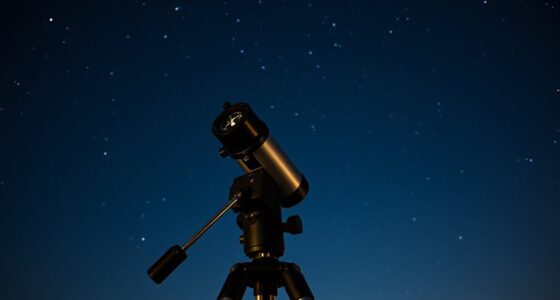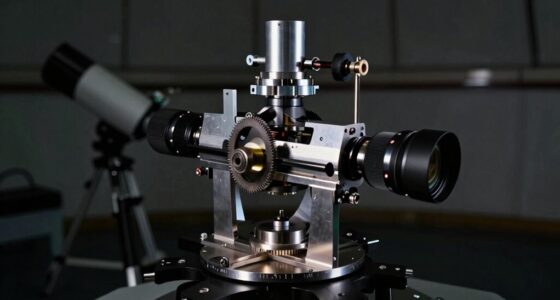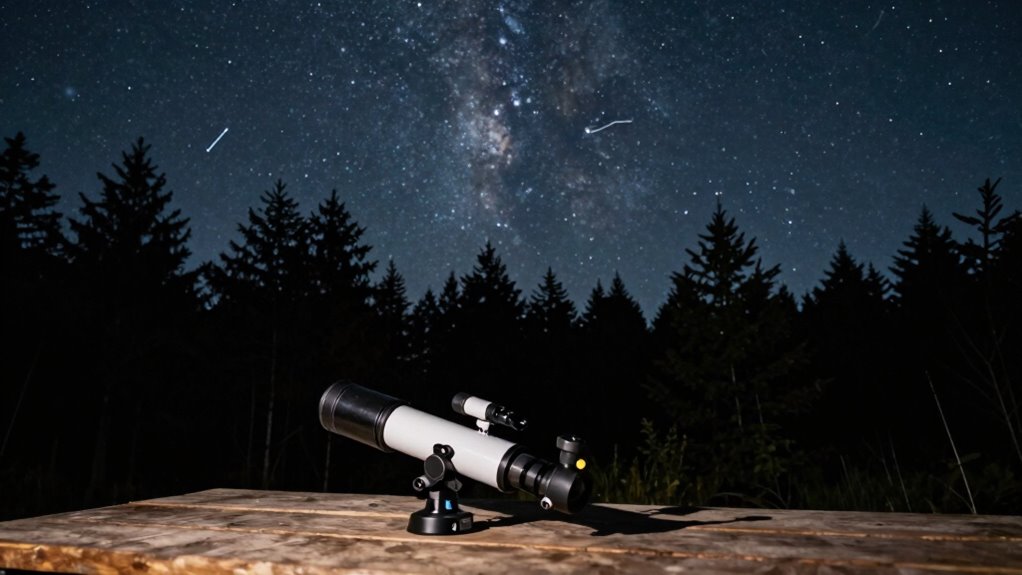

If Polaris is blocked, you can still accurately align your telescope by setting your latitude precisely using an inclinometer or smartphone app. Use bright stars near the celestial pole for manual adjustment, and rely on celestial mechanics like star trail patterns to guide you. Smartphone apps and cameras can help verify your alignment by analyzing star positions. Keep exploring these techniques further to master accurate polar alignment even without Polaris in sight.
Key Takeaways
- Use celestial objects near the pole, like the Big Dipper’s pointer stars, for manual alignment.
- Measure your local latitude and adjust the mount’s tilt accordingly without Polaris.
- Employ star charts or apps to identify bright stars near the celestial pole for accurate pointing.
- Utilize smartphone apps and camera feedback to analyze star patterns and refine alignment.
- Observe star trail symmetry over time to confirm correct polar alignment without Polaris.
smartphone app for polar alignment
As an affiliate, we earn on qualifying purchases.
As an affiliate, we earn on qualifying purchases.
Why Finding the Celestial Pole Matters When Polaris Is Blocked
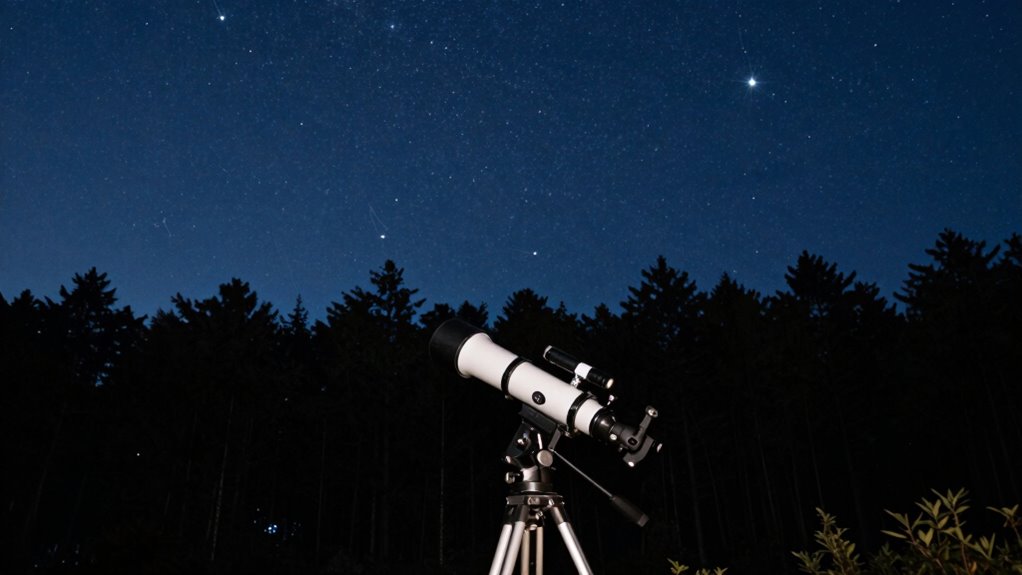
Even if Polaris is blocked from your view, finding the celestial pole remains *vital* for accurate polar alignment. It’s the key point in celestial navigation, helping you orient your telescope or mount precisely. Without a clear view of Polaris, your star trail images can become streaked or misaligned, making it harder to analyze or capture the night sky accurately. Knowing the position of the celestial pole allows you to set your mount’s axis correctly, ensuring smooth tracking of celestial objects. This is especially *essential* if you’re aiming for long-exposure astrophotography or detailed star observation. By understanding where the celestial pole lies, you maintain proper alignment even when Polaris isn’t visible, keeping your star trail images sharp and your telescope precisely pointed. Additionally, exploring performance upgrades can enhance your understanding of various techniques for celestial navigation.
inclinometer for astrophotography
As an affiliate, we earn on qualifying purchases.
As an affiliate, we earn on qualifying purchases.
How to Set Your Latitude and Equipment Without Seeing Polaris
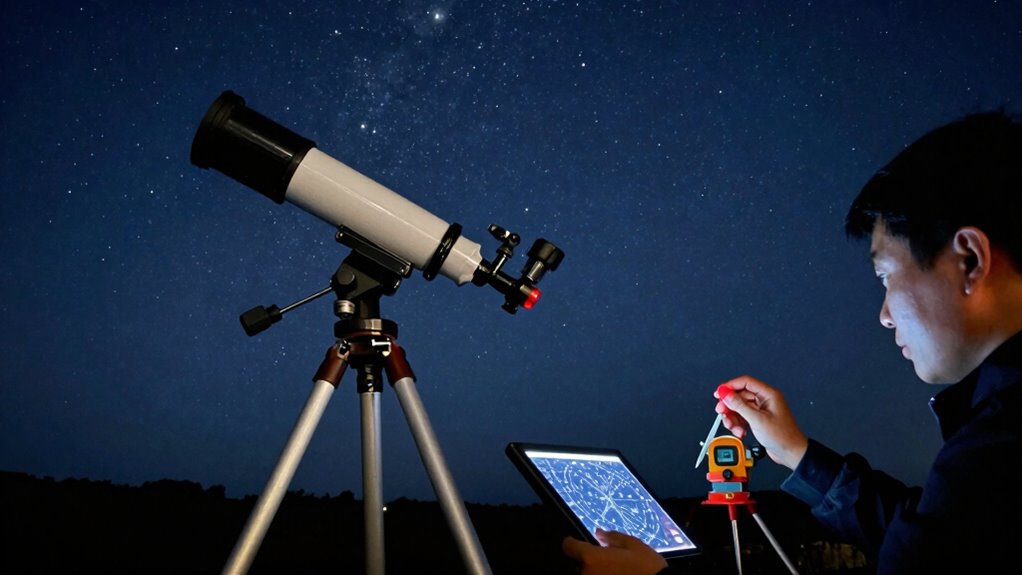
When Polaris isn’t visible, you can still accurately set your latitude and align your equipment through alternative methods. Precise equipment calibration and sky navigation are key. Use your latitude to position your tripod or mount correctly. Measure the angle between the horizon and your local latitude using a simple inclinometer or smartphone app. Additionally, understanding the best woods for farmhouse tables can provide insights into how different materials might affect your equipment’s stability on various terrains. It’s also crucial to consider the importance of protecting delicate skin when choosing a location for outdoor setups, especially in sunny conditions.
| Step | Action |
|---|---|
| 1 | Find your exact latitude at your location. |
| 2 | Adjust your mount’s latitude axis accordingly. |
| 3 | Use known celestial objects for alignment. |

Digital Camera, Full Color Night Vision Star Sky Effect 5k Recording 50x, with Storage Case, for Travel Outdoor Photography Wildlife Tracking Urban Nightscapes and
Ultra HD Photography: Capturse amazing photos with 50MP camera, delivering clear and detailed images with color reproduction. The…
As an affiliate, we earn on qualifying purchases.
As an affiliate, we earn on qualifying purchases.
Using Smartphone Apps and Cameras to Help Polar Align
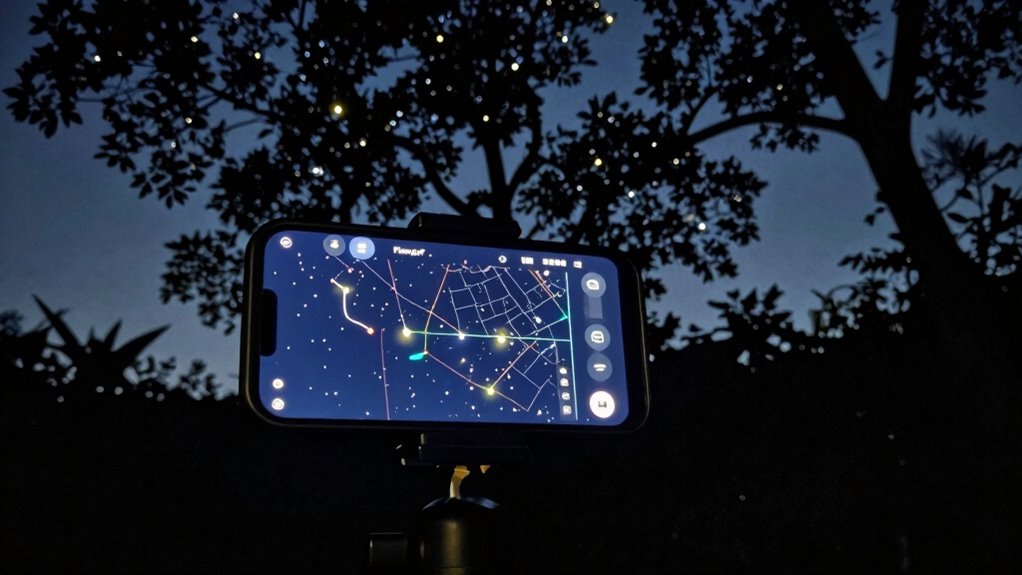
Using smartphone apps and cameras can substantially simplify the process of polar aligning when your view of Polaris is blocked. These tools allow you to verify your equipment’s calibration and aid in precise adjustments. With apps designed for astrophotography and deep sky imaging, you can capture images and analyze star positions to refine your alignment. Cameras attached to your telescope can help identify or mimic the pole position, even without direct sight of Polaris. This approach improves accuracy for deep sky observations and astrophotography.
Smartphone apps and cameras simplify polar alignment when Polaris is blocked, enhancing accuracy for astrophotography and deep sky viewing.
- Use apps to simulate star patterns and confirm proper alignment
- Capture images for detailed star position analysis
- Adjust your mount based on camera feedback for ideal equipment calibration

Celestial Navigation: A Complete Home Study Course, Second Edition
As an affiliate, we earn on qualifying purchases.
As an affiliate, we earn on qualifying purchases.
Star-Alignment Methods When Polaris Is Obstructed
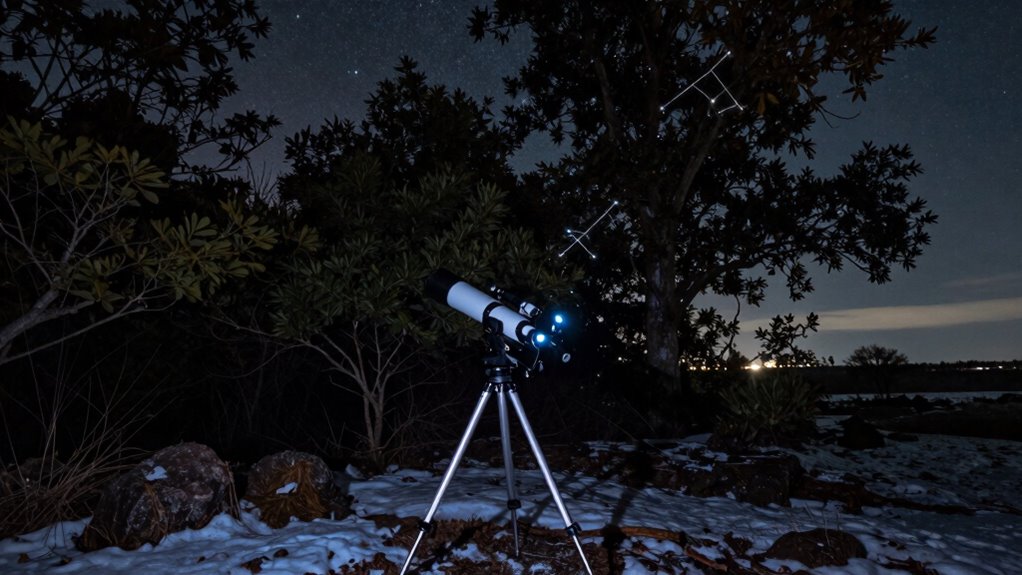
If Polaris is blocked from view, you’ll need alternative star-alignment techniques to guarantee your telescope points accurately. With equatorial mounts, you can use known bright stars near the celestial pole for alignment, even without Polaris in sight. Star tracking becomes essential; by manually aligning your mount to a prominent star, you ensure precise tracking throughout the night. Use star charts or apps to identify nearby stars, then adjust your mount’s azimuth and altitude accordingly. Once aligned with a visible star, the mount’s tracking system will compensate for Earth’s rotation, keeping celestial objects centered. This method relies on accurate initial setup, but it allows you to maintain precise tracking and imaging, even when Polaris remains hidden behind obstructions. To enhance your experience, consider referencing product roundups for telescopes that can help you find the best equipment for your needs. Additionally, proper color accuracy in your setup can significantly improve the visibility of faint stars, enhancing your stargazing experience.
Timing and Celestial Mechanics to Find the Celestial Pole
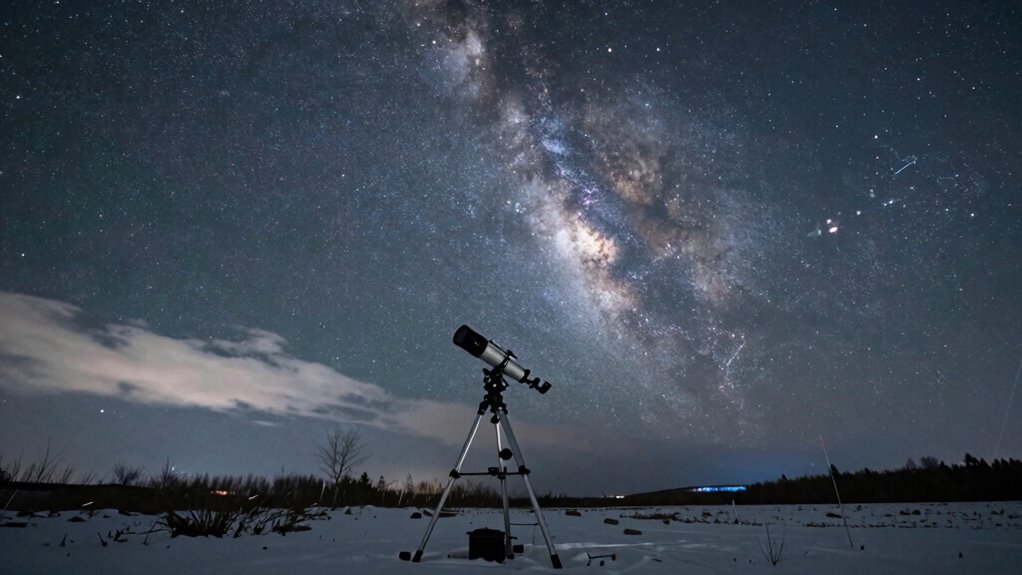
Timing plays a crucial role in locating the celestial pole because Earth’s rotation causes the stars to move predictably across the night sky. By understanding celestial mechanics, you can use star tracking to estimate the pole’s position even if it’s blocked. Precise timing helps you observe star movements relative to specific points in time, making celestial navigation more accurate. To find the pole, you can watch how stars circle around the sky over a set period. Key techniques include:
- Tracking star paths at known times to determine rotational patterns
- Using star trails and their symmetry to pinpoint the celestial pole
- Comparing star positions against celestial charts for quick reference
This approach allows you to align your telescope effectively, even without a direct view of Polaris.
Frequently Asked Questions
Can I Polar Align Without Any Visual Reference to the Celestial Pole?
Yes, you can polar align without visual cues to the celestial pole by relying on celestial navigation tools like a smartphone app or mount with built-in sensors. These tools use algorithms to determine the pole’s position based on your location and time, eliminating the need for visual references. This method allows precise alignment even when the celestial pole is blocked, ensuring your telescope tracks accurately without direct visual cues.
How Accurate Are Alternative Methods Compared to Direct Polaris Alignment?
Alternative methods like drift alignment or using calibration techniques offer good accuracy, but they generally aren’t as precise as direct Polaris alignment. Visual accuracy depends on your skill and patience, while calibration techniques, such as software-assisted adjustments, improve precision. You might find these methods suitable for casual astrophotography, but for high-precision work, direct Polaris alignment remains the most reliable.
What Are Common Mistakes to Avoid When Aligning Without Polaris?
When aligning without Polaris, avoid common mistakes like neglecting equipment calibration, misjudging celestial navigation, and rushing the process. Guarantee your mount and optical tools are correctly calibrated to prevent errors. Take your time to accurately identify celestial objects, double-check your measurements, and maintain steady positioning. By focusing on precise equipment setup and careful celestial navigation, you can achieve reliable alignment even when Polaris is blocked.
Do I Need Special Equipment for Star-Based Alignment Methods?
You don’t need special equipment for star-based alignment methods if you already have an equatorial mount with a reliable star tracking system. These mounts are designed to follow stars precisely, making alignment easier even without Polaris. Just make certain your mount’s settings are accurate, and use a star chart or app to identify suitable stars for alignment. No extra gadgets are necessary, but a good star map can improve your success.
How Does Local Horizon Obstruction Affect Alternative Polar Alignment Techniques?
Local horizon obstruction can challenge alternative polar alignment techniques by limiting horizon visibility, making it harder to identify celestial landmarks. To navigate obstructions, you’ll need to use tools like a compass, inclinometer, or smartphone apps for obstruction navigation. These help you estimate the celestial pole’s position without relying solely on the horizon. Adjust your mount carefully, and consider identifying nearby bright stars or using drift alignment to improve accuracy despite horizon limitations.
Conclusion
Even when Polaris hides behind an obstacle, you can still master your telescope’s alignment. Think of the celestial pole as a lighthouse guiding your journey through the night sky—its light isn’t always visible, but its position remains constant. By using your tools and understanding celestial mechanics, you’ll keep your stargazing steady and true. Remember, the universe’s secrets are there for the taking, even when the star you seek is just out of sight.