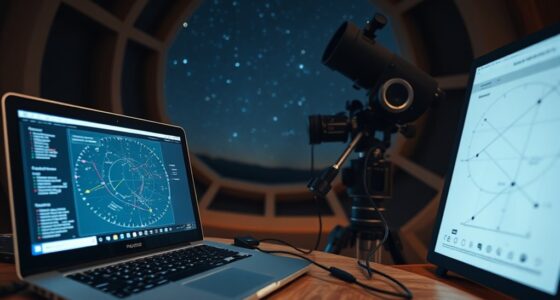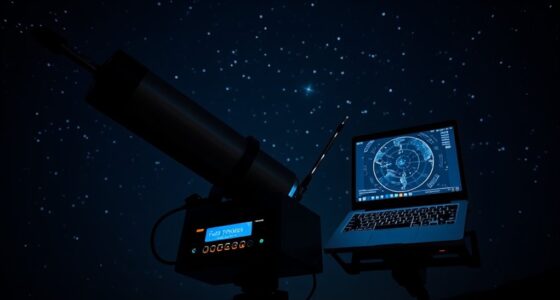

When your polar misalignment occurs, your telescope doesn’t track stars accurately, causing unwanted field rotation during astrophotography. This misalignment makes stars appear to drift or spin within your images, especially during long exposures. Even small errors can considerably reduce image sharpness and detail. To prevent this, precise polar alignment is essential for minimizing field rotation. Keep exploring to discover effective tips that can help you improve your alignment for better astrophotography results.
Key Takeaways
- Polar misalignment causes unintended field rotation during long exposures, leading to star trails and blurred images.
- It reduces tracking accuracy, making celestial objects appear to drift or rotate within the frame.
- Even slight misalignments significantly increase field rotation effects over extended imaging sessions.
- Proper polar alignment minimizes field rotation, enabling longer exposures and sharper deep-sky astrophotography.
- Regular alignment checks help maintain minimal field rotation, improving overall image clarity and tracking performance.

Polar misalignment can considerably impact your astrophotography by causing unintended field rotation during long exposures. When your mount isn’t accurately aligned with the celestial pole, it leads to polar alignment errors that directly affect your image quality. These errors make tracking objects across the sky less precise, resulting in tracking inaccuracies. As a result, stars and other celestial objects appear to drift or rotate in your images, especially during extended exposures. This rotation blurs details and diminishes the clarity of your astrophotographs, making it difficult to capture sharp, detailed images of deep-sky objects.
Even minor polar misalignments can cause noticeable effects over time. When your mount isn’t correctly aligned, the tracking system struggles to follow the apparent motion of stars accurately. Instead of smoothly tracking the objects, the mount may lag or drift, introducing field rotation. This rotation causes the objects in your images to appear as if they’re spinning around the center of the frame. Over longer exposures, this rotation becomes more pronounced, degrading the overall quality of your astrophotography. It’s essential to understand that polar alignment errors aren’t just about pointing the mount roughly at the celestial pole; they require precise adjustments to minimize tracking inaccuracies.
Even small polar misalignments cause star trails and image degradation during long exposures.
Tracking inaccuracies due to poor polar alignment can also lead to elongated star trails, which compromise the sharpness of your images. While some astrophotographers accept slight imperfections and use post-processing techniques to correct minor rotations, significant misalignments make it nearly impossible to produce high-quality results without re-alignment. Proper polar alignment ensures that your mount’s tracking is as accurate as possible, drastically reducing the effects of field rotation. When your polar alignment is spot on, your mount can follow the sky’s movement smoothly, allowing you to take longer exposures without the stars trailing or spinning.
To avoid these issues, it’s vital to regularly check and calibrate your polar alignment. Using tools like polar scopes or software-assisted alignment can help you achieve better accuracy. Remember, even slight improvements in polar alignment can greatly reduce tracking inaccuracies and mitigate the effects of field rotation. By paying close attention to your mount’s alignment, you’ll improve your tracking precision, resulting in clearer, sharper images and more successful astrophotography sessions. Ultimately, minimizing polar alignment errors is essential for capturing the universe in stunning detail, free from the distortions caused by field rotation.

Sky-Watcher Star Adventurer Mini – Motorized DSLR Night Sky Tracking Mount For Nightscapes, Time-lapse, and Panoramas
PORTABLE NIGHTSCAPE TRACKING PLATFORM: Motorized portable nightscape tracking platform perfect for capturing incredible detail of the Milky Way,...
As an affiliate, we earn on qualifying purchases.
Frequently Asked Questions
How Can Polar Misalignment Be Precisely Measured?
You can accurately measure polar misalignment using polar alignment techniques like drift alignment or using a polar scope. These methods help you identify misalignment by observing star movement or reticle markings. Misalignment measurement involves adjusting your mount until stars stay fixed in the field. Regularly checking with these techniques ensures precise alignment, reducing tracking errors and improving image quality during astrophotography.
What Are the Long-Term Effects of Misalignment?
If you don’t correct polar misalignment, you’ll notice long-term effects like polar drift, where stars slowly shift from their expected positions, and tracking errors that worsen over time. These issues cause your astrophotography to become blurry or streaked, reducing image quality. Regularly aligning your mount minimizes tracking errors and prevents polar drift, ensuring your equipment captures sharp, accurate images without long-term degradation.
Can Field Rotation Be Corrected After Initial Setup?
Yes, you can correct field rotation after initial setup by fine-tuning your polar alignment. When you notice field rotation, adjust your mount’s polar axis to improve alignment. Using software or manual adjustments, you can minimize the rotation, ensuring your images stay sharp and centered. Regularly checking and refining your polar alignment helps maintain proper tracking, reducing field rotation and improving overall imaging quality during your astrophotography sessions.
How Does Misalignment Affect Astrophotography Quality?
Misalignment affects your astrophotography quality by reducing mount alignment and tracking accuracy. When your mount isn’t properly aligned, star trails grow longer, details blur, and image sharpness diminishes. You’ll notice increased need for post-processing corrections, more frustration during captures, and limited ability to photograph faint objects. Ensuring precise mount alignment and maintaining tracking accuracy are essential to capturing clear, detailed astrophotos and minimizing the negative impact of misalignment.
Are There Specific Tools to Minimize Polar Misalignment?
You can use tools like polar scopes and drift alignment methods to minimize polar misalignment. These tools help you achieve precise polar alignment, which improves star tracking and reduces field rotation during astrophotography. Many mounts come with built-in polar finders, and software-assisted alignments can also enhance accuracy. Regularly checking and adjusting your polar alignment guarantees better image quality and smoother star tracking throughout your imaging sessions.
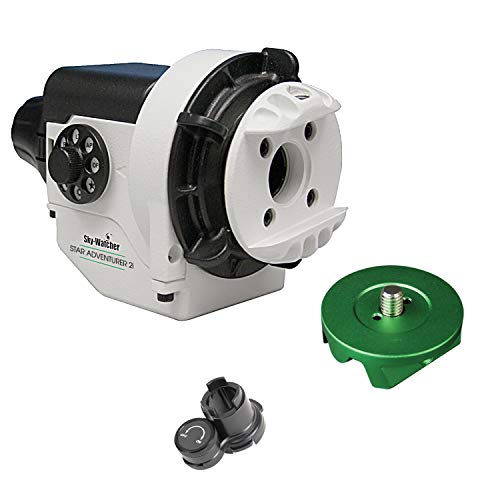
Sky-Watcher Star Adventurer Photo Kit – Motorized DSLR Night Sky Tracking Mount For Nightscapes, Time-lapse, and Panoramas
NEW FEATURES: The new, upgraded Star Adventurer 2i includes Wi-Fi, allowing for smartphone control using Sky-Watcher’s free SAM...
As an affiliate, we earn on qualifying purchases.
Conclusion
Understanding how polar misalignment affects field rotation reveals the delicate dance between precision and performance. If you ignore these effects, it’s like sailing without a compass—your observations drift aimlessly. By carefully adjusting for misalignment, you regain control over your imaging, ensuring clarity and accuracy. Remember, even the tiniest misstep can unravel your entire observation. So, align with purpose, and let your telescope’s true potential shine—because in astronomy, every degree counts.
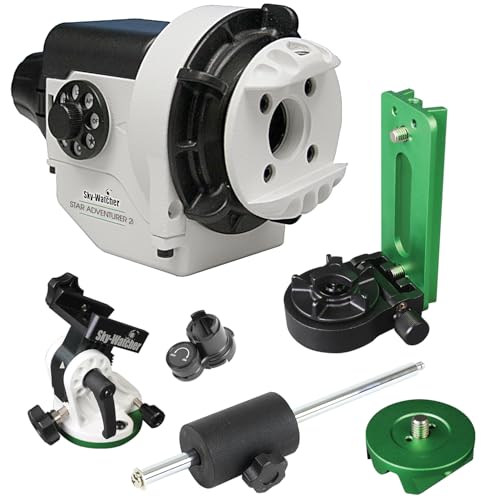
Sky-Watcher Star Adventurer 2i Pro Pack – Motorized DSLR Night Sky Tracker Equatorial Mount for Portable Nightscapes, Time-Lapse and Panoramas – Wi-Fi App Camera Control – Long Exposure (S20512)
Portable nightscape tracking platform: Motorized portable tracking platform perfect for capturing incredible detail of the Milky Way, eclipses...
As an affiliate, we earn on qualifying purchases.
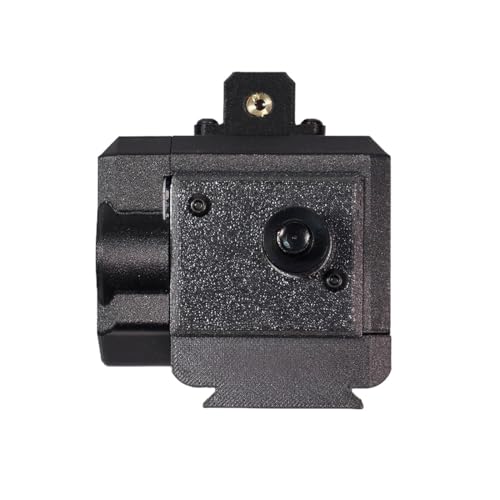
OrionU Star Tracking Equatorial Mount, Portable Single-Axis Star Tracker with High-Precision Alignment Pointer for DSLR & Mirrorless, Suitable for Beginners in Astrophotography (Matte Black)
Reinforced Steel Axis for Stable Tracking: Thick dual-screw steel shaft delivers solid single-axis tracking, supporting 4kg axial loads...
As an affiliate, we earn on qualifying purchases.