Shopping for astronomy telescope accessories usually comes down to one tradeoff: buy a bundled kit for value, or buy individual pieces for quality. After comparing ten popular options, the Celestron 1.25″ Eyepiece, Barlow & Filter Kit stands out as the best overall pick because it covers the widest range of viewing scenarios in one coherent package with reliable optics. If budget leads the decision, the Alstar Plossl eyepiece set delivers surprisingly sharp Plössl glass at a fraction of the branded price, while the SVBONY 68° ultra-wide eyepiece set is the stronger choice for anyone who prioritizes immersive wide-field views over sheer piece count. Note that two entries here (the Celticbird and 70mm refractor bundles) are complete telescopes with accessories included — useful if you’re starting from zero, but not upgrades for an existing scope. Keep reading for the full breakdown of what each option does well, where each one falls short, and which buyer each one suits best.

Prime made for students and young adults
- Fast, free delivery for dorm and study essentials
- Prime Video and Amazon Music included
- Member-only deals
Key Takeaways
- Bundled kits dominated this comparison, but quality varied widely — Celestron‘s kit earned the top spot for consistent optics, while the unbranded 1.25-inch sets traded sharpness for piece count.
- Plössl eyepieces in the 4mm–40mm range proved the best value-per-dollar category in the lineup, with SVBONY‘s 68° ultra-wide set justifying its higher price only for observers who specifically want wide-field views.
- A dedicated moon filter costs very little but delivers one of the biggest practical improvements — glare reduction on bright targets — making the Celestron Moon Filter the easiest recommendation for any existing telescope owner.
- Two products in this roundup are actually full telescopes with accessory bundles (the Celticbird 80mm and the 70mm FMC refractor); they only make sense if you don’t already own a scope.
- The 3x Barlow lenses included in most kits are aggressive for beginners — high magnification amplifies tripod shake and atmospheric blur, so the lower-magnification eyepieces in each kit will see far more actual use.
| Celestron 1.25″ Eyepiece, Barlow & Filter Telescope Accessory Kit |  | Best Overall | Eyepiece sizes: 6mm, 8mm, 13mm, 17mm, 32mm | Barlow lens: 2x | Filters included: Blue, Green, Light Green, Red, Orange, Yellow, Moon | VIEW LATEST PRICE | See Our Full Breakdown |
| Celticbird 80mm Aperture 600mm AZ Mount Refractor Telescope for Adults and Kids |  | Best for Beginners | Aperture: 80mm | Focal Length: 600mm | Mount Type: AZ Mount | VIEW LATEST PRICE | See Our Full Breakdown |
| 1.25-Inch Telescope Eyepiece Set with Barlow and Filters |  | Best Budget Pick | Eyepiece sizes: 4mm, 10mm, 20mm | Barlow lens: 5x | Filters included: 2 moon filters, 2 polarizing filters | VIEW LATEST PRICE | See Our Full Breakdown |
| Celestron Moon Filter for Telescopes – Fits Most 1.25″ Eyepieces |  | Best Single-Accessory Value | Model: 94119-A-CGL | Compatibility: Fits most 1.25″ eyepieces | Weight: 9.07 g | VIEW LATEST PRICE | See Our Full Breakdown |
| SVBONY Telescope Eyepiece 68° Ultra Wide Angle Lenses Set 6mm 9mm 15mm 20mm |  | Best Premium Upgrade | Focal lengths: 6mm, 9mm, 15mm, 20mm | Field of view: 68 degrees | Coating: Fully multi-coated | VIEW LATEST PRICE | See Our Full Breakdown |
| Celticbird Astronomical Telescope Accessory Kit with Eyepieces, Filters, and Barlow Lens |  | Best Starter Accessory Bundle | Eyepieces: 3 Plossl (6mm, 12.5mm, 20mm) | Filters: 4 (Moon, Red, Blue, Yellow) | Barlow Lens: 2X | VIEW LATEST PRICE | See Our Full Breakdown |
| Alstar Telescope Eyepiece Set – 4mm, 10mm, 20mm Plossl 1.25″ Accessory Kit |  | Best Value Eyepiece Trio | Eyepieces: 4mm, 10mm, 20mm Plossl | Barrel Size: 1.25 inches | Apparent Field of View: 50 degrees | VIEW LATEST PRICE | See Our Full Breakdown |
| CelticBird Telescope Accessory Kit – 1.25″ Eyepiece and Filter Set with Carry Case |  | Best Comprehensive Kit | Total Pieces: 13 | Eyepieces: 40mm, 20mm, 12.5mm, 8mm, 6mm Plossl | Filters: Red, Blue, Orange, Green, Yellow, Polarizing, Moon | VIEW LATEST PRICE | See Our Full Breakdown |
| SVBONY 40mm 1.25″ Plossl Telescope Eyepiece with Wide FOV |  | Best Single Low-Power Eyepiece | Focal Length: 40mm | Apparent Field of View: 40 degrees | Barrel Size: 1.25 inches | VIEW LATEST PRICE | See Our Full Breakdown |
| 70mm Aperture FMC Refractor Telescope for Beginners with Phone Adapter and Tripod |  | Best Beginner Telescope with Accessories Included | Aperture: 70mm | Focal Length: 300mm | Magnification: 15x-150x | VIEW LATEST PRICE | See Our Full Breakdown |
| astronomy telescope accessorie | Barlow lens | Eyepieces |
|---|---|---|
| Celestron 1.25" Eyepiece | 2x | — |
| Celticbird 80mm Aperture 600mm | — | 20mm and 9mm (30x and 66x) |
| 1.25-Inch Telescope Eyepiece S | 5x | — |
| Celestron Moon Filter for Tele | — | — |
| SVBONY Telescope Eyepiece 68° | — | — |
| Celticbird Astronomical Telesc | 2X | 3 Plossl (6mm, 12.5mm, 20mm) |
| Alstar Telescope Eyepiece Set | — | 4mm, 10mm, 20mm Plossl |
| CelticBird Telescope Accessory | 2X | 40mm, 20mm, 12.5mm, 8mm, 6mm Plossl |
| SVBONY 40mm 1.25" Plossl Teles | — | — |
| 70mm Aperture FMC Refractor Te | 3X | 20mm and 6mm |
More Details on Our Top Picks
Celestron 1.25″ Eyepiece, Barlow & Filter Telescope Accessory Kit
This kit stands out as the most complete starter arsenal in the roundup, pairing five fully multicoated Plössl eyepieces with a 2x Barlow and seven filters in a foam-lined metal case. Compared with the 1.25-Inch Eyepiece Set with Barlow and Filters, it doubles the eyepiece count, which translates to finer control over magnification — the practical difference between guessing at a good view and actually dialing one in. The 52-degree apparent field is narrower than the SVBONY 68-degree set’s, so sweeping star fields feel less immersive, but for planetary and lunar work the sharp four-element Plössl design holds its own. The tradeoff is honest: it demands a 1.25-inch focuser and adds filters a casual observer may never touch. Still, as a single purchase that covers years of growth, this pick makes the most sense for most buyers.
Pros:- Five Plössl eyepieces plus a 2x Barlow give a wide, finely spaced magnification range
- Fully multicoated four-element optics deliver strong contrast for the price
- Sturdy foam-lined metal case keeps everything organized and protected
- Seven included filters cover lunar and planetary enhancement scenarios
Cons:- Only compatible with 1.25-inch focusers, excluding 2-inch setups
- Several of the color filters have limited value for casual observers
Best for: Owners of a 1.25-inch focuser telescope who want one purchase to cover planetary, lunar, and deep-sky magnification ranges
Not ideal for: Owners of 2-inch focuser telescopes or anyone wanting digital or electronic accessories — this kit is purely optical
- Eyepiece sizes:6mm, 8mm, 13mm, 17mm, 32mm
- Barlow lens:2x
- Filters included:Blue, Green, Light Green, Red, Orange, Yellow, Moon
- Design:Four-element Plössl, fully multicoated
- Field of view:52 degrees
- Case:Metal, foam-lined
Our verdict“If you want one accessory purchase that keeps paying off for years of lunar and planetary observing, this is the kit to buy.”
Celticbird 80mm Aperture 600mm AZ Mount Refractor Telescope for Adults and Kids
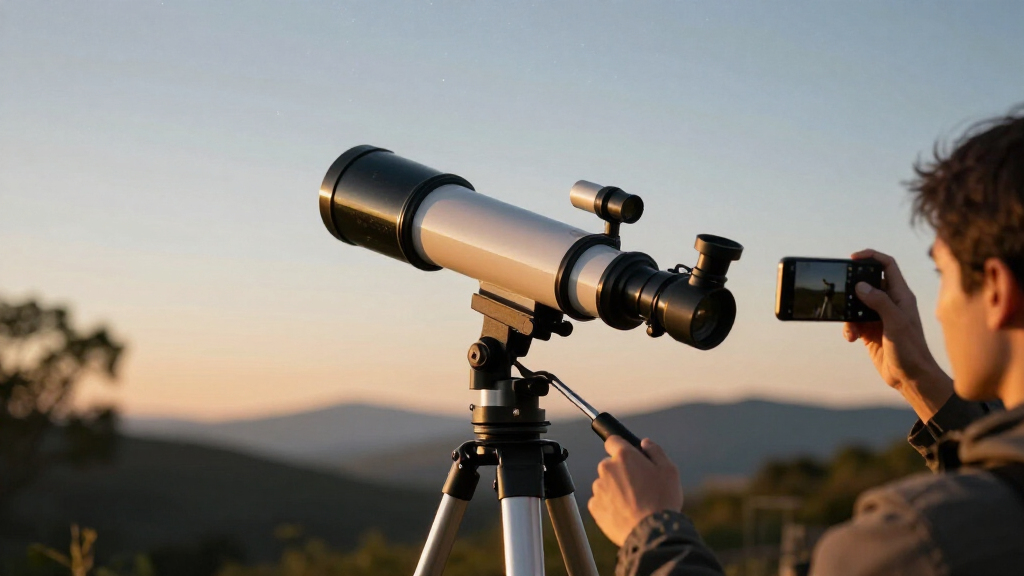
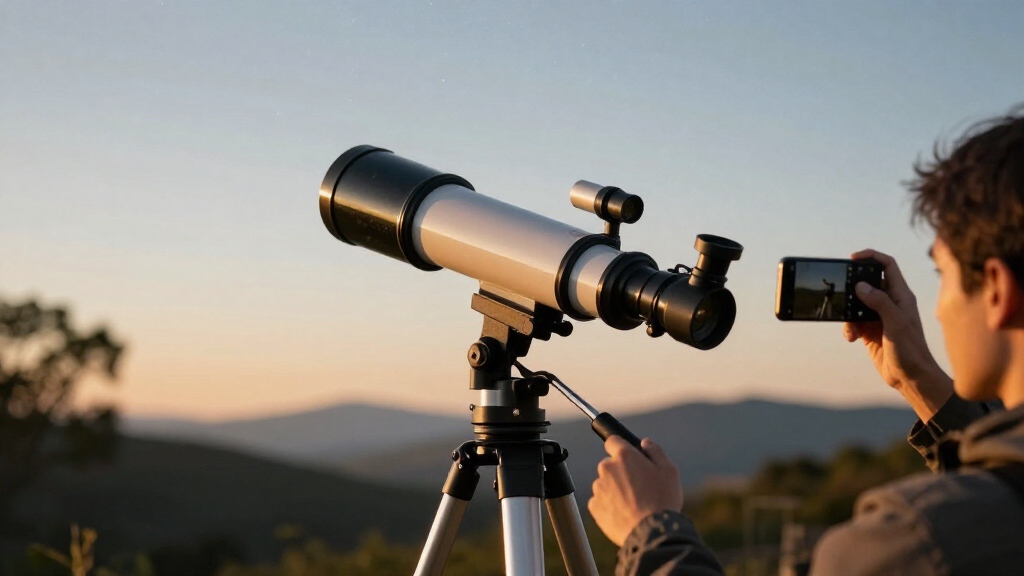
Strictly speaking this is a telescope rather than a pure accessory, but it earns a spot as the turnkey entry point that bundles everything a newcomer needs — eyepieces, moon filter, phone adapter, tripod, and a backpack. The 80mm aperture with fully coated optics punches above its weight for lunar and bright planetary viewing, and at 5.8 pounds it travels far more easily than most starter scopes. Compared with the 70mm Aperture FMC Refractor for Beginners, the extra 10mm of aperture buys noticeably brighter images of fainter targets. The tradeoff is ceiling: 30x to 66x magnification means Saturn’s rings are visible but small, and the lightweight tripod wobbles in wind. For a family testing whether astronomy sticks before investing in eyepiece kits like the Celestron Accessory Kit, this option is better suited to the job than anything else here.
Pros:- Fully coated 80mm optics produce bright, clear lunar and planetary images
- Everything included: tripod, backpack, phone adapter, and moon filter
- At 5.8 pounds it is genuinely portable for travel and camping
- Simple assembly suitable for kids with adult help
Cons:- Magnification tops out at 66x, limiting views of planets
- Lightweight tripod lacks stability in wind or at high powers
- Included setup instructions are thin for true beginners
Best for: Families and first-time astronomers who want a complete, portable setup in one box before committing to pricier gear
Not ideal for: Observers chasing high-magnification planetary detail — the modest magnification range and light tripod cap performance
- Aperture:80mm
- Focal Length:600mm
- Mount Type:AZ Mount
- Eyepieces:20mm and 9mm (30x and 66x)
- Finderscope:5×24
- Weight:5.8 pounds
- Included Accessories:Phone Adapter, Moon Filter, Backpack, Tripod
Our verdict“The right pick if you’re starting from zero and want a portable, all-in-one scope to learn on before buying accessories separately.”
1.25-Inch Telescope Eyepiece Set with Barlow and Filters
This set is the low-cost way to expand a basic telescope, covering the essential focal lengths (4mm, 10mm, 20mm), a 5x Barlow, and four filters for far less than the Celestron Accessory Kit. The soft eyecups are a nice comfort touch the Celestron kit doesn’t offer, making longer sessions easier on glasses wearers. But the differences matter: three eyepieces instead of five means coarser jumps between magnifications, the 5x Barlow is aggressive — it often pushes magnification past what small telescopes can resolve, producing blurry results — and there’s no carrying case, so pieces will drift loose in a bag. Compared with the Alstar Eyepiece Set, the included polarizing filters are a genuine plus for adjusting brightness. For a tight budget or a second telescope at a vacation home, this option makes sense; for a primary setup, spend up for the Celestron.
Pros:- Three focal lengths cover low, medium, and high magnification basics
- Two polarizing filters allow adjustable brightness reduction
- Soft eyecups improve comfort during long sessions
- Works with both reflector and refractor telescopes
Cons:- 5x Barlow often produces unusably high magnification on modest scopes
- No carrying case or storage included
- Only three eyepieces means large gaps between magnification steps
Best for: Budget-conscious beginners or owners of a secondary scope who want magnification variety for under the price of a premium kit
Not ideal for: Small-aperture telescopes — the 5x Barlow routinely exceeds usable magnification, and the missing case frustrates organized observers
- Eyepiece sizes:4mm, 10mm, 20mm
- Barlow lens:5x
- Filters included:2 moon filters, 2 polarizing filters
- Coating:Multi-coated
- Compatibility:1.25-inch reflectors and refractors
- Dimensions:5″D x 4″W x 5″H
Our verdict“A sensible budget add-on for a spare or starter scope, though serious observers should pay more for finer magnification spacing.”
Celestron Moon Filter for Telescopes – Fits Most 1.25″ Eyepieces
Sometimes the smartest accessory purchase is the smallest one. A moon filter does one job — cutting lunar glare so the full moon stops washing out surface detail — and this Celestron unit does it cleanly for a few dollars, with a 2-year warranty behind it. Both the Celestron Accessory Kit and the 1.25-Inch Eyepiece Set already include moon filters, so this pick is aimed at people who bought bare-bones scopes like the Celticbird 80mm and found the glare unwatchable. It also improves contrast for bright planets and even snowy terrestrial scenes, which most buyers don’t expect. The tradeoff is that it’s a single-purpose 1.25-inch thread — owners of 2-inch eyepieces or proprietary barrels are out of luck, and it does nothing for deep-sky viewing. As a first, cheap upgrade that transforms the single most-viewed object in the sky, nothing else in this roundup delivers more impact per dollar.
Pros:- Dramatically reduces lunar glare and reveals fainter surface details
- Threads easily onto nearly any 1.25-inch eyepiece
- Doubles as a contrast booster for planets and bright terrestrial scenes
- Backed by a 2-year US warranty and support
Cons:- Limited to 1.25-inch eyepieces only
- Single-function accessory with no other use for deep-sky targets
Best for: Owners of a basic 1.25-inch telescope who mainly view the moon and need glare control without buying a full kit
Not ideal for: Owners of 2-inch eyepieces or deep-sky-focused observers — this filter adds nothing to faint-object viewing
- Model:94119-A-CGL
- Compatibility:Fits most 1.25″ eyepieces
- Weight:9.07 g
- Quantity:1 Moon Filter
- Warranty:2-year US warranty
Our verdict“If your telescope came with nothing and you mostly look at the moon, spend the few dollars here before anything else.”
SVBONY Telescope Eyepiece 68° Ultra Wide Angle Lenses Set 6mm 9mm 15mm 20mm
This is the quality upgrade for observers outgrowing kit eyepieces. The 68-degree apparent field is the headline: compared with the 52-degree Plössls in the Celestron Accessory Kit, objects stay framed far longer before drifting out of view — a real advantage when manually tracking planets at high power. Fully multi-coated optics deliver sharp, high-contrast images, and the anodized aluminum housings with fold-down rubber eye guards feel like serious gear. The tradeoff is twofold: the four focal lengths (6–20mm) skew toward high magnification, so you’ll still need a long eyepiece like the SVBONY 40mm Plössl for wide-field sweeping, and the small exit pupil at 6mm dims the image for smaller telescopes. There are no filters or case here either — this is purely about optical quality. This pick makes the most sense for someone who already owns filters and wants the view itself to get dramatically better.
Pros:- 68-degree apparent field keeps targets framed far longer than standard 52-degree Plössls
- Fully multi-coated optics produce sharp, high-contrast images
- Four well-spaced focal lengths from low to high power
- Anodized aluminum build with fold-down rubber eye guards
Cons:- No low-power focal length for wide-field scanning — a separate long eyepiece is needed
- Small exit pupil dims views in smaller-aperture telescopes
- No filters, Barlow, or case included at a premium price
Best for: Intermediate observers with 4-inch or larger telescopes who want immersive wide-field views and already own filters and a Barlow
Not ideal for: Small-aperture scope owners — the short focal lengths and small exit pupils will produce dim, difficult images
- Focal lengths:6mm, 9mm, 15mm, 20mm
- Field of view:68 degrees
- Coating:Fully multi-coated
- Barrel size:1.25 inch
- Lens diameter:20mm
- Eye relief:Fold-down rubber eye guards
Our verdict“The best pure optical upgrade in this lineup for observers with enough aperture to exploit short, wide-field eyepieces.”
Celticbird Astronomical Telescope Accessory Kit with Eyepieces, Filters, and Barlow Lens
This kit makes the most sense for someone upgrading a basic scope for the first time. You get three Plossl eyepieces, four filters, and a 2X Barlow in a lockable aluminum case, which covers the lunar, planetary, and bright deep-sky basics without the overwhelm of a larger set. Compared with the CelticBird 13-piece kit, this one trades breadth for simplicity — five fewer filters and two fewer eyepieces, but a less intimidating spread of magnification choices for a newer observer. The tradeoff is real, though: nothing here substitutes for aperture, and if your telescope itself is small, deep-sky targets will stay dim no matter which eyepiece you screw in.
Pros:- Balanced eyepiece spread (6mm, 12.5mm, 20mm) covers low and high magnification
- 2X Barlow doubles your effective eyepiece collection
- Lockable aluminum case keeps everything organized for transport
- Moon filter included out of the box
Cons:- Manual focus throughout — no fine-focus aids included
- Four filters is thin coverage compared with rival kits
- Small parts count means you may outgrow it within a season
Best for: New telescope owners who want a one-purchase upgrade path with filters and a Barlow included
Not ideal for: Deep-sky hunters — the accessory spread can’t compensate for a scope with limited light gathering
- Eyepieces:3 Plossl (6mm, 12.5mm, 20mm)
- Filters:4 (Moon, Red, Blue, Yellow)
- Barlow Lens:2X
- Coating:Multi-coated
- Focus Type:Manual
- Case:Portable lockable aluminum
- Dimensions:4.7″D x 2.8″W x 7.1″H
Our verdict“A sensible first accessory purchase that adds variety without overwhelming a beginner, as long as your telescope has the aperture to match.”
Alstar Telescope Eyepiece Set – 4mm, 10mm, 20mm Plossl 1.25″ Accessory Kit
If you already own filters and just need better glass, this trio is the sharper buy. The fully multi-coated Plossl design and 50-degree apparent field beat the narrower views in cheaper bundles, and the rubber eyeguards make long sessions at the eyepiece noticeably more comfortable than bare metal barrels. Compared with the Celticbird starter kit, you give up the Barlow and every filter — but you gain optical quality where it counts. The 4mm eyepiece is the standout here, delivering genuine high-magnification planetary detail that most budget kits simply can’t reach. Just confirm your focuser accepts 1.25-inch barrels before ordering, because there’s no 2-inch flexibility at this price.
Pros:- 50-degree apparent field is generous for standard Plossls at this price
- Fully multi-coated optics improve contrast on planets and the Moon
- 4mm eyepiece provides true high-magnification lunar and planetary views
- Dust caps and durable build protect the investment
Cons:- 1.25-inch only — no path to 2-inch wide-field viewing
- No filters or Barlow included
- No storage case, so barrels are prone to picking up dust between sessions
Best for: Budget-conscious observers who prioritize eyepiece optics over bundled extras
Not ideal for: Anyone starting from zero — no Barlow, filters, or case means you’ll buy the rest separately
- Eyepieces:4mm, 10mm, 20mm Plossl
- Barrel Size:1.25 inches
- Apparent Field of View:50 degrees
- Optics:Fully multi-coated
- Material:Optical glass with premium plastic housing
- Included Accessories:Dust caps
Our verdict“The pick when you’d rather spend your money on three genuinely good eyepieces than a case full of mediocre accessories.”
CelticBird Telescope Accessory Kit – 1.25″ Eyepiece and Filter Set with Carry Case
This is the most complete package in the roundup: five Plossl eyepieces, seven filters, a 2X Barlow, and a metal case — thirteen pieces that let you dial in magnification and contrast for nearly any target. The polarizing filter alone sets it apart, giving variable glare control on the Moon that fixed filters can’t match. Against the Alstar trio, this kit wins on versatility and loses on refinement — you’re getting more glass, not better glass. The 40mm eyepiece also delivers low-power sweeping views the smaller kits can’t reach. The catch is cognitive load: five eyepieces and seven filters is a lot of decisions for someone still learning the sky, and the weaker color filters do little under light-polluted skies.
Pros:- 13-piece set covers nearly every magnification and filtering scenario
- Polarizing filter offers adjustable lunar glare reduction
- 40mm eyepiece enables low-power, wide-field scanning
- Sturdy metal case survives field transport better than plastic
Cons:- More pieces than a novice can meaningfully use
- Some color filters add little under urban light pollution
- Requires a capable telescope to justify the full spread
Best for: Intermediate hobbyists ready to experiment with magnification and filtration across many targets
Not ideal for: Complete beginners — the sheer number of pieces creates confusion before it creates better views
- Total Pieces:13
- Eyepieces:40mm, 20mm, 12.5mm, 8mm, 6mm Plossl
- Filters:Red, Blue, Orange, Green, Yellow, Polarizing, Moon
- Barlow Lens:2X
- Barrel Size:1.25 inches
- Case:Metal
- Dimensions:7.7″L x 4.3″W
Our verdict“The kit for observers who already know what they’re doing and want every tool in one metal box.”
SVBONY 40mm 1.25″ Plossl Telescope Eyepiece with Wide FOV
Sometimes one well-chosen eyepiece beats a whole kit. This 40mm Plossl is built for wide, low-magnification views — star clusters, the Milky Way, sweeping along the Moon’s terminator — and its fully multi-coated metal barrel feels a class above the plastic-housed eyepieces in the bundled sets. Compared with the 40mm included in the CelticBird 13-piece kit, this standalone unit is the better piece of glass, though its 40-degree apparent field is narrower than a premium wide-angle design. The M28.5 filter thread means you can add a Moon or nebula filter later, which softens the lack of bundled extras. If your collection has no low-power workhorse, this fills that gap cleanly.
Pros:- Fully multi-coated optics deliver clean, high-contrast wide views
- Solid metal construction with fold-down rubber eye guard
- Filter thread accepts standard M28.5 filters
- Plastic case included for a single-eyepiece purchase
Cons:- 40-degree apparent field feels tight next to modern 60-degree-plus designs
- Single focal length with no high-power counterpart
- No filters included
Best for: Observers filling a low-magnification gap in an existing eyepiece collection
Not ideal for: Planetary detail seekers — 40mm produces the lowest magnification in any telescope, useless for tight lunar craters
- Focal Length:40mm
- Apparent Field of View:40 degrees
- Barrel Size:1.25 inches
- Coatings:Fully multi-coated
- Body Material:Metal
- Filter Thread:M28.5 x 0.6
- Included:Plastic carrying case
Our verdict“A focused, quality-first purchase for the observer who needs one reliable low-power eyepiece rather than another box of parts.”
70mm Aperture FMC Refractor Telescope for Beginners with Phone Adapter and Tripod
In a roundup of accessories, this stands out as the all-in-one entry point — the telescope and its accessories arrive together, so nothing gets mismatched. The 70mm aperture and 300mm focal length deliver satisfying lunar and planetary views, and the phone adapter turns first-night successes into shareable photos, something none of the standalone eyepiece kits can offer. Compared with the Celticbird 80mm refractor, the smaller aperture means dimmer deep-sky performance, but the bundled 3X Barlow and two eyepieces keep magnification flexible out of the box. The honest ceiling is around 150x — pushing beyond it in a 70mm instrument mostly magnifies atmospheric blur, so experienced observers will hit its limits quickly.
Pros:- Everything included: tripod, finderscope, eyepieces, Barlow, and phone adapter
- 15x-150x magnification range suits both daytime wildlife and night sky
- Compact and light enough for trips away from city lights
- Phone adapter makes astrophotography accessible on day one
Cons:- 70mm aperture limits faint deep-sky targets
- 150x maximum realistic magnification frustrates serious planetary observers
- Image stability depends heavily on careful tripod setup
Best for: Families and kids getting a first telescope with every needed accessory in one box
Not ideal for: Experienced astronomers — 70mm of aperture caps out on planets and bright deep-sky objects quickly
- Aperture:70mm
- Focal Length:300mm
- Magnification:15x-150x
- Eyepieces:20mm and 6mm
- Barlow Lens:3X
- Finderscope:5×24
- Extras:Phone adapter and sturdy tripod included
Our verdict“The right first telescope for a curious beginner who wants to start observing tonight rather than assembling a kit piece by piece.”
How We Picked
I evaluated each product against four criteria that matter most to telescope owners shopping for accessories. Optical quality relative to price came first, because an accessory that degrades the view is worse than no accessory at all — budget kits with soft or internally reflective optics ranked lower even when they offered more pieces. Versatility across telescope types came second: I favored 1.25″ eyepieces and filters, which fit the vast majority of consumer scopes, over anything mount-specific. Coherence of the package mattered too — a well-chosen set of focal lengths with a sensible Barlow and a moon filter beats a box stuffed with redundant or unusable pieces.
Finally, I weighed who each product is actually for. Complete telescopes were judged as starter packages rather than accessories, which is why they sit lower in a roundup aimed at people upgrading existing equipment. Kits with carrying cases, brass barrels, and multi-coated glass edged out loose collections of generic eyepieces. The ranking reflects a simple hierarchy: broadly useful and well-made first, specialized but excellent second, and cheap-but-uneven third.
Factors to Consider When Choosing Astronomy Telescope Accessories
Before buying any telescope accessory, it helps to understand how the pieces fit together — and where buyers most often waste money.Eyepiece Focal Lengths: Build a Ladder, Not a Pile
The most common mistake new astronomers make is chasing maximum magnification. Magnification equals your telescope’s focal length divided by the eyepiece’s focal length, so a 4mm eyepiece on a 900mm scope produces 225x — far beyond what most nights’ atmospheric conditions or a budget mount can support. What actually improves your viewing is a spread of useful focal lengths: a low-power wide-field eyepiece (25mm–40mm) for finding objects and viewing star clusters, a mid-power piece (10mm–15mm) for the moon and planets, and one high-power option for rare steady nights. A 2x Barlow effectively doubles your set, which is why kits that include one cover more ground per dollar. If a kit contains three eyepieces clustered in the same magnification range, you’re paying for redundancy.
Barrel Size and Filter Thread Compatibility
Nearly every consumer telescope accepts 1.25″ eyepieces, but some larger scopes use 2″ barrels, and adapters only work in one direction. Check your focuser before buying — every kit in this roundup is 1.25″-based, which fits most Schmidt-Cassegrains, refractors, and reflectors sold today. Filters add another compatibility layer: they thread into the bottom of the eyepiece, and thread pitch can vary slightly between manufacturers. Celestron and SVBONY filters thread cleanly into their own and most major-brand eyepieces, while some generic filters cross-thread or sit loose. A moon filter that doesn’t seat properly will vignette your view or fall out when the scope tilts, so brand-name filters are one place where saving a few dollars genuinely isn’t worth it.
Kits vs. Individual Pieces: The Real Math
Bundles look like a bargain until you inventory what you’ll actually use. A typical kit might include five eyepieces, two Barlows, and six colored filters — but colored planetary filters are widely considered obsolete by modern observers, and duplicate eyepieces just take up case space. The smarter approach for many buyers is a small quality kit plus one premium individual eyepiece, rather than a huge kit of mediocre glass. That said, kits win decisively for one audience: brand-new telescope owners who own only the one or two eyepieces that came with their scope. For them, even a modest kit quadruples their magnification options for under $100. The mistake to avoid is buying a second kit when your first one already covers the useful focal lengths.
Apparent Field of View: The Spec Hidden in Plain Sight
Two eyepieces with identical focal lengths can feel completely different depending on their apparent field of view (FOV). Standard Plössls offer around 50°–52°, which is fine for planets but feels like looking through a porthole when you’re sweeping the Milky Way. Ultra-wide designs like SVBONY’s 68° series show noticeably more sky at the same magnification, making objects easier to track — especially on manual mounts without slow-motion controls, where objects drift out of view in seconds at high power. The tradeoff is price and eye relief: wide-field eyepieces cost more per focal length, and shorter focal lengths in any design can be uncomfortable for eyeglass wearers. If you wear glasses, check eye relief specs — anything under 15mm will force you to remove your glasses to see the full field.
When a Telescope Bundle Beats Accessories Alone
There’s a point where buying accessories for a cheap telescope stops making sense. If your current scope has a 60mm–70mm aperture and a shaky mount, a $100 eyepiece set will not fix the fundamental limits — aperture determines how much light you gather, and no accessory changes that. In that situation, a bundle like the Celticbird 80mm refractor with accessories included often represents better spending, because you upgrade the optics and the accessories in one purchase. A rough rule: if your accessory budget exceeds half the cost of a better telescope, put the money toward the telescope instead. Accessories shine when the scope underneath them is already worth investing in — generally 80mm aperture or larger for refractors, 100mm-plus for reflectors.
Build Quality Signals That Predict Longevity
Small construction details separate eyepieces that last a decade from ones that loosen within a year. Look for metal barrels instead of plastic, since plastic barrels wear out where they clamp in the focuser and can introduce flex at high magnification. Multi-coated optics matter more than coating marketing — a single coating layer on one surface does little, while fully multi-coated glass measurably increases contrast and reduces internal reflections that ghost bright objects. Cases, while they seem like filler, actually indicate how seriously a manufacturer treats the product, and they protect eyepiece coatings from the dust and fingerprints that degrade views over time. Finally, heavier eyepieces hold collimation better in focusers; a too-light eyepiece can shift slightly as you focus, which is maddening at 150x.
Frequently Asked Questions
Will these accessory kits fit my telescope?
If your telescope has a 1.25″ focuser — which includes the vast majority of consumer refractors, reflectors, and Schmidt-Cassegrains sold under Celestron, Orion, Sky-Watcher, and Gskyer branding — then yes, every eyepiece, Barlow, and filter in this roundup will fit. The one exception to verify is 2″-only focusers on larger Dobsonians, which need an adapter before they can accept 1.25″ eyepieces. Filters thread into the barrel of the eyepiece rather than the telescope itself, so as long as the eyepieces fit, the filters will too. If your scope came with 1.25″ eyepieces originally, you’re already compatible with everything listed here.
Is it better to buy an accessory kit or individual eyepieces?
Kits make sense if you currently own only the one or two starter eyepieces that shipped with your telescope, because they instantly give you a full range of magnifications for less than the cost of two premium individual eyepieces. Individual purchases win once you know your viewing habits — if you spend most nights on planets, one high-quality 6mm wide-angle eyepiece will outperform three generic short-focal-length kit pieces. The practical middle path many observers take is a mid-priced kit like the Alstar or Celestron set, then adding a single premium wide-field eyepiece later. Avoid stacking multiple kits, since you’ll end up with duplicate focal lengths and colored filters you’ll rarely use.
Do I really need a moon filter?
Yes, and it’s probably the cheapest meaningful upgrade in all of amateur astronomy. The full moon through even a modest telescope is bright enough to wash out surface detail and leave you seeing spots, and a neutral-density moon filter like Celestron’s cuts that glare while preserving contrast in the craters and maria along the terminator. At $15–$20, it delivers more nightly improvement than most accessories costing five times as much. If you observe the moon more than once a month, it should be your first or second accessory purchase, before any additional eyepieces. One filter serves your entire eyepiece collection since it threads into whichever eyepiece you’re using.
Why do my high-magnification eyepieces look blurrier than the low-power ones?
Almost always, the problem isn’t the eyepiece — it’s the atmosphere, your mount, or your telescope’s aperture limit. Turbulence in the upper atmosphere caps useful magnification on most nights to around 150x–200x regardless of equipment, and a shaky mount or imperfect collimation gets magnified along with the image. A 4mm eyepiece or 3x Barlow on a typical starter scope routinely pushes past 200x into permanently soft territory. Use your high-power options only on nights when the stars aren’t twinkling hard, and spend the first half of every session at low power to let your scope cool to outdoor temperature. If planets still look mushy at 100x on a steady night, check your finder alignment and collimation before blaming the glass.
Should I buy a telescope bundle with accessories or upgrade the scope I already own?
If your current telescope is a 60mm–70mm model with a lightweight tripod, a bundle like the Celticbird 80mm refractor usually makes more financial sense, since accessories can’t overcome a small aperture’s light-gathering limit. If you own an 80mm-plus refractor or 100mm-plus reflector on a decent mount, put your money into eyepieces and filters instead — that’s where this roundup’s dedicated accessory picks apply. A useful test: are you happy with the images your current scope produces at low power? If yes, accessories will multiply what it can do. If no, the scope itself is the bottleneck, and no eyepiece kit will change that.
Conclusion
For most telescope owners, the Celestron 1.25″ Eyepiece, Barlow & Filter Kit is the best overall choice — it covers the full useful magnification range with consistent optics and comes from a brand whose filters and threads actually fit the gear you already own. Best value goes to the Alstar Plossl set, which delivers the biggest usable capability jump per dollar for anyone still using only the eyepieces that came with their scope. If you want the premium viewing experience, skip piece count and buy the SVBONY 68° ultra-wide set, possibly paired with the SVBONY 40mm Plössl for low-power sweeping — the wide field transforms manual tracking compared with standard 50° eyepieces.
Beginners starting from zero should look at the telescope bundles: the Celticbird 80mm AZ refractor offers more aperture and included accessories than the 70mm FMC package, though the 70mm is the cheaper entry point for kids and casual family use. For the smallest, smartest single purchase, the Celestron Moon Filter improves every bright-target session for under twenty dollars. Whatever your budget, the pattern from this comparison is clear: fewer, better-chosen pieces beat a crowded case every time.
Fall Picks
fall essentials
As an affiliate, we earn on qualifying purchases.