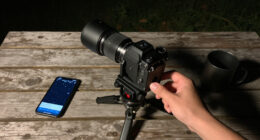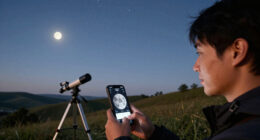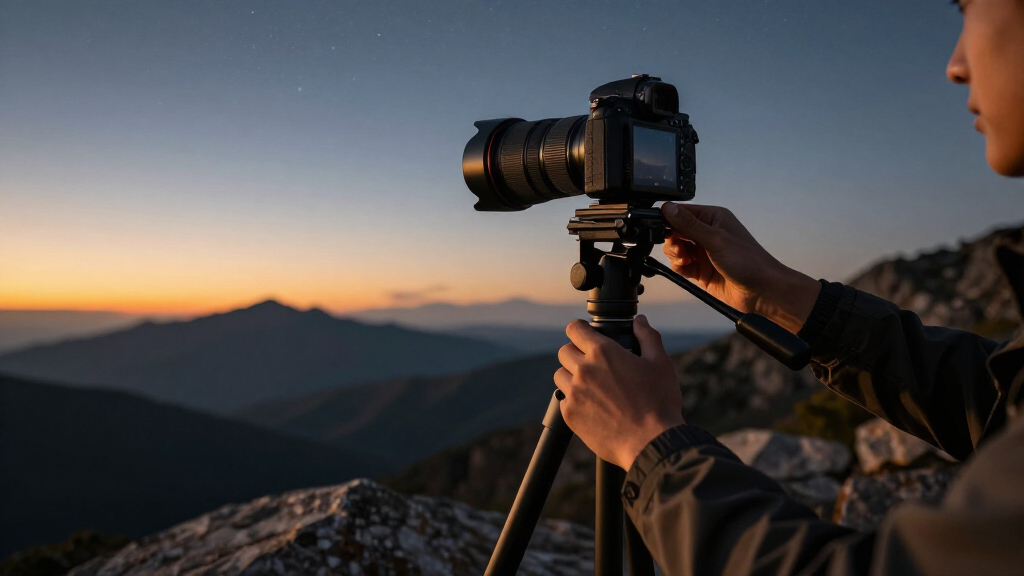

The right astrophotography camera tripod has one job that matters above all else: holding your camera perfectly still through multi-second or multi-minute exposures. After comparing twelve popular models, the SIRUI 47-inch Carbon Fiber Tripod stands out as my best overall pick thanks to its carbon fiber build and 15kg payload, which cancel out the vibration that ruins star shots. For budget-conscious shooters, the NEEWER Basics TP14B delivers surprising rigidity at a low price, while the K&F Concept 76″ Tripod with Ball Head balances height, weight, and versatility for wide Milky Way landscapes. The main tradeoff in this category is straightforward: taller tripods catch more wind, cheaper aluminum legs transmit more vibration, and the beefiest stability usually costs you portability. Keep reading for the full breakdown of all twelve models and which one fits your setup.

Prime made for students and young adults
- Fast, free delivery for dorm and study essentials
- Prime Video and Amazon Music included
- Member-only deals
Key Takeaways
- Payload capacity was the single biggest differentiator: the amazon.com/dp/B07KD2TNMN?tag=astrophotographyhq-20&ascsubtag=dc-1071724″ target=”_blank” rel=”nofollow sponsored noopener”>SIRUI carbon fiber model’s 15kg rating gave it a decisive stability advantage over sub-5kg models like the Amazon Basics 50-inch, which struggled to stay planted on uneven ground.
- Ultra-tall overhead tripods (the NEEWER 90-inch and K&F Concept 90-inch) are tempting for astrophotography because they clear foreground obstacles, but their extended height makes them the most wind-sensitive options in the lineup — a real liability for long exposures.
- Carbon fiber beat aluminum at every price point for night work; if budget forces aluminum, shorter and heavier legs like the K&F Concept 64-inch proved more stable than tall, thin travel designs.
- Convertible monopod tripods (K&F Concept 76″, NEEWER TP14B, and the 72-inch tripod with remote) add versatility but the detaching-leg mechanism introduced slight flex under heavy camera loads.
- Phone-mount tripods like the CAMBOFOTO, VICTIV, and remote-included model are fine for beginner moon shots via a smartphone, but none provide the rigidity needed for dedicated astro cameras or long-lens deep-sky work.
| SIRUI 47-inch Carbon Fiber Camera Tripod |  | Best Overall for Astro Stability | Material: 10x Carbon Fiber | Weight: 2.69 lbs / 1.22 kg | Max Load: 15 kg / 33.1 lbs | VIEW LATEST PRICE | See Our Full Breakdown |
| K&F Concept 76-inch Overhead Camera Tripod |  | Best for Overhead and Multi-Angle Shooting | Extension Boom Arm: Removable, 0 to 180 degrees, 360° rotation | Ball Head: 28mm metal ball, 360-degree panning | Height Range: 17.3”/44cm to 76.7”/195cm | VIEW LATEST PRICE | See Our Full Breakdown |
| K&F CONCEPT 76″ Camera Tripod with Ball Head, Travel Tripod and Monopod |  | Best Value for Beginners | Maximum Height: 76 inches | Monopod Height: 80 inches | Folded Length: 17 inches | VIEW LATEST PRICE | See Our Full Breakdown |
| NEEWER 90 Inch Tall Overhead Horizontal Camera Tripod Monopod, TP63 |  | Best for Heavy Rigs and Tall Framing | Height Range: 25.2 to 90.6 inches | Monopod Height: 22.2 to 94.5 inches | Maximum Load: 22 lbs / 10 kg | VIEW LATEST PRICE | See Our Full Breakdown |
| CAMBOFOTO 74-Inch Camera Tripod with Phone Mount and 360° Pan Head |  | Best Budget Pick for Casual Night-Sky Shooting | Height: 20 to 74 inches | Weight Capacity: 8.8 lbs | Weight: 2.8 lbs | VIEW LATEST PRICE | See Our Full Breakdown |
| Amazon Basics 50-inch Lightweight Portable Camera Tripod Stand with Quick-Release Plate, Adjustable Height, Aluminum, for Travel Photography |  | Best Ultra-Budget Starter Pick | Maximum Height: 50 inches | Weight: 1.23 lbs | Maximum Load: 4.4 pounds | VIEW LATEST PRICE | See Our Full Breakdown |
| K&F CONCEPT 90”/230cm Ultra High Horizontal Overhead Camera Tripod |  | Best for Overhead and Extreme-Angle Setups | Maximum Height: 90 inches / 2.3 m | Folded Size: 21 inches / 54 cm | Weight: 4.4 lbs / 2 kg | VIEW LATEST PRICE | See Our Full Breakdown |
| K&F CONCEPT 75″ Aluminum Camera Tripod, Lightweight and Compact for Travel |  | Best for Smartphone Astrophotography | Maximum Height: 75 inches | Folded Size: 19.6 inches | Weight: 2.6 lbs | VIEW LATEST PRICE | See Our Full Breakdown |
| NEEWER Basics TP14B 72″ Compact Travel Tripod Monopod for Camera |  | Best Hybrid Value | Maximum Height: 72 inches | Folded Length: 17 inches | Weight: 2.9 lbs | VIEW LATEST PRICE | See Our Full Breakdown |
| K&F Concept 64 inch Lightweight Aluminum Travel Camera Tripod |  | Best Balance of Weight and Rigidity | Maximum Height: 64.1 inches / 163 cm | Folded Length: 15.5 inches / 39.5 cm | Weight: 2.53 lbs / 1.15 kg | VIEW LATEST PRICE | See Our Full Breakdown |
| VICTIV 74” Camera Tripod with Phone Holder |  | Best Budget Kit for Phone and Camera Nights | Height Adjustment Range: 19-74 inches | Weight: 3.14 lbs / 1.4 kg | Head Type: 3-way pan head | VIEW LATEST PRICE | See Our Full Breakdown |
| Tripod for Camera and Phone, 72″ Tall Camera Tripod Monopod with Remote |  | Best Hybrid Tripod-Monopod Value | Height Range: 21-72 inches | Weight: 3.3 lbs | Material: Aluminum alloy | VIEW LATEST PRICE | See Our Full Breakdown |
| astrophotography camera tripod | Weight | Material | Maximum Height |
|---|---|---|---|
| SIRUI 47-inch Carbon Fiber Cam | 2.69 lbs / 1.22 kg | 10x Carbon Fiber | 120 cm / 47.2 inch |
| K&F Concept 76-inch Overhead C | 3.63 lbs / 1.65 kg | — | — |
| K&F CONCEPT 76" Camera Tripod | 3.3 lbs | Aluminum | 76 inches |
| NEEWER 90 Inch Tall Overhead H | — | Metal alloy | — |
| CAMBOFOTO 74-Inch Camera Tripo | 2.8 lbs | Aluminum | — |
| Amazon Basics 50-inch Lightwei | 1.23 lbs | Aluminum | 50 inches |
| K&F CONCEPT 90”/230cm Ultra H | 4.4 lbs / 2 kg | Metal | 90 inches / 2.3 m |
| K&F CONCEPT 75" Aluminum Camer | 2.6 lbs | Aluminum (pentagonal tube design) | 75 inches |
| NEEWER Basics TP14B 72" Compac | 2.9 lbs | — | 72 inches |
| K&F Concept 64 inch Lightweigh | 2.53 lbs / 1.15 kg | Aluminum | 64.1 inches / 163 cm |
| VICTIV 74” Camera Tripod with | 3.14 lbs / 1.4 kg | — | — |
| Tripod for Camera and Phone | 3.3 lbs | Aluminum alloy | — |
More Details on Our Top Picks
SIRUI 47-inch Carbon Fiber Camera Tripod
SIRUI’s carbon fiber build is what earns this model the top spot, because carbon dampens vibration better than the aluminum used in the K&F Concept 76-inch travel tripod — and vibration damping is the single most important trait for star trails and long exposures. At 2.69 lbs it is also the lightest full-size option here, which matters when you are hiking to a dark-sky site at 2 a.m. The included steel spike feet are a genuine astrophotography advantage: on loose soil or frost, spikes anchor the legs far better than rubber pads, and no other tripod in this lineup offers them. The tradeoff is the 47-inch maximum height, which is noticeably shorter than the 76-90 inch reach of the NEEWER and K&F models, meaning most shooters will be crouching at the viewfinder. The 33 lb load rating is generous for a camera plus a star tracker, though a big refractor telescope rig will push past it.
Pros:- Carbon fiber construction absorbs vibration better than aluminum for sharp long exposures
- Steel spike feet grip loose or frozen ground where rubber feet slip
- Twist-lock legs deploy quickly in the dark
- Very light at 2.69 lbs for carrying to remote shooting sites
Cons:- 47-inch maximum height is short compared to 76-90 inch rivals, forcing a low shooting posture
- Load ceiling is limiting for professional telescope or heavy lens setups
Best for: Astrophotographers who hike to remote dark-sky locations with a mirrorless or DSLR setup, possibly with a star tracker
Not ideal for: Anyone with a heavy telescope or long telephoto astro rig — the 15kg ceiling and moderate height will feel restrictive
- Material:10x Carbon Fiber
- Weight:2.69 lbs / 1.22 kg
- Max Load:15 kg / 33.1 lbs
- Max Tube Diameter:29.4 mm / 1.16 inch
- Maximum Height:120 cm / 47.2 inch
- Minimum Height:8 cm / 3.2 inch
- Leg Sections:4
Our verdict“If sharp stars and a light pack matter more than working height, this is the tripod to buy for astro work.”
K&F Concept 76-inch Overhead Camera Tripod
What separates this model from the crowd is the removable extension boom arm, which lets you position a camera directly overhead or at angles a standard tripod simply cannot reach — useful for flat-field shots, lunar workspace setups, or documenting gear. Compared with the CAMBOFOTO 74-inch, which only offers a pan/tilt head, this K&F unit gives you far more compositional freedom thanks to the 0-180° boom plus a 28mm metal ball head with 360° panning. The 76.7-inch maximum height is generous for framing wide Milky Way panoramas without craning your neck. The catch: K&F does not disclose the leg material, which is a real concern for astrophotography, since an unknown alloy may transmit more vibration than the SIRUI carbon fiber. There is also no carry case included, so factor that into travel plans.
Pros:- Removable boom arm enables true overhead and extreme-angle framing
- 76.7-inch working height suits tall framing and panorama work
- One-hand flip leg locks make setup fast in low light
- Arca-Swiss compatible quick release system
Cons:- Leg material is undisclosed, making vibration performance uncertain for long exposures
- No carry bag or accessory kit included
Best for: Photographers who need overhead, angled, or multi-position setups alongside standard night-sky framing
Not ideal for: Purists who want verified vibration-damping materials for long exposures — the unspecified build material is a gamble
- Extension Boom Arm:Removable, 0 to 180 degrees, 360° rotation
- Ball Head:28mm metal ball, 360-degree panning
- Height Range:17.3”/44cm to 76.7”/195cm
- Folded Length:15.3”/39cm
- Weight:3.63 lbs / 1.65 kg
- Thread Compatibility:1/4 inch standard, Arca-Swiss quick release
Our verdict“Choose this if shooting-angle versatility matters more to you than guaranteed vibration damping.”
K&F CONCEPT 76″ Camera Tripod with Ball Head, Travel Tripod and Monopod
This is the pick I would point beginners toward, because it bundles nearly everything a starting astrophotographer needs — two quick-release plates, a phone holder, a remote control, and a travel bag — at a price that undercuts most rivals in this roundup. The convertible monopod design (up to 80 inches) gives new shooters a second tool to experiment with as their style develops, something the SIRUI cannot do. Its 17.6 lb load capacity comfortably handles a DSLR with a wide astro lens, though the NEEWER TP63 out-muscles it at 22 lbs for heavier glass. Five-section aluminum legs fold to just 17 inches, but those extra sections are the weakness: thinner lowest leg sections flex more in wind, and on breezy nights exposures can smear. The setup instructions are also reportedly vague, which is frustrating when you are fumbling in the dark.
Pros:- Complete accessory bundle including remote, phone holder, two QR plates, and bag
- Converts to an 80-inch monopod for extra reach and flexibility
- 17-inch folded length is genuinely travel-friendly
- Solid 17.6 lb load capacity for a beginner-tier tripod
Cons:- Five leg sections mean thinner tubes and more flex in wind during long exposures
- Instructions are unclear, complicating first-time setup in the dark
Best for: Beginner astrophotographers on a budget who want a complete starter kit with accessories included
Not ideal for: Windy-site shooters or anyone running heavy telephoto lenses — five leg sections flex and the 17.6 lb ceiling fills up fast
- Maximum Height:76 inches
- Monopod Height:80 inches
- Folded Length:17 inches
- Weight:3.3 lbs
- Load Capacity:17.6 lbs
- Material:Aluminum
- Leg Sections:5
- Included Components:Tripod, phone holder, 2 quick release plates, travel bag, remote control
- Warranty:One year
Our verdict“The most sensible entry point for new astrophotographers who want accessories, value, and room to grow in one box.”
NEEWER 90 Inch Tall Overhead Horizontal Camera Tripod Monopod, TP63
When payload and reach are the priorities, this model leads the pack. The 22 lb load rating is the highest in this batch, and the 90.6-inch maximum height towers over the 74-76 inch CAMBOFOTO and K&F tripods — ideal for shooting over foreground obstacles or framing the Milky Way arch from a stable base. As a monopod it extends to 94.5 inches, and the +90° to -90° tilt with 360° rotation covers vertical and horizontal orientations without re-rigging. The metal alloy build feels planted under a loaded camera in a way lighter aluminum travel tripods do not. Two caveats temper the enthusiasm: NEEWER does not publish the tripod’s own weight, which makes packing calculations guesswork, and the one-year warranty is thin for a professionally oriented tool. Compared with the K&F 76-inch convertible, you trade bundled accessories for raw height and capacity.
Pros:- Highest load rating in this batch at 22 lbs for heavy lenses and trackers
- 90.6-inch height clears foreground obstacles other tripods cannot
- Full 360° rotation with ±90° tilt for vertical and horizontal framing
- Arca-type quick release plate standard
Cons:- Tripod weight is not specified, complicating travel planning
- One-year warranty is short for a pro-oriented support system
Best for: Astrophotographers running heavier telephoto lenses or tracking mounts who need maximum height and a 22 lb payload
Not ideal for: Backcountry hikers — the undisclosed weight likely makes this heavier than the 2.69 lb SIRUI for remote sites
- Height Range:25.2 to 90.6 inches
- Monopod Height:22.2 to 94.5 inches
- Maximum Load:22 lbs / 10 kg
- Material:Metal alloy
- Folded Size:21 inches
- Ball Head:Yes, ±90° tilt, 360° panoramic
- Quick Release Plate:Arca type
Our verdict“The right choice when payload and reach outrank portability for tall, heavy night-sky setups.”
CAMBOFOTO 74-Inch Camera Tripod with Phone Mount and 360° Pan Head
For casual shooters who mostly capture the moon, star clusters with a phone, or entry-level DSLR night shots, this option covers the basics at the lowest complexity and cost. At 2.8 lbs with a carry bag and phone mount included, it undercuts the similarly featured K&F 76-inch convertible on simplicity, though that rival includes a remote and a second quick-release plate. The 8.8 lb weight capacity is the real limitation here — fine for a phone, compact camera, or bare DSLR with a light lens, but a full-frame body plus a fast wide-angle prime plus a tracker will exceed it, and sag at full 74-inch extension will ruin star trails. The 360° pan head works for basic panning but lacks the fine positioning of a true ball head. Some buyers also report a fiddly initial setup process.
Pros:- Very light at 2.8 lbs and includes a carry bag for grab-and-go outings
- Phone mount and 360° pan head cover smartphone and light-camera shooting
- Height range from 20 to 74 inches handles tabletop to full standing setups
Cons:- 8.8 lb load capacity is the lowest here and sags with heavier camera setups
- Pan/tilt head offers less precise positioning than a ball head for framed night shots
- Setup process is reported as confusing by some users
Best for: Casual hobbyists shooting the moon or night sky with a smartphone, GoPro, or entry-level camera
Not ideal for: Owners of full-frame cameras with heavy lenses or star trackers — the 8.8 lb capacity sags under serious astro rigs
- Height:20 to 74 inches
- Weight Capacity:8.8 lbs
- Weight:2.8 lbs
- Material:Aluminum
- Head:360° pan and tilt with phone mount
- Included Components:Camera bag, phone mount
Our verdict“A reasonable budget entry for phone-based and light-camera astrophotography, but upgrade before adding heavy gear.”
Amazon Basics 50-inch Lightweight Portable Camera Tripod Stand with Quick-Release Plate, Adjustable Height, Aluminum, for Travel Photography
At this price, the Amazon Basics 50-inch is less a serious astro support and more a low-risk entry point. The 4.4 lb load limit means it will hold a mirrorless camera with a wide-angle lens for basic night sky shots, but hang anything like a telephoto on it and vibration becomes your enemy — the exact opposite of what long exposures need. Compared with the K&F Concept 64 inch, which carries 17.6 lbs for a modest step up in price, the gap in rigidity is immediately obvious when exposure times stretch past a few seconds. Still, the 1.23 lb weight and bundled bag make it painless to toss in a pack, and the quick-release plate and bubble level teach beginners the fundamentals. This pick makes sense for someone testing whether astrophotography is a hobby worth investing in at all.
Pros:- Extremely cheap entry point for trying astrophotography
- Featherlight at 1.23 lbs with a included carry bag
- Quick-release plate and bubble level teach good setup habits
- Adjustable lever-lock legs are simple for first-timers
Cons:- 4.4 lb load limit rules out most DSLR and lens combos
- Legs flex easily, causing blur in longer exposures
- 50-inch max height forces hunched or low-angle framing
Best for: Beginners with a lightweight mirrorless or compact camera who want to try night sky photography without spending much
Not ideal for: Anyone with a DSLR, long lens, or star tracker — the 4.4 lb capacity and flexy legs will ruin long exposures
- Maximum Height:50 inches
- Weight:1.23 lbs
- Maximum Load:4.4 pounds
- Material:Aluminum
- Collapsed Dimensions:3.3 x 2.9 x 16.9 inches
- Head Type:3-way head
- Included:Tripod with zippered storage bag
Our verdict“Buy this only to test the waters with a light camera — if astrophotography sticks, you will outgrow it within months.”
K&F CONCEPT 90”/230cm Ultra High Horizontal Overhead Camera Tripod
The defining feature here is height: 90 inches of extension paired with legs that tilt 0–180°, which lets you position a camera directly over a telescope eyepiece or shoot straight down for flat-field calibration work. Compared with the NEEWER Basics TP14B at 72 inches, this model buys you nearly a foot and a half more reach plus a 22 lb load capacity that comfortably handles a geared head and a loaded DSLR. The detachable monopod adds a second use case, though for astrophotography specifically the monopod is mostly irrelevant — nobody tracks stars handheld. The real tradeoff is portability: at 4.4 lbs with a 21-inch folded length and a setup process beginners will find fiddly, it demands commitment. The enlarged center column helps stability, but at full extension every tall tripod gets twitchy in wind, so hanging a weight from the hook is smart practice.
Pros:- 90-inch max height enables overhead and extreme low-angle framing
- 22 lb load capacity handles heavy bodies and heads
- 0–180° leg tilt and 360° rotation for creative positioning
- Detachable monopod adds versatility for daytime use
Cons:- Setup complexity will frustrate first-time users
- Heaviest model in this batch at 4.4 lbs
- Stability suffers at full extension without added ballast
Best for: Astro imagers who need serious height and load capacity for overhead rigs, wide sky panoramas, or heavy camera-and-head combinations
Not ideal for: Hikers and travelers counting grams — at 4.4 lbs and 21 inches folded, it’s a car-to-site tripod, not a backpacking one
- Maximum Height:90 inches / 2.3 m
- Folded Size:21 inches / 54 cm
- Weight:4.4 lbs / 2 kg
- Load Capacity:22 lbs / 10 kg
- Material:Metal
- Leg Tilt:0–180° with 360° rotation
- Included:Tripod, monopod, Allen wrench, manual, bag
- Warranty:1 year
Our verdict“This is the pick when your astro workflow demands height and load capacity over portability — skip it if you carry your gear on foot.”
K&F CONCEPT 75″ Aluminum Camera Tripod, Lightweight and Compact for Travel
Plenty of people shoot the Milky Way on a phone now, and this model is the only one in the batch built around that workflow. The bundled phone and tablet holder with a Bluetooth remote means you can trigger a long exposure without touching — and touching — the rig, which matters when a tap is enough to blur a 20-second night frame. Compared with the K&F Concept 64 inch, you get ten more inches of height at a similar 2.5–2.6 lb carry weight, though the 64-inch version is more confident with a dedicated camera on top. The pentagonal aluminum tubes keep things stiff for the class, but the plastic phone mount is the weak link and should be treated gently in cold weather, when plastic gets brittle. For a light mirrorless with a pancake lens it also performs acceptably — it just isn’t the platform for anything heavy.
Pros:- Phone and tablet holder grips devices securely for night shots
- Bluetooth remote enables hands-free shutter triggering
- 75-inch height at only 2.6 lbs is strong for travel
- 360° pan head helps with star trail framing
Cons:- Plastic phone holder feels fragile, especially in cold conditions
- Not built for heavier professional camera setups
- 472-inch remote range falls short for some remote setups
Best for: Phone-first astrophotographers and casual content creators who want a remote-triggered night sky setup
Not ideal for: Users with pro bodies or long lenses — the emphasis on phone accessories means camera load support is an afterthought
- Maximum Height:75 inches
- Folded Size:19.6 inches
- Weight:2.6 lbs
- Material:Aluminum (pentagonal tube design)
- Remote Range:472 inches
- Compatibility:Smartphones and tablets
- Included:Tripod, remote, phone/tablet holder, quick release plates, bag
- Warranty:1 year
Our verdict“If your astrophotography kit lives in your pocket, this is the tripod built for it — camera-first shooters should look elsewhere.”
NEEWER Basics TP14B 72″ Compact Travel Tripod Monopod for Camera
This option stands out for doing two jobs at a mid-tier price: it converts between a 72-inch tripod and a monopod, with a 13.2 lb load rating and a 360° ball head that makes framing the Milky Way or polaris far easier than a three-way head. Compared with the Amazon Basics 50-inch, the difference is night and day — more height, triple the load capacity, and a genuine Arca-type quick-release plate that plays nicely with accessories like L-brackets. Against the K&F Concept 64 inch, you trade a little stiffness and a compact 15.5-inch fold for extra height and the monopod conversion, which daytime shooters will appreciate even if astro work rarely uses it. The 1/4″ Arca plate is the quiet win here, since Arca compatibility opens the door to better plates and rails later. At 2.9 lbs it’s not ultralight, but it earns its weight.
Pros:- Tripod-to-monopod conversion doubles usefulness for the price
- Arca-type quick release plate supports future accessory upgrades
- 13.2 lb capacity covers most consumer DSLR and lens combos
- 360° ball head makes precise sky framing straightforward
Cons:- Slightly heavy for ultra-light travel at 2.9 lbs
- Load ceiling limits heavier professional camera bodies
- Leg material unspecified, making long-term durability a question
Best for: Budget-conscious hobbyists who want one support that handles night sky sessions and daytime monopod shooting
Not ideal for: Ultralight backpackers and owners of heavy pro bodies — 2.9 lbs adds up on trail, and 13.2 lbs caps heavy rigs
- Maximum Height:72 inches
- Folded Length:17 inches
- Weight:2.9 lbs
- Load Capacity:13.2 lbs
- Ball Head Rotation:360°
- Tilt Range:90°
- Quick Release Plate:1/4″ Arca type
- Compatibility:Smartphones, Sony, Canon, Nikon cameras
Our verdict“The best pound-for-pound value in this batch for hobbyists who want flexibility without paying premium prices.”
K&F Concept 64 inch Lightweight Aluminum Travel Camera Tripod
For pure camera-based astrophotography on a budget, this model hits the sweet spot the others circle around. It folds to just 15.5 inches — the most packable in this batch — yet its 36 mm ball head carries 17.6 lbs, enough for a DSLR, a star tracker, and a moderate lens without wobble. Compared with the K&F Concept 75 inch, you give up height but gain a stiffer, more confidence-inspiring platform, since fewer extended sections mean less flex during long exposures. The flip leg locks also set up faster than twist locks in the dark, a small thing that matters when you’re configuring gear by headlamp. The honest limitation is that 64.1 inches of max height forces taller users to stoop, and gusty nights will still demand a weighted hook or lower leg spread. As a do-everything travel astro support at 2.53 lbs, though, this pick makes the most sense for the largest group of buyers.
Pros:- 17.6 lb load capacity supports camera plus tracker plus lens
- Folds to a class-leading 15.5 inches for packing
- Flip locks enable fast setup in the dark
- 36 mm ball head is smoother and stiffer than typical budget heads
Cons:- 64-inch max height forces tall users into a stoop
- Wind stability requires lowering the column or adding ballast
- Four leg sections mean fully extended rigidity is reduced
Best for: Travel-oriented astro imagers who want a stiff, packable platform for a mirrorless or DSLR with a star tracker
Not ideal for: Tall photographers or anyone needing overhead height — 64 inches will feel limiting for both ergonomics and creative angles
- Maximum Height:64.1 inches / 163 cm
- Folded Length:15.5 inches / 39.5 cm
- Weight:2.53 lbs / 1.15 kg
- Load Capacity:17.6 lbs / 8 kg
- Material:Aluminum
- Ball Head Diameter:36 mm
- Leg Sections:4
Our verdict“The most balanced choice here for traveling camera shooters — compact, capable, and stiff enough for real long-exposure work.”
VICTIV 74” Camera Tripod with Phone Holder
Buyers who want to shoot the night sky with either a DSLR or a smartphone usually have to buy separate accessories, but this option bundles both mounting paths into one kit. The included 360° phone holder is the standout here — compared with the CAMBOFOTO 74-Inch, which offers a similar height and pan head, the VICTIV wins on bundled value with its spare quick-release plate and phone clamp. The 74-inch maximum height helps reduce atmospheric ground-haze distortion when framing constellations near the horizon. The tradeoff is stability: at 3.14 lbs spread over a tall frame, long exposures in wind will demand careful leg placement or added weight, and it cannot match the load confidence of the SIRUI carbon fiber model elsewhere in this roundup.
Pros:- Dual mounting for phones and cameras in one kit, rare at this price
- 74-inch height helps avoid ground-level haze when shooting near the horizon
- 3-way pan head with smooth motion suits panoramic star trail composites
- Spare quick-release plate and carrying bag included
Cons:- Light frame flexes in wind, blurring long astrophotography exposures
- 3.14 lbs feels heavy relative to its load capacity for extended hikes to dark-sky sites
Best for: Hobbyists shooting Milky Way panoramas or moon photos with a mix of smartphone and mirrorless camera who want one affordable kit for both
Not ideal for: Long-exposure deep sky shooters using heavy telephoto lenses — the lightweight frame will flex and blur multi-second exposures
- Height Adjustment Range:19-74 inches
- Weight:3.14 lbs / 1.4 kg
- Head Type:3-way pan head
- Camera Mount:1/4″ screw
- Phone Mount:360° rotating phone holder
- Included Accessories:Phone holder, extra quick-release plate, pan head, handle, non-slip pads
Our verdict“This pick makes the most sense for casual astro shooters juggling phone and camera setups who value bundled accessories over rock-solid stability.”
Tripod for Camera and Phone, 72″ Tall Camera Tripod Monopod with Remote
The ability to convert to a monopod in seconds is what separates this model from every fixed-leg tripod in this lineup, including the similarly sized NEEWER Basics TP14B. For astrophotographers, that monopod mode is a genuine asset at star parties or crowded viewpoints where tripod legs get kicked in the dark. The Arca Swiss-compatible mounting plate also gives it an edge over the VICTIV, since it plays nicely with popular astro ball heads and tracking mounts. What it gives up is reach and rigidity: the 72-inch ceiling falls short of the K&F Concept 76-inch models, and the aluminum legs wobble under heavy setups, so this is better paired with a mirrorless camera than a loaded DSLR rig.
Pros:- Converts to a monopod quickly, useful for handheld night work and crowded shooting spots
- Arca Swiss mount compatibility works with popular astro accessories
- Lightweight 3.3 lb aluminum build travels well to remote dark-sky locations
- Flexible height range from 21 to 72 inches covers most framing needs
Cons:- Stability drops noticeably with heavier camera gear, limiting long-exposure work
- 72-inch maximum height is shorter than competing 76- and 90-inch models in this roundup
Best for: Travel-oriented night photographers with mirrorless cameras who split time between tripod astrophotography and handheld monopod shooting
Not ideal for: Shooters running heavy telephoto lenses or star trackers — the aluminum hybrid legs lack the rigidity those setups demand
- Height Range:21-72 inches
- Weight:3.3 lbs
- Material:Aluminum alloy
- Configuration:Convertible tripod and monopod
- Head Type:3-way swivel head
- Mount:Universal Arca Swiss mounting plate
- Included Accessories:Remote control
Our verdict“This option stands out for mobile night photographers who want tripod stability and monopod agility in a single travel-friendly package.”
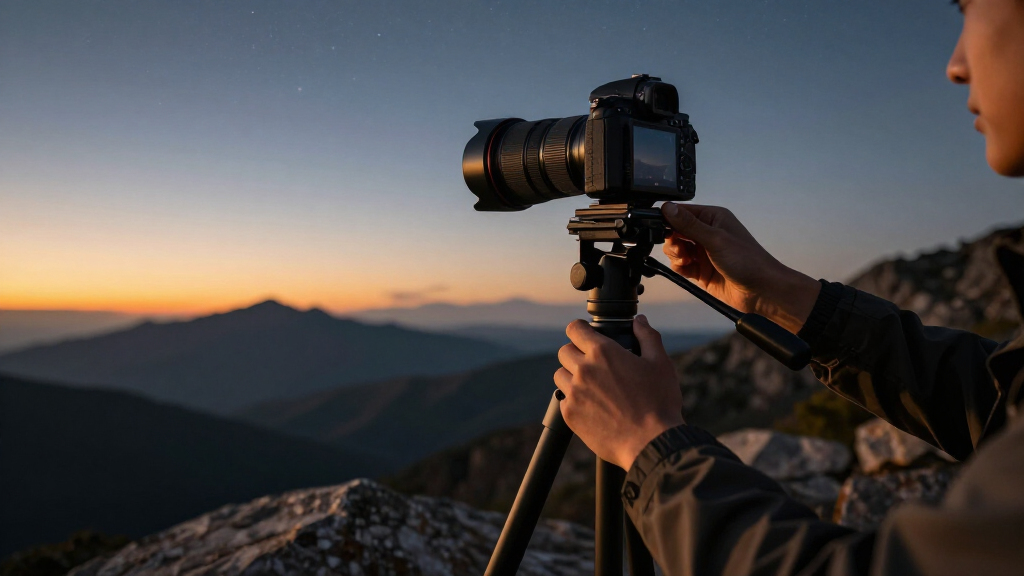
How We Picked
Because astrophotography punishes tripods differently than daytime photography, I judged every model against stability under long exposure first and everything else second. That meant prioritizing payload capacity relative to weight, leg diameter and material (carbon fiber over aluminum, thicker over thinner), the rigidity of the column and head interface, and how each tripod behaves fully extended — because that’s exactly how most people shoot the night sky. A tripod that wobbles at max height is disqualified for this use case no matter how good its other features are.
From there, I weighed practical value factors: price relative to performance, height range for framing over foreground obstacles, packed size for driving out to dark-sky sites, and extras like convertible monopod legs or included heads. The ranking reflects a simple hierarchy — models that stay rock-steady with a real camera and lens mounted place highest, versatile mid-range options fill the middle, and budget or phone-oriented tripods rank lower because their flex and vibration become visible as smeared stars in actual night shots.
Factors to Consider When Choosing Astrophotography Camera Tripods
Before settling on one of the twelve models above, it helps to understand what actually separates a tripod that produces tack-sharp stars from one that leaves you with soft, trailed frames. These are the factors I weighed hardest, and the mistakes I see buyers make most often.Vibration Damping Matters More Than Payload Alone
A tripod’s listed payload tells you what it can hold, not how still it holds it — and those are different things entirely. Carbon fiber damps vibration faster than aluminum, which is why a modest 15kg-rated carbon model can outperform a taller aluminum tripod with a similar number. The real enemy during a 20-second exposure isn’t the camera’s weight; it’s micro-vibrations from wind, shutter slap, and even ground-borne movement that the legs transmit to the sensor. Thicker lower-leg sections dampen these better than thin ones, regardless of the material. A common mistake is buying a tall, thin-legged tripod rated for 10kg and assuming the number guarantees stability at full extension — it doesn’t. If you can only afford aluminum, choose a shorter model with wide legs rather than a towering travel design.
Shoot Low, Not Tall: The Height Trap
Beginners consistently overestimate how much height they need for night-sky work. Raising the center column is the fastest way to introduce flex into an otherwise stable system, because the column acts as a lever multiplying every vibration. For astrophotography, the goal is to shoot with legs fully splayed and the column down, so your usable working height is really the tripod’s leg-only maximum. That 90-inch tripod sounds appealing for shooting over a fence line, but at full extension it becomes a sail in even light breeze. A better approach is planning your shooting position — kneel, sit, or pick foregrounds you can shoot from ground level. Only pay a premium for extreme height if you genuinely can’t reposition your vantage point.
Head Quality Is Half the Stability Equation
The flimsiest component in the chain defines the whole system’s stability, and on cheap tripods that component is almost always the head. A loose ball head will creep during a long exposure, slowly tilting your framing and smearing stars at the frame edge. For night work, look for a head with a separate panning base and a firm lock that doesn’t drift under load, since you’ll often level the camera and leave it locked for minutes at a time. Many budget models include pan-and-tilt heads designed for video or phones — usable, but check that the tilt lock holds without slipping. If you’re serious, budget to replace an included cheap head with a quality ball head even on an inexpensive set of legs; it’s the upgrade with the biggest sharpness return per dollar.
Weight and Portability: The Dark-Sky Reality
Astrophotography almost always means traveling away from city light pollution, so packed weight determines whether a tripod actually leaves the car. The sweet spot for most shooters is 1.5 to 2.5kg — heavy enough to resist wind, light enough to carry a kilometer to a dark field without regret. Carbon fiber models cost more partly because they hit this range while remaining rigid; aluminum models in the same weight class sacrifice leg thickness. Also check folded length against your transport method: anything over about 65cm folded won’t fit in carry-on luggage, which matters if you plan astro trips abroad. And don’t overlook hooks for hanging a camera bag as ballast — a genuinely useful feature that many budget tripods omit.
Don’t Overspend Before You Know Your Commitment Level
One pattern worth flagging: the most expensive mistakes in this category come from beginners buying premium tripods for gear they outgrow philosophically in six months, or from enthusiasts buying budget tripods they replace within a year. A phone-astrophotography beginner shooting the moon and star trails with a smartphone genuinely doesn’t need more than a sub-$50 model — the camera’s own limitations cap image quality before the tripod does. Conversely, anyone shooting with an interchangeable-lens camera and fast glass should skip entry-level tripods entirely, because a $40 tripod that ruins 30-second exposures is more expensive than a $120 one that works. Match the tripod tier to your camera tier, and upgrade the tripod first when you add a heavier lens.
Cold Weather and Night Usability Features
Astrophotography happens at night, often in cold conditions, and small design details become major annoyances. Twist locks are faster to operate by headlamp but can seize with grit or when wearing gloves; flip locks are glove-friendly but rattle if worn. Foam leg wraps are genuinely valuable — bare aluminum legs get painfully cold to grip during winter sessions, and carbon fiber is warmer to the touch than metal. Check whether the quick-release plate uses a standard Arca-Swiss mount, because fumbling a proprietary plate in the dark is miserable, and proprietary systems limit your future head upgrades. Finally, a hook or loop for hanging weight, plus spiked or replaceable feet, make a real difference on the soft ground where dark-sky sites usually sit.
Frequently Asked Questions
Do I need a carbon fiber tripod for astrophotography, or is aluminum fine?
Aluminum is genuinely fine if you choose the right design — shorter legs, thick sections, and a low shooting posture — but carbon fiber earns its premium for night work in two specific ways. It damps vibration faster, so a gust of wind or a mirror slap settles out before the shutter closes rather than during it. It’s also warmer to handle in cold night conditions and typically lighter for the same rigidity. If your budget forces aluminum, spend the savings on a heavier, shorter model rather than a tall travel design, and hang your camera bag from the center hook to add ballast. Where carbon becomes close to mandatory is when you’re carrying gear a long distance to a dark-sky site and every gram counts against stability you can’t afford to lose.
Can I use one of these tall overhead tripods for astrophotography?
You can, but with real caveats. Models like the 90-inch overhead tripods let you shoot above fence lines, vehicles, or tall foreground grass, which is occasionally useful for composition. The problem is that height and stability work against each other: fully extended, these tripods become highly sensitive to wind, and even a light breeze will produce visible star trailing in exposures longer than about 10 seconds. If you buy one, use it at partial extension whenever possible, weight the center column with your camera bag, and shoot on genuinely calm nights. For most astrophotographers, a 60-70 inch tripod used at leg-only height produces sharper results than a 90-inch tower used fully raised.
Are the tripods that come with phone mounts any good for astrophotography?
For smartphone astrophotography — moon shots, star trails with night modes, constellation framing — they’re perfectly adequate, and models like the VICTIV and the remote-included 72-inch tripod make the experience easier with Bluetooth shutter triggers. The limitation appears when you want to mount a real camera: the heads on these tripods are built for light phone loads, and their plastic components flex under a mirrorless or DSLR with a lens attached. That flex translates directly into soft stars. My advice is to treat phone-mount tripods as a stepping stone: if you enjoy the results and buy an actual camera later, plan to upgrade the tripod at the same time rather than trying to make the phone tripod carry hardware it wasn’t designed for.
Is a convertible tripod-monopod worth it for night sky photography?
The monopod conversion is a nice bonus but nearly useless for astrophotography itself, since a monopod cannot hold a camera still for a multi-second exposure. Where it earns its keep is versatility: the same tripod that carries your night rig can convert for daytime wildlife, sports, or video work, which spreads the purchase across more uses. The tradeoff to know about is that the detachable-leg mechanism adds a junction point that can introduce slight flex compared with a one-piece leg set, so a dedicated tripod of equal price is usually marginally stiffer. If you shoot a mix of subjects, the K&F Concept 76-inch and NEEWER TP14B conversions are sensible; if astrophotography is your only use, skip the feature and put the money into better legs.
What payload rating do I actually need for astrophotography?
A good rule of thumb is to add up your heaviest camera, lens, and head combination, then multiply by two — that’s the minimum payload you want. A typical mirrorless camera with a wide fast lens runs 1.5-2.5kg, suggesting a tripod rated for at least 5kg, which is why the SIRUI’s 15kg rating gives it such headroom. Long-lens deep-sky setups change the math dramatically: a 300mm lens plus camera can approach 4kg and benefits from a 10kg+ rating both for load safety and because heavier-duty tripods use wider, stiffer legs. Remember that payload is a strength rating, not a stability rating — a 10kg-rated flimsy tripod is still flimsy. Treat the number as a floor, and let leg thickness, material, and working height determine the real decision.
Conclusion
After comparing all twelve models, the right choice depends mostly on what camera you’re mounting and how far you carry it. For best overall, the SIRUI 47-inch Carbon Fiber Tripod wins on the criteria that matter most for night work — carbon fiber damping, a 15kg payload, and rigidity that cheaper tall models can’t match, provided you accept its modest maximum height. The best value pick is the NEEWER Basics TP14B, which delivers genuinely usable stability for under fifty dollars and outperforms taller, flexier competitors.
For beginners shooting with a phone or entry-level camera, the VICTIV 74-inch with phone holder or the 72-inch model with remote makes night photography approachable without a big spend. Best premium goes to the K&F Concept 90-inch Ultra High for shooters who truly need to clear foreground obstacles and will pair it with ballast and calm-night discipline. Finally, for specific needs: the K&F Concept 64-inch Aluminum suits travelers who prioritize packed size, the K&F Concept 76-inch with ball head fits hybrid shooters who want monopod versatility, and the Amazon Basics 50-inch is a backup-tripod-only choice that serious astrophotographers should skip. Whichever you choose, match the tripod tier to your camera tier — that single decision prevents most of the frustration that ruins first attempts at shooting the night sky.
Fall Picks
fall essentials
As an affiliate, we earn on qualifying purchases.