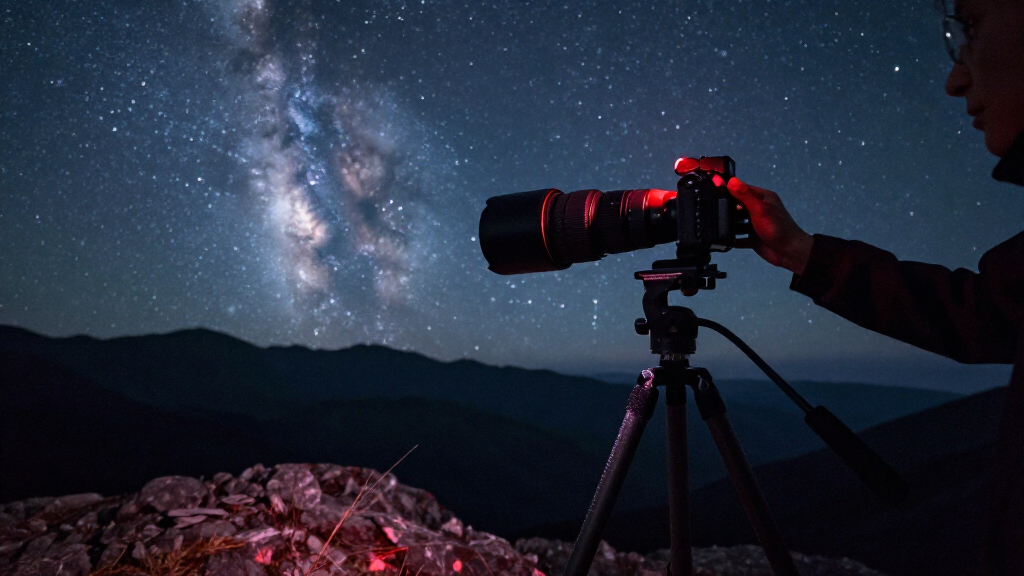
Among these astrophotography camera lenses, I rank the Samyang 24mm f/1.8 AF for Sony E as the best overall balance of a bright aperture and practical wide-field framing. The Canon RF 14mm f/1.4L VCM stands out for premium, expansive views, while the Rokinon 14mm f/2.8 Nikon F is a simpler value-minded route to a very wide field. The main tradeoff is between gathering more light with a fast aperture and choosing a focal length that fits your target, sensor, and tracking setup. Mount compatibility and manual versus autofocus operation also shape the decision. Read on for the full breakdown, ranking logic, and advice for matching a lens to your night-sky plans.

Prime made for students and young adults
- Fast, free delivery for dorm and study essentials
- Prime Video and Amazon Music included
- Member-only deals
Key Takeaways
- The Samyang 24mm f/1.8 AF for Sony E takes the overall spot because its bright aperture and moderately wide framing make it a versatile starting point for Milky Way scenes and broad night-sky compositions.
- The Canon RF 14mm f/1.4L VCM is the premium wide-field choice, pairing a very wide view with a fast aperture, while its specialized RF mount limits it to compatible Canon mirrorless bodies.
- The Rokinon and Samyang 14mm f/2.8 options prioritize field of view over speed; their value depends on exact mount, manual-focus preference, and version rather than the shared focal length alone.
- The Canon RF 20mm f/1.4 L VCM sits between the 14mm and 24mm approaches, giving Canon RF users a faster, less extreme wide angle; its bundle accessories do not change the lens’s optical role.
- The SVBONY SV535 105mm f/2.8 APO is a different tool, not a substitute wide-angle lens: its longer focal length suits smaller celestial subjects and tracked imaging better than sweeping Milky Way landscapes.
| Samyang 24mm f/1.8 AF Full-Frame Lens for Sony E |  | Best Compact Sony Astrophotography Pick | Focal length: 24mm | Maximum aperture: f/1.8 | Mount: Sony E | VIEW LATEST PRICE | See Our Full Breakdown |
| Rokinon 14mm f/2.8 Ultra-Wide-Angle Lens for Nikon F |  | Best Value-Style Manual Ultra-Wide for Nikon | Focal length: 14mm | Maximum aperture: f/2.8 | Mount: Nikon F | VIEW LATEST PRICE | See Our Full Breakdown |
| Canon RF 20mm f/1.4 L VCM Lens Bundle with EF-EOS R Adapter, Shoulder Bag, and 64GB Card |  | Best Premium Hybrid Astrophotography Bundle | Focal length: 20mm | Maximum aperture: f/1.4 | Mount: Canon RF | VIEW LATEST PRICE | See Our Full Breakdown |
| Canon RF 14mm f/1.4L VCM Lens Bundle |  | Best Premium Ultra-Wide for Canon RF | Focal length: 14mm | Maximum aperture: f/1.4 | Mount: Canon RF | VIEW LATEST PRICE | See Our Full Breakdown |
| Rokinon 14mm f/2.8 Ultra-Wide-Angle Manual Focus Lens for Canon EF |  | Best Manual Ultra-Wide for Canon EF | Focal length: 14mm | Maximum aperture: f/2.8 | Mount: Canon EF | VIEW LATEST PRICE | See Our Full Breakdown |
| Rokinon 14mm f/2.8 Series II Lens for Canon EF |  | Best for Ultra-Wide Milky Way Landscapes | Focal length: 14mm | Maximum aperture: f/2.8 | Minimum aperture: f/22 | VIEW LATEST PRICE | See Our Full Breakdown |
| SVBONY SV535 105mm f/2.8 APO Astrophotography Lens |  | Best for Portable Deep-Sky Imaging | Focal length: 105mm | Maximum aperture: f/2.8 | Optical design: 7 elements in 5 groups | VIEW LATEST PRICE | See Our Full Breakdown |
| astrophotography camera lense | Focal length | Maximum aperture | Mount | Weight |
|---|---|---|---|---|
| Samyang 24mm f/1.8 AF Full-Fra | 24mm | f/1.8 | Sony E | 8.1 oz |
| Rokinon 14mm f/2.8 Ultra-Wide- | 14mm | f/2.8 | Nikon F | — |
| Canon RF 20mm f/1.4 L VCM Lens | 20mm | f/1.4 | Canon RF | — |
| Canon RF 14mm f/1.4L VCM Lens | 14mm | f/1.4 | Canon RF | 2 lb |
| Rokinon 14mm f/2.8 Ultra-Wide- | 14mm | f/2.8 | Canon EF | 31.7 oz (900 g) |
| Rokinon 14mm f/2.8 Series II L | 14mm | f/2.8 | Canon EF | — |
| SVBONY SV535 105mm f/2.8 APO A | 105mm | f/2.8 | — | 482g |
More Details on Our Top Picks
Samyang 24mm f/1.8 AF Full-Frame Lens for Sony E
The Samyang 24mm f/1.8 is a strong fit for Sony shooters who want a portable, bright prime for night skies without carrying a bulky ultra-wide lens. Its f/1.8 aperture admits more light than the f/2.8 Rokinon 14mm options, while the 24mm view gives foregrounds and landscape elements more presence. That narrower framing does mean less sky coverage, so it is not the pick for capturing the widest Milky Way scenes in one frame. The astrophotography mode, weather sealing, and light 8.1-ounce build make it easier to set up for remote locations; customizable controls add flexibility beyond the more manual Rokinon 14mm f/2.8 for Nikon F. Its fixed focal length and Sony E-only mount limit versatility for multi-system owners.
Pros:- Bright f/1.8 aperture supports shorter exposures in low light.
- Compact 8.1-ounce design is practical for hiking and travel.
- Astrophotography mode and customizable controls are tailored to night-sky use.
- Weather sealing across five areas adds protection outdoors.
Cons:- Fixed 24mm framing captures less sky than a 14mm ultra-wide lens.
- Sony E mount limits use to compatible camera systems.
- No zoom means changing composition requires moving the camera or switching lenses.
Best for: Sony E full-frame photographers seeking a lightweight night-sky lens with a brighter aperture and useful astrophotography controls.
Not ideal for: Photographers who want the widest possible sky coverage, need zoom flexibility, or use a camera mount other than Sony E.
- Focal length:24mm
- Maximum aperture:f/1.8
- Mount:Sony E
- Angle of view:83.7°
- Autofocus:Linear STM
- Filter size:58mm
- Weight:8.1 oz
- Weather sealing:Five areas
Our verdict“Choose it for a light, bright Sony night-sky setup; pick a 14mm lens instead when maximum sky coverage matters more than aperture and portability.”
Rokinon 14mm f/2.8 Ultra-Wide-Angle Lens for Nikon F
For Nikon F photographers who prioritize fitting more sky into the frame, this Rokinon offers a 115.7° full-frame view at a 14mm focal length. Compared with the Samyang 24mm f/1.8, it gives the Milky Way and foreground more room in a single composition, though its f/2.8 aperture gathers less light and its manual focus asks for careful setup. The built-in chip supports exposure metering and focus confirmation on Nikon DSLRs, making the manual approach less bare-bones than it might sound. UMC coating and a built-in hood are aimed at reducing flare and ghosting around bright sources, but they do not remove the need to watch for stray light. The supplied optical construction details disagree on the number of groups, so that specification is uncertain.
Pros:- 115.7° full-frame angle of view captures a broad sky and foreground.
- f/2.8 maximum aperture supports night-sky exposures.
- UMC coating and built-in hood help limit flare and ghosting.
- Built-in chip supports exposure metering and focus confirmation on Nikon DSLRs.
Cons:- Manual focus requires careful focusing for stars and other night subjects.
- f/2.8 is less light-gathering than the f/1.8 Samyang 24mm or f/1.4 Canon RF primes.
- Supplied optical group-count information is inconsistent.
Best for: Nikon F DSLR owners who want a broad night-sky composition and are comfortable setting focus manually.
Not ideal for: Photographers who rely on autofocus, want a brighter-than-f/2.8 lens, or need a compact setup with reliable video autofocus.
- Focal length:14mm
- Maximum aperture:f/2.8
- Mount:Nikon F
- Angle of view:115.7° full-frame; 93.9° APS-C
- Focus:Manual
- Minimum focus distance:11 in (0.28 m)
- Lens coating:Ultra Multi-Coating (UMC)
- Lens hood:Built-in petal-style
Our verdict“Pick this Rokinon for wide Nikon night-sky framing and manual control, but choose a brighter autofocus lens if ease of focusing is a priority.”
Canon RF 20mm f/1.4 L VCM Lens Bundle with EF-EOS R Adapter, Shoulder Bag, and 64GB Card
This Canon bundle is the premium hybrid choice for RF shooters who want a bright f/1.4 aperture and a lens suited to both stills and video. At 20mm, it frames more of the sky than the Samyang 24mm f/1.8, while its wider aperture gives it a low-light advantage over both Rokinon 14mm f/2.8 lenses. It is not as expansive as the 14mm options, so wide Milky Way panoramas may call for a different focal length. Nano USM and VCM autofocus support quiet, fast focusing for video and hybrid work, while the bundle adds an EF-to-RF adapter, bag, and memory card. Those extras are useful for Canon owners with EF lenses, but the premium L-series positioning and specialized wide-angle view make this a less practical choice for casual, stills-only buyers.
Pros:- f/1.4 aperture offers strong light-gathering for night shooting.
- 20mm framing is wider than the Samyang 24mm f/1.8 while retaining a bright aperture.
- Nano USM and VCM hybrid autofocus support quiet photo and video operation.
- Bundle includes an EF-EOS R adapter, shoulder bag, and 64GB card.
Cons:- L-series positioning makes it a substantial commitment for a specialized focal length.
- 20mm does not capture as much sky as the 14mm Rokinon and Canon RF options.
- Ultra-wide perspective can distort subjects near the frame edges.
Best for: Canon RF hybrid creators who photograph the night sky and also need quiet autofocus for video or want to adapt EF lenses.
Not ideal for: Budget-conscious stills-only astrophotographers, or anyone whose first priority is the widest possible 14mm sky coverage.
- Focal length:20mm
- Maximum aperture:f/1.4
- Mount:Canon RF
- Focus type:Hybrid autofocus and manual focus
- Filter size:67mm
- Minimum focus distance:7.9 in
- Weather sealing:Yes
- Included accessories:EF-EOS R adapter, shoulder bag, 64GB card, lens hood, case, and caps
Our verdict“Choose this bundle if you need a bright RF wide-angle for both astrophotography and video; skip it if maximum sky width or a simpler stills setup is the goal.”
Canon RF 14mm f/1.4L VCM Lens Bundle
When the priority is capturing as much sky as possible without giving up a bright aperture, the Canon RF 14mm f/1.4L VCM is the lineup’s premium ultra-wide choice. Its 14mm view is broader than the Canon RF 20mm f/1.4L VCM, and f/1.4 gives it a light-gathering advantage over the Nikon and Canon EF Rokinon 14mm f/2.8 lenses. That combination suits wide-field night landscapes, though this is a specialized focal length rather than an everyday walkaround lens. Weather sealing, quiet autofocus, and a de-clickable aperture ring make it more capable for outdoor hybrid work than a manual-only Rokinon, but the 2-pound weight is a real burden for long hikes. Bundle details also conflict: the description lists a case and cap keeper, while another detail mentions an EF 70-300mm lens, so buyers should verify what is included.
Pros:- 14mm focal length provides expansive sky coverage.
- f/1.4 maximum aperture gathers more light than the 14mm f/2.8 Rokinon lenses.
- Weather-sealed L-series construction supports outdoor use.
- De-clickable aperture ring and quiet autofocus suit hybrid shooting.
Cons:- At 2 pounds, it is much heavier than the 8.1-ounce Samyang 24mm f/1.8.
- The 14mm view is specialized and may be too wide for many everyday subjects.
- Supplied bundle details conflict about whether an EF 70-300mm lens is included.
Best for: Canon RF astrophotographers who want a very wide field, f/1.4 light gathering, and weather-sealed controls for outdoor photo and video work.
Not ideal for: Travelers prioritizing a lightweight kit, photographers seeking a general-purpose focal length, or buyers who need certainty about the bundle contents.
- Focal length:14mm
- Maximum aperture:f/1.4
- Mount:Canon RF
- Autofocus:Dual Nano USM and Voice Coil Motor
- Minimum focus distance:9.4 in
- Weight:2 lb
- Construction:Weather-sealed L-series
- Features:De-clickable aperture ring, customizable control ring, function button, rear drop-in filter holder
Our verdict“Choose it for bright, expansive Canon RF night-sky scenes if weight and bundle uncertainty are acceptable.”
Rokinon 14mm f/2.8 Ultra-Wide-Angle Manual Focus Lens for Canon EF
This Canon EF Rokinon serves photographers who want 14mm sky coverage and prefer direct manual control over autofocus. Its 115.7° full-frame view matches the wide framing of the Nikon F Rokinon, while the Canon version is described with aspherical and ED elements intended to reduce distortion and aberrations. The f/2.8 aperture is less light-friendly than the Canon RF 14mm f/1.4L VCM, but the EF lens avoids that model’s heavier premium hybrid feature set. Manual focusing can suit tripod-based astrophotography, where focus is set deliberately, yet it is less convenient for changing subjects quickly or shooting video. At 31.7 ounces, it is also a substantial load for a manual prime, and the lack of stabilization offers little help for handheld scenes.
Pros:- 115.7° full-frame angle of view suits expansive sky and landscape compositions.
- f/2.8 aperture supports low-light photography.
- Aspherical and ED elements are designed to reduce distortion and aberrations.
- Built-in petal hood helps block stray light.
Cons:- Manual focus only makes quick refocusing less convenient than on the Canon RF 14mm f/1.4L VCM.
- At 31.7 oz, it is heavy for a fixed-focal-length lens.
- No image stabilization, limiting support for handheld low-light shooting.
Best for: Canon EF DSLR astrophotographers who want an ultra-wide night-sky lens and are comfortable focusing manually from a tripod.
Not ideal for: Hikers seeking a lightweight kit, hybrid shooters who need autofocus, or photographers who want f/1.4 light gathering.
- Focal length:14mm
- Maximum aperture:f/2.8
- Mount:Canon EF
- Angle of view:115.7°
- Focus:Manual
- Closest focus distance:10.8 in
- Weight:31.7 oz (900 g)
- Image stabilization:None
Our verdict“Pick this for deliberate, tripod-based wide-field astrophotography on Canon EF, but choose the RF 14mm f/1.4L if you need autofocus and a brighter aperture.”
Rokinon 14mm f/2.8 Series II Lens for Canon EF
The 14mm focal length and 115.7° full-frame view let you fit broad stretches of sky alongside foreground scenery, making this a strong choice for Milky Way compositions. Its f/2.8 aperture gathers more light than many slower wide-angle options, though the Samyang 24mm f/1.8 AF Full-Frame Lens for Sony E offers a brighter aperture and autofocus for its compatible system. Here, the trade is a wider view and manual-only operation: focusing on stars takes care, but the focus lock can help keep your setting steady through long exposures. ED and aspherical elements are intended to curb color fringing and distortion, while weather sealing adds reassurance outdoors. Canon EF shooters should skip it if they need autofocus or electronic aperture control.
Pros:- 115.7° full-frame field of view suits expansive sky-and-landscape compositions.
- f/2.8 maximum aperture supports relatively short exposures in low light.
- Focus lock helps hold a manual focus setting during long exposures.
- Weather-sealed construction and a built-in hood suit outdoor use.
Cons:- Manual focus can make precise star focusing slower and less convenient.
- No autofocus or electronic aperture control.
- The wide perspective is less suited to tighter deep-sky framing than a longer lens such as the SVBONY SV535 105mm f/2.8 APO.
Best for: Canon EF full-frame shooters who want a very wide Milky Way frame, manual control, and a lens suited to outdoor long exposures.
Not ideal for: Photographers who need autofocus for moving subjects or camera-controlled aperture adjustments, or who prefer a brighter f/1.8 lens.
- Focal length:14mm
- Maximum aperture:f/2.8
- Minimum aperture:f/22
- Mount:Canon EF
- Focus:Manual
- Field of view:115.7° on full-frame
- Optical construction:14 elements in 10 groups
- Weather sealing:Yes
Our verdict“Choose this Rokinon for broad Milky Way scenes on Canon EF when wide coverage matters more than autofocus and electronic controls.”
SVBONY SV535 105mm f/2.8 APO Astrophotography Lens
Unlike the Rokinon 14mm f/2.8 Series II, which frames sweeping sky and foreground, the 105mm focal length gives Sony E shooters a tighter view for wide-field deep-sky targets. Its f/2.8 aperture gathers light at a useful pace, while the APO optical design and coatings are intended to keep star color cleaner. At 482g, it is a portable option, and the Vixen-style dovetail and Arca-Swiss base make it easier to adapt to different support setups. It also accepts 2-inch astronomy filters at the objective. The tradeoffs are manual helical focusing, no image stabilization, and no included EAF bracket; it is also not water resistant. This is a more specialized astronomy tool than the ultra-wide Rokinon, not a general-purpose landscape lens.
Pros:- 105mm focal length provides tighter framing for wide-field deep-sky subjects than a 14mm lens.
- f/2.8 maximum aperture supports light gathering for astrophotography.
- APO optics and coatings are designed to reduce color aberration and improve contrast.
- 482g weight, multiple mounting options, and 2-inch filter compatibility support portable astronomy setups.
Cons:- Manual helical focus requires careful adjustment for stars.
- No EAF bracket is included, which limits out-of-box compatibility with electronic focusing setups.
- Not water resistant and has no image stabilization.
Best for: Sony E full-frame astrophotographers seeking a portable 105mm lens for wide-field deep-sky imaging and use with 2-inch astronomy filters.
Not ideal for: Photographers who want expansive Milky Way landscapes, autofocus, weather protection, image stabilization, or a supplied EAF bracket.
- Focal length:105mm
- Maximum aperture:f/2.8
- Optical design:7 elements in 5 groups
- Camera mount:Sony E
- Focus:Manual helical focus
- Filter compatibility:2-inch astronomy filters at the objective
- Weight:482g
- Mounting options:Vixen-style dovetail and Arca-Swiss base
Our verdict“Pick the SV535 if you want a lightweight Sony E lens for tighter deep-sky framing and can work with manual focus and weather-sensitive gear.”
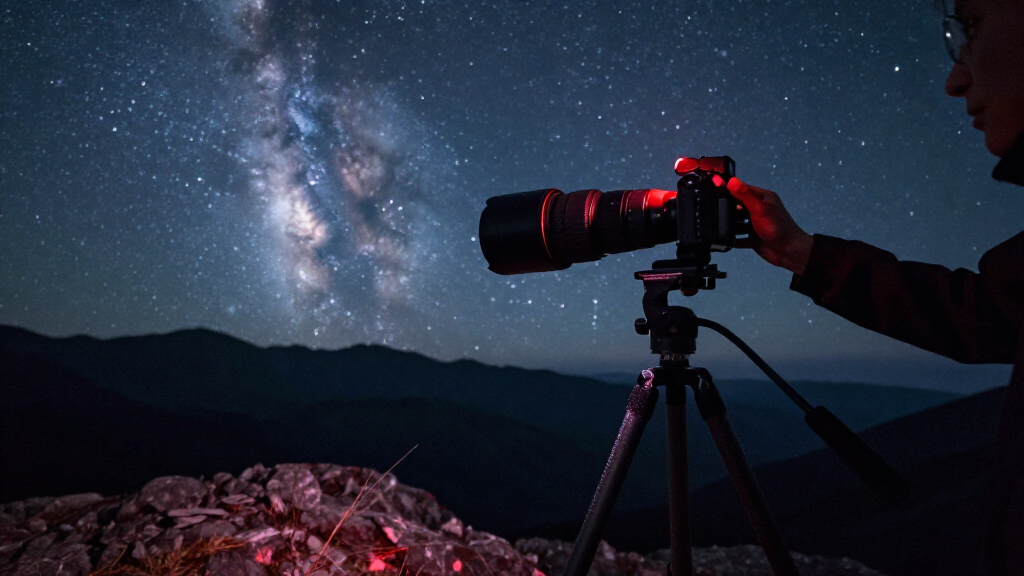
How We Picked
I ranked these lenses by how well their focal length and maximum aperture serve astrophotography, then weighed mount fit, focusing approach, likely usability in the dark, and the kind of targets each lens can frame. A fast aperture can shorten exposures or help keep ISO in check, but it does not automatically make a lens the right choice if its field of view is too wide or narrow for the intended subject.
The order reflects the breadth of use rather than a claim that one lens suits every camera or target. The Samyang 24mm earns the overall position for its balance; the Canon RF fast primes rank as premium options for compatible bodies; and the Rokinon 14mm lenses offer wider framing with slower apertures and mount-specific tradeoffs. The SVBONY 105mm is ranked for a specialized role, since its narrow field calls for different subjects and usually a more deliberate tracking workflow.
| astrophotography camera lense | Maximum aperture | Mount | Focus |
|---|---|---|---|
| Samyang 24mm f/1.8 AF Full-Fra | f/1.8 | Sony E | — |
| Rokinon 14mm f/2.8 Ultra-Wide- | f/2.8 | Nikon F | Manual |
| Canon RF 20mm f/1.4 L VCM Lens | f/1.4 | Canon RF | — |
| Canon RF 14mm f/1.4L VCM Lens | f/1.4 | Canon RF | — |
| Rokinon 14mm f/2.8 Ultra-Wide- | f/2.8 | Canon EF | Manual |
| Rokinon 14mm f/2.8 Series II L | f/2.8 | Canon EF | Manual |
| SVBONY SV535 105mm f/2.8 APO A | f/2.8 | — | Manual helical focus |
Factors to Consider When Choosing Astrophotography Camera Lenses
Before choosing among these astrophotography camera lenses, match the lens to your camera, subject, and shooting method. A headline aperture or focal length only tells part of the story; your sensor size, mount, sky conditions, and willingness to focus manually can change which tradeoff makes sense.
Match Focal Length to Your Target
Wide lenses take in large stretches of sky and can include foreground scenery, while longer lenses frame smaller regions with more apparent size. A 14mm view can suit sweeping Milky Way compositions, but it may leave a small nebula or galaxy looking tiny. A 105mm lens like the SVBONY is better aligned with tighter targets, though it magnifies tracking errors and makes framing less forgiving. Sensor size changes the effective angle of view, so check the lens-and-camera combination rather than relying on focal length alone. A common mistake is buying the widest lens available without deciding whether the goal is a landscape or a detailed celestial subject.
Balance Aperture Against Field of View
A wider maximum aperture lets more light reach the sensor, which can help capture faint stars with shorter exposures or lower sensitivity settings. That advantage matters under dark skies, but the brightest setting may not be the one you use if corner stars look distorted or the depth of field is too shallow for a foreground. Compare the f/1.4 and f/1.8 options with the f/2.8 14mm lenses as a practical speed-versus-coverage choice, not a simple quality ranking. Faster glass can also be larger, heavier, or more demanding to focus accurately. Check sample images and lens-specific performance at the aperture you expect to use, especially near the frame edges.
Confirm the Exact Camera Mount
Mount compatibility is a hard requirement, not a minor preference: Sony E, Nikon F, Canon EF, and Canon RF are distinct systems. An adapter may let some lens-and-camera combinations work, but autofocus, aperture control, electronic communication, and physical clearance can vary. The Canon RF 20mm bundle includes an EF-EOS R adapter, yet that accessory does not make every EF lens behave identically on every RF body. Check the camera maker’s compatibility guidance and the lens’s exact version before ordering. Similar product names can conceal different mounts or generations, so verify the complete model listing rather than matching only the focal length.
Choose a Focusing Method You Can Manage at Night
Autofocus can help with daytime use, but stars generally call for careful manual focus using live view, magnification, or a focusing aid. A manual-focus lens can be a sensible, direct option if you are comfortable setting focus yourself and do not need autofocus for other subjects. Autofocus-capable models add flexibility, though autofocus should not be assumed to lock reliably on a dark sky. Focus can shift with temperature or after handling, so plan to recheck it during a long session. Prioritize a repeatable focusing method and clear controls over the assumption that one focusing label guarantees easier astrophotography.
Factor In Tracking, Support, and Session Length
Wide-angle exposures are generally more tolerant of star movement than long-lens exposures, while a 105mm setup puts greater demands on tracking and precise framing. A tracker can extend exposure options, but it adds setup time, power needs, and alignment work; a tripod-only approach favors simpler, shorter exposures. Lens weight and balance matter if the camera sits on a small tracker or is carried to a remote site. Also plan for dew, spare batteries, and a way to check focus without introducing vibration. Paying for a faster lens may not solve motion blur caused by tracking limits or an unstable support.
Spend on the Feature That Fixes Your Main Limitation
Pay more for a fast aperture or premium build when those traits answer a clear need, such as shooting in dim conditions or using a specific camera system with demanding requirements. If your main goal is broad Milky Way scenery, a compatible 14mm f/2.8 may be a better fit than a premium 105mm lens, even if the latter is aimed at specialized imaging. Likewise, a bundle’s bag, card, or adapter can be useful, but those extras should not outweigh lens performance and compatibility. Think about the subjects you photograph most often and the equipment you already own before treating accessory count as added value. Avoid paying for capability your camera, tracking setup, or chosen subject cannot use.
Frequently Asked Questions
Is a 14mm f/2.8 lens fast enough for Milky Way photography?
Yes, a 14mm f/2.8 lens can be used for Milky Way photography, particularly when you want a very wide view and can work with shorter exposures. Compared with the f/1.4 and f/1.8 options in this roundup, it gathers less light at its maximum aperture, so you may need to raise ISO, accept a dimmer result, or make multiple frames for stacking. Actual results also depend on your camera sensor, sky darkness, and whether you use a tracker. Check how the lens performs wide open, since edge-star rendering can affect whether you prefer to stop it down. It is a practical choice when wide framing matters more to you than maximum light gathering.
Should I choose a 14mm, 20mm, or 24mm lens for night-sky landscapes?
Choose 14mm when you want to include a broad sweep of sky and foreground, and choose 20mm or 24mm when you want a less expansive composition or a larger-looking Milky Way region. The camera’s sensor size affects how wide each lens appears, so compare the angle of view on your specific body. A 14mm lens can make foreground elements prominent but may make celestial details appear small; a 24mm view offers tighter framing but gives you less room to include scenery. The Canon RF 20mm f/1.4 is a middle-ground option for RF users, while the Samyang 24mm f/1.8 is the roundup’s Sony E pick for balanced wide-field use. If possible, decide by the compositions you want rather than by focal length alone.
Can I use a Canon EF astrophotography lens on a Canon RF camera?
Canon EF lenses can often be adapted to Canon RF camera bodies with a compatible EF-EOS R adapter, but check the exact lens and camera pairing before purchase. Adapter compatibility may affect electronic aperture control or autofocus behavior, and those details matter if you also plan to use the lens outside astrophotography. Manual focusing on stars remains necessary even when a lens supports autofocus. The RF 20mm bundle listed here includes an EF-EOS R adapter, but that does not mean every EF lens is included or that every function is guaranteed for every setup. Verify the manufacturer’s compatibility information and confirm the adapter is suitable for your intended lens.
Is the SVBONY SV535 105mm f/2.8 a good first astrophotography lens?
It can be a good first lens if your main interest is tighter celestial subjects and you already have, or plan to use, a stable tracking setup. Its 105mm focal length is much narrower than the 14mm, 20mm, and 24mm options here, making broad Milky Way landscapes a poor match. Longer focal lengths show tracking and focusing errors more clearly, so setup precision matters. For a first lens intended to cover night-sky scenery and general wide-field work, one of the shorter focal lengths is usually easier to frame and more flexible. Pick the SVBONY when its specialized field of view matches your target list.
Do the two Rokinon 14mm f/2.8 Canon EF lenses offer the same astrophotography experience?
They share a 14mm focal length and f/2.8 maximum aperture, but the listings identify different versions: a manual-focus lens and a Series II lens. That distinction can affect handling and the controls available, so compare the exact specifications and included features rather than assuming the names describe identical products. For stars, manual focus is common even with an autofocus-capable lens, but an autofocus feature may still matter for daytime use. Both remain slower than the f/1.4 and f/1.8 choices in this roundup, trading light-gathering ability for very wide framing. Confirm that the lens is the intended Canon EF version and that its focusing method suits how you plan to use it.
Conclusion
For the best overall balance, I recommend the Samyang 24mm f/1.8 AF for Sony E, provided it matches your camera and your preferred framing. The best premium wide-angle choice is the Canon RF 14mm f/1.4L VCM for RF users who want expansive views and a fast aperture; the Canon RF 20mm f/1.4 L VCM is the more moderate-framing premium alternative. For value-minded wide-field shooting, compare the Rokinon 14mm f/2.8 versions by mount, focusing method, and exact model details. Beginners who want broad compositions should start with a compatible 14mm or 24mm option and favor manageable framing over the longest focal length. For specific celestial targets, choose the SVBONY SV535 105mm f/2.8 APO only if you want tighter views and can support the added tracking precision. My final recommendation is to verify mount compatibility first, then choose focal length for your subjects and aperture for your sky conditions.
Fall Picks
fall essentials
As an affiliate, we earn on qualifying purchases.



![Terence Tao: Math 2.0 [Pdf]](https://astrophotographyhq.com/wp-content/uploads/2026/10/terence-tao-math-2-0-pdf-featured-260x140.jpg)