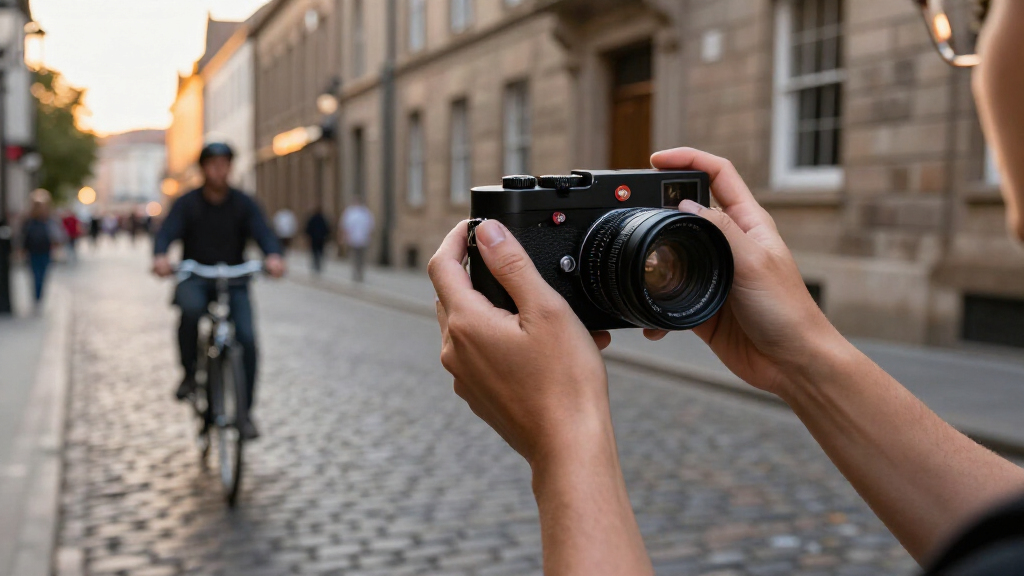

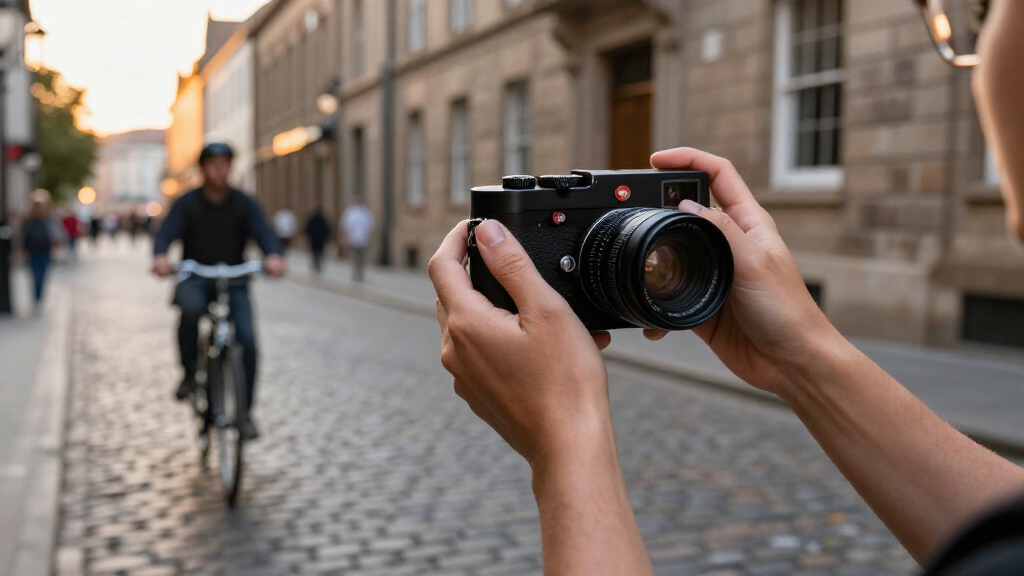
The Leica Q3 60MP is my best overall pick for its full-frame image quality, practical 28mm lens and compact fixed-lens design. For a tighter field of view, the Q3 43 offers a 43mm lens, while the SL3-S kit suits buyers who want an interchangeable-lens system. These choices reflect the main Leica tradeoff: premium image-making and handling versus price, portability, zoom flexibility and video or instant-print features. Older V-LUX and D-Lux models can suit specific budgets or zoom needs, but their age and capabilities matter when comparing them with newer cameras. Read on for the full breakdown, ranking logic and advice on choosing the right Leica for your work.

Prime made for students and young adults
- Fast, free delivery for dorm and study essentials
- Prime Video and Amazon Music included
- Member-only deals
Key Takeaways
- The Q3 60MP is the strongest all-round fit in this group for buyers who want a high-resolution full-frame camera without carrying an interchangeable-lens setup.
- The Q3 43 and standard Q3 serve different framing preferences: the 43mm lens favors tighter, natural perspectives, while 28mm is better for travel, interiors and environmental scenes.
- The SL3-S kit is the more adaptable system choice because its included 24–70mm zoom covers multiple focal lengths; that flexibility comes with more size and a different lens-system commitment.
- The D-Lux and V-LUX models prioritize convenience and zoom range over the Q-series’ full-frame approach, but older models warrant careful checks of condition, accessories and support.
- The Sofort 2 is the specialist pick, not a substitute for a main digital camera: its appeal is instant-photo creativity rather than matching the image quality or versatility of the Q and SL cameras.
| Leica Q3 43 60MP Compact Camera with 43mm Lens (19084) Bundle |  | Best for Portraits and Natural Perspective | Sensor: 60MP full-frame BSI CMOS | Lens: APO-Summicron 43mm f/2 ASPH. | Image resolutions: 60MP, 36MP, or 18MP | VIEW LATEST PRICE | See Our Full Breakdown |
| Leica V-LUX (Typ 114) Digital Camera |  | Best for Long-Range Zoom | Sensor: 20MP, 1-inch CMOS | Lens: DC VARIO-ELMARIT ASPH, 9.1–146mm f/2.8–4.0 | 35mm-equivalent focal length: 25–400mm | VIEW LATEST PRICE | See Our Full Breakdown |
| Leica Sofort 2 Instant Camera – Black Bundle |  | Best for Instant Prints | Sensor: 1/5-inch CMOS | Resolution: 4.9MP | Lens: 2.4mm f/2, 28mm equivalent | VIEW LATEST PRICE | See Our Full Breakdown |
| Leica D-Lux 7 Silver Compact Camera |  | Best Compact Zoom | Sensor: 17MP Four Thirds MOS | Lens: 24–75mm-equivalent, f/1.7–2.8 | Image stabilization: Optical | VIEW LATEST PRICE | See Our Full Breakdown |
| Leica Q3 60MP Compact Camera with 28mm Lens Bundle |  | Best Premium Wide-Angle Compact | Sensor: 60MP full-frame BSI CMOS | Lens: Summilux 28mm f/1.7 ASPH. | Video: 8K30, 4K60, 4:2:2 10-bit, FHD ProRes HQ | VIEW LATEST PRICE | See Our Full Breakdown |
| Leica SL2-S Mirrorless Full-Frame Digital Camera |  | Best for Professional Workflow | Sensor: 24 MP full-frame CMOS-BSI | Lens mount: Leica L | Image stabilization: Digital | VIEW LATEST PRICE | See Our Full Breakdown |
| Leica Q3 Compact Digital Camera, Black (19080) |  | Best for High-Resolution All-in-One Shooting | Sensor: 60 MP full-frame BSI CMOS | Lens aperture: f/1.7 | Digital zoom: Up to 90mm | VIEW LATEST PRICE | See Our Full Breakdown |
| Leica D-Lux 8 Compact Digital Camera Bundle with 64GB Memory Card, Travel Bag, Cleaning Kit, and Accessories |  | Best Value Compact Bundle | Sensor: 17 MP Four Thirds CMOS | Lens: 10.9–34mm f/1.7–2.8; 24–75mm full-frame equivalent | Viewfinder: 2.36 MP OLED electronic | VIEW LATEST PRICE | See Our Full Breakdown |
| Leica V-LUX 4 12MP Bridge Camera with 24x Zoom Lens |  | Best for Long-Range Zoom | Sensor resolution: 12 MP | Lens: 25–600mm equivalent, 24x optical zoom | Maximum aperture: f/2.8 | VIEW LATEST PRICE | See Our Full Breakdown |
| Leica Q3 60MP Full-Frame Compact Camera with 28mm Lens and Accessory Bundle |  | Best for Wide-Angle Creators | Sensor: 60 MP full-frame BSI CMOS | Processor: Maestro IV | Lens: Fixed 28mm | VIEW LATEST PRICE | See Our Full Breakdown |
| Leica D-LUX5 10.1 MP Compact Digital Camera with f/2.0 Lens, 3.8x Zoom, 3″ LCD, O.I.S. |  | Best Lightweight Leica Compact | Sensor: 1/1.6-inch CCD | Effective resolution: 10.1 MP | Lens and zoom: 24–90mm equivalent, 3.8x optical zoom | VIEW LATEST PRICE | See Our Full Breakdown |
| Leica SL3-S Mirrorless Camera with 24-70mm f/2.8 Lens Kit |  | Best Leica Hybrid for Fast Action and Video | Sensor: 24MP BSI CMOS full-frame | Included lens: Vario-Elmarit-SL 24–70mm f/2.8 ASPH. | Lens mount: Leica L | VIEW LATEST PRICE | See Our Full Breakdown |
| Leica camera | Sensor | Lens | Video | Continuous shooting |
|---|---|---|---|---|
| Leica Q3 43 60MP Compact Camer | 60MP full-frame BSI CMOS | APO-Summicron 43mm f/2 ASPH. | DCI 8K up to 30p; 4K up to 60p | — |
| Leica V-LUX | 20MP, 1-inch CMOS | DC VARIO-ELMARIT ASPH, 9.1–146mm f/2.8–4.0 | UHD 4K (3840 × 2160) | — |
| Leica Sofort 2 Instant Camera | 1/5-inch CMOS | 2.4mm f/2, 28mm equivalent | — | — |
| Leica D-Lux 7 Silver Compact C | 17MP Four Thirds MOS | 24–75mm-equivalent, f/1.7–2.8 | UHD 4K30p | Up to 11 fps |
| Leica Q3 60MP Compact Camera w | 60MP full-frame BSI CMOS | Summilux 28mm f/1.7 ASPH. | 8K30, 4K60, 4:2:2 10-bit, FHD ProRes HQ | — |
| Leica SL2-S Mirrorless Full-Fr | 24 MP full-frame CMOS-BSI | — | — | Up to 9 fps mechanical; up to 25 fps electronic |
| Leica Q3 Compact Digital Camer | 60 MP full-frame BSI CMOS | — | 8K output, ProRes support, MP4 capture | Up to 15 fps |
| Leica D-Lux 8 Compact Digital | 17 MP Four Thirds CMOS | 10.9–34mm f/1.7–2.8; 24–75mm full-frame equivalent | — | — |
| Leica V-LUX 4 12MP Bridge Came | — | 25–600mm equivalent, 24x optical zoom | Full HD 1080p, up to 60 fps | Up to 12 fps at full resolution |
| Leica Q3 60MP Full-Frame Compa | 60 MP full-frame BSI CMOS | Fixed 28mm | — | Up to 15 fps |
| Leica D-LUX5 10.1 MP Compact D | 1/1.6-inch CCD | — | HD 720p | — |
| Leica SL3-S Mirrorless Camera | 24MP BSI CMOS full-frame | — | 6K open-gate recording | Up to 30 fps |
More Details on Our Top Picks
Leica Q3 43 60MP Compact Camera with 43mm Lens (19084) Bundle
I’d choose the Q3 43 when a more natural, tighter view matters more than wide-angle flexibility. Its 60MP full-frame sensor and APO-Summicron 43mm f/2 lens suit portraits, everyday details, and available-light shooting, while hybrid autofocus with subject tracking is a practical advantage for moving subjects. Compared with the Leica Q3 28mm, the 43mm framing gives subjects more prominence but is less convenient in cramped interiors or for broad landscapes. Both offer 8K video and high-resolution capture; this bundle also supplies a memory card and cleaning accessories. The main compromise is shared by both Q3 models: the lens is fixed, so changing perspective means moving yourself rather than zooming. I’d skip it if one camera must cover a very wide range of focal lengths.
Pros:- 60MP full-frame sensor offers detailed files with selectable 36MP and 18MP capture
- APO-Summicron 43mm f/2 lens pairs a natural perspective with a bright maximum aperture
- Hybrid autofocus includes subject tracking, useful for moving people
- Bundle includes a 64GB memory card and cleaning accessories
Cons:- Fixed 43mm lens restricts framing flexibility compared with the Q3 28mm
- High-resolution 8K video and large DNG files require substantial storage
- A single focal length is less adaptable than the V-LUX’s long optical zoom
Best for: Portrait and street photographers who prefer a 43mm-equivalent perspective, want full-frame detail, and are comfortable working with a fixed lens.
Not ideal for: Travelers who regularly need both wide interiors and distant subjects, or buyers who want interchangeable lenses or optical zoom.
- Sensor:60MP full-frame BSI CMOS
- Lens:APO-Summicron 43mm f/2 ASPH.
- Image resolutions:60MP, 36MP, or 18MP
- Video:DCI 8K up to 30p; 4K up to 60p
- Autofocus:Hybrid phase-detection, contrast-detection, and DFD with subject tracking
- Stabilization:Optical
- Viewfinder and display:High-resolution OLED viewfinder; tilting 3-inch LCD
- Connectivity:Wi-Fi, Bluetooth, HDMI, USB-C
Our verdict“Choose the Q3 43 if portraits and a natural perspective matter more to you than the wider framing of the Q3 28mm.”
Leica V-LUX (Typ 114) Digital Camera
The V-LUX (Typ 114) is the practical pick here for people who need one camera to cover wide scenes and distant subjects. Its 25–400mm-equivalent 16x zoom offers framing options the fixed-lens Q3 43 and Q3 28 cannot match without moving or cropping. Optical stabilization helps steady handheld shots at longer focal lengths, and the rotatable screen and electronic viewfinder give you useful ways to compose. The tradeoff is sensor size: its 1-inch, 20MP sensor is smaller than the Q3 models’ full-frame sensors, so buyers prioritizing maximum image detail and low-light latitude should look at those instead. At 1.8 pounds, it is also less light to carry than its compact label might suggest. I’d pick it for reach and versatility, not for the Q-series image-quality priorities.
Pros:- 16x optical zoom covers a broad 25–400mm-equivalent range
- Optical image stabilization helps reduce shake at longer focal lengths
- UHD 4K video recording
- Rotatable LCD and electronic viewfinder support flexible composition
Cons:- The 1-inch sensor is smaller than the full-frame sensors in the Q3 cameras
- At 1.8 pounds, it is heavier to carry than a pocketable compact
- Maximum aperture narrows from f/2.8 to f/4.0 through the zoom range
Best for: Travelers, wildlife watchers, and event photographers who want a single integrated lens spanning wide-angle to substantial telephoto reach.
Not ideal for: Photographers who prioritize full-frame image quality, shallow depth of field, or a lightweight camera for all-day carry.
- Sensor:20MP, 1-inch CMOS
- Lens:DC VARIO-ELMARIT ASPH, 9.1–146mm f/2.8–4.0
- 35mm-equivalent focal length:25–400mm
- Optical zoom:16x
- Video:UHD 4K (3840 × 2160)
- Viewfinder:0.39-inch OLED electronic viewfinder, 2.36M dots
- Display:3-inch, 920K-dot rotatable LCD
- Stabilization:Optical and digital
- Weight:1.8 lbs
Our verdict“Choose the V-LUX if long optical reach matters more than the full-frame detail and low-light flexibility of the Q3 models.”
Leica Sofort 2 Instant Camera – Black Bundle
The Sofort 2 has a different job from the Q3 models: it turns casual moments into selectable instant prints rather than chasing high-resolution files. Its hybrid design lets you review images on the LCD and choose what to print, which avoids committing film to every shutter press. Bluetooth transfer through the Leica FOTOS app adds a digital sharing option, while the bundle’s film and travel bag make it ready for outings. Compared with the D-Lux 7, though, its 4.9MP, 1/5-inch sensor is built for fun snapshots, not detailed, flexible photography or UHD 4K video. Internal storage holds about 45 images, so a microSD card matters if you also want digital copies. I’d buy it for print-led social occasions, not as a main camera for serious image-making.
Pros:- Hybrid capture allows image review before selecting a print
- Bluetooth connection to the Leica FOTOS app supports photo transfer
- 28mm-equivalent f/2 lens gives a wide view for casual group and travel shots
- Bundle includes 20 Instax Mini exposures, a travel bag, and a 128GB microSDXC card
Cons:- 4.9MP, 1/5-inch sensor is far less suited to detailed files than the D-Lux 7 or Q3 cameras
- Internal memory holds only about 45 images without an external card
- Instant-film output and fixed wide-angle framing limit its role as a general-purpose camera
Best for: Social hosts, families, and travelers who want to choose which digital snapshots become physical instant prints.
Not ideal for: Photographers who need high-resolution files, strong low-light image quality, optical zoom, or a versatile everyday camera.
- Sensor:1/5-inch CMOS
- Resolution:4.9MP
- Lens:2.4mm f/2, 28mm equivalent
- LCD:3-inch TFT
- ISO range:100–1600
- Exposure compensation:±2 EV
- Internal memory:Approximately 45 images
- Included memory card:128GB microSDXC Extreme Pro
- Film and lens effects:10 film styles and 10 lens effects
Our verdict“Choose the Sofort 2 for selective instant printing and easy sharing, rather than as a substitute for the D-Lux 7 or a Q3.”
Leica D-Lux 7 Silver Compact Camera
The D-Lux 7 makes a strong case for a small, all-purpose zoom when the Q3’s fixed lens feels too restrictive. Its 24–75mm-equivalent range moves from wide-angle scenes to short telephoto framing, and the f/1.7–2.8 lens is brighter than the V-LUX’s f/2.8–4.0 zoom. Optical stabilization also helps with handheld shooting, while 11 fps bursts give it more flexibility for brief action than the Sofort 2. The compromise is a 17MP Four Thirds sensor rather than the 60MP full-frame sensor in either Q3; it is the more compact, less resolution-focused choice. Its single card slot and listed 30-minute recording limit may also frustrate longer video sessions. I’d choose it for everyday zoom versatility, not for maximum resolution or advanced video recording.
Pros:- 24–75mm-equivalent zoom is more flexible than the fixed lenses on the Q3 cameras
- Bright f/1.7–2.8 lens and optical stabilization support handheld shooting
- 11 fps continuous shooting and UHD 4K30p video add flexibility
- Full metal housing and touchscreen in a 14.22-ounce body
Cons:- 17MP Four Thirds sensor offers less resolution than the 60MP full-frame Q3 models
- Single SD/SDHC/SDXC card slot provides no second-card backup option
- Listed recording capacity is limited to 30 minutes
Best for: Travelers and everyday photographers who want a relatively compact camera with a bright standard zoom and a touchscreen.
Not ideal for: Buyers who need full-frame resolution, interchangeable lenses, a second card slot, or uninterrupted long-form video recording.
- Sensor:17MP Four Thirds MOS
- Lens:24–75mm-equivalent, f/1.7–2.8
- Image stabilization:Optical
- Continuous shooting:Up to 11 fps
- Video:UHD 4K30p
- Screen:3-inch touchscreen LCD
- ISO range:100–25600 (expanded)
- Weight:14.22 ounces
Our verdict“Choose the D-Lux 7 if you want a bright, stabilized zoom in a compact body and can accept less resolution than the Q3.”
Leica Q3 60MP Compact Camera with 28mm Lens Bundle
For a premium fixed-lens Leica that leans into wide-angle photography, I’d put the Q3 28mm ahead of the Q3 43mm for travel scenes, street work, and interiors. Its Summilux 28mm f/1.7 lens gives more room in the frame than the Q3 43’s 43mm perspective, while the 60MP full-frame sensor supports detailed files and digital framing options. The two Q3 models share 8K recording and hybrid phase-detection autofocus, so the choice is mainly about lens perspective: the Q3 43 suits tighter portraits, while this one better handles broad scenes. Digital crop options help vary composition, but they do not replace optical zoom. The fixed wide lens can feel limiting for distant subjects, and the supplied bundle accessories do not change that. I’d choose it for wide-angle image quality, not focal-length versatility.
Pros:- 60MP full-frame BSI CMOS sensor supports detailed still images
- Summilux 28mm f/1.7 lens suits wide scenes and low-light shooting
- 8K30, 4K60, 10-bit video, and FHD ProRes HQ support demanding video workflows
- IP52 weather sealing and included soft case add practical protection
Cons:- Fixed 28mm lens cannot optically zoom, unlike the D-Lux 7 or V-LUX
- Digital crop modes reduce the benefit of the full sensor area as framing tightens
- No built-in flash
Best for: Street, travel, and interior photographers who want a full-frame 28mm perspective, high-resolution files, and advanced video in a fixed-lens camera.
Not ideal for: Photographers who often shoot distant subjects or portraits with tighter framing and want optical zoom or interchangeable lenses.
- Sensor:60MP full-frame BSI CMOS
- Lens:Summilux 28mm f/1.7 ASPH.
- Video:8K30, 4K60, 4:2:2 10-bit, FHD ProRes HQ
- ISO range:50–100000 (expanded 16)
- Viewfinder:5.76M-dot OLED electronic viewfinder
- Display:3-inch, 1.84M-dot tilting touchscreen LCD
- Burst rate:Up to 15 fps
- Weather sealing:IP52
- Bundle items:SanDisk 64GB Extreme Pro card, deluxe soft case, cleaning kit
Our verdict“Choose the Q3 28mm if you want a premium full-frame wide-angle camera and value its perspective more than zoom flexibility.”
Leica SL2-S Mirrorless Full-Frame Digital Camera
The SL2-S is the lineup’s most work-oriented interchangeable-lens option here: its 24 MP full-frame sensor, Leica L mount, and DNG capture suit photographers who want room to build a system around their camera. Compared with the fixed-lens Leica Q3, it gives you lens choice rather than a ready-made compact package. Mechanical and electronic shutter modes offer flexibility, with bursts up to 25 fps electronically for action that benefits from fast capture. Digital stabilization may help with steadier framing, but it is not the same as optical stabilization. Its listed video resolution is 1080p, a clear limitation beside the Q3’s 8K options. I’d choose the SL2-S for a stills-focused professional setup, not for high-resolution video or a light travel kit.
Pros:- 24 MP full-frame CMOS-BSI sensor with DNG capture
- Leica L mount supports interchangeable lenses
- Mechanical and electronic shutter options, with electronic bursts up to 25 fps
- AMOLED touchscreen and Wi-Fi, Ethernet, and HDMI connectivity
Cons:- Video resolution is listed as 1080p, below the Q3’s 8K capability
- Digital stabilization does not provide the lens-based optical stabilization found on the V-LUX 4
- No built-in flash
Best for: Photographers building a Leica L-mount kit who value full-frame stills, DNG files, and multiple shutter modes.
Not ideal for: Video creators seeking 4K or 8K capture, or travelers who want a compact camera with a built-in lens.
- Sensor:24 MP full-frame CMOS-BSI
- Lens mount:Leica L
- Image stabilization:Digital
- Continuous shooting:Up to 9 fps mechanical; up to 25 fps electronic
- ISO range:100–100,000 (expanded)
- Video resolution:1080p
- Display and viewfinder:AMOLED touchscreen; electronic viewfinder
- Connectivity:Wi-Fi, Ethernet, HDMI
Our verdict“Choose the SL2-S for a system camera centered on full-frame stills and interchangeable lenses, not for advanced video or compact carry.”
Leica Q3 Compact Digital Camera, Black (19080)
The Q3 pairs a 60 MP full-frame sensor with a fixed f/1.7 lens, making it a strong all-in-one choice for photographers who want detailed files without selecting lenses. Its hybrid autofocus with subject tracking and tilting touchscreen make it more adaptable to moving subjects and awkward shooting angles than the simpler fixed-lens approach of the D-Lux 8. Digital zoom reaches a 90mm equivalent framing, but that is not the same as optical zoom: the lens remains fixed, so framing flexibility comes with a resolution tradeoff. The Q3 also offers 8K output and ProRes support, far beyond the SL2-S’s listed 1080p, though digital-only stabilization may be a drawback for handheld video. I’d pick it for image detail and broad creative capability in one camera, while buyers who need interchangeable lenses should look at the SL2-S instead.
Pros:- 60 MP full-frame BSI CMOS sensor with Triple Resolution Technology
- f/1.7 lens and hybrid autofocus with subject tracking
- Tilting touchscreen and electronic viewfinder
- 8K output, ProRes support, and Wi-Fi, USB-C, and HDMI
Cons:- Fixed lens limits optical framing choices compared with the interchangeable-lens SL2-S
- Digital zoom does not replace an optical telephoto lens
- Digital image stabilization may be limiting for handheld video
Best for: Travel and documentary photographers who want high-resolution full-frame files, a fast fixed lens, and advanced subject tracking in one camera.
Not ideal for: Photographers who regularly change focal lengths, need optical zoom, or prioritize optical image stabilization.
- Sensor:60 MP full-frame BSI CMOS
- Lens aperture:f/1.7
- Digital zoom:Up to 90mm
- Autofocus:Hybrid contrast and phase detection with tracking; 256 points
- Processor:Maestro IV
- Video:8K output, ProRes support, MP4 capture
- Display and viewfinder:Tilting LCD touchscreen; electronic viewfinder, 0.79x magnification
- Continuous shooting:Up to 15 fps
Our verdict“Pick the Q3 if you want high-resolution full-frame photography and advanced video in one fixed-lens camera.”
Leica D-Lux 8 Compact Digital Camera Bundle with 64GB Memory Card, Travel Bag, Cleaning Kit, and Accessories
The D-Lux 8 is the practical pick for buyers who want a built-in zoom and useful accessories in one package. Its 24–75mm-equivalent lens covers everyday wide-angle scenes through short telephoto framing, while the f/1.7–2.8 aperture helps when light is limited. That range makes it more flexible for casual travel than the fixed 28mm Q3, though its 17 MP Four Thirds sensor gives up the Q3’s full-frame resolution and low-light headroom. The OLED viewfinder, touchscreen, DNG support, and built-in flash add versatility without requiring extra lenses. This bundle also includes a memory card and travel accessories, so it is ready for basic outings. The stated 2.9-pound weight, however, is a notable concern for a camera positioned as compact, and battery life is not specified.
Pros:- 24–75mm full-frame-equivalent zoom covers common travel perspectives
- f/1.7–2.8 maximum aperture supports shooting in dimmer light
- OLED electronic viewfinder, touchscreen, and built-in flash
- Bundle includes a 64GB memory card, travel bag, cleaning kit, and card wallet
Cons:- 17 MP Four Thirds sensor has less resolution than the 60 MP full-frame Q3
- Listed weight of 2.9 pounds may undermine its compact-camera appeal
- Battery life is not specified
Best for: Casual travelers and everyday photographers who want a versatile zoom, a viewfinder, and useful starter accessories in one package.
Not ideal for: Buyers prioritizing a truly light carry, high-resolution full-frame files, or interchangeable lenses.
- Sensor:17 MP Four Thirds CMOS
- Lens:10.9–34mm f/1.7–2.8; 24–75mm full-frame equivalent
- Viewfinder:2.36 MP OLED electronic
- Display:3-inch, 1.84m-dot TFT LCD with touch control
- Image formats:DNG, JPEG
- Video resolution:2160p
- Connectivity:Bluetooth LE, USB-C
- Bundle contents:64GB memory card, travel bag, cleaning kit, memory card wallet
Our verdict“Choose the D-Lux 8 bundle for an all-in-one travel zoom with included accessories, provided its listed weight and smaller sensor suit your needs.”
Leica V-LUX 4 12MP Bridge Camera with 24x Zoom Lens
The V-LUX 4 serves a different purpose from the Q3 and D-Lux 8: its 25–600mm-equivalent 24x optical zoom prioritizes reach, not large-sensor detail. That range can take you from group scenes to distant subjects without changing lenses, while optical image stabilization helps counter camera shake at longer focal lengths. Its constant f/2.8 maximum aperture is useful across the zoom range, and bursts up to 12 fps support fast-moving scenes. Against the D-Lux 8’s 24–75mm-equivalent lens, the V-LUX 4 offers vastly more reach but a lower-resolution 12 MP sensor. The articulating screen and Full HD video add practical flexibility, though this is not the pick for high-resolution cropping or 4K capture. I’d favor it for wildlife, sports, and travel when zoom range matters more than sensor size.
Pros:- 24x optical zoom spans 25–600mm equivalent
- Optical image stabilization supports steadier long-range shooting
- Constant f/2.8 maximum aperture across the zoom range
- Articulating LCD and bursts up to 12 fps
Cons:- 12 MP sensor offers less detail than the 17 MP D-Lux 8 and 60 MP Q3
- Video is limited to Full HD 1080p
- Listed weight of 1.3 pounds is substantial for a travel bridge camera
Best for: Travelers, wildlife watchers, and sports parents who need a single camera with extensive optical reach and stabilization.
Not ideal for: Photographers who want high-resolution files, 4K video, or the larger sensor and detail of the Q3.
- Sensor resolution:12 MP
- Lens:25–600mm equivalent, 24x optical zoom
- Maximum aperture:f/2.8
- Image stabilization:Optical
- Screen and viewfinder:3-inch articulating LCD; 1.3 MP electronic viewfinder
- Video:Full HD 1080p, up to 60 fps
- Continuous shooting:Up to 12 fps at full resolution
- ISO range:100–6400 expanded
Our verdict“Choose the V-LUX 4 when one-camera optical reach matters more than high resolution or 4K video.”
Leica Q3 60MP Full-Frame Compact Camera with 28mm Lens and Accessory Bundle
This Q3 package is aimed at photographers who want a fixed 28mm lens for street, travel, and environmental portraits, plus a bundle of accessories for getting started. Its 60 MP full-frame sensor and Triple Resolution output let you choose 60, 36, or 18 MP files, balancing detail against file size more readily than the 17 MP D-Lux 8. Hybrid autofocus, up to 15 fps, and DCI 8K at 30p also make it more capable for mixed stills and video than the SL2-S, whose listed video tops out at 1080p. The fixed focal length is the central tradeoff: unlike the V-LUX 4, this Q3 cannot optically zoom to reframe distant subjects. The included card, bag, filters, tripod, and video light add utility, but do not change that lens limitation.
Pros:- 60 MP full-frame BSI CMOS sensor with 60, 36, and 18 MP output options
- Fixed 28mm lens suits wide-angle street and travel photography
- DCI 8K at 30p and 4K at 60p video recording
- Accessory bundle includes a 64GB SD card, bag, filters, flexible tripod, and mini LED video light
Cons:- Fixed 28mm lens cannot optically zoom like the V-LUX 4
- A fixed lens is less adaptable than the interchangeable-lens SL2-S
- The supplied accessories add little value for buyers who already own a camera kit
Best for: Street, travel, and video creators who prefer a wide 28mm perspective and want high-resolution files with a broad accessory kit.
Not ideal for: Photographers who need optical zoom, interchangeable lenses, or regular telephoto framing.
- Sensor:60 MP full-frame BSI CMOS
- Processor:Maestro IV
- Lens:Fixed 28mm
- Autofocus:Hybrid AF
- Video recording:DCI 8K at 30p; 4K at 60p
- Resolution options:60 MP, 36 MP, or 18 MP
- Sensitivity range:ISO 50–100,000
- Continuous shooting:Up to 15 fps
- Bundle accessories:64GB SD card, camera bag, cleaning kit, straps, lens cap keeper, flexible tripod, card reader and wallet, 3-piece filter kit, HDMI cable, USB-C cable, mini LED video light
Our verdict“Pick this Q3 bundle if a wide 28mm view, high-resolution stills, and 8K video fit your work better than zoom flexibility.”
Leica D-LUX5 10.1 MP Compact Digital Camera with f/2.0 Lens, 3.8x Zoom, 3″ LCD, O.I.S.
The D-LUX5 is the lightweight choice here for buyers who want a Leica-branded compact with a useful zoom, rather than the fixed-lens approach of the Leica Q3. Its 24–90mm equivalent zoom covers everyday wide and short-telephoto framing, while the f/2.0 maximum aperture and optical stabilization help when light falls or shutter speeds slow. At 9.6 ounces, it is far easier to carry than the Leica SL3-S kit, but its 10.1MP CCD sensor and 720p video make it a distinctly older, less capable imaging tool than the newer cameras in this roundup. I’d choose it for simple travel and casual photography, not for high-resolution printing or modern video work. The small rear LCD also means less convenient composition than a camera with an electronic viewfinder.
Pros:- Compact 9.6-ounce body is easy to carry compared with the SL3-S kit.
- 24–90mm equivalent zoom offers more framing flexibility than the fixed-lens Q3.
- f/2.0 maximum aperture and optical stabilization support handheld shooting in dimmer light.
- Built-in flash and HDMI connectivity add practical convenience.
Cons:- 10.1MP CCD sensor offers far less resolution than the Q3 and newer Leica models.
- 720p video is limited for current video workflows.
- No electronic viewfinder, leaving composition to the 3-inch rear LCD.
Best for: Travelers and casual photographers who want a light Leica compact with a stabilized zoom lens for everyday snapshots.
Not ideal for: Photographers who need high-resolution files, 4K-or-better video, an electronic viewfinder, or strong low-light performance at high ISO.
- Sensor:1/1.6-inch CCD
- Effective resolution:10.1 MP
- Lens and zoom:24–90mm equivalent, 3.8x optical zoom
- Maximum aperture:f/2.0
- Image stabilization:Optical
- Video:HD 720p
- Display:3-inch LCD, 460,000 dots
- Weight:9.6 ounces
Our verdict“Choose the D-LUX5 if portability and a stabilized zoom matter more than modern resolution, viewfinder comfort, or video quality.”
Leica SL3-S Mirrorless Camera with 24-70mm f/2.8 Lens Kit
The SL3-S is the most capable hybrid option in this pair: its 24MP full-frame BSI CMOS sensor, up-to-30fps bursts, and 6K open-gate video suit creators who move between stills and demanding video projects. The included 24–70mm f/2.8 lens gives it a versatile working range, unlike the fixed 28mm lens on the Leica Q3, and its dual CFexpress Type B and SD slots support more flexible recording workflows. That capability comes with a much larger, heavier kit than the D-LUX5, and the body is listed as not water resistant. It also lacks a built-in flash, so low-light assignments may call for external lighting. I’d rank it above compact models for professional flexibility, but not for buyers prioritizing pocketability.
Pros:- Full-frame 24MP sensor and Maestro IV processor support demanding stills and video work.
- Up to 30fps burst shooting suits fast-moving subjects better than the D-LUX5.
- 6K open-gate recording, RAW HDMI output, and L-Log provide advanced video options.
- Included 24–70mm f/2.8 lens and dual card slots create a flexible working setup.
Cons:- The 1.9-pound body and zoom kit are much less portable than the D-LUX5.
- Not water resistant, limiting confidence in wet or dusty conditions.
- No integrated flash, so supplemental lighting may be needed for some situations.
Best for: Hybrid professionals and advanced enthusiasts who need fast bursts, high-quality video tools, interchangeable L-mount flexibility, and a versatile standard zoom.
Not ideal for: Travelers seeking a pocketable camera or outdoor shooters who require a water-resistant body without adding protective gear.
- Sensor:24MP BSI CMOS full-frame
- Included lens:Vario-Elmarit-SL 24–70mm f/2.8 ASPH.
- Lens mount:Leica L
- Continuous shooting:Up to 30 fps
- Video:6K open-gate recording
- Viewfinder:5.76-million-dot electronic viewfinder
- Card slots:CFexpress Type B and SD UHS-II
- Weight:1.9 pounds
- Weather resistance:Not water resistant
Our verdict“Choose the SL3-S kit for demanding stills and video production if you can accept its size and the need for weather protection and external lighting.”
How We Picked
I ranked these cameras by how well each one fits a clear buyer need, weighing sensor and lens capabilities, handling, portability, system flexibility and the practical value of the complete offering. For Leica, the lens choice matters as much as the body: a fixed 28mm Q3, a 43mm Q3 and an SL body with a zoom solve different photographic problems. I also separated modern high-resolution options from older compact and bridge models instead of treating a longer feature list as automatically better.
The ranking favors cameras with a strong balance of capability and a distinct role, not simply the newest or most expensive model. Bundle contents count only when they add practical convenience; they do not make an older camera equivalent to a newer one. I account for real tradeoffs such as fixed-lens limits, system size, aging specifications and specialized instant-print use, so each pick can be matched to a buyer rather than presented as a universal winner.
| Leica camera | Continuous shooting |
|---|---|
| Leica Q3 43 60MP Compact Camer | — |
| Leica V-LUX | — |
| Leica Sofort 2 Instant Camera | — |
| Leica D-Lux 7 Silver Compact C | Up to 11 fps |
| Leica Q3 60MP Compact Camera w | — |
| Leica SL2-S Mirrorless Full-Fr | Up to 9 fps mechanical; up to 25 fps electronic |
| Leica Q3 Compact Digital Camer | Up to 15 fps |
| Leica D-Lux 8 Compact Digital | — |
| Leica V-LUX 4 12MP Bridge Came | Up to 12 fps at full resolution |
| Leica Q3 60MP Full-Frame Compa | Up to 15 fps |
| Leica D-LUX5 10.1 MP Compact D | — |
| Leica SL3-S Mirrorless Camera | Up to 30 fps |
Factors to Consider When Choosing Best Leica Cameras
Choosing among Leica cameras is easier when I start with the kind of photographs I make and the gear I am willing to carry. These broader factors help avoid paying for resolution, zoom reach or system flexibility that will not improve the way I shoot.
Choose Your Lens Commitment Before Comparing Bodies
A fixed-lens camera removes the need to select and carry additional lenses, but it also asks you to work within one field of view. Before choosing between a Q-series camera and an SL model, think about whether you routinely need to change focal lengths or can move your position instead. A 28mm view gives room for context, while a more standard or tighter view can suit portraits and detail work. Interchangeable lenses add creative options, but they also bring extra cost, weight and decisions. A common mistake is choosing a camera for its body alone and only later finding that its lens setup does not suit everyday subjects.
Match Sensor and Resolution to Your Output
High resolution can help when you make large prints, crop heavily or need flexibility in post-processing, but it is not automatically a visible benefit for every use. For web sharing and modest prints, handling and lens choice may matter more than the maximum pixel count. Consider the computer storage and backup space your files will need, especially if you shoot frequently. Buyers moving from a phone may gain more from learning exposure and composition than from choosing the highest-resolution body. Decide how you will use the files before treating megapixels as a ranking on their own.
Weigh Portability Against Zoom and System Range
Small fixed-lens cameras can be easier to carry regularly, while bridge cameras offer a broad zoom range without a bag of lenses. An interchangeable-lens camera can cover varied assignments, but its practical size grows once you add lenses and accessories. Think about the longest focal length you actually use, rather than assuming a large zoom range is always helpful. For travel, a camera that stays with you may be more useful than a more capable kit left at home. Check the complete carry setup, including charger, spare battery and lens, before deciding which design is portable enough.
Treat Older Models as a Condition and Support Decision
Older Leica cameras may still meet a specific need, but age changes the buying equation: battery health, wear, included accessories and repair options deserve close attention. Confirm the exact model and included items, since product listings can combine a camera with bundles that vary. Ask whether the camera’s file format and connectivity suit your current workflow, rather than relying on its original feature set. A low-use older model can be appealing, but a missing charger or tired battery can erase that convenience. Compare the full condition and support picture with a newer compact before choosing on the basis of familiar branding alone.
Pay for the Features You Will Use Repeatedly
Spend more when a particular capability changes what you can photograph: a preferred focal length, interchangeable lenses, video needs or high-resolution cropping. Avoid paying for a premium feature that rarely appears in your work. Bundled bags and memory cards may help a new owner start shooting, but they should not outweigh differences in camera generation or lens design. Beginners can benefit from a camera whose controls encourage regular practice, rather than a complex system bought for hypothetical future needs. Set aside part of the budget for memory, batteries, protection and storage, because the camera body is only one part of a usable kit.
Frequently Asked Questions
Is the Leica Q3 43 or the standard Q3 a better first choice?
I would choose based on framing, not assume one is a universal upgrade over the other. The standard Q3’s 28mm lens makes it easier to include surroundings, which can suit travel, street scenes and indoor photography. The Q3 43 gives a tighter perspective that many buyers may prefer for portraits and everyday details. Neither offers an interchangeable lens, so the field of view is a lasting part of the decision. If possible, compare sample images at both focal lengths before committing.
Should I buy an older Leica compact or choose a newer D-Lux model?
An older compact can make sense when its particular size, controls or zoom meet your needs and its condition is clear. A newer model may offer a more current experience, but the product name alone does not tell you whether it is the right fit. Check battery condition, included charger, operating status, file workflow and available service options for any older camera. Also compare the lens range and handling with the newer alternative rather than focusing only on the body. For a camera you depend on regularly, confidence in condition and support may matter more than a bundle of extras.
Can a Leica Q3 replace an interchangeable-lens camera?
It can replace one for photographers whose work fits the Q3’s fixed 28mm lens and who value a compact full-frame setup. It is less suitable if a job regularly requires telephoto reach, specialized lenses or quick changes in perspective. Cropping can provide some framing flexibility, but it does not turn the fixed lens into a different optical option. Consider the most common subjects in your own work, not just the range of subjects you might photograph someday. If you need a broad lens choice, the SL system is the more adaptable route in this lineup.
Is the Leica Sofort 2 a sensible main camera?
The Sofort 2 makes the most sense as a creative instant-photo camera, not as a direct replacement for a versatile digital camera. Its appeal is the physical print experience and playful, social use, rather than the full-frame image quality or lens flexibility of the Q and SL models. Think about whether you want prints as part of the activity or need one dependable camera for travel and varied assignments. Film and print supplies also become part of ongoing ownership, so factor in how often you expect to make prints. Buyers who mainly need a general-purpose camera should look elsewhere in this roundup.
What should I check before choosing a Leica camera bundle?
Read the included-items list carefully and confirm that each accessory fits the exact camera model. A memory card or bag can be useful, but a bundle does not necessarily add much if you already own compatible accessories. Check whether the listing identifies the camera’s condition and includes essentials such as the correct battery and charger. For older cameras, ask about function and wear rather than treating accessories as proof of readiness. Compare the bundle against the camera body’s suitability for your needs first; extras should settle a close choice, not drive it.
Conclusion
For most buyers seeking one Leica for serious everyday photography, I recommend the Q3 60MP with the 28mm lens as the best overall balance in this lineup. The Q3 43 is the better match if you prefer a tighter fixed perspective, while the SL3-S kit is my best premium choice for those who want interchangeable-lens flexibility with a standard zoom included. For a more accessible compact-camera role, compare the D-Lux 8 with older D-Lux options and choose based on generation, condition and the exact package rather than the bundle label. Beginners should prioritize a camera they will carry and use often; the D-Lux format or a fixed-lens Q may be less demanding than building an SL kit, depending on their needs. For instant prints, pick the Sofort 2; for extensive zoom reach, consider the V-LUX models while checking age and condition. The right choice comes down to whether your priority is image quality, a particular focal length, system flexibility, zoom convenience or the print experience.