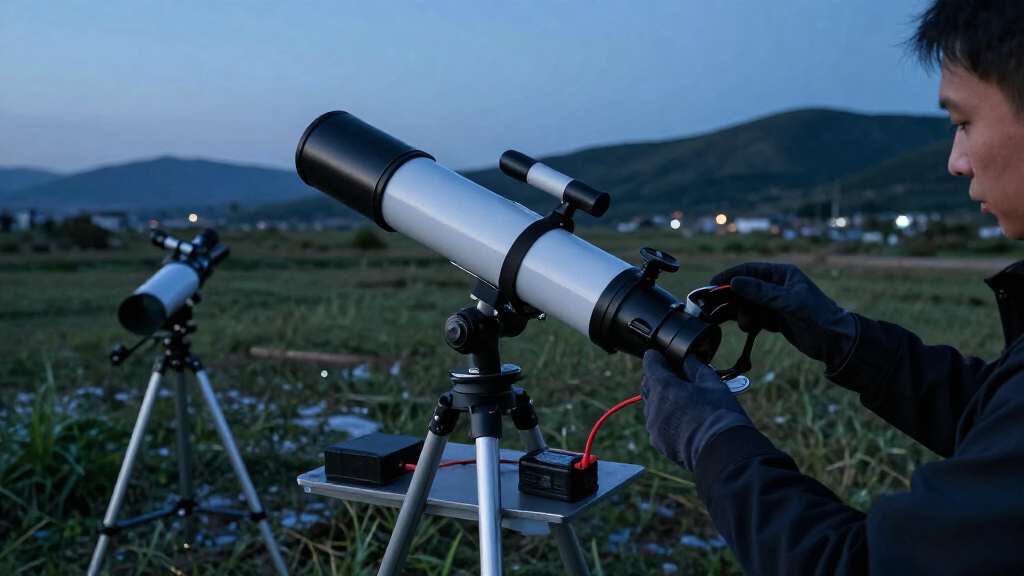
Dew formation can ruin an otherwise perfect night of astronomy, but the right portable telescope dew heater keeps your optics clear without draining your battery. My top overall pick is the SVBONY SV192 560 mm Telescope Dew Heater because it balances powerful heating elements with smart PWM temperature control, preventing the thermal currents that blur images. For those needing a compact solution for shorter sessions, the NEEWER HW-17B USB Lens Heater offers reliable USB power and a slim profile that fits easily on small refractors. The main tradeoff you will face is between raw heating power and energy efficiency; larger strips heat faster but demand more from your power bank, while smaller units may struggle in high humidity. I have compared these fourteen models to help you find the specific balance of fit, power, and control that matches your gear.

Prime made for students and young adults
- Fast, free delivery for dorm and study essentials
- Prime Video and Amazon Music included
- Member-only deals
Key Takeaways
- PWM (Pulse Width Modulation) temperature control, found on models like the SVBONY SV172 430mm, is superior to fixed-voltage heaters because it prevents overheating and reduces the thermal shimmer that degrades image quality.
- USB-powered heaters offer unparalleled convenience for beginners but often lack the amperage needed for large Schmidt-Cassegrain tubes in freezing conditions, where 12V systems remain the standard.
- Fit precision matters more than brand loyalty; a 400mm strip on a 300mm tube creates wasteful heat pockets, while a too-tight fit restricts airflow and risks damaging the dew shield.
- Slim profile heaters are critical for fast-focal-ratio astrographs, as bulky heating elements can cause vignetting if placed too close to the lens edge.
- Battery life varies drastically based on ambient temperature; a heater rated for 5W consumption may draw significantly more power in sub-zero winds to maintain the dew point differential.
| SVBONY SV172 240 mm Dew Heater Lens Warmer |  | Best for Small Refractors | Length: 240 mm | Width: 50 mm | Max Diameter: Below 76 mm | VIEW LATEST PRICE | See Our Full Breakdown |
| NEEWER HW-17B USB Lens Heater, 16 in / 400 mm |  | Best for Versatility | Total Length: 400 mm (16 in) | Effective Length: 300 mm (11.8 in) | Max Diameter: 86 mm | VIEW LATEST PRICE | See Our Full Breakdown |
| SVBONY SV172 320 mm Dew Heater Strip for Telescopes and Camera Lenses |  | Best for Even Heating | Length: 320 mm | Width: 50 mm | Material: Aluminum Film | VIEW LATEST PRICE | See Our Full Breakdown |
| NEEWER HW-23B USB Lens Heater, 23.6 in, 3 Temperature Settings | | Best for Large Telescopes | Total Length: 600 mm (23.6 in) | Effective Length: 500 mm (20 in) | Max Diameter: 150 mm | VIEW LATEST PRICE | See Our Full Breakdown |
| Astromania 25 cm USB Telescope Dew Heater Strip |  | Best for Precise Control | Length: 25 cm | Max Diameter: 80 mm (3.15 in) | Control Type: Stepless Sliding Knob | VIEW LATEST PRICE | See Our Full Breakdown |
| NEEWER HW-20B 20-Inch USB Lens Heater | | Best for Mixed Optical Gear | Effective Length: 15.7 in (400 mm) | Max Diameter: 120 mm | Power Source: 5V USB | VIEW LATEST PRICE | See Our Full Breakdown |
| SVBONY SV192 560 mm Telescope Dew Heater |  | Best for Large Aperture Telescopes | Heating Length: 560 mm | Max Diameter: 178 mm | Input Voltage: 12 V | VIEW LATEST PRICE | See Our Full Breakdown |
| SVBONY SV192 480 mm Telescope Dew Heater Strip |  | Best Mid-Size 12V Solution | Strip Length: 480 mm | Max Diameter: 152 mm | Power Input: 12V | VIEW LATEST PRICE | See Our Full Breakdown |
| Move Shoot Move 350 mm Lens Dew Heater Strip |  | Best for Cold Weather Flexibility | Size: 350 mm | Max Diameter: 4.26 in | Material: Neoprene | VIEW LATEST PRICE | See Our Full Breakdown |
| SVBONY SV172 USB Dew Heater Strip (400 mm) |  | Best Lightweight USB Option | Strip Length: 400 mm | Max Diameter: 127 mm | Weight: 4.3 ounces | VIEW LATEST PRICE | See Our Full Breakdown |
| Celestron 8-Inch Aluminum Dew Heater Ring |  | Best Integrated Solution for Celestron Owners | Compatibility: 8-inch Celestron SCT, EdgeHD, RASA | Material: Aluminum | Power Input: 12V DC | VIEW LATEST PRICE | See Our Full Breakdown |
| SVBONY SV172 430mm USB Lens Warmer |  | Best Premium Temperature Control | Effective Length: 430 mm | Total Length: 500 mm | Temperature Range: 25–70°C | VIEW LATEST PRICE | See Our Full Breakdown |
| KIWIFOTOS USB Lens Warmer (Under 80 mm) |  | Best for Small Optics and Beginners | Max Lens Diameter: 80 mm | Power Source: USB | Settings: Low, Medium, High | VIEW LATEST PRICE | See Our Full Breakdown |
| R-Sky Astro Instruments 6-Inch Dew Heater Strip |  | Best for Cold-Weather Durability | Size: 6 Inches | Power: 12V | Connector: RCA | VIEW LATEST PRICE | See Our Full Breakdown |
| portable telescope dew heater | Weight | Max Diameter |
|---|---|---|
| SVBONY SV172 240 mm Dew Heater | 66 g | Below 76 mm |
| NEEWER HW-17B USB Lens Heater | 2.65 oz | 86 mm |
| SVBONY SV172 320 mm Dew Heater | 6.3 oz | — |
| NEEWER HW-23B USB Lens Heater | 4.9 oz | 150 mm |
| Astromania 25 cm USB Telescope | — | 80 mm (3.15 in) |
| NEEWER HW-20B 20-Inch USB Lens | 5.3 oz | 120 mm |
| SVBONY SV192 560 mm Telescope | 5.6 ounces | 178 mm |
| SVBONY SV192 480 mm Telescope | 5.6 ounces | 152 mm |
| Move Shoot Move 350 mm Lens De | — | 4.26 in |
| SVBONY SV172 USB Dew Heater St | 4.3 ounces | 127 mm |
| Celestron 8-Inch Aluminum Dew | — | — |
| SVBONY SV172 430mm USB Lens Wa | 160 g | — |
| KIWIFOTOS USB Lens Warmer | 59 g | — |
| R-Sky Astro Instruments 6-Inch | — | — |
More Details on Our Top Picks
SVBONY SV172 240 mm Dew Heater Lens Warmer
This 240 mm strip is an excellent choice for small refractors and compact spotting scopes. Its 50 mm width is a key advantage, as it minimizes the risk of causing vignetting or interfering with focusing knobs on short barrels. Compared to the longer SVBONY SV172 320 mm, this shorter version wastes less energy on empty space, making it more efficient for small apertures. However, the limited length means it cannot wrap around larger objective lenses, restricting its versatility. It is a specialized tool rather than a universal solution, best used when you have a specific, smaller target in mind.
Pros:- Narrow 50 mm width prevents vignetting
- Compact length reduces power waste
- USB powered for easy field use
Cons:- Too short for lenses over 76 mm diameter
- Limited to small optical tubes
Best for: Owners of small refractors (70-80mm) who need a precise fit without excess bulk.
Not ideal for: Users with larger telescopes or zoom lenses, as the 240 mm length is insufficient for proper coverage.
- Length:240 mm
- Width:50 mm
- Max Diameter:Below 76 mm
- Power Input:5 V USB
- Heating Modes:Strong, Medium, Weak
- Cable Length:1.8 m
- Weight:66 g
Our verdict“A specialized, efficient heater for small refractors where excess length would be wasteful.”
NEEWER HW-17B USB Lens Heater, 16 in / 400 mm
The NEEWER HW-17B stands out for its 400 mm total length, offering significantly more reach than the SVBONY SV172 240 mm. This extra length allows it to accommodate a wider variety of camera lenses and medium-sized telescopes, making it a more flexible investment. The touch-fastener closure ensures a secure fit on irregular shapes, unlike simple strap designs that might slip. While the effective heating area is 300 mm, the overall bulk is still manageable. It serves as a strong middle-ground option for users who need one heater to cover multiple pieces of gear, though it may be overkill for tiny spotting scopes.
Pros:- Longer 400 mm length fits more gear
- Secure touch-fastener closure
- Three distinct temperature settings
Cons:- Effective heating length is shorter than total length
- Bulkier than smaller strips
Best for: Photographers and astronomers who switch between camera lenses and medium-sized telescopes.
Not ideal for: Those with very small lenses who want the most compact, low-profile solution possible.
- Total Length:400 mm (16 in)
- Effective Length:300 mm (11.8 in)
- Max Diameter:86 mm
- Temperature Settings:High, Medium, Low
- Power:5V USB
- Cable Length:1.5 m (4.9 ft)
- Weight:2.65 oz
Our verdict“A versatile, secure option that bridges the gap between small lenses and medium telescopes.”
SVBONY SV172 320 mm Dew Heater Strip for Telescopes and Camera Lenses
Featuring an aluminum film construction, this 320 mm strip is engineered to distribute heat evenly, reducing hot spots that can cause optical distortions. This makes it a superior choice compared to basic resistive wires found in some competitors like the Astromania 25 cm, which may heat unevenly. The 50 mm width balances coverage with the risk of vignetting, fitting well on standard refractor barrels. It is a step up in build quality and performance consistency. While it requires the same USB power source as others, the material choice suggests better durability and thermal performance for serious observers who prioritize optical clarity.
Pros:- Aluminum film ensures even heat distribution
- 320 mm length fits many standard refractors
- Narrow width minimizes vignetting risk
Cons:- No specified operating temperature range
- Requires external USB power
Best for: Serious observers who need consistent, even heat distribution to prevent optical aberrations.
Not ideal for: Casual users who need a basic, low-cost solution for very short sessions.
- Length:320 mm
- Width:50 mm
- Material:Aluminum Film
- Power Connection:USB
- Heat Settings:3 (Strong, Medium, Weak)
- Weight:6.3 oz
- Dimensions:5.9 x 4.7 x 1.7 inches
Our verdict“A high-quality strip that prioritizes even heating for optical fidelity.”
NEEWER HW-23B USB Lens Heater, 23.6 in, 3 Temperature Settings
With a 600 mm total length and a maximum diameter capacity of 150 mm, the NEEWER HW-23B is built for larger instruments that smaller strips cannot handle. It comfortably fits 8-inch Schmidt-Cassegrains or large telephoto lenses, whereas the NEEWER HW-17B would be too short. The touch-fastener system allows for quick adjustments on wide barrels, though the bulk is noticeable. This model is the heavy-duty option in the lineup, sacrificing portability for coverage. It is the only choice in this batch suitable for large aperture telescopes, making it indispensable for owners of big optics despite its larger footprint.
Pros:- Fits telescopes up to 150 mm diameter
- Long 600 mm strip covers large barrels
- Secure touch-fastener closure
Cons:- Bulky and heavier than smaller options
- Effective heating length is 500 mm, not full 600 mm
Best for: Owners of large refractors, SCTs, or big camera lenses who need extensive coverage.
Not ideal for: Backpackers or users with small gear who want to minimize weight and bulk.
- Total Length:600 mm (23.6 in)
- Effective Length:500 mm (20 in)
- Max Diameter:150 mm
- Temperature Settings:Low, Medium, High
- Power:5V USB
- Cable Length:1.5 m (4.9 ft)
- Weight:4.9 oz
Our verdict“The only option here capable of wrapping around large-aperture telescopes.”
Astromania 25 cm USB Telescope Dew Heater Strip
The Astromania 25 cm distinguishes itself with a sliding knob for stepless temperature adjustment, allowing users to dial in the exact heat needed rather than settling for fixed presets. This is a significant advantage over the SVBONY SV172 240 mm, which only offers three discrete modes. Fine control helps prevent overheating, which can cause air turbulence and blur images. The ABS material provides a rigid structure that resists kinking. While the 250 mm length limits it to lenses under 80 mm, the ability to fine-tune temperature makes it the best choice for sensitive imaging setups where thermal stability is critical.
Pros:- Stepless temperature adjustment via sliding knob
- Rigid ABS construction resists kinking
- Precise control prevents overheating
Cons:- Limited to lenses under 80 mm diameter
- Shorter length than many competitors
Best for: Astrophotographers who need precise, variable temperature control to minimize heat haze.
Not ideal for: Users with large telescopes, as the 250 mm length is too short for big barrels.
- Length:25 cm
- Max Diameter:80 mm (3.15 in)
- Control Type:Stepless Sliding Knob
- Voltage:5 V
- Material:ABS
- Warranty:2 Years
- Color:Orange
Our verdict“Ideal for users who prioritize precise thermal management over fixed settings.”
NEEWER HW-20B 20-Inch USB Lens Heater
This heater stands out for its versatile compatibility, fitting camera lenses, binoculars, and smaller telescopes alike. Unlike the SVBONY SV192 560 mm, which demands a dedicated 12V setup, this NEEWER model runs on standard 5V USB power, making it far more accessible for beginners who already carry power banks. The three temperature settings provide necessary flexibility for varying humidity levels, though the 5.3 oz weight is slightly heavier than some ultra-minimalist strips. Its touch fasteners offer a secure fit, but they can feel bulky compared to sleeker neoprene designs. This is an excellent choice if you want one tool that works across multiple optical devices without needing specialized power sources.
Pros:- Runs on universal 5V USB power
- Fits cameras, binoculars, and small telescopes
- Three adjustable heat levels
- Secure touch-fastener closure
Cons:- Heavier than neoprene alternatives
- Limited to 120 mm diameter equipment
Best for: Photographers and stargazers who switch between cameras, binoculars, and small scopes.
Not ideal for: Owners of large telescopes with diameters exceeding 120 mm, as it will not fit.
- Effective Length:15.7 in (400 mm)
- Max Diameter:120 mm
- Power Source:5V USB
- Temperature Settings:Low, Medium, High
- Weight:5.3 oz
- Cable Length:4.9 ft (1.5 m)
Our verdict“A flexible, USB-powered solution for users with mixed optical gear who want simple plug-and-play dew protection.”
SVBONY SV192 560 mm Telescope Dew Heater
Designed specifically for large optical tubes, this 560 mm strip accommodates lenses up to 178 mm in diameter, a capacity that the NEEWER HW-20B cannot match. Its narrow 50 mm width is a critical design feature, ensuring it does not interfere with focusing knobs or finder scopes on big scopes. However, it requires a 12V power source, which adds a layer of complexity compared to USB models. The alloy fiber heating wire provides robust, even heat distribution, essential for preventing dew on large primary mirrors. While the DC connector is standard for astronomy gear, it means you cannot simply plug this into a phone charger. It is the right choice for serious astronomers with 6-8 inch scopes who need reliable, high-output heating.
Pros:- Fits large lenses up to 178 mm
- Narrow profile avoids obstructing accessories
- Alloy fiber wire ensures even heating
- Three distinct heating modes
Cons:- Requires 12V power, not USB
- Overkill for small telescope tubes
Best for: Astronomers with telescopes between 150 mm and 178 mm outer diameter who use 12V power systems.
Not ideal for: Casual observers or those using small refractors who prefer the simplicity of USB power.
- Heating Length:560 mm
- Max Diameter:178 mm
- Input Voltage:12 V
- Width:50 mm
- Connector Type:DC 5.5 x 2.1 mm
- Weight:5.6 ounces
Our verdict“A high-capacity 12V heater strip ideal for protecting large-aperture telescopes from heavy dew.”
SVBONY SV192 480 mm Telescope Dew Heater Strip
This 480 mm strip fills the gap between small USB heaters and massive 12V rings. It fits primary mirrors up to 152 mm, making it a precise fit for popular 150 mm reflectors that the SVBONY SV192 560 mm might handle too loosely. The three-layer insulation is a standout feature, designed to minimize heat loss and improve efficiency in windy conditions. Like its larger sibling, it requires 12V power, which limits its use to setups with dedicated astronomy batteries. The 5.5 x 2.1 mm connector is standard, but the shorter cable might require extension in some mounting configurations. It is a specialized tool for specific mirror sizes, offering better thermal efficiency than wider, less insulated strips.
Pros:- Three-layer insulation reduces heat loss
- Precise fit for 152 mm mirrors
- Three-speed heat regulation
- Robust 12V power delivery
Cons:- Limited to 152 mm diameter
- Requires 12V power source
Best for: Owners of 150 mm telescopes who want a snug fit and better insulation than standard strips.
Not ideal for: Users with lenses larger than 152 mm or those without a 12V power supply.
- Strip Length:480 mm
- Max Diameter:152 mm
- Power Input:12V
- Insulation:Three-layer material
- Connector:5.5 x 2.1 mm female
- Weight:5.6 ounces
Our verdict“An insulated 12V heater strip optimized for 150 mm telescopes needing efficient dew prevention.”
Move Shoot Move 350 mm Lens Dew Heater Strip
Constructed from flexible neoprene, this heater is engineered to remain pliable down to -25°C, a significant advantage over plastic or rigid strips that stiffen in extreme cold. It fits lenses up to 4.26 inches, comparable to the NEEWER HW-20B, but the neoprene material provides better thermal retention and comfort against equipment. The USB power ensures compatibility with modern power banks, avoiding the need for 12V batteries. The hook-and-loop strap is easy to manage, though it may lack the precision tension of specialized astronomy mounts. This is not the most powerful heater, but its cold-weather resilience makes it indispensable for winter astrophotography sessions where other materials become brittle or ineffective.
Pros:- Remains flexible down to -25°C
- Neoprene material retains heat well
- USB powered for easy portability
- Adjustable strap for secure fit
Cons:- Limited to 4.26 inch diameter
- Lower max temperature than some 12V strips
Best for: Winter astrophotographers who need a heater that stays flexible in freezing temperatures.
Not ideal for: Users with telescopes larger than 4.26 inches or those needing maximum heat output.
- Size:350 mm
- Max Diameter:4.26 in
- Material:Neoprene
- Input Voltage:5 V USB
- Cold Flexibility:-25°C
- Max Temp:167°F
Our verdict“A durable, cold-resistant neoprene heater ideal for winter nights and small-to-medium lenses.”
SVBONY SV172 USB Dew Heater Strip (400 mm)
Weighing only 4.3 ounces, this heater is significantly lighter than the NEEWER HW-20B, making it less likely to add unwanted weight to delicate tripod setups. The aluminum heating element ensures consistent warmth across the strip, addressing a common flaw in cheaper resistive wires. It fits lenses under 127 mm, a sweet spot for many popular refractors and camera lenses. The 1.8 m cable is longer than the NEEWER’s, offering more freedom in positioning the power bank. However, like all USB strips, it relies on stable 5V/2A power, which can drain smaller power banks quickly. This is the go-to choice for minimalists who prioritize weight savings and cable length over maximum heat output.
Pros:- Ultra-lightweight at 4.3 ounces
- Long 1.8 m USB cable
- Aluminum element for even heat
- Three adjustable heat settings
Cons:- Limited to 127 mm diameter
- USB power may drain small banks
Best for: Minimalists who need a lightweight, long-cable USB heater for lenses under 127 mm.
Not ideal for: Users with heavy telescopes needing robust 12V power or large aperture coverage.
- Strip Length:400 mm
- Max Diameter:127 mm
- Weight:4.3 ounces
- Cable Length:1.8 m
- Power Input:5 V USB
- Heating Element:Aluminum
Our verdict“A lightweight, long-cabled USB heater perfect for reducing gear weight on small optical tubes.”
Celestron 8-Inch Aluminum Dew Heater Ring
This option stands out for 8-inch Celestron owners seeking a permanent, low-profile solution. Unlike the SVBONY SV172 430mm USB Lens Warmer, which wraps around the tube and can look bulky, this ring integrates directly into the front assembly by replacing the retaining ring. This creates a seamless aesthetic and eliminates the risk of the heater slipping or shifting during transport. The rigid aluminum construction ensures consistent contact with the corrector plate, which is vital for even heat distribution across large optics.
However, the tradeoff is strict compatibility and the need for a 12V DC power source, unlike the USB-powered alternatives in this roundup. You cannot easily move this heater to a different telescope size or brand. For those who own multiple scopes or prefer the flexibility of USB power banks, this fixed design is a limitation. Yet, for dedicated Celestron users, it offers the cleanest setup available.
Pros:- Integrates seamlessly with the telescope front assembly
- Rigid aluminum ensures consistent thermal contact
- Includes storage clips for neat cable management
- Backed by a solid 2-year warranty
Cons:- Limited strictly to specific 8-inch Celestron models
- Requires an external 12V DC power source, not USB
Best for: Owners of 8-inch Celestron Schmidt-Cassegrain, EdgeHD, or RASA telescopes who want a permanent, integrated dew prevention solution.
Not ideal for: Multi-scope users or those who prefer USB power sources, as this unit is size-specific and requires a 12V DC supply.
- Compatibility:8-inch Celestron SCT, EdgeHD, RASA
- Material:Aluminum
- Power Input:12V DC
- Mounting Type:Retaining Ring Replacement
- Accessories:Cable management clip, jack storage
- Warranty:2 Years
Our verdict“The definitive choice for 8-inch Celestron owners prioritizing a clean, integrated look over universal compatibility.”
SVBONY SV172 430mm USB Lens Warmer
This model is better suited to precision-focused astrophotographers who need exact thermal management. Compared to the R-Sky Astro Instruments 6-Inch Heater, which relies on an external controller, this SVBONY unit features built-in PWM temperature control with a digital display. This allows you to dial in the exact wattage needed to prevent dew without overheating delicate optics. The 430mm effective length makes it versatile enough for many refractors and camera lenses, offering a balance between coverage and portability.
The primary drawback is its USB dependency. While convenient, it lacks the raw power potential of 12V systems for very large or heavily frosted scopes. Additionally, the 500mm total length includes non-heating sections, meaning you must position it carefully to ensure the active zone covers your lens. It is a smart investment for those who value control and visibility over raw heating power.
Pros:- Digital display with PWM for precise temp control
- USB powered for easy access to power banks
- Versatile length fits many optical tubes
- Accurate 2°C control range
Cons:- Effective heating length is shorter than total length
- Dependent on USB power stability and voltage
Best for: Astrophotographers using refractors or camera lenses who require precise, adjustable temperature settings via a digital interface.
Not ideal for: Users with very large telescopes needing high-wattage 12V systems, or those who dislike managing USB power banks.
- Effective Length:430 mm
- Total Length:500 mm
- Temperature Range:25–70°C
- Control Type:PWM with Display
- Power Supply:USB
- Weight:160 g
- Warranty:1 Year
Our verdict“Ideal for tech-savvy users who want visible, adjustable control over their dew prevention process.”
KIWIFOTOS USB Lens Warmer (Under 80 mm)
This pick makes the most sense for owners of small refractors or camera lenses under 80mm. It is significantly more compact than the SVBONY SV172 430mm USB Lens Warmer, weighing only 59g, which minimizes strain on lightweight mounts. The three-setting regulator (Low, Medium, High) offers a simple, no-fuss approach to dew prevention, avoiding the complexity of digital controllers. Its USB interface allows you to plug directly into a smartphone power bank, making it incredibly portable for impromptu observing sessions.
The major limitation is the 80mm diameter cap. If you own a 102mm or larger refractor, this heater will not fit, forcing you to look at larger options. Furthermore, the random shipping of controller designs means you might receive an older or newer version, which can be frustrating for consistency. It is a functional, basic tool for small-aperture users who prioritize simplicity and low weight.
Pros:- Extremely lightweight at 59g
- Simple three-level temperature adjustment
- Fits small lenses under 80mm perfectly
- Works with any standard USB power source
Cons:- Strict 80mm diameter limit excludes most astro scopes
- Inconsistent controller designs shipped randomly
Best for: Beginners and users of small refractors (under 80mm) or camera lenses who need a lightweight, simple USB solution.
Not ideal for: Owners of medium to large telescopes, as the heater physically cannot fit lenses over 80mm in diameter.
- Max Lens Diameter:80 mm
- Power Source:USB
- Settings:Low, Medium, High
- Weight:59 g
- Regulator Cable:1.5 m
- Brand:KIWIFOTOS
Our verdict“A lightweight, no-nonsense dew heater for small lenses where size and weight are the primary constraints.”
R-Sky Astro Instruments 6-Inch Dew Heater Strip
This option stands out for its hand-assembled build quality and focus on extreme conditions. Unlike the USB-powered SVBONY SV172, this 12V RCA strip is designed for robust, continuous power delivery, making it suitable for sub-zero environments. The cold-resistant power cord is a critical feature, as standard cables often stiffen and crack in winter, potentially causing connection failures. The uniform heat distribution helps prevent hot spots that could distort the optical path on a 6-inch scope.
The significant tradeoff is the lack of a controller. You must purchase a separate dew heater controller to use this strip, adding to the total cost and complexity. Compared to all-in-one USB units, this setup requires more planning and gear. However, for serious winter observers who need a reliable, high-power system for 6-inch optics, the dedicated 12V architecture offers stability that USB systems often struggle to match in freezing temperatures.
Pros:- Cold-resistant cord stays flexible in freezing temps
- Hand-assembled with premium components
- Uniform heat distribution for 6-inch optics
- Robust 12V RCA connection for stable power
Cons:- Controller not included, requiring additional purchase
- Size-specific fit for 6-inch telescopes only
Best for: Winter astrophotographers with 6-inch telescopes who need a rugged, 12V system with cold-flexible cabling.
Not ideal for: Casual observers who want a plug-and-play solution, as this requires a separate controller and 12V power source.
- Size:6 Inches
- Power:12V
- Connector:RCA
- Cord Feature:Cold-Resistant/Flexible
- Compatibility:Refractor, SCT, Mak, Newtonian
- Warranty:2 Years
- Controller:Sold Separately
Our verdict“A durable, professional-grade heater strip for 6-inch scopes in harsh winter conditions, provided you supply your own controller.”
How We Picked
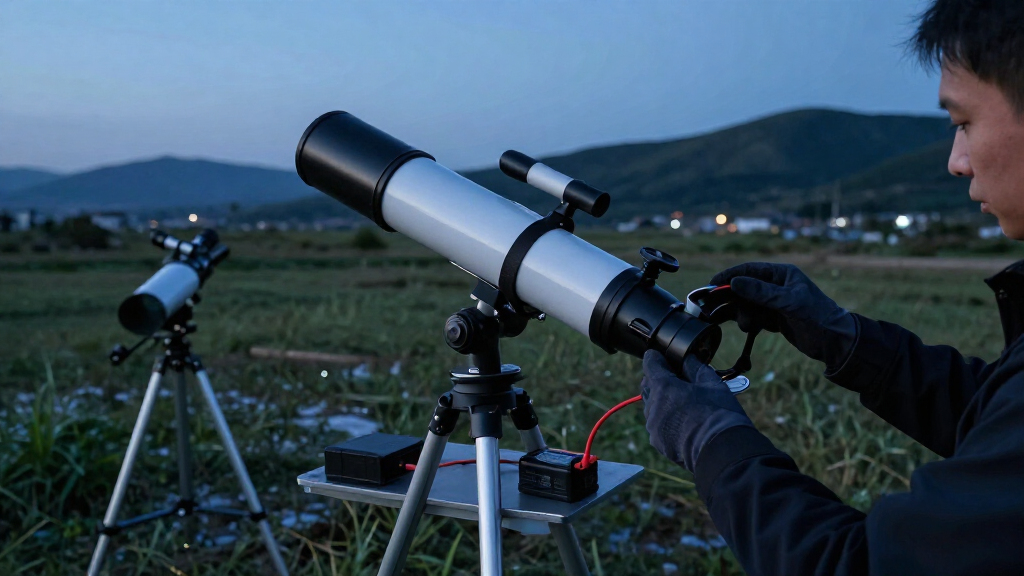
To rank these portable telescope dew heaters, I prioritized thermal efficiency and control mechanisms over simple brand recognition. Fixed-temperature heaters are common and cheap, but they often overheat optics, creating thermal turbulence that ruins high-magnification planetary views. Therefore, models offering adjustable power or PWM control received higher rankings for their ability to maintain a stable temperature just above the dew point. I also evaluated power compatibility, distinguishing between USB-C, micro-USB, and 12V DC inputs. A heater that cannot run efficiently on a standard portable power bank becomes a burden for field use, limiting its practicality for mobile astronomers.
Build quality and physical design were the final differentiators. I looked for slim, low-profile heating elements that do not induce vignetting in fast optical systems. Additionally, the durability of the connector and the flexibility of the heating strip were assessed. A stiff, brittle strip can crack in cold weather, while a poorly secured connector can disconnect mid-session, leading to rapid dew formation. This combination of electronic control, power flexibility, and physical robustness determined the final order of this roundup.
Factors to Consider When Choosing Portable Telescope Dew Heaters
Choosing a dew heater is not just about size; it is about managing the thermal boundary layer around your optics. Here are the critical factors to weigh before making a purchase.Power Source and Battery Efficiency
Most modern portable heaters run on USB (5V) or 12V DC. USB is convenient because you can use standard power banks, but amperage limits can be a hidden issue. A 10000mAh power bank sounds large, but if your heater draws 2A continuously, you will only get about 2-3 hours of runtime, which might not last a full all-nighter. In contrast, 12V systems, often used with dedicated astronomy power supplies, handle larger heaters more efficiently. If you plan to use large 8-inch or 10-inch telescopes, a 12V system is often more practical than fighting USB voltage drops. Always check the wattage rating of the heater against your power source’s output capacity.
Temperature Control and Thermal Shimmer
Not all heaters are created equal when it comes to heat distribution. Basic resistive strips get hot and stay hot, which can create thermal currents rising through the optical path. This phenomenon, known as shimmer, blurs fine details on the moon and planets. Advanced units use Pulse Width Modulation (PWM) to rapidly switch the power on and off, maintaining a consistent temperature with less energy waste and less turbulence. For astrophotography, where long exposures amplify these effects, investing in a controller with variable intensity or automatic dew point tracking is worth the extra cost to preserve image sharpness.
Sizing and Fit Precision
A common mistake is buying a heater strip that is too long for the dew shield. Excess length results in overlapping heating elements, which creates hot spots that can damage coatings or cause uneven expansion of the tube. Conversely, a strip that is too short leaves sections of the glass exposed to dew. Measure the outer diameter of your dew shield precisely. You want a heater that fits snugly but does not stretch the elastic or Velcro to its limit. For irregularly shaped dew shields, such as those on Newtonians, look for flexible strips with strong adhesive backing rather than rigid rings.
Profile and Vignetting Risks
The physical thickness of the heater matters, especially for fast focal ratio telescopes (f/5 or faster). Bulky heating elements can intrude into the light path, causing vignetting (darkened corners) in your images. Slim-profile heaters are designed to sit flush against the tube. If you are using a Schmidt-Cassegrain or a fast refractor, ensure the heater does not extend beyond the outer edge of the dew shield. Some premium models use thin, uniform heating wires encased in flexible silicone, which minimizes this risk while providing even heat distribution across the entire glass surface.
Frequently Asked Questions
Do I really need a dew heater if I use my telescope in summer?
Yes, dew is not exclusive to winter nights. In summer, the ground radiates heat rapidly after sunset, often causing the air temperature to drop below the dew point quickly. This is especially true in humid climates or near bodies of water. While summer dew might be less persistent than winter frost, it can still form on your primary mirror or corrector plate within minutes. A heater keeps the glass just a few degrees above the ambient air temperature, preventing condensation from forming in the first place, which is far easier than cleaning wet optics in the dark.
Can I use a car charger to power my telescope dew heater?
You can, but it is generally not recommended for precision work. Car batteries are designed for high-current starting, not steady, low-draw continuous loads. While a 12V car charger will power a dew heater, the electrical noise from the car’s alternator and other electronics can sometimes introduce interference, though this is rare with simple resistive heaters. More importantly, leaving a car running for hours to power a small device is inefficient and environmentally unfriendly. A dedicated 12V lithium power bank or a USB power bank is a cleaner, quieter, and more portable solution for field astronomy.
How do I know if my dew heater is overheating my optics?
Overheating is visible through thermal shimmer in your eyepiece view, where the image appears to ripple or boil slightly, particularly at high magnifications. You might also notice that the image contrast drops because the heater is creating convection currents inside the tube. If you use a controller, lower the power setting until the shimmer disappears but the glass remains dry. Ideally, the heater should only be warm to the touch, not hot. Modern controllers with ambient temperature sensors can automate this process, adjusting power to keep the optics just above the dew point without excess heat.
Is a ring heater better than a strip heater for Schmidt-Cassegrains?
Ring heaters, like the Celestron 8-Inch Aluminum Dew Heater Ring, are generally superior for Schmidt-Cassegrains because they provide rigid, uniform pressure and heat distribution around the corrector plate. They are easy to install and remove without fiddling with Velcro or adhesives. Strip heaters are more versatile and can fit odd shapes, but they can shift during transport or observation. If you own a specific model of SCT, a dedicated ring heater is often the most reliable choice, ensuring the heater never slides off the dew shield during setup.
How much power does a dew heater actually consume?
Power consumption varies widely depending on the size and temperature setting. A small 400mm USB strip might draw between 1.5 and 3 watts, while a large 12V heater for an 8-inch telescope can draw 10 to 15 watts or more. On a standard 10000mAh USB power bank (approx. 37Wh), a 3W heater will last roughly 12 hours, whereas a 10W heater will last only about 3.5 hours. Always calculate your expected observing session length and ambient temperature to ensure your power source is adequate; colder nights require more wattage to maintain the dew point differential.
Conclusion
Selecting the right portable telescope dew heater depends largely on your telescope type and power infrastructure. For most users seeking a balance of performance and ease of use, the SVBONY SV192 560 mm Telescope Dew Heater stands out as the Best Overall choice due to its effective PWM control and robust build, which prevents the thermal shimmer that plagues cheaper units. If you are just starting out or observing with smaller refractors, the NEEWER HW-17B USB Lens Heater is the Best Value and Best for Beginners, offering plug-and-play simplicity with standard USB power. For owners of large Schmidt-Cassegrains who need reliable, high-wattage performance, the Celestron 8-Inch Aluminum Dew Heater Ring is the Best Premium option, providing a secure, rigid fit that strips cannot match. Finally, if you are constrained by battery life or observing in mild conditions, the Astromania 25 cm USB Telescope Dew Heater Strip is an excellent Compact Choice that minimizes power draw while keeping optics clear. Match the heater’s wattage and form factor to your specific gear, and you will spend less time wiping lenses and more time observing the stars.