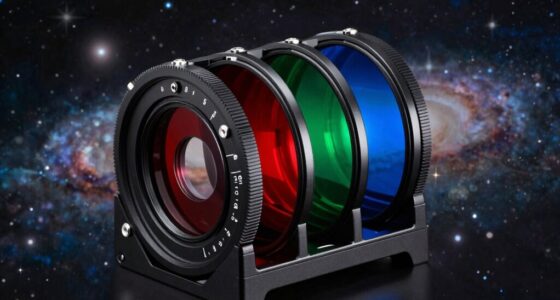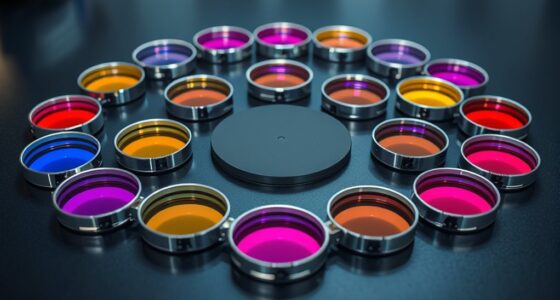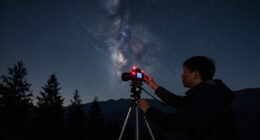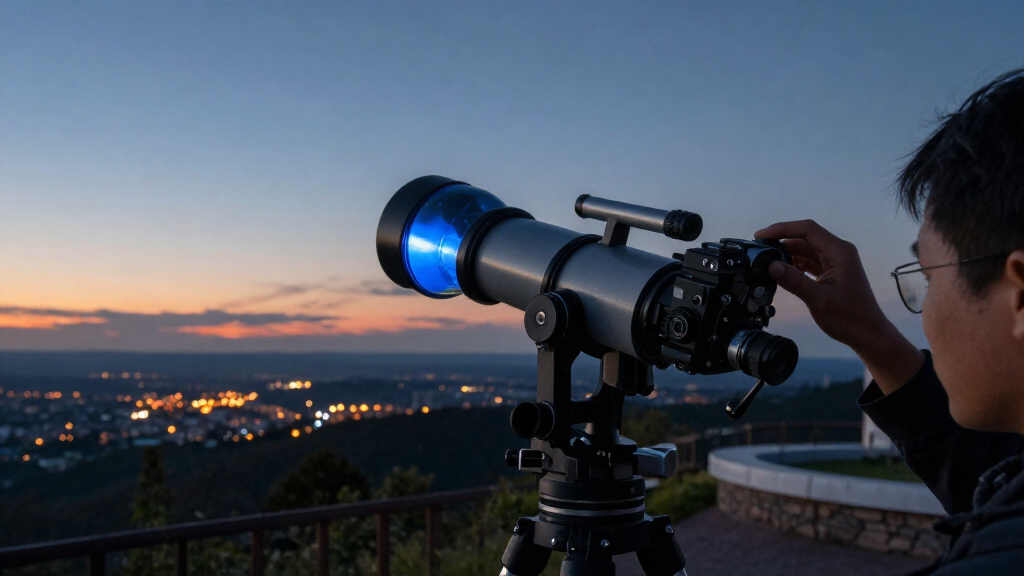
Choosing the right astrophotography light pollution filters depends heavily on whether you are shooting from a light-polluted backyard or a dark rural site. My top overall pick is the SVBONY SV220 3nm Dual-Band H-Alpha and OIII Telescope Filter because it delivers extreme isolation for narrowband targets, effectively turning day into night for emission nebulae. For those who prefer broadband imaging without the complexity of narrowband, the Hoya Starscape 52mm Light Pollution Filter stands out for its excellent color balance and minimal star dimming compared to cheaper alternatives. The main tradeoff in this category is between light rejection and signal loss; aggressive filters block more sky glow but also cut down on faint starlight and broadband nebula details. Continue reading for a detailed breakdown of how these fifteen options perform under different sky conditions.

Prime made for students and young adults
- Fast, free delivery for dorm and study essentials
- Prime Video and Amazon Music included
- Member-only deals
Key Takeaways
- Narrowband filters (3nm-7nm) offer superior light pollution rejection but require significantly longer exposure times and are strictly for emission targets.
- Broadband UHC filters strike a balance by blocking common LED and sodium street lights while preserving enough signal for broader target lists.
- Glass substrate quality matters more than brand name in budget filters; cheaper resin-based options often introduce color casts that are difficult to correct.
- Filter thickness impacts vignetting; 2-inch filters are generally safer for fast focal ratios than their 1.25-inch counterparts.
- Dual-band filters provide the best value for beginners by allowing color separation of H-Alpha and OIII in a single pass, though monochrome cameras yield better results.
| Hoya Starscape 52mm Light Pollution Filter for Astrophotography |  | Best for Wide-Angle Camera Lenses | Filter size: 52mm | Glass: Didymium optical glass | Coating: Multi-coated | VIEW LATEST PRICE | See Our Full Breakdown |
| SVBONY 1.25-Inch UHC Telescope Filter |  | Best Value UHC Starting Point | Filter type: UHC nebula filter | Thread size: 31.75mm (1.25 inches) | Lens material: Optical glass | VIEW LATEST PRICE | See Our Full Breakdown |
| Celestron UHC/LPR Light Pollution Reduction Filter, 1.25-inch |  | Best-Specified UHC/LPR Option | Model: 94123-CGL | Filter size: 1.25 inches | Transmission: Over 97% across the bandpass | VIEW LATEST PRICE | See Our Full Breakdown |
| K&F Concept 58mm Natural Night Light Pollution Reduction Filter |  | Best for Color-Preserving Night Photography | Filter size: 58mm | Material: Optical glass | Coating: 28 multi-layer coatings; nano coating | VIEW LATEST PRICE | See Our Full Breakdown |
| SVBONY SV220 7nm SII & OIII Dual-Band Telescope Filter, 1.25-Inch |  | Best for One-Shot Color Narrowband Imaging | Model: SV220 | Filter bands: SII and OIII | Bandwidth: 7nm | VIEW LATEST PRICE | See Our Full Breakdown |
| K&F Concept 67mm Natural Night Light Pollution Reduction Filter | | Best for Natural-Color Night Photography | Filter size: 67mm | Material: Optical glass | Coating: 28 multi-layer coatings; nano coating | VIEW LATEST PRICE | See Our Full Breakdown |
| Walking Way 77mm Natural Night Filter for Astrophotography |  | Best for 77mm Lens Versatility | Filter size: 77mm | Thread size: 7.7 centimeters | Material: Neodymium optical glass | VIEW LATEST PRICE | See Our Full Breakdown |
| SVBONY SV220 3nm Dual-Band H-Alpha and OIII Telescope Filter, 2-Inch |  | Best for Narrowband Nebula Imaging | Filter type: Dual-band H-Alpha and OIII narrowband | Bandwidth: 3±1 nm | Cutoff wavelength range: 300–1050 nm | VIEW LATEST PRICE | See Our Full Breakdown |
| Hoya Starscape 49mm Light Pollution Filter for Astrophotography |  | Best for Compact 49mm Camera Lenses | Filter size: 49mm | Glass: Didymium | Coating: Multi-coated | VIEW LATEST PRICE | See Our Full Breakdown |
| 2″ L-Enhance Dual Narrowband Light Pollution Filter (H-Alpha and H-Beta/O-III) |  | Best for Multi-Line Emission Imaging | Filter type: Dual-band pass filter | Target emission lines: H-Alpha, H-Beta, and OIII | Maximum transmission: Up to 90% | VIEW LATEST PRICE | See Our Full Breakdown |
| HOYA Starscape 55mm Light Pollution Filter |  | Best for Wide-Angle DSLR Shooters | Brand: HOYA | Filter Size: 55mm | Glass Type: Didymium optical glass | VIEW LATEST PRICE | See Our Full Breakdown |
| SVBONY SV240 2-Inch Multi-Narrowband Telescope Filter |  | Best for Deep-Sky Emission Nebulae | Brand: SVBONY | Model: SV240 | Filter Size: 2 inches | VIEW LATEST PRICE | See Our Full Breakdown |
| FIBONAX 1.25-Inch UHC Telescope Filter |  | Best Value for Telescope Viewing | Brand: FIBONAX | Filter Size: 1.25 inches (31.75 mm) | Thread Size: M28.5×0.6 | VIEW LATEST PRICE | See Our Full Breakdown |
| HOYA 67mm STARSCAPE Light Pollution Astrophotography Filter |  | Best for Standard Zoom Lenses | Brand: HOYA | Filter Size: 67mm | Glass Type: Didymium | VIEW LATEST PRICE | See Our Full Breakdown |
| SVBONY 2-Inch UHC Telescope Filter |  | Best for Large-Format Visual Observing | Brand: SVBONY | Filter Type: UHC | Compatible Size: 2-inch | VIEW LATEST PRICE | See Our Full Breakdown |
| astrophotography light pollution filter | Filter size | Coating | Water resistance |
|---|---|---|---|
| Hoya Starscape 52mm Light Poll | 52mm | Multi-coated | Water resistant |
| SVBONY 1.25-Inch UHC Telescope | — | Multi-coated | Not water resistant |
| Celestron UHC/LPR Light Pollut | 1.25 inches | — | — |
| K&F Concept 58mm Natural Night | 58mm | 28 multi-layer coatings; nano coating | Waterproof |
| SVBONY SV220 7nm SII & OIII Du | — | Multi-coated | Not water resistant |
| K&F Concept 67mm Natural Night | 67mm | 28 multi-layer coatings; nano coating | Waterproof |
| Walking Way 77mm Natural Night | 77mm | 28-layer multi-coating | Water resistant |
| SVBONY SV220 3nm Dual-Band H-A | 2 inches | — | — |
| Hoya Starscape 49mm Light Poll | 49mm | Multi-coated | Water resistant |
| 2" L-Enhance Dual Narrowband L | — | — | Not water resistant |
| HOYA Starscape 55mm Light Poll | 55mm | Multi-coated | — |
| SVBONY SV240 2-Inch Multi-Narr | 2 inches | — | — |
| FIBONAX 1.25-Inch UHC Telescop | 1.25 inches (31.75 mm) | — | — |
| HOYA 67mm STARSCAPE Light Poll | 67mm | Multi-coated | — |
| SVBONY 2-Inch UHC Telescope Fi | — | — | — |
More Details on Our Top Picks
Hoya Starscape 52mm Light Pollution Filter for Astrophotography
The Hoya Starscape is a camera-lens filter for photographers who want to reduce yellow-orange skyglow without moving to a telescope-specific nebula filter. Its didymium glass targets that color cast, while stated transmission of 97%+ helps limit the light loss that could affect exposure. The slim aluminum frame is designed to reduce vignetting, a useful advantage on wide lenses; the K&F Concept 58mm Natural Night filter offers a similar camera-oriented role but fits a different thread size and emphasizes protective coatings. This Hoya is less specialized than the SVBONY UHC filters, which target emission nebulae rather than broad night-sky and cityscape photography. The main constraint is fit: it screws directly onto 52mm filter threads, so buyers with other lens sizes need a different filter or a step-up ring.
Pros:- Didymium glass is specified to reduce yellow-orange light pollution.
- 97%+ stated transmission helps limit light loss.
- Slim aluminum frame is designed to reduce vignetting on wide-angle lenses.
- Water-resistant construction suits outdoor night photography.
Cons:- Direct fit is limited to lenses with 52mm filter threads.
- Its general night-photography approach is less specialized for emission nebulae than a UHC filter.
- The product data does not specify a narrowband passband for suppressing broad-spectrum skyglow.
Best for: Night-sky and cityscape photographers with 52mm-thread lenses who want to reduce yellow-orange light pollution while retaining a camera-lens workflow.
Not ideal for: Telescope users seeking narrowband or UHC emission-nebula contrast, and camera owners whose lenses lack 52mm filter threads.
- Filter size:52mm
- Glass:Didymium optical glass
- Coating:Multi-coated
- Light transmission:97%+
- Frame material:Aluminum
- Weight:1.6 ounces
- Water resistance:Water resistant
Our verdict“Choose the Hoya Starscape if you shoot night skies with a 52mm lens and want a camera-oriented filter rather than a telescope nebula filter.”
SVBONY 1.25-Inch UHC Telescope Filter
This SVBONY UHC is a straightforward entry into emission-nebula filtering: it blocks selected artificial-light wavelengths to darken the background and bring nebular contrast forward. The standard 1.25-inch thread fits compatible telescope eyepieces and imaging accessories, and the product is described for both visual observing and astrophotography. Compared with the Celestron UHC/LPR, this model lists no transmission percentage or defined passband, so buyers have less specification detail for judging how it may perform on particular targets. It is also a different tool from the Hoya Starscape 52mm, which mounts on a camera lens and aims at broader night-sky color correction. This filter makes sense for a basic telescope UHC setup, but it is not a general-purpose camera filter, and its lack of water resistance calls for care during damp sessions.
Pros:- UHC design targets emission-nebula contrast against a darker background.
- Standard 1.25-inch thread fits compatible telescope eyepieces and accessories.
- Listed for both visual observation and astrophotography.
- Multi-coated optical glass is used in the filter.
Cons:- Not water resistant, so exposure to dew or moisture requires care.
- No transmission percentage or passband width is provided in the supplied specifications.
- Nebula-focused filtering is less versatile for general camera-lens night photography.
Best for: Telescope owners with 1.25-inch accessories who want a basic UHC filter for visual observation or emission-nebula imaging.
Not ideal for: Camera-lens astrophotographers seeking broad night-sky color correction, or buyers who need a water-resistant filter or detailed passband specifications.
- Filter type:UHC nebula filter
- Thread size:31.75mm (1.25 inches)
- Lens material:Optical glass
- Frame material:Aluminum
- Coating:Multi-coated
- Weight:40g
- Water resistance:Not water resistant
- Warranty:1 year
Our verdict“Pick this SVBONY when you need a basic 1.25-inch UHC filter for nebulae and do not need detailed bandpass data or weather resistance.”
Celestron UHC/LPR Light Pollution Reduction Filter, 1.25-inch
The Celestron UHC/LPR earns this spot for pairing a stated 60nm passband with over 97% transmission across the bandpass. Those figures give telescope users more technical detail than the SVBONY 1.25-Inch UHC, whose supplied specifications do not state a bandwidth or transmission level. The Celestron also lists an H-alpha passband at 656nm, supporting its stated use for emission-nebula imaging. Its multi-layer hardened coatings are a practical advantage for equipment that may see repeated handling, while the Hoya Starscape 52mm remains the more natural fit for camera lenses and general night-sky color correction. This is not an all-target solution: its 1.25-inch format and nebula-focused passband narrow its audience, and the supplied data does not establish broad benefits for every deep-sky object.
Pros:- 60nm passband and over 97% transmission across the bandpass are specified.
- H-alpha passband at 656nm is listed for imaging.
- Designed to reduce common artificial light and atmospheric skyglow.
- Multi-layer hardened coatings are described as scratch-resistant.
Cons:- The 1.25-inch format does not fit larger telescope accessories without suitable adapters.
- Nebula-focused performance may not suit every observing or imaging target.
- The stated passband does not make it equivalent to a narrowband dual-line filter.
Best for: Telescope users with 1.25-inch fittings who image or observe emission nebulae and want a filter with stated passband and transmission figures.
Not ideal for: Camera-lens photographers, owners of 2-inch telescope accessories, or observers seeking one filter for targets beyond emission nebulae.
- Model:94123-CGL
- Filter size:1.25 inches
- Transmission:Over 97% across the bandpass
- Passband:60nm
- H-alpha passband:656nm
- Item weight:0.03kg
- Warranty:2-year limited warranty
Our verdict“Choose the Celestron if you want a 1.25-inch nebula filter with explicit passband and transmission specifications rather than a less-documented UHC option.”
K&F Concept 58mm Natural Night Light Pollution Reduction Filter
The K&F Concept 58mm is aimed at photographers who want a camera-lens filter for night scenes while keeping colors looking natural. Its 28 multi-layer coatings and nano coating are described as waterproof, oil-resistant, and scratch-resistant, giving it a more protective coating specification than the Hoya Starscape 52mm, which instead highlights didymium glass and high light transmission. The slim frame is designed to help avoid vignetting on wide-angle and telephoto lenses, and its use case extends from city scenes to star photography. Unlike the SVBONY UHC filters, it is not presented as a telescope filter for isolating emission-nebula wavelengths. Its key limitation is straightforward but decisive: it fits 58mm-thread lenses, so it will not directly mount on other lens sizes, and the supplied data gives no quantified transmission or passband.
Pros:- Designed to reduce light pollution while preserving natural colors.
- 28 multi-layer coatings and nano coating are specified.
- Waterproof, oil-resistant, and scratch-resistant coating claims suit outdoor use.
- Slim frame is designed to help avoid vignetting on wide-angle and telephoto lenses.
Cons:- Direct compatibility is limited to camera lenses with 58mm filter threads.
- No transmission percentage or passband width is supplied.
- Unlike telescope UHC filters, it is not specified as a narrowband emission-nebula filter.
Best for: Camera photographers with 58mm-thread lenses who shoot city nights and stars and want light-pollution reduction with color preservation and protective coatings.
Not ideal for: Telescope imagers seeking UHC or narrowband emission-nebula filtering, and photographers whose lenses have thread sizes other than 58mm.
- Filter size:58mm
- Material:Optical glass
- Coating:28 multi-layer coatings; nano coating
- Special effect:Light pollution reduction
- Water resistance:Waterproof
- Compatible devices:Cameras with 58mm filter-thread lenses
- Weight:3.52 ounces
- Model number:KF01.1116
Our verdict“Choose this K&F Concept filter for color-conscious night photography with a 58mm camera lens, not for telescope-based narrowband nebula imaging.”
SVBONY SV220 7nm SII & OIII Dual-Band Telescope Filter, 1.25-Inch
Unlike the broader UHC filters in this group, the SVBONY SV220 targets SII and OIII emission through a stated 7nm bandwidth. That narrow dual-band design is intended to help one-shot color cameras record emission nebulae and related deep-sky targets in light-polluted or moonlit conditions, without swapping between separate filters to capture those bands. Compared with the Celestron UHC/LPR, it is the more specialized imaging choice; the Celestron instead offers a 60nm passband and a broader UHC/LPR approach. The SV220’s 1.25-inch size and 28.5mm thread mean camera compatibility depends on the right mount or adapter, so buyers should check their optical train before choosing it. It is also not water resistant, and its narrowband purpose makes it a poor match for general night landscapes or broadband targets.
Pros:- Combines SII and OIII bands in one filter for compatible one-shot color imaging.
- Stated 7nm bandwidth is aimed at suppressing unwanted light and skyglow.
- Designed for emission nebulae, planetary nebulae, and supernova remnants.
- OD5 cutoff depth and multi-coated construction are specified.
Cons:- Primarily intended for astrophotography rather than general visual or camera-lens use.
- Compatibility depends on a suitable 1.25-inch connection and camera mount.
- Not water resistant, which calls for care during damp observing sessions.
Best for: Astrophotographers using a compatible one-shot color camera and 1.25-inch optical setup to image emission nebulae under light pollution or moonlight.
Not ideal for: Nightscape photographers, broadband-target imagers, or telescope owners without a compatible 1.25-inch filter connection and camera mount.
- Model:SV220
- Filter bands:SII and OIII
- Bandwidth:7nm
- Size:1.25 inches
- Thread size:28.5mm
- Coating:Multi-coated
- Cut-off depth:OD5
- Water resistance:Not water resistant
- Warranty:1 year
Our verdict“Choose the SV220 if your compatible one-shot color imaging setup can use a 1.25-inch filter and your main targets emit SII and OIII.”
K&F Concept 67mm Natural Night Light Pollution Reduction Filter
The K&F Concept is a sensible choice for photographers who want to reduce the look of urban light pollution without making the sky colors the main event. Its natural-color design suits night landscapes and city scenes where preserving the scene’s overall color matters more than isolating specific nebula emission lines. Compared with the Hoya Starscape 49mm, this filter fits a larger lens thread and emphasizes natural color rather than targeting yellow-orange light specifically. The slim 0.15-inch frame is helpful with wide-angle lenses, where a thicker ring can intrude into the corners. Its coated glass also resists water, oil, and scratches, but that protection does not broaden compatibility: it screws onto 67mm lenses only. It is a camera-lens filter, not a substitute for a narrowband telescope filter such as the SVBONY SV220.
Pros:- Designed to reduce light pollution while retaining natural-looking colors
- Slim frame helps limit vignetting on compatible lenses
- Coatings resist water, oil, and scratches
- Optical-glass construction
Cons:- Fits only lenses with a 67mm filter thread
- Broad natural-night filtering is less suited to isolating specific nebula emission lines than dual-narrowband options
Best for: Nightscape photographers with 67mm lens threads who want reduced city-sky color interference while keeping scene colors natural.
Not ideal for: Telescope imagers seeking strong emission-nebula isolation, or camera owners whose lenses do not use a 67mm thread.
- Filter size:67mm
- Material:Optical glass
- Coating:28 multi-layer coatings; nano coating
- Frame thickness:0.15 in
- Water resistance:Waterproof
- Weight:3.52 oz
- Compatible devices:Cameras with 67mm lens diameter
Our verdict“Choose this for natural-color nightscapes on a 67mm lens, but look to a telescope narrowband filter for emission-nebula imaging.”
Walking Way 77mm Natural Night Filter for Astrophotography
For a photographer already using 77mm lenses, the Walking Way combines light-pollution reduction with a stated ability to cut haze across night-sky, cityscape, and architectural work. Its neodymium optical glass and color-correcting effect point toward a general-purpose lens filter, rather than the emission-line selectivity of the SVBONY SV220 or Optolong L-eNhance. The supplied protective case is a practical extra for carrying it between shoots, and the 28-layer coating is described as water-repellent, scratch-resistant, and oil-resistant. The key limitation is the fixed 77mm thread; a step-up ring may help on smaller lenses, but it does not make this a universal fit. Product data gives no independent performance measurements, so I would choose it for broad night photography rather than a tightly specified imaging result.
Pros:- Designed for night skies, cityscapes, and architectural photography
- Neodymium optical glass with a color-correcting effect
- 28-layer coating resists water, scratches, and oil
- Protective case is included
Cons:- Direct fit is limited to 77mm lens threads
- No independent performance details are provided
- General-purpose filtering is less targeted for emission nebulae than the dual-narrowband SVBONY SV220
Best for: Astrophotographers and nightscape shooters who own 77mm-thread lenses and want one filter for skies, city scenes, and architecture.
Not ideal for: Buyers who need documented spectral performance, emission-nebula contrast, or a filter that directly fits a different lens-thread size.
- Filter size:77mm
- Thread size:7.7 centimeters
- Material:Neodymium optical glass
- Coating:28-layer multi-coating
- Special effect:Color correcting
- Water resistance:Water resistant
- Included:Protective case
Our verdict“Pick the Walking Way if you need a coated, multi-scene filter for 77mm camera lenses and can accept limited performance documentation.”
SVBONY SV220 3nm Dual-Band H-Alpha and OIII Telescope Filter, 2-Inch
The SVBONY SV220 takes a more specialized route than camera-lens night filters: its 3±1 nm dual-band pass targets H-Alpha and OIII, helping preserve those emission signals while suppressing much of the unwanted background. That makes it the strongest fit here for deep-sky nebula work from light-polluted locations, not for natural-color landscapes or general star fields. Compared with the Optolong L-eNhance, the SV220 specifies a narrower 3±1 nm bandwidth and an OD5 average optical density; the L-eNhance instead covers H-Alpha, H-Beta, and OIII. The SV220 also lists 85%+ transmission and coatings intended to limit halos and stray light. Its tradeoff is system fit: this is a 2-inch telescope filter with an M48 thread, so camera-lens users and 1.25-inch setups should skip it.
Pros:- 3±1 nm dual band targets H-Alpha and OIII emissions
- 85%+ transmission supports signal capture
- OD5 average optical density and 300–1050 nm cutoff range are specified
- Coatings are designed to reduce halos and stray light
Cons:- Designed for 2-inch telescope setups rather than camera-lens threads
- Narrowband specialization is less suitable for broadband targets and natural-color landscapes
- Does not include H-Beta as a named passband, unlike the Optolong L-eNhance
Best for: Deep-sky imagers using a 2-inch telescope setup who want to target H-Alpha and OIII nebula emissions from light-polluted skies.
Not ideal for: Camera-lens nightscape photographers, broadband galaxy imagers, and owners of 1.25-inch filter systems.
- Filter type:Dual-band H-Alpha and OIII narrowband
- Bandwidth:3±1 nm
- Cutoff wavelength range:300–1050 nm
- Average optical density:OD5
- Transmission rate:85%+
- Thread specification:M48×0.75
- Filter size:2 inches
Our verdict“Choose the SV220 for 2-inch telescope imaging of H-Alpha and OIII nebulae, not for broad-spectrum night photography.”
Hoya Starscape 49mm Light Pollution Filter for Astrophotography
The Hoya Starscape is the compact camera-lens option in this group, with Didymium glass aimed at reducing yellow-orange light from sodium and mercury-vapor sources. That targeted approach can improve star-to-sky contrast in affected skies, while its stated 97%+ light transmission is a useful fit for a filter that stays on a lens during low-light shooting. Compared with the K&F Concept 67mm, this Hoya fits a smaller thread and identifies the specific colors it is designed to suppress; the K&F instead emphasizes preserving natural colors more generally. Its slim aluminum frame also suits wide-angle use, but the 49mm-only direct fit narrows its audience. Like other broad light-pollution filters, it will not isolate nebula lines as selectively as the SVBONY SV220 or Optolong L-eNhance.
Pros:- Didymium glass targets yellow-orange light pollution
- 97%+ light transmission is specified
- Slim aluminum frame is designed to help prevent vignetting
- Water-resistant construction
Cons:- Directly fits only 49mm lenses
- Its targeted yellow-orange reduction is not a substitute for dual-narrowband nebula filtering
- Less flexible across lens systems than a filter in a commonly shared larger thread size
Best for: Night-sky photographers with 49mm lenses who shoot under lighting dominated by yellow-orange sodium or mercury-vapor sources.
Not ideal for: Owners of other lens-thread sizes or deep-sky imagers seeking narrowband emission-line isolation.
- Filter size:49mm
- Glass:Didymium
- Coating:Multi-coated
- Light transmission:97%+
- Frame material:Aluminum
- Weight:22.68 g
- Water resistance:Water resistant
Our verdict“Choose this Hoya for compact 49mm nightscape lenses and yellow-orange light reduction, but not for narrowband deep-sky work.”
2″ L-Enhance Dual Narrowband Light Pollution Filter (H-Alpha and H-Beta/O-III)
The Optolong L-eNhance is built for color-camera deep-sky imaging, where separating nebula emissions from a bright background matters more than keeping a natural-looking landscape. It isolates H-Alpha, H-Beta, and OIII, giving it a broader named set of emission lines than the SVBONY SV220, which targets H-Alpha and OIII with a stated 3±1 nm bandwidth. Optolong claims maximum transmission up to 90% and light-pollution-line blocking above 99%, though the supplied data does not specify a passband width. Its stated compatibility includes DSLR, color CMOS, and CCD cameras with a 2-inch, M48×0.75 setup. That makes it a more specialized choice than the Hoya Starscape filters: it can suit heavily light-polluted skies for nebula work, but it is not intended for general nightscapes, and it is listed as not water resistant.
Pros:- Designed to pass H-Alpha, H-Beta, and OIII emission lines
- Maximum transmission is specified as up to 90%
- Product data states light-pollution-line blocking above 99%
- Compatible with DSLR, color CMOS, and CCD cameras using the stated 2-inch thread
Cons:- Specialized emission-line filtering is not suited to general landscape photography
- Requires a 2-inch filter setup with M48×0.75 threading
- Listed as not water resistant
Best for: Astrophotographers using DSLR, color CMOS, or CCD cameras with a 2-inch M48 setup who prioritize nebula imaging from bright skies.
Not ideal for: Nightscape photographers wanting natural scene colors, 1.25-inch telescope users, or anyone needing a water-resistant filter.
- Filter type:Dual-band pass filter
- Target emission lines:H-Alpha, H-Beta, and OIII
- Maximum transmission:Up to 90%
- Light-pollution-line blocking:Above 99%
- Blocking range:300–1000 nm
- Thread size:M48×0.75
- Substrate thickness:1.85 mm
- Water resistance:Not water resistant
Our verdict“Choose the L-eNhance for multi-line nebula imaging with a compatible 2-inch color-camera setup, and skip it for broad nightscape photography.”
HOYA Starscape 55mm Light Pollution Filter
This filter stands out for its Didymium glass construction, which specifically targets the yellow-orange wavelengths emitted by sodium vapor streetlights. Unlike the SVBONY SV240, which is a narrowband filter designed for specific emission lines in deep-sky imaging, the HOYA Starscape is a broadband solution meant for capturing the entire night sky, including stars and landscapes. The 97%+ light transmission is a significant advantage, ensuring that your exposure times do not balloon unnecessarily compared to darker, more aggressive filters. Its slim aluminum frame is engineered to prevent vignetting, a critical feature for wide-angle lenses that often suffer from corner darkening with thicker filter rings. However, the 55mm thread size is a hard constraint; if your lens uses a different diameter, this filter is useless without step-down rings, which can introduce vignetting. It is an excellent choice for urban astrophotographers shooting Milky Way panoramas, but it lacks the narrowband isolation needed for detailed nebula work in heavily lit areas.
Pros:- Didymium glass effectively cuts yellow-orange sodium light pollution.
- High 97%+ transmission minimizes exposure time increases.
- Slim frame design reduces vignetting on wide-angle lenses.
- Preserves natural color balance better than narrowband filters.
Cons:- Fixed 55mm thread size limits compatibility to specific lenses.
- Less effective against modern LED streetlights than some newer broadband filters.
Best for: DSLR and mirrorless shooters using 55mm lenses who want to reduce skyglow while retaining natural star colors and landscape details.
Not ideal for: Telescope users or those shooting deep-sky emission nebulae, as it does not isolate specific wavelengths like Ha or OIII.
- Brand:HOYA
- Filter Size:55mm
- Glass Type:Didymium optical glass
- Coating:Multi-coated
- Light Transmission:97%+
- Frame Material:Aluminum
- Warranty:1 year
Our verdict“This is the go-to choice for wide-angle urban astrophotography where preserving the natural look of the night sky matters more than isolating nebulae.”
SVBONY SV240 2-Inch Multi-Narrowband Telescope Filter
The SV240 is a multi-narrowband filter that isolates Hydrogen-Alpha, OIII, and H-Beta wavelengths, making it far superior to broadband filters like the HOYA Starscape 55mm when shooting emission nebulae from light-polluted skies. By blocking almost all light except for these specific emission lines, it achieves a cut-off depth of ≥OD4, which dramatically suppresses urban skyglow. This results in high-contrast images of nebulae even from suburban backyards. The 2-inch format allows it to cover full-frame camera sensors without vignetting, a key advantage over the smaller 1.25-inch alternatives. However, this extreme light blocking means stars will appear dimmer or disappear entirely, which is a tradeoff for deep-sky targets but a dealbreaker for Milky Way shots. It is not water-resistant, requiring careful handling in humid conditions. This filter is ideal for those focused on specific targets like the Orion Nebula, but it is too restrictive for general night photography.
Pros:- Blocks Ha, OIII, and H-Beta wavelengths for high-contrast nebula shots.
- Deep OD4 cut-off effectively eliminates most urban light pollution.
- 2-inch size covers full-frame sensors without vignetting.
- High core transmittance (>90%) preserves signal from target emissions.
Cons:- Not water-resistant, risking damage in damp environments.
- Eliminates most star light, making it useless for landscape astro.
Best for: Astronomers targeting emission nebulae (Ha, OIII, H-Beta) who need maximum light pollution rejection from city or suburban locations.
Not ideal for: Shooters interested in star fields, Milky Way landscapes, or reflection nebulae, as the narrow bandwidth hides most stars.
- Brand:SVBONY
- Model:SV240
- Filter Size:2 inches
- Supported Wavelengths:Ha, OIII, H-Beta
- Core Transmittance:>90%
- Cut-off Depth:≥OD4
- Frame Material:Optical glass
Our verdict“Choose this if your primary goal is capturing detailed nebulae from light-polluted skies, accepting that you will lose the star field context.”
FIBONAX 1.25-Inch UHC Telescope Filter
This UHC filter offers a balanced approach for visual observers and astrophotographers using 1.25-inch equipment. It enhances contrast for nebulae and the moon by blocking artificial light, similar to the SVBONY 2-Inch UHC, but in a more compact and typically more affordable format. The multi-coated optical glass ensures over 90% light transmission, keeping the view bright enough for visual use where eye adaptation is key. A practical feature is the M28.5×0.6 threading, which allows stacking with other filters if needed, though this is rarely necessary for UHC alone. Compared to the HOYA Starscape, this is strictly for telescope use and lacks the wide-field clarity for DSLR lenses. Its main drawback is the limited compatibility with only 1.25-inch drawtubes or nosepieces. For beginners looking to improve visual detail on planets or nebulae without breaking the bank, this serves its purpose well, though it lacks the advanced coating technologies found in premium brands.
Pros:- Improves visual contrast for nebulae and lunar details.
- Threaded design allows for potential filter stacking.
- Includes a protective storage case for safe transport.
- Compact 1.25-inch size fits standard telescope eyepieces.
Cons:- Strictly limited to 1.25-inch telescope equipment.
- Coating technology is basic compared to premium optical brands.
Best for: Amateur astronomers with 1.25-inch telescopes seeking improved visual contrast for nebulae and lunar observations.
Not ideal for: DSLR astrophotographers or those using 2-inch telescope accessories, as the thread size and format are incompatible.
- Brand:FIBONAX
- Filter Size:1.25 inches (31.75 mm)
- Thread Size:M28.5×0.6
- Light Transmission:>90%
- Frame Material:Aluminum
- Warranty:1 year
- Included Accessories:Protective storage case
Our verdict“A solid, no-nonsense entry-level filter for visual observers wanting to cut glare and boost contrast in a standard 1.25-inch telescope.”
HOYA 67mm STARSCAPE Light Pollution Astrophotography Filter
Essentially identical in optical performance to the HOYA Starscape 55mm, this 67mm version targets the extremely common filter thread size of many standard zoom lenses and prime lenses. The Didymium glass continues to excel at cutting sodium and mercury vapor light, preserving the blue hues of the night sky that often get washed out by orange streetlights. The 67mm diameter makes it compatible with popular lenses like the 24-70mm f/2.8 or 70-200mm f/2.8, which are staples for many astrophotographers. The slim frame is critical here, as 67mm lenses are often wide-angle, and vignetting is a common risk. Unlike the SVBONY SV240, this filter allows for full-spectrum capture, meaning you retain stars, milky way structure, and foreground details. The tradeoff is that it cannot reject broadband LED light pollution as effectively as dedicated LED-cutting filters. It is the perfect companion for those who already own 67mm lenses and want a reliable, high-transmission filter for urban nightscapes.
Pros:- Fits the widely used 67mm thread size on many prosumer lenses.
- High 97%+ transmission keeps exposures reasonable.
- Slim aluminum frame minimizes vignetting on wide angles.
- Enhances star-to-sky contrast by blocking yellow-orange light.
Cons:- Does not specifically target modern LED light pollution.
- Fixed size requires adapters for other lens diameters.
Best for: Photographers using popular 67mm zoom or prime lenses who need to reduce orange skyglow while maintaining star visibility.
Not ideal for: Owners of 55mm, 58mm, or 77mm lenses, as this specific size will not screw on without adapters.
- Brand:HOYA
- Filter Size:67mm
- Glass Type:Didymium
- Coating:Multi-coated
- Light Transmission:97%+
- Frame Material:Aluminum
- Weight:2.4 ounces
Our verdict“This is the ideal light pollution filter for the vast majority of DSLR and mirrorless zoom lens users due to its ubiquitous 67mm size.”
SVBONY 2-Inch UHC Telescope Filter
Designed for 2-inch telescope accessories, this UHC filter is larger than the FIBONAX 1.25-inch UHC, making it suitable for wide-field visual observing without vignetting. It improves contrast by blocking artificial light, which is particularly helpful for viewing diffuse nebulae and the moon from suburban areas. The aluminum frame and optical glass construction are durable and lightweight at 41g. While it shares the general UHC principle with other filters, it does not transmit H-alpha and higher wavelengths as effectively as specialized narrowband filters like the SVBONY SV240. This makes it less ideal for deep-sky astrophotography of specific emission targets but excellent for general visual use where eye comfort and overall contrast matter. The inclusion of a plastic storage box is a nice touch for protection. Its main limitation is the lack of specialized coatings for modern LED rejection, meaning some urban glare may persist. It is a reliable, straightforward upgrade for visual astronomers with 2-inch focusers.
Pros:- 2-inch format prevents vignetting in wide-field visual setups.
- Improves contrast for diffuse nebulae and lunar details.
- Lightweight aluminum frame adds minimal load to the focuser.
- Includes a protective plastic storage box.
Cons:- Does not isolate H-alpha wavelengths for deep-sky imaging.
- Less effective against modern LED streetlights than specialized filters.
Best for: Visual astronomers using 2-inch telescope eyepieces who want better contrast for nebulae and lunar views.
Not ideal for: Astrophotographers needing narrowband isolation for Ha or OIII targets, as this is a broader UHC filter.
- Brand:SVBONY
- Filter Type:UHC
- Compatible Size:2-inch
- Thread Interface:M48 × 0.75
- Material:Optical glass, aluminum frame
- Net Weight:41 g
- Warranty:1 year
Our verdict“A dependable choice for visual observers with 2-inch focusers looking to enhance contrast without the complexity of narrowband imaging.”
How We Picked
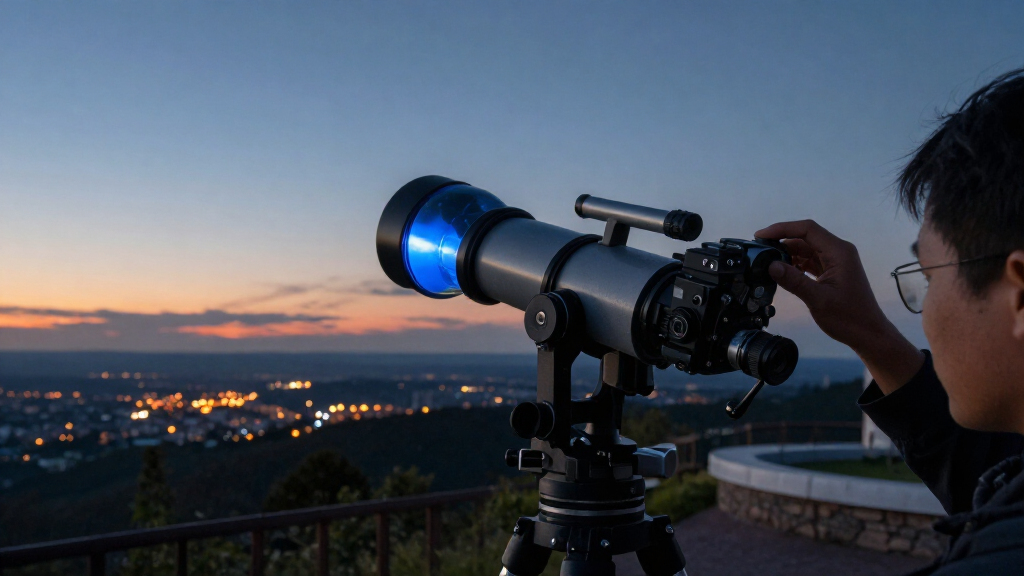
I evaluated these filters based on their spectral transmission curves, build quality, and real-world application scenarios. The primary criterion was light rejection efficiency, specifically how well each filter blocks common urban lighting spectra (sodium, mercury, and LED) while transmitting the target emission lines (H-Alpha, O-III, S-II). I also prioritized build durability, favoring glass filters with anti-reflective coatings over cheaper resin versions that degrade over time. The ranking logic moves from specialized, high-performance narrowband options for advanced users to versatile broadband filters for general observers and beginners. This hierarchy reflects the increasing difficulty of use and the narrowing of target lists as light rejection becomes more aggressive.
| astrophotography light pollution filter | Water resistance |
|---|---|
| Hoya Starscape 52mm Light Poll | Water resistant |
| SVBONY 1.25-Inch UHC Telescope | Not water resistant |
| Celestron UHC/LPR Light Pollut | — |
| K&F Concept 58mm Natural Night | Waterproof |
| SVBONY SV220 7nm SII & OIII Du | Not water resistant |
| K&F Concept 67mm Natural Night | Waterproof |
| Walking Way 77mm Natural Night | Water resistant |
| SVBONY SV220 3nm Dual-Band H-A | — |
| Hoya Starscape 49mm Light Poll | Water resistant |
| 2" L-Enhance Dual Narrowband L | Not water resistant |
| HOYA Starscape 55mm Light Poll | — |
| SVBONY SV240 2-Inch Multi-Narr | — |
| FIBONAX 1.25-Inch UHC Telescop | — |
| HOYA 67mm STARSCAPE Light Poll | — |
| SVBONY 2-Inch UHC Telescope Fi | — |
Factors to Consider When Choosing Astrophotography Light Pollution Filters
Selecting a filter is not just about blocking light; it is about managing the tradeoff between sky background noise and target signal strength. Here are the critical factors to weigh before making a purchase.Narrowband vs. Broadband Rejection
The most significant decision you will make is choosing between narrowband and broadband filters. Narrowband filters, such as the 3nm or 7nm options, isolate specific emission lines, offering near-total immunity to light pollution. This makes them ideal for shooting from a city backyard but renders them useless for reflection nebulae or galaxies. Broadband UHC filters, on the other hand, block specific pollution lines while passing a wider range of visible light. This allows you to photograph a wider variety of targets, including some broadband nebulosity, though they are less effective under heavy LED pollution. If you only have access to light-polluted skies, narrowband is the only path to high-contrast images.
Filter Size and Vignetting Risks
Filter diameter must match your optical train to avoid vignetting or mechanical issues. While 1.25-inch filters are cheaper and widely available, they can cause vignetting in fast Newtonian reflectors or wide-field refractors with large sensors. The 2-inch standard provides a larger clear aperture, ensuring the entire field of view is illuminated, which is critical for wide-field astrophotography. Always check the back-focus distance of your camera adapter; adding a filter wheel or multiple filters can push you out of focus if you are already borderline. For deep-sky imaging with modern mirrorless cameras, the 2-inch size is generally the safer investment.
Glass Substrate and Coating Quality
The physical construction of the filter affects image sharpness and color fidelity. Optical glass substrates with multi-layer anti-reflective coatings (like HMC or Didymium) minimize internal reflections that cause halos around bright stars. Cheaper filters often use plastic or low-grade glass, which can introduce subtle color casts or reduce contrast across the frame. When comparing options, look for specifications mentioning ‘interference filters’ or ‘hard-coated glass.’ These technologies provide more stable transmission curves over temperature changes and time. A poorly coated filter can degrade the performance of an otherwise excellent telescope, wasting the light you worked hard to gather.
Target List Compatibility
Your filter choice dictates what you can photograph. Light Pollution Reduction (LPR) filters are designed for broadband targets and work best on galaxies and star clusters where you want natural colors. UHC filters are a hybrid, enhancing contrast in emission nebulae like the Orion Nebula while still allowing some broadband data. Dual-band narrowband filters are strictly for emission nebulae (H-Alpha, O-III, S-II). Before buying, list your top ten desired targets. If they are all galaxies, a narrowband filter is a waste of money. If they are all nebulae, a broadband filter will struggle to provide sufficient contrast in polluted skies.
Processing Workflow Complexity
Narrowband imaging requires a more complex post-processing workflow than broadband imaging. Because you are capturing data in specific channels (H-Alpha, O-III, S-II), you must map these to RGB channels during processing, often using techniques like the Hubble Palette or natural color mapping. This demands more software knowledge and time compared to standard RGB imaging with broadband filters. Additionally, narrowband data requires longer integration times to achieve a similar signal-to-noise ratio, meaning you need more patience and tracking stability. If you prefer quick results, broadband UHC filters offer a more straightforward path to usable images.
Frequently Asked Questions
Can I use a light pollution filter for landscape photography?
Most dedicated astrophotography light pollution filters are not suitable for landscape photography. Their spectral blocking curves are designed to reject specific artificial light wavelengths while passing astronomical emission lines, which often results in unnatural color casts and reduced dynamic range in terrestrial scenes. For landscapes, you would be better off using a standard polarizing filter or a graduated neutral density filter. Using an astro filter on a landscape can lead to difficult color corrections in post-processing and may not effectively reduce glare or atmospheric haze in the way dedicated landscape tools do.
Do these filters work with smartphone cameras attached to telescopes?
Yes, they can work, but the benefits are often limited by the sensor’s dynamic range. Smartphone sensors typically have smaller pixels and less sensitivity than dedicated astronomy cameras, so the light loss from narrowband filters can make exposures extremely long and prone to noise. Broadband UHC filters are generally more forgiving for smartphone astrophotography because they retain more signal. However, ensure your adapter allows the filter to sit flush against the sensor plane to avoid vignetting, which is common with the smaller sensors found in phones.
Why does my image look green or blue with a UHC filter?
This color cast is a characteristic of the filter’s transmission spectrum, which often emphasizes O-III (oxygen) lines that appear blue-green. While this enhances contrast in emission nebulae, it results in unnatural star colors. In post-processing, you can correct this by performing a background extraction and color calibration, using stars as a reference to neutralize the sky background. Some filters are designed with ‘natural night’ color balance to mitigate this, but most UHC filters will require significant color correction to render stars white.
Is it better to buy individual narrowband filters or a dual-band filter?
For color cameras, a dual-band filter (like H-Alpha/O-III) is usually the better value and easier to use. It allows you to capture two key emission lines in a single exposure, which can be separated in processing to create a pseudo-color image. Individual filters require a filter wheel and multiple nights of imaging, or a monochrome camera with an LRGB setup. If you are using a color DSLR or mirrorless camera, the dual-band approach simplifies the workflow significantly without requiring expensive hardware upgrades like a filter wheel.
How much exposure time do I need to add when using these filters?
The required exposure time increases based on the filter’s bandwidth. A broadband LPR filter might require 20-50% more exposure time compared to no filter. A UHC filter might double the exposure time. Narrowband 3nm filters can require 5 to 10 times more exposure time than broadband imaging to achieve the same signal-to-noise ratio. This is because they block a vast amount of light, including much of the starlight you want to capture. You must plan for longer integration sessions, which demands better tracking stability from your mount.
Conclusion
Choosing the right astrophotography light pollution filter comes down to your location and target list. For the Best Overall performance in heavily polluted skies, the SVBONY SV220 3nm Dual-Band offers unmatched contrast for nebulae. If you need a Best Value option for general use, the SVBONY 1.25-Inch UHC provides excellent light rejection for a fraction of the cost of premium brands. Beginners should start with the Celestron UHC/LPR for its forgiving nature and wide compatibility. For those seeking Premium glass quality and color fidelity, the Hoya Starscape 67mm remains a benchmark for broadband imaging. Match the filter to your sky conditions, and you will see a dramatic improvement in your deep-sky images.