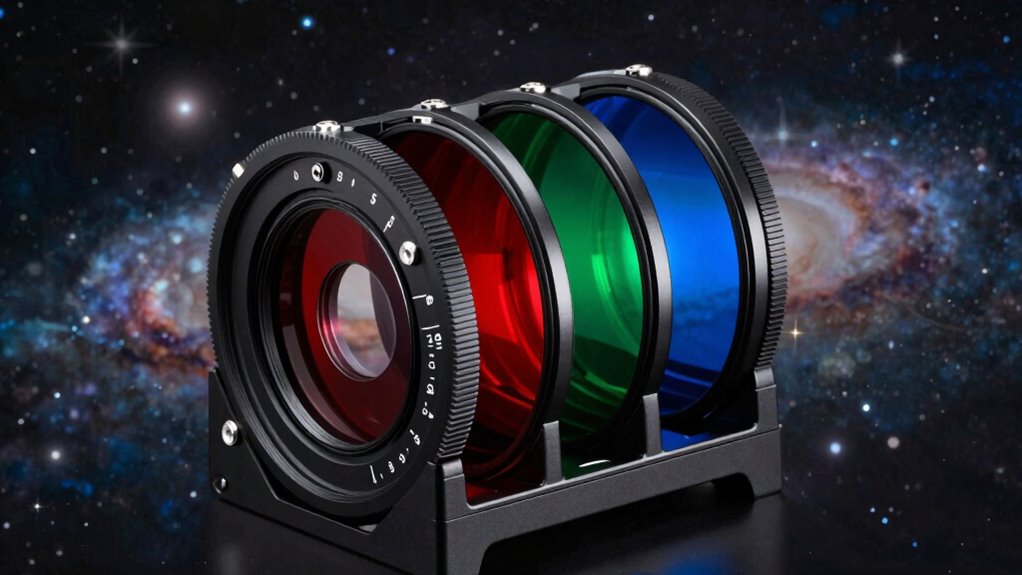

For astrophotographers, choosing the right filter wheel can significantly improve image quality and simplify filter management. The GOWE 2-Inch 5-Position Manual Filter Wheel stands out as the best overall pick for its reliability and ease of use. The Astromania 1.25-inch Multiple 5-Position Filter Wheel offers excellent versatility for those on a budget, while the Astromania 1.25 inch 5-Position Filter Wheel with LRGB Filters Set is ideal for detailed color imaging. Buyers face tradeoffs between size, filter capacity, and budget—more advanced options tend to be pricier but offer better precision and durability. Keep reading for a detailed look at each product and how to choose the best filter wheel for your astrophotography setup.

Prime made for students and young adults
- Fast, free delivery for dorm and study essentials
- Prime Video and Amazon Music included
- Member-only deals
Key Takeaways
- The top picks balance build quality, filter capacity, and compatibility with common telescope sizes.
- Larger filter wheels (2-inch) tend to offer better durability and filtering options but at a higher price point.
- The most versatile options include multiple filter positions and compatibility with LRGB sets, ideal for detailed imaging.
- Budget-friendly models often compromise on build quality or filter capacity but still deliver solid performance for beginners.
- Ease of use and reliable motor operation are critical for seamless imaging sessions, especially for advanced astrophotographers.
| GOWE 2-Inch 5-Position Manual Filter Wheel for Telescope Astrophotography |  | Best Overall for Heavy-Duty Short-Back Focus Setups | Size: 2 inches | Number of Positions: 5 | Material: Aluminum | VIEW ON AMAZON | See Our Full Breakdown |
| Astromania 1.25-inch Multiple 5-Position Filter Wheel for Telescope with Filter Set |  | Best for Beginners and Visual Observation with a Variety of Filters | Filter Size: 1.25 inches | Number of Filters: 7 | Material: Metal | VIEW ON AMAZON | See Our Full Breakdown |
| Astromania 1.25 inch 5-Position Filter Wheel with LRGB Filters Set |  | Best for High-Quality RGB Imaging on a Budget | Diameter: 1.25 inches | Number of Positions: 5 | Material: Aluminum | VIEW ON AMAZON | See Our Full Breakdown |
| Astromania 1.25-Inch Planetary Imaging Filter Set – 3 Pieces with Filter Wheel |  | Best for Planetary and Lunar Imaging with Essential Filters | Filter Size: 1.25 inches | Includes: UV, IR, CH4 filters | Filter Wheel: 3-piece with 5-position | VIEW ON AMAZON | See Our Full Breakdown |
| Astromania 1.25″ Multiple 9-Position Filter Wheel for Telescope with LRGB Filter Set |  | Best for Expanded Filter Selection and Versatility | Diameter: 1.25 inches | Number of Positions: 9 | Material: Aluminum | VIEW ON AMAZON | See Our Full Breakdown |
| Astromania 2-inch Filter Wheel with 5 Positions for Telescope Accessories |  | Best Overall for Heavy-Duty, Versatile Astrophotography | Filter Positions: 5 | Diameter: 2 inches | Material: Aluminum | VIEW ON AMAZON | See Our Full Breakdown |
| Astromania 1.25-inch Filter Wheel for Telescopes |  | Best for Versatile, Compact Filter Switching in Visual and Imaging Use | Compatibility: 1.25-inch filters | Number of Positions: 5 | Adapters Included: Eyepiece and T2 with M42 locking ring | VIEW ON AMAZON | See Our Full Breakdown |
| filter wheels for astrophotography | Material | Number of Positions |
|---|---|---|
| GOWE 2-Inch 5-Position Manual | Aluminum | 5 |
| Astromania 1.25-inch Multiple | Metal | — |
| Astromania 1.25 inch 5-Positio | Aluminum | 5 |
| Astromania 1.25-Inch Planetary | Robust construction | — |
| Astromania 1.25" Multiple 9-Po | Aluminum | 9 |
| Astromania 2-inch Filter Wheel | Aluminum | — |
| Astromania 1.25-inch Filter Wh | — | 5 |
More Details on Our Top Picks
GOWE 2-Inch 5-Position Manual Filter Wheel for Telescope Astrophotography
This manual filter wheel stands out for its robust aluminum build and support for heavy cameras, making it ideal for those with short back focus telescopes like Newtonians or Dobs. Unlike smaller 1.25-inch options, it accommodates larger 2-inch filters, providing more versatility for astrophotographers seeking a comprehensive filter setup. However, the manual operation means filter changes aren’t automated, which can slow down imaging sessions. The absence of included filters and the need for a 20mm inward focusing distance are tradeoffs that slightly limit convenience but are acceptable for dedicated users. Compared to motorized options, this wheel is more affordable but less efficient for rapid filter switching.
Pros:- Supports heavy cameras and filters due to sturdy aluminum construction
- Quick filter changes with manual operation
- Compact design fits short back focus telescopes
Cons:- Filters are not included, adding to initial cost
- Requires 20mm inward focusing distance, which might limit compatibility
Best for: Astrophotographers using heavy-duty, short back focus telescopes who prefer manual control and larger filters.
Not ideal for: Beginners or those seeking motorized, automated filter changes, or who prefer plug-and-play solutions.
- Size:2 inches
- Number of Positions:5
- Material:Aluminum
- Compatibility:Telescope, CCD Camera
- Filter Included:No
- Inward Focusing Distance:20mm
Our verdict“This filter wheel is best suited for experienced astrophotographers prioritizing durability and support for heavy setups over automation.”
Astromania 1.25-inch Multiple 5-Position Filter Wheel for Telescope with Filter Set
This bundle offers a versatile 5-position filter wheel combined with seven colored filters, making it attractive for planetary and lunar observers, as well as astrophotographers exploring different imaging options. Its metal construction ensures durability, and the included filters cover a broad spectrum, from lunar to ND filters. Compared to the more specialized LRGB set, this package emphasizes versatility, but the complexity of the filter wheel may challenge newcomers. It lacks motorized operation, so filter changes are manual, which might slow rapid imaging sessions. Its compatibility is limited to 1.25-inch accessories, which is standard but less flexible than larger 2-inch setups.
Pros:- Includes a broad range of filters suitable for planetary and lunar work
- Robust metal construction for longevity
- Affordable bundle for entry-level astrophotography
Cons:- Manual operation can slow down imaging workflow
- Limited to 1.25-inch accessories, reducing future expandability
Best for: Beginners or hobbyists who want a variety of filters with straightforward manual operation for planetary and lunar imaging.
Not ideal for: Advanced astrophotographers needing automated filter changes or those using larger 2-inch filters.
- Filter Size:1.25 inches
- Number of Filters:7
- Material:Metal
- Mounting Options:1.25-inch nosepiece, T-thread, T2
- Filter Wheel:5-position
- Included Filters:Red, Orange, Light Yellow, Dark Green, Blue, Green, ND96 Moon Filter
Our verdict“This filter wheel with a set of filters is perfect for beginners looking for a durable, all-in-one starter kit for planetary observation.”
Astromania 1.25 inch 5-Position Filter Wheel with LRGB Filters Set
This 5-position filter wheel with an integrated LRGB filter set is tailored for astrophotographers focused on high-quality color imaging. Its aluminum construction offers durability, and the quick swap capability helps maintain efficient imaging sessions. Unlike larger filter sets, this one specializes in RGB and luminance, making it ideal for capturing detailed color images. The need for an additional 20mm focus travel may require some adjustment, and its weight could impact mount stability for smaller telescopes. Compared to the 9-position wheel, this setup is more streamlined but offers fewer filters, suited primarily for RGB work.
Pros:- Supports multiple filters with a 5-position wheel for flexibility
- Durable aluminum build ensures longevity
- Easy to change filters during imaging without removing the camera
Cons:- Requires additional focus travel adjustment
- Heavy for some mounts, which could affect tracking
Best for: Astrophotographers seeking precise RGB imaging with quick filter changes and a compact setup.
Not ideal for: Those wanting a broad range of filters beyond RGB and luminance or automated switching.
- Diameter:1.25 inches
- Number of Positions:5
- Material:Aluminum
- Included Filters:Red, Green, Blue, Luminance
- Attachment:1.25 inch nosepiece, T-thread
Our verdict“Ideal for dedicated RGB astrophotographers who value durability and quick filter swaps in a compact form.”
Astromania 1.25-Inch Planetary Imaging Filter Set – 3 Pieces with Filter Wheel
This 3-piece set includes UV, IR, and CH4 filters, optimized for planetary and lunar imaging, with a robust filter wheel that simplifies filter changes. Its numbered system enhances efficiency, making it easier to identify filters during long sessions. While it covers fundamental planetary filters, it doesn’t support a broad spectrum of astrophotography filters, limiting its versatility for deep-sky imaging. The 1.25-inch size is standard, but some may find the limited filter options restrictive. The need for understanding planetary imaging filters makes it more suitable for experienced planetary astrophotographers.
Pros:- Quick and easy filter changes with numbered system
- Includes essential filters for planetary detail
- Robust construction for reliable use
Cons:- Limited to 1.25-inch filters, restricting flexibility
- Requires knowledge of planetary filters for optimal use
Best for: Planetary astronomers focusing on detail-rich imaging with quick filter identification.
Not ideal for: Deep-sky astrophotographers or those requiring a wider range of filters for multispectral imaging.
- Filter Size:1.25 inches
- Includes:UV, IR, CH4 filters
- Filter Wheel:3-piece with 5-position
- Adaptor Compatibility:1.25 inch eyepiece, T2 camera
- Material:Robust construction
Our verdict“This filter set with a dedicated filter wheel is perfect for planetary enthusiasts who prioritize efficiency and essential imaging filters.”
Astromania 1.25″ Multiple 9-Position Filter Wheel for Telescope with LRGB Filter Set
This 9-position filter wheel supports a broad array of filters, including RGB and luminance, making it an excellent choice for detailed astrophotography that benefits from multiple spectral channels. Its sturdy aluminum body provides durability and protection for filters, which is especially helpful during prolonged imaging runs. The increased number of positions allows for more specialized filters, but it’s limited to 1.25-inch sizes, and the lack of motorized operation means filter switching is manual. While this setup is highly flexible, it’s best suited for users who prioritize filter variety and are comfortable with manual changes rather than automation.
Pros:- Supports up to nine filters for maximum flexibility
- Sturdy aluminum construction ensures longevity
- Protects filters from dust and impact
Cons:- Limited to 1.25-inch filters, reducing compatibility with larger filters
- No motorized operation, requiring manual changes
Best for: Advanced amateur astrophotographers demanding a wide array of filters and manual control during long imaging sessions.
Not ideal for: Beginners or those seeking motorized, automated filter change setups, or larger filter sizes.
- Diameter:1.25 inches
- Number of Positions:9
- Material:Aluminum
- Included Filters:RGB set and Luminance
Our verdict“This high-capacity filter wheel is well-suited for experienced astrophotographers who need a variety of filters and are comfortable with manual switching.”
Astromania 2-inch Filter Wheel with 5 Positions for Telescope Accessories
This 2-inch filter wheel stands out for its robust aluminum build and support for heavy cameras, making it ideal for serious astrophotographers who need durability and stability. Compared to the smaller Astromania 1.25-inch Filter Wheel, its larger diameter and sturdy construction help reduce flexure during extended imaging sessions. The 5-position setup allows for quick filter changes, essential for capturing multiple targets efficiently. However, its requirement for a 22.5mm inward focusing distance means some setups may need adjustments or spacers, adding complexity. While it’s compact for its size, the need for additional adapters for certain camera configurations could be a minor hassle. This filter wheel is perfect for astrophotographers who prioritize stability and versatility over ultra-compact design.
Pros:- Supports heavy cameras with sturdy aluminum construction
- Allows quick switching between five filters
- Light-tight interior prevents reflections and stray light
- Compact design suitable for various telescope types
Cons:- Requires 22.5mm inward focusing distance, which might need adjustment
- Additional adapters may be necessary for specific camera setups
Best for: Amateur and semi-professional astronomers using heavy camera gear and seeking reliable, multi-position filter management.
Not ideal for: Beginners with small or lightweight setups, as the extra focus distance and potential for needing adapters may complicate simple configurations.
- Filter Positions:5
- Diameter:2 inches
- Material:Aluminum
- Adapter:2-inch telescope adapter
- Thread:M48x0.75 male
- Compatibility:Supports heavy cameras
Our verdict“This filter wheel suits astrophotographers who need a durable, versatile solution for multi-filter imaging with heavy cameras.”
Astromania 1.25-inch Filter Wheel for Telescopes
This 1.25-inch filter wheel offers a practical choice for observers and astrophotographers who value quick filter changes without needing the larger, more complex setup of a 2-inch system. Compared to the Astromania 2-inch Filter Wheel, it’s smaller and easier to integrate into lightweight or portable setups, especially for planetary imaging or visual work. Its inclusion of multiple adapters, such as T2 and eyepiece connectors, enhances versatility across different telescope types. The 23mm focus travel requirement can be restrictive for some scopes, making installation challenging if inward focus is limited. Its design may be less suitable for Newtonian reflectors, which often require different focus arrangements, and changing filters can be slightly cumbersome for users unfamiliar with T-thread or eyepiece adapters. Overall, this filter wheel makes the most sense for those with moderate needs and a preference for compactness.
Pros:- Supports quick filter changes for efficient observation
- Includes multiple adapters for versatile use
- Compact and lightweight for portable setups
- Provides a convenient storage case
Cons:- Requires 23mm inward focus travel, which can be restrictive
- Cumbersome filter installation/removal for some users
Best for: Amateur astronomers who frequently switch filters during planetary imaging or visual observations with 1.25-inch accessories.
Not ideal for: Owners of large, heavy setups or Newtonian reflectors, where inward focus travel and design compatibility may be problematic.
- Compatibility:1.25-inch filters
- Number of Positions:5
- Adapters Included:Eyepiece and T2 with M42 locking ring
- Focus Travel Requirement:23mm
- Construction:Plastic and metal
- Weight:Lightweight
Our verdict“This filter wheel is a solid choice for portable, versatile use with 1.25-inch telescopes, especially in planetary imaging scenarios.”

How We Picked
These filter wheels were evaluated based on multiple criteria including build quality, compatibility with standard telescope accessories, filter capacity, ease of installation, and overall value for money. Priority was given to products that strike a balance between durability and affordability, ensuring they meet the demands of both amateur and semi-professional astrophotographers. The ranking reflects how well each product performs across these factors, with consideration for user feedback and technical specifications to identify the most reliable and versatile options in 2026.| filter wheels for astrophotography | Material |
|---|---|
| GOWE 2-Inch 5-Position Manual | Aluminum |
| Astromania 1.25-inch Multiple | Metal |
| Astromania 1.25 inch 5-Positio | Aluminum |
| Astromania 1.25-Inch Planetary | Robust construction |
| Astromania 1.25" Multiple 9-Po | Aluminum |
| Astromania 2-inch Filter Wheel | Aluminum |
| Astromania 1.25-inch Filter Wh | — |