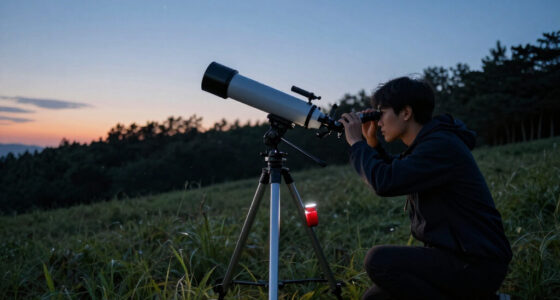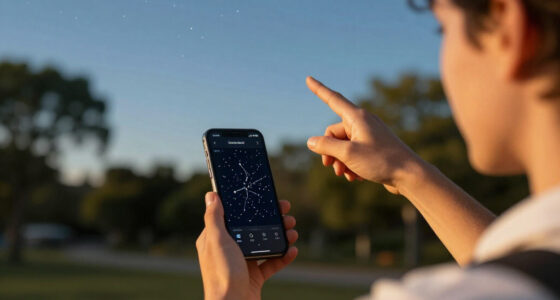
Astrophotography light pollution filters vary by what they block and what they’re designed to fit: camera-lens night filters aim to reduce the cast of artificial lighting, while telescope UHC and dual-band filters target emission nebulae. My best overall pick is the SVBONY SV240 Multi-Narrowband Telescope Filter for dedicated telescope imaging where selective spectral filtering matters. The SVBONY SV220 SII & OIII 7nm Dual-Band is a more specialized nebula option, while the Hoya Starscape is a straightforward camera-lens choice. The main tradeoffs are broad scene color versus stronger rejection of selected wavelengths, plus matching the filter to a lens or telescope and its thread size. Read on for the full comparison, buying guidance, and picks by use case.

Prime made for students and young adults
- Fast, free delivery for dorm and study essentials
- Prime Video and Amazon Music included
- Member-only deals
Key Takeaways
- Telescope filters and camera-lens filters solve different problems: the SVBONY UHC, SV220, and SV240 models are telescope options, while the K&F Concept, Haida, Walking Way, and Hoya models are lens filters.
- The SVBONY SV240 and SV220 stand apart for narrowband nebula imaging: their specialized spectral approach is aimed at emission targets, not general-purpose night landscapes.
- UHC filters are the simpler telescope route in this lineup: SVBONY’s 1.25-inch and 2-inch options, FIBONAX, and Celestron differ in size and brand, so telescope fit should guide the choice.
- Camera-lens filter selection is largely dictated by thread diameter: the lineup spans 52mm, 58mm, 67mm, and 77mm, and a filter that does not fit the lens is not a practical substitute.
- A light pollution filter cannot remove every urban-sky limitation: it may alter the background and color balance, but sky brightness, target choice, exposure, and post-processing still shape the final image.
| K&F Concept 77mm Clear Natural Night Filter |  | Best Overall for 77mm Camera Lenses | Brand: K&F Concept | Filter size: 77mm | Compatible devices: Cameras with a 77mm lens thread | VIEW LATEST PRICE | See Our Full Breakdown |
| Haida 67mm Slim Nano Pro MC Clear Night Filter |  | Best for Targeted Sodium and Mercury-Lamp Blocking | Brand: Haida | Model: HD3704 | Filter size: 67mm | VIEW LATEST PRICE | See Our Full Breakdown |
| Walking Way 67mm Natural Night Filter |  | Best 67mm Pick for Cityscapes and Night-Sky Color | Brand: Walking Way | Filter size: 67mm | Compatible devices: Camera lenses with 67mm filter threads | VIEW LATEST PRICE | See Our Full Breakdown |
| SVBONY 2-Inch UHC Telescope Filter |  | Best for General Telescope Viewing and Imaging | Brand: SVBONY | Model: FF9131B | Filter type: UHC | VIEW LATEST PRICE | See Our Full Breakdown |
| SVBONY SV220 2-Inch SII & OIII 7nm Dual-Band Nebula Filter |  | Best for Narrowband Emission-Nebula Imaging | Brand: SVBONY | Model: SV220 | Filter size: 2 inches | VIEW LATEST PRICE | See Our Full Breakdown |
| Walking Way 58mm Natural Night Filter for Cameras | | Best for 58mm Camera Lenses | Brand: Walking Way | Filter size: 58mm | Material: Neodymium optical glass | VIEW LATEST PRICE | See Our Full Breakdown |
| FIBONAX 1.25-Inch UHC Telescope Filter |  | Best for Budget-Minded UHC Nebula Imaging | Brand: FIBONAX | Model: Dawn01 | Filter size: 31.75mm (1.25in) | VIEW LATEST PRICE | See Our Full Breakdown |
| SVBONY SV240 2-Inch Multi-Narrowband Telescope Filter |  | Best for Multi-Band Astrophotography | Brand: SVBONY | Model: SV240 | Filter size: 2 inches | VIEW LATEST PRICE | See Our Full Breakdown |
| K&F Concept 67mm Natural Night Light Pollution Reduction Filter | | Best for Wide-Angle 67mm Camera Lenses | Brand: K&F Concept | Filter size: 67mm | Compatible devices: Cameras with 67mm lens diameter | VIEW LATEST PRICE | See Our Full Breakdown |
| Walking Way 52mm Natural Night Filter for Light Pollution Reduction | | Best Compact Fit for 52mm Camera Lenses | Brand: Walking Way | Listed filter size: 52mm | Thread size: 52mm | VIEW LATEST PRICE | See Our Full Breakdown |
| Hoya 52mm Starscape Light Pollution Astrophotography Filter |  | Best for Wide-Angle 52mm Lenses | Filter size: 52mm | Glass: Didymium | Frame material: Aluminum | VIEW LATEST PRICE | See Our Full Breakdown |
| SVBONY 1.25-Inch UHC Telescope Filter |  | Best Entry-Level Eyepiece-Threaded UHC Option | Filter type: UHC | Thread size: 31.75 mm (1.25 in) | Lens material: Optical glass | VIEW LATEST PRICE | See Our Full Breakdown |
| Walking Way 77mm Natural Night Filter – Nano-Coated Optical Glass for Light Pollution Reduction | | Best for 77mm Camera Lenses | Thread size: 77 mm | Glass: Optical glass (neodymium) | Coating: 28-layer multi-coating | VIEW LATEST PRICE | See Our Full Breakdown |
| Celestron UHC/LPR Light Pollution Reduction Telescope Filter, 1.25-Inch |  | Best Specified UHC/LPR Filter for Nebula Imaging | Filter type: UHC/LPR light pollution reduction | Filter size: 1.25 inches | Transmission: Over 97% across the bandpass | VIEW LATEST PRICE | See Our Full Breakdown |
| K&F CONCEPT 58mm Clear Natural Night Filter | | Best Slim, Color-Neutral 58mm Pick | Thread size: 58mm (5.8 cm) | Glass: AGC optical glass | Color: Clear | VIEW LATEST PRICE | See Our Full Breakdown |
| astrophotography light pollution filter | Coating | Water resistance | Brand | Filter size |
|---|---|---|---|---|
| K&F Concept 77mm Clear Natural | 28 multi-layer coatings | Waterproof | K&F Concept | 77mm |
| Haida 67mm Slim Nano Pro MC Cl | Nano coating | Not water resistant | Haida | 67mm |
| Walking Way 67mm Natural Night | 28 layers of anti-reflective and protective coatings | Water resistant | Walking Way | 67mm |
| SVBONY 2-Inch UHC Telescope Fi | — | — | SVBONY | — |
| SVBONY SV220 2-Inch SII & OIII | — | Not water resistant | SVBONY | 2 inches |
| Walking Way 58mm Natural Night | 28-layer multi-coating | Water resistant | Walking Way | 58mm |
| FIBONAX 1.25-Inch UHC Telescop | — | — | FIBONAX | 31.75mm (1.25in) |
| SVBONY SV240 2-Inch Multi-Narr | Multi-coated | Not water resistant | SVBONY | 2 inches |
| K&F Concept 67mm Natural Night | 28 multi-layer coatings and nano coating | Waterproof | K&F Concept | 67mm |
| Walking Way 52mm Natural Night | 28-layer anti-reflective and anti-fingerprint multi-coating | Water resistant | Walking Way | — |
| Hoya 52mm Starscape Light Poll | Enhanced HMC multi-coating | — | — | 52mm |
| SVBONY 1.25-Inch UHC Telescope | Multi-coated | Not water resistant | — | — |
| Walking Way 77mm Natural Night | 28-layer multi-coating | Water resistant | — | — |
| Celestron UHC/LPR Light Pollut | Multi-layer dielectric, plasma-assisted and ion-beam hardened | — | — | 1.25 inches |
| K&F CONCEPT 58mm Clear Natural | 28-layer nano coating | Waterproof | — | — |
More Details on Our Top Picks
K&F Concept 77mm Clear Natural Night Filter
I rank this as the most balanced camera-lens option here for photographers who want a general-purpose night filter without a strongly specified color effect. Its AGC optical glass is described as producing no color cast, while the slim 0.15-inch frame is intended to reduce vignetting risk on wide-angle lenses. Compared with the Haida 67mm, which specifies blocking sodium and mercury light in a narrow wavelength range, K&F’s description emphasizes broader night-sky use rather than a particular spectral profile. The 28-layer coatings also add resistance to water, oil, and scratches, a practical advantage over the non-water-resistant Haida. The main limitation is fit: this screw-on filter works only with a 77mm lens thread, and its light-pollution reduction should not be mistaken for a substitute for dark skies or a narrowband telescope filter.
Pros:- AGC optical glass is described as avoiding a color cast.
- Slim 0.15-inch frame is designed to help limit vignetting.
- 28-layer coatings resist water, oil, and scratches.
- Designed to reduce light pollution in night-sky photography.
Cons:- Fits only lenses with a 77mm filter thread.
- Product details do not specify a spectral blocking range or quantified reduction.
Best for: Night-sky photographers using 77mm-thread lenses who want a clear-looking filter with a slim frame and protective coatings.
Not ideal for: Photographers whose lenses use another filter-thread size, or deep-sky imagers seeking a dedicated narrowband telescope filter.
- Brand:K&F Concept
- Filter size:77mm
- Compatible devices:Cameras with a 77mm lens thread
- Material:AGC optical glass
- Frame thickness:0.15 in
- Coating:28 multi-layer coatings
- Color:Clear
- Water resistance:Waterproof
Our verdict“Choose this for a 77mm camera lens when you want a slim, coated general night filter rather than a specialized emission-line filter.”
Haida 67mm Slim Nano Pro MC Clear Night Filter
The Haida stands apart from the broader-purpose camera filters in this group because its light control is described precisely: it blocks sodium and mercury lamp light between 580 and 610nm. That makes it a more targeted choice for photographers dealing with those sources, with stated transmission of 100% blue, 50% green, and 90% red to retain much of the scene’s color information. Unlike the K&F Concept 77mm, which emphasizes a clear appearance and weather-resistant coatings, the Haida specifies a spectral tradeoff and does not claim water resistance. Its nano-coated optical glass is intended to reduce reflections, and the slim 67mm format suits compatible camera lenses. Skip it if you need broad light control, wet-weather protection, or a filter for telescope imaging; its specified blocking profile is narrower than the SVBONY UHC options.
Pros:- Specifies blocking of sodium and mercury light from 580–610nm.
- Stated transmission preserves 100% blue and 90% red light.
- Nano coating is designed to reduce reflections.
- Slim 67mm format fits compatible camera lenses.
Cons:- Not water resistant.
- Its specified spectral blocking may not address other light sources.
- 50% green transmission can affect color balance relative to a clear filter.
Best for: Camera photographers with 67mm-thread lenses who shoot under sodium or mercury lighting and want a filter with a stated spectral profile.
Not ideal for: Photographers working in wet conditions, using a different thread size, or seeking a telescope-mounted narrowband filter for emission nebulae.
- Brand:Haida
- Model:HD3704
- Filter size:67mm
- Blocking range:580–610nm
- Light transmission:100% blue, 50% green, 90% red
- Coating:Nano coating
- Material:Optical glass
- Water resistance:Not water resistant
Our verdict“Pick the Haida when sodium and mercury lamps are the specific problem and its 67mm thread matches your lens.”
Walking Way 67mm Natural Night Filter
Walking Way gives 67mm lens owners a general natural-night option with a stated focus on urban light pollution, contrast, and color correction. Its neodymium optical glass is described as maintaining high light transmission and true-to-life color, while the 28-layer coating is designed to resist reflections and everyday contaminants. Compared with the Haida 67mm, this filter does not specify a sodium-and-mercury blocking band or transmission percentages; that makes its intended use less spectrally precise, but may suit buyers seeking a broad camera filter for night skies and cityscapes rather than a defined lamp-specific effect. It also includes a protective case and claims water resistance, unlike the Haida. Its tradeoff is limited lens compatibility, and the benefit is condition-dependent: it is not a universal fix for every bright sky or astrophotography target.
Pros:- Neodymium optical glass is described as supporting high transmission and natural color.
- 28-layer coatings are designed to resist reflections, water, scratches, oil, and fingerprints.
- Screw-on 67mm format suits compatible camera lenses.
- Protective case is included.
Cons:- Fits only camera lenses with 67mm filter threads.
- No specific wavelength-blocking range or transmission figures are provided.
- Light-pollution reduction is intended for specific shooting conditions.
Best for: Cityscape and night-sky photographers with 67mm-thread lenses who want a color-correcting filter with protective coatings and a storage case.
Not ideal for: Photographers who need a documented wavelength-blocking profile, use another lens-thread size, or want a dedicated telescope nebula filter.
- Brand:Walking Way
- Filter size:67mm
- Compatible devices:Camera lenses with 67mm filter threads
- Material:Neodymium optical glass
- Coating:28 layers of anti-reflective and protective coatings
- Special effect:Color correcting
- Water resistance:Water resistant
- Included accessories:Protective case
Our verdict“Choose Walking Way over the Haida if you value claimed water resistance and a general color-correcting role more than a specified lamp-blocking band.”
SVBONY 2-Inch UHC Telescope Filter
Unlike the screw-on K&F and Walking Way camera filters, this SVBONY is built for a 2-inch telescope eyepiece or accessory, so it belongs in a telescope imaging or observing setup rather than on a camera lens. Its UHC design is intended to improve contrast and reduce light pollution, giving it a broader telescope-use role than the SV220, which targets specific SII and OIII emission bands. That makes this model the more flexible pick for buyers who want one UHC filter for visual observation and astrophotography, but it is not the right match for every target: the product data states that it does not transmit H-alpha and higher wavelengths. The optical-glass element, aluminum frame, and included case make the format straightforward, though it is not water resistant. Check the M48×0.75 interface and your target’s wavelengths before choosing it.
Pros:- Designed to improve contrast and reduce light pollution in telescope use.
- Suitable for both visual observation and astrophotography.
- Optical-glass element has an aluminum frame.
- Includes a plastic case and a one-year warranty.
Cons:- Does not transmit H-alpha and higher wavelengths.
- Requires a compatible 2-inch accessory with an M48×0.75 thread.
- Not water resistant.
Best for: Telescope owners with 2-inch M48×0.75 accessories who want a UHC filter for both visual observing and astrophotography.
Not ideal for: Imagers focused on H-alpha or other higher-wavelength detail, camera-lens users, or anyone needing a water-resistant filter.
- Brand:SVBONY
- Model:FF9131B
- Filter type:UHC
- Compatible eyepiece size:2 inches
- Thread size:M48×0.75
- Lens material:Optical glass
- Frame material:Aluminum
- Weight:41g
- Included accessories:Plastic case
Our verdict“Choose this UHC model for a compatible 2-inch telescope setup and mixed observing and imaging, but not for H-alpha-focused work.”
SVBONY SV220 2-Inch SII & OIII 7nm Dual-Band Nebula Filter
This is the most specialized option in the group: its 7nm SII and OIII bands are aimed at emission nebulae, planetary nebulae, and supernova remnants, not general-purpose night scenes. By isolating those wavelengths, the SV220 is designed to suppress artificial-light interference and sky glow, including under moonlit conditions. Compared with the SVBONY 2-Inch UHC filter, it offers a narrower, target-specific imaging approach rather than a filter also positioned for visual observation. That focus can be an advantage for nebula imaging, but it makes the SV220 a poor all-rounder for broad-spectrum targets or ordinary camera-lens photography. The manufacturer recommends optical systems faster than f/4, so buyers should check their telescope or lens speed before committing. Its 2-inch, 48mm-compatible format and multi-coating suit supported setups, but it is not water resistant.
Pros:- 7nm SII and OIII bands target emission nebulae and related objects.
- Designed to reduce artificial-light interference and sky glow.
- Intended for imaging under light-polluted and moonlit skies.
- Multi-coated with an OD5 cut-off depth.
Cons:- Specialized bands limit its usefulness for general-purpose astrophotography.
- Manufacturer recommends optical systems faster than f/4.
- Not water resistant.
Best for: Deep-sky imagers using a compatible 2-inch or 48mm setup to photograph SII- and OIII-emitting nebulae under light-polluted or moonlit skies.
Not ideal for: Wide-field night-sky photographers, visual observers seeking a general UHC filter, or owners of optical systems that do not meet the faster-than-f/4 recommendation.
- Brand:SVBONY
- Model:SV220
- Filter size:2 inches
- Thread size:48mm
- Bandpass:7nm
- Filter bands:SII and OIII
- Cut-off depth:OD5
- Recommended optical systems:Faster than f/4
- Water resistance:Not water resistant
Our verdict“Choose the SV220 over the general SVBONY UHC when your main goal is narrowband SII/OIII imaging and your optical system meets its speed recommendation.”
Walking Way 58mm Natural Night Filter for Cameras
The 58mm screw-on format makes this a straightforward camera-lens option for reducing urban light pollution and haze. Its neodymium optical glass is described as preserving light transmission and avoiding chromatic aberration, while the 28-layer coating is designed to resist reflections, water, scratches, and fingerprints. Compared with the telescope-focused FIBONAX 1.25-Inch UHC Telescope Filter, this Walking Way is aimed at camera lenses and general night-sky scenes rather than a specified H-beta and O-III passband for nebula work. Its tradeoff is a fixed 58mm fit: it will not suit other lens-thread sizes without a compatible step-up arrangement, and the description does not provide passband or transmission figures. I’d choose it for a matching lens and a general-purpose night-photography filter, not as a substitute for a narrowband imaging filter.
Pros:- Neodymium optical glass is intended to reduce urban light pollution and haze.
- 28-layer coating is described as water-, scratch-, and fingerprint-resistant.
- Screw-on camera-lens format is simple to fit when the thread size matches.
- Protective case is included for storage.
Cons:- Fits only lenses with a 58mm filter thread.
- No specific passband or light-transmission figures are provided.
- General light-pollution reduction is less targeted than the FIBONAX UHC filter’s stated H-beta and O-III bands.
Best for: Camera owners with a 58mm filter-thread lens who photograph urban night skies or cityscapes and want a screw-on filter with a protective case.
Not ideal for: Astrophotographers seeking specified narrowband transmission for emission nebulae, or anyone whose lens does not have a 58mm filter thread.
- Brand:Walking Way
- Filter size:58mm
- Material:Neodymium optical glass
- Coating:28-layer multi-coating
- Compatibility:Cameras with 58mm filter-thread lenses
- Water resistance:Water resistant
- Included item:Protective case
- Manufacturer part number:FILTER-KGH58
Our verdict“Choose this for general night photography if your camera lens has a 58mm thread; pick a telescope UHC or narrowband filter for more wavelength-specific nebula imaging.”
FIBONAX 1.25-Inch UHC Telescope Filter
The FIBONAX UHC is the most clearly specified choice here for a 1.25-inch telescope setup: it lists transmission above 90% and identifies H-beta and O-III wavelengths, bands useful for bringing out emission-nebula contrast against artificial light. That makes its purpose more targeted than the general camera-lens filters, such as the K&F Concept 67mm Natural Night Filter, which is designed for photographic lenses rather than telescope eyepiece or camera threads. The aluminum frame and storage case suit regular transport, and the stated waterproof construction adds some protection during setup. The compromise is fit: it requires a 1.25-inch connection with M28.5×0.6 threads, so it is not a universal camera filter. Its listed lunar-detail benefit also does not make it a dedicated lunar filter; the UHC bandpass defines its main use.
Pros:- Specifies H-beta and O-III wavelengths for emission-nebula use.
- More than 90% stated light transmission in its intended passbands.
- Aircraft-grade aluminum frame and protective storage case support transport.
- Designed to reduce sodium and mercury streetlight glare.
Cons:- Compatibility is limited to the 1.25-inch size and M28.5×0.6 threads.
- A UHC passband is more target-specific than a general camera natural-night filter.
- The stated light-pollution performance does not include a detailed transmission curve.
Best for: Telescope owners and astrophotographers with a compatible 1.25-inch, M28.5×0.6 connection who mainly want more contrast on emission nebulae.
Not ideal for: Camera-lens users or telescope owners with 2-inch fittings, and buyers seeking a broadly specified filter for all celestial targets.
- Brand:FIBONAX
- Model:Dawn01
- Filter size:31.75mm (1.25in)
- Thread size:M28.5×0.6
- Optical material:Multi-coated optical glass
- Light transmission:More than 90%
- Specified wavelengths:H-beta and O-III
- Frame material:Aircraft-grade aluminum
- Warranty:1 year
Our verdict“Pick the FIBONAX if your 1.25-inch telescope setup matches its threads and emission nebulae are your priority.”
SVBONY SV240 2-Inch Multi-Narrowband Telescope Filter
The SVBONY SV240 stands apart from the single-purpose UHC options by transmitting H-alpha, O-III, and H-beta bands, with more than 90% stated transmission in those core wavelengths. That combination gives astrophotographers a single filter for several emission-line signals, rather than choosing the 1.25-inch FIBONAX UHC and its narrower stated H-beta/O-III emphasis. The product is described for use under Bortle 1–8 skies and across a range of imaging systems, though that broad suitability does not make every target or camera combination equivalent. Its 2-inch size limits compatibility, and the filter is not water resistant. The manufacturer also notes possible near-infrared halos, a relevant drawback for imaging if the optical train allows near-IR light through. I’d favor its broader band selection over a general lens filter when imaging emission targets, provided the system and infrared control are suitable.
Pros:- Transmits three listed core bands: H-alpha, O-III, and H-beta.
- More than 90% stated transmittance in the core wavelengths.
- Multi-narrowband design can cover several emission signals with one filter.
- Described for a broad range of astrophotography systems and Bortle 1–8 skies.
Cons:- Near-infrared halos may affect some imaging setups.
- Not water resistant.
- Requires a compatible 2-inch system and does not fit 1.25-inch equipment directly.
Best for: Astrophotographers with a compatible 2-inch system who want one filter transmitting H-alpha, O-III, and H-beta for emission-target imaging.
Not ideal for: Users with 1.25-inch telescope fittings, those needing water-resistant equipment, or imagers especially sensitive to near-infrared halos.
- Brand:SVBONY
- Model:SV240
- Filter size:2 inches
- Core wavelengths:H-alpha, O-III, H-beta
- Core wavelength transmittance:More than 90%
- Cut-off depth:≥OD4
- Coating:Multi-coated
- Water resistance:Not water resistant
- Warranty:1 year
Our verdict“Choose the SV240 for multi-band emission imaging on a compatible 2-inch setup if you can manage its near-infrared halo risk.”
K&F Concept 67mm Natural Night Light Pollution Reduction Filter
For camera owners with 67mm filter threads, this K&F Concept filter pairs light-pollution reduction with an ultra-slim 0.15-inch frame. That low-profile design is particularly relevant on wide-angle lenses, where a thicker filter can increase the chance of vignetting at the frame edges. Its AGC optical glass has 28 multi-layer and nano coatings described as waterproof, oil-resistant, and scratch-resistant, while the product is designed to avoid a color cast. Compared with the Walking Way 58mm Natural Night Filter, the main choice is not a stronger stated astrophotography bandpass—neither listing provides a detailed passband—but the lens thread size and slim-frame emphasis. This is a camera filter, not a telescope UHC filter, so buyers targeting emission nebulae should look to options such as the FIBONAX instead. The 67mm-only fit is its central limitation.
Pros:- Ultra-slim 0.15-inch frame helps limit vignetting risk on wide-angle lenses.
- AGC optical glass is designed to avoid a color cast.
- 28-layer and nano coatings are described as waterproof, oil-resistant, and scratch-resistant.
- Made specifically for light-pollution reduction in night-sky photography.
Cons:- Compatible only with lenses that have a 67mm filter diameter.
- No specific wavelength passbands or transmission figures are provided.
- A general camera filter is less targeted for emission nebulae than a telescope UHC or multi-narrowband filter.
Best for: Night-sky photographers using 67mm-thread wide-angle or telephoto lenses who want a slim filter frame and coated optical glass.
Not ideal for: Telescope imagers seeking specified narrowband performance, or camera users whose lenses have filter threads other than 67mm.
- Brand:K&F Concept
- Filter size:67mm
- Compatible devices:Cameras with 67mm lens diameter
- Material:AGC optical glass
- Coating:28 multi-layer coatings and nano coating
- Frame thickness:0.15 inches
- Water resistance:Waterproof
- Weight:3.52 ounces
Our verdict“Choose this for night-sky photography on a 67mm lens, especially when a slim frame matters more than narrowband nebula imaging.”
Walking Way 52mm Natural Night Filter for Light Pollution Reduction
The Walking Way 52mm brings the same general camera-filter approach as the brand’s 58mm model to a smaller lens thread: neodymium glass is intended to reduce urban light pollution and haze, while its 28-layer coating is described as anti-reflective, water-repellent, scratch-resistant, and oil-resistant. A protective case is included, making it a practical fit for photographers who keep a filter packed with a compact lens kit. Compared with the K&F Concept 67mm Natural Night Filter, this model serves a different thread size rather than offering a stated narrowband advantage; both are general camera filters without listed passband figures. One concern is the source description’s conflicting size information, which mentions both 52mm and 77mm. I would verify the actual product and lens-thread fit before ordering. Skip it if exact sizing cannot be confirmed or if your goal is emission-line imaging.
Pros:- Neodymium optical glass is intended to reduce urban light pollution and haze.
- 28-layer coating is described as water-repellent, scratch-resistant, and oil-resistant.
- Designed for camera-lens night and astrophotography use.
- Protective storage case is included.
Cons:- The description conflicts by mentioning both 52mm and 77mm sizing.
- Compatible only with a matching 52mm lens thread if the listed size is correct.
- No specific wavelength passbands or transmission figures are provided.
Best for: Camera owners with a confirmed 52mm lens thread who want a general light-pollution and haze-reduction filter for night photography.
Not ideal for: Buyers who cannot verify the filter size from the listing, owners of non-52mm lenses, or astrophotographers seeking a defined narrowband passband.
- Brand:Walking Way
- Listed filter size:52mm
- Thread size:52mm
- Material:Neodymium optical glass
- Coating:28-layer anti-reflective and anti-fingerprint multi-coating
- Special effect:Color correcting
- Compatibility:Cameras with a 52mm lens thread
- Water resistance:Water resistant
- Included item:Protective case
Our verdict“Consider this only if the seller confirms a 52mm filter thread and your needs are general camera night photography rather than narrowband imaging.”
Hoya 52mm Starscape Light Pollution Astrophotography Filter
The Hoya Starscape is the most specifically targeted camera filter here for photographers working under sodium- or mercury-vapor lighting. Its Didymium glass is designed to suppress yellow-orange light while preserving landscape colors, a useful distinction from the K&F CONCEPT 58mm Clear Natural Night Filter, which emphasizes a neutral color presentation and fits a different thread size. Hoya’s stated 97%+ light transmission and enhanced HMC coating aim to retain star brightness while reducing reflections. The slim aluminum frame also suits wide-angle 52mm lenses where a thicker filter can create vignetting. The tradeoff is its narrow fit and specialized spectral behavior: step rings may be needed for other lenses, and the color response may be less suitable for everyday photography. I’d choose it for a matching lens and targeted urban-light suppression, not as a universal filter.
Pros:- Didymium glass targets yellow-orange light associated with sodium and mercury vapor lamps.
- Slim aluminum frame is designed to reduce vignetting on wide-angle lenses.
- Enhanced HMC multi-coating and stated 97%+ transmission help limit reflections while retaining light.
- Designed to preserve landscape colors in long-exposure night photography.
Cons:- The 52mm thread fits only matching lenses without step rings.
- Its specialized glass may shift color balance outside astrophotography use.
Best for: Astrophotographers with 52mm wide-angle lenses who want to reduce yellow-orange streetlight glow while retaining landscape color.
Not ideal for: Photographers who need one filter for several thread sizes or want a neutral filter for daytime use; the fixed 52mm fit and specialized glass limit flexibility.
- Filter size:52mm
- Glass:Didymium
- Frame material:Aluminum
- Coating:Enhanced HMC multi-coating
- Light transmission:97%+
- Weight:1.6 ounces
- Model number:S-52INTENS
Our verdict“Choose the Hoya if your lens has a 52mm thread and you want targeted yellow-orange light reduction without a bulky wide-angle filter.”
SVBONY 1.25-Inch UHC Telescope Filter
This SVBONY UHC filter is aimed at telescope users who want to improve emission nebula contrast through a standard 1.25-inch eyepiece or accessory, rather than fit a camera lens. By selectively reducing artificial-light wavelengths, it darkens the sky background around nebulae. That makes it a different tool from the Hoya 52mm Starscape, which screws onto a camera lens and targets yellow-orange lighting for night landscapes. SVBONY’s optical glass, multi-coating, and aluminum frame provide a straightforward format for compatible telescope setups, and the filter is also described as usable for astrophotography. Its limits are the narrow 1.25-inch compatibility and a lack of water resistance. Compared with the Celestron UHC/LPR, the supplied details do not specify a passband or transmission figure, so buyers seeking those documented parameters may prefer Celestron.
Pros:- UHC filtering is designed to darken the background and improve emission-nebula contrast.
- Standard 1.25-inch threading fits compatible telescope eyepieces and accessories.
- Optical glass lens and aluminum frame provide a conventional telescope-filter construction.
- Described for both telescope use and astrophotography.
Cons:- Limited to compatible 1.25-inch eyepieces and accessories.
- Not water resistant, so it needs protection from moisture during outdoor use.
- Product data does not specify a passband or transmission figure for direct technical comparison.
Best for: Telescope owners with 1.25-inch eyepieces who primarily observe or photograph emission nebulae under artificial sky glow.
Not ideal for: Camera-lens astrophotographers or telescope users with 2-inch accessories; this filter’s 1.25-inch thread will not fit those setups directly.
- Filter type:UHC
- Thread size:31.75 mm (1.25 in)
- Lens material:Optical glass
- Frame material:Aluminum
- Coating:Multi-coated
- Compatible devices:Telescopes
- Weight:40 g
- Water resistance:Not water resistant
Our verdict“Pick this SVBONY for a compatible 1.25-inch telescope setup focused on nebula contrast, but choose a camera-thread filter for lens-based shooting.”
Walking Way 77mm Natural Night Filter – Nano-Coated Optical Glass for Light Pollution Reduction
For a camera lens with a 77mm filter thread, Walking Way offers a dedicated natural-night option with neodymium optical glass and a 28-layer coating intended to reduce reflections and help resist water, scratches, and oil. Its appeal is a protective, camera-oriented package rather than the narrower nebula filtering of telescope UHC models such as the Celestron UHC/LPR 1.25-Inch. The product description emphasizes contrast and color fidelity for night-sky photography, while the included case supports storage between sessions. That makes it a more natural fit for wide-field lens imaging than an eyepiece-threaded telescope filter. The main limitation is straightforward but decisive: it only fits 77mm lenses. The supplied details also do not give a transmission percentage or specify particular wavelengths blocked, so buyers who prioritize quantified spectral performance may want a filter with those figures.
Pros:- Neodymium optical glass is presented as supporting transmission and color fidelity.
- 28-layer coating is described as anti-reflective, water resistant, scratch resistant, and oil proof.
- Made for 77mm camera lens threads.
- Includes a protective case for storage.
Cons:- Fits only lenses with a 77mm filter thread.
- Product data does not state a transmission percentage or specific wavelength passband.
- Its camera-lens format does not fit standard telescope eyepiece threads.
Best for: Camera astrophotographers using 77mm lenses who want a coated natural-night filter with a protective case for outdoor sessions.
Not ideal for: Owners of lenses with other filter-thread sizes or buyers seeking a specified passband and transmission figure before choosing a filter.
- Thread size:77 mm
- Glass:Optical glass (neodymium)
- Coating:28-layer multi-coating
- Coating properties:Anti-reflective and anti-fingerprint
- Water resistance:Water resistant
- Compatible devices:Cameras with 77mm lens threads
- Included accessory:Protective case
Our verdict“Choose Walking Way when your lens has a 77mm thread and coating protection matters more than a published passband specification.”
Celestron UHC/LPR Light Pollution Reduction Telescope Filter, 1.25-Inch
Celestron earns this role by giving telescope users concrete optical details: a 60 nm passband, an H-alpha passband at 656 nm, and stated transmission above 97% across the bandpass. Its UHC/LPR design targets artificial lighting and atmospheric sky glow to darken the background while supporting emission-nebula contrast. Compared with the SVBONY 1.25-Inch UHC Telescope Filter, Celestron supplies more quantified passband information and describes hardened dielectric coatings, which helps buyers match the filter to a nebula-imaging goal. The tradeoff is specialization: it is made for 1.25-inch telescope fittings and is less suited to general night-sky or landscape photography on camera lenses. Its contrast effect is most relevant when the target is a nebula, not when a photographer wants a broadly neutral view of stars and scenery.
Pros:- 60 nm passband and 656 nm H-alpha passband are specified.
- Stated transmission is over 97% across the bandpass.
- Designed to reduce artificial lighting and atmospheric sky glow for stronger nebula contrast.
- Multi-layer dielectric coatings are plasma-assisted and ion-beam hardened.
Cons:- Designed for 1.25-inch telescope fittings rather than camera lens threads.
- Its contrast-enhancing effect is specialized for nebula viewing and imaging.
- Requires a compatible telescope accessory setup to use.
Best for: Telescope imagers with 1.25-inch accessories who want documented passband details for emission-nebula work.
Not ideal for: Wide-field camera-lens photographers or buyers seeking a general-purpose night filter; this is a specialized telescope UHC/LPR filter.
- Filter type:UHC/LPR light pollution reduction
- Filter size:1.25 inches
- Transmission:Over 97% across the bandpass
- Passband:60 nm
- H-alpha passband:656 nm
- Coating:Multi-layer dielectric, plasma-assisted and ion-beam hardened
- Weight:0.03 kg
- Warranty:2-year limited warranty
Our verdict“Choose Celestron over the SVBONY UHC if documented passband specifications matter for your 1.25-inch nebula-imaging setup.”
K&F CONCEPT 58mm Clear Natural Night Filter
The K&F CONCEPT is the most appealing option in this group for a 58mm camera lens when neutral color and a slim profile matter more than a specified nebula passband. Its AGC optical glass is described as producing no color cast, while the 0.15-inch frame is designed to limit vignetting on wide-angle and telephoto lenses. Compared with the Hoya 52mm Starscape, this filter emphasizes clear, color-neutral rendering rather than Didymium glass aimed at yellow-orange lighting; the right choice depends on thread size and how targeted you want the filtering to be. K&F also lists a 28-layer nano coating with waterproof, oil-resistant, and scratch-resistant properties. Its chief compromise is compatibility: the 58mm thread will not fit other lenses directly, and the supplied product data does not state a transmission rate or wavelength range.
Pros:- AGC optical glass is described as providing high-definition images without a color cast.
- Slim 0.15-inch frame is designed to reduce vignetting on wide-angle and telephoto lenses.
- 28-layer nano coating is listed as waterproof, oil resistant, and scratch resistant.
- Designed to reduce light pollution for night-sky photography.
Cons:- Fits only camera lenses with a 58mm filter thread.
- Product details do not specify a transmission percentage or wavelength range.
- Camera-lens format does not fit telescope eyepiece accessories.
Best for: Night-sky photographers with 58mm wide-angle or telephoto lenses who prioritize a slim frame and neutral color rendering.
Not ideal for: Photographers who need a filter for another thread size or want documented wavelength and transmission figures for a narrowly targeted imaging setup.
- Thread size:58mm (5.8 cm)
- Glass:AGC optical glass
- Color:Clear
- Frame thickness:0.15 inches
- Coating:28-layer nano coating
- Water resistance:Waterproof
- Weight:3.52 ounces
- Compatible devices:Cameras with 58mm filter-thread lenses
Our verdict“Pick this K&F filter for a 58mm lens when slim construction and color-neutral night images are priorities.”

How We Picked
I grouped the 15 products by their intended setup before comparing them: camera-lens clear night filters, telescope UHC filters, and specialized dual- or multi-narrowband filters. That distinction matters more than a simple feature tally because a filter designed for a camera lens is not interchangeable with a telescope filter, and a nebula filter is not a general solution for stars, galaxies, or wide-field scenes. I weighed stated filter type, mount or thread size, likely target suitability, usability, and how clearly each option serves a distinct buyer.
The ranking favors versatility within each product’s intended role, clear fit information, and a useful balance between specialization and ease of use. The SVBONY SV240 leads for telescope-based nebula work because it represents the lineup’s most adaptable narrowband approach; the SV220 follows for buyers prioritizing SII and OIII emission. UHC models rank below those specialist filters for narrowband nebula capture but remain more approachable for broader telescope use. Camera filters are judged separately by lens compatibility and intended night-scene use, so the best choice among them depends heavily on matching the diameter rather than assuming one size or coating makes a universal winner.
| astrophotography light pollution filter | Brand | Water resistance |
|---|---|---|
| K&F Concept 77mm Clear Natural | K&F Concept | Waterproof |
| Haida 67mm Slim Nano Pro MC Cl | Haida | Not water resistant |
| Walking Way 67mm Natural Night | Walking Way | Water resistant |
| SVBONY 2-Inch UHC Telescope Fi | SVBONY | — |
| SVBONY SV220 2-Inch SII & OIII | SVBONY | Not water resistant |
| Walking Way 58mm Natural Night | Walking Way | Water resistant |
| FIBONAX 1.25-Inch UHC Telescop | FIBONAX | — |
| SVBONY SV240 2-Inch Multi-Narr | SVBONY | Not water resistant |
| K&F Concept 67mm Natural Night | K&F Concept | Waterproof |
| Walking Way 52mm Natural Night | Walking Way | Water resistant |
| Hoya 52mm Starscape Light Poll | — | — |
| SVBONY 1.25-Inch UHC Telescope | — | Not water resistant |
| Walking Way 77mm Natural Night | — | Water resistant |
| Celestron UHC/LPR Light Pollut | — | — |
| K&F CONCEPT 58mm Clear Natural | — | Waterproof |
Factors to Consider When Choosing Astrophotography Light Pollution Filters
Before choosing a filter, start with your imaging setup and target—not the word “light pollution” on the product name. A filter can change which wavelengths reach the sensor, but it cannot make every target or sky condition look better. These factors help prevent mismatched purchases and set realistic expectations.
Match the Filter to Your Camera Lens or Telescope
Camera-lens filters attach by thread diameter, while telescope filters are commonly specified by eyepiece or accessory-barrel size. Check the exact diameter marked on the lens, not just the camera body or lens family name. If you own lenses with different front threads, a single filter may not cover your kit; step-up rings can help when a larger filter can be shared, though they add bulk and may affect hood use. Telescope buyers should confirm the filter cell fits the focuser, diagonal, or imaging train they plan to use. A wrong-size filter is a dead end, even if its spectral design is otherwise a good match.
Choose for the Target, Not Just the Brightness of the Sky
Emission nebulae can benefit from narrowband filtering because much of their visible signal lies in selected emission lines. Galaxies, reflection nebulae, and star fields emit broader light, so aggressive filtering may remove useful target signal along with unwanted background. Wide-field night landscapes also include foreground colors and mixed lighting that can respond unevenly to spectral filtering. Before buying, name the targets you expect to image most often and check whether the filter’s intended bandpass suits them. If your target list changes regularly, a more specialized filter may create more workflow limits than it solves.
Understand Broad Night Filters Versus UHC and Narrowband Designs
“Natural night” or clear night camera filters are generally aimed at reducing the color cast associated with some artificial lighting, while UHC and narrowband telescope filters restrict selected wavelengths more strongly. They are not interchangeable categories, even when both are marketed for light pollution reduction. A broad camera filter may preserve a more familiar scene but offer a different kind of filtering than an emission-focused telescope model. Narrower filtering can improve separation of nebular signal from background, yet it can also dim stars and complicate color balance. Compare the stated spectral purpose and intended equipment rather than relying on a shared marketing label.
Set Expectations for Modern LED Lighting and Dark-Sky Conditions
Older lighting often produced more concentrated spectral lines that some filters could suppress selectively; modern white LEDs tend to spread light across a broader range. That makes the effect of a filter depend on the local lighting mix, not simply how bright the sky looks. A filter will not erase skyglow, restore detail lost to haze, or replace a darker observing site. It may still help with a suitable target and workflow, but results can vary between locations. If possible, plan for both filtered and unfiltered captures so processing choices are not locked to one spectral response.
Account for Exposure, Color, and Processing Changes
Filtering changes the amount and balance of light reaching the sensor, so exposure and color calibration may need adjustment. Stronger rejection can mean longer total capture time, especially when the camera or telescope setup already gathers light slowly. A filter also cannot correct tracking errors, focus problems, or poor calibration frames. Keep notes on exposure, gain or ISO, and white balance when comparing filtered and unfiltered results. Buyers who prefer minimal post-processing should favor a setup whose color response and target use are manageable rather than assuming the filter will produce finished-looking images directly.
Pay for Specialization Only When Your Imaging Matches It
A dedicated dual- or multi-narrowband filter can make sense when emission nebulae are a regular part of your imaging plan and your camera supports the intended use. It is harder to justify for someone who mainly photographs star fields, galaxies, or mixed night landscapes. A simpler UHC filter may be a more approachable telescope starting point, while a camera-lens filter is the relevant category for wide-field lens work. Think about the equipment you already own, how often you image compatible targets, and whether you are willing to manage a more specialized processing workflow. Spending on spectral selectivity is useful only when the target and setup can take advantage of it.
Frequently Asked Questions
Can I use a telescope UHC filter on a camera lens?
Usually not as a direct fit: telescope UHC filters in this lineup use 1.25-inch or 2-inch telescope fittings, while camera-lens filters attach to a threaded front diameter such as 52mm or 77mm. Adapters may exist for some rigs, but mechanical fit does not make the filter appropriate for every lens-based scene. UHC filtering is aimed at selective visual or imaging use, especially for suitable nebula targets, rather than general wide-field night photography. Check both the mounting method and the filter’s intended spectral use before trying to adapt one.
Will a light pollution filter make my images better under any city lighting?
No single filter works equally well under every urban sky. The local mix of streetlights, building lights, haze, and modern broad-spectrum LEDs affects what a filter can suppress. A filter may help a compatible target by reducing some background wavelengths, but it cannot remove all skyglow or restore signal lost to poor transparency. Compare test frames from your own location when possible, and keep an unfiltered option for targets whose broad color could be reduced by filtering.
Should I buy a narrowband filter if I photograph more than nebulae?
Only if emission nebulae are important enough in your target list to justify a specialized tool. Narrowband filters can isolate selected nebular emissions, but they may suppress useful light from galaxies, reflection nebulae, and star fields. For a mixed portfolio, a broad camera night filter or a less specialized telescope option may fit more sessions, though the right category depends on your equipment. Decide by listing your most frequent targets rather than choosing the filter with the strongest-sounding specification.
How do I choose between a 1.25-inch and a 2-inch telescope filter?
Choose the format your telescope accessories and imaging train can accept, then consider whether the filter will be used in more than one configuration. A 2-inch filter may suit a larger focuser or camera train, while a 1.25-inch model fits compatible smaller accessories. The formats are not automatically interchangeable, and adapters can introduce practical limits such as vignetting or clearance issues. Confirm your focuser, diagonal, camera adapter, and any reducer or corrector before ordering.
Do I need a different filter for each camera-lens diameter?
Not always, but each lens needs a compatible attachment. A larger threaded filter can sometimes be shared across smaller-thread lenses with step-up rings, which can reduce duplication across a kit. The tradeoff is added hardware and possible interference with lens hoods or compact setups. Check the largest diameter you need to cover and whether the adapter arrangement remains practical for your lenses. The 52mm, 58mm, 67mm, and 77mm options in this roundup make thread matching a key part of the decision.
Conclusion
For best overall telescope nebula versatility, I’d choose the SVBONY SV240, while the SV220 is the more focused pick for SII and OIII imaging. For best value, compare the SVBONY UHC models and FIBONAX UHC by the telescope size you already own; the best fit is more useful than an incompatible format. For a beginner using a camera lens, the Hoya Starscape is a clear starting point if its thread size matches, while K&F Concept or Walking Way models may suit buyers whose lens diameter points to those options. For a premium or specialized telescope setup, the multi-narrowband SV240 makes the most sense when emission nebulae are the goal and the workflow supports it. For wide-field camera work, choose among the 52mm, 58mm, 67mm, and 77mm filters by exact lens fit; none should be treated as a universal fix for every target or city sky.