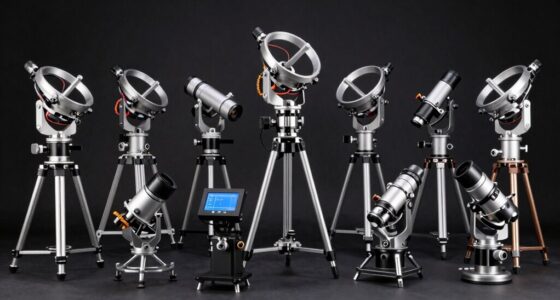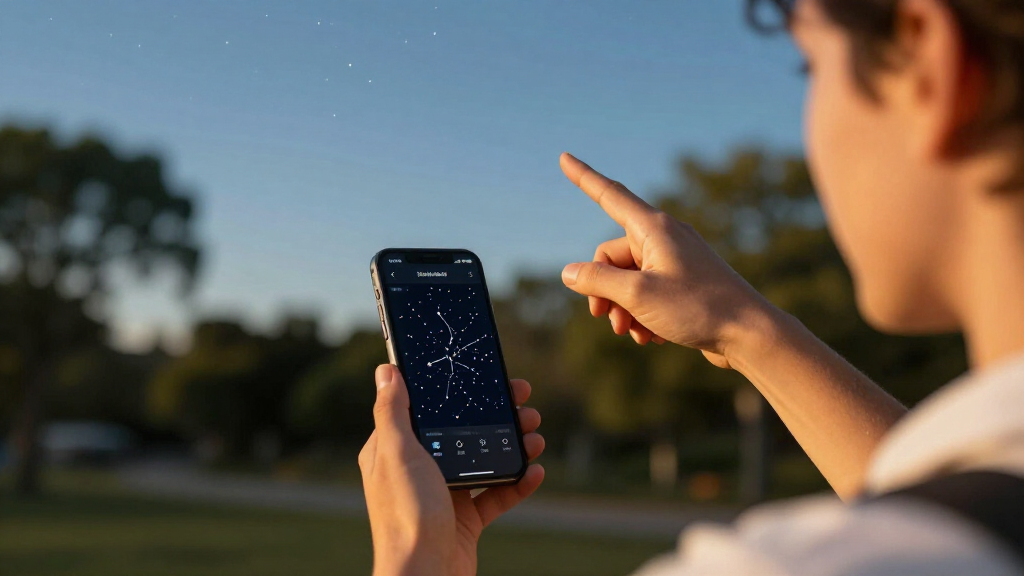
Astronomy star charts come in a few distinct flavors — rotating planispheres, seasonal star wheel sets, illustrated beginner guides, and deep-sky atlases — and the right one depends on how dark your sky is, your latitude, and whether you’re hunting constellations or faint galaxies. My top overall pick is The Night Sky 30°-40° (Large) Star Finder, which stands out for its unmatched readability under red flashlight light and its nearly distortion-free star patterns. For casual backyard observers, the National Geographic Backyard Guide to the Night Sky pairs its charts with enough context to teach itself, while the Observer’s Sky Atlas takes the deep-sky crown for anyone with a telescope. The main tradeoff in this category is simplicity versus depth: planispheres are indestructible and instant but shallow, while atlases reward skill with thousands more targets. Latitude matching is the other decision point that trips up most first-time buyers. Keep reading for the full breakdown of all 11 charts and who each one suits best.

Prime made for students and young adults
- Fast, free delivery for dorm and study essentials
- Prime Video and Amazon Music included
- Member-only deals
Key Takeaways
- Planispheres dominate the top of this ranking because they never go out of date and work at a glance — but only if you buy the correct latitude version, which is why The Night Sky appears three times with different zones and sizes.
- The Night Sky’s large version beat its small sibling decisively: the small version’s portability advantage is real, but its cramped labels make it frustrating for anyone over roughly 40 or observing with glasses.
- Deep-sky atlases like the Observer’s Sky Atlas only make sense if you own a telescope — for naked-eye observers they are overkill, and a $12 planisphere will actually get used more.
- Books that combine charts with narrative (National Geographic’s two titles, Find the Constellations) ranked well for beginners precisely because a chart alone can’t teach you how to find things — the instructional layer is the value.
- The budget multi-latitude planisphere and Celestron‘s seasonal maps are the weakest performers here: the former trades accuracy for flexibility, and the latter’s seasonal format forces page-flipping that a planisphere eliminates entirely.
| The Night Sky 30°-40° (Large; North Latitude) |  | Best Large Planisphere | Type: Planisphere star wheel | Latitude Coverage: 30°-40° North | Format: Large print edition | VIEW LATEST PRICE | See Our Full Breakdown |
| Observer’s Sky Atlas: The 500 Best Deep-Sky Objects With Charts and Images |  | Best Deep-Sky Atlas | Type: Deep-sky observing atlas | Objects Covered: 500 deep-sky targets | Included Materials: Finder charts and reference images | VIEW LATEST PRICE | See Our Full Breakdown |
| National Geographic Backyard Guide to the Night Sky, 2nd Edition |  | Best for Beginners | Type: Illustrated beginner’s guide | Edition: 2nd Edition | Coverage: Constellations, planets, moon, celestial events | VIEW LATEST PRICE | See Our Full Breakdown |
| The Night Sky 30°-40° (Small) Star Finder |  | Best Compact Pick | Type: Pocket planisphere star wheel | Latitude Coverage: 30°-40° North | Format: Small, pocket-sized edition | VIEW LATEST PRICE | See Our Full Breakdown |
| Find the Constellations: A Classic Guide to Tracking Planets and the Solar System with Star Charts for Children (Ages 10-12) |  | Best for Kids | Type: Children’s illustrated astronomy guide | Recommended Age: 10-12 years | Coverage: Constellations, planets, solar system | VIEW LATEST PRICE | See Our Full Breakdown |
| Double-Sided Multi-Latitude Planisphere Star Map Night Sky Guide |  | Best Premium Planisphere | Brand: Explore Scientific | Map Type: Planisphere | Latitude Range: Equator to 60° North | VIEW LATEST PRICE | See Our Full Breakdown |
| National Geographic Stargazer’s Atlas: The Ultimate Guide to the Night Sky |  | Best Coffee-Table Atlas | Publisher: National Geographic | Format: Hardcover atlas | Audience: Amateur astronomers and beginners | VIEW LATEST PRICE | See Our Full Breakdown |
| Guide to the Stars | 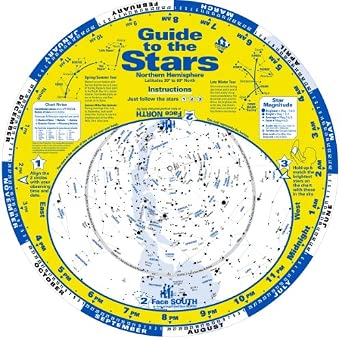 | Best for Building Foundational Knowledge | Format: Paperback guide | Audience: Beginners and enthusiasts | Coverage: Stars, constellations, celestial phenomena | VIEW LATEST PRICE | See Our Full Breakdown |
| The Night Sky 40°-50° (Large) Star Finder |  | Best Classic Planisphere | Format: Planisphere star finder | Latitude Range: 40°-50° North | Size: Large | VIEW LATEST PRICE | See Our Full Breakdown |
| Astronomy: The Stars – Beginner’s Guide |  | Budget Starter Read | Format: Beginner’s guide (digital/print) | Audience: Complete newcomers | Focus: Stars and astronomy fundamentals | VIEW LATEST PRICE | See Our Full Breakdown |
| Celestron Sky Maps – Seasonal Star Charts for Stargazing |  | Best Field-Ready Chart Set | Material: Heavy-duty water-resistant card stock | Size: 13.75 x 11.5 inches | Binding: Plastic spiral binding | VIEW LATEST PRICE | See Our Full Breakdown |
| astronomy star chart | Format |
|---|---|
| The Night Sky 30°-40° | Large print edition |
| Observer’s Sky Atlas: The 500 | — |
| National Geographic Backyard G | Softcover guidebook |
| The Night Sky 30°-40° | Small, pocket-sized edition |
| Find the Constellations: A Cla | Softcover book |
| Double-Sided Multi-Latitude Pl | — |
| National Geographic Stargazer’ | Hardcover atlas |
| Guide to the Stars | Paperback guide |
| The Night Sky 40°-50° | Planisphere star finder |
| Astronomy: The Stars | Beginner’s guide (digital/print) |
| Celestron Sky Maps | — |
More Details on Our Top Picks
The Night Sky 30°-40° (Large; North Latitude)
Among planispheres, The Night Sky 30°-40° in its large format stands out for sheer readability. Its dial-based design shows only the stars visible from your latitude, which cuts the clutter that frustrates newcomers trying to match a chart to the real sky. Compared with the smaller version of the same star finder, this large edition trades portability for legibility — constellations and star names are easy to read under a dim red flashlight, a genuine advantage when your hands are cold and your eyes are dark-adapted. Compared with the Celestron Sky Maps seasonal charts, it is simpler but far faster to use: spin the dial, match the time, and go. The tradeoff is specificity — buyers outside the 30°-40° band will need a different edition, and there are no deep-sky targets or companion notes included.
Pros:- Dial design shows only visible stars for your latitude, reducing confusion
- Large format makes labels easy to read in dim red light
- Durable and instantly usable with no page flipping
- Faster at the eyepiece than seasonal chart booklets
Cons:- Only accurate within the 30°-40° latitude band
- No deep-sky objects or observing guidance included
Best for: Stargazers in the southern US or similar latitudes who want a fast, legible whole-sky reference for casual constellation hunting
Not ideal for: Anyone north of roughly 40° latitude, or observers hunting nebulae and galaxies — the dial shows stars and constellations only
- Type:Planisphere star wheel
- Latitude Coverage:30°-40° North
- Format:Large print edition
- Intended Users:Beginners through enthusiasts
- Content:Stars and constellations visible at latitude
- Use Case:Naked-eye stargazing and orientation
Our verdict“This pick makes the most sense for observers in the 30°-40° band who value quick, glove-friendly sky orientation over depth.”
Observer’s Sky Atlas: The 500 Best Deep-Sky Objects With Charts and Images
Once plain star charts stop being enough, this is the natural next step. The Observer’s Sky Atlas goes beyond constellation outlines to catalog the 500 best deep-sky objects, pairing each with finder charts and images so you know what a nebula or cluster should look like through a small telescope. That is the key difference from the National Geographic Backyard Guide — where that book explains the sky in friendly prose, this one assumes you already own a telescope and want targets. Compared with a planisphere like The Night Sky, the payoff is purposeful observing rather than casual stargazing. The tradeoff is a steeper learning curve: coordinates, magnitudes, and chart symbols demand patience from readers new to atlas conventions. For intermediate hobbyists, though, that structure is exactly what makes observing sessions productive.
Pros:- Curated list of 500 targets eliminates guesswork about what to observe
- Finder charts plus images set realistic expectations at the eyepiece
- Compact enough to bring along on observing sessions
- Scales well as skills grow over multiple seasons
Cons:- Assumes familiarity with atlas symbols and coordinate systems
- Too advanced for readers who have never used a telescope
Best for: Intermediate telescope owners who want a curated target list instead of wandering the sky aimlessly
Not ideal for: Complete beginners without a telescope — much of the content targets objects invisible to the naked eye
- Type:Deep-sky observing atlas
- Objects Covered:500 deep-sky targets
- Included Materials:Finder charts and reference images
- Intended Users:Amateur astronomers with telescopes
- Skill Level:Intermediate to advanced
- Use Case:Planned telescope observing sessions
Our verdict“This is the pick for hobbyists ready to graduate from constellation spotting to systematic deep-sky observing.”
National Geographic Backyard Guide to the Night Sky, 2nd Edition
For a first astronomy book, readability beats raw data, and this guide gets that balance right. The second edition pairs constellation maps with plain-language explanations of planets, moon phases, and seasonal events, plus stargazing tips that no planisphere offers — where to look, when to look, and what to expect. Compared with The Night Sky planisphere, this is the more complete starting point: you learn why the sky changes through the year, not just what is overhead tonight. Compared with the Observer’s Sky Atlas, it deliberately skips dense technical detail, which is the right call for its audience. The drawback is ceiling — after a season or two, serious observers will outgrow it and want deeper charts. As a friendly on-ramp, though, this option stands out for turning curiosity into an actual hobby.
Pros:- Approachable explanations of constellations, planets, and celestial events
- Practical stargazing tips for timing and location
- Attractive illustrations make learning visual and inviting
- Broad enough to stay useful across all seasons
Cons:- Light on technical data for advancing hobbyists
- Charts are too basic for telescope-based observation
Best for: First-time stargazers and casual backyard observers who want context and tips, not just sky maps
Not ideal for: Telescope users chasing faint deep-sky objects — the charts lack the depth for serious targeting
- Type:Illustrated beginner’s guide
- Edition:2nd Edition
- Coverage:Constellations, planets, moon, celestial events
- Intended Users:Beginners and outdoor enthusiasts
- Extras:Stargazing tips and observing advice
- Format:Softcover guidebook
Our verdict“This is the smart first purchase for anyone starting from zero who wants to understand the sky, not just locate it.”
The Night Sky 30°-40° (Small) Star Finder
Same trusted dial design as the large edition, shrunk to pocket size — that is the whole pitch, and it works. The small Night Sky star finder slips into a jacket pocket or a telescope accessory case, making it the version you actually carry on a hike or a camping trip, where the large format stays home. Compared with the large edition, the tradeoff is immediate: smaller labels are harder to read in dim light, so older eyes or gloved hands may struggle at the margin. Compared with the Double-Sided Multi-Latitude Planisphere, this one covers a single latitude band but does so with cleaner, less cluttered star positions — a fair swap if you observe mostly from one region. Just know that it ships with minimal instructions and no target lists, so it pairs well with a fuller guide like the Backyard Guide.
Pros:- Genuinely pocketable for travel and trail use
- Same accurate, uncluttered charts as the large edition
- Simple dial operation works without batteries or apps
- Inexpensive companion to a fuller guidebook
Cons:- Small print is difficult to read in dim red light
- Minimal instructions and no additional reference content
Best for: Hikers, campers, and travelers in the 30°-40° band who need a take-anywhere sky reference
Not ideal for: Anyone wanting a self-contained learning tool — there are no instructions or observing notes, and the small text frustrates some readers
- Type:Pocket planisphere star wheel
- Latitude Coverage:30°-40° North
- Format:Small, pocket-sized edition
- Intended Users:Beginner and intermediate stargazers
- Content:Stars and constellations for the latitude band
- Use Case:Portable stargazing on the go
Our verdict“Buy this if portability is the priority and you already have a beginner’s guide to fill in the gaps.”
Find the Constellations: A Classic Guide to Tracking Planets and the Solar System with Star Charts for Children (Ages 10-12)
Few astronomy books for children survive across generations, but this classic earns its longevity. Find the Constellations teaches kids aged 10-12 to recognize star patterns and track planets using simple charts, quizzes, and a tone that talks to young readers rather than at them. Compared with the National Geographic Backyard Guide, this is narrower and younger in focus — it is a book a child can work through independently, with star charts sized for learning rather than field precision. Compared with a planisphere, it builds actual understanding of how the sky moves, which is a better foundation than a dial alone. The tradeoff is age range: content sits squarely at the middle-grade level, so teenagers and adults will find it too basic, and younger children may need an adult alongside for some sections.
Pros:- Engaging, time-tested writing aimed squarely at middle-grade readers
- Includes working star charts kids can use outside
- Quizzes and activities reinforce what constellations look like
- Covers planets and the solar system alongside star patterns
Cons:- Content depth is limited for readers above age 12
- Younger children will likely need adult help with some passages
Best for: Parents of curious 10-12 year olds who want screen-free astronomy learning with real star charts
Not ideal for: Teens or adults — the reading level and content depth cap out well below serious stargazing needs
- Type:Children’s illustrated astronomy guide
- Recommended Age:10-12 years
- Coverage:Constellations, planets, solar system
- Included Materials:Star charts, quizzes, and activities
- Format:Softcover book
- Use Case:At-home learning and family stargazing
Our verdict“The clear choice for gift-givers nurturing a child’s first real interest in the night sky.”
Double-Sided Multi-Latitude Planisphere Star Map Night Sky Guide
Explore Scientific’s double-sided planisphere solves the oldest planisphere problem: distortion. By splitting the sky across two faces, the star map stays accurate across a wide latitude band from the equator to 60° north, where single-disc models like The Night Sky 40°-50° force you to match your exact latitude or accept warped constellations. The maps come from Wil Tirion, arguably the most respected celestial cartographer working, and the plotting includes nebulae and galaxies beyond the basic constellation lines. Compared with the Celestron Sky Maps seasonal charts, this is faster at the eyepiece — dial in the date and time and the current sky appears instantly. The tradeoff is a steeper learning curve; planispheres assume you already understand how the sky rotates, so absolute first-timers may feel lost at first.
Pros:- Double-sided design keeps star positions accurate across a huge latitude range
- Wil Tirion maps include deep-sky objects, not just constellations
- Durable, easy-to-clean construction suited to damp nighttime use
- Instant date-and-time dial beats flipping through seasonal charts
Cons:- Northern hemisphere only, unusable for southern sky observers
- Assumes some familiarity with sky rotation, frustrating true beginners
Best for: Intermediate stargazers in the northern hemisphere who want one durable, distortion-minimized chart covering multiple latitudes
Not ideal for: Southern hemisphere observers — the latitude range ends at the equator, making it unusable below that line
- Brand:Explore Scientific
- Map Type:Planisphere
- Latitude Range:Equator to 60° North
- Cartographer:Wil Tirion
- Model Number:ES-TPS018
- Customer Rating:4.4/5
- ASIN:B09HYYH66D
Our verdict“The most capable planisphere in this lineup — worth it if you stargaze across latitudes and already know the basics of sky navigation.”
National Geographic Stargazer’s Atlas: The Ultimate Guide to the Night Sky
Where planispheres like the Explore Scientific double-sided model are tools for the field, this atlas is a reference you study before you go outside. It pairs wide-reaching sky coverage with National Geographic’s signature illustrations, making it the most visually rich option here — closer to a curated sky encyclopedia than a chart you hold at the eyepiece. Compared with the Observer’s Sky Atlas, which targets 500 specific deep-sky objects with serious chart detail, this one trades depth for accessibility and beauty, which is exactly the right call for its audience. The drawback is practical: a large-format atlas is awkward to carry and read in the dark, so it works best alongside a planisphere rather than replacing one. If you want a single book that teaches and inspires, this is it; if you want tonight’s sky in ten seconds, it isn’t.
Pros:- Gorgeous illustrations and maps that double as a coffee-table book
- Broad coverage accessible to readers with no astronomy background
- Explains celestial objects and sky navigation, not just star positions
- Strong gift appeal for budding astronomers
Cons:- Too large and richly illustrated for practical dark-site use
- Not a quick-lookup tool — finding what’s overhead tonight takes longer than a planisphere
Best for: Casual stargazers and gift-buyers who want a beautiful, browsable sky reference for planning sessions at home
Not ideal for: Field observers who need a portable, red-light-readable chart at the telescope — the size and layout work against that
- Publisher:National Geographic
- Format:Hardcover atlas
- Audience:Amateur astronomers and beginners
- Coverage:Full night sky guide
- ASIN:1426222203
Our verdict“The book to buy if you want to understand the sky, not just locate it — pair it with a planisphere for field work.”
Guide to the Stars
This is a learning-first guide rather than a lookup tool, and that distinction shapes who should buy it. Compared with the National Geographic Stargazer’s Atlas, it leans harder into explanation — how stars behave, why constellations shift, what you’re actually looking at — while skipping much of the visual polish. That makes it a better companion for a reader’s first year in astronomy, sitting somewhere between a children’s book like Find the Constellations and a technical atlas. The writing is genuinely approachable, which is its strongest card, but the sparse illustrations are a real limitation for a subject where orientation depends on pictures. Anyone trying to match the text against the actual sky will wish for more diagrams, and there’s nothing included to help at the eyepiece. Treat it as the conceptual half of a stargazing library, with a planisphere covering the practical half.
Pros:- Clear, jargon-free explanations suited to complete newcomers
- Covers constellations and celestial phenomena in real depth
- Affordable entry point into astronomy as a hobby
- Comfortable for teen and adult readers alike
Cons:- Illustrations are too sparse for spatial subjects like constellation finding
- No charts or accessories to support actual observing sessions
Best for: Readers who want to understand the science and lore of the night sky before investing in equipment
Not ideal for: Visual learners and field observers — thin illustrations and no charts make it hard to connect text to the real sky
- Format:Paperback guide
- Audience:Beginners and enthusiasts
- Coverage:Stars, constellations, celestial phenomena
- Style:Explanatory text guide
- ASIN:1928771017
Our verdict“A solid primer for the curious mind, but pair it with a proper chart if you ever intend to step outside and look up.”
The Night Sky 40°-50° (Large) Star Finder
This is the archetypal planisphere — the design most amateur astronomers started on — and the large format here is the point. A bigger disc means bigger labels and finer star detail, which matters enormously when you’re reading it by dim red light at night. Compared with the Explore Scientific double-sided planisphere, this one covers a narrower 40°-50° band, and that constraint is deliberate: a tighter latitude window produces less distortion and a simpler, less cluttered face. For most of the continental US and southern Canada, that band is the right one. The classic two-sided sky and constellation-overlay trick keeps the front uncluttered while still naming everything. The weakness is fit: buy the wrong latitude version and the sky never quite matches yours, and the sparse instructions mean first-timers may need a YouTube video to get oriented. It’s simple, and that’s both its strength and its ceiling.
Pros:- Large disc is unusually easy to read under dim red light
- Simple, uncluttered design that beginners can operate in minutes
- Durable proven design trusted by astronomy clubs for decades
- Less distortion than wide-latitude alternatives
Cons:- Only accurate within its 40°-50° latitude window
- Instructions are minimal, leaving some newcomers confused at first use
Best for: Stargazers between 40° and 50° north latitude who want a simple, legible, dial-up chart for regular night use
Not ideal for: Observers outside the 40°-50° band or anyone wanting deep-sky detail — this shows the bright-sky basics only
- Format:Planisphere star finder
- Latitude Range:40°-50° North
- Size:Large
- Audience:Beginners and amateur astronomers
- ASIN:0961320745
Our verdict“If you live in the latitude band and want one reliable dial for the whole year, this classic earns its place over fancier charts.”
Astronomy: The Stars – Beginner’s Guide
As the cheapest on-ramp in this lineup, this guide does one job: explaining what stars are and how the sky works, without assuming any prior knowledge. Compared with the Guide to the Stars, it aims even lower in price and complexity, making it a reasonable first purchase for someone testing whether astronomy is a passing interest. Against National Geographic’s Backyard Guide to the Night Sky, though, the gap is obvious — no visuals, no charts, and no seasonal maps means you finish the book understanding concepts but still unable to find anything overhead. That’s the central tradeoff: knowledge without navigation. For a few dollars more, a planisphere like The Night Sky 40°-50° would solve the practical half, and honestly that combination is how I’d recommend using this book. On its own, it’s a primer; it is not a star chart, and buyers should not expect one.
Pros:- Very accessible writing for readers with zero astronomy background
- Covers the fundamentals of stars and celestial objects in one sitting
- Inexpensive way to sample the hobby before bigger purchases
- Approachable for teens and adults
Cons:- No visuals, charts, or maps despite the star-chart context
- Shallow on technical detail, quickly outgrown by keen learners
Best for: Complete newcomers who want an inexpensive conceptual introduction before committing to gear or charts
Not ideal for: Anyone expecting actual star charts — there are no visuals or maps to use for real-world observing
- Format:Beginner’s guide (digital/print)
- Audience:Complete newcomers
- Focus:Stars and astronomy fundamentals
- Visuals:None included
- ASIN:B0GWY51TL1
Our verdict“A fair first read for the curious, but serious stargazers should put the same money toward a planisphere instead.”
Celestron Sky Maps – Seasonal Star Charts for Stargazing
Most star charts force you to choose between a sturdy field tool and a detailed reference you study at home. This set tries to do both, pairing seasonal sky maps with a glow-in-the-dark planisphere so you can orient yourself without killing your night vision with a red flashlight. Compared with The Night Sky 30°-40° (Large), which is smaller and simpler, these charts cover far more territory — including deep-sky targets — at the cost of a much bigger footprint. The plastic spiral binding lets the pages lay flat, which matters more than it sounds when you are star-hopping with one hand on a telescope. The tradeoff is real, though: you are pinned to the Northern Hemisphere, and the glow feature needs a shot of light beforehand to work at all.
Pros:- Heavy-duty water-resistant card stock survives dew and damp nights
- Seasonal charts and planisphere together cover constellations plus deep-sky objects
- Spiral binding lays flat for hands-free reference at the eyepiece
- Glow-in-the-dark star finder reduces the need for flashlights
Cons:- Northern Hemisphere coverage only — useless below the equator
- Oversized format is awkward for compact storage or travel
- Glow-in-the-dark feature requires pre-exposure to light before it works
Best for: Amateur astronomers who want a durable, all-in-one chart set they can toss in a gear bag for nights at dark-sky sites
Not ideal for: Southern Hemisphere observers or anyone wanting a pocket-size finder — this is a large-format set, not something you’ll casually carry on a hike
- Material:Heavy-duty water-resistant card stock
- Size:13.75 x 11.5 inches
- Binding:Plastic spiral binding
- Includes:Glow-in-the-dark planisphere
- Chart Coverage:Seasonal star charts for all four seasons
- Geographic Range:Northern Hemisphere only
- Skill Level:Beginner through experienced
Our verdict“A rugged, flat-laying chart set built for actual field use — grab it if you observe outdoors regularly and live in the Northern Hemisphere.”
How We Picked
I evaluated each product through the lens of what a stargazer actually does in the field: standing in the dark, holding a chart at arm’s length, trying to match printed patterns to the sky. That made readability under dim red light the single most weighted criterion — white background charts that dazzle your night vision lose points regardless of how accurate they are. I also weighed latitude accuracy and distortion, since a planisphere designed for the wrong latitude shows stars in positions that don’t match what you see, which defeats the entire purpose.
Beyond the field test criteria, I scored each product on depth of content (naked-eye constellations versus telescopic deep-sky targets), durability for outdoor use, learning curve for beginners, and long-term value — whether the product stays useful after the first month or gets outgrown. This explains the ranking structure: field-ready planispheres sit at the top, hybrid book-chart guides fill the middle because they trade convenience for teaching power, and the bottom spots go to products whose formats compromise either accuracy or usability.
Factors to Consider When Choosing Astronomy Star Charts
Before picking a specific chart, it helps to understand the format landscape and the mistakes that catch first-time buyers. These are the factors that shaped my ranking more than any individual product’s features.Match Your Latitude Before Anything Else
This is the single most common mistake in the category, and it’s an expensive one because returned charts are usually non-refundable once opened. A planisphere is a mechanical analog computer for a specific latitude band — the stars near your southern horizon simply won’t match if you buy the wrong version. If you live in the southern US (roughly Los Angeles, Atlanta, Dallas), you want the 30°-40° version; the northern states and most of central Europe need the 40°-50° version. Some buyers see a “multi-latitude” chart and assume it’s the smarter purchase, but the adjustable disc mechanism usually introduces slack that throws off alignment. My advice: spend the two minutes to check your latitude on any mapping app, then buy the version built for it. The only buyers who should consider multi-latitude designs are frequent travelers or gift-givers who don’t know the recipient’s location.
Naked Eye or Telescope? The Answer Changes Everything
Chart buyers split into two camps, and buying for the wrong camp wastes money in both directions. If you’re observing with just your eyes or binoculars, you need maybe 100 bright stars and constellation lines — anything more is visual noise that makes the chart harder to match against the sky. Telescope owners face the opposite problem: a planisphere shows almost none of the deep-sky objects a telescope can resolve, and they’ll outgrow one within months. A common trap is the enthusiastic beginner who buys a 500-object atlas on day one, gets overwhelmed, and quits before finding their first nebula. The smarter path for most people is a cheap planisphere first, then a deep-sky atlas once you’ve genuinely exhausted the bright-sky targets. This progression is why I ranked teaching-oriented books in the middle — they serve the transition period well.
Dark Adaptation: The Hidden Dealbreaker
Your eyes need about 20-30 minutes to fully dark-adapt, and a single glance at a bright white chart page resets that clock. This is why chart design matters far more than beginners expect. The best charts — like David Chandler’s The Night Sky series — use white stars on a dark sky-colored background, so a dim red flashlight preserves your night vision while you read. Books printed as black-on-white pages, including most glossy atlases, force you to choose between seeing the chart and seeing the sky. Some observers work around this with thick red acetone filters or by photographing pages, but that’s a hassle. If you plan to observe seriously, treat dark-sky-friendly printing as a requirement, not a bonus. Casual readers studying constellations indoors before an outing can safely ignore this factor.
Size, Durability, and Field Use
A chart you’re afraid to bring outside is a chart you’ll stop using. Planispheres win on toughness because most are laminated or printed on heavy stock that shrugs off dew — the reason they rank so highly here. Bound books are a mixed bag: a hardcover atlas survives a backpack but is genuinely awkward to hold open one-handed at a telescope, and spiral binding is worth seeking out if you go the book route. Think about gloves, too; a chart with tiny labels you can’t read while wearing winter gloves turns a January observing session into an exercise in frustration. Finally, consider that size cuts both ways — a large chart is easier to read but won’t fit in a jacket pocket, which is exactly why The Night Sky comes in two sizes rather than one compromise format.
How Much Teaching Support Do You Need?
A star chart tells you where things are; it doesn’t tell you how to find them, and that distinction separates buyers who stick with astronomy from those who abandon it. If terms like “magnitude” and “right ascension” mean nothing to you, a bare chart can feel like being handed a map of a country whose language you don’t speak. Illustrated guides with narrative sections — the National Geographic titles and Find the Constellations for kids — cost more per chart but include the orientation layer that makes charts click. Adults who already know the Big Dipper and Orion can skip this and go straight to a pure chart. Kids are a special case: charts written for their level, like Find the Constellations, dramatically outperform adult charts they’ll find intimidating. Don’t underestimate this factor; it’s the difference between a chart that gets used weekly and one that lives in a drawer.
When to Pay More (and When Not To)
The price band in this category runs from about $10 to $40, and the interesting truth is that price predicts quality far less than format does. A $12 planisphere will outlast and outperform a $30 coffee-table star atlas for actual field use, because you’re paying for different things — portability and durability versus depth and production value. Where extra money buys real capability is at the telescope end: a curated deep-sky atlas with star-hopping directions genuinely helps you find faint objects that a planisphere doesn’t even list. Where extra money buys nothing is decorative scale — giant wall-chart atlases with Hubble imagery look spectacular on a shelf but are nearly useless in the field. Set your budget by your equipment and commitment level, not by assuming the priciest option is the most capable. For most buyers, that means spending under $20 and being very happy.
Frequently Asked Questions
Do I need to buy the latitude-specific version, or will any planisphere work?
Latitude matching genuinely matters, and it’s the difference between a chart that matches the sky and one that creates confusion. Stars below your southern horizon on a chart designed for a lower latitude will appear where you can’t see them, and the reverse problem occurs with higher-latitude versions — the southern sky simply won’t line up. That said, the distortion is gradual rather than absolute: a 40° chart used at 35° latitude will be noticeably off near the horizon but reasonably accurate overhead, where most beginners start. If you’re within about 5 degrees of a version’s design latitude, you’ll rarely notice the mismatch. Beyond 10 degrees, buy the correct version or accept that horizon-level finding will frustrate you.
Can one chart really serve both naked-eye and telescope observing?
No single product does both jobs well, which is why serious observers eventually own two charts. A planisphere excels at the naked-eye task of orienting yourself — finding which constellations are up and using bright stars as anchors — but it typically lists only a handful of the deep-sky objects a telescope can reach. Conversely, a deep-sky atlas like the Observer’s Sky Atlas shows thousands of telescopic targets but its faint-star detail is pure clutter when you’re just learning the constellations. The practical workflow most observers settle on is planisphere first to orient, then atlas second to hunt. If you can only buy one and don’t yet own a telescope, the planisphere is the correct answer without question.
Are apps making physical star charts obsolete?
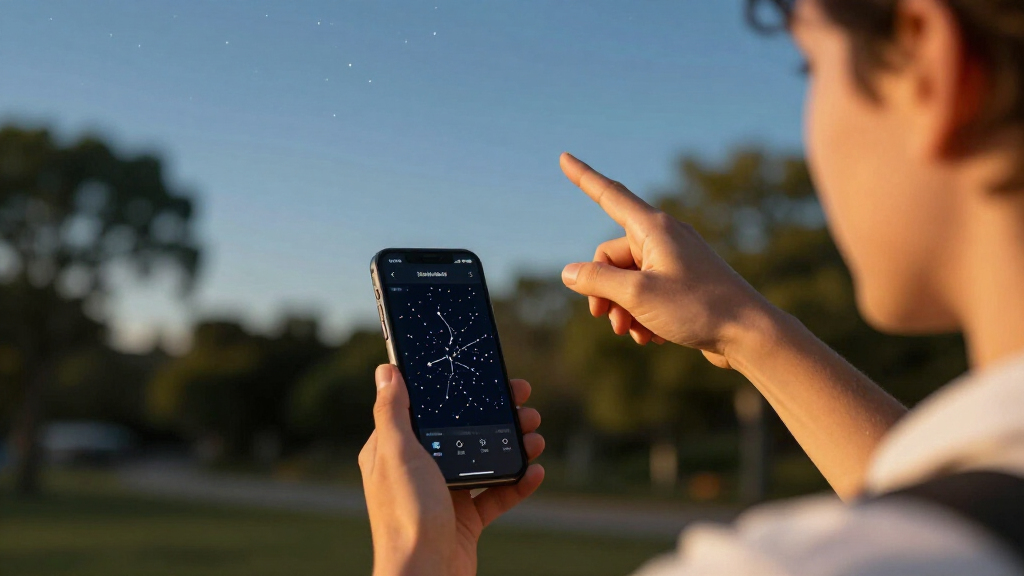
Apps are brilliant tools, but they haven’t killed the printed chart, and the reasons are practical rather than nostalgic. Phone screens destroy your dark adaptation even on red-shifted night modes, and cold-weather battery drain has ended many an observing session early. Physical charts also build a different skill: learning the sky from a static map forces you to develop spatial memory, while apps that point you at targets tend to keep that skill dormant. Where apps win decisively is object data, precise coordinates, and cloudy-night planning — none of which a printed chart attempts. The best answer for most observers is both: an app for planning and a planisphere at the eyepiece. Charts for kids are especially valuable since screen-based astronomy competes with every other app for their attention.
Is a seasonal chart set a good alternative to a rotating planisphere?
Seasonal formats like Celestron’s Sky Maps divide the year into four separate sky views, and they work — but the rotation is the planisphere’s core advantage. With a planisphere, you dial in the exact date and time and see precisely what’s overhead right now, including at 2 a.m. when the sky has moved on from what an evening seasonal chart shows. Seasonal charts are at their best for casual observing during a fixed evening window and for showing a whole season’s sky on one generous page, which some people find easier to scan. They also tend to include supplementary observing lists that planispheres lack. For anyone observing at varied hours or past midnight, though, the planisphere’s dial mechanism is simply the better technology.
What’s the best first chart for a child?
Children need charts designed for their reading level and attention span, and handing a 10-year-old an adult atlas almost guarantees they’ll zone out. Find the Constellations has stayed in print for decades precisely because it teaches through narrative, simple diagrams, and quizzes rather than dense star data — the charts are simplified to the constellations a child can realistically find, which builds confidence fast. A standard planisphere can work for motivated kids around age 10 and up, especially used together with an adult, but expect the magnitude cut-off and small labels to be barriers. What to avoid is the tempting “kid’s telescope kit” bundles that include cheap, poorly printed charts; they confuse more than they teach. The strongest combination is a child-oriented book for the learning phase plus a family planisphere for actual backyard sessions.
Conclusion
After comparing all 11 charts, the decision really comes down to what kind of observer you are rather than which product is objectively “best.” For most buyers, The Night Sky 30°-40° (Large) Star Finder is my best overall pick — it nails readability, accuracy, and durability at a price that leaves room for a red flashlight. If you’re further north, the 40°-50° large version is the same product doing the same job.
Best value goes to the small Night Sky planisphere, which delivers the full capability of its large sibling for a few dollars less, provided your eyes handle small labels. Best premium is the National Geographic Stargazer’s Atlas for readers who want a reference-grade volume with serious production value, while best for beginners is a two-way call: the National Geographic Backyard Guide for adults teaching themselves, and Find the Constellations for kids aged 8-12. Telescope owners should skip the planispheres entirely and put their money in the Observer’s Sky Atlas. Whatever you choose, match your latitude, protect your night vision, and get outside — the best chart is the one that’s actually in your hands when the sky clears.
Fall Picks
fall essentials
As an affiliate, we earn on qualifying purchases.