Choosing an astrophotography camera lens starts with deciding what you want to photograph: broad Milky Way landscapes, a tighter region of sky, or deep-sky targets through a dedicated imaging setup. I rank the Canon RF 20mm f/1.4 L VCM first for its combination of a bright aperture and expansive field, while the Rokinon 14mm f/2.8 is a compelling manual-focus choice for very wide scenes. For a dedicated, lightweight telescope-style setup, the SVBONY SV535 105mm f/2.8 takes a different route from the camera lenses.

Get school and study supplies delivered free — and shop member deals
- Fast, free delivery on millions of items
- Access to Prime Big Deal Days deals on October 6–7
- Prime Video, Amazon Music and more included
The main tradeoff is not simply aperture versus focal length. A shorter lens captures more sky and is easier to use for foreground landscapes, while a longer focal length frames smaller targets more tightly and places greater demands on tracking and accurate focus. Mount compatibility also narrows the field: the Canon RF primes fit RF cameras, the Rokinon is for Canon EF, and the SVBONY uses an astronomy-oriented mounting approach. I compare these four by night-sky fit, usable field of view, practical setup demands, and drawbacks, rather than treating them as interchangeable.
Key Takeaways
- The Canon RF 20mm f/1.4 is my strongest all-around pick here for Canon RF landscape astrophotography, combining an f/1.4 aperture with a stated 126-degree angle of view.
- The Rokinon 14mm f/2.8 offers the broadest listed angle of view at 115.7 degrees and costs you autofocus; its manual focus and substantial 900 g weight shape the experience.
- The Canon RF 24mm f/1.4 trades some scene coverage for a less extreme wide-angle view, a bright aperture, and weather-sealed L-series construction.
- The SVBONY SV535 is the specialist option: its 105 mm focal length and astronomy mounting options suit tighter, tracked sky framing rather than sweeping Milky Way landscapes.
- Check your camera mount before comparing focal lengths: these choices divide between Canon EF, Canon RF, and an astronomy-focused M42/E-mount-compatible setup.
| Canon RF 20mm f/1.4 L VCM Wide-Angle Prime Lens with Shoulder Bag and 64GB Memory Card |  | Best Overall for Canon RF Night Landscapes | Mount: Canon RF | Focal length: 20mm | Maximum aperture: f/1.4 | VIEW LATEST PRICE | See Our Full Breakdown |
| Rokinon 14mm f/2.8 Ultra-Wide Lens for Canon |  | Best for Expansive Milky Way Landscapes | Mount: Canon EF | Focal length: 14mm | Maximum aperture: f/2.8 | VIEW LATEST PRICE | See Our Full Breakdown |
| Canon RF 24mm f/1.4 L VCM Wide-Angle Lens Bundle |  | Best Premium 24mm Option for Canon RF | Mount: Canon RF | Focal length: 24mm | Maximum aperture: f/1.4 | VIEW LATEST PRICE | See Our Full Breakdown |
| SVBONY SV535 APO Astrophotography Lens, 105mm f/2.8 |  | Best Dedicated Optic for Tighter Tracked Targets | Focal length: 105mm | Maximum aperture: f/2.8 | Weight: 482 g | VIEW LATEST PRICE | See Our Full Breakdown |
| astrophotography camera lense | Focal length | Maximum aperture | Mount | Weight |
|---|---|---|---|---|
| Canon RF 20mm f/1.4 L VCM Wide | 20mm | f/1.4 | Canon RF | — |
| Rokinon 14mm f/2.8 Ultra-Wide | 14mm | f/2.8 | Canon EF | 31.7 oz (900 g) |
| Canon RF 24mm f/1.4 L VCM Wide | 24mm | f/1.4 | Canon RF | 2 lb |
| SVBONY SV535 APO Astrophotogra | 105mm | f/2.8 | — | 482 g |
More Details on Our Top Picks
Canon RF 20mm f/1.4 L VCM Wide-Angle Prime Lens with Shoulder Bag and 64GB Memory Card
The Canon RF 20mm f/1.4 L VCM is my top pick for a Canon RF photographer who wants one lens to cover broad night landscapes and general wide-angle work. Its f/1.4 maximum aperture is the brightest listed in this group, which gives more light-gathering headroom than the f/2.8 Rokinon and SVBONY. The stated 126-degree angle of view also makes room for a large sweep of sky, putting it ahead of the 24mm for expansive compositions while avoiding the extremely wide 14mm perspective.
That mix matters when the scene includes both stars and foreground. A 20mm focal length can frame a wide swath of sky without pushing as far toward the edge-heavy composition of an ultra-wide lens. Canon also lists coatings and optical elements intended to reduce chromatic aberration, flare, and ghosting—useful goals when bright stars and nearby light sources share a frame. I would not read those claims as a guarantee of pinpoint stars across every corner, but they make the lens a more directly specified option for demanding still and video work than the basic Rokinon description.
Compared with the RF 24mm f/1.4, this lens favors field coverage and closer focusing, while retaining the same stated maximum aperture and hybrid autofocus approach. The 24mm may suit photographers who want a more restrained perspective; the 20mm is easier to recommend when a broad sky is the priority. Unlike the SVBONY, this is a camera lens for a Canon RF body, not a 105mm instrument for tighter tracked targets. Its weather sealing and video-oriented controls add versatility, though they are not the main reason to choose it for stars.
The drawbacks are system dependence and uncertainty around the included accessories: it is a Canon RF lens, and the bundle description does not give the memory card’s compatibility details. It is also not water resistant, despite having weather sealing, so I would not treat it as safe from wet conditions. For nightscape shooters already invested in Canon RF, the balance of brightness, broad framing, and hybrid use makes this the most complete fit in the lineup.
Pros:- f/1.4 aperture offers the most light-gathering headroom among these four lenses.
- Stated 126-degree angle of view suits broad night-sky and foreground compositions.
- Optical elements and coatings are specified to reduce chromatic aberration, flare, and ghosting.
- Weather sealing and hybrid autofocus support use beyond still astrophotography.
Cons:- Fits Canon RF cameras, so it is not a direct option for EF or other camera systems.
- Weather sealing does not mean water resistance.
- Bundle memory-card capacity and compatibility details are not provided.
Best for: Canon RF photographers who want a bright, wide lens for Milky Way landscapes, night scenes, and mixed photo-video work.
Not ideal for: Canon EF or other-mount users, photographers who need a compact kit above all else, or deep-sky imagers seeking a longer focal length and dedicated tracking setup.
- Mount:Canon RF
- Focal length:20mm
- Maximum aperture:f/1.4
- Angle of view:126 degrees
- Autofocus:Nano USM and Voice Coil Motor (VCM)
- Minimum focusing distance:7.9 inches
- Filter thread:67mm
- Weather sealing:Yes; product description says not water resistant
Our verdict“I recommend the RF 20mm f/1.4 as the most balanced nightscape choice here for Canon RF users who value a bright aperture and a sweeping field of view.”
Rokinon 14mm f/2.8 Ultra-Wide Lens for Canon
The Rokinon 14mm f/2.8 is the straightforward pick when the composition needs to include a huge section of sky, a foreground, or both. Its listed 115.7-degree angle of view is exceptionally broad, and 14mm gives it a more expansive perspective than either Canon RF prime. That can be useful for Milky Way scenes where the landscape matters as much as the stars, or when a photographer wants a wide view from a fixed tripod without stitching multiple frames.
Its f/2.8 aperture is slower than the f/1.4 Canon lenses. That is a meaningful compromise for night work: the Canons gather more light at their widest settings, while the Rokinon asks for a longer exposure, higher sensitivity, or a different framing strategy to reach a similar exposure. In exchange, it is a manual-focus lens with a built-in petal-shaped hood and a stated optical design that includes aspherical elements. Manual focus is not automatically a problem for stars, since many astrophotographers focus manually, but it does mean there is no autofocus convenience for daytime use.
Compared with the RF 20mm, the Rokinon captures a wider scene but gives up one and two-thirds stops of maximum aperture based on the listed f-numbers. It may be the better fit for a Canon EF body or someone who values the broadest landscape framing over speed. Against the 24mm f/1.4, the difference is even more pronounced: the Rokinon covers more of the scene, while the 24mm gives a brighter, tighter view and offers autofocus. The Rokinon is not interchangeable with the RF lenses without a compatible camera system or suitable adaptation.
At 900 g, this is also a substantial lens for a setup built around portability. I would choose it for its ultra-wide perspective, not because it is the lightest way to shoot the night sky. Photographers who want autofocus, a brighter aperture, or a lighter travel kit should look at the Canon RF options if their camera accepts them. For Canon EF users who prioritize broad Milky Way compositions and are comfortable focusing by hand, the Rokinon has a distinct role.
Pros:- 115.7-degree angle of view captures broad sky-and-landscape compositions.
- 14mm focal length provides the widest listed focal-length perspective in this camera-lens group.
- Aspherical elements are included in the optical design.
- Built-in petal-shaped hood is part of the lens.
Cons:- f/2.8 is slower than the f/1.4 Canon primes for low-light exposures.
- Manual focus only; there is no autofocus for daytime or mixed-use shooting.
- At 900 g, it is relatively heavy for a wide-angle nightscape kit.
Best for: Canon EF photographers who want an ultra-wide view for Milky Way landscapes and are comfortable setting focus manually.
Not ideal for: Canon RF users without a suitable adaptation path, buyers who prioritize f/1.4 light gathering, or photographers seeking a lightweight autofocus lens.
- Mount:Canon EF
- Focal length:14mm
- Maximum aperture:f/2.8
- Angle of view:115.7 degrees
- Focus:Manual
- Optical construction:14 elements in 10 groups
- Closest focus distance:10.8 inches
- Weight:31.7 oz (900 g)
- Lens hood:Built-in petal-type
Our verdict“I would choose the Rokinon for Canon EF nightscape work when its ultra-wide framing matters more than autofocus, low-light speed, or low weight.”
Canon RF 24mm f/1.4 L VCM Wide-Angle Lens Bundle
The Canon RF 24mm f/1.4 L VCM takes a slightly tighter approach than the RF 20mm while keeping the same listed f/1.4 maximum aperture. That makes it a good fit for night photographers who want a bright wide-angle lens but prefer a less sweeping composition. Compared with the 20mm f/1.4, it places more emphasis on a defined subject or a smaller section of sky; compared with the Rokinon 14mm, it sacrifices some field coverage for a faster aperture and autofocus.
For astrophotography, the main draw is its f/1.4 aperture. The lens is also part of Canon’s L-series and described as weather sealed, which may appeal to photographers who work outdoors in changing conditions. I would treat weather sealing as protection against some environmental exposure, not a promise that the lens can handle water. Hybrid VCM and Nano USM autofocus, along with controls designed for stills and video, make this the more flexible mixed-use option than the manual-focus Rokinon.
This 24mm is not the most sky-filling choice in this group. The Rokinon’s 14mm perspective and the RF 20mm’s stated 126-degree angle of view are better starting points for very broad landscapes. The SVBONY sits on the other end of the range, with a 105mm focal length intended for much tighter astronomical framing. The RF 24mm occupies a practical middle ground for Canon RF owners: wide enough for nightscapes, but less extreme than the two shorter photographic options.
The stated 2 lb weight is a notable compromise for a prime lens, particularly for a compact travel setup. Its Canon RF mount also limits its audience, and the shoulder bag and 64GB card in the bundle do not change the lens’s core astrophotography performance. I would rank it below the RF 20mm for all-around night landscapes because the 20mm offers a wider stated field at the same maximum aperture. Still, photographers who favor the 24mm framing and want weather-sealed construction and autofocus have a clear reason to choose it.
Pros:- f/1.4 maximum aperture supports low-light shooting.
- Weather-sealed L-series construction is suited to demanding outdoor use.
- VCM and Nano USM hybrid autofocus supports stills and video.
- Bundle includes a shoulder bag and 64GB memory card.
Cons:- Canon RF mount restricts it to compatible camera bodies or suitable adaptation.
- Listed 2 lb weight may be substantial for a compact astrophotography kit.
- Its 24mm framing is less expansive than the 20mm and 14mm options.
Best for: Canon RF users who want an f/1.4 wide-angle lens with a more restrained composition than 20mm and strong still-photo and video versatility.
Not ideal for: Photographers who need the widest possible sky coverage, a lighter prime, or a lens compatible with Canon EF and non-RF cameras.
- Mount:Canon RF
- Focal length:24mm
- Maximum aperture:f/1.4
- Diaphragm blades:11
- Autofocus:Voice Coil Motor (VCM) and Nano USM
- Minimum focusing distance:9.4 inches
- Construction:Weather-sealed L-series
- Weight:2 lb
- Bundle includes:Shoulder bag and 64GB memory card
Our verdict“I recommend the RF 24mm f/1.4 for Canon RF photographers who want a bright, durable, autofocus wide prime and prefer tighter framing to the RF 20mm.”
SVBONY SV535 APO Astrophotography Lens, 105mm f/2.8
The SVBONY SV535 APO is the specialist in this roundup, not a direct rival to the 14mm and 20mm nightscape lenses. Its 105mm focal length frames a much smaller portion of the sky, making it better suited to tighter wide-field astronomical targets in a tracked setup than sweeping Milky Way scenes with a landscape foreground. The 482 g weight helps keep the optical assembly portable, while the f/2.8 aperture offers a faster starting point than many longer focal-length telescope configurations.
Its apochromatic optical design, FMC multi-coating, and 5-group, 7-element construction are intended to support sharp, color-accurate images. These are useful design goals for stars, where color fringing and bright halos can be distracting, but the supplied specifications do not establish measured corner performance or guarantee results for every sensor. The helical focuser and compatibility with electronic focusing systems give it a more astronomy-oriented workflow than the Canon primes. It also supports 2-inch filters at the objective, a feature that can matter to imagers planning a filter-based setup.
Compared with the Rokinon 14mm, the SV535 is far tighter in framing and has the same f/2.8 maximum aperture. It should not be picked as a substitute for broad landscape coverage. Against the Canon RF 20mm and 24mm, it gives up the f/1.4 aperture and ordinary wide-angle versatility, but offers mounting features designed around astronomical rigs. Multiple mounting options—including an M42 thread, E-mount support, Vixen-style dovetail, and Arca-Swiss base—make its physical setup more flexible, though buyers still need to check exact camera and accessory compatibility.
The key limitation is that the EAF bracket is not included, even though the focuser can work with electronic focusing systems. That adds a separate setup requirement for anyone planning automated focus. It also requires more careful tracking than a short lens because stars move more noticeably across the frame at a longer focal length. I rank it fourth overall only because the article includes varied camera lenses and this one serves a narrower target set; for a buyer assembling a portable tracked imaging rig, it may be the most relevant option of the four.
Pros:- 105mm focal length suits tighter sky framing than the landscape-oriented wide primes.
- 482 g weight supports a more portable astronomy imaging setup.
- Apochromatic design and FMC coating target color accuracy and reduced optical artifacts.
- Supports 2-inch filters and several mounting approaches.
Cons:- The 105mm framing is not suited to expansive Milky Way landscapes.
- EAF bracket is not included.
- Longer focal length places greater demands on tracking and precise focus than the short wide-angle lenses.
Best for: Astrophotographers building a lightweight, tracked setup for tighter celestial targets who want filter support and astronomy-style mounting options.
Not ideal for: Beginners seeking a simple lens for handheld or fixed-tripod Milky Way landscapes, or buyers who expect an EAF bracket to be included.
- Focal length:105mm
- Maximum aperture:f/2.8
- Weight:482 g
- Optical design:5 groups, 7 elements; apochromatic
- Coating:FMC multi-coating
- Mounting:M42 thread, E-mount support, Vixen-style dovetail, Arca-Swiss base
- Focuser:Helical; compatible with EAF electronic focusing systems
- Filter support:2-inch filters at the objective
- EAF bracket:Not included
Our verdict“I recommend the SVBONY SV535 to astrophotographers with a tracked, astronomy-oriented setup who want tighter framing rather than a conventional wide nightscape lens.”
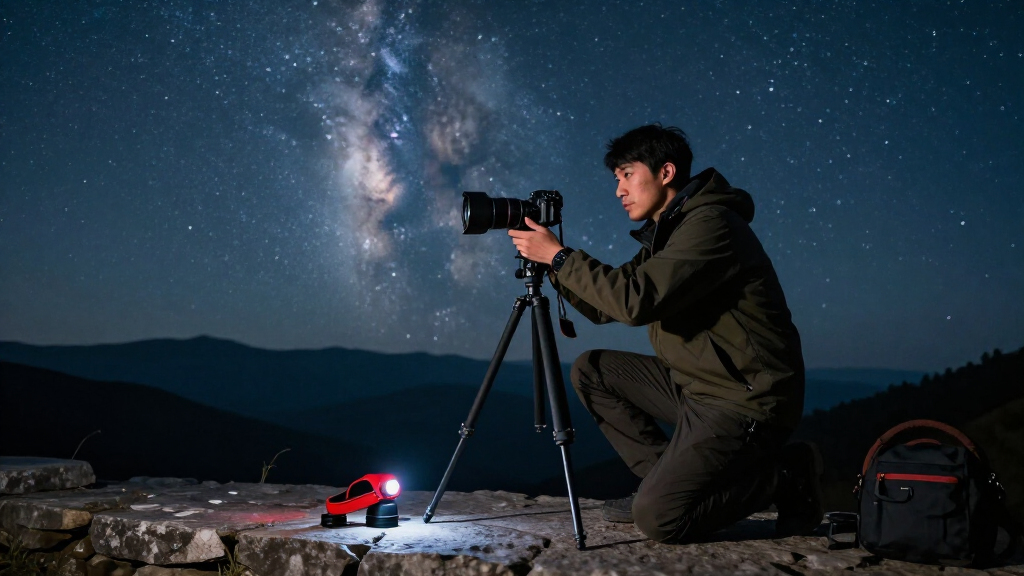
How We Picked
I ranked these lenses for astrophotography use, not for general-purpose photography. That means I looked at how aperture and focal length affect night-sky exposure and framing, whether a lens is a natural fit for a camera or a dedicated imaging rig, and what its focus and mounting approach asks of the photographer. A bright maximum aperture can help gather light, but it does not make every focal length appropriate for every target.
I also gave weight to field of view and the practical realities of night shooting. Broad lenses are forgiving for landscape compositions and can make it easier to include foreground scenery; tighter framing can isolate celestial regions but makes tracking errors and focus more noticeable. The Canon RF 20mm earns the top spot because it pairs f/1.4 with a very wide stated angle of view. The 24mm is a strong alternative when a somewhat tighter composition and professional construction matter more. The 14mm delivers an expansive perspective without the newer RF-system features, while the SVBONY is ranked as a specialist rather than a direct substitute for the camera primes.
Finally, I included tradeoffs that can affect a real buying decision: mount restrictions, weight, manual focusing, missing accessories, and the difference between a photographic wide-angle lens and an astronomy-oriented optic. Product descriptions and specifications supplied for these models do not establish measured corner sharpness, coma performance, or tracked exposure limits, so I do not treat those outcomes as proven. My order reflects the stated features and the roles each lens can reasonably fill.
| astrophotography camera lense | Mount | Maximum aperture | Autofocus |
|---|---|---|---|
| Canon RF 20mm f/1.4 L VCM Wide | Canon RF | f/1.4 | Nano USM and Voice Coil Motor (VCM) |
| Rokinon 14mm f/2.8 Ultra-Wide | Canon EF | f/2.8 | — |
| Canon RF 24mm f/1.4 L VCM Wide | Canon RF | f/1.4 | Voice Coil Motor (VCM) and Nano USM |
| SVBONY SV535 APO Astrophotogra | — | f/2.8 | — |
Factors to Consider When Choosing Astrophotography Camera Lenses
I would choose an astrophotography lens by matching its field of view and focusing demands to the targets I actually plan to shoot. Aperture matters, but the camera mount, tracking equipment, and desired framing can change which lens is the better fit.Choose a focal length for your target
Short focal lengths show more sky and are usually the natural choice for Milky Way landscapes, constellations, and night scenes that include foreground detail. In this lineup, the 14mm Rokinon is the widest focal-length option, while the RF 20mm offers an expansive stated angle of view and the RF 24mm frames more tightly. A 105mm lens such as the SVBONY is intended for much smaller regions of the sky, not a sweeping landscape. Before choosing, check how the focal length will frame on your camera sensor; sensor size affects the final field of view.
Wider is not automatically better. A very broad lens can include unwanted foreground or light sources, while a tighter one can give a target more presence. For a single-frame Milky Way scene, I would start with 14mm or 20mm. For a more focused wide-angle composition, 24mm may be easier to control. For tighter astronomical targets, consider the SVBONY only if the mount and tracking setup suit its longer focal length.
Compare aperture without treating it as the whole story
A lens’s maximum aperture affects how much light it can gather at a given shutter speed and ISO. The RF 20mm and 24mm both open to f/1.4, while the Rokinon and SVBONY are f/2.8. That makes the Canon primes faster on paper and can provide more exposure flexibility for untracked night scenes. It does not prove that a lens produces better star shapes or sharper corners wide open; those qualities depend on optical performance and the way the lens is used.
Some astrophotographers stop a lens down to improve edge rendering, which reduces the aperture advantage. I would treat the listed maximum aperture as a useful starting point, then check sample images and camera-specific reports for the exact lens and sensor when corner stars are a priority. If you plan to use a tracking mount, longer exposures can change the balance between aperture and focal length.
Match the lens mount to your camera and rig
Mount compatibility comes before feature comparisons. The Rokinon listed here is Canon EF, while the two Canon L-series primes are Canon RF. The SVBONY uses an astronomy-focused combination of M42 threading, E-mount support, and mounting interfaces. Do not assume a lens will fit a body because its focal length or brand name looks familiar. Check the exact camera model, adapter requirements, electronic communication, and physical clearance for any filters or accessories.
The SVBONY’s multiple mounting approaches can suit an imaging rig, but a buyer still needs to confirm how the supplied configuration interfaces with their camera and support hardware. Its EAF compatibility also does not mean the electronic focuser bracket is included. For the Canon lenses, camera-native autofocus features are useful for general photography, but night-sky focus may still call for careful manual adjustment and a focus check on the camera display.
Decide whether tracking belongs in your setup
A fixed tripod is often the simplest starting point for short focal lengths, especially for wide landscape compositions. As focal length increases, star movement becomes more apparent during an exposure, so tracking and precise focus matter more. That is a major difference between the short Canon and Rokinon lenses and the 105mm SVBONY. The latter’s target framing can reward a tracking setup, but it is less forgiving of movement and alignment errors.
There is no single exposure time that applies to every camera, pixel size, direction in the sky, or tracking situation. I would learn the limits of the full camera-and-lens combination rather than relying on a generic rule. If you do not have a tracker and want simple wide nightscapes, start with a short lens. If your goal is a tighter celestial subject, budget time for polar alignment, tracking practice, and repeatable focus.
Check focus, weight, and environmental protection
Stars expose focus errors quickly, so a reliable way to set and verify focus is more useful than autofocus specifications alone. The Rokinon is manual-focus only; that may suit deliberate night work but makes it less convenient for daytime autofocus. The Canon primes offer hybrid autofocus for broader use, and the SVBONY’s helical focuser is built around controlled adjustment. A focus aid or electronic focuser can help, but accessories and compatibility should be checked before purchase.
Weight also changes how pleasant a setup is to carry and support. The Rokinon is listed at 900 g, the SVBONY at 482 g, and the RF 24mm at 2 lb; the RF 20mm listing gives dimensions but not a weight in the supplied specifications. Weather sealing can be useful outdoors, but it should not be confused with waterproofing. The RF 20mm is explicitly described as not water resistant, so I would protect any lens from moisture and avoid assuming a weather-sealed label means unrestricted exposure.
Look beyond headline claims when checking image quality
Astrophotography buyers often focus on corner stars, coma, chromatic aberration, flare, and vignetting. The SVBONY description identifies an apochromatic design and FMC coating; the RF 20mm description says its elements and coatings aim to reduce chromatic aberration, flare, and ghosting; the Rokinon lists aspherical elements. These are relevant design details, but they are not substitutes for sample images made with a similar sensor.
When comparing examples, inspect the corners as well as the center, note whether the lens was used wide open or stopped down, and check whether image correction was applied. If you plan to use a filter, verify that the filter size and mounting arrangement work with the lens and your other gear. The RF 20mm specifies a 67mm filter thread, while the SVBONY supports 2-inch filters at the objective; these are different systems and should not be treated as directly interchangeable.
Frequently Asked Questions
Which lens in this roundup is best for Milky Way landscape photography?
I would start with the Canon RF 20mm f/1.4 for a Canon RF body because it combines a bright f/1.4 aperture with a stated 126-degree angle of view. The Rokinon 14mm is a strong alternative when an ultra-wide perspective matters more than aperture speed and autofocus, while the RF 24mm suits a somewhat tighter composition. Camera mount and sensor size can change the practical framing, so confirm those before choosing.
Is f/1.4 better than f/2.8 for astrophotography?
At the same focal length and exposure conditions, f/1.4 admits more light than f/2.8, giving a photographer more flexibility with shutter speed and ISO. That can be useful for untracked nightscapes, but the largest aperture is not always the best setting if the lens renders stars poorly near the edges wide open. The RF 20mm and 24mm are f/1.4, while the Rokinon and SVBONY are f/2.8; I would compare sample images as well as the aperture number.
Can I use the Canon RF lenses on a Canon EF camera?
The two Canon primes in this roundup are specified for Canon RF mount, while the Rokinon is specified for Canon EF. Do not assume that a lens designed for one mount will work on the other; check Canon’s compatibility information and any adapter requirements for your exact body. The Rokinon is the directly listed option here for an EF camera, while the RF lenses are intended for compatible RF bodies.
Is the SVBONY SV535 a good lens for wide Milky Way landscapes?
The SV535 is not my pick for broad Milky Way landscapes because its 105mm focal length shows a much smaller area of sky than the 14mm, 20mm, and 24mm lenses. Its role is better understood as a portable, astronomy-oriented optic for tighter tracked framing, with support for 2-inch filters and multiple mounting options. If your goal is a large sky-and-foreground scene, I would choose one of the shorter lenses instead.
Do I need a star tracker to use these lenses?
You can make wide-field nightscape images with a fixed tripod, especially with shorter focal lengths and exposures suited to your camera and framing. A tracker can support longer exposures, while the 105mm SVBONY makes accurate tracking more relevant because movement is more visible at its tighter field of view. A tracker does not remove the need to focus carefully, and its usefulness depends on your target, exposure plan, and willingness to set up and align the equipment.
Conclusion
For Canon RF Milky Way and nightscape photography, I would choose the RF 20mm f/1.4 first: it combines a bright aperture with the widest stated angle of view in the Canon pair. Choose the RF 24mm f/1.4 instead if you prefer tighter framing, autofocus, and weather-sealed L-series construction, and accept the listed 2 lb weight. For a Canon EF user who wants an ultra-wide view and is happy to focus manually, the Rokinon 14mm f/2.8 is the clearest match, though it is slower and heavier than some buyers will want.
If your goal is tighter tracked astronomical framing rather than sweeping landscape scenes, the SVBONY SV535 serves a different purpose and is the only astronomy-oriented optic here. I would choose it only after checking camera and mount compatibility and planning for the missing EAF bracket if electronic focusing is part of the setup. My simplest decision rule is to match focal length to the sky area you want, then confirm mount fit and decide whether aperture, portability, or tracking needs matter most.
Fall Picks
fall essentials
As an affiliate, we earn on qualifying purchases.