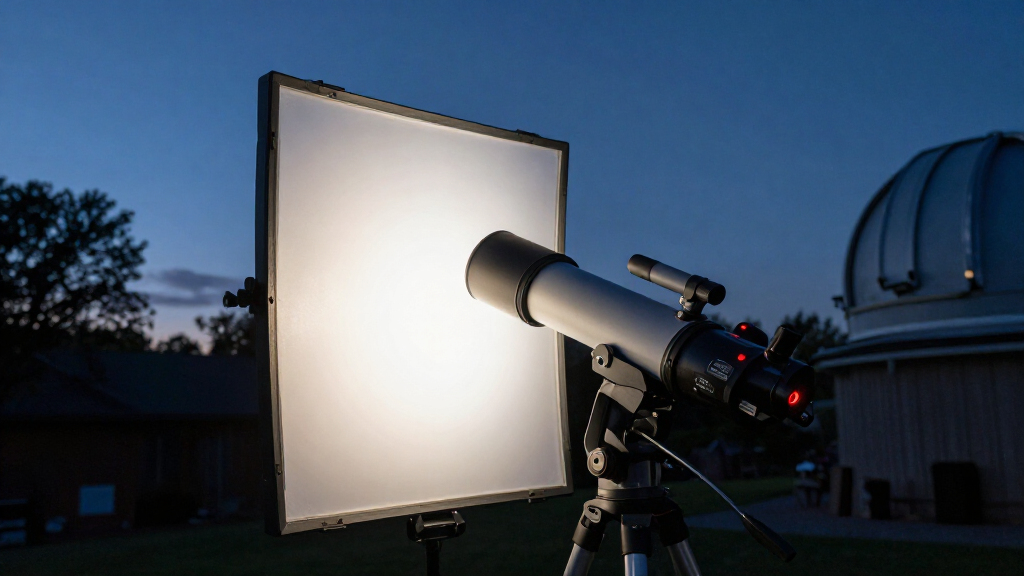
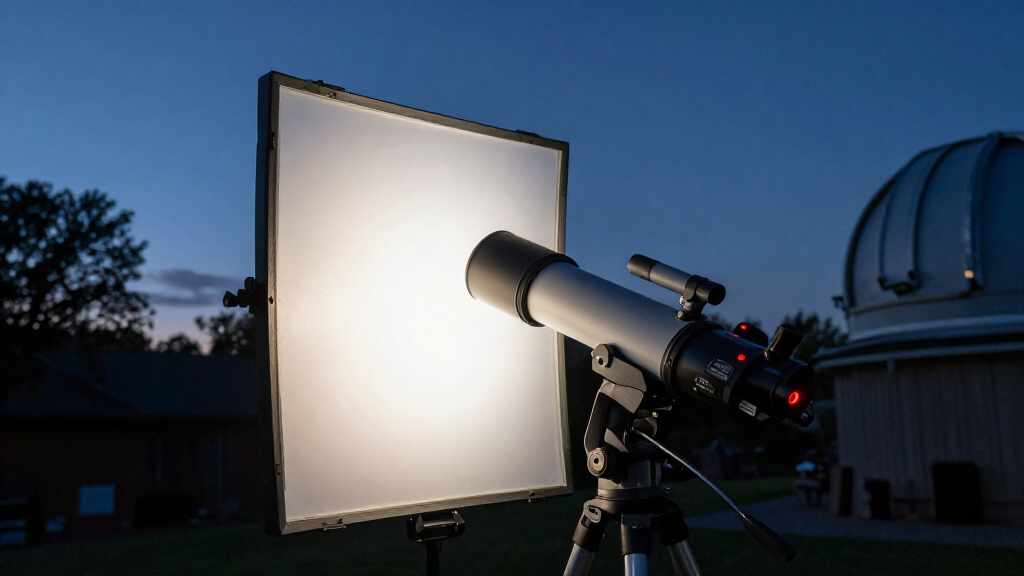
Choosing an astrophotography flat field panel is mostly a matter of matching its illuminated area and mounting style to your telescope—not picking the panel with the longest feature list. For small instruments, the two adjustable 60–100 mm plates are the most compact candidates. The 180 mm panel with an ND 0.6 filter stands out for its stated uniform white light, aluminum housing, and broader reflector-and-refractor compatibility. For larger rigs, the 240 mm aluminum-frame panel names specific telescope matches, while the 340 mm option is aimed at still larger optical tubes.

Prime made for students and young adults
- Fast, free delivery for dorm and study essentials
- Prime Video and Amazon Music included
- Member-only deals
My ranking gives the most weight to how clearly each product’s size, telescope fit, and practical use are described. That means the 180 mm model leads on documented versatility, while the 240 mm panel is a more clearly specified choice for its named telescope group. The small plates may be a better physical match for compact scopes, but their descriptions leave performance and setup details thin. Across the lineup, the main tradeoffs are aperture compatibility versus illuminated diameter, included features versus missing mounting hardware, and how much confidence the listing gives a buyer before purchase.
Key Takeaways
- Best documented all-around fit: The 180 mm panel is listed for reflector and refractor telescopes and includes an ND 0.6 filter, though the product dimensions may be incomplete.
- Best for named medium-size setups: The 240 mm aluminum-frame panel identifies the RC8, 200F4 Newtonian, and C8HD, but its magnet is not included.
- Best for large listed telescope types: The 340 mm panel targets RC, 10-inch Newtonian, and C11HD setups; its weight information conflicts and its instructions are described as unclear.
- Best compact format: Both adjustable plates are specified for 60–100 mm apertures and a 95–134 mm fixed diameter, but neither listing provides much performance detail.
- Check fit before features: Match the panel’s actual illuminated area and support arrangement to your optical tube and camera configuration; telescope aperture alone does not establish a secure or suitable fit.
| 180 mm Telescope Flatfield Panel with 12V Inverter and ND 0.6 Filter |  | Best Overall for Buyers Who Want Documented Extras | Total diameter: 180 mm | Illuminated diameter: 170 mm | Power: 12V inverter | VIEW LATEST PRICE | See Our Full Breakdown |
| 240 mm Medium Flat Field Panel with Aluminum Alloy Frame (Magnet Not Included) |  | Best for Named Medium-Size Telescope Setups | Diameter: 240 mm | Frame material: Aluminum alloy | Compatible telescopes: RC8, 200F4 Newtonian, C8HD | VIEW LATEST PRICE | See Our Full Breakdown |
| 340 mm Flat Field Panel for Telescopes (Without Magnet) |  | Best for Larger Listed Telescope Types | Diameter: 340 mm | Compatible telescope types: RC, 10-inch Newtonian, C11HD | Weight in description: 780 g | VIEW LATEST PRICE | See Our Full Breakdown |
| Brightness-Adjustable White Flat Field Plate for 60–100 mm Telescopes |  | Best Compact Pick with a Stated Weight | Compatible telescope aperture: 60–100 mm | Fixed diameter: 95–134 mm | Brightness: Adjustable | VIEW LATEST PRICE | See Our Full Breakdown |
| Luminous White Flat Field Plate with Brightness Adjustment for 60–100 mm Telescopes |  | Best Alternate Compact Plate for 60–100 mm Scopes | Color: Luminous white | Compatible telescope aperture: 60–100 mm | Diameter: 95–134 mm | VIEW LATEST PRICE | See Our Full Breakdown |
| astrophotography flat field panel | Diameter |
|---|---|
| 180 mm Telescope Flatfield Pan | — |
| 240 mm Medium Flat Field Panel | 240 mm |
| 340 mm Flat Field Panel for Te | 340 mm |
| Brightness-Adjustable White Fl | — |
| Luminous White Flat Field Plat | 95–134 mm |
More Details on Our Top Picks
180 mm Telescope Flatfield Panel with 12V Inverter and ND 0.6 Filter
This is my overall pick because it combines the clearest range of practical features in the group: a 170 mm illuminated diameter inside a 180 mm total diameter, a 12V inverter, an included ND 0.6 filter, and an aluminum housing. The listing describes it as a uniform white-light source for astrophotography calibration and says it works with reflector and refractor telescopes. That makes it the easiest product here to consider across more than one broad telescope category, although the buyer still needs to verify the panel’s physical fit.
Compared with the 240 mm and 340 mm panels, this one includes a filter and gives a distinct illuminated-area figure rather than only an overall diameter. Those details help frame what the panel is meant to do, but they do not establish measured uniformity or prove it will cover a particular imaging train. Its aluminum housing is a useful durability detail, while the 12V inverter signals a powered setup rather than the unspecified arrangements of the smaller plates.
The main hesitation is the listed product size of 0.39 × 0.39 × 0.39 inches, which does not credibly describe a 180 mm panel. I would treat that as incomplete or inaccurate product information and confirm dimensions, power connections, and how the inverter is supplied before ordering. It also weighs 5.6 ounces, more than either small adjustable plate, so it is not the most compact option. Still, for a buyer prioritizing a stated filter and broad telescope categories over a narrowly named compatibility list, it has the strongest feature case in this roundup.
Pros:- 170 mm illuminated diameter is specified separately from the 180 mm total diameter.
- Includes an ND 0.6 filter, unlike the other listed panels.
- Aluminum housing and a stated 12V inverter provide more setup detail than the small plates.
- Listed for both reflector and refractor telescopes.
Cons:- The listed 0.39-inch cube dimensions appear incomplete or inaccurate for a 180 mm panel.
- The listing does not state measured illumination uniformity or explain the power connector and supply arrangement.
- Its 5.6-ounce weight is higher than the two compact adjustable plates.
Best for: Astrophotographers seeking a mid-sized panel with a specified illuminated diameter, included ND 0.6 filter, and stated reflector-and-refractor compatibility.
Not ideal for: Buyers who need fully reliable dimensional and power-supply details before purchase, or those whose telescope needs an illuminated area larger than 170 mm.
- Total diameter:180 mm
- Illuminated diameter:170 mm
- Power:12V inverter
- Filter:ND 0.6
- Housing:Aluminum
- Weight:5.6 ounces
- Listed product dimensions:0.39 × 0.39 × 0.39 inches; confirm before purchase
- Compatibility:Reflector and refractor telescopes
Our verdict“I would start here for its combination of an explicit illuminated diameter, filter, and broad telescope categories, but I would confirm the dimensions and power arrangement first.”
240 mm Medium Flat Field Panel with Aluminum Alloy Frame (Magnet Not Included)
The 240 mm panel earns its place near the top because it connects a specific diameter to three named telescope types: RC8, 200F4 Newtonian, and C8HD. That is more actionable than a general aperture range when a buyer owns one of those instruments. Its aluminum alloy frame also gives a clearer construction detail than the small plates provide, and its listed 380 g weight helps buyers plan handling and support.
Compared with the 180 mm model, the 240 mm panel is a more directly targeted match for its named telescope group and has a larger overall diameter. The 180 mm option, however, provides an illuminated diameter and includes an ND 0.6 filter, while this panel’s listing does not identify a filter or describe a powered system. I would not assume that the 240 mm outside diameter is fully illuminated; the supplied information gives no separate illuminated-area measurement.
The panel is described as helping capture flats to correct uneven illumination and as usable during the day with a camera exposure of about 2–4 seconds. That is a useful indication of the intended workflow, not a guaranteed exposure for every camera, telescope, or lighting condition. It requires the buyer’s camera and telescope setup, and the magnet is not included. Compared with the 340 mm model, it is more compact and its weight information is more consistent, but it is not the right choice for a larger instrument if the panel does not cover the front opening. I would match actual coverage and mounting before choosing it.
Pros:- Names RC8, 200F4 Newtonian, and C8HD as compatible telescope types.
- 240 mm diameter gives a clear size reference for checking physical coverage.
- Aluminum alloy frame and 380 g weight are specified.
- Listing describes daytime flat capture with an approximate 2–4 second camera exposure.
Cons:- Magnet is not included, so a buyer may need a separate mounting solution.
- No separate illuminated diameter, filter, or power specifications are provided.
- Requires the user’s camera and telescope setup rather than functioning as a standalone calibration system.
Best for: Owners of an RC8, 200F4 Newtonian, or C8HD who want a 240 mm panel with a stated aluminum alloy frame and a described daytime flat workflow.
Not ideal for: Owners of larger telescope openings, or anyone who expects a magnet or a complete camera-and-panel package to be included.
- Diameter:240 mm
- Frame material:Aluminum alloy
- Compatible telescopes:RC8, 200F4 Newtonian, C8HD
- Weight:380 g
- Magnet:Not included
- Use described:Daytime flat-field imaging
- Example camera exposure:About 2–4 seconds; actual exposure may vary
Our verdict“I would choose this over the 340 mm model for a listed RC8, 200F4 Newtonian, or C8HD setup when its 240 mm size fits and I can provide the mounting hardware.”
340 mm Flat Field Panel for Telescopes (Without Magnet)
When a 240 mm panel is too small for the telescope opening, the 340 mm diameter here is the clearest reason to move up. The listing names RC, 10-inch Newtonian, and C11HD telescopes, making this the large-format option in the lineup for those particular setups. It is described as a tool for capturing flats that correct uneven illumination and can be used for daytime exposures with a camera and matching focal length.
Compared with the 240 mm panel, this one offers a larger stated diameter and targets larger telescope types, while the 240 mm model has a more specific list of compatible instruments and a consistent 380 g weight entry. The larger panel is listed as weighing 780 g in its description, but the product information also reports 0.035 ounces. Those figures conflict sharply, so I would not rely on the weight until the seller clarifies it. A panel of this size may also need more careful support and storage than the smaller options.
The magnet is not included, and the listing’s instructions are described as unclear. That matters more on a large panel because the buyer needs a dependable way to position it without shifting during flat capture. It does not include enough detail to establish its illuminated area, power method, or any filter. Compared with the 180 mm model, it has a much larger stated overall diameter but fewer clearly described included components. I would choose it only when its size matches a named larger telescope and I can confirm the mounting and weight details.
Pros:- 340 mm diameter suits a larger physical format than the 240 mm panel.
- Listing names RC, 10-inch Newtonian, and C11HD telescope types.
- Described for flat-field imaging to correct uneven illumination.
- Can be used for daytime flat exposures with a camera and matching focal length.
Cons:- Magnet is not included.
- Weight information conflicts: 780 g in the description versus 0.035 ounces in product information.
- Instructions are described as unclear, and no illuminated diameter or power details are provided.
Best for: Owners of an RC, 10-inch Newtonian, or C11HD who need a larger flat-field panel and can verify support, weight, and coverage.
Not ideal for: Small-telescope owners, buyers seeking a well-documented powered panel, or anyone who needs clear instructions and consistent weight information before purchase.
- Diameter:340 mm
- Compatible telescope types:RC, 10-inch Newtonian, C11HD
- Weight in description:780 g
- Weight in product information:0.035 ounces; conflicts with description
- Magnet:Not included
- Use described:Flat-field imaging, including daytime capture
- Setup note:Camera and matching focal length required
Our verdict“I would consider this for a named large telescope only after confirming its true weight, illuminated coverage, and a stable mounting method.”
Brightness-Adjustable White Flat Field Plate for 60–100 mm Telescopes
This adjustable white plate is aimed at the smallest telescopes in the roundup: its stated match is 60–100 mm aperture, with a fixed diameter listed as 95–134 mm. That makes it a compact-format alternative to the 180 mm panel, which has a larger stated illuminated area and additional listed hardware. Brightness adjustment is the key feature here: a user can change the light level rather than being limited to a single output, although the listing does not specify a dimming range or how the control works.
Its stated 1.76-ounce weight supports the case for a lightweight setup, especially when portability and uncomplicated storage matter. Compared with the nearly identical B09H4TDDZJ plate, this listing supplies a manufacturer and model number and gives a more plausible item weight. Those extra identifiers make it somewhat easier to distinguish, but they do not establish better illumination or build quality. Both products share the same stated aperture range and diameter range, so fit should drive the choice more than the product wording.
The weak point is how little else the listing explains. It does not provide measured uniformity, a power source, a mounting method, or clarity about the relationship between the 95–134 mm fixed diameter and the telescope’s front opening. The listed package dimensions are also unusually small for the described product, so I would verify what those figures refer to. Against the 240 mm panel, this one is plainly for a much smaller scope and lacks named telescope-model matching. I would choose it only when the aperture range and physical measurements genuinely fit, not because brightness adjustment alone guarantees suitable flats.
Pros:- Designed for the stated 60–100 mm telescope aperture range.
- Brightness is adjustable, unlike a fixed-output description.
- Listed at 1.76 ounces, making it one of the lightest options here.
- Manufacturer and model number are provided.
Cons:- No measured illumination uniformity, dimming range, or power details are supplied.
- Compatibility is limited to the stated small-aperture range.
- Package dimensions appear unusually small and should be confirmed.
Best for: Owners of 60–100 mm telescopes who want a lightweight white panel with adjustable brightness and can confirm its physical fit.
Not ideal for: Owners of larger telescopes or buyers who require detailed power, mounting, illuminated-area, or measured uniformity information.
- Compatible telescope aperture:60–100 mm
- Fixed diameter:95–134 mm
- Brightness:Adjustable
- Item weight:1.76 ounces
- Package dimensions:1.18 × 0.79 × 0.39 inches; confirm what is measured
- Pieces:1
- Manufacturer:MINZIHAO
- Model number:MINZIHAO6666
Our verdict“I would pick this as a compact small-scope option when its 95–134 mm dimensions fit, while treating its sparse performance details as a real limitation.”
Luminous White Flat Field Plate with Brightness Adjustment for 60–100 mm Telescopes
This is the other small-scope option, and on the information supplied it is close in purpose to the MINZIHAO plate: both list 60–100 mm aperture compatibility, a 95–134 mm diameter range, and brightness adjustment. That makes this panel a plausible match for a compact telescope when a buyer wants controllable white illumination without moving to a 180 mm or larger format. The listing identifies its color as luminous white but says little else about the light source or operating arrangement.
Compared with the B0DK5T1FK2 plate, this model has fewer identifying details: it provides no manufacturer or model number in the supplied specifications, while the other listing names MINZIHAO and a model number. Its listed 0.035-ounce weight is dramatically lower than the other plate’s 1.76 ounces, but that difference is not a sound basis for preferring it because the entry may refer to incomplete product data. I would verify the actual item weight and included components rather than interpret the figure as proof that this panel is exceptionally light.
The description also leaves out the features that would make the choice easier: no mounting details, power source, illuminated-area measurement, dimming range, or uniformity data are provided. That puts it behind the 180 mm model for buyers who want a more explicit feature set and behind the 240 mm panel for buyers with a named telescope match. Its case is narrower: it may suit an owner of a 60–100 mm scope who confirms the physical dimensions and prefers this listing. If those details cannot be verified, I would compare it directly with the better-identified adjustable plate before ordering.
Pros:- Listed for 60–100 mm telescope apertures.
- Brightness adjustment is specified.
- 95–134 mm diameter range provides a starting point for checking fit.
- Luminous white color is identified.
Cons:- The 0.035-ounce weight is difficult to interpret and should be verified.
- No manufacturer or model number is supplied in the provided specifications.
- Power, mounting, illuminated area, and uniformity details are absent.
Best for: Owners of 60–100 mm telescopes looking for a brightness-adjustable white panel who can confirm dimensions and item details with the seller.
Not ideal for: Buyers who need a clearly documented weight, manufacturer identity, power arrangement, mounting instructions, or measured illumination performance.
- Color:Luminous white
- Compatible telescope aperture:60–100 mm
- Diameter:95–134 mm
- Brightness:Adjustable
- Item weight:0.035 ounces; verify listing accuracy
- Department:Unisex adult
- ASIN:B09H4TDDZJ
Our verdict“I would treat this as a possible compact alternative to the MINZIHAO plate, but only after confirming its weight, dimensions, and included setup details.”
How We Picked
I ranked these five options around the practical job a flat field panel needs to do: provide a suitable, even illumination source for capturing calibration flats with a particular telescope and imaging setup. A product’s stated brightness adjustment, illuminated diameter, material, power arrangement, filter, and named telescope compatibility all matter because each can affect setup choices. I gave greater weight to details that let a buyer judge fit and less weight to broad claims that lack supporting specifications.
That method puts the 180 mm panel first for its stated uniform white light, included ND 0.6 filter, aluminum housing, and compatibility with both reflectors and refractors. It does not make the panel a universal winner: the listing’s unusually incomplete product dimensions deserve caution. The 240 mm panel ranks next because its 240 mm diameter and three named telescope types give buyers a more concrete starting point, despite the missing magnet. I place the 340 mm model after it because its large diameter is useful for specified larger instruments, but its conflicting weight entries and unclear instructions weaken confidence in the listing.
The two 60–100 mm adjustable plates sit lower in the overall order because their aperture range is narrow and their available descriptions omit key performance and setup details. They may still be the most sensible physical size for a small telescope in that range. I distinguish between them only slightly: one gives a manufacturer and model number plus a stated 1.76-ounce item weight, while the other lists a much smaller 0.035-ounce weight without enough context to establish what that figure represents. I do not treat that discrepancy as proof of better performance.
I have not treated any product as personally tested, and the supplied information does not establish measured illumination uniformity, dimming range, power draw, connector type, calibration results, or mounting method for every panel. My recommendations are based on the provided listings, not unverified performance claims. Before buying, I would confirm the usable illuminated diameter, the way the panel is supported over the telescope, and whether any required magnet, adapter, or power supply is included.
Factors to Consider When Choosing Astrophotography Flat Field Panels
I would choose a flat field panel by confirming three things in order: whether its size covers the telescope opening, whether its light and power arrangement work for the imaging setup, and whether it can be held in place consistently. A long feature list cannot compensate for a panel that is too small, poorly supported, or unclear about how it runs.
Match the panel to the telescope opening
Start with the telescope’s front opening and the panel’s usable illuminated area—not only the telescope’s advertised aperture. Those measurements are related but not identical, and a stated outer diameter does not prove that the entire area emits light. The 180 mm model is the only option here with a separate illuminated diameter of 170 mm. The 240 mm and 340 mm products state overall diameters but do not give illuminated-area measurements. The compact plates list both a 60–100 mm aperture range and a 95–134 mm fixed diameter, but the descriptions do not explain how the diameter changes or attaches.
Before choosing, check the clear opening, dew shield, camera arrangement, and any obstruction that could keep a panel from sitting squarely. I would also confirm whether the listed diameter refers to the panel body, the emitting area, or a mounting dimension. For the named telescope groups, the 240 mm and 340 mm listings offer useful starting points, not a substitute for checking actual coverage.
Understand brightness adjustment and filters
Adjustable brightness can give the user more control over exposure level, but it is not the same as a stated uniformity measurement. Neither compact plate gives a dimming range or details about how brightness is controlled. The 180 mm option lists an ND 0.6 filter, a specific accessory not listed for the other panels. A neutral-density filter can be part of managing light level, but the listing does not describe filter placement or the expected exposure change for a particular camera.
Do not treat a brighter or dimmer source as automatically better for flat frames. Exposure depends on the camera, optical system, and capture workflow. If predictable control is central to your setup, ask for information on adjustment method, output range, and whether the light remains even across the usable area as it changes. Those details are absent from several listings, so I would not infer them from the word “adjustable” or “uniform.”
Check power and mounting before ordering
The 180 mm listing is the only one here that names a 12V inverter. It does not fully explain connector type, power supply inclusion, or cable arrangement, so those questions still need answers. The two small plates do not provide power details in the supplied information. The 240 mm and 340 mm panels both say the magnet is not included; buyers should plan a safe, stable way to position them rather than assume magnetic mounting hardware comes in the package.
Mounting consistency matters because the panel needs to sit in a repeatable position while calibration frames are captured. A large panel can be harder to support than a lightweight plate, while a very small panel may not cover the opening. Confirm the product’s support method, package contents, and any required adapter. If the listing is unclear—especially for the 340 mm model, whose instructions are described as unclear—I would request clarification before building a workflow around it.
Treat compatibility claims as starting points
The products provide different kinds of compatibility information. The two compact options state an aperture range of 60–100 mm; the 180 mm model says reflector and refractor telescopes; the 240 mm panel lists RC8, 200F4 Newtonian, and C8HD; and the 340 mm panel lists RC, 10-inch Newtonian, and C11HD. These descriptions are not equally precise. A general telescope category may include very different opening sizes, and a named telescope match still needs confirmation against the panel’s usable diameter.
I would compare the telescope’s actual front dimensions with the panel measurements and ask the seller about any uncertainty in the fit. For the 240 mm and 340 mm models, confirm whether the listed telescope references account for a dew shield or other front-end hardware. For the small plates, confirm exactly what the 95–134 mm figure means. Compatibility labels narrow the search; they do not guarantee a secure fit on every version of a telescope.
Weigh listing clarity against form factor
Several specifications in this group need care. The 180 mm panel’s product dimensions are listed as 0.39 inches on each side, which appears incomplete for a panel with a 180 mm total diameter. The 340 mm panel has conflicting weight entries of 780 g and 0.035 ounces. The 0.035-ounce entry also appears on one compact plate, where its meaning is uncertain. I would treat these as information gaps rather than infer product performance from them.
That is why my ranking favors the 180 mm option for its feature detail while still calling out its dimensions, and places the 240 mm model ahead of the 340 mm option for clearer weight information and a more compact named fit. The MINZIHAO small plate has a more plausible stated item weight and identifying details than its close alternative. Your own telescope may change the practical order: for a compact scope, the small plate may fit better; for a large telescope with confirmed coverage needs, a 340 mm format may be more suitable than the overall winner.
Frequently Asked Questions
What does a flat field panel do in astrophotography?
A flat field panel provides an illumination source for capturing flat calibration frames. Those frames can help correct uneven illumination and other optical-system effects when used in an appropriate calibration workflow. A panel’s stated size, light uniformity, exposure level, and repeatable placement all matter; the product descriptions in this roundup do not provide measured uniformity results for every model.
How do I choose the right panel diameter?
Compare the panel’s usable illuminated area with the telescope’s clear front opening and any dew shield or mounting hardware that affects coverage. Do not assume the outer diameter is the same as the illuminated area. Only the 180 mm panel provides both a total diameter and a separate illuminated diameter in the supplied specifications; for the other products, I would verify usable coverage with the seller.
Are the two 60–100 mm adjustable plates interchangeable?
They are similar on the main listed points: both are brightness adjustable, specify 60–100 mm telescope apertures, and give a 95–134 mm diameter range. The MINZIHAO listing supplies a manufacturer, model number, and 1.76-ounce weight, while the other reports 0.035 ounces without comparable identifying detail. Neither listing provides enough information about mounting, power, or measured illumination uniformity to treat them as exact equivalents.
Do the 240 mm and 340 mm panels include mounting magnets?
No. Both larger-panel listings say the magnet is not included. I would confirm the required mounting method and plan a stable support solution before buying, particularly for the 340 mm panel. Its instructions are described as unclear, so a buyer may want clarification about included components and setup before relying on it for repeatable calibration frames.
Which panel should I choose if I use a reflector telescope?
The 180 mm panel is explicitly listed for reflector and refractor telescopes, while the 240 mm and 340 mm models name particular reflector-related telescope types, including Newtonians. I would not pick by telescope category alone: compare the panel’s illuminated coverage with your optical tube’s opening, confirm support and power details, and check whether the named model matches your exact configuration.
Conclusion
For the broadest stated feature set, I would start with the 180 mm panel: it lists a 170 mm illuminated area, an ND 0.6 filter, aluminum housing, and reflector-and-refractor compatibility. I would confirm its unusually incomplete product dimensions and power details before ordering. If you own an RC8, 200F4 Newtonian, or C8HD, the 240 mm panel is the more directly targeted choice, provided its diameter fits and you can supply a mounting solution.
For an RC, 10-inch Newtonian, or C11HD, the 340 mm panel may suit a larger front opening, but I would first resolve the conflicting weight entries and unclear setup instructions. Owners of 60–100 mm telescopes can focus on the two adjustable plates: I would lean toward the MINZIHAO listing for its more complete identifiers and more plausible stated weight, while treating the other as an alternative only after verifying its specifications. In every case, my final check would be the same: confirm illuminated coverage, fit, power, and mounting rather than choosing by diameter or compatibility wording alone.
Evergreen bestsellers Picks

Bose QuietComfort Wireless Bluetooth Headphones with Active Noise Cancellation, Mic, USB‑C Charging, Deep Bass, 24‑Hour Battery – White Smok

Sony BRAVIA 5 85-Inch Mini LED 4K HDR Smart TV (K-85XR50)

Samsung 85-Inch QN70H Neo QLED 4K Smart TV (2026)
As an affiliate, we earn on qualifying purchases.