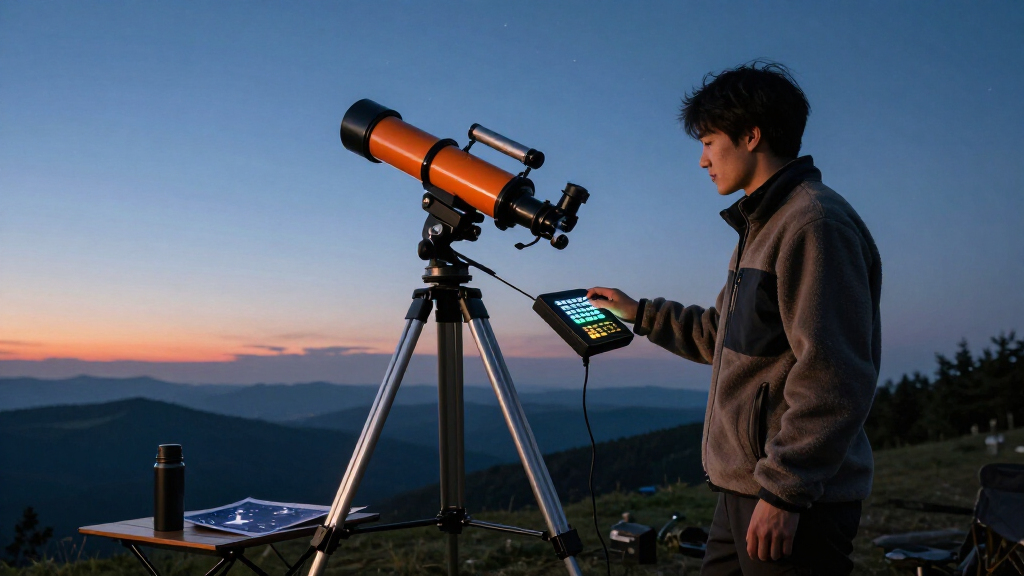

Computerized telescope mounts turn a night of manual star-hopping into a point-and-go experience, but choosing the right one means balancing payload capacity against portability, and GoTo accuracy against budget. My overall pick is the Celestron CGEM II, which carries up to 40 pounds with a sturdy tripod and reliable NexStar hand control — enough mount for serious visual observing and entry-level astrophotography alike. If your budget or your back demands something smaller, the Sky-Watcher AZ-GTi delivers full GoTo via WiFi in a package you can carry one-handed, while the Celestron CGX-L is the heavy-duty choice for imagers with big telescopes. The main tradeoff you’ll face in this category is simple: heavier mounts track better and carry more gear, but they cost more and take longer to set up. Read on for the full breakdown, including which mounts suit beginners, travelers, and deep-sky imagers.

Prime made for students and young adults
- Fast, free delivery for dorm and study essentials
- Prime Video and Amazon Music included
- Member-only deals
Key Takeaways
- Payload ratings told only half the story — the Celestron CGX-L and CGEM II held steady under load where lighter mounts like the iEXOS-100-2 flexed near their published limits, which is why the heavy Celestrons dominate the top of this ranking.
- The Celestron Advanced VX earned the value spot because it’s the cheapest mount here with an all-star equatorial architecture — but it lacks the CGEM II’s payload headroom, so heavy optical tubes push it past its comfort zone.
- Two very different ‘beginner’ paths emerged: the NexStar 8SE bundles everything a visual newcomer needs, while the AZ-GTi assumes you already own a telescope and just want GoTo smarts added cheaply.
- Every Sky-Watcher mount in this lineup trades stiffness for portability — the Star Adventurer GTi and AZ-GTi are the only options you’ll genuinely carry on a plane, but neither belongs under a large refractor with a camera attached.
- The iEXOS-100-2 and Star Adventurer GTi both skip Celestron‘s NexStar ecosystem entirely, using open-source or app-based control — better for tinkerers on a budget, worse for anyone who wants a proven hand controller out of the box.
| Celestron CGEM II Computerized Equatorial Mount and Tripod, 40 lb Payload |  | Best Overall | Mount type: Computerized equatorial | Payload capacity: 40 lbs | Tripod: 2-inch steel | VIEW LATEST PRICE | See Our Full Breakdown |
| Celestron CGX-L Heavy-Duty German Equatorial Mount with Counterweights |  | Best Premium | Payload capacity: 75 lbs | Worm wheel diameter: 144 mm | Dovetail saddle length: 270 mm | VIEW LATEST PRICE | See Our Full Breakdown |
| Celestron Advanced VX Computerized German Equatorial Mount |  | Best Value | Mount type: Computerized German equatorial | Payload capacity: 30 lbs | Tripod legs: Stainless steel, 2 inches | VIEW LATEST PRICE | See Our Full Breakdown |
| Explore Scientific iEXOS-100-2 PMC-Eight Equatorial Tracker System with Tripod and Mount |  | Best Compact | Mount type: Equatorial tracker system | Controller: PMC-Eight with eight independent CPUs | Drive system: Clutched dual-axis worm gears, belt-driven stepper motors | VIEW LATEST PRICE | See Our Full Breakdown |
| Celestron NexStar 8SE Computerized Schmidt-Cassegrain Telescope |  | Best for Beginners | Optical design: Schmidt-Cassegrain | Aperture: 8 inches | Mount type: Computerized GoTo alt-azimuth | VIEW LATEST PRICE | See Our Full Breakdown |
| Sky-Watcher Star Adventurer GTi GoTo Mount Kit with Tripod and Pier Extension |  | Best Portable Astrophotography Kit | Mount type: GoTo equatorial tracking mount | Included components: Mount head, tripod with pier extension, counterweight bar | Polar scope: Built-in with illuminator | VIEW LATEST PRICE | See Our Full Breakdown |
| Sky-Watcher AZ-GTi Portable WiFi GoTo Alt-Az Mount |  | Best Compact Dual-Purpose Mount | Mount type: Computerized Alt-Az GoTo | Weight: 8.6 lbs | Payload capacity: 11 lbs | VIEW LATEST PRICE | See Our Full Breakdown |
| computerized telescope mount | Mount type | Payload capacity |
|---|---|---|
| Celestron CGEM II Computerized | Computerized equatorial | 40 lbs |
| Celestron CGX-L Heavy-Duty Ger | — | 75 lbs |
| Celestron Advanced VX Computer | Computerized German equatorial | 30 lbs |
| Explore Scientific iEXOS-100-2 | Equatorial tracker system | — |
| Celestron NexStar 8SE Computer | Computerized GoTo alt-azimuth | — |
| Sky-Watcher Star Adventurer GT | GoTo equatorial tracking mount | — |
| Sky-Watcher AZ-GTi Portable Wi | Computerized Alt-Az GoTo | 11 lbs |
More Details on Our Top Picks
Celestron CGEM II Computerized Equatorial Mount and Tripod, 40 lb Payload
The CGEM II hits the sweet spot most computerized equatorial mounts miss: enough payload for serious astrophotography without the backbreaking bulk of a heavy-duty platform. Its 40 lb capacity comfortably carries an 8-inch SCT plus a guide scope and camera, where the Celestron Advanced VX starts straining near that threshold. Compared with the CGX-L, the CGEM II gives up 35 lbs of headroom but saves considerable weight in the field. The NexStar+ controller’s 40,000-object database and multiple alignment routines make finding targets straightforward, and the 2-inch steel tripod keeps vibration manageable at high magnifications.
The tradeoff is portability: 60 lbs of combined mount and tripod weight means this is a backyard or short-drive setup, not a grab-and-go rig. Still, for imagers and visual observers who want capacity without going full observatory-grade, this is the most balanced choice here.
Pros:- 40 lb payload handles mid-size telescopes plus astrophotography accessories
- NexStar+ database of over 40,000 objects with multiple alignment procedures
- Sidereal, solar, and lunar tracking rates support both visual and imaging use
- 2-inch steel tripod reduces vibration at high magnification
Cons:- Mount and tripod together weigh around 60 lbs, making transport awkward
- Wedge-free fork users will find the German equatorial counterweight setup slower than alt-az alternatives like the NexStar 8SE
Best for: Intermediate astronomers and astrophotographers who need a stable 40 lb platform for medium-size optical tubes and imaging gear
Not ideal for: Travelers and anyone without a permanent or semi-permanent setup spot — the combined weight makes frequent loading and unloading a chore
- Mount type:Computerized equatorial
- Payload capacity:40 lbs
- Tripod:2-inch steel
- Controller:NexStar+ hand controller
- Object database:Over 40,000 objects
- Tracking rates:Sidereal, solar, lunar
- Connectivity:USB
- Mount weight:40 lbs
Our verdict“The best all-around pick for hobbyists ready to carry real payload capacity without committing to observatory-class hardware.”
Celestron CGX-L Heavy-Duty German Equatorial Mount with Counterweights
When your imaging rig outgrows mid-range mounts, the CGX-L is the step-up that justifies its cost. Its 75 lb payload dwarfs the 40 lb rating of the Celestron CGEM II, and the 144 mm worm wheels translate to smoother tracking — the difference between trailed stars and clean long exposures with heavy OTAs. The long 270 mm dovetail saddle accommodates larger tube assemblies that smaller saddles can’t grip securely.
Connectivity is where this model pulls ahead of everything else in this lineup: four auxiliary ports plus autoguide and USB ports make it a natural fit for remote imaging setups run from a laptop indoors. The tradeoffs are real, though. At 75 lbs of tripod alone plus mount weight, this is effectively a two-person or permanent-pier mount, and the cost sits firmly in heavy-duty territory. Beginners will find the polar alignment and balancing workflow genuinely challenging compared with the app-guided Explore Scientific iEXOS-100-2.
Pros:- 75 lb payload capacity supports large telescopes and full imaging rigs
- Large 144 mm worm wheels deliver smooth, precise tracking for long exposures
- Extensive port selection including autoguide and USB for remote operation
- Robust 2.75-inch tripod legs minimize vibration under heavy loads
Cons:- Very heavy total weight makes transport a two-person job
- Premium price point typical of heavy-duty mounts
- Complex setup and polar alignment steepen the learning curve considerably
Best for: Serious astrophotographers running large telescopes or dual-scope imaging rigs who need maximum payload and remote-control capability
Not ideal for: Casual visual observers and anyone who moves equipment by car — the weight and price are wasted on light payloads and occasional use
- Payload capacity:75 lbs
- Worm wheel diameter:144 mm
- Dovetail saddle length:270 mm
- Tripod leg diameter:2.75 inches
- Tripod weight:46.2 lbs
- Tripod height range:35.75 to 52.75 inches
- Latitude adjustment range:3° to 65°
- Tracking rates:Sidereal, solar, lunar
- Ports:4 auxiliary, autoguide, USB
Our verdict“A no-compromise platform for dedicated imagers whose gear has outgrown mid-range mounts — overkill for everyone else.”
Celestron Advanced VX Computerized German Equatorial Mount
The Advanced VX delivers the core computerized equatorial experience — GoTo pointing, a 40,000-object database, and multiple tracking rates — at a price point well below the Celestron CGEM II. The 30 lb payload handles a small refractor or a 6-inch SCT with a camera attached, which covers the most common entry-to-intermediate astrophotography setups. Its 7–77 degree latitude range is broader than most competitors, making it genuinely usable across nearly any observing location.
Compared with the tablet-driven Explore Scientific iEXOS-100-2, the Advanced VX keeps a traditional hand controller, which some users prefer for reliability, and its dual EQ North/EQ South modes add travel flexibility. The compromise is capacity and stability: load it near its maximum and it won’t track as cleanly as the CGEM II’s heavier chassis. At 47 lbs total kit weight, it’s also not light, but that mass buys a steadier view than the ultraportable Sky-Watcher options.
Pros:- 30 lb payload covers common beginner-to-intermediate telescope and camera setups
- Broad 7–77 degree latitude adjustment suits nearly any observing location
- 40,000+ object database with multiple alignment procedures
- Stainless steel 2-inch tripod legs provide a stable observing platform
Cons:- 47 lb total kit weight is cumbersome for frequent transport
- Tracking degrades when loaded near maximum capacity compared with heavier mounts
Best for: Budget-conscious beginners in astrophotography who want a capable computerized EQ mount for a small refractor or 6-inch SCT
Not ideal for: Imagers planning to grow into heavy optical tubes — the 30 lb ceiling will be hit quickly, making the CGEM II the better long-term buy
- Mount type:Computerized German equatorial
- Payload capacity:30 lbs
- Tripod legs:Stainless steel, 2 inches
- Latitude adjustment range:7–77 degrees
- Hand control:NexStar+
- Object database:40,000+ objects
- Tracking rates:Sidereal, solar, and lunar
- Tracking modes:EQ North and EQ South
- Total kit weight:47 lbs
Our verdict“The smartest entry point into computerized equatorial mounts — capable enough to grow with, priced for first-time buyers.”
Explore Scientific iEXOS-100-2 PMC-Eight Equatorial Tracker System with Tripod and Mount
The iEXOS-100-2 takes a different approach to computerized control: instead of a hand controller, its PMC-Eight system with eight independent CPUs pairs with the ExploreStars app on a tablet you already own. That makes the whole package lighter and cheaper than hand-controlled rivals like the Celestron Advanced VX, and the quiet belt-driven stepper motors are noticeably smoother-sounding than typical gear-driven mounts — a real benefit at star parties.
The clutched axes let you reposition and balance by hand without loosening gears, which speeds up setup considerably. Tradeoffs are worth weighing: without a compatible tablet, the mount is largely unusable, and there’s no focuser included, so budget for one if you plan to image. Its payload is also modest compared with the CGEM II, limiting it to camera lenses and small refractors. For grab-and-go wide-field work and portable tracking, though, it undercuts the competition on weight and simplicity.
Pros:- Eight-CPU PMC-Eight controller delivers responsive app-based operation
- Quiet belt-driven stepper motors suit noise-sensitive environments
- Clutched axes allow quick manual balancing and repositioning
- Compact included tripod keeps the whole system easy to transport
Cons:- Requires a compatible tablet — no standalone hand controller option
- No focuser included, adding cost for imaging setups
- Modest payload limits it to small refractors and camera lenses
Best for: Wide-field imagers and traveling astrophotographers who want a lightweight GoTo tracker controlled from their own tablet
Not ideal for: Buyers without a compatible Apple, Android, or Windows tablet, or anyone wanting to mount a large optical tube — the payload can’t handle it
- Mount type:Equatorial tracker system
- Controller:PMC-Eight with eight independent CPUs
- Drive system:Clutched dual-axis worm gears, belt-driven stepper motors
- App:ExploreStars for Apple, Android, and Windows tablets
- Alignment:Polar alignment sight hole through RA axis with altitude control
- Included components:Tripod and mount
Our verdict“A tablet-controlled tracking package that trades capacity and accessories for portability and smooth, quiet operation.”
Celestron NexStar 8SE Computerized Schmidt-Cassegrain Telescope
Unlike every other pick here, the NexStar 8SE is a complete telescope system — optical tube, fork arm, and computerized mount in one box. That makes it the most friction-free entry into GoTo astronomy: SkyAlign lets a first-timer point at any three bright objects and be tracking within minutes, with none of the counterweight balancing and polar alignment that German equatorial mounts like the Celestron Advanced VX demand. The 8-inch Schmidt-Cassegrain aperture resolves planetary detail and pulls in deep-sky targets that smaller beginner scopes miss.
The single fork arm alt-azimuth design is where the compromises live. It tracks objects for visual use but won’t do long-exposure astrophotography the way an equatorial mount will — field rotation sees to that — and the lightweight tripod can wobble at high magnification if touched. Accessories beyond the basics cost extra. For pure visual exploring with minimal fuss, nothing else in this lineup gets you observing faster.
Pros:- Complete telescope system with 8-inch aperture for planetary and deep-sky viewing
- SkyAlign gets beginners aligned and tracking in minutes
- Automatic GoTo locating and tracking of 40,000+ objects
- Compatible with the broad Celestron accessory ecosystem
Cons:- Alt-azimuth mount cannot support long-exposure astrophotography
- Lightweight tripod is prone to vibration at high magnification
- Useful accessories beyond the basics must be purchased separately
Best for: First-time telescope buyers who want large-aperture GoTo observing with the simplest possible setup
Not ideal for: Aspiring astrophotographers — the alt-azimuth fork mount can’t track for long exposures, so an equatorial mount is the right tool instead
- Optical design:Schmidt-Cassegrain
- Aperture:8 inches
- Mount type:Computerized GoTo alt-azimuth
- Object database:40,000+ objects
- Alignment technology:SkyAlign
- Hand control:NexStar+
- Warranty:2 years
Our verdict“The fastest path from box to observing for visual beginners — just don’t buy it expecting to photograph galaxies.”
Sky-Watcher Star Adventurer GTi GoTo Mount Kit with Tripod and Pier Extension
This kit stands out as the most complete grab-and-go astrophotography package in the lineup — you get the mount head, tripod, pier extension, and counterweight bar in one box, which is more than most competitors include. Compared with the Celestron Advanced VX, it trades raw payload capacity for portability, making it the better choice for imaging from dark-sky sites rather than a permanent backyard setup. The built-in illuminated polar scope is a genuine time-saver for accurate polar alignment, something the Explore Scientific iEXOS-100-2-2 handles through its app instead. Wi-Fi control keeps the whole rig cable-light when you’re shooting in the field.
The tradeoff is that its equatorial design and modest capacity mean it’s built for camera lenses and small refractors, not big telescope tubes — buyers wanting room to grow should look at the heavier Celestron mounts.
Pros:- Complete kit includes mount head, tripod, pier extension, and counterweight bar
- Built-in illuminated polar scope speeds up accurate polar alignment
- Built-in Wi-Fi enables wireless control without extra dongles
- Equatorial GoTo tracking purpose-built for long-exposure astrophotography
Cons:- Limited payload compared with German equatorial mounts like the CGEM II, restricting telescope choices
- Field astrophotography demands a reliable external power solution beyond casual battery packs
Best for: Astrophotographers who travel to dark-sky locations with a small refractor or camera lens and want a complete, ready-to-shoot kit
Not ideal for: Imagers planning to mount heavy telescopes or a full imaging train with guide scope — the payload is too limited for serious aperture
- Mount type:GoTo equatorial tracking mount
- Included components:Mount head, tripod with pier extension, counterweight bar
- Polar scope:Built-in with illuminator
- Connectivity:Built-in Wi-Fi
- Intended use:Portable astrophotography
Our verdict“Buy this if portable deep-sky imaging with light gear is your priority and you want everything included; skip it if you need heavy-payload capacity.”
Sky-Watcher AZ-GTi Portable WiFi GoTo Alt-Az Mount
At just 8.6 lbs, this is the lightest computerized option here, and it plays a different game than everything else in the roundup. Where the Star Adventurer GTi is strictly an equatorial imaging tool, the AZ-GTi’s Alt-Az design makes it equally comfortable for visual observing and casual photography — you can mount a telescope tube one night and a DSLR with a telephoto lens the next. The Freedom Find dual encoders are a standout: you can push the mount by hand without losing alignment, a flexibility the purely GoTo-driven Celestron mounts don’t offer. App control through SynScan Pro adds panorama and time-lapse modes that make it genuinely fun for daytime photography too.
The compromises are real, though. Alt-Az tracking produces field rotation, limiting clean exposures to short durations, and the optional shutter release cable for automated DSLR shots is an extra purchase. Compared with the NexStar 8SE, it’s far more portable but far less capable optically.
Pros:- Featherweight 8.6 lb body makes it the easiest GoTo mount here to travel with
- Dual encoders allow manual slewing without losing GoTo alignment
- SynScan Pro app adds tracking, panorama, and time-lapse photography modes
- Flexible power options: AA batteries or 12V input for field use
Cons:- Alt-Az design causes field rotation, capping usable exposure times for astrophotography
- DSLR shutter release cable for automated exposures is an optional extra
- 11 lb payload limits telescope and accessory choices
Best for: Visual observers and casual photographers who want one lightweight mount for both a small telescope and a DSLR camera
Not ideal for: Serious deep-sky imagers — Alt-Az tracking and an 11 lb payload rule out long-exposure work with heavy gear
- Mount type:Computerized Alt-Az GoTo
- Weight:8.6 lbs
- Payload capacity:11 lbs
- Connectivity:Built-in Wi-Fi
- Control:SynScan Pro app for iOS and Android
- Encoders:Freedom Find dual encoders
- Power options:AA batteries or 12V input
- Photography features:Panorama and time-lapse modes; 60-second exposure preset
Our verdict“This pick makes the most sense for grab-and-go observers who want GoTo convenience in a bag-friendly package — just don’t expect it to replace a dedicated equatorial mount for imaging.”

How We Picked
I ranked these computerized telescope mounts around four factors that actually decide whether an owner is happy after six months. Payload realism came first: manufacturers quote maximum capacities, but mounts perform best at roughly half that number, so I compared each model’s usable load against the telescopes a typical buyer would attach. Tracking and goto accuracy came second, because a computerized mount that can’t find or hold a target defeats its own purpose — mount architecture (equatorial versus alt-azimuth) and gearing quality matter more than feature counts here.
From there I weighed setup burden and portability, since the best mount is the one you actually take outside, and total value, meaning what tripod, counterweights, hand control, and software come included versus sold separately. That logic explains the ordering: the CGX-L and CGEM II lead because they pair real payload with proven GoTo systems, the Advanced VX wins on value within that same framework, and the portable Sky-Watcher and Explore Scientific options rank lower for imaging-heavy use but fill niches the big mounts can’t — travel, grab-and-go, and budget entry points.
| computerized telescope mount | Mount type |
|---|---|
| Celestron CGEM II Computerized | Computerized equatorial |
| Celestron CGX-L Heavy-Duty Ger | — |
| Celestron Advanced VX Computer | Computerized German equatorial |
| Explore Scientific iEXOS-100-2 | Equatorial tracker system |
| Celestron NexStar 8SE Computer | Computerized GoTo alt-azimuth |
| Sky-Watcher Star Adventurer GT | GoTo equatorial tracking mount |
| Sky-Watcher AZ-GTi Portable Wi | Computerized Alt-Az GoTo |
Factors to Consider When Choosing Computerized Telescope Mounts
Before settling on any of the seven mounts above, it helps to understand the tradeoffs that shape this entire category. These are the factors that most often make or break a computerized mount purchase.Payload Capacity: Buy for the Telescope You’ll Own in Two Years
The most common mistake in this category is buying a mount rated exactly for your current telescope. Manufacturers state maximum payload, but real-world performance lives at 50 to 60 percent of that figure — a mount rated for 30 pounds handles a 15-to-18-pound imaging rig well, but hangs a 28-pound telescope at the edge of its tolerance. Add a camera, guidescope, dew heater, and focuser, and your rig gains weight faster than most beginners expect. That’s why I placed the CGX-L and CGEM II above lighter options: their headroom absorbs future upgrades rather than forcing a second mount purchase. If your telescope is modest and permanent, a lighter mount like the Advanced VX makes sense — but if you suspect aperture fever is coming, buy the payload now.
Equatorial Versus Alt-Azimuth: The Decision That Shapes Everything
Equatorial mounts track the sky’s rotation with a single axis, which makes them mandatory for long-exposure astrophotography and noticeably smoother at high magnification. Alt-azimuth mounts like the AZ-GTi move in two axes, are faster to set up, and don’t need polar alignment — but they introduce field rotation that limits useful exposure times to seconds, not minutes. Many buyers conflate ‘computerized’ with ‘astrophotography-capable,’ and that assumption costs money: a GoTo alt-az mount will find galaxies all night but cannot photograph them. The NexStar 8SE sits in an interesting middle ground — its alt-az fork is superb for visual work yet needs a wedge to even attempt imaging. Match the architecture to your actual goal before comparing any other spec.
Setup Weight and the Portability You’ll Actually Use
A mount that takes forty minutes and two people to assemble gets used far less than one you can carry outside in one trip. The CGX-L with counterweights approaches 80 pounds of total kit, which is fine for a permanent observatory but punishing for a suburban driveway astronomer who sets up and tears down nightly. This is where the Sky-Watcher options justify themselves — the AZ-GTi and Star Adventurer GTi weigh a fraction of the equatorial mounts and fit in carry-on luggage. My advice: honestly estimate how far you’ll carry the mount and how often. The best-performing mount in this roundup is worthless if it stays in the garage, and the growth of lightweight GoTo mounts exists precisely because so many heavy mounts met that fate.
Control Systems: Hand Controller, App, or Open Source
Celestron’s NexStar hand controller is a mature system with a vast object database, years of community documentation, and consistent behavior across models — that familiarity is a genuine advantage when something goes wrong at 11 p.m. The iEXOS-100-2 runs Explore Scientific’s PMC-Eight system, which is open source and popular with tinkerers, while the Sky-Watcher mounts use WiFi and a smartphone app that trades buttons for convenience. Apps work beautifully until WiFi interference or a dead phone battery intervenes, something hand-controller loyalists quietly appreciate. If you’re the type who enjoys configuring software, the open ecosystem is a feature, not a bug. If you want to press a button and have the mount slew, stay within the NexStar family.
What’s Included Versus What You’ll Still Buy
Mount pricing hides accessory math that catches first-time buyers off guard. Some packages include a tripod and pier extension, others ship counterweights, and a few assume you own both — the difference can add meaningful cost before first light. The Star Adventurer GTi kit includes tripod and pier extension, making it genuinely complete, while a bare mount head paired with your existing photographic tripod may flex under anything heavier than a small refractor. Also check power: computerized mounts need a portable battery or power supply, which is rarely included and rarely budgeted. Before comparing two mounts on price alone, tally the tripod, counterweights, power solution, and any wedge needed to complete the system.
Mount-Only Versus Complete Telescope Systems
Four of the products in this roundup are bare mounts for people who already own optics; the NexStar 8SE is the exception, pairing its computerized fork arm with a proven 8-inch Schmidt-Cassegrain. That distinction matters because buying a mount first and a telescope later gives flexibility but delays first light, while buying the bundle gets you observing immediately but locks you into that aperture. Beginners frequently underestimate how much a complete system simplifies the learning curve — there’s no compatibility guessing, no balancing tutorial needed on night one. Experienced hobbyists move in the opposite direction, upgrading mounts independently because the mount outlives several telescopes. Decide which of those two buyers you are before clicking anything.
Frequently Asked Questions
Can I do astrophotography with any computerized alt-azimuth mount?
Short exposures, yes — long exposures, no. Alt-az mounts like the Sky-Watcher AZ-GTi and the fork arm on the NexStar 8SE track targets accurately in two axes, but because the sky rotates relative to their frame, stars begin to trail in exposures longer than roughly 20 to 30 seconds. That’s plenty for lunar and planetary imaging, which stack thousands of brief frames, but it rules out most nebula and galaxy work. For deep-sky imaging you need an equatorial mount — the Advanced VX, CGEM II, CGX-L, iEXOS-100-2, and Star Adventurer GTi all qualify, differing mainly in how much weight they can carry while tracking precisely. Some imagers add an equatorial wedge to alt-az mounts, but that adds cost and complexity that usually would have been better spent on an equatorial mount from the start.
Is the Celestron Advanced VX enough mount, or should I stretch to the CGEM II?
The answer depends entirely on your telescope’s weight. The Advanced VX comfortably handles optical tubes up to around 13 or 14 pounds for imaging, which covers most 8-inch Schmidt-Cassegrains and mid-size refractors — beyond that, its tracking precision and stability start to suffer. The CGEM II’s 40-pound rating means it carries those same instruments with headroom to spare, and that margin translates directly into steadier views and cleaner tracking rather than wasted capacity. If you already own a modest telescope and don’t plan to upgrade, the Advanced VX is the smarter spend. If aperture fever runs in your family, or you want to image with a larger refractor and guiding gear, the CGEM II’s extra payload will save you from buying twice.
Do these mounts need WiFi or a smartphone to work?
Not all of them, and the split matters if you observe at dark sites with no connectivity. The three Celestron equatorial mounts use the NexStar hand controller, which is fully self-contained — no phone, no network, just a handbox with a built-in database of over 40,000 objects. The Sky-Watcher AZ-GTi and Star Adventurer GTi create their own WiFi network that your phone or tablet joins, so they don’t need internet access, but they do depend on your device’s battery and a working app. The iEXOS-100-2’s PMC-Eight system supports several software options, including free open-source tools that run on a laptop. If minimal fuss at a remote site appeals to you, a hand-controller mount removes a whole category of potential failure; if you like touchscreen skymaps, the app-based mounts feel more modern.
How much total weight will I actually be carrying for setup?
More than the spec sheet suggests, because listed weights usually cover the mount head alone. Add the tripod, counterweights, and power supply, and the totals climb fast: a CGX-L setup with its standard tripod and counterweights can exceed 80 pounds spread across several pieces, while a CGEM II rig lands somewhat lighter but still demands multiple trips from the car. The Advanced VX splits the difference at a manageable but not trivial weight. At the light end, the AZ-GTi and Star Adventurer GTi genuinely fit in a backpack, tripod included, and the iEXOS-100-2 is close behind. A practical test before buying: load a duffel bag with the stated weight and carry it to your observing spot. If that feels unpleasant once, remember you’ll do it every clear night.
Why is the NexStar 8SE in a mount roundup when it’s a complete telescope?
Because many people searching for a computerized mount are really searching for their first motorized telescope, and the 8SE is essentially a GoTo alt-az mount with an 8-inch Schmidt-Cassegrain pre-attached. For that buyer, it eliminates every compatibility question — no matching mount to telescope, no balancing lessons, no tripod shopping — and delivers turnkey GoTo observing on night one. Its limitations are the mirror image of its strengths: the single fork arm carries only its own tube, the alt-az design caps long-exposure imaging, and the lightweight tripod wobbles in wind. If you already own a telescope you love, skip the 8SE and buy a bare mount like the Advanced VX or AZ-GTi instead. But if you’re starting from nothing and want visuals first, it’s the most coherent single purchase on this list.
Conclusion
After comparing all seven, the right choice comes down to who you are as an observer. For the best overall pick, the Celestron CGEM II hits the sweet spot between payload, stability, and usability — strong enough for serious imaging rigs, manageable enough for regular backyard use. The Celestron CGX-L stands as the best premium choice for imagers with heavy telescopes or observatory ambitions, while the Advanced VX takes best value for anyone whose optical tube weighs under about 15 pounds. Beginners starting from scratch should look hard at the NexStar 8SE, which bundles telescope and computerized mount into one coherent system with no compatibility guesswork. For specific needs: the Sky-Watcher AZ-GTi is the pick for grab-and-go portability with an existing telescope, the Star Adventurer GTi kit suits traveling wide-field imagers, and the budget-conscious tinkerer will appreciate the iEXOS-100-2‘s open-source PMC-Eight control. Weigh your telescope, your carrying distance, and your imaging ambitions honestly — those three answers will point you to the right mount faster than any spec sheet.
Fall Picks
fall essentials
As an affiliate, we earn on qualifying purchases.