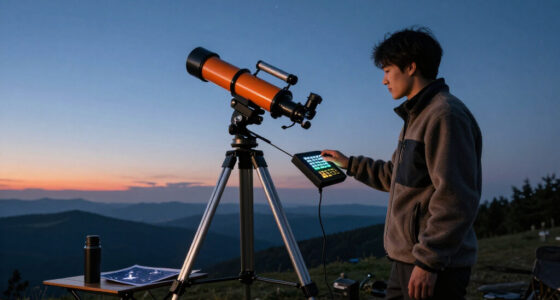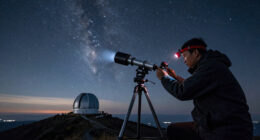
If you’re passionate about capturing the wonders of the night sky, this astrophotography equipment checklist is designed to guide you through selecting the best gear for your celestial adventures. Whether you’re a beginner just starting out or an experienced astrophotographer looking to upgrade your setup, understanding the essentials can make all the difference in achieving stunning images.

Prime made for students and young adults
- Fast, free delivery for dorm and study essentials
- Prime Video and Amazon Music included
- Member-only deals
This guide is organized into key categories — telescopes, cameras, mounts & tripods, lenses, filters, and accessories — each with expert insights and practical tips. Use this checklist to compare options, avoid common pitfalls, and make informed decisions that suit your specific needs and budget.
Remember, choosing the right equipment isn’t just about the latest technology; it’s about matching gear to your skill level, target objects, and observing conditions. Take your time to review the recommendations, focus on quality, and prioritize compatibility to ensure a smooth and rewarding astrophotography journey.
Telescopes
A good telescope is the cornerstone of astrophotography. It determines how well you can observe and photograph distant celestial objects. When selecting a telescope, consider factors like aperture size, focal length, and ease of use. Larger apertures gather more light, revealing more detail, which is crucial for deep-sky imaging. However, bigger isn’t always better if portability or ease of setup is a concern. The Astronomy: A Self-Teaching Guide, Eighth Edition offers comprehensive insights into understanding telescope types, mounting options, and ideal configurations for astrophotography.
Common mistakes include choosing a telescope that’s too advanced for your current skill level or neglecting compatibility with your camera and mounts. Additionally, ensure your telescope’s mounting system is stable and precise enough for long exposure shots. Sizing and fit are vital; a compact refractor might be perfect for beginners, while advanced users may prefer a larger reflector or compound telescope. Compatibility with accessories and future upgrades should also be considered to avoid costly replacements later.
What to look for:
- Aperture size suitable for your targets
- Ease of setup and portability
- Compatibility with camera and accessories
- Stable, precise mount for long exposures
Astronomy: A Self-Teaching Guide, Eighth Edition

This book provides a comprehensive introduction to astronomy, designed for self-study. It covers fundamental concepts and recent developments in the field, making it suitable for beginners and enthusiasts alike.
Pros:
- Comprehensive coverage of astronomy topics
- Suitable for self-study
- Updated with recent developments
Cons:
- No detailed specifications provided
- No customer reviews available
- Limited information on edition features
Best for: Intermediate to advanced astrophotographers
Not ideal for: Beginners seeking ultra-portable options
Bottom line: Choose a telescope that matches your skill level and goals.
Cameras
Your camera is the heart of astrophotography. The right camera can dramatically improve your image quality, capturing faint details of distant galaxies and nebulae. The SVBONY Astrophotography Accessories Kit with the SC571CC cooled camera offers excellent thermal management and sensitivity, making it a popular choice for dedicated astrophotographers. When selecting a camera, consider factors like sensor size, cooling capabilities, and compatibility with your telescope or lens system. A cooled camera reduces noise during long exposures, resulting in clearer images.
Many beginners make the mistake of choosing cameras that lack sufficient sensitivity or are incompatible with their existing gear. It’s essential to verify that your camera supports the necessary connection types and software integration. For versatile use, consider whether the camera can handle both planetary and deep-sky imaging, and check for user-friendly controls and software support. Upgrading your camera can significantly enhance your astrophotography experience, so invest in quality and compatibility from the start.
What to look for:
- Sensor size and resolution
- Cooling features for long exposures
- Compatibility with mounts and software
- Ease of use and software support
SVBONY Astrophotography Accessories Kit with SC571CC Cooled Camera and SV241 Pow

This astrophotography kit includes the SC571CC cooled color camera with a high-resolution IMX571 APS-C sensor and dual-stage TEC cooling, providing low-noise, detailed images of deep-sky objects. Paired with the SV241 power adapter hub, it offers multiple power and data interfaces for reliable, high-performance astrophotography sessions.
Pros:
- High-resolution IMX571 sensor captures detailed deep-sky images
- Effective dual-stage TEC cooling reduces noise for long exposures
- Multiple power and data ports support various astrophotography equipment
- Compatible with a wide range of telescope types
Cons:
- Requires careful handling of input voltage and current to avoid damage
- Complex setup may be challenging for beginners
- Power supply limitations necessitate proper connection management
Best for: Dedicated astrophotographers seeking high sensitivity
Not ideal for: Casual users or smartphone-only setups
Bottom line: Prioritize camera sensitivity and compatibility for best results.
Mounts & Tripods
An effective mount is crucial for capturing sharp, detailed images. The Sky-Watcher EQ6-R is renowned for its fully computerized GoTo system, enabling precise tracking of celestial objects. This reduces star trails and allows longer exposures, essential for deep-sky astrophotography. When choosing a mount, consider weight capacity, tracking accuracy, and ease of calibration. A sturdy, well-built mount minimizes vibrations and helps maintain alignment during extended sessions.
Many users overlook the importance of compatibility with their telescope and camera. Proper balancing and regular calibration are common pitfalls that can lead to blurry images. For beginners, an easier setup might be preferable, but if you’re aiming for advanced astrophotography, investing in a high-quality, computer-controlled mount like the Sky-Watcher EQ6-R is wise. Ensure your tripod or pier is stable and capable of supporting your gear without wobbling, which can ruin long exposures.
What to look for:
- High load capacity
- Precise tracking and GOTO functionality
- Ease of calibration and setup
- Sturdy, vibration-resistant tripod
Sky-Watcher EQ6-R Fully Computerized GoTo German Equatorial Telescope Mount
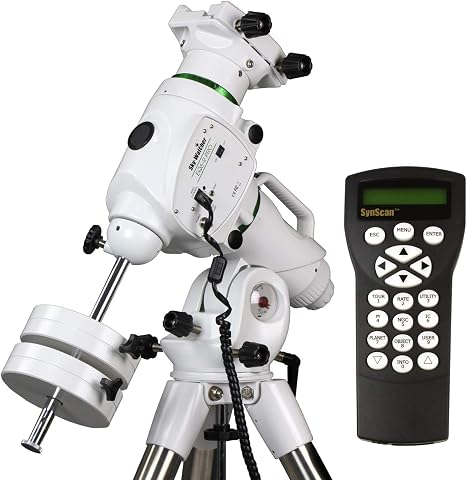
The Sky-Watcher EQ6-R is a computerized, motorized German equatorial mount designed for precise tracking of celestial objects, suitable for both visual astronomy and astrophotography. It features belt-driven stepper motors for quiet operation, a robust all-metal construction with a 44-pound payload capacity, and a built-in illuminated polar finder for easy alignment.
Pros:
- Highly accurate computerized GoTo system with extensive celestial database
- Quiet belt-driven motors for smooth slewing
- Robust all-metal construction with high payload capacity
- Built-in illuminated polar finder for easy alignment
Cons:
- May be heavy to transport for some users
- Requires a 12V power source
- Complex setup for beginners
Best for: Serious amateur astrophotographers
Not ideal for: Lightweight or portable-only setups
Bottom line: Invest in a mount that offers stability and precision.
Lenses
While telescopes are the primary tools, specialized lenses can expand your astrophotography capabilities, especially for smartphone or camera-based setups. The MIAO LAB 2-in-1 Phone Camera Lens Kit offers macro and wide-angle options, making it versatile for capturing the night sky with your phone. These lenses are great for wide-field shots of star fields or the Milky Way, but they may lack the magnification needed for detailed planetary imaging. Compatibility with your device and ease of attachment are key considerations.
Common mistakes include using lenses that don’t fit your device or neglecting the need for stable mounts. For smartphone astrophotography, ensure the lens kit is compatible with your phone model, and consider adding a tripod or mount to stabilize your shots. While these lenses are more suited for wide-angle shots, combining them with other gear can help diversify your astrophotography portfolio. Keep in mind that lens quality and clarity directly impact your final images.
What to look for:
- Compatibility with device
- Wide-angle and macro options
- Ease of attachment and stability
- Lens quality and clarity
MIAO LAB 2-in-1 Phone Camera Lens Kit (12.5X Macro + 0.45X Wide Angle)
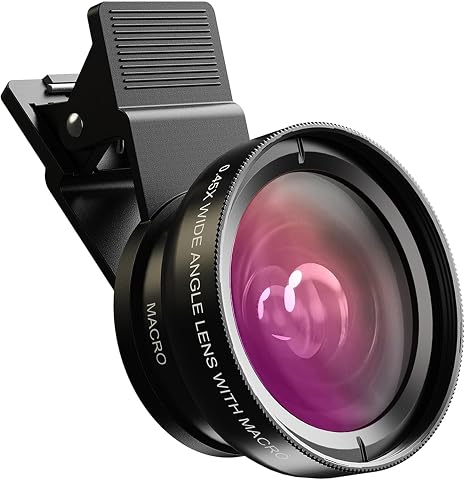
This universal smartphone lens kit includes a 0.45X wide-angle lens for expansive landscape shots and a 12.5X macro lens for detailed close-ups. Made with aircraft-grade aluminum and multi-element coated glass, it offers DSLR-like quality for iPhone/Android users.
Pros:
- Universal compatibility with most smartphones
- Premium aluminum and glass construction for durability
- Easy-to-use clip-on design for instant attachment
Cons:
- Fixed focal length may limit creative flexibility
- Short macro working distance requires precise positioning
Best for: Mobile astrophotography enthusiasts
Not ideal for: Deep-sky or planetary imaging
Bottom line: Use specialized lenses to diversify your astrophotography shots.
Filters
Filters play a vital role in astrophotography by enhancing contrast and reducing light pollution. The MOONCOOL Electric Bike listed here seems to be an error; instead, look for filters designed specifically for astrophotography, such as light pollution filters, narrowband filters, or UV/IR cut filters. These accessories can dramatically improve your image quality by isolating specific wavelengths or blocking unwanted light. Selecting the right filter depends on your target objects and observing environment.
Many beginners overlook the importance of matching filters to their camera and telescope setup. Compatibility and quality matter—cheap filters may introduce distortions or reduce image clarity. When choosing filters, consider their size to match your camera or telescope’s aperture, and ensure they are easy to attach and clean. Proper filter use can save you hours of post-processing and help reveal details that are otherwise obscured by ambient light or atmospheric interference.
What to look for:
- Compatibility with your gear
- Type of filter (light pollution, narrowband)
- Quality optical coatings
- Ease of attachment and cleaning
Accessories
Completing your astrophotography setup with the right accessories can significantly improve your experience and results. The book Astrophotography for the Amateur offers valuable tips on essential tools and extras such as remote shutters, power supplies, and carrying cases. Accessories help streamline your workflow, protect your gear, and extend your shooting sessions. For instance, a reliable power source ensures uninterrupted imaging, while a remote shutter release minimizes vibrations during long exposures.
Common mistakes include neglecting to organize or properly store your gear, which can lead to damage or loss. Investing in quality accessories like lens cleaning kits, cable organizers, and weather-resistant cases helps maintain your equipment and makes setups more efficient. Additionally, consider adding extra batteries, adapters, or filters tailored to your specific targets. Thoughtful accessory choices can make your astrophotography more enjoyable and productive, especially during extended sessions under the stars.
What to look for:
- Durability and quality
- Compatibility with your gear
- Ease of use and storage
- Specialized tools for astrophotography
Astrophotography for the Amateur

This book provides guidance for amateur astronomers interested in capturing stunning astrophotography images. It covers techniques, equipment, and tips to help beginners improve their astrophotography skills.
Pros:
- Comprehensive guide for beginners
- Includes practical tips and techniques
- Suitable for amateur astronomers
Cons:
- Lacks detailed technical specifications
- No included equipment or accessories
Best for: Enhancing workflow and protecting gear
Not ideal for: Minimal setups or casual users
Bottom line: Choose accessories that support your astrophotography goals.
Starting your astrophotography journey doesn’t have to be overwhelming. Focus on acquiring quality gear that matches your skill level and targets, and you’ll see your images improve over time. Remember, it’s better to invest in a few versatile, reliable pieces than to spread your budget thin across many low-quality items.
Use this checklist as a practical guide to prioritize your purchases, avoid common pitfalls, and build a setup that inspires you to explore the night sky. Happy shooting, and clear skies ahead!
Halloween Picks
halloween
As an affiliate, we earn on qualifying purchases.