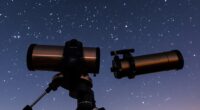
If you’re searching for a 2 inch duo band filter, you’re likely aiming to improve contrast and detail in astrophotography. The best options balance wavelength specificity with light pollution reduction, but tradeoffs exist between price, performance, and versatility. The Askar Colour Magic C2 stands out for its overall performance, while the SVBONY SV220 offers a budget-friendly alternative. More advanced users might prefer the Ultra E2 for its wider bandpass, but that comes with higher costs. Continue reading for a detailed breakdown of these filters and how to choose the right one for your setup.
Key Takeaways
- Top filters like the Askar Colour Magic C2 deliver balanced performance with excellent contrast and light pollution reduction.
- Bandpass width (nm) significantly affects image contrast; narrower bands (around 7nm) improve nebula detail but reduce overall light throughput.
- Set compatibility and ease of installation vary; some filters include multi-set packages for versatile applications, others are single units.
- Price correlates with performance; premium filters often feature higher quality coatings and more precise wavelength control.
- Choosing between dual-band and narrowband filters depends on your target objects and light pollution environment.
| Askar Colour Magic C2 Duo-Band Filter S-II O-III, 2 Inch Narrowband Nebula Filter for Astrophotography |  | Best Overall for Versatile Narrowband Imaging | Filter Type: Duo-band (SII+OIII) | Wavelengths: 500.7nm and 672nm | Size: 2 Inch | VIEW ON AMAZON | See Our Full Breakdown |
| SVBONY SV220 2″ Dual-Band Nebula Filter (SII & OIII 7nm) |  | Best for Bright Sky Conditions and Light Pollution Reduction | Filter Type: Dual-Band Nebula Filter | Wavelength: 7nm | Size: 2 inches | VIEW ON AMAZON | See Our Full Breakdown |
| Askar Colour Magic Ultra E 2″ Narrowband Duo-Band Filter Set for Astrophotography |  | Best for Deep-Sky Imaging with Halo Control | Filter Size: 2 inches | Passbands: 3nm at Hα+OIII (E1), outside 3nm at SII+OII (E2) | Application: Deep-sky astrophotography | VIEW ON AMAZON | See Our Full Breakdown |
| Askar Colour Magic Ultra E2 Narrowband Duo-Band Filter (OIII+SII), 2 Inch Nebula Filter |  | Best for Heavy Light Pollution and Deep-Sky Detail | Bandwidth: 3nm | Center Wavelengths: 500.7nm (OIII), 672nm (SII) | Transmittance: Over 85% | VIEW ON AMAZON | See Our Full Breakdown |
| Askar Colour Magic Super D1 Duo Narrowband Filter (OIII & Ha), 2 Inch, Astrophotography, Astronomy Filters |  | Best for Contrast and Light Pollution Reduction in General Astrophotography | FWHM OIII: 6.5nm ±0.5nm | FWHM Ha: 8.5nm ±0.5nm | CWL: 500.7nm | VIEW ON AMAZON | See Our Full Breakdown |
| Askar Colour Magic C1 Duo-Band Filter (H+OIII), 2 Inch Narrowband Nebula Filter |  | Best for General Astrophotography and Light Pollution Reduction | Type: Duo-band nebula filter | Wavelengths: 500.7nm (Hα), 656.6nm (OIII) | Size: 2 inches | VIEW ON AMAZON | See Our Full Breakdown |
| Askar Colour Magic Ultra E1 Duo-Band Filter (Ha+OIII), 2 Inch Narrowband Nebula Filter |  | Best for Deep-Sky Imaging with Ultra-Narrow Bandwidths | Bandwidth: 3nm | Center Wavelengths: 500.7nm, 656.6nm | Size: 2 inch | VIEW ON AMAZON | See Our Full Breakdown |
| Askar Colour Magic Super D2 Duo Narrowband Filter (OIII & SII), 2 Inch |  | Best for Dual Narrowband Imaging with Emission Line Focus | FWHM OIII: 6.5nm ±0.5nm | FWHM SII: 8.5nm ±0.5nm | CWL: 500.7nm & 672nm | VIEW ON AMAZON | See Our Full Breakdown |
| Askar Colour Magic C 2″ Duo-Band Filter C1+C2 Package Set |  | Best for Complete Narrowband Imaging with Versatile Line Coverage | VIEW ON AMAZON | See Our Full Breakdown |
| inch duo band filter | Size |
|---|---|
| Askar Colour Magic C2 Duo-Band | 2 Inch |
| SVBONY SV220 2" Dual-Band Nebu | 2 inches |
| Askar Colour Magic Ultra E 2" | — |
| Askar Colour Magic Ultra E2 Na | 2 Inch |
| Askar Colour Magic Super D1 Du | 2 Inch |
| Askar Colour Magic C1 Duo-Band | 2 inches |
| Askar Colour Magic Ultra E1 Du | 2 inch |
| Askar Colour Magic Super D2 Du | — |
| Askar Colour Magic C 2" Duo-Ba | — |
More Details on Our Top Picks
Askar Colour Magic C2 Duo-Band Filter S-II O-III, 2 Inch Narrowband Nebula Filter for Astrophotography
This filter stands out for its ability to enhance contrast and detail across multiple nebula types by combining SII and OIII bands in one package, making it a flexible choice compared to the more specialized Askar Ultra E set. Its high transmittance over 90% ensures sharp, bright images, yet it demands a compatible setup and is priced higher, which might deter casual users. Compared to single-band options like the SVBONY SV220, it simplifies workflows with dual-band coverage, but this added versatility comes at a cost. Ideal for serious astrophotographers seeking a comprehensive narrowband filter without multiple accessories, it is less suited for beginners or those on a tight budget.
Pros:- Combines SII and OIII bands for versatile imaging
- Over 90% transmittance ensures bright, detailed images
- Reduces light pollution effectively in various sky conditions
- Enhances contrast and sharpness in nebulae
Cons:- Requires a compatible telescope and camera setup
- Higher price point may be prohibitive for casual users
- Specialized for narrowband imaging, not for general astrophotography
Best for: Experienced astrophotographers wanting a versatile dual-band filter capable of capturing multiple nebulae types with high clarity.
Not ideal for: Casual stargazers or beginners who prefer simpler, more affordable single-band filters or who lack compatible equipment.
- Filter Type:Duo-band (SII+OIII)
- Wavelengths:500.7nm and 672nm
- Size:2 Inch
- Transmittance:Over 90%
- Application:Astrophotography
- Compatibility:Requires compatible telescope/camera
Our verdict“This filter is ideal for advanced users seeking a broad, high-performance narrowband option for deep-sky imaging.”
SVBONY SV220 2″ Dual-Band Nebula Filter (SII & OIII 7nm)
The SVBONY SV220 excels in environments with significant light pollution, effectively reducing sky glow while boosting contrast for emission nebulae and planetary objects. Unlike the Askar Colour Magic C2, which covers broader wavelengths for varied targets, this filter’s narrow 7nm bandwidth targets specific emission lines, making it highly effective in bright conditions. Its design favors telescopes with an aperture over f/4, limiting compatibility with some setups. While offering excellent contrast enhancement, its narrow focus means it isn’t suitable for planetary or wide-field astrophotography. This makes it a strong choice for those working in suburban or urban settings who prioritize nebula imaging.
Pros:- Reduces light pollution and sky glow effectively
- Enhances contrast for emission and planetary nebulae
- Designed specifically for bright, light-polluted skies
- Suitable for use with telescopes > f/4
Cons:- Limited to narrowband wavelengths, less versatile
- Requires compatible optical configuration for optimal performance
- Not suitable for planetary imaging or wide-field views
Best for: Amateur astronomers with telescopes over f/4 seeking to improve nebula imaging in light-polluted areas.
Not ideal for: Owners of fast telescopes or planetary photographers who need broader or more versatile filters.
- Filter Type:Dual-Band Nebula Filter
- Wavelength:7nm
- Size:2 inches
- Designed For:Astrophotography
- Compatibility:Optical systems > f/4
- Cut-Off Depth:OD5
Our verdict“This filter is best suited for users in light-polluted areas focusing on nebulae with fast telescopes, but less ideal for planetary or wide-field astrophotography.”
Askar Colour Magic Ultra E 2″ Narrowband Duo-Band Filter Set for Astrophotography
The Ultra E set offers a comprehensive solution for deep-sky astrophotographers needing ultra-narrow bandwidths and halo suppression, making it ideal for capturing faint celestial details. Compared with the Askar C2 filter, which covers broader bands, the Ultra E’s extremely narrow 3nm passbands deliver higher contrast and finer detail, especially in light-polluted skies. However, the narrow bandwidth can mean longer exposures and the need for precise setup. Its halo control features are a plus, but the set’s complexity and price make it less suitable for beginners or casual observers. This set is best for those who prioritize high-precision deep-sky imaging over convenience.
Pros:- Extremely narrow 3nm passbands for high contrast
- Halo control improves image clarity
- Effective in light-polluted areas
- Includes both E1 and E2 filters for versatile imaging
Cons:- Requires precise, compatible telescope and camera setup
- Longer exposure times needed due to narrow bandwidths
- Higher price point limits accessibility
Best for: Advanced astrophotographers focusing on deep-sky object imaging who need high contrast and halo suppression.
Not ideal for: Beginners or those looking for a straightforward, budget-friendly filter for general use.
- Filter Size:2 inches
- Passbands:3nm at Hα+OIII (E1), outside 3nm at SII+OII (E2)
- Application:Deep-sky astrophotography
- Includes:E1 and E2 filters
- Effectiveness:High contrast and halo control
Our verdict“This set suits dedicated deep-sky astrophotographers seeking ultimate contrast and halo suppression, with tradeoffs in complexity and cost.”
Askar Colour Magic Ultra E2 Narrowband Duo-Band Filter (OIII+SII), 2 Inch Nebula Filter
The Ultra E2 filter is tailored for deep-sky imaging in heavily light-polluted environments, delivering excellent contrast enhancement for nebulae. Its 3nm bandwidth at OIII and SII wavelengths ensures sharp emission line imaging, comparable in quality to the C2 but with a narrower focus on deep-sky objects. Though it excels in challenging conditions, it’s less versatile for planetary or wide-field use. The premium price reflects its professional-grade performance, making it less appealing to casual hobbyists. This filter makes the most sense for dedicated deep-sky astronomers working in challenging light conditions.
Pros:- Enhances nebula contrast in polluted skies
- Narrow 3nm bandwidth improves emission line detail
- High transmittance (>85%) for bright images
- Effective for deep-sky imaging in difficult environments
Cons:- Designed primarily for deep-sky, not planetary imaging
- Requires compatible telescope and camera setup
- Premium price may be a barrier for some users
Best for: Deep-sky astrophotographers needing high contrast and detail in heavily light-polluted skies.
Not ideal for: Casual users or planetary imagers who require broader bandwidths or multi-purpose filters.
- Bandwidth:3nm
- Center Wavelengths:500.7nm (OIII), 672nm (SII)
- Transmittance:Over 85%
- Size:2 Inch
Our verdict“This filter is a strong choice for deep-sky imaging under difficult light conditions, with some cost and setup considerations.”
Askar Colour Magic Super D1 Duo Narrowband Filter (OIII & Ha), 2 Inch, Astrophotography, Astronomy Filters
The Super D1 filter combines OIII and Ha bands, making it a versatile choice for capturing a wide range of celestial features with high contrast. Compared to the specialized Ultra E set, it offers more flexibility for general astrophotography, though it may not achieve the same level of contrast or halo suppression. Its high transmittance (around 85%) ensures bright, detailed images, but compatibility depends on the telescope’s specifications. It is a compelling option for amateur astronomers who want a balance of performance and affordability, yet it falls short in ultra-narrow bandwidth or professional deep-sky applications.
Pros:- Combines OIII and Ha bands for versatility
- High transmittance ensures bright, detailed images
- Reduces light pollution effectively
- Suitable for a broad range of celestial targets
Cons:- Less specialized than ultra-narrowband filters
- May not provide the same contrast as narrower filters
- Requires compatible telescope and filter wheel
Best for: Amateurs seeking a multi-band narrowband filter for diverse astrophotography projects, especially in light-polluted areas.
Not ideal for: Deep-sky specialists or astrophotographers requiring ultra-narrow bandwidths for faint object imaging.
- FWHM OIII:6.5nm ±0.5nm
- FWHM Ha:8.5nm ±0.5nm
- CWL:500.7nm
- Size:2 Inch
Our verdict“This filter offers a practical, multi-band solution for general astrophotography, with some compromises in narrowband performance.”
Askar Colour Magic C1 Duo-Band Filter (H+OIII), 2 Inch Narrowband Nebula Filter
This Askar Colour Magic C1 Duo-Band Filter stands out for its ease of use and versatility in enhancing nebula and star images. Compared to more specialized filters like the Ultra E1, it offers a broader bandwidth that makes it suitable for both amateur and semi-professional astrophotographers. Its high transmittance over 90% ensures bright, detailed images while effectively reducing light pollution, making it ideal in urban settings. However, it requires a compatible telescope to deliver optimal results, and its design is focused solely on astrophotography, not visual observation. For those wanting an accessible, reliable filter for general celestial imaging, this makes a solid choice.
Pros:- Enhances contrast and detail in nebulae and stars
- Reduces light pollution for clearer urban observations
- High transmittance at key wavelengths ensures bright images
Cons:- Requires a compatible telescope for best results
- Limited to astrophotography, not suitable for visual use
Best for: Beginners and amateur astronomers seeking an easy-to-use filter for diverse night sky conditions
Not ideal for: Advanced astrophotographers or users seeking ultra-narrow bandwidths for deep-sky imaging, as this filter’s broader passbands may limit contrast in complex nebulae
- Type:Duo-band nebula filter
- Wavelengths:500.7nm (Hα), 656.6nm (OIII)
- Size:2 inches
- Transmittance:Over 90%
Our verdict“This filter is best suited for newcomers and casual astrophotographers who want reliable performance without complex setup.”
Askar Colour Magic Ultra E1 Duo-Band Filter (Ha+OIII), 2 Inch Narrowband Nebula Filter
The Askar Colour Magic Ultra E1 Duo-Band Filter excels at capturing detailed images of emission nebulae and supernova remnants, thanks to its ultra-narrow 3nm bandwidth. It offers higher contrast than broader filters like the C1, making it the preferred choice for serious astrophotographers dedicated to deep-sky imaging. Its transmittance exceeds 85%, providing bright, crisp results even in light-polluted areas. The main tradeoff is its narrow bandwidth, which limits versatility for general use and requires precise focusing and compatible equipment. This pick is ideal for experienced users aiming for high-contrast, high-detail astrophotos.
Pros:- Exceptional contrast for emission nebulae and supernova remnants
- Narrow bandwidth reduces light pollution effectively
- High transmittance ensures bright, detailed images
Cons:- Requires precise focus and compatible equipment
- Limited versatility outside targeted deep-sky applications
Best for: Advanced astrophotographers focused on deep-sky object imaging in light-polluted environments
Not ideal for: Casual stargazers or beginners who prefer broader filters for easier capturing, as the narrow bandwidth demands more precise setup
- Bandwidth:3nm
- Center Wavelengths:500.7nm, 656.6nm
- Size:2 inch
- Transmittance:Over 85%
Our verdict“This filter is perfect for experienced astrophotographers seeking ultra-contrast imaging of faint deep-sky objects amid light pollution.”
Askar Colour Magic Super D2 Duo Narrowband Filter (OIII & SII), 2 Inch
The Askar Colour Magic Super D2 offers a versatile approach for astrophotographers interested in capturing both OIII and SII emission lines, with narrow FWHM values of 6.5nm and 8.5nm respectively. Compared to broader filters like the C1, its narrow bandwidths increase contrast and reduce unwanted light, leading to sharper images of gaseous nebulae. Its peak transmittance of 85% ensures bright results, but users need compatible telescopes and precise focusing due to the narrow spectral lines. This filter is less suited for general observation but excels in producing high-contrast, detailed images of emission-line nebulae.
Pros:- Enhances contrast of emission nebulae effectively
- Reduces light pollution for clearer astrophotography
- Narrow bandwidths improve detail and color separation
Cons:- Requires accurate focusing and compatible gear
- Limited to emission-line imaging, not suitable for broad-spectrum use
Best for: Experienced astrophotographers focused on multi-line nebula imaging with specific emission filters
Not ideal for: Casual observers or those new to astrophotography, as the narrowband design necessitates precise handling and dedicated equipment
- FWHM OIII:6.5nm ±0.5nm
- FWHM SII:8.5nm ±0.5nm
- CWL:500.7nm & 672nm
- Peak transmittance:85%
Our verdict“Ideal for advanced users aiming to capture detailed, high-contrast images of emission nebulae with specific spectral lines.”
Askar Colour Magic C 2″ Duo-Band Filter C1+C2 Package Set
The Askar Colour Magic C1+C2 Package Set combines two high-transmittance filters that cover Hα, OIII, and SII lines, offering an all-in-one solution for astrophotographers seeking comprehensive nebula imaging. Its over 90% transmittance at key wavelengths ensures vibrant, detailed images while effectively reducing light pollution. Compared with single filters like the C1 or Ultra E1, this set simplifies workflow by providing dual-line coverage in a single package, making it easier to produce high-contrast, detailed compositions. Nevertheless, the increased complexity and cost might be a barrier for casual users, and the filters demand compatible, precise equipment for best results.
Pros:- Provides comprehensive line coverage for detailed nebula imaging
- High transmittance over 90% enhances brightness and contrast
- Reduces light pollution effectively for urban astrophotography
Cons:- Higher cost and complexity compared to individual filters
- Requires compatible, precise setup for optimal results
Best for: Experienced astrophotographers or serious amateurs wanting broad nebula coverage with minimal setup complexity
Not ideal for: Beginners or casual stargazers who seek simple, single-filter solutions or do not have compatible equipment
Our verdict“This set offers a versatile, high-performance solution for advanced astrophotographers seeking detailed nebula images with minimal filter switching.”

How We Picked
These filters were selected based on their optical performance, build quality, and value for astrophotography enthusiasts. We considered bandwidth specifications, coating durability, and ease of installation across different telescope setups. Additionally, user reviews and manufacturer reputation helped determine reliability and consistency. Filters that offer versatile use cases, such as multi-band sets, were prioritized for their flexibility, while cost-effectiveness was a key factor in identifying the best value options. The ranking reflects a balance between performance, usability, and price to help buyers find the best fit for their needs.Factors to Consider When Choosing 2 Inch Duo Band Filter
When choosing a 2 inch duo band filter, several factors should influence your decision. Understanding the nuances of bandwidth, wavelength specificity, and build quality can help you avoid common pitfalls and select a filter that enhances your astrophotography experience while fitting your budget and equipment. Keep in mind that the right filter varies depending on your target objects, light pollution conditions, and telescope compatibility.Bandwidth and Wavelength Specificity
The primary consideration is the filter’s bandwidth, typically measured in nanometers (nm). Narrower bands, around 7nm, excel at isolating nebula emission lines like H-alpha, OIII, and SII, providing higher contrast and detail. However, narrower bandwidths also mean less light passes through, requiring longer exposures. Conversely, wider bands allow more light, making them easier to use in less optimal conditions but potentially sacrificing some contrast. Matching the bandwidth to your astrophotography targets and environment is key to getting the best results.
Compatibility and Mounting
Ensure the filter’s size and mounting system are compatible with your telescope and camera setup. Most 2 inch filters are standard, but verify the thread size and whether you need adapters or multi-filter holders. Some filters come as part of sets, offering flexibility for different targets, while single filters may be more straightforward but less versatile. Ease of installation and secure mounting can prevent issues like vignetting or misalignment during imaging sessions.
Build Quality and Coatings
Durability and optical coatings influence the filter’s lifespan and image quality. High-quality dielectric coatings reduce reflections and maximize light transmission, leading to clearer images with minimal halos or distortions. Cheap coatings may degrade over time or introduce unwanted artifacts, so investing in well-coated filters pays off in the long run. Check for filters with reputable coatings and protective glass to withstand frequent use and cleaning.
Price and Value
Price varies widely in this category, reflecting differences in coating quality, bandwidth precision, and included features. While high-priced filters tend to offer superior performance, budget options can still provide decent results for beginners or casual hobbyists. Evaluate whether the incremental performance gains justify the additional cost, especially if you plan to expand your astrophotography setup. Multi-set packages often deliver better overall value, offering coverage of multiple emission lines at a lower per-filter cost.
Use Case and Target Objects
Consider what objects you plan to photograph. Narrowband filters favor detailed nebula imaging, especially in light-polluted areas, whereas dual-band filters might be better for general use across different nebula types and environmental conditions. If you’re aiming for visual observation, ease of use and broad compatibility matter more, while dedicated imaging setups benefit from narrower bands and high transmission rates. Matching the filter type to your specific astrophotography goals ensures better results.
Frequently Asked Questions
Can I use a 2 inch duo band filter with my existing telescope setup?
Most 2 inch filters are designed with standard threads that fit common telescope and camera adapters. However, it’s important to verify your equipment’s thread size and compatibility. Some filters may require specific adapters or holders, especially if you have a non-standard or older mount. Ensuring compatibility beforehand can prevent installation issues during imaging sessions. If your setup is compatible, a 2 inch filter generally offers a straightforward upgrade to enhance nebula imaging.
How does bandwidth affect astrophotography quality?
Bandwidth determines how narrowly a filter isolates specific emission lines, directly impacting contrast and detail. Narrower bandwidths (around 7nm) improve the visibility of faint nebula features by reducing light pollution and skyglow, but they also require longer exposure times. Broader bands allow more light to pass through, making imaging faster and easier, but may include unwanted background light. Selecting the right bandwidth depends on your target objects, ambient light conditions, and your patience for longer exposures.
Are multi-band filter sets worth the extra cost?
Multi-band sets provide the flexibility to capture different emission lines like H-alpha, OIII, and SII in one package, which can be highly advantageous for comprehensive nebula imaging. They also offer the convenience of switching between bands without changing filters. However, they tend to be more expensive and sometimes compromise slightly on individual filter quality compared to single, dedicated filters. For serious astrophotographers or those exploring multiple targets, the increased versatility often justifies the investment.
What should I look for in a durable, long-lasting filter?
Durability hinges on high-quality dielectric coatings and robust glass construction that resist scratches, reflections, and degradation over time. Reputable brands often provide coatings with anti-reflective properties and protective layers. Additionally, consider filters with sealed bodies or protective filters to prevent dust and moisture buildup. Investing in a well-coated, carefully constructed filter ensures consistent performance over many years, especially if you plan frequent use or cleaning.
Is it better to buy a single filter or a set for astrophotography?
If your focus is on specific objects or emission lines, a single high-quality filter may be the best choice for optimal performance. However, a set offers greater versatility, allowing imaging of multiple nebulae with different emission lines and adapting to various conditions. Sets often provide better value per filter, but you should weigh this against the potential for slightly lower individual filter quality. For newcomers, a set can be a cost-effective way to experiment with different imaging techniques.
Conclusion
For those seeking an all-around performer, the Askar Colour Magic C2 shines as the best overall pick, balancing performance and value. Beginners or casual hobbyists will appreciate the user-friendly SVBONY SV220 for its affordability. Serious astrophotographers aiming for maximum detail and flexibility may lean toward premium options like the Ultra E2 or multi-set packages, which justify higher costs with enhanced capabilities. Light-pollution fighters in need of quick, effective imaging should prioritize narrowband filters with narrower bandwidths. No matter your level, understanding your specific targets and environment is key to making the right choice.”