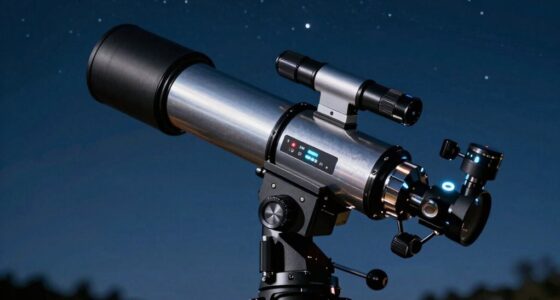

Choosing an apochromatic refractor for widefield means balancing field coverage against aperture, image correction, portability, and imaging support. My shortlist puts the Omegon AP 66/400 ED forward as a compact, precisely focused starting point, the SVBONY SV550 122mm as the strongest ready-to-image choice thanks to its included field flattener, and the Sky-Watcher Evostar 80EDX as a capable middle ground for buyers who want manageable size and a fine focuser. The larger Sky-Watcher 120mm gathers more light but has a longer focal length, while the Omegon 72/432 is compact yet hampered here by a reported field-of-view figure that does not establish a wide imaging field. I rank these for practical widefield use, not aperture alone: field correction and usable imaging scale matter as much as collecting light.

Prime made for students and young adults
- Fast, free delivery for dorm and study essentials
- Prime Video and Amazon Music included
- Member-only deals
Key Takeaways
- Best widefield imaging package: The SVBONY SV550 pairs a 122mm triplet with an included 0.8× reducer/flattener, but its 6.44kg tube calls for a sturdy mount.
- Best compact entry point: The Omegon AP 66/400 is short and light, with a 1:10 focuser for fine adjustments; its 66mm aperture limits light gathering.
- Best balanced doublet: The Sky-Watcher Evostar 80EDX offers 80mm aperture, a 600mm focal length, and an 11:1 focuser without the SV550’s heavier tube.
- Best for visual versatility: The Sky-Watcher EvoStar 120 provides 120mm aperture and useful included accessories, though 900mm is less naturally widefield than the shorter options.
- Check the field figures before buying: The listed 0.09° for the Omegon 72/432 and 7.5° for the EvoStar 120 are not directly comparable to image-circle specifications; confirm actual camera framing with your sensor and optics.
| SVBONY SV550 122mm f/7 Triplet Apochromatic Refractor Telescope with SV209 0.8× Field Flattener |  | Best Overall for Widefield Imaging | Aperture: 122 mm | Focal length: 854 mm | Focal ratio: f/7 | VIEW ON AMAZON | See Our Full Breakdown |
| Sky-Watcher Evostar 80EDX APO Doublet Refractor Telescope |  | Best Balanced Doublet | Aperture: 80 mm | Focal length: 600 mm | Focal ratio: f/7.5 | VIEW ON AMAZON | See Our Full Breakdown |
| Omegon AP 66/400 ED Apochromatic Refractor Telescope |  | Best Compact Starter for Wide Fields | Aperture: 66 mm | Focal length: 400 mm | Optical tube length: 40 cm | VIEW ON AMAZON | See Our Full Breakdown |
| Sky-Watcher EvoStar 120 APO Doublet Refractor |  | Best for Visual Light Gathering | Aperture: 120 mm | Focal length: 900 mm | Optical design: APO doublet with synthetic fluorite element | VIEW ON AMAZON | See Our Full Breakdown |
| Omegon Apochromatic Refractor Pro APO AP Photography Scope 72/432 ED OTA |  | Best Lightweight Camera-Compatible OTA | Aperture: 72 mm | Focal length: 432 mm | Optical design: Apochromatic refractor with ED glass | VIEW ON AMAZON | See Our Full Breakdown |
| apochromatic refractor for widefield | Aperture | Focal length | Optical design | Focuser |
|---|---|---|---|---|
| SVBONY SV550 122mm f/7 Triplet | 122 mm | 854 mm | FPL-51 ED triplet apochromat | — |
| Sky-Watcher Evostar 80EDX APO | 80 mm | 600 mm | APO doublet with FPL-53 ED glass | 2.8-inch Crayford-style, 11:1 |
| Omegon AP 66/400 ED Apochromat | 66 mm | 400 mm | ED apochromatic doublet | Power Linear Crayford-style with 1:10 reduction |
| Sky-Watcher EvoStar 120 APO Do | 120 mm | 900 mm | APO doublet with synthetic fluorite element | 10:1 dual-speed Crayford |
| Omegon Apochromatic Refractor | 72 mm | 432 mm | Apochromatic refractor with ED glass | — |
More Details on Our Top Picks
SVBONY SV550 122mm f/7 Triplet Apochromatic Refractor Telescope with SV209 0.8× Field Flattener
The SVBONY SV550 takes the top position because it is the only option here that pairs a relatively short 854mm focal length and large 122mm aperture with an included 0.8× reducer and field flattener. That combination directly addresses two widefield-imaging needs: reducing focal length for a broader frame and correcting field curvature toward the edges. Its FPL-51 triplet design also targets lower color fringing than a simpler achromat, making bright stars and contrast-heavy subjects a better fit for imaging.
Compared with the smaller Omegon 66/400 and 72/432, the SV550 gathers more light and offers a field-correction accessory in the box, but it is far less portable at 6.44kg. It also has the longest focal length among the shorter compact options, so it is not automatically the widest framing choice once sensor size and reducer configuration are factored in. I would choose it for a more capable deep-sky setup, not as a casual grab-and-go tube. The manual focuser and stated 0.97° field figure also deserve verification against the intended camera setup; the included flattener is helpful, but does not by itself guarantee compatibility with every sensor or spacing arrangement.
Pros:- 122mm aperture gathers more light than the compact 66mm, 72mm, and 80mm options.
- FPL-51 ED triplet design is intended to reduce chromatic aberration.
- Included 0.8× reducer and field flattener support broader imaging and edge correction.
- 854mm focal length balances reach with a wider framing potential than the 900mm EvoStar 120.
Cons:- At 6.44kg, the tube places greater demands on transport and mount capacity.
- Manual focusing requires careful adjustment for astrophotography.
- Camera spacing and image-circle compatibility should be checked for the intended sensor.
Best for: Astrophotographers who want larger aperture, triplet color correction, and an included reducer/flattener for deep-sky imaging.
Not ideal for: Travel-first observers, owners of lightweight mounts, or buyers who prioritize the shortest focal length and easiest carrying.
- Aperture:122 mm
- Focal length:854 mm
- Focal ratio:f/7
- Optical design:FPL-51 ED triplet apochromat
- Included imaging accessory:SV209 0.8× focal reducer and field flattener
- Tube weight:6.44 kg
- Focus:Manual
Our verdict“I rank the SV550 first for widefield imaging because its included flattener and substantial aperture make the most complete imaging-focused package, provided your mount can carry it.”
Sky-Watcher Evostar 80EDX APO Doublet Refractor Telescope
The Evostar 80EDX is my balanced pick for buyers who want a useful imaging focal length without stepping up to the SV550’s heavier 122mm tube. Its 80mm FPL-53 doublet, 600mm focal length, and 11:1 Crayford focuser make a practical combination for broad nebulae, star fields, and visual scanning. The fine focus reduction helps make small adjustments near focus easier, an advantage when a camera reveals focus errors that are less obvious through an eyepiece.
Compared with the Omegon 66/400, this Sky-Watcher offers more aperture and a longer focal length, trading some framing width for increased reach and light collection. Against the SV550, it gives up aperture and an included field flattener, but its lighter doublet format is a more approachable match for a portable mount. The listed accessories—rings, dovetail, adapters, dew shield, and padded case—make setup logistics simpler, though no field flattener is listed. Buyers planning corner-to-corner imaging should confirm correction options and camera spacing rather than assuming a sharp center guarantees a flat sensor field. Its 600mm focal length also remains better suited to widefield than planetary magnification without additional optics.
Pros:- FPL-53 ED doublet and high-transmission coatings are designed for high-contrast views.
- 600mm focal length offers a broad framing option with more reach than the 400mm Omegon.
- 11:1 Crayford focuser supports fine manual focus adjustments.
- Padded case and mounting hardware are included.
Cons:- A field flattener is not listed among the included accessories.
- 80mm aperture collects less light than the 120mm and 122mm models.
- Doublet design may offer less color correction than a well-corrected triplet under demanding imaging conditions.
Best for: Imagers and visual observers seeking a manageable 80mm APO with a precise focuser and a 600mm focal length.
Not ideal for: Buyers who need an included field flattener, maximum light gathering, or the shortest possible focal length.
- Aperture:80 mm
- Focal length:600 mm
- Focal ratio:f/7.5
- Optical design:APO doublet with FPL-53 ED glass
- Focuser:2.8-inch Crayford-style, 11:1
- Coating:Metallic High-Transmission Coatings
- Included accessories:Tube rings, V-style dovetail, carry handle, case, dew shield, adapters
Our verdict“I recommend the Evostar 80EDX as the best middle ground for buyers who want a capable 600mm APO without the mass and setup demands of the SV550.”
Omegon AP 66/400 ED Apochromatic Refractor Telescope
With a 66mm aperture and 400mm focal length, the Omegon AP 66/400 is the most naturally compact imaging option in this group. Its short focal length can frame large objects more easily than the 600mm Evostar 80EDX or 854mm SV550 when using the same camera sensor. The ED doublet is intended to keep color fringing under control, while the 1:10 reduction focuser gives the photographer finer focus adjustment than a basic single-speed arrangement.
That compact scale comes with a clear limitation: 66mm gathers less light than the other listed apertures, so faint targets can call for longer exposures or more patience. It also does not list a field flattener, and the product details do not specify included accessories beyond a Plössl description. Compared with the Omegon 72/432, this model has a slightly smaller aperture but a shorter focal length and a more clearly described fine focuser. I would favor it when a compact tube and framing flexibility matter more than light collection. Its quoted 41.3cm field figure needs context before use as an imaging comparison; actual framing depends on the camera sensor and optical configuration.
Pros:- 400mm focal length is the shortest specified among the five models.
- Compact 40cm tube is easier to transport than the larger refractors.
- 1:10 focuser reduction helps with fine focus for imaging.
- ED doublet design aims for high-contrast views with reduced color fringing.
Cons:- 66mm aperture gathers less light than every other model in this roundup.
- No field flattener is listed as included.
- Accessory package details are limited in the supplied product information.
Best for: Beginners or mobile imagers who want a short, compact ED APO and value precise focusing over larger aperture.
Not ideal for: Deep-sky buyers prioritizing light gathering, or camera users who need a confirmed flat field without sourcing extra correction optics.
- Aperture:66 mm
- Focal length:400 mm
- Optical tube length:40 cm
- Weight:2.19 kg
- Optical design:ED apochromatic doublet
- Focuser:Power Linear Crayford-style with 1:10 reduction
- Mount type:Equatorial
Our verdict“I would choose the AP 66/400 for a portable, short-focal-length setup, while accepting that its small aperture and unlisted field correction limit its appeal for demanding deep-sky imaging.”
Sky-Watcher EvoStar 120 APO Doublet Refractor
The EvoStar 120 earns its place through aperture and a useful accessory bundle rather than the widest framing. Its 120mm objective collects more light than the 66mm, 72mm, and 80mm models, helping visual observers see dimmer objects and giving astrophotographers a larger aperture to work with. The 10:1 dual-speed Crayford focuser, 8×50 RACI finder, 2-inch dielectric diagonal, eyepieces, and foam-lined case make this the most visibly equipped package in the lineup.
For a widefield buyer, the important tradeoff is the 900mm focal length. It is longer than every other stated focal length here, so the same camera sensor will show a narrower patch of sky than with the 400mm, 432mm, or 600mm alternatives. That makes it more flexible for visual astronomy and smaller deep-sky targets than for expansive framing. Compared with the SV550, it has a similar aperture but a doublet optical design and no included reducer/flattener specified. The supplied 7.5° field figure is unusually broad for a 900mm telescope and lacks measurement context, so I would verify it with the intended eyepiece or camera rather than rely on it as a direct comparison.
Pros:- 120mm aperture offers strong light gathering compared with the compact refractors.
- 10:1 dual-speed focuser supports controlled focus adjustments.
- Includes a RACI finder, 2-inch diagonal, two eyepieces, and a protective case.
- Matched doublet objective uses a synthetic fluorite element for color correction.
Cons:- 900mm focal length gives narrower framing than the shorter telescopes in this comparison.
- No field flattener is specified in the supplied package details.
- A doublet may show more residual color than a well-corrected triplet in demanding imaging conditions.
Best for: Visual observers who want a 120mm aperture, a substantial included accessory set, and an APO that can also support imaging.
Not ideal for: Widefield imagers seeking short focal length, a supplied field flattener, or the lightest travel setup.
- Aperture:120 mm
- Focal length:900 mm
- Optical design:APO doublet with synthetic fluorite element
- Focuser:10:1 dual-speed Crayford
- Finderscope:8×50 RACI
- Included optics:2-inch dielectric diagonal; 25mm and 5mm LET eyepieces
- Case:Foam-lined aluminum case
Our verdict“I recommend the EvoStar 120 to buyers who put visual aperture and included accessories ahead of the broadest imaging field.”
Omegon Apochromatic Refractor Pro APO AP Photography Scope 72/432 ED OTA
The Omegon Pro APO AP 72/432 ED is a small, straightforward optical tube for buyers who value portability and camera compatibility. Its 72mm ED objective and 432mm focal length sit close to the 66/400 Omegon in scale, while adding a little aperture and focal length. At a stated 2.06kg and 43.2cm tube length, it remains easy to transport and can suit a modest imaging rig, assuming the camera adapters and mount are appropriate.
I rank it below the AP 66/400 because the supplied product details describe the 66/400’s 1:10 focusing reduction, while this model only specifies manual focus. That distinction matters when focusing on a star field with a camera. The 72/432 also lists a 0.09° field of view, a figure that does not support a clear widefield comparison without knowing how it was measured; I would verify actual framing from focal length and sensor size. Compared with the Evostar 80EDX, this Omegon is lighter and shorter, but has less aperture and no listed fine-reduction focuser or included field flattener. It is a portability-led option, not the most complete imaging system.
Pros:- 72mm ED APO optics are designed to reduce chromatic aberration.
- Short 432mm focal length supports broad framing with a suitable camera sensor.
- At 2.06kg, the tube is lighter than the larger refractors in this list.
- Fully coated optics and a reflex finder are included.
Cons:- Manual focusing is less finely specified than the 1:10 and 11:1 systems on competing models.
- The listed 0.09° field-of-view figure is unclear and should be verified.
- No field flattener is specified as included.
Best for: Travel-minded observers and camera users seeking a compact 72mm ED APO tube for a lightweight setup.
Not ideal for: Imagers who need fine-focus gearing, a supplied field flattener, or clearly documented wide sensor coverage.
- Aperture:72 mm
- Focal length:432 mm
- Optical design:Apochromatic refractor with ED glass
- Weight:2.06 kg
- Tube length:43.2 cm
- Focus:Manual
- Finderscope:Reflex
Our verdict“I see the Omegon 72/432 as a portable camera-friendly OTA, but the AP 66/400 is the more clearly specified compact choice for fine focusing.”

How We Picked
I ranked these five telescopes against the specific promise of widefield observing and imaging, rather than treating every APO refractor as interchangeable. My first question was whether the focal length and aperture make sense for broad sky targets; my next was whether the supplied optics and focusing hardware support clean, repeatable framing. A shorter focal length generally frames a larger patch of sky with a given camera sensor, while greater aperture can improve light collection but often adds tube weight and mount demands.
I also gave weight to practical imaging support: field flatteners, reducer compatibility, focuser precision, and included hardware. That favors the SV550’s included reducer/flattener for camera use, while the AP 66/400 and Evostar 80EDX offer fine focusing without an included field-correction accessory listed in the supplied details. The EvoStar 120’s aperture and accessory bundle help visual use, but its 900mm focal length places it behind shorter models for broad framing. I treated the stated field-of-view figures cautiously because the product information does not define the measurement method or sensor and eyepiece assumptions. The ranking reflects the information supplied; buyers should verify image-circle coverage, back focus, mount capacity, and camera compatibility before committing.
| apochromatic refractor for widefield | Optical design |
|---|---|
| SVBONY SV550 122mm f/7 Triplet | FPL-51 ED triplet apochromat |
| Sky-Watcher Evostar 80EDX APO | APO doublet with FPL-53 ED glass |
| Omegon AP 66/400 ED Apochromat | ED apochromatic doublet |
| Sky-Watcher EvoStar 120 APO Do | APO doublet with synthetic fluorite element |
| Omegon Apochromatic Refractor | Apochromatic refractor with ED glass |
Factors to Consider When Choosing Apochromatic Refractor For Widefield
I would choose a widefield APO by matching its focal length, correction accessories, and total system weight to the targets and camera I plan to use.Focal length determines framing
For the same camera sensor, a shorter focal length frames a larger area of sky. That gives the 400mm Omegon AP 66/400 and 432mm Omegon 72/432 a natural framing advantage over the 600mm Evostar 80EDX, 854mm SV550, and 900mm EvoStar 120. A broader frame is not automatically better: large nebulae and star fields benefit, while smaller galaxies may appear tiny. Check a field-of-view calculator using the actual sensor dimensions rather than relying on an unexplained product listing figure.
Aperture, focal ratio, and exposure goals
Aperture affects light gathering and potential resolution, while focal length sets image scale with a given camera. The 120mm and 122mm scopes collect more light than the 66mm to 80mm options, but they also require stronger support and are less convenient to transport. Focal ratio can also affect imaging speed, but the supplied details do not give an f-number for every model. I would compare the complete configuration—including reducer use—rather than infer exposure performance from aperture alone.
Field flattening and camera fit
Refractors can show stars that soften or stretch near the edge of a camera frame if the image field is curved. The SV550 includes a 0.8× reducer and field flattener, making it the clearest imaging-ready choice here. The other listings do not specify a flattener in the supplied package information. Before purchase, check the required back focus, adapter thread, image-circle coverage, and whether correction optics support your sensor size. A flattener must match the telescope and be set at the correct spacing to deliver the intended edge performance.
Focuser precision and mount capacity
Fine focus control helps when small focus errors are visible in camera images. The AP 66/400 has a 1:10 reduction, the Evostar 80EDX has an 11:1 focuser, and the EvoStar 120 lists a 10:1 dual-speed unit. The two Omegon models do not have comparable reduction ratios specified in the supplied details. Also account for the full imaging train: camera, guide scope, adapters, and correction optics add weight. The SV550’s 6.44kg tube makes mount capacity a key part of its total cost and usability, while the smaller Omegon tubes are easier to carry.
Doublet or triplet for widefield use
These options include ED doublets and ED triplets. A triplet design, as in the SV550, uses an extra lens element and is intended to improve color correction, while the doublets aim to keep the optical tube simpler and lighter. The glass type and overall optical design matter more than the label alone, and no product description here guarantees identical performance across wavelengths or sensors. For broad deep-sky imaging, consider both color correction and field flattening; for portable visual use, a lighter doublet may be the more sensible compromise.
Treat listed field-of-view figures carefully
The supplied field figures vary in format and do not state the eyepiece, sensor, or measurement method. I would not rank the telescopes by those numbers alone. Focal length plus sensor size gives a more useful camera framing estimate; for visual observing, the eyepiece focal length and apparent field also matter. Verify any unusually broad or narrow quoted figure with the seller or manufacturer, especially for the Omegon 72/432 and EvoStar 120 listings.
Frequently Asked Questions
Which refractor in this lineup is best for widefield astrophotography?
I rank the SVBONY SV550 first for imaging because it includes a 0.8× reducer and field flattener alongside 122mm triplet optics. Its 854mm focal length is not the shortest here, and its 6.44kg tube needs a capable mount, so it is best for buyers who value aperture and imaging support over easy portability. For shorter framing and a lighter setup, compare the Omegon 66/400 and 72/432, while checking how you will handle field correction.
Is the shortest focal length always the best choice for widefield?
No. A shorter focal length frames more sky with the same sensor, which can suit large nebulae and expansive star fields. However, the 400mm Omegon AP 66/400 has the smallest aperture in this comparison, and its imaging result still depends on the camera sensor and field correction. A longer scope may frame smaller targets more effectively or collect more light through a larger aperture. Match framing to your target rather than choosing by focal length alone.
Do I need a field flattener for astrophotography?
A field flattener can help keep stars sharper toward the corners of a camera sensor by correcting field curvature. The SV550 includes a matched 0.8× reducer/flattener; the other product details supplied here do not list one in the box. Whether you need one depends on the telescope’s native field, sensor size, and how much edge distortion you accept. Check compatibility, back focus, and spacing before adding a flattener to a setup.
Which of these is easiest to transport?
The two smaller Omegon models are the clearest portability choices: the 72/432 weighs 2.06kg, while the AP 66/400 is listed at 2.19kg and has a 40cm tube. The Evostar 80EDX includes a padded case, but its tube weight is not supplied in the details here. The SV550 is listed at 6.44kg, making it the least suited to buyers who prioritize a light travel kit. Remember to include the mount and accessories when judging total carry weight.
Can I use these refractors for both visual observing and imaging?
All five can serve visual or imaging roles when paired with suitable mounts, eyepieces, cameras, and adapters, but their strengths differ. The EvoStar 120 has a visual-friendly accessory package and 120mm aperture, while the SV550 has the most explicit imaging support through its included flattener. The compact Omegon scopes are easier to transport, and the Evostar 80EDX sits between them in aperture and focal length. Confirm which accessories are actually included and whether a separate mount is required.
Conclusion
My first choice for a dedicated widefield imaging rig is the SVBONY SV550, especially for buyers who want a larger aperture and included field correction and already have a mount suited to its weight. For a more manageable all-round refractor, I would pick the Sky-Watcher Evostar 80EDX: it combines an 80mm aperture, 600mm focal length, fine focuser, and useful case and mounting hardware, though field correction may be an extra step. Choose the Omegon AP 66/400 if your priority is compact, short-focal-length framing; choose the Omegon 72/432 if its lower listed weight and camera compatibility matter more than documented fine-focus features. The EvoStar 120 suits visual observers who want more light gathering and a generous accessory package, but its 900mm focal length makes it the least natural fit for the broadest camera framing. Before deciding, verify sensor coverage, mount capacity, and the actual field figures for your intended setup.