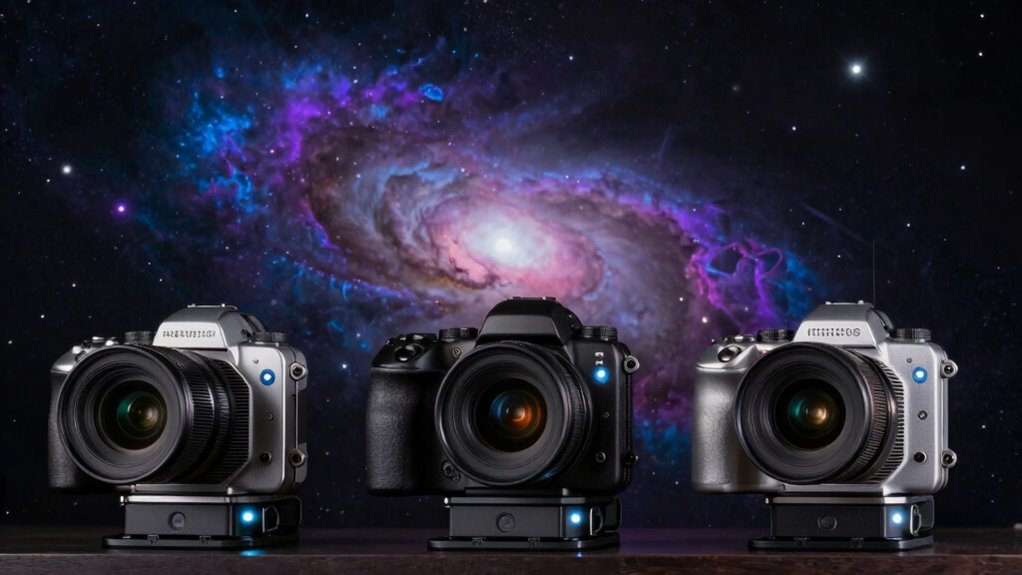

Choosing a cooled camera for nebulae imaging means balancing sensor size, noise control, field of view, and the gear you already own. I rank the SVBONY SC571CC first for its 26MP APS-C sensor and 16-bit capture, while the SV605CC Deep Sky Kit with dual-band filter is the more ready-to-use option for emission nebulae. The SV405CC takes a different route, pairing a larger-than-one-inch 4/3 sensor with a bundled UV/IR cut filter.

Prime made for students and young adults
- Fast, free delivery for dorm and study essentials
- Prime Video and Amazon Music included
- Member-only deals
The tradeoff is clear: the SC571CC offers the broadest sensor area and most resolution here, but asks you to source compatible filters and supporting equipment. The SV605CC models have smaller square sensors, yet cooling, low-glow design, and bundled accessories can suit a focused nebula setup. I also separate the SV605CC packages by what they actually add: one includes a dual-band filter and drawer, another a guide camera and scope, and the standalone camera keeps the package simpler.
Key Takeaways
For the largest image area: The SC571CC’s 23.4 × 15.7 mm APS-C sensor and 26MP resolution offer more framing flexibility than the four 9MP IMX533 options.
For emission nebula accessories: The SV605CC Deep Sky Kit bundles a dual-band filter and magnetic drawer, reducing separate filter-system purchases.
For an established guiding setup: The SV605CC Deep Space Kit adds a 60 mm guide scope and 1.23MP guide camera, unlike the imaging-only packages.
For a 4/3 sensor with a filter included: The SV405CC offers 11.7MP and a UV/IR cut filter, but its product information gives less detail about cooling performance.
For a compact square sensor: The standalone SV605CC pairs an IMX533 with cooling up to 30°C below ambient and USB 3.0, but has less resolution and sensor area than the SC571CC.
| SVBONY SC571CC Cooled Color Astronomy Camera with IMX571 APS-C Sensor |  | Best Overall for Sensor Area and Detail | Sensor: IMX571 APS-C BSI CMOS | Resolution: 26MP | Sensor area: 23.4 × 15.7 mm | VIEW ON AMAZON | See Our Full Breakdown |
| SVBONY SV605CC Cooled Astrophotography Camera Deep Sky Kit |  | Best Nebula Kit with Dual-Band Filter | Sensor: IMX533 color CMOS | Resolution: 3008 × 3008 pixels (9MP) | Pixel size: 3.76 µm | VIEW ON AMAZON | See Our Full Breakdown |
| SVBONY SV405CC TEC-Cooled 11.7 MP Color Astronomy Camera with UV/IR Cut Filter |  | Best 4/3-Sensor Alternative with Filter Included | Sensor: IMX294 color CMOS | Sensor format: 4/3 | Resolution: 11.7MP | VIEW ON AMAZON | See Our Full Breakdown |
| SVBONY SV605CC Deep Space Astrophotography Kit |  | Best Bundle for Guided Imaging | Deep-sky sensor: 1-inch IMX533 color CMOS | Deep-sky resolution: 3008 × 3008 | Guide sensor: 1/3-inch CMOS | VIEW ON AMAZON | See Our Full Breakdown |
| SVBONY SV605CC Cooled Color Astrophotography Camera, 9MP IMX533 |  | Best Standalone IMX533 Camera | Sensor: 1-inch IMX533 color CMOS | Resolution: 9MP (3008 × 3008) | Pixel size: 3.76 µm | VIEW ON AMAZON | See Our Full Breakdown |
| cooled camera for nebulae imaging | Sensor | Resolution | Pixel size | Cooling |
|---|---|---|---|---|
| SVBONY SC571CC Cooled Color As | IMX571 APS-C BSI CMOS | 26MP | 3.76 µm | Dual-stage TEC, up to 35°C below ambient |
| SVBONY SV605CC Cooled Astropho | IMX533 color CMOS | 3008 × 3008 pixels (9MP) | 3.76 µm | TEC cooling to 30°C below ambient |
| SVBONY SV405CC TEC-Cooled 11.7 | IMX294 color CMOS | 11.7MP | — | — |
| SVBONY SV605CC Deep Space Astr | — | — | — | — |
| SVBONY SV605CC Cooled Color As | 1-inch IMX533 color CMOS | 9MP (3008 × 3008) | 3.76 µm | Double-layer TEC, up to 30°C below ambient |
More Details on Our Top Picks
SVBONY SC571CC Cooled Color Astronomy Camera with IMX571 APS-C Sensor
I place the SC571CC first because it has the largest and highest-resolution sensor in this group: a 26MP, back-illuminated APS-C IMX571. Its 23.4 × 15.7 mm area can capture a wider patch of sky than the 1-inch IMX533 cameras, a meaningful difference when framing extended nebulae with a telescope of a given focal length. The 3.76 µm pixels and 16-bit ADC also give the imaging workflow substantial data to work with, though the final result still depends on optics, sky conditions, and processing.
Cooling is specified at up to 35°C below ambient, the largest stated temperature reduction here, and the front-window heater addresses dew on the camera window rather than the sensor itself. A 512 MB buffer supports USB 3.0 transfer stability, a useful practical detail during long capture sessions. Against the SV405CC, the SC571CC offers more resolution and a larger format; against the SV605CC kits, it gives up included specialty accessories in favor of a broader sensor.
My main reservation is system cost in gear and setup, not a claim about price: the listing calls for a compatible telescope and astrophotography equipment, and no bundled nebula filter or guide scope is specified. Also, “35°C below ambient” is a relative cooling figure, not a promise that the camera can reach the same absolute temperature on every night. This is my strongest pick for a buyer prioritizing framing and detail, but not for someone seeking a ready-made package.
Pros:- 26MP APS-C back-illuminated sensor provides the broadest imaging area in this selection.
- 16-bit ADC and up to 14 stops of dynamic range give substantial capture data for processing.
- Dual-stage TEC cooling is specified up to 35°C below ambient.
- Front-window heater and 512 MB buffer address dew control and USB capture stability.
Cons:- No nebula filter, filter drawer, guide camera, or guide scope is listed as included.
- Cooling is expressed relative to ambient, so actual sensor temperature depends on conditions.
- Requires a compatible telescope and supporting astrophotography equipment.
Best for: Imagers who want an APS-C field of view, 26MP detail, and have a telescope and filter setup ready.
Not ideal for: Beginners seeking an all-in-one nebula kit, or anyone whose telescope and mount cannot support the camera’s imaging train.
- Sensor:IMX571 APS-C BSI CMOS
- Resolution:26MP
- Sensor area:23.4 × 15.7 mm
- Pixel size:3.76 µm
- Cooling:Dual-stage TEC, up to 35°C below ambient
- ADC:16-bit
- Buffer and connection:512 MB DDR3; USB 3.0 Type-C
- Window heater:Software-controlled front-window heater
Our verdict“I recommend the SC571CC to buyers who value APS-C framing and resolution above bundled accessories.”
SVBONY SV605CC Cooled Astrophotography Camera Deep Sky Kit
For a buyer targeting emission nebulae, this SV605CC package is the most directly equipped option in the lineup. The 9MP, square IMX533 color sensor has 3.76 µm pixels and 80% quantum efficiency, while TEC cooling is specified to 30°C below ambient. Most importantly for the product’s role, the kit includes an SV220 dual-band filter and an SV226 magnetic filter drawer. Those additions make it a more purpose-built nebula package than the standalone SV605CC or the guide-camera bundle.
The square 3008 × 3008 frame is a different proposition from the SC571CC’s APS-C rectangle. It can suit nebulae that fit within a compact square composition, but offers fewer pixels and less sensor area for broad framing or substantial cropping. The filter drawer accepts 1.25-inch and 2-inch filters, giving the owner a stated path to different filter sizes. That flexibility is useful, although buyers still need to match the filter and drawer to their telescope’s optical path.
This package does not include a guide scope or guide camera, so it is not as complete for tracking support as the other SV605CC kit. Its specialty is the filter combination, not a broad accessory bundle. Compared with the SC571CC, I would choose it for included emission-nebula filtering and a smaller square sensor; I would choose the SC571CC for greater resolution and field area. Its focused design is a strength for the right target, but less useful if the buyer primarily wants galaxies, wide star fields, or a flexible general-purpose setup.
Pros:- Includes an SV220 dual-band filter suited to emission-nebula imaging.
- SV226 magnetic drawer supports both 1.25-inch and 2-inch filters.
- TEC cooling is specified up to 30°C below ambient, with a low-glow sensor design.
- The 3.76 µm square IMX533 sensor and stated 80% quantum efficiency suit deep-sky capture.
Cons:- 9MP square sensor has less resolution and imaging area than the SC571CC APS-C camera.
- No guide camera or guide scope is included in this kit description.
- Its bundled filter focus may be less useful for buyers prioritizing other target types.
Best for: Nebula imagers who want an IMX533 cooled camera bundled with a dual-band filter and magnetic filter drawer.
Not ideal for: Buyers who need a guide scope, want APS-C framing, or mainly image targets that do not benefit from the included dual-band filter.
- Sensor:IMX533 color CMOS
- Resolution:3008 × 3008 pixels (9MP)
- Pixel size:3.76 µm
- Quantum efficiency:80%
- Cooling:TEC cooling to 30°C below ambient
- Included filter:SV220 dual-band filter
- Filter drawer:SV226 magnetic filter drawer
- Filter compatibility:1.25-inch and 2-inch filters
Our verdict“I favor this kit when included dual-band filtering matters more than a larger sensor or guiding gear.”
SVBONY SV405CC TEC-Cooled 11.7 MP Color Astronomy Camera with UV/IR Cut Filter
The SV405CC earns a distinct place for buyers who want a 4/3-format color sensor rather than the smaller 1-inch IMX533 format, but do not need the SC571CC’s APS-C resolution. Its IMX294 sensor records 11.7MP, placing it between the 9MP SV605CC cameras and the 26MP SC571CC on pixel count. The included UV/IR cut filter is a practical addition for controlling unwanted ultraviolet and infrared wavelengths in a standard imaging setup.
USB 3.0 supports stated full-resolution capture speeds up to 19 fps in RAW8 or 16 fps in RAW16. Those rates are less decisive for long nebula exposures than sensor size, cooling, and exposure control, but the connection can help with responsive capture and file transfer. Compared with the SV605CC packages, the SV405CC offers a larger sensor format and higher pixel count; compared with the SC571CC, it gives up APS-C area and 16-bit/14-stop specifications that are stated for that model.
The product information identifies the camera as TEC-cooled but does not provide a maximum temperature drop, so I cannot compare its cooling capacity directly with the models specifying 30°C or 35°C below ambient. Its 3.7-pound listed weight also deserves a check against the camera train and focuser capacity. This is a sensible middle-ground option for a buyer interested in a 4/3 sensor and a basic filter in the package, but the incomplete cooling specification makes it harder to judge for long, warm-night sessions.
Pros:- 11.7MP IMX294 sensor uses a 4/3 format, larger than the listed 1-inch IMX533 sensors.
- Included UV/IR cut filter can help manage unwanted wavelengths in standard imaging.
- USB 3.0 supports up to 19 fps in RAW8 or 16 fps in RAW16 at full resolution.
- TEC-cooled design is intended for deep-sky astrophotography.
Cons:- No cooling temperature reduction is specified, unlike the SV571CC and SV605CC models.
- At a listed 3.7 pounds, its load should be checked against the focuser and mount.
- Requires a wired USB connection and manual focus.
Best for: Deep-sky imagers seeking a 4/3 color camera with an included UV/IR cut filter and USB 3.0 capture.
Not ideal for: Buyers who need a stated cooling-temperature limit, an APS-C sensor, or a filter drawer and guide gear in one package.
- Sensor:IMX294 color CMOS
- Sensor format:4/3
- Resolution:11.7MP
- Connection:USB 3.0
- Maximum capture speed:19 fps RAW8; 16 fps RAW16 at full resolution
- Included accessory:UV/IR cut filter
- Focus:Manual
- Weight:3.7 lbs
Our verdict“I would pick the SV405CC for its 4/3 sensor and included UV/IR filter, while checking cooling details before committing to long exposures.”
SVBONY SV605CC Deep Space Astrophotography Kit
This SV605CC package makes most sense when the buyer needs more than a cooled imaging camera. It includes a 1-inch IMX533 color camera plus an SV905C guide camera and a 60 mm guide scope with a helical focuser. For long nebula exposures, autoguiding can help the mount track the target more consistently, so the bundle addresses a practical part of the imaging system that the dual-band-filter kit does not.
The main imaging sensor records 3008 × 3008 pixels, and its peak quantum efficiency is stated as up to 80%. The guide camera is a separate 1.23MP, 1/3-inch device with USB 2.0 and ST4 connections; the listed software support includes PHD2, MDL, NINA, and SKY-X. This gives the package a clear advantage over the standalone SV605CC for someone assembling a guiding setup, but it does not include the SV220 dual-band filter and SV226 drawer supplied with the other kit.
Its limitation is that the guide sensor is modest in resolution, and the product description does not state a cooling-temperature figure for the main camera. The bundle also adds a scope and camera that a buyer with an existing guider may not need. Compared with the SC571CC, it offers less sensor area but more supporting equipment; compared with the filter kit, it favors tracking support over specialized nebula filtering. I rank it for guided-system value in components, not as the best sensor or filter package.
Pros:- Combines an IMX533 deep-sky camera with an SV905C guide camera.
- Includes a 60 mm guide scope with built-in helical focuser.
- Guide connections include USB 2.0 and ST4, with several named software options.
- Square 3008 × 3008 imaging sensor has peak quantum efficiency stated up to 80%.
Cons:- Guide camera resolution is 1.23MP, lower than the main imaging camera.
- No dual-band filter or filter drawer is listed in this package.
- The main camera’s cooling temperature reduction is not specified in the supplied details.
Best for: New or expanding deep-sky imagers who need a cooled camera, guide camera, and guide scope in one package.
Not ideal for: Imagers who already own a compatible guide system, or buyers whose main priority is an included dual-band filter.
- Deep-sky sensor:1-inch IMX533 color CMOS
- Deep-sky resolution:3008 × 3008
- Guide sensor:1/3-inch CMOS
- Guide resolution:1280 × 960 (1.23MP)
- Guide pixel size:3.75 microns
- Guide scope:60 mm aperture with helical focuser
- Guide connections:USB 2.0 and ST4
- Peak quantum efficiency:Up to 80%
Our verdict“I recommend this bundle when guiding gear is missing, but not when a filter package or larger sensor is the main goal.”
SVBONY SV605CC Cooled Color Astrophotography Camera, 9MP IMX533
This standalone SV605CC is the straightforward choice for a buyer who wants the IMX533 camera without paying in complexity for bundled filter or guiding accessories. It has a 1-inch, 9MP color sensor with 3.76 µm pixels and stated 80% quantum efficiency. Double-layer TEC cooling is specified up to 30°C below ambient, and USB 3.0 provides the wired data connection for capture. For long nebula exposures, that cooling specification is more useful for comparison than the optional Wi-Fi feature.
The square 3008 × 3008 output matches the imaging sensor in the two SV605CC kits, so the key difference is package contents rather than a stated change in core sensor resolution. The dual-band kit adds a filter and magnetic drawer; the guiding kit supplies an extra camera and scope. This standalone model is a better fit if those accessories are already in the buyer’s equipment case or if they want to select filters and guiding components independently.
There are caveats in the supplied description. Optional Wi-Fi and remote control may appeal to a remote workflow, but the camera still relies on an external device for viewing, and the listing’s video and wall-mount details do not establish an advantage for telescope imaging. Its single video channel and stated IP54 protection also make it a poor fit for buyers expecting multi-stream use or exposure to harsh outdoor conditions. Against the SC571CC, it is smaller and lower in resolution; its case is simplicity and the stated cooling figure, not maximum framing.
Pros:- IMX533 sensor records 9MP at 3008 × 3008 with 3.76 µm pixels.
- TEC cooling is specified up to 30°C below ambient for long-exposure imaging.
- USB 3.0 is provided, with optional Wi-Fi and remote-control functionality listed.
- Compact aluminum enclosure offers a more self-contained alternative to accessory-heavy kits.
Cons:- Smaller 1-inch, 9MP sensor offers less area and resolution than the SC571CC.
- No filter, filter drawer, guide camera, or guide scope is listed as included.
- IP54 protection may not suit harsh outdoor conditions, and viewing depends on an external device.
Best for: Imagers who want a cooled IMX533 camera and already own, or prefer to choose, filters and guiding equipment separately.
Not ideal for: Buyers seeking the widest sensor area, a bundled nebula filter, or a guide scope and guide camera.
- Sensor:1-inch IMX533 color CMOS
- Resolution:9MP (3008 × 3008)
- Pixel size:3.76 µm
- Quantum efficiency:80%
- Cooling:Double-layer TEC, up to 30°C below ambient
- Connectivity:USB 3.0; optional Wi-Fi
- Control:Remote; external device required for viewing
- Enclosure:Aluminum; listed IP54 rating
Our verdict“I would choose this standalone model when I want the cooled IMX533 core and do not need the kits’ added hardware.”

How We Picked
I ranked these cameras by how well their stated features serve long-exposure nebula imaging, not by a general-purpose camera checklist. Sensor size and resolution matter because they affect framing and the detail available for cropping. Cooling matters because nebula exposures are long enough for sensor heat to become a visible source of noise; I treated each temperature figure as a maximum relative to ambient, not as a guaranteed operating temperature in every setting.
I also gave weight to practical imaging needs: filter compatibility or included filters, data connection, guiding equipment, and the distinction between a bare camera and a complete kit. That is why the SC571CC leads for sensor capability, while the SV605CC dual-band kit ranks higher for a buyer focused on emission nebulae who wants filter hardware in the box. The guiding kit earns its own role rather than being treated as an interchangeable imaging camera.
Product information is not equally complete across this lineup. Where a specification such as cooling temperature, sensor format, or environmental protection is not provided, I do not fill the gap with an assumption. Buyers should verify telescope back-focus, adapters, software support, power requirements, and filter fit before ordering; a camera’s headline sensor specs alone do not make a complete imaging system.
| cooled camera for nebulae imaging | Cooling |
|---|---|
| SVBONY SC571CC Cooled Color As | Dual-stage TEC, up to 35°C below ambient |
| SVBONY SV605CC Cooled Astropho | TEC cooling to 30°C below ambient |
| SVBONY SV405CC TEC-Cooled 11.7 | — |
| SVBONY SV605CC Deep Space Astr | — |
| SVBONY SV605CC Cooled Color As | Double-layer TEC, up to 30°C below ambient |
Factors to Consider When Choosing Cooled Camera For Nebulae Imaging
I would start with the image scale and equipment already on hand, then choose a camera package. A sensor that sounds impressive on its own can be a poor match for a telescope, mount, or filter train. Nebula imaging also rewards a setup that can hold focus and track reliably during repeated long exposures.
Sensor size and framing
Sensor area changes the portion of sky captured at a given telescope focal length. The SC571CC’s APS-C sensor is the largest here, making it the clearest choice for broad nebula complexes or buyers who want room to crop. The SV405CC’s 4/3 sensor sits between APS-C and the 1-inch IMX533 models by format, while the SV605CC cameras deliver a compact square field. A square frame can make composition simple for some targets, but it will not replace the wider sensor when a large nebula needs to fit in one exposure.
Resolution is related but not identical to field of view. The 26MP SC571CC records more pixels than the 11.7MP SV405CC and 9MP SV605CC models, but a high pixel count cannot compensate for poor focus, tracking, or optics. Check a framing calculator with your telescope and target before buying, especially if you already know which nebulae you plan to image.
Cooling and long exposures
TEC cooling limits sensor heat, which can reduce thermal noise in long-exposure captures. The SC571CC is specified up to 35°C below ambient, while the two standalone or filter-kit SV605CC descriptions state up to 30°C below ambient. These are relative limits, not fixed temperatures; the camera’s achieved temperature depends on ambient conditions and operation. The SV405CC is described as TEC-cooled without a stated temperature drop, so buyers comparing it for warm nights should request more detail.
Cooling is only one part of a clean dataset. Darks, consistent exposure settings, secure power, and calibration workflow still matter. Confirm the cooling control software and power requirements for the specific camera before purchase, since those details are not fully supplied in every listing.
Filters for nebula targets
Filter choice depends on the target and sky. The SV605CC Deep Sky Kit is the only option here explicitly supplied with a dual-band filter and magnetic drawer, giving emission-nebula imagers a clear package advantage. The SV405CC includes a UV/IR cut filter, a different accessory that manages ultraviolet and infrared wavelengths; it should not be treated as equivalent to the dual-band filter. The other cameras list no included nebula filter.
Before relying on a bundled filter, check its physical size, drawer fit, telescope adapter, and compatibility with the rest of the imaging train. A filter can help isolate desired wavelengths, but it cannot correct tracking errors or make every nebula appear equally well suited to a narrowband approach.
Guiding, connections, and setup
Autoguiding is a system decision, not just a camera feature. The SV605CC Deep Space Kit is the only package that includes a guide camera and 60 mm guide scope. That is useful if you are assembling a guided setup, but unnecessary weight and cost in equipment if you already have a compatible guider. The guide sensor is 1.23MP, which is a separate role from the main imaging sensor and should not be judged by the same resolution needs.
USB 3.0 appears on the SC571CC, SV405CC, and standalone SV605CC listings, while the guide camera uses USB 2.0 and ST4 connections. Verify compatibility with your capture computer and software, and check cable routing, mount clearance, adapters, and available power. The SV405CC’s stated frame rates may be useful for capture responsiveness, but for nebula work the more consequential questions are whether the camera fits the optical train and whether the complete rig can track for the intended exposure length.
Choose the package, not just the camera
Compare what is in the box before treating the three SV605CC options as interchangeable. The dual-band kit adds a nebula filter and drawer; the deep-space kit adds a guide camera and guide scope; the standalone model gives the buyer the camera without those listed extras. They share the stated IMX533, 9MP square imaging format, but their package roles differ. The SC571CC and SV405CC bring different sensor formats, and the SV405CC includes a UV/IR cut filter.
I would make a checklist of the telescope adapter, filter holder, guide equipment, USB cable, power supply, and capture software needed for a working session. Product descriptions do not confirm every accessory or compatibility detail. Filling gaps deliberately avoids buying a bundle with duplicate equipment—or discovering that a camera still needs a key component before first light.
Frequently Asked Questions
Which camera in this lineup has the largest sensor?
The SVBONY SC571CC has the largest stated sensor area, at 23.4 × 15.7 mm in APS-C format. That gives it more framing area than the 4/3 SV405CC and the 1-inch IMX533 cameras. I would favor it for larger nebulae or a wider field at a given telescope focal length, provided the telescope and imaging train can support the format.
Which option is most ready for emission-nebula imaging?
The SV605CC Deep Sky Kit is the most directly equipped because it includes an SV220 dual-band filter and an SV226 magnetic filter drawer alongside the cooled IMX533 camera. That does not make it universally better for every target or sky condition, and buyers should confirm the filter dimensions fit their optical train. The SC571CC may suit someone who prioritizes a bigger sensor and already owns filters.
Is a higher megapixel count always better for nebulae?
No. More pixels can support detail and cropping, but field of view is strongly affected by sensor dimensions and telescope focal length, while sampling depends on pixel size and the optics. The SC571CC’s 26MP APS-C sensor gives more resolution and area than the 9MP SV605CC models, but a smaller square sensor may frame a particular target more conveniently. I would compare the camera-and-telescope field of view before using megapixels as the deciding factor.
What is the difference between the three SV605CC listings?
The core imaging format is an IMX533 color sensor with 9MP in each described SV605CC option, but the packages differ. The Deep Sky Kit includes a dual-band filter and magnetic drawer; the Deep Space Kit includes an SV905C guide camera and 60 mm guide scope; the standalone camera lists USB 3.0, optional Wi-Fi, remote control, and cooling up to 30°C below ambient. I would choose by the accessory you still need, then verify the exact included items.
What should I verify before buying a cooled astronomy camera?
Check sensor framing with your telescope, adapter and back-focus requirements, filter and drawer compatibility, focuser and mount load, power needs, and support in your capture software. Confirm how cooling is controlled and whether the listed temperature drop meets your expectations, particularly for the SV405CC, whose supplied details do not give a maximum drop. Also make sure you have the cables, guiding components, and calibration workflow required for long-exposure imaging.
Conclusion
My pick for the broadest nebula framing and most resolution is the SVBONY SC571CC, especially for buyers with a compatible telescope and filters already in place. Choose the SV605CC Deep Sky Kit if a dual-band filter and drawer are the missing pieces for an emission-nebula setup. If you are building a guided rig, the SV605CC Deep Space Kit is the bundle that adds a guide camera and scope; if you own those accessories, the standalone SV605CC avoids duplicating them. The SV405CC is the 4/3-format alternative with an included UV/IR cut filter, but I would seek clearer cooling specifications before making it my long-exposure pick. Match the camera to the telescope, target size, and equipment you already own rather than choosing by resolution alone.