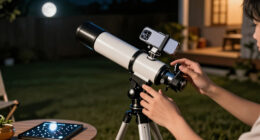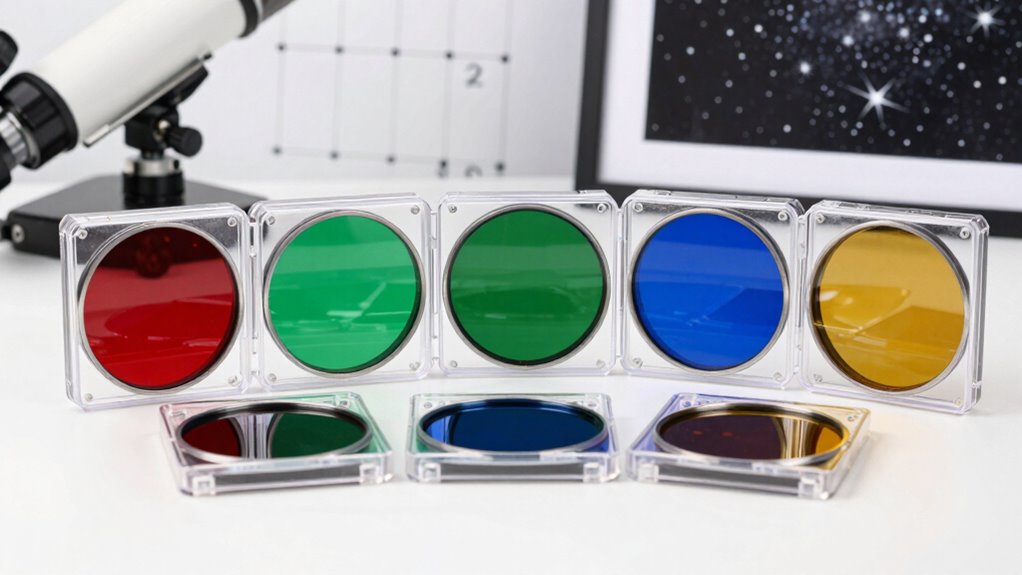
Choosing the right LRGB filter sets for monochrome cameras can significantly impact your astrophotography results. The Astromania 2-Inch LRGB Telescope Filter Set stands out as the overall best for its balance of quality and affordability, while the Optolong LRGB Filter Set (2″) offers excellent versatility for larger setups. For those just starting out, the Alstar 1.25″ Deluxe Telescope LRGB Filter Set provides a straightforward, beginner-friendly option. The main tradeoffs in this category often involve balancing image quality against cost, compatibility with your camera and telescope, and the specific wavelength precision needed. Continue reading for a detailed breakdown of each set and what makes them suitable for different users.

Prime made for students and young adults
- Fast, free delivery for dorm and study essentials
- Prime Video and Amazon Music included
- Member-only deals
Key Takeaways
- The top picks balance filter quality with affordability, making high-performance imaging accessible for various budgets.
- Compatibility with your camera size (1.25″ vs 2″) is crucial to avoid mounting issues or vignetting.
- Premium options tend to offer narrower bandwidths for sharper separation of luminance and color details, but at a higher price.
- Beginner-friendly sets often include detailed instructions or bundled accessories, easing setup for newcomers.
- Price differences reflect variations in coating quality, filter precision, and build durability, influencing long-term reliability.
| Astromania 2-Inch LRGB Telescope Filter Set |  | Best Overall for Basic Astrophotography | Filter Size: 2 inches | Includes: Luminance, Red, Green, Blue filters | Material: Dichroic glass | VIEW ON AMAZON | See Our Full Breakdown |
| Telescope Accessories LRGB V-Pro Series 2” Imaging Filter Set for Monochrome Cameras |  | Best for Versatile Telescope Compatibility | Compatibility: Monochrome CCD and CMOS cameras | Filter Size: 2 inches | Application: Supports all telescope types including reflector and refractor | VIEW ON AMAZON | See Our Full Breakdown |
| Optolong LRGB Filter Set (1.25″) |  | Best for Precision Optical Performance | Size: 1.25 inches | Wavefront: λ/4 | Parallelism: <30 seconds | VIEW ON AMAZON | See Our Full Breakdown |
| Alstar 2-Inch Deluxe Telescope LRGB Filter Set |  | Best for High-Resolution Deep Sky Imaging | Filters Included: Luminance, Red, Green, Blue | Filter Size: 2 inches | Material: Dichroic glass | VIEW ON AMAZON | See Our Full Breakdown |
| Alstar 1.25″ Deluxe Telescope LRGB Filter Set |  | Best for Compact and Budget-Conscious Setups | Filter Size: 1.25 inches | Filters Included: Luminance, Red, Green, Blue | Material: Dichroic glass with coating | VIEW ON AMAZON | See Our Full Breakdown |
| Optolong LRGB Filter Set (2″) |  | Best Overall for High-Precision Astrophotography | Size: 2 inches | Wavefront: λ/4 | Parallelism: <30 seconds | VIEW ON AMAZON | See Our Full Breakdown |
| Astromania 2-Inch LRGB Telescope Filter Set for Astrophotography |  | Best for Budget-Conscious Enthusiasts and Beginners | Set Includes: Luminance, Red, Green, Blue filters | Filter Size: 2 inches | Material: Dichroic glass with IR-blocking coating | VIEW ON AMAZON | See Our Full Breakdown |
| lrgb filter sets for monochrome camera | Filter Size | Material | Compatibility | Features |
|---|---|---|---|---|
| Astromania 2-Inch LRGB Telesco | 2 inches | Dichroic glass | — | — |
| Telescope Accessories LRGB V-P | 2 inches | — | Monochrome CCD and CMOS cameras | Spectral gap design, optical coatings |
| Optolong LRGB Filter Set | — | — | — | — |
| Alstar 2-Inch Deluxe Telescope | 2 inches | Dichroic glass | 2-inch telescope accessories | Precision CNC machining, anti-reflection coating |
| Alstar 1.25" Deluxe Telescope | 1.25 inches | Dichroic glass with coating | Standard 1.25-inch accessories | Parfocal, anti-reflection |
| Optolong LRGB Filter Set | — | — | — | — |
| Astromania 2-Inch LRGB Telesco | 2 inches | Dichroic glass with IR-blocking coating | Fits 2-inch astrophotography accessories | — |
More Details on Our Top Picks
Astromania 2-Inch LRGB Telescope Filter Set
This Astromania set stands out for offering an affordable, straightforward solution for those starting in monochrome astrophotography. Its 2-inch filters are compatible with many standard accessories and feature a parfocal design, minimizing refocusing time. Unlike the more advanced Telescope Accessories V-Pro Series, it lacks spectral gap optimization, which could slightly limit contrast in light-polluted skies. Its focus on UV/IR blocking ensures higher contrast images, but it’s restricted to monochrome CCD cameras and won’t suit users with color cameras or more specialized setups. Overall, this set provides reliable performance for beginners or hobbyists seeking an easy upgrade without complex features.
Pros:- Affordable entry point for monochrome astrophotography
- Parfocal design reduces refocusing time
- Blocks UV and IR for higher contrast images
- Easy to attach to standard accessories
Cons:- Requires compatible 2-inch astrophotography equipment
- Limited to monochrome CCD cameras, not suitable for color cameras
Best for: Beginners and hobbyists looking for an easy-to-use, affordable LRGB filter set for monochrome CCD cameras.
Not ideal for: Advanced astrophotographers requiring spectral gap tuning or multi-camera setups, as it offers limited customization.
- Filter Size:2 inches
- Includes:Luminance, Red, Green, Blue filters
- Material:Dichroic glass
- IR-Blocking Coating:Yes
- Parfocal:Yes
Our verdict“This set is ideal for newcomers seeking a reliable, straightforward LRGB solution for basic astrophotography needs.”
Telescope Accessories LRGB V-Pro Series 2” Imaging Filter Set for Monochrome Cameras
The V-Pro Series set excels in delivering high-quality optical coatings and a spectral gap design that reduces light pollution, making it a top choice for serious amateurs with various telescope types. Unlike the Astromania set, which focuses on simplicity, this set’s spectral gap helps improve contrast in urban environments, especially with reflector and refractor telescopes. Its support for both CCD and CMOS monochrome cameras broadens its appeal, but it’s more complex and potentially more expensive, which might deter casual users. This pick is best suited for those who want improved image clarity and reduced light pollution effects across multiple setups.
Pros:- Reduces light pollution effectively
- Supports a variety of telescope types
- Spectral gap design enhances contrast
- Compatible with CCD and CMOS monochrome cameras
Cons:- Requires compatible telescope and camera setup
- More expensive and complex than entry-level options
- No price information available
Best for: Mid-level astronomers seeking versatile, high-performance filters compatible with multiple telescope types and camera sensors.
Not ideal for: Beginners or users with a tight budget, as it involves a more complex setup and lacks detailed price transparency.
- Compatibility:Monochrome CCD and CMOS cameras
- Filter Size:2 inches
- Application:Supports all telescope types including reflector and refractor
- Features:Spectral gap design, optical coatings
- Adjustable:Eyepiece position
Our verdict“This filter set is suited for astrophotographers aiming for sharper, clearer images in light-polluted areas with flexible equipment compatibility.”
Optolong LRGB Filter Set (1.25″)
The Optolong set stands out for its meticulous optical polishing and high wavefront accuracy, ensuring precise spectral performance. Its λ/4 wavefront specification and rigorous testing make it ideal for astrophotographers prioritizing image fidelity. Compared with the larger Astromania 2-inch set, this 1.25-inch set offers a more compact form factor, suitable for smaller telescopes or portable setups, but it’s limited in size. The absence of included filter holders or mounts means additional accessories are necessary, which could increase overall costs. This set appeals most to those demanding top optical quality in a space-saving package, but it’s less flexible for larger or more complex systems.
Pros:- High-quality optical polishing for accurate imaging
- Durable, scratch-resistant coatings
- Rigorous testing ensures spectral and wavefront precision
- Compact size ideal for portable systems
Cons:- Limited to 1.25-inch size, less versatile for larger telescopes
- No included filter holder or mounting hardware
- Higher cost for premium quality in small size
Best for: Astrophotographers who prioritize spectral accuracy and optical quality in small or portable setups.
Not ideal for: Users needing larger filters for bigger telescopes or those who want a complete, ready-to-use kit without additional accessories.
- Size:1.25 inches
- Wavefront:λ/4
- Parallelism:<30 seconds
- Coating:IRO source assisted coating
- Durability:Scratch resistant
- Testing:Spectrophotometer and laser interferometer
Our verdict“This set is perfect for demanding astrophotographers seeking maximum optical performance in a compact, portable format.”
Alstar 2-Inch Deluxe Telescope LRGB Filter Set
The Alstar 2-inch set is distinguished by its precision CNC machining and anti-reflection coatings, making it ideal for deep sky imaging with monochrome CCD cameras. It supports high-resolution color imaging by combining multiple filtered exposures. Compared to the Astromania set, it offers more durable construction and better anti-reflection performance, but it necessitates a filter wheel for efficient switching, adding to the overall complexity and cost. Its robust build quality makes it suitable for dedicated astrophotographers who want consistent, high-quality results, but casual users or those on a tight budget might find it less appealing.
Pros:- High-precision CNC machining for accurate imaging
- Anti-reflection coatings reduce glare
- Supports high-resolution deep sky imaging
- Includes all primary color filters
Cons:- Requires a filter wheel for switching filters
- More expensive, especially for casual users
- Designed specifically for 2-inch telescope accessories
Best for: Experienced astrophotographers who need durable, high-precision filters for demanding deep sky imaging projects.
Not ideal for: Casual hobbyists or those seeking an affordable, simple setup without filter wheels or additional accessories.
- Filters Included:Luminance, Red, Green, Blue
- Filter Size:2 inches
- Material:Dichroic glass
- Finish:Black anodized
- Compatibility:2-inch telescope accessories
- Features:Precision CNC machining, anti-reflection coating
Our verdict“This filter set is ideal for serious astrophotographers committed to high-resolution deep sky imaging with monochrome cameras.”
Alstar 1.25″ Deluxe Telescope LRGB Filter Set
The Alstar 1.25-inch set provides a compact, high-quality solution for astrophotographers with smaller telescopes or those seeking affordability. Its precision machining and anti-reflection coatings mirror the larger 2-inch version, offering sharp, colorful images with monochrome CCD cameras. The parfocal design reduces refocusing, saving time during sessions. Compared with the Optolong 1.25″ set, it emphasizes build quality, but like other premium sets, it requires a filter wheel for efficient operation, which can increase overall costs. This set is well-suited for dedicated amateurs with limited space or budget constraints.
Pros:- High-quality manufacturing and coatings
- Parfocal design reduces refocusing
- Suitable for standard 1.25-inch accessories
- Enables detailed color astrophotography
Cons:- Requires a filter wheel for easy switching
- More expensive than basic filters
- Limited size for larger telescopes
Best for: Astrophotographers with small telescopes or tight budgets who want high-quality, compact filters for detailed color imaging.
Not ideal for: Users with larger telescopes or those requiring a fully integrated, ready-to-use package without additional accessories.
- Filter Size:1.25 inches
- Filters Included:Luminance, Red, Green, Blue
- Material:Dichroic glass with coating
- Features:Parfocal, anti-reflection
- Compatibility:Standard 1.25-inch accessories
- Features:Laser engraved
Our verdict“This filter set provides a compact, high-quality option for dedicated astrophotographers working with smaller systems.”
Optolong LRGB Filter Set (2″)
This Optolong set stands out for its high optical quality, with precise wavefront correction and rigorous testing, making it ideal for astrophotographers demanding consistent, sharp images. Compared with the Astromania 2-Inch LRGB set, it offers superior durability due to its scratch-resistant coating and more precise spectral performance thanks to spectrophotometer and laser interferometer testing. However, its higher cost and requirement for compatible 2-inch filter slots may be limiting for some users. The premium build quality and strict testing protocols ensure reliable long-term performance, though the price might deter casual amateurs. If you prioritize image clarity and durability in a professional or serious amateur setup, this set delivers excellent results with less compromise.
Pros:- Exceptional optical quality with precise wavefront correction
- Durable, scratch-resistant coating withstands environmental stress
- Rigorous testing ensures consistent high performance
Cons:- Higher price point compared to more basic sets
- Requires specific 2-inch filter slots, limiting compatibility
Best for: Professional astrophotographers or advanced amateurs seeking high accuracy and durability in their filter set
Not ideal for: Beginners or casual users who prefer budget-friendly options or have incompatible filter setups
- Size:2 inches
- Wavefront:λ/4
- Parallelism:<30 seconds
- Coating:IRO source assisted
- Durability:Scratch resistant
- Testing:Spectrophotometer and laser interferometer
Our verdict“This set is best suited for dedicated astrophotographers who need reliable, high-precision filters and are willing to invest in durability and quality.”
Astromania 2-Inch LRGB Telescope Filter Set for Astrophotography
This Astromania set offers a practical choice for those starting in astrophotography, with all essential color filters—luminance, red, green, and blue—designed for straightforward integration with 2-inch accessories. Compared to the Optolong set, it provides a more affordable route into multispectral imaging but may lack the same level of optical polish and durability. Its dichroic glass and IR-blocking coating improve image contrast by reducing UV and IR interference, making it well-suited for high-contrast, detailed captures. The parfocal design minimizes refocusing time, which is a plus for beginners. However, it requires compatible 2-inch equipment and may not meet the durability standards of premium options, making it less ideal for long-term or professional use. This set is perfect for hobbyists who want decent quality without a steep price tag.
Pros:- Blocks UV and IR wavelengths for clearer images
- Includes all essential color filters for versatile astrophotography
- Parfocal design reduces refocusing time
Cons:- Requires compatible 2-inch astrophotography equipment
- May be more expensive than single filters for casual users
Best for: Beginner or casual astrophotographers on a budget seeking reliable, easy-to-use filters
Not ideal for: Advanced users or professionals needing maximum optical precision and durability
- Set Includes:Luminance, Red, Green, Blue filters
- Filter Size:2 inches
- Material:Dichroic glass with IR-blocking coating
- Compatibility:Fits 2-inch astrophotography accessories
Our verdict“This set offers a cost-effective way for beginners to explore multispectral imaging with decent quality, provided they have compatible gear.”

How We Picked
The filters included in this roundup were selected based on their optical quality, compatibility with monochrome cameras, and overall value for astrophotography. We prioritized products with well-coated glass to minimize light bleed and maximize contrast. Ease of installation and durability also played a role, especially for filters intended for frequent use. Price-to-performance ratio was a key factor, ensuring each set offers a meaningful upgrade over basic options without unnecessary premium costs. Filter size compatibility—whether 1.25″ or 2″—was also considered, tailoring recommendations to different telescope types and user needs. The ranking reflects a combination of optical quality, user reviews, and versatility across various astrophotography scenarios.| lrgb filter sets for monochrome camera | Material | Features |
|---|---|---|
| Astromania 2-Inch LRGB Telesco | Dichroic glass | — |
| Telescope Accessories LRGB V-P | — | Spectral gap design, optical coatings |
| Optolong LRGB Filter Set | — | — |
| Alstar 2-Inch Deluxe Telescope | Dichroic glass | Precision CNC machining, anti-reflection coating |
| Alstar 1.25" Deluxe Telescope | Dichroic glass with coating | Parfocal, anti-reflection |
| Optolong LRGB Filter Set | — | — |
| Astromania 2-Inch LRGB Telesco | Dichroic glass with IR-blocking coating | — |
Factors to Consider When Choosing Lrgb Filter Sets For Monochrome Cameras
Selecting the right LRGB filter set involves more than just optical quality. You need to consider how the filter size matches your camera and telescope, the bandwidth and coating quality, as well as your budget. Additional factors include the ease of installation, durability, and whether the filters are suitable for your specific imaging goals. Understanding these aspects helps prevent common pitfalls, such as mismatched sizes or filters that don’t provide sufficient contrast enhancement. A thoughtful approach ensures you get a setup that delivers consistent, high-quality images over time.Filter Size and Compatibility
Ensuring the filter size matches your monochrome camera’s mount—either 1.25″ or 2″—is essential. Mismatched sizes can cause vignetting or require adapters that introduce light leaks. Larger filters often provide better light collection and are compatible with bigger telescopes, but they tend to be more expensive. Confirm your camera and telescope specifications before purchasing to avoid compatibility issues that could hinder your imaging quality.Bandwidth and Coating Quality
The primary function of LRGB filters is to isolate specific light wavelengths. Narrower bandwidths can improve contrast and detail but may require longer exposure times. High-quality coatings reduce internal reflections and light leaks, enhancing image sharpness. Cheaper filters often have inferior coatings, which can lead to light contamination or inconsistent performance over time. Investing in well-coated filters ensures longevity and consistent results, especially for demanding astrophotography sessions.Price and Long-Term Value
While budget filters may seem attractive initially, they often lack durability or optical precision, potentially leading to repeated replacements. Premium filters typically feature multilayer coatings and tighter manufacturing tolerances, offering better contrast and longer lifespan. Consider your long-term goals—if you’re committed to high-quality imaging, investing in a slightly more expensive set can save money and frustration over time. Balance your budget with the performance you need for the type of astrophotography you pursue.Ease of Use and Maintenance
Filters that are easy to install and clean tend to produce more consistent results, especially for those who frequently switch between filters. Look for sets with smooth threads and durable coatings that resist fingerprints and scratches. Proper maintenance, including regular cleaning with appropriate tools, extends the lifespan of your filters. User-friendly designs and clear instructions can make a significant difference, particularly for beginners or those upgrading from basic setups.Specialized Needs and Future Expansion
Consider whether you want filters tailored for specific targets, such as nebulae or galaxies, or a versatile set for multiple projects. Some filters offer narrower bandwidths suitable for detailed emission line imaging, while broader filters may be better for general luminance enhancement. Think about your future plans—if you plan to upgrade your camera or telescope, choose filters that can scale with your equipment. This foresight can prevent costly replacements later.Frequently Asked Questions
Can I use these filters with a color camera instead of monochrome?
LRGB filters are specifically designed for monochrome cameras, which require separate color channels to produce images. Using them with a color camera can lead to color inaccuracies since the filters are meant to isolate specific wavelengths for monochrome sensors. For color cameras, built-in Bayer filters or dedicated color filters are more appropriate. If you’re interested in multispectral imaging, ensure your camera and filters are compatible with that approach, but generally, these LRGB sets are optimized for monochrome setups.How do I know if a filter set is compatible with my telescope or mount?
Compatibility depends largely on the filter size and your camera’s mount type. Most astrophotography filters come in 1.25″ or 2″ sizes, so verifying your equipment’s specifications is essential. Additionally, consider the thread standard used by your camera or filter wheel to ensure a proper fit. Some filters include adapters or are designed for specific filter wheels, which can simplify installation. Checking manufacturer specifications and consulting your equipment manual will help prevent mismatches that could compromise image quality.Are narrower bandwidth filters always better for astrophotography?
Narrower bandwidth filters can deliver higher contrast by isolating specific emission lines, which is advantageous for capturing fine details in nebulae and emission regions. However, they also tend to require longer exposure times because they let through less light. Conversely, broader filters allow more light, reducing exposure duration but potentially sacrificing some contrast. The optimal choice depends on your target objects, your camera’s sensitivity, and your available imaging time. Balancing bandwidth with exposure needs is key to achieving clear, detailed images.What should I consider if I want to upgrade my existing filter set?
When upgrading, focus on the optical quality and coating durability of new filters to ensure consistent results. Compatibility with your current camera and filter wheel is also critical—check size and threading. Think about your imaging goals—if you’re transitioning to more detailed narrowband imaging, higher-quality, narrower filters may be worth the investment. Additionally, consider the longevity of the filters; investing in well-coated, durable options can save money and effort over time, especially if you plan ongoing or advanced astrophotography projects.Is it worth paying more for premium filters?
Investing in premium filters often results in sharper, higher-contrast images due to better coatings, tighter manufacturing tolerances, and narrower bandwidths. These qualities are especially beneficial when imaging faint objects or fine details. However, if you are a beginner or primarily interested in casual astrophotography, mid-range filters may suffice. The decision ultimately hinges on your goals—if you seek professional-grade results and plan extensive imaging, paying more can provide noticeable improvements and greater long-term reliability.Conclusion
For those starting out or on a budget, the Alstar 1.25″ Deluxe Telescope LRGB Filter Set offers a user-friendly and affordable entry point. Serious amateurs seeking a balance of quality and value will find the Astromania 2-Inch LRGB Telescope Filter Set to be a reliable all-around choice. For dedicated astrophotographers aiming for the highest contrast and detail, the Optolong LRGB Filter Set (2″) provides premium performance. Professionals or those with larger telescopes should consider premium, narrowband options for maximum clarity. Ultimately, your choice depends on your equipment, experience level, and imaging ambitions—each set here is designed to meet different needs effectively.Columbus Day / Indigenous Peoples' Day Picks
long weekend sales
As an affiliate, we earn on qualifying purchases.