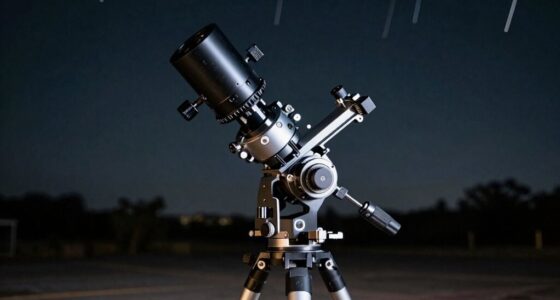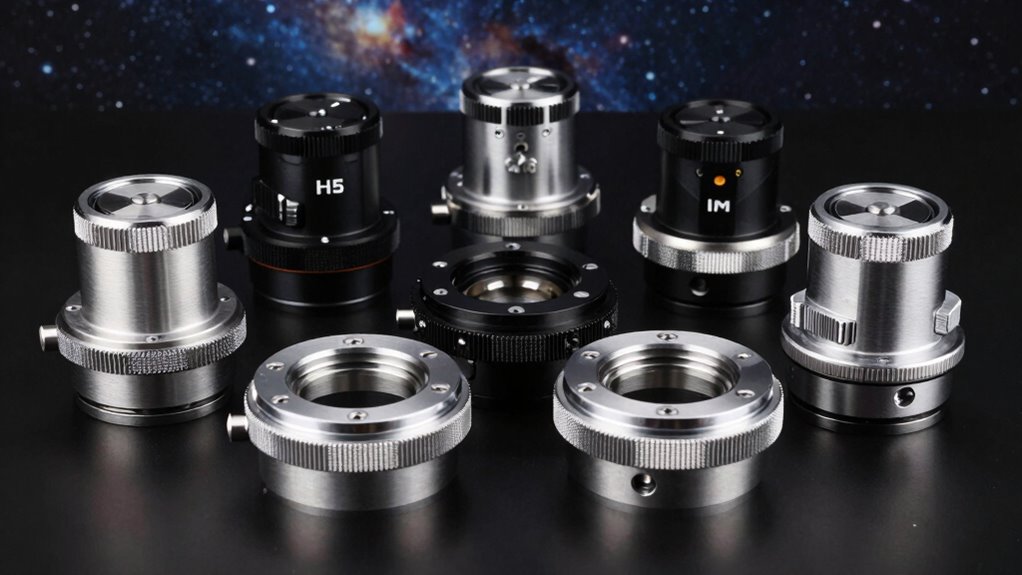

When selecting tilt adapters for astrophotography cameras, precision and flexibility are key. The OGMA Z’Tilter Back Focus and Tilt Adjuster stands out as the best overall for its robust build and precise control. The Alstar Extendable Photo Adapter offers excellent value for those on a budget, while the M54 Tilter excels for high-end setups requiring advanced features. Readers face a tradeoff between affordability and fine-tuning capability, along with considerations for compatibility and ease of use. Keep reading for a detailed comparison to help you find the ideal tilt adapter for your astrophotography setup.

Prime made for students and young adults
- Fast, free delivery for dorm and study essentials
- Prime Video and Amazon Music included
- Member-only deals
Key Takeaways
- The OGMA Z’Tilter provides precise control but at a higher price point, making it ideal for serious astrophotographers.
- Most tilt adapters share extendable features, which help adapt to different camera and telescope configurations, but this can sometimes introduce stability issues.
- Compatibility varies significantly; adapters designed for specific camera systems or threads tend to perform better in terms of alignment and ease of use.
- Budget options like the Alstar Extendable Adapter offer decent performance but may lack fine adjustment features found in premium models.
- Ease of installation and adjustment is a common deciding factor, especially for those frequently changing setups or experimenting with different configurations.
| OGMA Z’Tilter Back Focus and Tilt Adjuster for ZWO ASI2600 and ASI6200 (Black Edition) |  | Best Overall for Precision Camera Adjustment | Compatibility: ASI2600, ASI6200 (monochrome and color), ASI2600 Duo | Function: Back focus adjustment, tilt removal | Adjuster Type: 4-point or 3-point | VIEW ON AMAZON | See Our Full Breakdown |
| Alstar Telescope Camera Adapter Extendable Photo Adapter for DSLR Cameras |  | Best for Beginners in Astrophotography | Material: Aluminum alloy | Maximum length: 34mm / 1.34 inches | Eyepiece size compatibility: Up to 38mm | VIEW ON AMAZON | See Our Full Breakdown |
| Astromania M42 T2 T Ring Telescope Photo Adapter for 42mm Pentax-K SLR/DSLR |  | Best for Manual Focus and Lightweight Imaging | Mount: Equatorial Mount | Focus Type: Manual Focus | Objective Lens Diameter: 42 mm | VIEW ON AMAZON | See Our Full Breakdown |
| Alstar Telescope Photo Adapter Extendable Camera Adapter for DSLR Cameras |  | Best for Precise Focus and Flexibility | Mount: Equatorial Mount | Focus Type: Manual Focus | Optical-Tube Length: 11.2 cm | VIEW ON AMAZON | See Our Full Breakdown |
| Astromania Camera Adapter, Variable Extension Projection Adapter 1.25″ |  | Best for High-Magnification Planetary Imaging | Inner Diameter: 1.25 inches | Objective Lens Diameter: 38 mm | Optical Tube Length: 1.25 inches | VIEW ON AMAZON | See Our Full Breakdown |
| Astromania Telescope Photo Adapter Extendable Camera Adapter with T Adapter |  | Best Versatile Extendable Adapter for Astrophotography | Mount: Altazimuth | Focus Type: Manual | Objective Lens Diameter: 38 mm | VIEW ON AMAZON | See Our Full Breakdown |
| M54 Tilter for ASI2600 Series / ASI6200 Pro Series / ASI2400MC |  | Best High-Precision Tilt Adjustment for Professional-Grade Cameras | Camera Compatibility: ASI2600 Pro, ASI6200 Pro, ASI2400MC Pro | Adjustment Mechanism: 3-point tilt from the rear | VIEW ON AMAZON | See Our Full Breakdown |
| tilt adapters for astrophotography camera | Material |
|---|---|
| OGMA Z’Tilter Back Focus and T | Specially modeled front flange and load-spreading geometry |
| Alstar Telescope Camera Adapte | Aluminum alloy |
| Astromania M42 T2 T Ring Teles | Anodized Aluminum |
| Alstar Telescope Photo Adapter | Anodized Aluminum |
| Astromania Camera Adapter | Anodized aluminum |
| Astromania Telescope Photo Ada | — |
| M54 Tilter for ASI2600 Series | — |
More Details on Our Top Picks
OGMA Z’Tilter Back Focus and Tilt Adjuster for ZWO ASI2600 and ASI6200 (Black Edition)
The OGMA Z’Tilter stands out for its exceptional ability to provide fine-tuned back focus and tilt correction, which is vital for high-quality astrophotography. Compared to the Alstar Extendable Photo Adapter, it offers superior stability and tilt removal, crucial for capturing sharp images at high magnifications. While installation may demand technical skill, the precision it offers minimizes image distortions caused by tilt or focus shifts. Its compatibility with multiple ZWO models makes it versatile for dedicated astrophotographers seeking reliable, stable adjustments. However, it’s limited to specific camera models and lacks bundled accessories, which could increase setup complexity. Ideal for advanced users who need precise control over tilt and focus stability in their imaging setups.
Pros:- Provides highly precise back focus and tilt correction
- Compatible with multiple ZWO camera models for versatility
- Design minimizes deformation and maintains stability during imaging
Cons:- Requires technical knowledge for installation
- Limited to specific camera models
- No included accessories for setup or calibration
Best for: Astrophotographers using ZWO ASI2600 or ASI6200 cameras who require precise tilt and focus adjustments.
Not ideal for: Beginners who prefer plug-and-play solutions or use different camera brands, as installation may be complex.
- Compatibility:ASI2600, ASI6200 (monochrome and color), ASI2600 Duo
- Function:Back focus adjustment, tilt removal
- Adjuster Type:4-point or 3-point
- Material:Specially modeled front flange and load-spreading geometry
Our verdict“This pick makes the most sense for advanced users demanding precise tilt and focus stability with their ZWO cameras.”
Alstar Telescope Camera Adapter Extendable Photo Adapter for DSLR Cameras
This extendable DSLR adapter offers a straightforward solution for newcomers wanting to connect their cameras to telescopes. Its retractable design allows flexible focus adjustment, making it easier for beginners to achieve clear images without complicated setups. Compared to the Astromania Variable Extension Projection Adapter, this model provides a longer extension range up to 34mm, which can help in fine-tuning focus for different telescopes. Still, proper securing of eyepieces is essential to avoid image quality issues, and manual focusing can be challenging for those new to astrophotography. Its simple, durable aluminum build makes it a reliable starter accessory. Ideal for beginners who want an easy-to-use, extendable connection for basic astrophotography tasks.
Pros:- Extensible design for flexible focus adjustment
- Sturdy aluminum construction resists corrosion
- Simple to attach and suitable for entry-level users
Cons:- Focus fine-tuning may be manual and tricky for beginners
- Limited to eyepieces up to 38mm in size
- No electronic or additional focus aids included
Best for: Amateur astrophotographers starting out with DSLR cameras and seeking an adjustable, user-friendly adapter.
Not ideal for: Experienced astrophotographers requiring high-precision tilt control or electronic autofocus features, as this adapter lacks advanced controls.
- Material:Aluminum alloy
- Maximum length:34mm / 1.34 inches
- Eyepiece size compatibility:Up to 38mm
- Compatibility:DSLR cameras, standard eyepieces
Our verdict“This adapter is perfect for beginners seeking a straightforward, extendable connection for basic astrophotography setups.”
Astromania M42 T2 T Ring Telescope Photo Adapter for 42mm Pentax-K SLR/DSLR
The Astromania T Ring Adapter excels for users who prefer manual focus control and lightweight setups. Its anodized aluminum construction keeps the weight minimal while offering durability. Compared to the Alstar Extendable Photo Adapter, it is more straightforward, with a fixed 42mm mount, making it ideal for dedicated Pentax-K DSLR users. However, its lack of electronic autofocus or aperture control means it’s best suited for those comfortable with manual adjustments. The focus accuracy depends heavily on user skill, and it’s limited to cameras with a 42mm bayonet mount. This adapter is ideal for straightforward astrophotography of the moon, planets, or nebulae with manual focus precision.
Pros:- Lightweight and durable aluminum construction
- Easy to install with machined knurling for grip
- Compatible with a range of Pentax-K DSLR cameras
Cons:- No electronic autofocus or aperture control
- Requires manual focus, which may challenge beginners
- Limited to cameras with 42mm Pentax-K bayonet
Best for: Pentax-K DSLR users who prefer lightweight, manual-focus adapters for astrophotography.
Not ideal for: Photographers wanting electronic autofocus or advanced focus aids, as this adapter requires manual focusing only.
- Mount:Equatorial Mount
- Focus Type:Manual Focus
- Objective Lens Diameter:42 mm
- Weight:22.68 g
- Material:Anodized Aluminum
- Additional Features:Astrophotography Adapter for Pentax-K Cameras
Our verdict“This adapter makes sense for Pentax-K DSLR owners who prefer manual focus and lightweight design for their astrophotos.”
Alstar Telescope Photo Adapter Extendable Camera Adapter for DSLR Cameras
The Alstar Extendable Camera Adapter offers a versatile solution for astrophotographers seeking precise focus control through its adjustable 2-inch extension tube. It provides a stable, wobble-free connection, making it suitable for planetary and deep-sky imaging. Compared with the simpler Astromania Variable Extension Projection Adapter, its longer extension (up to 11.2cm) allows finer focus adjustments and magnification control. While manual focus can be challenging for beginners, its durable anodized aluminum ensures long-term stability. Its compatibility with standard 2-inch eyepiece holders makes it adaptable across various telescopes. However, it requires manual focus adjustments, which might be tricky for newcomers unfamiliar with focusing procedures. Perfect for intermediate users needing adjustable focus and stable connection for detailed astrophotography.
Pros:- Allows fine-tuning focus and magnification via extension
- Universal compatibility with 2-inch eyepiece holders
- Durable anodized aluminum construction ensures longevity
Cons:- Manual focus adjustment may pose a learning curve
- Limited to telescopes with 2-inch eyepiece holders
- No electronic controls or autofocus features
Best for: Amateur to intermediate astrophotographers who need precise focus control and stability with DSLR setups.
Not ideal for: Beginners who lack experience with manual focus adjustments or do not require adjustable extension features.
- Mount:Equatorial Mount
- Focus Type:Manual Focus
- Optical-Tube Length:11.2 cm
- Item Weight:5.6 ounces
- Material:Anodized Aluminum
- Compatible Devices:Cameras with 2-inch eyepiece holders
Our verdict“This adapter suits those who need precise focus control and a stable connection for advanced DSLR astrophotography.”
Astromania Camera Adapter, Variable Extension Projection Adapter 1.25″
The Astromania Variable Extension Projection Adapter is designed for high-magnification imaging of the Moon and planets, offering a precise focal length adjustment via its 34mm scale. Its durable anodized aluminum body ensures stability, while the 1.25-inch inner diameter suits common planetary eyepieces and cameras. Compared to fixed-length adapters, this model provides greater flexibility in focal length, which is essential for planetary detail. However, it lacks electronic features such as autofocus or exposure control, relying entirely on manual focusing. Its compatibility is limited to 1.25-inch telescope connections, making it less versatile for wide-field deep-sky work. Ideal for enthusiasts aiming for detailed planetary images using manual focus adjustments.
Pros:- Provides precise focal length adjustment with scale
- Sturdy anodized aluminum construction
- Compatible with a wide range of 1.25-inch eyepieces and cameras
Cons:- No electronic autofocus or automated features
- Limited to 1.25-inch telescope connections
- Requires manual focus, which can be challenging for some users
Best for: Planetary astrophotographers seeking adjustable focal length with manual focus control over high-magnification targets.
Not ideal for: Deep-sky photographers or those needing electronic autofocus, as this adapter is limited to manual adjustments and 1.25-inch connections.
- Inner Diameter:1.25 inches
- Objective Lens Diameter:38 mm
- Optical Tube Length:1.25 inches
- Dimensions:5.1″D x 2.4″W x 2.4″H
- Material:Anodized aluminum
- Scales:34mm variable extension
Our verdict“This adapter is well-suited for planetary imagers who prioritize focal length flexibility and manual control over electronic features.”
Astromania Telescope Photo Adapter Extendable Camera Adapter with T Adapter
This extendable camera adapter stands out for its adjustable magnification, making it well-suited for capturing detailed images of the Moon, planets, and galaxies. Compared with the OGMA Z’Tilter, which offers precise tilt adjustments for high-end cameras, this model focuses more on flexible magnification rather than fine tilt control. Its build of durable black anodized aluminum ensures longevity during frequent use, but its manual focus and need for additional T2 rings can pose challenges for beginners or those seeking an all-in-one solution. The compatibility with 1.25-inch eyepiece holders limits its use to specific telescopes, but for those equipped, it offers significant imaging versatility. This pick makes sense for amateur astronomers who want a reliable, adjustable adapter without the premium price tag of specialized tilt adapters, provided they are comfortable with manual focus adjustments and adding accessories.
Pros:- Allows high-magnification imaging with telescopes and cameras
- Adjustable magnification offers versatile imaging options
- Durable black anodized aluminum construction
Cons:- Requires additional T2 ring and compatible camera bayonet
- Limited to telescopes with 1.25-inch eyepiece holders
- Manual focus can be challenging for newcomers
Best for: Amateur astrophotographers seeking adjustable magnification for versatile planetary and lunar imaging
Not ideal for: Beginners or users looking for integrated tilt control without additional accessories or manual focus adjustments
- Mount:Altazimuth
- Focus Type:Manual
- Objective Lens Diameter:38 mm
- Focal Length:285 mm
- Field Of View:0.14 degrees
- Weight:7.23 ounces
Our verdict“This adapter is best for those who prioritize adjustable magnification over integrated tilt control and are comfortable with manual focus setup.”
M54 Tilter for ASI2600 Series / ASI6200 Pro Series / ASI2400MC
The M54 Tilter excels in providing precise, easy tilt adjustments specifically for high-end ASI cameras, making it ideal for fine focusing and framing in astrophotography. Unlike the Astromania Adapter, which offers adjustable magnification but limited tilt control, this tilt adapter focuses solely on improving camera positioning through its 3-point rear adjustment mechanism—minimizing setup time and maximizing accuracy. Its compatibility with flagship models like the ASI2600 Pro and ASI6200 Pro makes it a perfect choice for serious astrophotographers who need precise control. However, its limited compatibility means it’s not suitable for other camera brands or models, and it lacks additional features like integrated focus or zoom. This tilt adapter is perfect for users with high-end ASI cameras who want to optimize camera angles without removing the entire setup.
Pros:- Allows easy tilt adjustment without removing the tilt plate
- Compatible with multiple high-end ASI camera models
- Enhances camera positioning flexibility during imaging
Cons:- Limited to specific ASI camera models
- No additional features or accessories included
- Requires manual setup for each adjustment
Best for: Advanced astrophotographers using ASI2600 Pro, ASI6200 Pro, or ASI2400MC Pro cameras needing precise tilt control
Not ideal for: Photographers with non-ASI cameras or those seeking multi-functional adapters with zoom or focus features
- Camera Compatibility:ASI2600 Pro, ASI6200 Pro, ASI2400MC Pro
- Adjustment Mechanism:3-point tilt from the rear
Our verdict“This tilt adapter is ideal for dedicated ASI camera users seeking precise, hassle-free tilt adjustments during imaging sessions.”

How We Picked
To evaluate these tilt adapters, I focused on key factors that impact astrophotography performance: precision of tilt adjustment, build quality, compatibility, ease of use, and value for money. I compared how smoothly each adapter allowed for fine-tuning, along with their stability once set. Durability and material quality were also critical, as astrophotography often involves long sessions and delicate equipment. The ranking reflects a balance between high-end features and accessibility, aiming to recommend options suitable for both enthusiasts and advanced users who demand reliability.| tilt adapters for astrophotography camera | Material |
|---|---|
| OGMA Z’Tilter Back Focus and T | Specially modeled front flange and load-spreading geometry |
| Alstar Telescope Camera Adapte | Aluminum alloy |
| Astromania M42 T2 T Ring Teles | Anodized Aluminum |
| Alstar Telescope Photo Adapter | Anodized Aluminum |
| Astromania Camera Adapter | Anodized aluminum |
| Astromania Telescope Photo Ada | — |
| M54 Tilter for ASI2600 Series | — |
Factors to Consider When Choosing Tilt Adapters For Astrophotography Cameras
Choosing the right tilt adapter involves understanding several important factors. Compatibility is paramount; ensure the adapter matches your camera and telescope threads. Precision in tilt adjustment affects image quality, especially for astrophotography where small misalignments can cause significant issues. Consider the build quality and materials—sturdy construction reduces vibration and maintains alignment over long sessions. Extendable features add versatility but can compromise stability if not well-designed. Lastly, evaluate your budget and decide whether advanced fine-tuning capabilities justify a higher price or if a simpler, budget-friendly option meets your needs.Compatibility and Thread Size
Matching the tilt adapter to your camera and telescope threads is essential. Many adapters are designed for specific mounts like M42, M54, or Canon T-ring sizes. Using an incompatible adapter can lead to poor alignment, stability issues, or even damage. Always verify thread specifications before purchase, especially if you plan to switch between different imaging setups or upgrade equipment later.Precision and Adjustment Mechanics
The core function of a tilt adapter is its ability to fine-tune the angle of your camera relative to the optical axis. Look for adapters that offer smooth, micro-adjustable tilts, preferably with locking mechanisms that hold the position firmly. Cheaper models may lack the finesse needed for precise astrophotography, resulting in compromised image quality or frustration during setup.Build Quality and Materials
Durability is important because astrophotography sessions often involve extended exposure times and transport. Aluminum or high-quality metal alloys tend to be more stable and resistant to wear than plastic alternatives. A well-constructed adapter minimizes vibrations and maintains alignment, making it worth investing in a sturdy, well-machined product if you plan frequent use.Ease of Use and Adjustability
Adapters that are easy to install and adjust save time during setup and allow for quick tweaks when needed. Features like thumb screws, knobs, or calibrated scales help in making precise adjustments without tools. Keep in mind that overly complex mechanisms may be tempting to avoid if you prefer quick, straightforward setup routines.Value and Budget Considerations
While high-end tilt adapters excel in precision and durability, they often come at a premium. Budget options may lack some adjustment fine-tuning but can suffice for beginners or casual users. Consider your level of expertise, frequency of use, and the importance of fine control versus basic alignment, balancing these factors against your budget.Frequently Asked Questions
Can I use a tilt adapter with any camera or telescope?
Most tilt adapters are designed for specific thread sizes and mounting standards. Compatibility depends on matching these thread sizes and ensuring the adapter fits your camera and telescope. Many adapters are modular or offer multiple thread options, making them versatile, but always double-check specifications before purchasing to avoid mismatches that could compromise stability or ease of use.
How important is fine adjustment control in a tilt adapter?
Fine adjustment control is critical in astrophotography because even small misalignments can cause star trails or blurry images during long exposures. An adapter with smooth, micro-adjustable tilts helps you precisely align your camera’s sensor with the optical axis. This accuracy directly influences the sharpness and clarity of your images, especially at high magnifications or with wide-field setups.
Are extendable tilt adapters more prone to stability issues?
Extendable adapters offer greater versatility in fitting different setups, but their mechanical complexity can sometimes introduce stability concerns. If the extension mechanism isn’t well-designed, it may cause slight flexing or movement under camera weight or during adjustments. Choosing a model with robust locking features and high-quality materials can mitigate these issues, making extendable options viable for most astrophotographers.
Should I prioritize a premium build or affordability?
This depends on your usage frequency and precision requirements. If you regularly conduct long, detailed imaging sessions, investing in a premium, durable, and highly adjustable adapter makes sense. Conversely, for occasional or beginner use, a more affordable model with basic tilt functionality can provide satisfactory results without the higher cost. Balance your budget with your imaging ambitions to make the best choice.
What common mistakes should I avoid when choosing a tilt adapter?
One common mistake is selecting an adapter without verifying compatibility, which can lead to unstable connections or misalignment. Another is overlooking the importance of smooth adjustment mechanisms, resulting in difficulty achieving precise tilt angles. Additionally, ignoring build quality can cause adapters to loosen or fail over time. Careful research and reading user reviews help avoid these pitfalls, ensuring you select a reliable, suitable model.
Conclusion
For most users seeking reliable, precise control, the OGMA Z’Tilter offers a balanced mix of quality and adjustability, making it the best overall pick. Budget-conscious astrophotographers should consider the Alstar Extendable Adapter for its affordability, while advanced users requiring maximum fine-tuning might prefer the M54 Tilter for its sophisticated features. Beginners or casual enthusiasts will find the simpler models sufficient, but investing in a well-built, compatible adapter is advisable for long-term success. Carefully match your needs with these recommendations to enhance your astrophotography sessions effectively.
Fall Picks
fall essentials
As an affiliate, we earn on qualifying purchases.