
TL;DR

Prime made for students and young adults
- Fast, free delivery for dorm and study essentials
- Prime Video and Amazon Music included
- Member-only deals
RCW 86 is the remnant of a supernova seen around 185 AD, now studied in detail through multi-wavelength observations. It provides insights into supernova mechanics, cosmic ray acceleration, and galactic evolution, bridging ancient records with modern science.
Imagine a star so bright it outshines entire galaxies, appearing suddenly in the night sky nearly 2,000 years ago. That’s the story ancient Chinese astronomers recorded—an event now identified as the supernova that left behind RCW 86. Today, this ghostly cloud of gas and dust offers a vivid glimpse into cosmic violence, linking history with the cutting edge of astrophysics.
On July 24, 2026, NASA’s APOD highlighted RCW 86 as a stunning example of how remnants of stellar explosions continue to shape our galaxy. If you’ve ever stared up at the night sky, imagining what it looked like in ancient times, now you can connect that wonder with the high-tech tools scientists use to decode its secrets.
In this story, you’ll learn how astronomers piece together the history of this ancient explosion, what makes RCW 86 unique, and how observing it today reveals the fiery aftermath of a star’s death.RCW 86 is linked to a supernova recorded by ancient astronomers in 185 AD, making it a direct window into stellar death from nearly two millennia ago.
The remnant’s composition—rich in iron and lacking a neutron star—identifies it as a Type Ia supernova, caused by a white dwarf explosion.
Modern multi-wavelength observations help determine RCW 86’s age, expansion rate, and role in cosmic ray acceleration.
Amateur astronomers with large telescopes can observe faint filaments of RCW 86 using narrowband filters under dark skies.
Studying RCW 86 reveals how supernova remnants seed the galaxy with heavy elements and influence star formation.
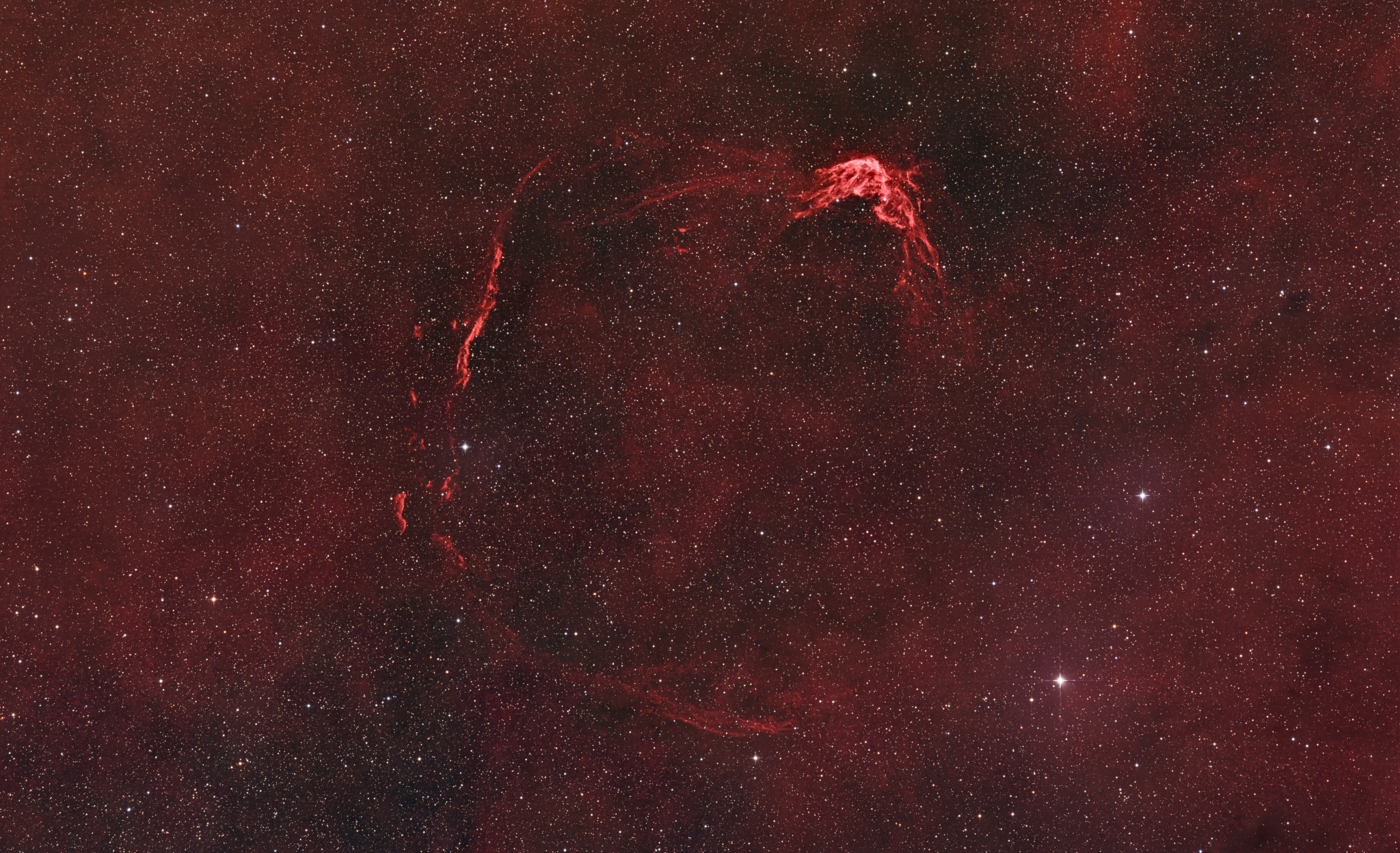
Why RCW 86 Is a Stellar Time Capsule from 185 AD
RCW 86 is like a cosmic fossil, dating back to a supernova recorded by Chinese and Korean astronomers around 185 AD. They described a sudden bright star that stayed visible for months, then faded away. Modern scientists connect this historical record with the nebula we see today, about 8,000 light-years from Earth.
This remnant spans roughly 100 light-years across, meaning the explosion’s shock waves have been rippling outward for centuries. It’s a massive, ghostly cloud, glowing faintly in X-ray, radio, and optical wavelengths. Studying it reveals how supernovae influence their surroundings—like a stone thrown into a pond, creating ripples that last for millennia.
large amateur telescope for deep sky observation
As an affiliate, we earn on qualifying purchases.
As an affiliate, we earn on qualifying purchases.
How Do We Know RCW 86 Is a Type Ia Supernova? The Clues That Count
Scientists have pieced together clues indicating RCW 86 resulted from a Type Ia supernova—a thermonuclear explosion of a white dwarf star. Key evidence? The nebula contains a lot of iron, a hallmark of Type Ia explosions, and no neutron star or pulsar is present within the remnant.
This is like a cosmic fingerprint. Unlike massive stars that explode as core-collapse supernovae, white dwarfs blow apart in a fiery detonation after stealing enough material from a companion star. That process creates the particular elemental signature we see in RCW 86.
Understanding the supernova type helps astronomers refine models of stellar evolution and the cosmic history of element creation. Knowing whether a supernova is Type Ia or core-collapse also impacts our understanding of galactic chemical enrichment, since Type Ia supernovae are primary sources of iron and other heavy elements that seed future generations of stars and planets. This classification influences how we interpret the timing and distribution of elements across the galaxy, shaping our broader understanding of cosmic evolution.
Deeply analyzing the elemental makeup and the remnant’s structure allows scientists to infer not just the explosion type but also the environment in which the supernova occurred. This information helps us understand how different supernovae contribute uniquely to galactic chemistry and influence subsequent star formation. The implications extend to refining supernova models, which are crucial for understanding cosmic distances and the expansion of the universe, since Type Ia supernovae serve as standard candles in cosmology.
narrowband filters for astrophotography
As an affiliate, we earn on qualifying purchases.
As an affiliate, we earn on qualifying purchases.
Peering Into the Past: How We Date and Study RCW 86 Today
How do scientists figure out the age and dynamics of a remnant like RCW 86? They measure how fast its shock waves expand—like watching the ripples from a stone thrown into a pond—and compare that to historical records and computer models.
Recent X-ray observations reveal high-energy particles and magnetic fields that hint at cosmic ray acceleration. These details show how the supernova’s shock waves energize particles to near light speed, contributing to the cosmic ray population in our galaxy.
By tracking the remnant’s expansion and composition, researchers continue to refine estimates of its age, confirming it as the explosion observed nearly 1,800 years ago. This process involves complex modeling of shock physics and plasma interactions, which helps scientists understand not just when the explosion occurred but also how the remnant’s structure evolves over time. Such insights are crucial for understanding the lifecycle of supernova remnants and their role in shaping the interstellar medium, influencing star formation and galactic ecology.
Studying RCW 86 in multiple wavelengths provides a comprehensive picture of its physical properties. For instance, radio observations reveal the magnetic field structure, while optical and infrared data help map the distribution of different elements and dust. Combining these data sets allows scientists to reconstruct the history of the explosion and its impact on the surrounding environment, offering a window into the processes that govern stellar death and galactic recycling.
astronomy binoculars for faint nebulae
As an affiliate, we earn on qualifying purchases.
As an affiliate, we earn on qualifying purchases.
What Makes RCW 86 a Must-See Target for Astronomers and Amateurs
While RCW 86 is too faint for the naked eye, it’s a favorite among amateur astronomers with large telescopes. Narrowband filters, which isolate specific emission lines, can reveal its delicate filaments and shock fronts. Observing conditions matter—a dark sky and steady atmosphere make all the difference.
Imagine pointing a 12-inch telescope at a faint, ghostly cloud that’s bigger than the full moon. With patience and the right gear, you can glimpse the intricate structures that tell the story of a star’s death on a cosmic scale.
Use a wide-field view to capture its sprawling structure, or a long focal length setup for detailed shots of its filaments. It’s like photographing a faint, ancient ghost still lingering in the sky.
star chart app for night sky viewing
As an affiliate, we earn on qualifying purchases.
As an affiliate, we earn on qualifying purchases.
The Big Picture: Why Studying RCW 86 Matters for Our Galaxy
RCW 86 isn’t just a pretty nebula—it’s a piece of the galaxy’s puzzle. Supernova remnants distribute heavy elements like iron, silicon, and nickel, which are essential for planet formation and life. They also stir up the interstellar medium, triggering new generations of stars.
Plus, RCW 86’s shock waves accelerate cosmic rays, influencing space weather and radiation environments across the galaxy. Understanding these processes helps us see how galaxies evolve and how our solar system might have inherited some of these elements.
Frequently Asked Questions
How can I observe RCW 86 with amateur gear?
Using a large telescope (at least 8 inches aperture) with narrowband filters targeting emission lines like H-alpha and [S II] can help reveal RCW 86’s faint filaments. Dark skies and steady conditions improve your chances of spotting its delicate structure.Why is RCW 86 associated with a supernova from 185 AD?
Historical records describe a bright, guest star visible for months—matching the estimated age of the nebula. Its size and expansion rate, along with elemental clues, confirm it as the remnant of that ancient explosion.What makes Type Ia supernova remnants like RCW 86 different?
They originate from white dwarf stars detonating after accumulating matter from a companion star. Their remnants are rich in iron and lack a neutron star or pulsar, unlike core-collapse supernova remnants.How long will RCW 86 remain visible or active?
Supernova remnants like RCW 86 can glow for hundreds of thousands of years. Its shock waves will continue to expand and energize the surrounding gas, gradually fading but leaving a lasting mark on the galaxy.Conclusion
RCW 86 serves as a cosmic bridge connecting ancient sky-watching with today’s high-tech science. It reminds us that even from over 8,000 light-years away, the echoes of a stellar explosion continue to shape our universe.
Next time you gaze up, think of this ghostly remnant—an ancient flash of light that still whispers stories of stars dying and galaxies evolving. That’s the true beauty of tonight’s sky: a living history book written in light and gas.
Halloween Picks
halloween
As an affiliate, we earn on qualifying purchases.