
Cooled astrophotography cameras use thermoelectric cooling to reduce sensor noise, letting you capture long exposures of nebulae and galaxies without the heat buildup that ruins uncooled shots. Among the six models compared here, the SVBONY SV605CC with its 9MP IMX533 sensor stands out as the best overall pick, thanks to its zero-amp-glow sensor design and clean deep-sky performance. The SV405CC with IMX294 sensor remains the strongest value for large Four Thirds framing on a budget, while the SC571CC with its APS-C IMX571 sensor is the premium choice for wide-field targets. The main tradeoff you face in this category is sensor size versus cost: bigger sensors capture more sky but demand better optics and a sturdier mount. Keep reading for the full breakdown of which camera matches your telescope, mount, and target list.

Prime made for students and young adults
- Fast, free delivery for dorm and study essentials
- Prime Video and Amazon Music included
- Member-only deals
Key Takeaways
- The SV605CC platform appears three times in this lineup with different filter bundles — the sensor and cooling are identical, so the real decision is which filter set matches your targets, not which camera body is better.
- The SC571CC’s APS-C IMX571 sensor is the largest in the group, but its wider field only pays off if your telescope has a flat, well-corrected field across an APS-C frame — many budget refractors will vignette badly with it.
- The IMX533 in the SV605CC has essentially no amp glow, which means cleaner single exposures and less reliance on calibration frames — a genuine advantage over the IMX294-based SV405CC for narrowband work.
- Every camera here is a color sensor; if your goal is maximum detail in emission nebulae from light-polluted skies, the bundled dual-band and multi-narrowband filter kits carry more weight than small differences in sensor specs.
- The SV405CC bundle with the UV/IR cut filter is the most cost-effective entry point, but its Four Thirds sensor and modest 11.7MP resolution make it better paired with smaller focal length scopes than with long refractors.
| SVBONY SC571CC Cooled Color Astronomy Camera with IMX571 APS-C Sensor |  | Best Overall | Sensor: IMX571 APS-C BSI CMOS | Resolution: 26MP | Pixel Size: 3.76 µm | VIEW LATEST PRICE | See Our Full Breakdown |
| SVBONY SV405CC Cooled Astrophotography Camera with IMX294 Sensor |  | Best Value for Large Pixels | Sensor: Back-illuminated IMX294 color CMOS, 4/3 inch | Resolution: 11.7MP (4144 × 2822) | Pixel Size: 4.63 µm | VIEW LATEST PRICE | See Our Full Breakdown |
| SVBONY SV605CC Cooled Color Astrophotography Camera, 9MP IMX533 Sensor |  | Best for Beginners | Sensor: Sony IMX533 color, 1-inch | Resolution: 3008 × 3008 (9MP) | Pixel Size: 3.76 µm | VIEW LATEST PRICE | See Our Full Breakdown |
| SVBONY SV605CC Cooled 9MP Color Astrophotography Camera with SV240 2-Inch Multi-Narrowband Filter |  | Best for Light-Polluted Skies | Sensor: IMX533 color CMOS, 1-inch | Resolution: 3008 × 3008 | Pixel Size: 3.76 μm | VIEW LATEST PRICE | See Our Full Breakdown |
| SVBONY SV605CC Cooled Astrophotography Camera with SV220 2-Inch Dual-Band Nebula Filter |  | Best Nebula Starter Kit | Sensor: IMX533 color CMOS, 1-inch square | Resolution: 3008 × 3008 (9MP) | Pixel Size: 3.76 µm | VIEW LATEST PRICE | See Our Full Breakdown |
| SVBONY SV405CC TEC-Cooled 11.7 MP CMOS Color Astronomy Camera with UV/IR Cut Filter |  | Best for Deep-Sky Wide-Field Framing | Sensor: Sony IMX294 color CMOS, 4/3 format | Effective Resolution: 11.7 MP | Cooling: TEC (thermoelectric cooling) | VIEW LATEST PRICE | See Our Full Breakdown |
| cooled astrophotography camera | Sensor | Cooling | Interface | Resolution |
|---|---|---|---|---|
| SVBONY SC571CC Cooled Color As | IMX571 APS-C BSI CMOS | Dual-stage TEC, 35°C below ambient | USB 3.0 | 26MP |
| SVBONY SV405CC Cooled Astropho | Back-illuminated IMX294 color CMOS, 4/3 inch | Two-stage TEC, up to 30°C below ambient | USB 3.0 | 11.7MP (4144 × 2822) |
| SVBONY SV605CC Cooled Color As | Sony IMX533 color, 1-inch | Double-layer TEC, up to 30°C below ambient | USB 3.0 | 3008 × 3008 (9MP) |
| SVBONY SV605CC Cooled 9MP Colo | IMX533 color CMOS, 1-inch | TEC, up to 30°C below ambient | USB 3.0 | 3008 × 3008 |
| SVBONY SV605CC Cooled Astropho | IMX533 color CMOS, 1-inch square | Two-stage TEC, up to 30°C below ambient | USB 3.0 | 3008 × 3008 (9MP) |
| SVBONY SV405CC TEC-Cooled 11.7 | Sony IMX294 color CMOS, 4/3 format | TEC (thermoelectric cooling) | USB 3.0 (up to 5 Gbps) | — |
More Details on Our Top Picks
SVBONY SC571CC Cooled Color Astronomy Camera with IMX571 APS-C Sensor
Among the cooled cameras in this lineup, the SC571CC is the one I would point serious imagers toward first. Its 26MP APS-C sensor covers roughly four times the area of the 1-inch IMX533 found in the SV605CC variants, which means wider fields and more resolution per night of clear sky. The 16-bit ADC and 14 stops of dynamic range outclass the 14-bit SV405CC, giving cleaner gradients in bright nebula cores. The integrated dew heater is a genuine differentiator — none of the other picks include one, and it can rescue an all-night session in humid conditions. The tradeoff is real, though: cooling plus heater functions demand a more capable power supply, and those small 3.76 µm pixels want medium-to-long focal lengths to shine.
Pros:- Large 26MP APS-C sensor captures wide fields with fine detail
- 16-bit ADC with up to 14 stops of dynamic range for smooth gradients
- Integrated front-window dew heater keeps long sessions running
- Zero amp-glow sensor produces clean dark frames
Cons:- 3.76 µm pixels need medium-to-long focal lengths to realize their resolution
- Cooling and heater draw adds power supply complexity
Best for: Experienced deep-sky imagers with tracked mounts who want maximum field size and clean 16-bit data
Not ideal for: Beginners or anyone running a short focal length scope and a lightweight power setup — the pixel scale and power demands will frustrate rather than help
- Sensor:IMX571 APS-C BSI CMOS
- Resolution:26MP
- Pixel Size:3.76 µm
- Cooling:Dual-stage TEC, 35°C below ambient
- ADC:16-bit
- Buffer:512 MB DDR3
- Dew Prevention:Integrated front-window heater
- Interface:USB 3.0
Our verdict“This is the pick for imagers ready to trade setup complexity for the largest, cleanest sensor in the lineup.”
SVBONY SV405CC Cooled Astrophotography Camera with IMX294 Sensor
The SV405CC earns its place through generous 4.63 µm pixels — the largest in this roundup by a wide margin. Compared with the 3.76 µm pixels of the SC571CC and SV605CC, that bigger pixel pitch delivers higher full well capacity (63ke-) and pairs forgivingly with shorter focal length scopes, making it the friendliest option here for a small refractor. The HCG mode is a smart inclusion, cutting read noise while preserving dynamic range, which matters when stacking many light frames. Against the SV605CC, you give up the square 1-inch format and gain a 4/3-inch rectangle with more total sensor area. Drawbacks are honest: 14-bit output trails the SC571CC’s 16-bit data, and at 3.08 pounds it is a load for small travel mounts.
Pros:- Large 4.63 µm pixels suit short focal length telescopes
- HCG mode reduces read noise while retaining dynamic range
- 63ke- full well capacity handles bright targets well
- Broad compatibility including Linux, macOS and Raspberry Pi
Cons:- 14-bit ADC limits dynamic range compared with 16-bit rivals
- 3.08-pound body strains small or travel mounts
Best for: Imagers using short focal length refractors who want forgiving pixel scale without paying for APS-C
Not ideal for: Anyone chasing maximum dynamic range or using a lightweight travel mount — the 14-bit ADC and 3-pound body work against both
- Sensor:Back-illuminated IMX294 color CMOS, 4/3 inch
- Resolution:11.7MP (4144 × 2822)
- Pixel Size:4.63 µm
- Full Well Capacity:63ke-
- ADC:14-bit
- Cooling:Two-stage TEC, up to 30°C below ambient
- Buffer:256MB DDRIII
- Interface:USB 3.0
Our verdict“The smart middle choice for small-scope imagers who want cooled performance at a friendlier pixel scale than the newer 3.76 µm sensors.”
SVBONY SV605CC Cooled Color Astrophotography Camera, 9MP IMX533 Sensor
The SV605CC is the most approachable entry into cooled imaging in this group. Its square 3008 × 3008 frame is a practical blessing for newcomers: no orientation guesswork when framing targets, and the 1-inch sensor keeps field of view manageable on modest telescopes. Compared with the SV405CC, you get 80% quantum efficiency on a back-illuminated sensor, which means shorter exposures and fewer tracking demands — a real kindness for someone still learning polar alignment. Double-layer TEC cooling reaching 30°C below ambient handles thermal noise capably for the price class. The limitations are structural rather than hidden: 1.6 kg is heavier than it needs to be for this sensor size, and the smaller sensor means the SC571CC will capture far more sky per frame if your budget stretches.
Pros:- Square frame removes orientation guesswork when composing
- 80% quantum efficiency shortens exposure requirements
- Double-layer TEC cooling runs 30°C below ambient
- Compact aluminum housing fits most focuser setups
Cons:- 1.6 kg body is heavy for a 1-inch sensor camera
- Small sensor limits field of view on extended targets
Best for: First-time cooled-camera buyers on tracked mounts who want clean, simple deep-sky results without APS-C complexity
Not ideal for: Imagers targeting large nebula complexes — the 1-inch sensor’s field of view will crop wide targets the SC571CC frames easily
- Sensor:Sony IMX533 color, 1-inch
- Resolution:3008 × 3008 (9MP)
- Pixel Size:3.76 µm
- Quantum Efficiency:80%
- Cooling:Double-layer TEC, up to 30°C below ambient
- Interface:USB 3.0
- Weight:1.6 kg
Our verdict“The most sensible first cooled camera here — clean data and simple framing for imagers still building their skills.”
SVBONY SV605CC Cooled 9MP Color Astrophotography Camera with SV240 2-Inch Multi-Narrowband Filter
This bundle takes the beginner-friendly SV605CC and adds the piece that matters most if you image from a city: the SV240 multi-narrowband filter. Unlike the dual-band SV220 bundle, which passes only Ha and OIII, the SV240 adds a third passband for H-Beta, pulling out fainter detail in objects like the California Nebula. With over 90% core transmittance and OD4 cutoff depth, the filter strips out urban light pollution while the camera’s TEC cooling keeps thermal noise low — the two work as a system rather than separate purchases. The camera itself matches the standalone SV605CC in every meaningful way, so the decision comes down to your filter strategy. One caveat worth flagging: the listing’s resolution claims are inconsistent between title and product details, so verify sensor specs with the seller before ordering.
Pros:- Three-band filter (Ha, OIII, H-Beta) captures fainter emission detail than dual-band options
- Over 90% core transmittance preserves signal at target wavelengths
- OD4 cutoff depth effectively blocks urban light pollution
- Cooled sensor complements narrowband’s long exposure demands
Cons:- Listed resolution is inconsistent between title and product details
- Filter and camera combo is narrowband-specific, limiting broadband flexibility
Best for: Urban and suburban imagers who want a complete camera-plus-filter narrowband solution in one purchase
Not ideal for: Dark-sky imagers focused on broadband color galaxies — the narrowband filter would only slow those exposures down
- Sensor:IMX533 color CMOS, 1-inch
- Resolution:3008 × 3008
- Pixel Size:3.76 μm
- Quantum Efficiency:Up to 80%
- Cooling:TEC, up to 30°C below ambient
- Included Filter:SV240 2-inch multi-narrowband
- Filter Passbands:Ha, OIII, H-Beta
- Interface:USB 3.0
Our verdict“The right bundle for city-based nebula hunters who want one-click readiness against light pollution.”
SVBONY SV605CC Cooled Astrophotography Camera with SV220 2-Inch Dual-Band Nebula Filter
Positioned between the bare SV605CC and the triple-band SV240 bundle, this kit is aimed squarely at the classic targets: emission nebulae. The SV220 dual-band filter passes H-alpha and OIII at over 94% transmission — the two lines that carry most of the visual punch in objects like the Orion Nebula and North America Nebula — while its waterproof optical glass and anodized frame make it more forgiving for dew-prone nights than uncoated alternatives. Because the filter threads M48 × 0.75, it can also migrate to future camera upgrades, which softens the long-term cost. The compromise versus the SV240 bundle is coverage: skip this one if faint H-Beta targets are your priority. And like the SV605CC platform itself, the 1-inch sensor means this is a nebula kit, not a wide-field galaxy rig.
Pros:- Over 94% transmission on H-alpha and OIII preserves nebula signal
- Waterproof optical glass with anodized aluminum frame resists dew damage
- M48 filter thread moves easily to future cameras
- Cooled IMX533 sensor supports clean long narrowband exposures
Cons:- Dual-band coverage omits H-Beta, limiting fainter emission targets
- 1-inch sensor restricts field of view on large nebula complexes
Best for: Nebula-focused imagers building their first complete cooled-camera and filter setup under moderate light pollution
Not ideal for: Imagers wanting maximum wavelength coverage or wide-field galaxy work — the dual-band filter and small sensor both narrow its scope
- Sensor:IMX533 color CMOS, 1-inch square
- Resolution:3008 × 3008 (9MP)
- Pixel Size:3.76 µm
- Cooling:Two-stage TEC, up to 30°C below ambient
- Included Filter:SV220 2-inch dual-band nebula
- Filter Passbands:H-alpha 656.3 nm, OIII 500.7 nm
- Filter Transmission:Over 94%
- Interface:USB 3.0
Our verdict“A tidy, upgrade-friendly nebula kit that trades the SV240 bundle’s third band for a more durable filter build.”
SVBONY SV405CC TEC-Cooled 11.7 MP CMOS Color Astronomy Camera with UV/IR Cut Filter
This option stands out for its 4/3 format Sony IMX294 sensor, which is noticeably larger than the IMX533 sensor in the SV605CC lineup. That extra sensor real estate translates directly into wider fields of view, so nebulae like the North America or Rosette fill the frame without needing short focal length optics or mosaicking. The TEC cooling keeps thermal noise low across long integrations, which is the whole point of paying extra for a cooled camera over a planetary CMOS unit.
The bundled UV/IR cut filter is a sensible inclusion here — compared with the SV605CC bundles that pair narrowband or dual-band filters, this one is aimed at broadband color imaging under decent skies rather than light-polluted urban imaging. The tradeoff is real, though: manual focus and manual exposure control demand patience and practice, and the sensor offers no cleaning access, so dust management falls entirely on careful handling at the telescope.
Pros:- TEC cooling keeps thermal noise controlled during long deep-sky integrations
- Large 4/3 format IMX294 sensor frames big nebulae and star fields without mosaics
- Fast USB 3.0 connection with up to 5 Gbps bandwidth for smooth full-resolution capture
- Included UV/IR cut filter improves contrast and color accuracy out of the box
Cons:- Manual focus and manual exposure control create a steeper learning curve for newcomers
- No user-accessible sensor cleaning method, so dust prevention depends entirely on careful handling
Best for: Intermediate imagers who want a large-format cooled color sensor for framing big emission nebulae and galaxy fields in one shot
Not ideal for: Beginners who expect autofocus or automated exposure assist — this camera is fully manual and will frustrate anyone still learning the basics
- Sensor:Sony IMX294 color CMOS, 4/3 format
- Effective Resolution:11.7 MP
- Cooling:TEC (thermoelectric cooling)
- Interface:USB 3.0 (up to 5 Gbps)
- Frame Rate:19 fps (RAW8), 16 fps (RAW16) at full resolution
- Video Capture Resolution:4K
- File Formats:RAW, MP4
- Included Accessory:UV/IR Cut Block Filter
- Weight:3.7 pounds
Our verdict“A smart pick for deep-sky imagers who prioritize wide framing and cooled low-noise performance over beginner-friendly automation.”
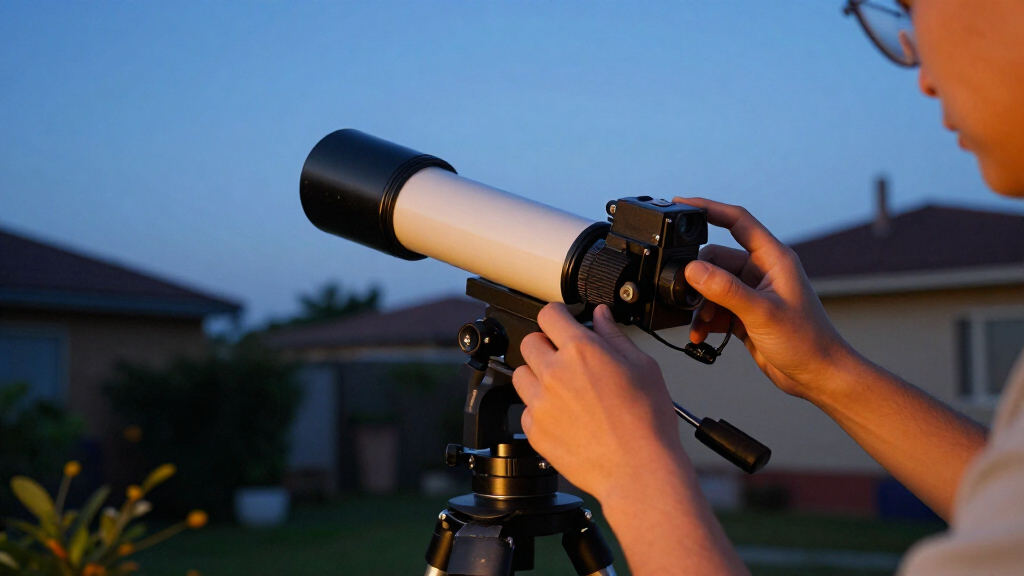
How We Picked
My ranking leans on four factors that actually change what your images look like at the end of the night. First, sensor performance under long exposure: amp glow, read noise, and how deep the TEC cooling actually drives the sensor below ambient all matter more than headline resolution. The IMX533 and IMX571 sensors have a real advantage here because of their near-zero amp glow, which shows up as cleaner backgrounds after stacking. Second, sensor size relative to typical telescope optics — a large sensor is a liability if your flattener can’t cover it, so I weighed how forgiving each camera is with common beginner-to-intermediate refractors.
Third, I evaluated bundle value: since three entries share the same camera body, the included filters became the differentiator, judged on whether they suit realistic shooting scenarios like light-polluted narrowband imaging or broadband color work. Fourth, I considered usability factors — driver maturity in popular capture software, back-focus compatibility, and how demanding each camera is on mount guiding accuracy. Cameras that demand a better mount than most buyers own were ranked with that caveat attached, not ignored.
| cooled astrophotography camera | Sensor | Cooling | Interface |
|---|---|---|---|
| SVBONY SC571CC Cooled Color As | IMX571 APS-C BSI CMOS | Dual-stage TEC, 35°C below ambient | USB 3.0 |
| SVBONY SV405CC Cooled Astropho | Back-illuminated IMX294 color CMOS, 4/3 inch | Two-stage TEC, up to 30°C below ambient | USB 3.0 |
| SVBONY SV605CC Cooled Color As | Sony IMX533 color, 1-inch | Double-layer TEC, up to 30°C below ambient | USB 3.0 |
| SVBONY SV605CC Cooled 9MP Colo | IMX533 color CMOS, 1-inch | TEC, up to 30°C below ambient | USB 3.0 |
| SVBONY SV605CC Cooled Astropho | IMX533 color CMOS, 1-inch square | Two-stage TEC, up to 30°C below ambient | USB 3.0 |
| SVBONY SV405CC TEC-Cooled 11.7 | Sony IMX294 color CMOS, 4/3 format | TEC (thermoelectric cooling) | USB 3.0 (up to 5 Gbps) |
Factors to Consider When Choosing Cooled Astrophotography Cameras
Choosing a cooled camera is less about picking the best sensor on paper and more about matching the camera to your telescope, mount, sky conditions, and the specific objects you want to image. These are the factors that most often make or break the purchase.Cooling Depth and Amp Glow
The whole point of a cooled camera is thermal noise reduction, but not all cooling systems are equal in practice. Look for how far below ambient the sensor can be held — most quality models manage 35 to 45 degrees below ambient, which is enough to make dark current nearly irrelevant on a typical night. Just as important is amp glow: some sensors produce a faint glow from on-chip circuitry during long exposures, which you can calibrate out with dark frames but never fully eliminate on targets with faint outer nebulosity. Newer sensor generations like the IMX533 and IMX571 largely solved this, which is why they command a premium. A common mistake buyers make is comparing resolution charts while ignoring amp glow specs — a glow-free sensor at 9MP will often produce cleaner final images than a glow-prone 12MP chip. If you shoot from warm climates or during summer, deep cooling matters even more, because dark current roughly doubles with every 5 to 6 degrees of sensor temperature.
Sensor Size Versus Your Optics
A bigger sensor captures a wider field of view, but only if your telescope’s field flattener covers the full sensor circle. This is where many astrophotographers get burned: an APS-C sensor like the IMX571 paired with a basic doublet refractor produces stretched stars and heavy vignetting at the corners that no amount of processing fixes. Check the manufacturer’s stated image circle for your flattener or reducer before choosing between Four Thirds, APS-C, or smaller formats. Sensor size also affects resolution per pixel on your target — a wide field spreads the same pixels across more sky, which is great for large nebulae like the North America Nebula but works against you on small galaxies and planetary nebulae. Match the format to your primary targets rather than assuming bigger is always better. Beginners are usually better served starting with a smaller sensor that works with affordable optics, then upgrading format once their telescope collection justifies it.
Pixel Size and Sampling
Pixel size determines how finely your camera samples the image your telescope delivers, and mismatched sampling is one of the most common silent image-quality killers. As a rough guide, you want your image scale — pixel size divided by focal length, times 206 — to land between about 1 and 2 arcseconds per pixel for typical seeing conditions. Small pixels around 2.4 microns suit short focal length refractors, while longer scopes benefit from larger pixels in the 4 to 5 micron range. Oversampling wastes light by spreading it across more pixels than the atmosphere allows, forcing longer total integration times. Undersampling loses fine detail and produces blocky stars that sharpening can’t rescue. Before buying, do this simple calculation with your actual telescope’s focal length — it will immediately narrow the field. A camera that images beautifully at 300mm focal length may be a poor match at 1500mm.
Color Versus Filter Strategy
Every camera in this category is a one-shot color sensor, which simplifies shooting but makes your filter choice the main lever for image quality. A UV/IR cut filter is the default for broadband color work under dark skies, protecting star colors from infrared blooming. Under light pollution, dual-band filters that pass hydrogen-alpha and oxygen-III wavelengths transform what you can capture from a suburban backyard, letting nebulae punch through skyglow. Multi-narrowband filters add sulfur-II capability for full SHO palette processing, which gives more creative flexibility but demands more integration time per channel. The mistake to avoid is buying a camera with no filter plan at all — unfiltered color sensors under urban skies mostly record light pollution. Decide where you shoot before choosing a bundle, because the right filter often improves results more than a sensor upgrade would.
Mount and Guiding Requirements
A cooled camera only performs as well as the mount carrying it, and long exposures amplify every guiding error. Larger sensors are especially unforgiving because any drift shows as trailed stars across a wide field, while a smaller sensor effectively crops the worst of the drift away. If you’re on an entry-level equatorial mount with a modest guide scope, a Four Thirds or smaller sensor with shorter exposures will deliver sharper results than an ambitious APS-C build struggling with 5-minute subs. Heavier cameras also shift your balance point and may push a small mount past its comfortable payload. Be honest about your current guiding performance — check your guide logs for RMS error in arcseconds — before assuming a premium camera will improve your images. Many imagers see more improvement from mount tuning and auto-guiding upgrades than from any camera swap.
Software Ecosystem and Workflow
A camera is only as good as its driver support in the software you actually run, and this is where established brands earn their keep. Look for confirmed compatibility with your capture program, whether that’s a full observatory suite or a laptop-based ASCOM or INDI workflow on a mini PC at the telescope. Check that the camera supports standard temperature-controlled operation where the software sets a target temperature and the TEC holds it, rather than just an on/off switch — consistent sensor temperature is what makes dark frame libraries work across multiple nights. Also consider memory and storage demands: high-resolution sensors at 16-bit depth can produce large files that fill small drives quickly during an all-night session. Finally, think about power — TEC cooling draws real current, and a camera that needs a dedicated 12V supply changes what battery solution you need in the field.
Frequently Asked Questions
Since three of these are the same SV605CC camera with different filters, which bundle should I choose?
The camera body is identical across the three SV605CC bundles, so choose based on your sky conditions and targets. The dual-band nebula filter bundle makes the most sense if you image from suburban or urban skies, because it blocks light pollution while passing hydrogen-alpha and oxygen-III, which is where the IMX533 sensor’s low noise really shines. The multi-narrowband filter bundle adds sulfur-II transmission for SHO palette processing, appealing if you want the Hubble-style gold-and-teal look and don’t mind longer total integration times. If you shoot mostly under dark rural skies and want natural broadband color on galaxies and reflection nebulae, you could skip the filter bundles and pair the base camera with a simple UV/IR cut filter instead. Buying the bundle still saves money over purchasing filters separately, so even a partial match to your needs usually justifies it.
It depends almost entirely on your telescope, not on the sensors themselves. The SC571CC’s IMX571 offers a noticeably wider field, zero amp glow, and higher resolution, which is a genuine upgrade if your optics can cover an APS-C frame with flat stars to the corners — typically a quality triplet refractor with a dedicated APS-C flattener. On a basic doublet or a scope with a smaller image circle, the extra sensor area becomes a liability, producing stretched corner stars and vignetting you’ll fight in every frame. The SV405CC still delivers strong results when paired with optics that match its Four Thirds sensor, at a lower price that leaves budget for the filters and mount upgrades that often matter more. If you already own premium wide-field optics, the SC571CC justifies itself; if you’re still building your setup, the SV405CC is the smarter first step.
How much does cooling depth actually matter for my images?
Cooling matters most for long single exposures and warm-weather imaging, where dark current accumulates as unwanted signal and speckle noise in your frames. A sensor held 35 to 45 degrees below ambient reduces dark current to a small fraction of its uncooled level, which means cleaner individual frames and less reliance on large dark frame libraries. That said, modern stacking software can average out a lot of thermal noise if you take enough frames, so the practical difference is smaller than spec sheets suggest for short exposures. Where cooling clearly wins is in narrowband imaging, where 5 to 10 minute sub-exposures are routine and any thermal signal builds visibly. Cooling also enables consistent sensor temperatures across nights, which lets you reuse calibration frames instead of shooting new darks every session — a workflow benefit that saves real time at the telescope.
Can I use these cooled cameras for planetary imaging too?
You can, but it’s the wrong tool for the job, and understanding why helps you budget correctly. Planetary imaging depends on high frame rates — capturing thousands of short exposures per minute and stacking the sharpest ones to beat atmospheric turbulence. Cooled deep-sky cameras like these prioritize full well depth and low read noise at long exposures, not frame rate, so they typically top out at modest frame rates that limit planetary results. A dedicated uncooled planetary camera with fast USB transfer and small region-of-interest modes will outperform all six of these on Jupiter or Saturn for a fraction of the cost. The one exception is lunar imaging, where these cameras do respectable work because the moon is bright enough for short exposures. If planetary is your main interest, buy a specialized camera and consider these cooled models only as a deep-sky companion.
Do I need a filter even under dark skies with a color camera?
Even at a true dark-sky site, a UV/IR cut filter is strongly recommended for any color astro camera. Camera sensors are sensitive well beyond the visible spectrum, and without a cut filter, stars develop bloated, oddly colored halos as infrared light focuses at a different point than visible light through your refractor. This is not a subtle effect — it visibly degrades star quality across the whole frame. Narrowband filters remain optional at dark sites, since broadband color imaging of galaxies and reflection nebulae works beautifully unfiltered beyond the UV/IR cut. Under anything less than genuinely dark skies, a dual-band filter becomes the single biggest upgrade you can make, often the difference between a washed-out gray frame and a striking nebula image. The practical approach is to start with a UV/IR cut filter always mounted, then add narrowband filtration once you know your local sky conditions well.
Conclusion
Mapping these six options to buyer types makes the decision straightforward. For best overall, the SV605CC with the 9MP IMX533 sensor hits the sweet spot: zero amp glow, forgiving sensor size, and bundles that match real shooting scenarios. The best premium pick is the SC571CC, whose APS-C IMX571 sensor rewards imagers who already own wide-field optics capable of covering it — buyers without such optics should skip it rather than stretch. For best value, the SV405CC with the UV/IR cut filter is the most sensible entry into serious deep-sky work, pairing a proven Four Thirds sensor with everything a beginner needs to start shooting the same night. Among the SV605CC bundles, the dual-band nebula filter version is the pick for light-polluted suburban imagers, while the multi-narrowband bundle suits those chasing SHO palette nebula portraits with patience for long integrations. If you’re new to cooled cameras entirely, start with the SV405CC, learn your mount and processing workflow, and upgrade sensor format once your optics — not your camera — become the limiting factor.
Fall Picks
fall essentials
As an affiliate, we earn on qualifying purchases.