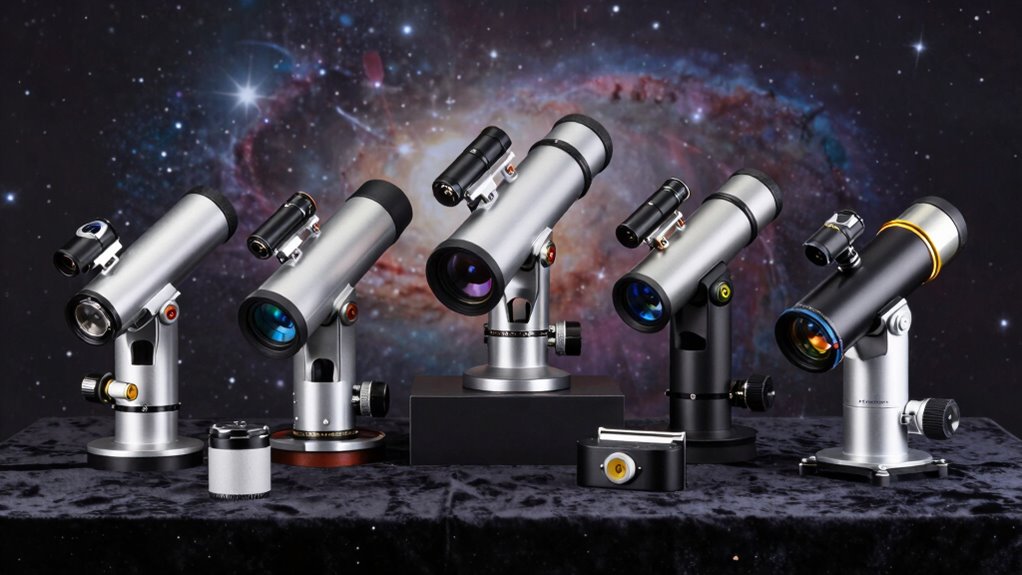

Choosing the right telescope and flattener kit for astrophotography can significantly impact image quality and ease of use. The SVBONY SV503 102mm ED Refractor Telescope Kit stands out as the best overall due to its versatile optics and bundled accessories. For those seeking high-end performance, the SVBONY SV545 Telescope Petzval Lens APO offers exceptional image correction and deep sky capabilities. Meanwhile, the SVBONY SV550 80ED F6 Triplet Apochromatic Refractor balances premium quality with more accessible pricing. Readers face tradeoffs between aperture size, optical quality, and ease of setup, making it essential to weigh your specific astrophotography goals. Continue reading for a detailed breakdown of the top kits and what makes each unique.

Prime made for students and young adults
- Fast, free delivery for dorm and study essentials
- Prime Video and Amazon Music included
- Member-only deals
Key Takeaways
- The top-ranked kit combines aperture size, optical quality, and bundled accessories for overall versatility.
- Premium options like the SV545 Petzval lens deliver superior image correction but come with higher costs and setup complexity.
- Entry-level kits often sacrifice some optical performance but excel in user-friendliness and affordability.
- Field flatteners are critical for wide-field astrophotography; their compatibility and quality vary across products.
- Build quality and ease of installation significantly influence long-term satisfaction, especially for beginners and advanced users alike.
| SVBONY SV503 102mm ED Refractor Telescope Kit |  | Best Overall for Versatile Backyard Astronomy & Imaging | Aperture: 102mm | Focal Length: Not specified | FPL Glass Type: FPL51 ED | VIEW ON AMAZON | See Our Full Breakdown |
| SVBONY Astrophotography Kit with SV545 Petzval Lens and SV238 Off-Axis Guider |  | Best for Deep-Sky Imaging & Precise Guiding | Focal Length: 203mm | Aperture: F4.5 | Lens Type: Petzval APO | VIEW ON AMAZON | See Our Full Breakdown |
| SVBONY SV550 80ED F6 Triplet Apochromatic Refractor Telescope with SV209 Field Flattener and UV IR Filter |  | Best for Portable High-Contrast Imaging | Aperture: 80mm | Focal Ratio: F6 | Optical Design: Triplet Apochromatic | VIEW ON AMAZON | See Our Full Breakdown |
| Explore Scientific Field Flattener for Refractor Telescopes f/5 to f/7 |  | Best for Precision Field Correction in Refractors | Focal Ratio Compatibility: f/5 to f/7 | Spacing Requirement: 55mm (+/- 2mm) | Optics Coating: Fully multi-coated | VIEW ON AMAZON | See Our Full Breakdown |
| SVBONY SV503 Refractor Telescope with Field Flattener, 70mm ED Refractor |  | Best for Compact, High-Quality Visual & Imaging | Aperture: 70mm | Focal Length: 474mm | Focal Ratio: F/6.78 | VIEW ON AMAZON | See Our Full Breakdown |
| SVBONY SV503 Refractor Telescope Kit |  | Best for Portable Astrophotography with Dew Prevention | Objective Lens Diameter: 102mm | Focal Ratio: f/7 | Features: Dew-free heating surface, portable handle, compatible with finder scope, includes 0.8x focal reducer and field flattener | VIEW ON AMAZON | See Our Full Breakdown |
| SVBONY SV545 Telescope Petzval Lens APO with SV241 Power Hub Adapter |  | Best for Professional-Quality Deep Sky Imaging | Focal Length: 203mm | Aperture: F4.5 | Image Circle: 44mm | VIEW ON AMAZON | See Our Full Breakdown |
| telescope and flattener kit for astrophotography | Aperture | Focal Length |
|---|---|---|
| SVBONY SV503 102mm ED Refracto | 102mm | Not specified |
| SVBONY Astrophotography Kit wi | F4.5 | 203mm |
| SVBONY SV550 80ED F6 Triplet A | 80mm | — |
| Explore Scientific Field Flatt | — | — |
| SVBONY SV503 Refractor Telesco | 70mm | 474mm |
| SVBONY SV503 Refractor Telesco | — | — |
| SVBONY SV545 Telescope Petzval | F4.5 | 203mm |
More Details on Our Top Picks
SVBONY SV503 102mm ED Refractor Telescope Kit
This kit stands out for its high-quality FPL51 ED glass, which delivers crisp planetary images comparable to more specialized setups like the SVBONY SV550 80ED but with added versatility. Its dual-speed focuser and comprehensive accessories make it suitable for both observation and astrophotography, especially for those looking to upgrade from basic telescopes. Compared with the SV503 Refractor alone, this kit offers more complete functionality, though the absence of a mount or tripod may complicate initial setup. Its design is less beginner-friendly due to the complexity of multiple components, but it rewards users who want flexibility and quality.
While the focal length isn’t specified, the included zoom eyepiece helps mitigate this, and the compatibility with major brands ensures broader usability. The main tradeoff involves potential setup challenges for newcomers and the lack of a dedicated mount, requiring additional investment.
Pros:- High-quality FPL51 ED glass for sharp planetary images
- Versatile accessories for observation and imaging
- Rotatable dual-speed focuser for precise focus adjustments
Cons:- Focal length not specified, complicating image scale prediction
- No included mount or tripod, requiring additional purchase
- Potentially complex setup for beginners
Best for: Intermediate amateur astronomers seeking a versatile, high-quality refractor kit suitable for planetary and deep-sky imaging.
Not ideal for: Beginners who prefer an all-in-one, easy-to-assemble package or those without existing mounting equipment.
- Aperture:102mm
- Focal Length:Not specified
- FPL Glass Type:FPL51 ED
- Back Focus:90mm
- Focuser:Dual-speed
- Eyepiece:SV215 3-8mm zoom
- Finderscope:SV182 30mm
- Diagonal Mirror:1.25″ dielectric
- Dovetail Base:Universal
Our verdict“This kit is best for those who want a flexible, high-performance refractor with room to grow, despite some setup complexity.”
SVBONY Astrophotography Kit with SV545 Petzval Lens and SV238 Off-Axis Guider
This kit excels at high-efficiency deep-sky astrophotography thanks to its fast F4.5 Petzval APO lens and large off-axis guider prism, making it ideal for capturing detailed images of galaxies and nebulae. Its built-in field flattener ensures minimal star distortion, outperforming simpler guides like the SVBONY SV503 refractor for complex deep-sky shots. The dual-helix focuser provides tactile precision, but the system’s complexity means it’s better suited to experienced astrophotographers with additional accessories on hand. Unlike the SV503 kit, it doesn’t include a mount or camera, adding to the initial investment.
While the guiding system is robust, the assembly process can be intimidating for newcomers, and it lacks electronic autofocus, which could improve focusing accuracy. The system’s specialty makes it less versatile for planetary or lunar imaging, where smaller, more specialized telescopes excel.
Pros:- Fast F4.5 aperture ideal for deep-sky objects
- Chromatic aberration-free APO design for sharp images
- Large, effective off-axis guider prism for precise tracking
- Built-in field flattener enhances image quality
Cons:- Requires additional accessories like mount and camera
- Complex assembly may challenge beginners
- No electronic autofocus feature included
Best for: Advanced astrophotographers focused on deep-sky imaging and precise guiding who can handle complex setups.
Not ideal for: Beginners or casual users seeking a straightforward, all-in-one imaging solution without additional accessories.
- Focal Length:203mm
- Aperture:F4.5
- Lens Type:Petzval APO
- Optics:3-group, 5-element
- Field Flattener:Built-in
- Guide Prism Size:8x14mm
- Guide Support:Dual-helix focuser
- Filter Drawer:M48, 1.25″ and 2″
Our verdict“Best suited for experienced astrophotographers aiming for high-quality deep-sky images with precise guiding capabilities.”
SVBONY SV550 80ED F6 Triplet Apochromatic Refractor Telescope with SV209 Field Flattener and UV IR Filter
Compared with larger setups like the SV503, this 80mm triplet offers outstanding contrast and color fidelity thanks to its apochromatic design. Its lightweight construction at just over 8 pounds makes it exceptionally portable for field work or travel. The included SV209 field flattener and UV/IR filter significantly improve image quality by reducing chromatic aberration and light pollution, making it a strong choice for astrophotographers who want sharp, true-to-life images without the bulk. However, it requires a separate mount and camera, adding to the overall cost and setup complexity. The optical performance is excellent, but it lacks electronic features and is less suitable for those seeking an all-in-one, motorized system.
This telescope’s portability makes it less ideal for heavier mounts or permanent observatories, and installation of accessories can be tricky for beginners. Nevertheless, it performs remarkably well for its size and weight.
Pros:- High-contrast triplet apochromatic optics for sharp images
- Lightweight and portable for field use
- Includes field flattener and UV/IR filter for improved image fidelity
- Color-accurate imaging suitable for planetary and lunar photography
Cons:- Requires separate mount and camera setup
- Installation of accessories like the field flattener may be complex for newcomers
- No electronic or motorized features included
Best for: Travelers and portable astrophotographers who prioritize high-contrast, true-color imaging with minimal bulk.
Not ideal for: Beginners seeking a fully integrated, motorized astrophotography system or those wanting a larger aperture for deep-sky imaging.
- Aperture:80mm
- Focal Ratio:F6
- Optical Design:Triplet Apochromatic
- Weight:8.27 lbs
- Included Accessories:Field Flattener, UV IR Filter
- Compatibility:Camera compatible with Canon
Our verdict“Ideal for portable, high-contrast imaging where ease of transport and image quality are priorities, despite the need for additional equipment.”
Explore Scientific Field Flattener for Refractor Telescopes f/5 to f/7
This field flattener offers precise correction for refractors with focal ratios between f/5 and f/7, making it especially useful for achieving sharp stars across the entire field. Compared to the SVBONY SV209, which combines a field flattener with a telescope, this accessory specializes in correcting field curvature, ensuring images are free from star distortion at the edges. Its fully multi-coated optics provide high contrast, and the T-ring compatibility makes attachment straightforward. The main tradeoff involves the need for meticulous spacing of 55mm, which can be challenging for less experienced users. Its narrow focus on refractor telescopes limits versatility with other optical designs.
While offering excellent correction, it doesn’t include a T-ring or other mounting hardware, requiring additional parts. Its performance hinges on precise setup, making it less ideal for quick or casual astrophotography.
Pros:- Reduces star distortion for crisp, flat images
- Compatible with a range of focal ratios (f/5 to f/7)
- Fully multi-coated optics for high contrast
Cons:- Requires precise 55mm spacing for optimal performance
- No included T-ring or mounting hardware
- Limited to refractor telescopes
Best for: Dedicated astrophotographers using refractors with focal ratios from f/5 to f/7 seeking sharp, distortion-free images.
Not ideal for: Beginners or users with non-refractor telescopes, as setup requires careful spacing and additional accessories.
- Focal Ratio Compatibility:f/5 to f/7
- Spacing Requirement:55mm (+/- 2mm)
- Optics Coating:Fully multi-coated
- Connection:T-ring thread
Our verdict“Best for dedicated refractor users who need precise field flattening for detailed astrophotography, despite setup delicacies.”
SVBONY SV503 Refractor Telescope with Field Flattener, 70mm ED Refractor
Compared with larger, more complex systems like the SV550 80ED, the SV503 70mm offers a more compact and user-friendly package that still produces excellent images. Its flat-field design and ED glass minimize chromatic aberration, ensuring bright and sharp views across the field. The lightweight profile makes it especially suitable for portable setups or field work, and the included 2-inch to 1.25-inch adapter adds flexibility. However, the manual focus and absence of electronic features mean that precise focusing can be more challenging, especially for astrophotographers seeking motorized control. It also lacks a finderscope, which might slow initial targeting.
For users prioritizing portability and straightforward operation over advanced automation, this refractor makes a compelling choice, though it requires additional accessories for complete astrophotography setups.
Pros:- Flat-field correction for sharp, edge-to-edge images
- High-quality ED glass reduces chromatic aberration
- Lightweight and portable for easy transport
- Includes versatile adapter for various accessories
Cons:- No motorized or electronic focusing options
- Lacks included finderscope, making initial alignment slower
- Limited to manual operation, less suited for automated imaging
Best for: Beginners or portable enthusiasts wanting a compact, high-quality refractor for visual astronomy and basic imaging.
Not ideal for: Advanced astrophotographers needing motorized focusing or integrated electronics for higher precision.
- Aperture:70mm
- Focal Length:474mm
- Focal Ratio:F/6.78
- Objective Lens Diameter:7cm
- Optical Tube Length:47.4cm
- Item Dimensions:12.52″D x 9.25″W x 6.69″H
- Item Weight:2.69 kg
- Mount Type:Altazimuth
- Focus Type:Manual
Our verdict“Great for newcomers and portable users who want a sharp, easy-to-carry refractor without the complexity of electronic features.”
SVBONY SV503 Refractor Telescope Kit
The SVBONY SV503 Refractor Telescope Kit stands out for its large 102mm objective lens and f/7 focal ratio, delivering bright and detailed images ideal for both beginner and intermediate astrophotographers. Compared with the SVBONY SV545 Petzval lens, which excels in deep-sky imaging but requires more setup knowledge, the SV503 offers a more straightforward experience with a focus on portability and reliability. Its built-in dew-free heating surface ensures consistent performance during outdoor sessions, a feature not present on many other kits. However, it may need additional accessories such as mounts or tripods, and its compatibility is limited to certain finderscopes, which could complicate setup for some users. This kit is best suited for amateurs seeking a versatile, portable solution that requires minimal additional gear, but less ideal for those who want an all-in-one professional setup out of the box.
Pros:- Large 102mm objective lens for bright, detailed images
- Built-in dew prevention ensures consistent outdoor use
- Portable handle and compact design for easy transport
- Includes a 0.8x focal reducer and field flattener for wider, flatter images
Cons:- Requires additional accessories like mount and tripod for complete setup
- Compatibility limited to specific finderscopes, which could restrict customization
- No included mount or tripod details may lead to extra purchases
Best for: Beginners and amateur astronomers wanting a portable, dew-proof telescope with good imaging quality
Not ideal for: Advanced astrophotographers or users needing a fully integrated mount and tripod system, as these details are not included
- Objective Lens Diameter:102mm
- Focal Ratio:f/7
- Features:Dew-free heating surface, portable handle, compatible with finder scope, includes 0.8x focal reducer and field flattener
- Compatible Accessories:Requires additional mount and tripod
Our verdict“This kit makes sense for those prioritizing portability, dew prevention, and ease of use in astrophotography, but it’s not a ready-to-go complete system.”
SVBONY SV545 Telescope Petzval Lens APO with SV241 Power Hub Adapter
The SVBONY SV545 Petzval Lens APO is designed for serious deep-sky astrophotographers, offering a 203mm focal length and F4.5 aperture that favor high-speed imaging. Its built-in field flattener ensures sharp, edge-to-edge images on full-frame cameras, which sets it apart from typical refractors like the SVBONY SV503, that often require separate flatteners. The integration with the SV241 Power Hub provides flexible power and data options, catering to more complex setups. Still, the complexity of its assembly and operation makes it less suitable for beginners, and its high cost might deter casual users. Compatibility with specific camera models isn’t detailed, which could pose challenges for some. This pick is perfect for professionals or dedicated amateurs aiming for minimal optical distortion and high-quality imaging, but it isn’t ideal for those seeking a straightforward or budget-friendly kit.
Pros:- High-quality APO optics significantly reduce chromatic aberration
- Built-in field flattener guarantees sharpness across the frame
- Versatile power and data interfaces via SV241 hub for complex setups
- Optimized for high-speed, deep-sky imaging
Cons:- Setup complexity may be challenging for users unfamiliar with astrophotography gear
- Limited information on compatibility with various camera models
- Higher price point, making it less accessible for amateurs on a budget
Best for: Experienced astrophotographers seeking professional-level deep-sky images with minimal optical distortions
Not ideal for: Beginners or casual hobbyists who prefer a simple, plug-and-play setup due to its complex assembly and cost
- Focal Length:203mm
- Aperture:F4.5
- Image Circle:44mm
- Optics Design:3-group, 5-element APO
- Built-in Field Flattener:Yes
Our verdict“This lens and hub combo fits those with advanced imaging needs and experience, offering professional results at the expense of simplicity and cost.”

How We Picked
The products were evaluated based on optical performance, build quality, ease of use, compatibility with common astrophotography setups, and value for the price. Priority was given to kits that include both telescopes and flatteners designed specifically for astrophotography, as this combination is essential for achieving sharp, distortion-free images. We also considered user feedback and professional reviews to identify which options provide consistent results and long-term reliability. The ranking reflects a balance between performance, affordability, and versatility, ensuring options suit different skill levels and photographic ambitions.Factors to Consider When Choosing Telescope And Flattener Kit For Astrophotography
Selecting the right telescope and flattener kit requires understanding several key factors that influence image quality and usability. Beyond optical specs, consider how the setup integrates with your existing equipment, your intended targets, and your experience level. Proper matching of components ensures optimal performance and minimizes common issues like field curvature or vignetting. Being aware of tradeoffs between aperture, focal length, and portability will help you make a more informed decision that aligns with your astrophotography goals.Optical Quality and Aperture
The primary factors affecting image detail are the optical quality and aperture size of the telescope. Larger apertures gather more light, enabling better capture of faint deep-sky objects, but they often increase weight and setup complexity. High-quality optics, such as apochromatic triplets, reduce chromatic aberration and improve sharpness across the field, which is vital when paired with a flattener. Balance your desire for image detail with practical considerations like portability and ease of handling.
Compatibility and Mounting
Ensuring that the telescope and flattener are compatible with your mount and camera system is essential. Some flatteners are designed for specific telescope models or focal ratios, so mismatched components can lead to vignetting or uneven correction. Check whether the kit includes adapters or if you’ll need additional accessories. Proper mounting stability and precise alignment are equally important to minimize star trailing and achieve sharp images.
Ease of Use and Setup
Beginners should prioritize kits that are straightforward to assemble and calibrate. Complex setups can introduce frustration and increase chances of alignment errors. Look for products with clear instructions, robust construction, and features like integrated focusers or quick-release systems. Advanced users might prefer more customizable options, but even seasoned astrophotographers benefit from intuitive design to streamline imaging sessions.
Price and Value
While high-end kits offer superior optical performance and durability, they often come with a higher price tag. Conversely, budget options may lack some features or optical excellence but remain suitable for hobbyists starting out. Assess whether the added investment delivers tangible improvements aligned with your goals. Sometimes, spending more on a well-built flattener or larger aperture yields better long-term results than a cheaper, less capable setup.
Additional Features to Consider
Extras like integrated field flatteners, filters, or off-axis guiders can enhance your astrophotography experience. Compatibility with your camera and filter wheel setup is another important aspect. Remember that accessories such as carrying cases, protective caps, and calibration tools contribute to ease of maintenance and longevity. Think about future upgrades and whether the kit can grow with your skills to avoid frequent replacements.
Frequently Asked Questions
What is the most important feature to look for in a telescope and flattener kit for astrophotography?
The most critical feature is optical compatibility combined with high-quality correction capabilities. A good flatness correction ensures star points remain sharp across the entire image, especially for wide-field astrophotography. Additionally, the optical quality of the telescope—particularly if it’s an apochromatic design—directly impacts image clarity and color accuracy. Ensuring the flare, vignetting, and chromatic aberration are minimized is essential for professional-looking results.
Can I use a standard telescope with a flattener designed for astrophotography?
While some standard telescopes can work with astrophotography flatteners, compatibility is not guaranteed. Many flatteners are optimized for specific focal ratios or telescope types. Using a flattener not designed for your particular model or focal length may result in subpar correction or vignetting. Always check the manufacturer’s specifications and compatibility lists before pairing a flattener with your telescope for best results.
Is it better to buy a kit or assemble my own setup?
Buying a pre-packaged kit is often more convenient, especially for beginners, as it ensures compatibility and simplifies setup. Kits typically include everything needed to start astrophotography with minimal fuss. However, building a custom setup allows for tailored components suited to specific needs, such as larger apertures or specialized flatteners. For most users, a well-reviewed kit offers a more straightforward path to quality images and fewer compatibility headaches.
How much should I expect to spend on a good telescope and flattener kit?
Entry-level kits suitable for casual astrophotography generally range from $500 to $1,000, providing decent optics and basic flatteners. Mid-range options, offering better optical correction and larger apertures, typically cost between $1,000 and $2,500. Premium setups, including high-end apochromatic triplets and advanced flatteners, can exceed $3,000. Your budget should reflect your goals; investing more often results in higher image quality and greater versatility for deep-sky imaging.
Are field flatteners necessary for astrophotography?
Field flatteners are highly recommended for astrophotography, especially when capturing wide-field images. They correct field curvature caused by the telescope’s optics, ensuring stars remain sharp from the center to the edges of the frame. Without a flattener, images may exhibit star elongation or blurring toward the edges, diminishing overall quality. The decision to include a flattener depends on your camera sensor size and the type of astrophotography you pursue, but for best results, they are generally considered an essential accessory.
Conclusion
For most users, the SVBONY SV503 102mm ED Refractor Telescope Kit offers an excellent balance of performance, ease of use, and value, making it the ideal choice for those starting in astrophotography. The SVBONY SV545 Telescope Petzval Lens APO serves best for advanced hobbyists aiming for top-tier image correction and deep sky imaging. Budget-conscious beginners will find the SVBONY SV503 Refractor Telescope Kit provides reliable results without breaking the bank. Meanwhile, those seeking a premium setup focused on professional-quality images might opt for the SV550 80ED F6 Triplet Apochromatic Refractor. Ultimately, your choice should align with your experience level, target objects, and long-term ambitions in astrophotography.
Fall Picks
fall essentials
As an affiliate, we earn on qualifying purchases.